– TODAY- Summary of the Cubana de Aviacion Tragic Accident in Havana. PHOTOS. <> HOY- Un Recuento del Trágico Accidente de Cubana de Aviación en la Habana. FOTOS.

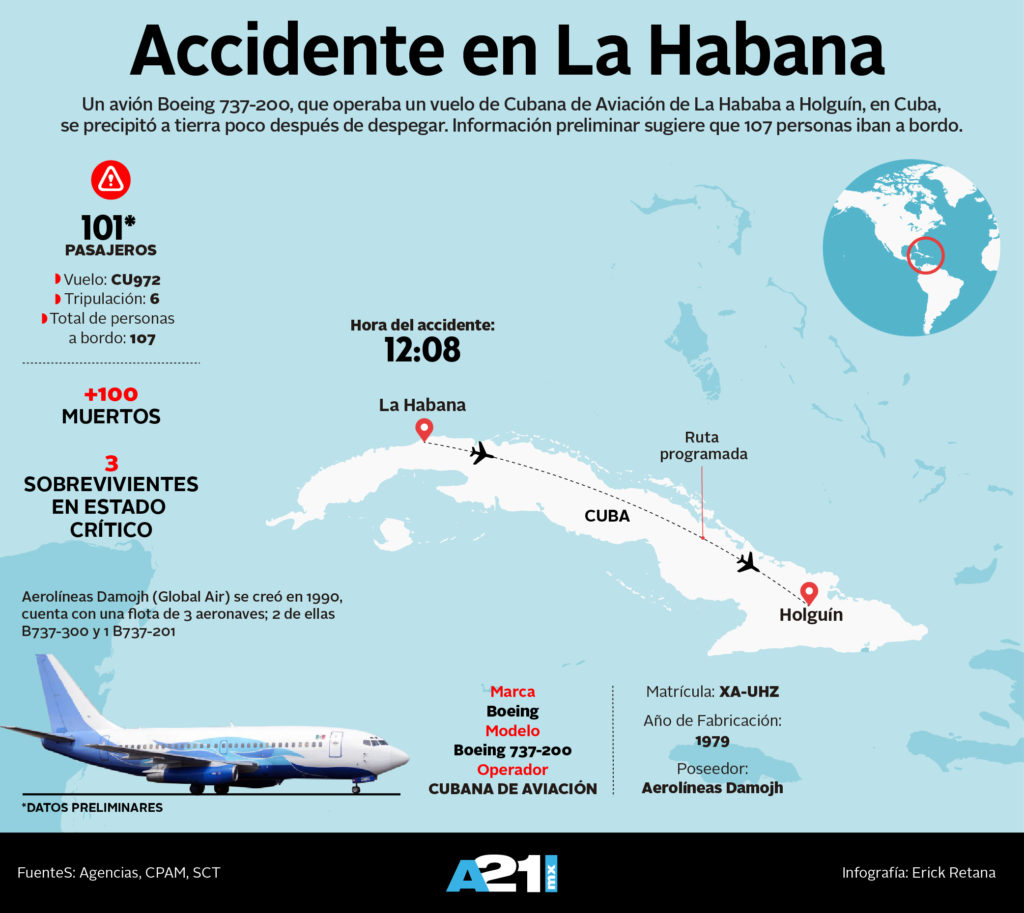
Los restos de las primeras víctimas identificadas retornaron este domingo a sus lugares de origen mientras avanza la investigación del siniestro del vuelo DMJ-972 de Cubana de Aviación en el que el viernes murieron 110 personas cuando el avión se estrelló poco después de despegar del aeropuerto de La Habana.

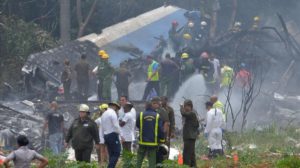
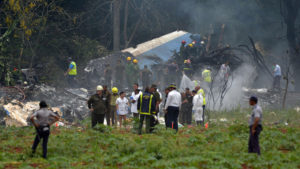
La zona de cultivos en la que cayó la aeronave, a un kilómetro del recinto aeroportuario, centra los trabajos de la comisión de investigación formada por las autoridades cubanas, a la que se han empezado a sumar expertos de otros países sin que todavía haya una explicación de lo sucedido.

Los expertos tratan de reunir piezas del fuselaje, los motores y el interior del aparato, que Cubana tenía alquilado desde hace menos de un mes a la aerolínea mexicana Global Air, responsable del mantenimiento del avión, un Boeing 737 fabricado en 1979.

Esos restos se trasladan a una dependencia aeroportuaria para su posterior evaluación, explicó el jefe de la comisión de investigación y presidente del Instituto de Aeronáutica Civil de Cuba (IACC), Armando Daniel López, citado por medios estatales.

También se busca la segunda de las dos cajas negras del avión, la que registra los parámetros técnicos del vuelo, aunque “su hallazgo no es determinante para arribar a una conclusión”, precisó el funcionario.

5aff71ddf1a62 (1)

La primera caja negra, que graba los sonidos en la cabina de control, se recuperó horas después del accidente y hasta ahora no se ha difundido su contenido.

Este domingo se unieron a la investigación dos expertos de las autoridades aeronáuticas de México, país de origen de la aerolínea propietaria del aparato, que superó la última revisión técnica en noviembre del año pasado.

Cubana de Aviación lo operaba en régimen de alquiler pero el contrato de arrendamiento estipulaba que el mantenimiento técnico era responsabilidad de Global Air, la compañía propietaria, también registrada como Damojh.

La Dirección General de Aeronáutica Civil (DGAC) de México anunció este domingo una nueva auditoría a Damojh para “verificar que las condiciones actuales de operación sigan cumpliendo con la normatividad” y colaborar con la investigación.
0029137624

Además, el ministro cubano de Transporte, Adel Yzquierdo, avanzó la llegada de peritos de aseguradoras de países europeos y expertos de Estados Unidos y garantizó que se permitirá que participen en la investigación “cuantas personas jurídicas y naturales tengan derecho, como el fabricante, propietario y las autoridades de la nación de origen del avión”.

La zona del accidente, a un kilómetro del aeropuerto habanero, se mantendrá preservada el tiempo necesario, pues los trabajos pueden prolongarse “días, semanas y hasta meses”, advirtió.

Todos los restos humanos han sido recuperados y trasladados al Instituto de Medicina Legal de La Habana, donde hasta ahora han sido identificados 33 de los 110 cadáveres.

Las tres supervivientes, de 19, 23 y 39 años y nacionalidad cubana, mantienen un estado “crítico grave” debido a los severos traumas craneales, fracturas y quemaduras sufridas en el siniestro, y se encuentran acompañadas por sus familiares en el centro sanitario, con todo el país pendiente de su recuperación.

También ha comenzado el proceso de identificación de los seis integrantes de la tripulación de la aeronave, todos mexicanos, con la presencia en La Habana de 15 familiares que han sido entrevistados por los expertos forenses cubanos.

Como la investigación, también se espera que el reconocimiento de las víctimas dure varias semanas, indicó el director del organismo forense, Sergio Rabell.
Los familiares de la mayoría de las víctimas se encuentran en La Habana para colaborar en la identificación de sus seres queridos, y también están ya en la capital cubana los allegados de los seis miembros de la tripulación.

Los parientes, cuya estancia costea el Gobierno cubano, se alojan en un hotel y son atendidos por médicos y psicólogos especializados en este tipo de situaciones.

A la provincia de Holguín, a cuya capital se dirigía el avión accidentado y donde residían 67 de las víctimas, llegaron ayer los restos ya identificados de tres de las personas fallecidas

Se trata de Suyen Lizandra Figueredo y su hija de siete años, Alexa Rivas Figueredo, recibidos por “una representación masiva” del municipio de Gibara, donde vivían; y de Yunaisi Pelegrino, de 39 años y vecina de Holguín.
A21_accidente_habana_2018_-01

Alexa Rivas es una de los cinco menores que perecieron en el vuelo, en el que también perdieron la vida otros tres niños de dos, cuatro y cinco años y una bebé de quince meses.

En el siniestro murieron 99 personas de nacionalidad cubana y once extranjeros: siete mexicanos -los seis miembros de la tripulación y una turista-, dos argentinos, un saharaui y un saharaui con nacionalidad española.

logo

The remains of the first identified victims returned to their places of origin on Sunday as the investigation of the flight of DMJ-972 of Cubana de Aviación advances, in which 110 people died on Friday when the plane crashed shortly after taking off from the airport. Havana.

The area of ​​crops in which the aircraft fell, one kilometer from the airport, centers the work of the commission of inquiry formed by the Cuban authorities, which has begun to add experts from other countries without there still being an explanation from what has occured.

The experts try to gather pieces of the fuselage, the engines and the interior of the aircraft, which Cubana had hired for less than a month to the Mexican airline Global Air, responsible for the maintenance of the plane, a Boeing 737 manufactured in 1979.

These remains are transferred to an airport dependency for further evaluation, explained the head of the commission of investigation and president of the Institute of Civil Aeronautics of Cuba (IACC), Armando Daniel López, quoted by state media.

The second of the two black boxes of the plane is also being searched, which records the technical parameters of the flight, although “its finding is not decisive to arrive at a conclusion,” the official said.

cuba-accidente-avion-1

The first black box, which records the sounds in the control cabin, was recovered hours after the accident and until now its content has not been disseminated.

This Sunday, two experts from the aeronautical authorities of Mexico, the country of origin of the airline that owns the aircraft, joined the investigation, which surpassed the last technical revision in November of last year.

Cubana de Aviación operated it on a rental basis but the lease agreement stipulated that the technical maintenance was the responsibility of Global Air, the owner company, also registered as Damojh.

The General Direction of Civil Aeronautics (DGAC) of Mexico announced on Sunday a new audit to Damojh to “verify that the current operating conditions continue to comply with the regulations” and collaborate with the investigation.

In addition, the Cuban Minister of Transport, Adel Yzquierdo, advanced the arrival of experts from insurers from European countries and experts from the United States and guaranteed that they will be allowed to participate in the investigation “as many legal and natural persons as they are entitled, as the manufacturer, owner and the authorities of the nation of origin of the plane. ”

The area of ​​the accident, one kilometer from the Havana airport, will be preserved for the necessary time, since the work can be extended “days, weeks and even months”, he warned.

download (1)

All human remains have been recovered and taken to the Legal Medicine Institute of Havana, where up to now 33 of the 110 corpses have been identified.

The three survivors, aged 19, 23 and 39 and Cuban nationality, maintain a “critical serious” state due to the severe cranial traumas, fractures and burns suffered in the accident, and are accompanied by their relatives in the health center, with the whole country awaiting recovery.

The process of identifying the six members of the crew of the aircraft, all Mexicans, has also begun, with the presence in Havana of 15 relatives who have been interviewed by Cuban forensic experts.

As the investigation, the recognition of the victims is also expected to last several weeks, said the director of the forensic body, Sergio Rabell.

The relatives of most of the victims are in Havana to collaborate in the identification of their loved ones, and the relatives of the six crew members are already in the Cuban capital.

The relatives, whose stay is paid by the Cuban Government, stay in a hotel and are attended by doctors and psychologists specialized in this type of situation.
download

To the province of Holguín, to whose capital the crashed plane was headed and where 67 of the victims resided, arrived yesterday the remains already identified of three of the deceased

This is Suyen Lizandra Figueredo and her seven-year-old daughter, Alexa Rivas Figueredo, received by “a massive representation” of the municipality of Gibara, where they lived; and Yunaisi Pelegrino, 39 years old and neighbor of Holguín.

images

Alexa Rivas is one of the five children who died on the flight, in which three other children of two, four and five years and a fifteen-month-old baby also lost their lives.

In the incident, 99 people of Cuban nationality and eleven foreigners died: seven Mexicans -the six crew members and one tourist-, two Argentines, a Saharawi and a Saharawi with Spanish nationality.

Agencies/EFE/14ymedio/Lorena Cantó,La Habana/ Internet Photos/ Arnoldo Varona/ TheCubanHistory.com
THE CUBAN HISTORY, HOLLYWOOD.

logo

– EL DOBLE NUEVE: Exclusive Cuban Domino Game. Rules. <> EL DOBLE NUEVE: Exclusivo Juego de Dominó Cubano. Reglas. FOTOS.

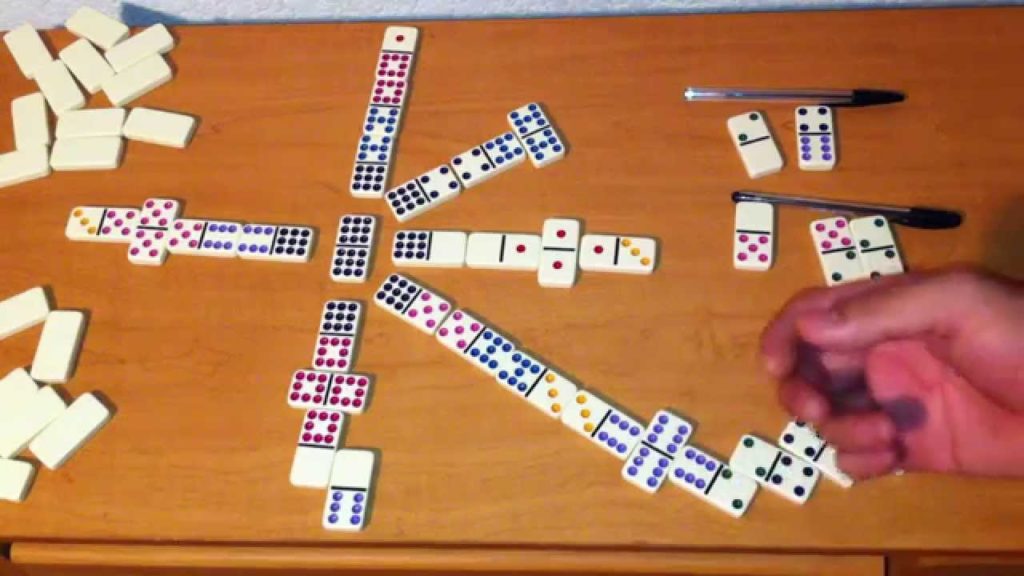
In much of the island of Cuba, Cubans play a variant of the traditional domino game which is called double six, this exclusivity of the island is called DOUBLE NINE, or Cuban Domino.

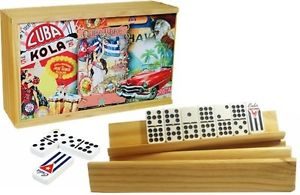
It differs from the traditional domino -double six that is played with 28 chips- in this modality 55 chips (30 pairs and 25 odd ones) are used, whose values ​​range from zero white to double nine and which together total 459 points.

And it is played in a different way:

In each “hand” (game) of the Cuban domino only 40 chips take part-ten for each player-, while the remaining 15 remain on the side of the table, “asleep”, without being seen by any of the players.

Every time a new “hand” starts, they go through again the 55 cards, so that the 15 that are “asleep” change regularly.
The fact that the players do not know the values ​​of the chips that remain outside increases the unpredictability and the random nature of this modality, according to the experts.

7859db55337f47d59d98a7b741954b35

When you take your ten chips, there are 15 left and it is harder to guess what the other has.

The Cuban researcher Migdonio Torres Romero affirms in his book El domino del doble nueve that this modality is very popular in the western and central areas of the island: Havana, Pinar del Río, Matanzas, Cienfuegos and Camagüey, among other cities. However, he clarifies that on the island also the double six is ​​very popular (according to Torres Romero the traditional domino is played more in the eastern zone: Santiago, Guantanamo, Holguín).

Cuban creation
The first records of dominoes date back to China, in the tenth century, according to the Encyclopaedia Britannica. However, the relationship between that first and distant antecedent and the western version we know now is not entirely clear.

In the middle of the XVIII century the first vestiges of this game appear, particularly in Italy and France. From there, and with changes from the Chinese original, the domino began to expand around the world and today is a game that enjoys popularity, with its respective variants, in virtually all five continents.

America arrived by way of Spanish and English conquerors. Currently, it is a very popular discipline – in its traditional version of 28 cards – in Latin American and Caribbean countries.

But only in Cuba the modality of 55 chips is played.

“For me, double six is ​​a science and double nine is an art,” says expert Cuban players. “In the traditional domino calculation and accuracy are very important, while in the Cuban, which I play more with my family and my friends, the element of luck or chance has a greater presence, because of the sleeping chips, that we do not know which They are”.

According to some experts, they have tried to organize a double nine tournament in the United States, but they have not been successful: demand has been low. In recent years, we members of the USA domino federation have supported and encouraged the double nine, which is very popular among Cubans. And they add … “They do not play it anywhere else in the world, and it’s hard to play for those who do not know it.”

A popular adage says that Cubans either do not arrive or pass. And in the case of dominoes, it can be said that they were passed.

logo

En buena parte de la isla de Cuba, los cubanos juegan una variante del tradicional juego de domino, que es el llamado doble seis, esta exclusividad de la isla es el llamado DOBLE NUEVE, o Domino Cubano.

Se diferencia del dominó tradicional -doble seis que se juega con 28 fichas- en esta modalidad se utilizan 55 fichas (30 pares y 25 impares) cuyos valores van desde el blanco cero hasta el doble nueve y que en total suman 459 puntos.

Y se juega en una forma distinta:

En en cada “mano” (juego) del dominó cubano solo participan 40 fichas -diez por cada jugador-, mientras las 15 restantes permanecen a un lado de la mesa, “dormidas”, sin que puedan ser vistas por ninguno de los jugadores.

Cada vez que comienza una nueva “mano”, vuelven a revolver las 55 fichas, de modo que las 15 que quedan “dormidas” cambian regularmente.
El que los jugadores no sepan los valores de las fichas que quedan por fuera aumenta la impredictibilidad y el carácter azaroso de esta modalidad, de acuerdo con los conocedores.

maxresdefault (1)

Cuando coges tus diez fichas, quedan 15 fuera y es más difícil adivinar lo que tiene el otro.

El investigador cubano Migdonio Torres Romero afirma en su libro El dominó del doble nueve que esta modalidad es muy popular sobre en las zonas occidental y central de la isla: La Habana, Pinar del Río, Matanzas, Cienfuegos y Camagüey, entre otras ciudades. Sin embargo, aclara que en la isla también el doble seis es muy popular (según Torres Romero el dominó tradicional se juega más en la zona oriental: Santiago, Guantánamo, Holguín).

Creación cubana
Los primeros registros que se tienen del dominó se remontan a China, en el siglo X, según la Enciclopedia Británica. Sin embargo, no está del todo clara la relación entre aquel primer y lejano antecedente y la versión occidental que conocemos ahora.

A mediados del siglo XVIII aparecen los primeros vestigios de este juego, particularmente en Italia y Francia. A partir de ahí, y con cambios respecto al original chino, el dominó comenzó a expandirse por el mundo y hoy es un juego que goza de popularidad, con sus respectivas variantes, en prácticamente los cinco continentes.

A América llegó por la vía de los conquistadores españoles e ingleses. En la actualidad es una disciplina muy popular -en su versión tradicional de 28 fichas- en países de Latinoamérica y el Caribe.

s-l1600

Pero solo en Cuba se juega la modalidad de 55 fichas.

“Para mí, el doble seis es una ciencia y el doble nueve es un arte”, dice expertos jugadores cubanos. “En el dominó tradicional el cálculo y la precisión son muy importantes, en tanto que en el cubano, que lo juego más con mi familia y mis amigos, el elemento suerte o azar tiene mayor presencia, por las fichas dormidas, que no sabemos cuáles son”.

Según algunos expertos han intentando organizar un torneo de doble nueve en Estados Unidos, pero no han tenido éxito: la demanda ha sido escasa. En los últimos años, nosotros miembros de la federación de dominó USA ha apoyado y fomentado el doble nueve, que es muy popular entre los cubanos. Y añaden..”Eso no lo juegan en ninguna otra parte del mundo. Y es difícil de jugar para quien no lo conoce”.

Un popular adagio dice que los cubanos o no llegan o se pasan. Y en el caso del dominó, se puede decir que se pasaron.

Agencies/BBC/Excerpts/Internet Photos/Arnoldo Varona/TheCubanHistory.com
THE CUBAN HISTORY, HOLLYWOOD.

logo

– CUBA… On That 20 of May 1902! . PHOTOS. <> CUBA.. En ese 20 de Mayo de 1902!. FOTOS.

That day wrote, full of healthy chauvinism, the chronicler Federico Villoch on one of his faded Old Postcards: “On May 20, 1902 – a day of splendid sun and blue sky, as if God had come down to take part in the party- the flag of the American Intervention descended from the mast of the Morro -not bigger than a handkerchief, of the little ones- and our national “banderón” went up – big, beautiful, enormous – taking the world alone; and swallowing the air, waving victorious in frantic whips ».

It points later: “There was no window, door, roof, roof, balcony or public road post where a Cuban flag, more or less large, hung; nor the chest of a man who did not show his three colors intertwined in a button or rosette in the buttonhole of the frock coat, jacket or jacket; nor a woman’s hairstyle where the tall, thick bun does not look like the national flag, on the tip of an artistic and upright pin. ”

The historian Ramiro Guerra synthesized in 1932: “Those who had the privilege of contemplating that apotheosis will never be able to forget it”.

Were those Cubans who were crying for happiness in the street wrong with the founding of a State with international recognition even if it were a crippled and castrated Republic? Was Máximo Gómez wrong when, with eyes clouded by tears, he embraced José Miguel Gómez, that May 20, in the old throne room of the government palace, to say: “I think we have arrived”?

We had really arrived? Emilio Roig wrote in 1959: “The Republic that emerged on May 20, 1902, was not, without a doubt, the one they conceived and for which several generations of Cubans fought and died …

9A5B187D-CB05-4A1C-9C98-C3058C039FE1_w1023_r1_s

“Our long struggle for independence fulfilled its historic mission. And we Cubans must feel very satisfied to have left the Spanish despotism and conquered the Republic.

“Very happy we must also feel … that after achieving the independence of Spain, we could destroy the annexation plans of President McKinley and Governor Leonardo Wood and, thanks to the tenacious struggle maintained by our people during the US military intervention, that hid the triumph of the Liberation Army, the Republic will be achieved, even with the castration that meant the Platt Amendment, terrible factor of disturbance and citizen dissociation ».

Patriotic Fervor

… The ovations were happening every time on foot, on horseback or by car, passed one of the top leaders of the Liberation Army-Garcia Menocal, Jose Miguel, Cebreco. Montalvo, Quintín Bandera … -. The crowd was renewed in the Plaza de Armas to bring the president and his secretaries to the balcony of the palace. Don Tomás looked out and left to repeat the same thing in a little while. It was an intense day. To greet the president came the Rector of the University of Havana and the director of the Academy of San Alejandro, directors of the Economic Society of Friends of the Country, the mayor of Havana and his councilors, the heads of the Fire and Guard Corps Rural, the consuls and the accredited foreign press, members of the United States Congress and representatives of the Catholic Church headed by Monsignor Barnada, archbishop primate of Santiago de Cuba …. José Francisco Martí Zayas Bazán, the son of the Apostle, commanded the company of ceremonies.

maximo_gomez

Estrada Palma attended a Te Deum at the Cathedral and supervised a student stop at the Plaza de Armas. Through the Prado, from La Punta to Campo de Marte, there were parades of floats sponsored by institutions or companies, bands of music, flagged in honor of the American republics and political groups. They also paraded people with costumes and danced and sang the blacks that made up a comparsa. In the evening, at the National Theater there was a great cultural evening in which Luis Estévez y Romero, Vice President of the Republic and his wife Marta Abreu occupied the box of honor. In the evening the fireworks started. Ana Cairo says about it: “The nocturnal Havana shone like a sun and the photographers took great pains to capture this rarity.” The parties ended on May 21, at dawn.

Triumphal arches were erected and, in the Central Park, a replica of the Statue of Liberty was placed. The one who could gave a hand of grout in front of his house. Not a few commercial establishments changed their name overnight to temper them to new times. There were parties for Cuba in Paris and in North American universities and in some locations in Mexico. The poems that exalted the event were not lacking.

figaro 1902

The magazine El Fígaro, in a number that circulated on the 20th, published valuable opinions about the nascent State and its future and an interesting photographic display. Juan Gualberto Gómez was strict in his considerations. In his opinion, the death of Martí diverted the course of the Revolution and in that deviation was the key to the great wound suffered by the ideal of the absolute independence of the fatherland. Juan Gualberto concluded: “We must persist in the claim of our mutilated sovereignty; and in order to achieve it, it is necessary to adopt again … the directing ideas and the methods that Martí advocated ».

logo

Ese día escribía, lleno de sano chovinismo, el cronista Federico Villoch en una de sus Viejas postales descoloridas: «El día 20 de mayo de 1902 —un día de espléndido sol y cielo azul, tal como si Dios hubiera bajado a tomar parte en la fiesta— descendía del mástil del Morro la banderita de la Intervención Americana —no mayor de un pañuelo, de los pequeños— y subía nuestro “banderón” nacional —grande, bello, enorme— cogiéndose él solo el mundo; y tragándose el aire, al ondear victorioso en látigos frenéticos».

Apunta más adelante: «No quedó ventana, puerta, tejado, azotea, balcón o poste de la vía pública de donde no colgase una bandera cubana, más o menos grande; ni pecho de hombre que no mostrase sus tres colores entrelazados en un botón o roseta en el ojal de la levita, saco o chamarreta; ni peinado de mujer donde el alto y espeso moño no luciera la enseña patria, en la punta de un artístico y enhiesto prendedor».

Sintetizaba el historiador Ramiro Guerra en 1932: «Los que tuvieron el privilegio de contemplar aquella apoteosis no podrán olvidarla jamás».

¿Se equivocaban aquellos cubanos que lloraban de felicidad en la calle ante la fundación de un Estado con reconocimiento internacional aunque fuera una República lisiada y castrada? ¿Se equivocó Máximo Gómez cuando, con los ojos nublados por las lágrimas, se abrazó a José Miguel Gómez, aquel 20 de mayo, en el viejo salón del trono del palacio de gobierno, para decirle: «Creo que hemos llegado»?

¿Habíamos llegado realmente? Escribía Emilio Roig en 1959: «La República que surgió el 20 de mayo de 1902, no fue, sin duda alguna, la que concibieron y por la que lucharon y murieron varias generaciones de cubanos…

maximo_gomez

«Nuestra larga lucha por la independencia cumplió a plenitud su misión histórica. Y los cubanos debemos sentirnos muy satisfechos de haber salido del despotismo español y conquistado la República.

«Muy felices debemos también sentirnos… de que después de lograr la independencia de España, pudiéramos destruir los planes anexionistas del presidente McKinley y el gobernador Leonardo Wood y, gracias a la lucha tenaz mantenida por nuestro pueblo durante la intervención militar norteamericana, que escamoteó el triunfo del Ejército Libertador, se lograra la República, aún con la castración que significó la Enmienda Platt, factor terrible de perturbación y disociación ciudadana».

Fervor Patriotico.

… Las ovaciones se sucedían cada vez que a pie, a caballo o en coche, pasaba alguno de los altos jefes del Ejército Libertador —García Menocal, José Miguel, Cebreco. Montalvo, Quintín Bandera…—. La muchedumbre se renovaba en la Plaza de Armas para hacer salir al balcón de palacio al Presidente y a sus secretarios de despacho. Don Tomás se asomaba y se retiraba para repetir lo mismo al poco rato. Fue una jornada intensa. A saludar al mandatario acudían el Rector de la Universidad de La Habana y el director de la Academia de San Alejandro, directivos de la Sociedad Económica de Amigos del País, el Alcalde habanero y sus concejales, los jefes del Cuerpo de Bomberos y de la Guardia Rural, los cónsules y la prensa extranjera acreditada, miembros del Congreso de Estados Unidos y representantes de la Iglesia Católica encabezados por monseñor Barnada, arzobispo primado de Santiago de Cuba…. José Francisco Martí Zayas Bazán, el hijo del Apóstol, mandaba la compañía de ceremonias.

fotos_nocturnas01

Asistió Estrada Palma a un Te Deum en la Catedral y supervisó una parada estudiantil en la Plaza de Armas. Por el Prado, desde La Punta al Campo de Marte, hubo desfiles de carrozas auspiciadas por instituciones o empresas, bandas de música, abanderadas en honor de las repúblicas americanas y agrupaciones políticas. Desfilaron además personas con disfraces y bailaron y cantaron los negros que conformaban una comparsa. Por la noche, en el Teatro Nacional hubo una sonada velada cultural en la que Luis Estévez y Romero, vicepresidente de la República y su esposa Marta Abreu ocuparon el palco de honor, Tarde en la noche comenzaron los fuegos artificiales. Dice Ana Cairo al respecto: «La Habana nocturna resplandecía como un sol y los fotógrafos se esmeraron captando dicha rareza». Las fiestas acabaron el 21 de mayo, al amanecer.

Se levantaron arcos de triunfo y, en el Parque Central, se emplazó una réplica de la Estatua de la Libertad. El que pudo dio una mano de lechada al frente de su casa. No pocos establecimientos comerciales cambiaron de nombre de la noche a la mañana para atemperarlos a los nuevos tiempos. Hubo fiestas por Cuba en París y en universidades norteamericanas y en algunas localidades de México. No faltaron los poemas que exaltaron el acontecimiento.

figaro 1902

La revista El Fígaro, en un número que circuló el propio día 20, publicó valiosas opiniones sobre el naciente Estado y su futuro y un interesantísimo despliegue fotográfico. Juan Gualberto Gómez fue terminante en sus consideraciones. A su juicio, la muerte de Martí desvió el curso de la Revolución y en esa desviación estaba la clave de la gran herida que sufría el ideal de la independencia absoluta de la patria. Concluía Juan Gualberto: «Hay que persistir en la reclamación de nuestra soberanía mutilada; y para alcanzarla, es fuerza adoptar de nuevo… las ideas directrices y los métodos que preconizara Martí».

Agencies/Ciro Bianchi/ Excerpts/ Internet Photos/ Arnoldo Varona/ TheCubanistory.com
THE CUBAN HISTORY, HOLLYWOOD.
logo