PASEO DEL PRADO “El Prado”, La Habana. Una de las calles más Antiguas de la Capital Cubana. * PASEO DEL PRADO “El Prado”, La Havana. One of the Oldest Streets of the Cuban Capital. PHOTOS/VIDEOS.

PASEO DEL PRADO “EL PRADO”, LA HABANA. UNA DE LAS CALLES MAS ANTIGUAS DE LA CAPITAL CUBANA. FOTOS

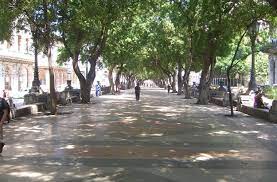
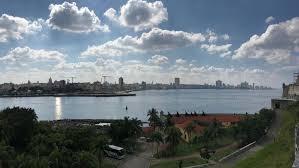
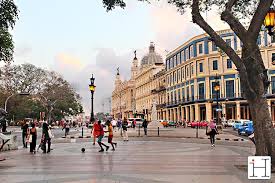
El Paseo del Prado es una calle arbolada que data de 1772 y es una de las calles más antiguas de La Habana. Corre de norte a sur desde el Malecón (una avenida de seis carriles que bordea la costa) hasta el Parque de la Fuente de la India.
download (81)

El Paseo del Prado está cerca de la antigua muralla de la ciudad y de la división entre Centro Habana y La Habana Vieja. Técnicamente, el Paseo del Prado comprende todo el recorrido del Paseo Martí aproximadamente desde el Malecón hasta la Calle Máximo Gómez, hasta la Fuente de la India. El paseo ha tenido varios nombres, pasó a llamarse Paseo de Martí en 1898 con la independencia de la isla de España. A pesar de las referencias históricas, los habaneros lo llaman simplemente “El Prado”.

PRIMER BOULEVARD DE ESTILO EUROPEO EN LA HABANA

La construcción del primer bulevar de estilo europeo en La Habana, la primera calle de este tipo fuera de las murallas de la ciudad, fue propuesta por Don Felipe Fons de Viela y Ondeano en 1770, y el trabajo se completó a mediados de la década de 1830 durante el mandato del Capitán- General (español: Capitanía General de Cuba) Miguel Tacón y Rosique (1834–1838) [b] quien también fue responsable del Paseo de Tacón, la Plaza del Vapor y el Teatro Tacón.

logoVIDEOS- PASEO DEL PRADO, La Habana, Cuba…

En 1925, el arquitecto paisajista francés Jean-Claude Nicolas Forestier rediseñó el Paseo del Prado, lo bordeó con árboles, esculturas de bronce de leones, paredes de piedra de coral y bancos de mármol. Los leones de bronce se agregaron en 1928. Los Leones fueron encargados por el presidente Gerardo Machado. Fueron escritos por el escultor francés Jean Puiforcat y el maestro lanzador cubano Juan Comas Masique, quien usó el metal de los cañones fuera de servicio para forjar los leones.

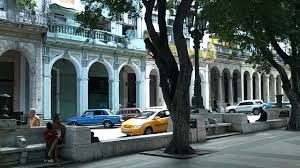
A lo largo del bulevar se encuentran importantes edificios como el Gran Teatro de La Habana, hoteles (entre ellos el Hotel Sevilla), cines como el Fausto, teatros y casonas que imitan los estilos de Madrid, París y Viena. El Prado fue la primera calle pavimentada de La Habana. Cuando se construyó El Capitolio en 1929, se eliminó esa sección del paseo marítimo.

En la esquina de la calle Cárcel se ubicaba la concesionaria de autos Packard & Cunnigham, y en 1940 la cadena de radio RHC-Cadena Azul estableció sus estudios en el Prado.

ARQUITECTURA DEL PAISAJE DE “EL PRADO”.

Jean-Claude Nicolas Forestier, arquitecto paisajista francés, fue el arquitecto de El Prado, se había mudado a La Habana desde Francia durante cinco años para colaborar con arquitectos y arquitectos paisajistas en varios proyectos en toda la ciudad, incluido el diseño de los jardines para el Capitolio. . Trabajó en el plan maestro de la ciudad con el objetivo de crear un equilibrio armónico entre las formas clásicas y el paisaje tropical de La Habana.
images (63)

Abrazó y conectó la red de carreteras de la ciudad mientras acentuaba los hitos prominentes a través de una serie de parques, avenidas, “paseos” y bulevares que, 50 años después, demostraron ser un contraste directo con el Plan Piloto de La Habana de Josep Lluis Sert, que fue influenciado por el CIAM. principios de planificación del Movimiento Moderno. La influencia de Nicolás Forestier ha dejado su huella en La Habana; muchas de sus ideas se vieron truncadas por la Gran Depresión de 1929.

El Paseo del Prado había sido la sustitución del primer paseo de la Ciudad de La Alameda de Paula que fue construido hacia 1776 por Antonio Fernández Trevejo. Para la década de 1950, las familias se mudaban del Prado a Miramar y otras partes de la ciudad como el Vedado y Siboney. Después de la revolución de 1959, las calles del Prado y muchos de sus edificios, como la mayoría de los edificios de La Habana, se deterioraron físicamente al punto de que muchos se derrumbaron y permanecen hasta el día de hoy en estado ruinoso.
RECOMIENDENOS A SUS AMISTADES * PREFIERA A NUESTROS SPONSORS.

RECOMIENDENOS A SUS AMISTADES * PREFIERA A NUESTROS SPONSORS.

logo

PASEO DEL PRADO “EL PRADO”, LA HAVANA. ONE OF THE OLDEST STREETS OF THE CUBAN CAPITAL. PHOTOS

The Paseo del Prado is a tree-lined street that dates back to 1772 and is one of the oldest streets in Havana. It runs north-south from the Malecón (a six-lane avenue that runs along the coastline) to the Parque de la Fuente de la India.
images (62)

Paseo del Prado is near the old city wall, and the division between Centro Habana and Old Havana. Technically, the Paseo del Prado includes the entire length of Paseo Martí approximately from the Malecon to Calle Máximo Gómez, to the Fuente de la India fountain. The promenade has had several names, it was renamed Paseo de Martí in 1898 with the island’s independence from Spain. Despite the historic references, the people of Havana simply call it “El Prado.”

FIRST EUROPEAN-STYLE BOULEVARD IN HAVANA

Construction of the first European-style boulevard in Havana, the first street of its type outside the city walls, was proposed by Don Felipe Fons de Viela y Ondeano in 1770, and work was completed in the mid-1830s during the term of Captain-General (Spanish: Capitanía General de Cuba) Miguel Tacón y Rosique (1834–1838)[b] who was also responsible for the Paseo de Tacón, the Plaza del Vapor, and the Tacón Theatre.

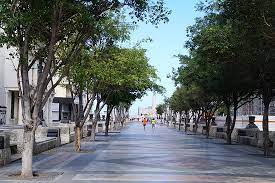
in 1925 French landscape architect Jean-Claude Nicolas Forestier redesigned the Paseo del Prado, lined it with trees, bronze sculptures of lions, coral stone walls, and marble benches. The bronze lions were added in 1928. The Lions were commissioned by President Gerardo Machado. They were authored by French sculptor Jean Puiforcat and Cuban-born master caster Juan Comas Masique, who used the metal from decommissioned cannons to forge the lions.

Lining the boulevard are important buildings such as the Gran Teatro de La Habana, hotels (including the Hotel Sevilla), cinemas such as the Fausto, theaters, and mansions imitating styles from Madrid, París, and Vienna. El Prado was the first paved street in Havana. When El Capitolio was built in 1929 that section of the promenade was removed.

At the corner of Cárcel street the car dealership Packard & Cunnigham was located, and in 1940 the radio network RHC-Cadena Azul established its studios on the Prado.

LANDSCAPE ARCHITECTURE OF “EL PRADO”.

Jean-Claude Nicolas Forestier, a French landscape architect, was the architect of El Prado, he had moved to Havana from France for five years to collaborate with architects and landscape architects on various projects throughout the city including the design of the gardens for the Capitolio. He worked on the master plan of the city with the aim to create a harmonic balance between classical forms and the tropical landscape of Havana.
download (82)

He embraced and connected the city’s road network while accentuating prominent landmarks through a series of parks, avenues, “paseos,” and boulevards which 50 years later proved to be a direct contrast to the Havana Plan Piloto of Josep Lluis Sert which was influenced by CIAM planning principles of Modern Movement. Nicolas Forestier’s influence has left his mark on Havana; many of his ideas were cut short by the Great Depression of 1929.

The Paseo del Prado had been a replacement for the first promenade in the City of La Alameda de Paula which was buildt around 1776 by Antonio Fernández Trevejo. By the 1950s, families were moving from the Prado to Miramar and other parts of the city such as the Vedado and Siboney. After the 1959 revolution, the Prado streets and many of its buildings were, like the majority of buildings in Havana, physically deteriorated to the point that many collapsed and remain to this day in a ruined state.

Agencies/ Wiki/ ElPradoHist./ Extractos/ Excerpts/ Internet Photos/ YouTube/ Arnoldo Varona/ www.TheCubanHistory.com
THE CUBAN HISTORY, HOLLYWOOD.
RECOMIENDENOS A SUS AMISTADES * PREFIERA A NUESTROS SPONSORS.
RECOMIENDENOS A SUS AMISTADES * PREFIERA A NUESTROS SPONSORS.

logo

“LIBORIO” en el Imaginario popular del Pueblo Cubano. Su Origen. PHOTOS. * “LIBORIO” in the Popular Imagination of the Cuban People. Origin. PHOTOS

“LIBORIO” EN EL IMAGINARIO POPULAR DEL PUEBLO CUBANO. SU ORIGEN. PHOTOS

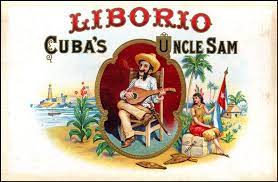
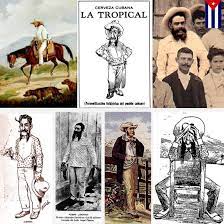
Para los Cubanos “Liborio”, como ningún otro personaje del imaginario popular representa al pueblo de Cuba. Es para los cubanos lo que es Juan para los españoles, John Bull para los ingleses, Asterix para los franceses o el tío Sam para las norteamericanos.

download (76)

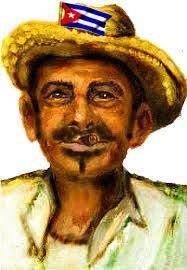
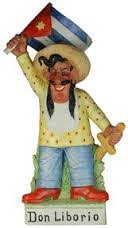
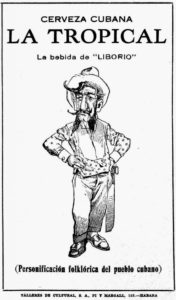
Liborio representa al legitimo campesino cubano, ataviado con sombrero de yarey, guayabera blanca de hilo, pañuelo rojo al cuello y machete al cinto. El diccionario Larousse lo recoge como “nombre genérico del hombre cubano” que por extensión representa al pueblo cubano.

Liborio esta siempre dispuesto a sacar su machete de la vaina para eslomar (deslomar) a los sinvergüenzas que hacen fortuna en la política y en el gobierno a costa del desdichado guajiro cubano, como dice él con gracia.

ORIGEN DEL PERSONAJE CUBANO LIBORIO

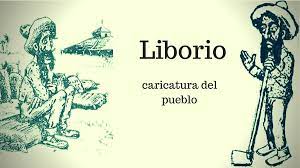
Creado por el caricaturista Ricardo de la Torriente, apareció por primera vez en 1900 en el periódico ‘La Discusión’ que dirigiera Torriente y más tarde y desde 1905 hasta 1931 en en el semanario ‘La Política Cómica’ también dirigido por Torriente.

Algunos otros consideran que el posible origen de Liborio se encuentra en las Aventuras de un mayoral de Juan Jiménez. Este personaje tan querido por los cubanos tiene una larga tradición en el humorismo y la caricatura política, ya que ha personificado y simbolizado a la nación cubana en todos los desafíos que le ha tocado afrontar en su historia.

De alguna forma, y sin la anuencia del Vaticano, Liborio ha sido canonizado por los cubanos y aparece entre los toponímicos de santos en Cuba. No obstante no ha sido posible reconocer por las autoridades eclesiásticas el origen de San Liborio, registrado por Antonio Núñez Jiménez en su obra El Archipiélago, que lo ubica en alguna zona intrincada de la provincia de Camagüey.

Todas las vicisitudes, penas y alegrías del pueblo cubano en esas décadas fueron captadas por Liborio y expresadas a veces en cuartetas otras veces con sólo un gesto de su cara, ya que Liborio era un bromista un tanto satírico.

images (61)

Esta era la imagen que, representando a Cuba, nunca faltaba en los carnavales, fiestas de disfraces y en los desfiles; no-solo en Cuba antes de Castro, sino en las paradas y fiestas guajiras del exilio, donde con nostálgica vehemencia, aparece de vez en cuando Liborio.

OTRAS REPRENTACIONES DE LIBORIO

Otros, sin embargo, consideran que Liborio no es tan representativo del sentir popular, pues fue utilizado por la sátira política a partir de 1902 con posiciones partidistas muy bien definidas que lo convirtieron en el representante de una parte del pueblo de Cuba, pero no de todo el pueblo de Cuba.

Expresan estos señores que Liborio no es más que una copia al carbón del Guajiro de Landaluce que realizó Ricardo de la Torriente para transmitir su mensaje político y que no pasaba de ser un personaje sumiso y llorón lo que daba muy mala fama a los cubanos.

Sin embargo, este es el Liborio que le gustó a la gente y el que se ganó el sentir popular del pueblo cubano. Prueba de eso es que años después, durante el gobierno de Gerardo Machado, apareció un Liborio sin patillas, valiente y emprendedor pero no le gusto a nadie..Nada, que así de incomprensibles son los cubanos.

Hacia los años cincuenta surgieron otras versiones más modernas de Liborio y hasta surgió Liborito Pérez, versión más ligera y con distinto talante: sin patillas ni bigote, de cara regordeta y sombrero mambí y guayabera criolla. Esta nueva versión de Liborio apareció también en el semanario humorístico Zigzag de Castor Vispo y Roseñada, que en cierta forma fue el continuador, al menos en el estilo humorístico de La Política Cómica.

Liborio-602x1024

Hoy, seis décadas después, este personaje en si, como símbolo del pueblo cubano NO ha cambiado. Lo que sí es diferente es su representación, es decir, su imagen y vestimenta. Sigue siendo el mismo hombre sufrido, pegado a la tierra, con sombrero de guano, pero ha perdido su inmaculada guayabera blanca. Viste una camisa raída, unos pantalones desgarrados y anda descalzo. Ya no lleva su machete al cinto, ahora lleva atado a uno de sus pies una gruesa cadena de metal de la que arrastra una pesada bola de hierro, igual al grillete que llevaba nuestro apóstol José Martí” cuando estuvo en prisión a los diecisiete años.

Es irónico, si no fuera desgarradoramente triste. Después de mas de un siglo transcurrido, estamos como Martí, en el punto de partida.

RECOMIENDENOS A SUS AMISTADES * PREFIERA A NUESTROS SPONSORS.

RECOMIENDENOS A SUS AMISTADES * PREFIERA A NUESTROS SPONSORS.

logo

“LIBORIO” IN THE POPULAR IMAGINATION OF THE CUBAN PEOPLE. ORIGEN. PHOTOS.

For Cubans “Liborio”, like no other character in the popular imagination, represents the people of Cuba. He is for the Cubans what Juan is for the Spanish, John Bull for the English, Asterix for the French, or Uncle Sam for the North Americans.

download (74)

Liborio represents the legitimate Cuban peasant, dressed in a yarey hat, a white string guayabera, a red scarf around his neck, and a machete around his belt. The Larousse dictionary collects it as the “generic name of the Cuban man” that by extension represents the Cuban people.

Liborio is always ready to take his machete out of the sheath to slaughter (slaughter) the scoundrels who make their fortune in politics and in the government at the expense of the unfortunate Cuban peasant, as he says with grace.

ORIGIN OF THE CUBAN CHARACTER LIBORIO

Created by the cartoonist Ricardo de la Torriente, it appeared for the first time in 1900 in the newspaper ‘La Discusión’ directed by Torriente and later and from 1905 to 1931 in the weekly ‘La Política Cómica’ also directed by Torriente.

Some others consider that the possible origin of Liborio is in Juan Jiménez’s Aventuras de un mayoral. This character so beloved by Cubans has a long tradition in humor and political caricature since he has personified and symbolized the Cuban nation in all the challenges that it has had to face in its history.

Somehow, and without the consent of the Vatican, Liborio has been canonized by the Cubans and appears among the names of saints in Cuba. However, it has not been possible to recognize by the ecclesiastical authorities the origin of San Liborio, registered by Antonio Núñez Jiménez in his work The Archipelago, which places it in some intricate area of ​​the province of Camagüey.

All the vicissitudes, sorrows, and joys of the Cuban people in those decades were captured by Liborio and sometimes expressed in quatrains other times with just a gesture of his face since Liborio was a somewhat satirical joker.

download (75)

This was the image that, representing Cuba, was never lacking in carnivals, costume parties, and parades; not only in Cuba before Castro, but in the Guajiras exile stops and parties, wherewith nostalgic vehemence, Liborio appears from time to time.

OTHER REPRESENTATIONS OF LIBORIO

Others, however, consider that Liborio is not so representative of popular sentiment, as he was used for political satire from 1902 with very well-defined partisan positions that made him the representative of a part of the Cuban people, but not of all the people of Cuba.

These gentlemen express that Liborio is nothing more than a carbon copy of the Guajiro de Landaluce that Ricardo de la Torriente made to transmit his political message and that he was no more than a submissive and crying character, which gave a very bad reputation to the Cubans.

However, this is the Liborio that the people liked and the one that won the popular sentiment of the Cuban people. Proof of this is that years later, during the government of Gerardo Machado, a Liborio without sideburns appeared, brave and enterprising but nobody liked me … Nothing, that is how incomprehensible Cubans are.

Around the fifties, other more modern versions of Liborio emerged and Liborito Pérez even emerged, a lighter version with a different mood: without sideburns or mustache, with a plump face and a mambí hat and Creole guayabera. This new version of Liborio also appeared in the humorous weekly Zigzag by Castor Vispo y Roseñada, which is a certain way was the follower, at least in the humorous style of La Política Cómica.

download (77)

Today, six decades later, this character himself, as a symbol of the Cuban people, has NOT changed. What is different is the representation of him, that is, his image and clothing. He is still the same long-suffering man, stuck to the ground, with a guano hat, but he has lost his immaculate white guayabera. He wears a ragged shirt, ripped pants and is barefoot. He no longer carries his machete on his belt, now he has a thick metal chain tied to one of his feet, from which he is dragging a heavy iron ball, just like the shackle that our apostle José Martí wore “when he was in prison at the age of seventeen.

He’s ironic if it weren’t heartbreakingly sad. After more than a century elapsed, we are like Martí, at the starting point.

Agencies/ Wiki/ Juan Pérez/ TodoCuba/ Extractos/ Excerpts/ Internet Photos/ Arnoldo Varona/ www.TheCubanHistory.com
THE CUBAN HISTORY, HOLLYWOOD.

RECOMIENDENOS A SUS AMISTADES * PREFIERA A NUESTROS SPONSORS.
RECOMIENDENOS A SUS AMISTADES * PREFIERA A NUESTROS SPONSORS.

logo

OPINIÓN DESDE CUBA: Despues de 63 años, el régimen Cubano es un anciano disfrazado de Revolucionario. * OPINION FROM CUBA: After 63 years, the Cuban Regime is an Old Man Disguised as a Revolutionary. Por/By Abraham Jiménez Enoa, La Havana, Cuba.

OPINIÓN DESDE CUBA: DESPUES DE 63 AÑOS, EL RÉGIMEN CUBANO ES UN ANCIANO DISFRAZADO DE REVOLUCIONARIO.
Por Abraham Jiménez Enoa, La Habana, Cuba.

images (56)

Una mujer y un hombre le hablan al mar a media mañana del último día del 2021. Han bajado el muro del malecón de La Habana y desde los arrecifes dicen frases en yoruba. Están vestidos de blanco y tienen tapadas sus cabezas con pañuelos. El hombre está arrodillado: con su mano izquierda hace sonar una maraca azul mientras la derecha la levanta al cielo. La mujer introduce y saca sus manos del agua en un mismo acto, que repite varias veces, con los ojos cerrados mientras balbucea. Estoy encima del muro y desde allí solo alcanzo a distinguir la palabra “ayúdanos”. A unos metros de mí, un pescador también observa la escena mientras le quita con un cuchillo las escamas a un pescado. A nuestras espaldas, en la Avenida de los presidentes, un cartel dice con letras en rojo: “Año 64 de la Revolución”.

A las 12:00 de la noche, 21 salvas de artillerías remueven la ciudad con su estruendo. Los cañonazos significan que el primer día del año ha llegado y, en Cuba, este día tiene el valor añadido de ser también el aniversario del castrismo: un régimen dictatorial entrado en la tercera edad que sigue, a esta altura de su vida, disfrazado de revolucionario. Los estallidos desde la Fortaleza de San Carlos de la Cabaña no pueden ser más inoportunos: se sienten como globos de colores y serpentinas colocados en una funeraria. Hoy en Cuba no hay absolutamente nada que celebrar. La isla pocas veces ha estado más triste y más desvencijada que ahora.

El país se siente como si hubiera culminado en sus entrañas una guerra civil y se adentrara ahora en la posguerra, o como si estuviese en los días posteriores al paso de un huracán que arrasó con todo el territorio nacional. Esa sensación de destrozo viene de lo vivido en 2021, un año en el cual, además de estar sumidos en una pandemia, el régimen volvió la cotidianidad de la isla un suplicio.

Por un lado, la imperiosa obligatoriedad de reformar el ineficiente sistema económico, hizo que el presidente Miguel Díaz-Canel dictara la “Tarea ordenamiento”. Su implementación provocó un resultado contrario al que buscaba: una inflación de 60% en los precios minoristas de los comercios y de 6,900% en el mercado informal. Esta situación se unió a una caída de 13% del Producto Interno Bruto entre 2020 y 2021. Esta combinación de factores económicos negativos, más la devaluación de la moneda nacional, el desabastecimiento de las tiendas y las farmacias, han hecho que los cubanos tengan que pasar una verdadera odisea todos los días para llevar un plato de comida a la mesa y para medicarse.

Durante las fiestas de fin de año, por ejemplo, muchas de las casas en el país no sirvieron cerdo, el plato clásico de las festividades en Cuba, porque no había ni dónde ni cómo comprarlo. Conozco un solo amigo que sí logró tener cerdo en su casa para esperar el año: lo tenía congelado en su refrigerador desde hacía siete meses.

Es por ello que, a lo largo del año pasado, dada la grave situación de falta de alimentos y medicamentos, el exilio cubano tuvo que disponerse a ayudar a sus coterráneos, enviando hacia la isla toneladas de medicamentos y comida por vías alternativas a las del régimen.

download (72)

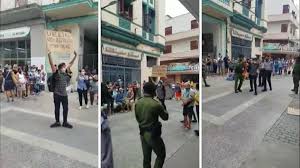
Además de la escasez y la precariedad de la vida, los cubanos tuvieron que convivir en 2021 con la furia desmedida del castrismo, que se sintió en pánico al ver tanta inconformidad ciudadana declarada. La respuesta del régimen a las ansias de cambio de los cubanos fue colocar la varilla de la represión en un nivel nunca antes visto.

De no ser por las más de 6,380 acciones represivas durante el año —según el Observatorio Cubano de Derechos Humanos— y por los 955 presos políticos en estos 12 meses —según Prisoners Defenders—, el país se le hubiese escurrido de las manos.

La semana de la Navidad en Cuba transcurrió mientras cientos de ciudadanos eran sancionados a largas condenas de cárcel por haber salido a la calle en las protestas populares de julio a ejercer su derecho de manifestarse. Los juicios fueron un guiño déspota del castrismo para seguir imponiendo el terror y demostrar de lo que es capaz de ejecutar si está en juego su status quo.

Un gesto cargado de simbolismo ejemplarizante dirigido a la sociedad civil disidente y que enterró las pocas ganas, si quedaban algunas, de celebrar el fin del año en un país marchito. De todos modos, es imposible que exista la felicidad en una nación donde es más fácil estar preso que sentarse a la mesa a comer un plato de comida.

 OPINIÓN Por Abraham Jiménez Enoa, periodista en Cuba y cofundador de la revista ‘El Estornudo’.

RECOMIENDENOS A SUS AMISTADES * PREFIERA A NUESTROS SPONSORS.

RECOMIENDENOS A SUS AMISTADES * PREFIERA A NUESTROS SPONSORS.

logo

OPINION FROM CUBA: AFTER 63 YEARS, THE CUBAN REGIME IS AN OLD MAN DISGUISED AS A REVOLUTIONARY.
By Abraham Jiménez Enoa, La Havana, Cuba.

images (60)

A woman and a man speak to the sea in the middle of the morning on the last day of 2021. They have lowered the wall of the Malecón in Havana and from the reefs, they say phrases in Yoruba. They are dressed in white and their heads are covered with kerchiefs. The man is kneeling: with his left hand, he sounds a blue maraca while his right raises it to the sky. The woman introduces and takes her hands out of the water in the same act, which she repeats several times, with her eyes closed while she babbles. I’m on top of the wall and from there I can only make out the word “help us”. A few meters from me, a fisherman also observes the scene while he removes the scales from a fish with a knife. Behind us, on the Avenue of the Presidents, a sign says in red letters: “Year 64 of the Revolution.”

At 12:00 at night, 21 salvoes of artillery stirred the city with their roar. The cannon shots mean that the first day of the year has arrived and, in Cuba, this day has the added value of also being the anniversary of Castroism: a dictatorial regime entering the third age that continues, at this point in its life, disguised as revolutionary. The explosions from the San Carlos de la Cabaña Fortress could not be more inopportune: they feel like-colored balloons and streamers placed in a funeral home. Today in Cuba there is absolutely nothing to celebrate. The island has seldom been sadder and more ramshackle than it is now.

The country feels as if a civil war had culminated in its guts and is now entering the postwar period, or as if it were in the days after a hurricane that swept across the national territory. That feeling of destruction comes from what was experienced in 2021, a year in which, in addition to being mired in a pandemic, the regime turned the island’s daily life into an ordeal.

On the one hand, the imperative obligation to reform the inefficient economic system led President Miguel Díaz-Canel to dictate the “Ordering Task”. Its implementation produced a result contrary to what it was looking for: inflation of 60% in the retail prices of businesses and 6,900% in the informal market. This situation was coupled with a 13% drop in the Gross Domestic Product between 2020 and 2021. This combination of negative economic factors, plus the devaluation of the national currency, the shortage of stores and pharmacies, have made Cubans have to spend a real odyssey every day to bring a plate of food to the table and to medicate.

During the end of the year festivities, for example, many of the houses in the country did not serve pork, the classic dish of the festivities in Cuba, because there was nowhere or how to buy it. I know only one friend who did manage to have pork at his house to wait for the year: he had had it frozen in his refrigerator for seven months.

That is why, throughout the past year, given the serious situation of lack of food and medicine, the Cuban exile had to prepare to help their compatriots, sending tons of medicines and food to the island by alternative routes to those of the regime.

images (59)

In addition to the scarcity and precariousness of life, Cubans had to live in 2021 with the unbridled fury of Castroism, which was panicked by seeing so much public disagreement declared. The regime’s response to the Cubans’ desire for change was to set the bar of repression at a level never seen before.

If not for the more than 6,380 repressive actions during the year – according to the Cuban Observatory for Human Rights – and for the 955 political prisoners in these 12 months – according to Prisoners Defenders – the country would have slipped out of his hands.

Christmas week in Cuba passed while hundreds of citizens were sentenced to long prison terms for having taken to the streets in the popular protests in July to exercise their right to demonstrate. The trials were a despotic nod to Castroism to continue imposing terror and demonstrate what it is capable of executing if its status quo is at stake.

A gesture loaded with exemplary symbolism directed at dissident civil society and that buried the little desire, if any, to celebrate the end of the year in a withered country. Anyway, there is no such thing as happiness in a nation where it is easier to be imprisoned than to sit down at the table to eat a plate of food.

 OPINION- Abraham Jiménez Enoa, a journalist in Cuba and co-founder of the magazine ‘El Estornudo’.

Agencies/ TheWashingtonPost/ OPINION -Abraham Jiménez Enoa/ Internet Photos/ Arnoldo Varona/ www.TheCubanHistory.com
THE CUBAN HISTORY, HOLLYWOOD.

RECOMIENDENOS A SUS AMISTADES * PREFIERA A NUESTROS SPONSORS.

RECOMIENDENOS A SUS AMISTADES * PREFIERA A NUESTROS SPONSORS.

logo