
Ernest Hemingway liked to get up early.
He did his best writing in the morning, standing in front of his typewriter, plucking the keys as fast as the words might come to him. This was fortunate, because by 11 a.m., the Havana heat began to creep into his rented room at the Hotel Ambos Mundos. He couldn’t think in the swelter, much less write.
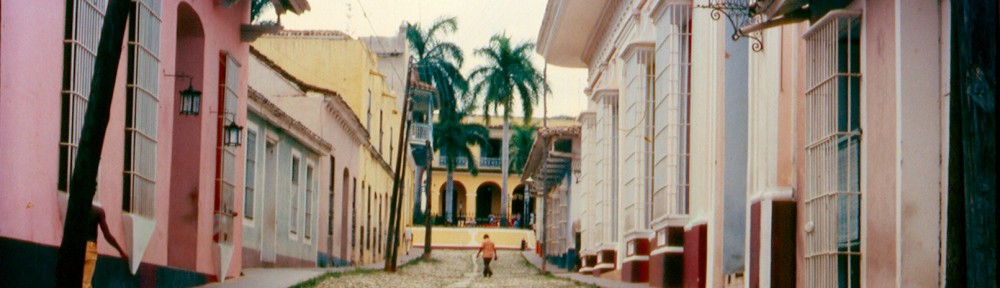
If the trade winds were good, Hemingway might make his way to Havana Harbor, where his boat, Pilar, was docked in the 1930s. But on other days, he would take the ornate caged elevator down from Room 511 to the lobby and make his way out to the sun-speckled street. It was just a 10-minute stroll through Old Havana from Hotel Ambos Mundos to El Floridita, Hemingway’s favorite bar.
Between the heat and the morning spent cooped in his small room, Hemingway was always parched by the time he arrived at El Floridita.

Luckily, bartender Constantino Ribalaigua Vert was always waiting in his white apron, shaker in hand and cocktail glasses lined up on the dark wood bar. A good bartender knows the right way to greet a thirsty customer. A great bartender knows that Ernest Hemingway was not your typical thirsty customer.
Constantino, called by the locals “El Rey de los Cocteleros,” The Cocktail King of Cuba.
He had learned how to tend bar from his father. In 1914, the 26-year-old worked behind the mahogany counter at El Floridita, the American-style bar at the end of Obispo Street. By 1918, he had saved up enough cash to buy the place.
For the next three decades, Ribalaigua catered to tourists, artists, actors and expats, creating craft cocktails at a time when working with liquor was hardly considered an “art.” Eventually, his craft would make El Floridita world famous.
American sportswriter Jack Cuddy, holed up in Havana during the early 1930s to observe the New York Giants in spring training, once asked the man behind the bar at the Hotel Nacional to direct him to the best bartender in Cuba. “Constante,” the man said, without hesitation. In the forward to Ribalaigua’s 1935 recipe book, Bar La Florida Cocktails, Cuddy recalled what happened next: “We sent a committee of one to make a phone call to Sloppy Joes, the Plaza, the Sevilla and Prado 86. He returned and said the bartender was right. The vote was unanimously in favor of Constantino Ribalaigua.”

Hemingway’s introduction to Ribalaigua and El Floridita was more unintentional. In an interview with NPR, Hilary Hemingway, Ernest Hemingway’s niece, explains: “In the early 1930s, Hemingway went into the Floridita to use the restroom one day. People in the bar were bragging about the daiquiris that were being served there. So he ordered one and took a sip. Ernest asked for another one, this time with ‘less sugar and more rum.’ And that’s how the Papa Doble, or the Hemingway Daiquiri, was born.”
Ribalaigua coined the drink after Hemingway — and the rest is literary-meets-libation history. The Papa was for Hemingway, known for his graying beard and fatherly self-assurance. The doble — well, that meant two. Two times more liquor to pack the most punch. Phillip Greene, author of the book To Have and Have Another: A Hemingway Cocktail Companion, says Hemingway proudly boasted to have downed 17 of Constante’s daiquiris over the course of one afternoon in 1942. Seventeen dobles, that is. As Greene appropriately remarks in his book, “that’s a hell of a lot of daiquiri.”

..In the 1920s and ’30s yielded a convoluted intersection between liquor and legality, Those who could afford to escape the restraints of Prohibition traveled overseas to Paris, Spain and the Caribbean. Cuba, just 100 miles off the coast of Florida, was a near and welcomed respite for thirsty Americans. According to most estimates, American tourism to Cuba doubled from 1916 to 1926, from about 45,000 to 90,000 tourists a year.
Ribalaigua was a master of his trade at a time when there when there were no illusions about the cocktail’s place in liquor lore. He invented more than 200 drinks and adapted dozens of others. His concoctions and recipes eventually made their way back to some of the finest bars in the U.S.
The daiquiri itself was not invented by Ribalaigua, but he did fine-tune it. He was the first to add chipped ice (a slightly more frappe-like version of today’s frozen daiquiri), and he made four different versions at El Floridita. For the Papa Doble, he added grapefruit juice and a few drops of maraschino liqueur to two jiggers of light rum and the juice of a fresh lime.

British writer Basil Woon once wrote about the deftness with which Ribalaigua worked his magic behind the bar, explaining that he poured the ingredients freely, throwing the contents from shaker to shaker “with one motion,” until Ribalaigua had filled the glasses “to the brim and not a drop is left over.” Strawberry daiquiris at El Floridita, where the Papa Doble, named for Ernest Hemingway, was born.
Even after Prohibition ended, Hemingway still swilled his daiquiris at El Floridita — and this, too, was because of Ribalaigua. In a letter dated June 5, 1943, Hemingway wrote to his third wife, Martha Gellhorn, “Everything is lovely here at the Nacional and the only thing lacking is you dear if you could only see the view from my room looking out over the beautiful gulf stream and Oh those daiquiris that nobody makes like old Constantino.”

“He brought everyone who visited to see Constantino. They all would go to the Floridita to have drinks,” says Hilary Hemingway. Ava Gardner and John Wayne dropped in for Constante-crafted cocktails. Over a bottle of Gordon’s Gin at El Floridita, Spencer Tracy convinced Ernest Hemingway that Tracy should play the part of Santiago from The Old Man in the Sea. Hemingway once notoriously whispered to a fellow patron seated at the mahogany bar that there were FBI agents from the U.S. sitting just tables away, investigating his every move.

..The year 2017 marks the 200th anniversary of El Floridita, which opened in 1817. The bar is much the same as it was in Ribalaigua’s time, a pink stucco building with a lighted sign out front. The heavy curtains are a splash of burgundy and the old wooden bar remains. At the end of the counter, there’s a bronze statue of Ernest Hemingway. But behind the bar, the spirit of Ribalaigua, who died in 1952, looms forever in immortality — a hidden, ethereal figure with the cocktail shaker in his palm, ready to pour a hard drink with a cool hand, without spilling a single drop.

Constante, el Rey del Daiquiri cubano de Ernest Hemingway.
A Ernest Hemingway le gustaba levantarse temprano.

Él hizo sus mejores novelas por la mañana, parado delante de su máquina de escribir, desplumando las llaves tan rápidamente como las palabras pudieron venir a él. Esto fue una suerte, porque a las 11 de la mañana, el calor de La Habana comenzó a arrastrarse a su habitación alquilada en el Hotel Ambos Mundos. No podía pensar con el sofocante calor, y mucho menos escribir.
Si los vientos alisios fueran buenos, Hemingway podría llegar hasta el puerto de La Habana, donde su barco, Pilar, fue atracado en los años treinta. Pero en otros días, tomaba el ornamentado elevador enjaulado desde la habitación 511 hasta el vestíbulo y salía a la calle moteada por el sol. Estaba a sólo 10 minutos a pie de la Habana Vieja desde el Hotel Ambos Mundos hasta El Floridita, el bar favorito de Hemingway.
Entre el calor y la mañana que pasaba encerrado en su pequeña habitación, Hemingway siempre estaba reseco por el recorrido hasta que llegaba a El Floridita.

Afortunadamente, el barman Constantino Ribalaigua Vert siempre estaba esperando en su delantal blanco, un batidor en la mano y gafas de cóctel alineados en el bar de madera oscura. Un buen barman sabe la manera correcta de saludar a un cliente sediento. Un gran barman sabe que Ernest Hemingway no era su típico cliente sediento.
Constantino, era llamado por los locales “El Rey de los Cocteleros”, El Rey Cóctel de Cuba.
Había aprendido atender la barra de su padre. En 1914, el joven de 26 años trabajó detrás del mostrador de caoba en El Floridita, el bar de estilo americano al final de la calle Obispo. Hacia 1918, había ahorrado suficiente dinero para comprar el lugar.
Durante las tres décadas siguientes, Ribalaigua atendió a turistas, artistas, actores y expatriados, creando cócteles artesanales en un momento en que el trabajo con licores apenas se consideraba un “arte”. Eventualmente, su oficio haría El Floridita mundialmente famoso.
El cronista deportivo estadounidense Jack Cuddy, escondido en La Habana durante la década de 1930 para observar a los Gigantes de Nueva York en el entrenamiento de primavera, le preguntó una vez al hombre detrás del bar del Hotel Nacional que lo dirigiera al mejor barman de Cuba. – ‘Constante’ – dijo el hombre sin dudarlo. En el libro de receta de Ribalaigua de 1935, Bar La Florida Cocktails, Cuddy recordó lo que sucedió a continuación: “Enviamos un comité de uno para hacer una llamada telefónica a Sloppy Joes, la Plaza, Sevilla y Prado 86. El camarero tenía razón, la votación fue unánime en favor de Constantino Ribalaigua “.

La introducción de Hemingway a Ribalaigua y El Floridita fue más que involuntaria. En una entrevista con NPR, Hilary Hemingway, la sobrina de Ernest Hemingway, explica: “A principios de los años 30, Hemingway fue a la floridita a usar el baño un día. La gente del bar se jactaba de los daiquiris que se servían allí. Ordenó uno y tomó un sorbo. Ernest pidió otro, esta vez con “menos azúcar y más ron”. Y así nació el Papa Doble, o el Daiquiri de Hemingway.
Ribalaigua acuñó la bebida después de Hemingway – y el resto es literario-cumple-historia de la libación. ‘El Papa’ era para Hemingway, conocido por su barba grisácea y su auto-seguridad paternal. El doble – bueno, eso significaba dos. Dos veces más licor para mejor saborear el golpe. Phillip Greene, autor del libro A tener y tener otro: un compañero de cóctel de Hemingway, dice que Hemingway orgullosamente se jactó de haber tomado 17 de daiquiris de Constante durante una tarde de 1942. Diecisiete dobles, es decir. Como Greene señala apropiadamente en su libro, “eso es un infierno de un montón de daiquiri”.

En las décadas de 1920 y 1930 se produjo una confluencia entre el licor y la legalidad. Aquellos que podían permitirse el lujo de escapar de las restricciones de la prohibición viajaron al extranjero a París, España y el Caribe. Cuba, a sólo 100 millas de la costa de Florida, fue un respiro cercano y acogedor para los estadounidenses sedientos. Según la mayoría de las estimaciones, el turismo estadounidense a Cuba se duplicó de 1916 a 1926, de unos 45.000 a 90.000 turistas al año.
Ribalaigua era un maestro de su comercio en una época en que no había ilusiones sobre el lugar del cóctel en la tradición del licor. Inventó más de 200 bebidas y adaptó docenas de otras. Sus brebajes y recetas eventualmente hicieron su camino de vuelta a algunos de los mejores bares en los EE.UU.
El daiquiri en sí no fue inventado por Ribalaigua, pero lo hizo especial. Él fue el primero en agregar hielo astillado (una versión ligeramente más parecida a un frappé del daiquiri congelado de hoy), e hizo cuatro versiones diferentes en El Floridita. Para el Papa Doble, agregó zumo de pomelo y unas gotas de licor de marrasquino a dos jiggers de ron ligero y el jugo de una lima fresca.

El escritor británico Basil Woon escribió una vez sobre la habilidad con que Ribalaigua trabajó su magia detrás de la barra, explicando que vertió los ingredientes libremente, arrojando el contenido de la coctelera a la coctelera “con un movimiento” hasta Ribalaigua había llenado los vasos “hasta el borde Y no queda una gota. Fresa daiquiris en El Floridita, donde nació el Papa Doble, llamado así por Ernest Hemingway.
Incluso después de que la Prohibición terminara, Hemingway todavía llevaba sus daiquiris al El Floridita – y esto también por Ribalaigua. En una carta fechada el 5 de junio de 1943, Hemingway escribió a su tercera esposa, Martha Gellhorn, “Todo es precioso aquí en el Nacional y lo único que falta eres tu querida si sólo pudieras ver la vista desde mi habitación mirando hacia la hermosa vista del golfo y esos daiquiris que nadie hace como el viejo Constantino.
“Traía a todos los que visitaban a Constantino, todos iban a la Floridita a tomar bebidas”, dice Hilary Hemingway. Ava Gardner y John Wayne participaron en cócteles elaborados por Constante. Sobre una botella de Gordon’s Gin en El Floridita, Spencer Tracy convenció a Ernest Hemingway de que Tracy debía interpretar la parte de Santiago de ‘The Old Man in the Sea’. Hemingway una vez notoriamente susurró a un amigo patrón sentado en el bar de caoba que había agentes del FBI de los EE.UU. sentado a sólo mesas de distancia, investigando cada uno de sus movimientos.

El año 2017 marca el 200 aniversario de El Floridita, inaugurado en 1817. El bar es muy parecido al de Ribalaigua, un edificio de estuco rosado con letrero iluminado en el frente. Las pesadas cortinas son un chapoteo de Borgoña y el antiguo bar de sólida madera. Al final del mostrador, hay una estatua de bronce de Ernest Hemingway. Pero detrás de la barra, el espíritu de Ribalaigua, que murió en 1952, se cierne para siempre en la inmortalidad, una figura oculta y etérea con la coctelera en la palma de la mano, lista para servir una bebida fría sin derramar ni una sola gota.
Agencies/NPR/Nicole Jankowski/ Internet Photos/ Excerpts/ Arnoldo Varona/ TheCubanHistory.com
THE CUBAN HISTORY, HOLLYWOOD.