> CUBAN GOVERNMENT warns of gloomy times for the future of Cuban economy. + GOBIERNO CUBANO advierte de tiempos sombríos para la economia del pais.

c51f7711670d4ce6876c9aff2b26e48c-780x527

Cuba plans to reduce spending further in 2018 following two years of budget cuts, the ruling Communist Party newspaper Granma wrote on Friday, as a deepening crisis in socialist ally Venezuela puts the squeeze on its finances.

The Caribbean island began to slash imports and reduce the use of fuel and electricity last year, sending its centrally planned economy into recession for the first time in nearly a quarter century.

“The basic premise (of the 2018 plan) is to meet production and service goals through efficiency and a lowering of costs to levels less than in 2017,” Granma wrote on Friday, citing a presentation of Economy Minister Ricardo Cabrisas to the Council of Ministers.

In the wake of the 2014 crash in oil prices, Venezuela has reduced shipments of subsidized fuel to communist-run Cuba, as well as payments for Cuban professional services.

Rodrigo-Malmierca-Cuban-economy-770x437

Other oil-producing allies, such as Angola and Algeria, also find themselves short of cash to pay for Cuban services.

A boom in tourism has not been enough to stem the hemorrhaging of hard currency in a country embargoed by the United States. Cuba does not publish up-to-date information on its debt, balance of payments and current account.

Cuban President Raul Castro admitted a year ago that the country was strapped for cash, adding in December that it was having trouble paying suppliers and thanking them for their patience.

The economy shrank 1 percent last year, he said, after averaging 3 percent growth the previous four years.

images

Relatively minor gas shortages appeared this month and the supply of imported consumer goods has been irregular this year.

Diplomats and foreign businessmen said some joint venture partners were having problems repatriating profits as state-run banks were short of cash to send abroad.

“It was reiterated that the plan (2018) must be objective, adjusted for the resources the country has,” Granma wrote.

logo

Gobierno Cubano advierte de tiempos sombríos para la economía del país.

Cuba planea reducir aún más el gasto en 2018 tras dos años de recortes presupuestarios, dijo el viernes el gobernante periódico del Partido Comunista, Granma, a medida que una crisis cada vez más profunda de aliado socialista Venezuela pone el apretón en sus finanzas.

Havana-1024x440

“La premisa básica (del plan 2018) es cumplir los objetivos de producción y servicio a través de la eficiencia y la reducción de los costos a niveles menores que en 2017”, escribió Granma citando una presentación del ministro de Economía, Ricardo Cabrisas, al Consejo de Ministros .

Tras la caída de los precios del petróleo en 2014, Venezuela ha reducido los envíos de combustible subsidiado a la Cuba comunista, así como los pagos por servicios profesionales cubanos.

04CUBA1-facebookJumbo

Otros aliados productores de petróleo, como Angola y Argelia, también se encuentran sin dinero para pagar los servicios cubanos.

Un auge en el turismo no ha sido suficiente para detener la hemorragia de divisas en un país embargado por los Estados Unidos. Cuba no publica información actualizada sobre su deuda, balanza de pagos y cuenta corriente.

El presidente cubano Raúl Castro admitió hace un año que el país estaba atado por dinero en efectivo, agregando en diciembre que estaba teniendo problemas para pagar a los proveedores y agradeciendo su paciencia.

La economía cayó un 1 por ciento el año pasado, dijo, después de promediar un crecimiento de 3 por ciento en los últimos cuatro años.

1200x-1

La escasez de gas relativamente menor apareció este mes y la oferta de bienes de consumo importados ha sido irregular este año.

Diplomáticos y empresarios extranjeros dijeron que algunos socios de la joint venture tuvieron problemas para repatriar beneficios ya que los bancos estatales no tenían dinero para enviar al exterior.

“Se reiteró que el plan (2018) debe ser objetivo, ajustado por los recursos que tiene el país”, escribió Granma.

Agencies/Reuters/Daily Mail/Marc Frank, La Havana/Internet Photos/ Arnoldo Varona/ TheCubanHistory.com
THE CUBAN HISTORY, HOLLYWOOD.

Cuba101

> NOTES ON THE ORIGINS of the Cuban Music and its International Repercussions. Video. + BREVES NOTAS sobre los orígenes de la música cubana y su repercusión internacional.

2

The music of the aborigines that the Spaniards found in Cuba and other Caribbean islands did not interest the settlers. They were looking for gold and silver and they did not find them, at least in the quantities they sought. Havana, once settled on the north coast, becomes the port of forced entry of ships that come and go between Spain and America.

Every year two fleets left from Seville. One was going to Mexico and to ports of Central America. Another went to Cartagena and eventually to Argentina. During the winter both fleets met in Havana and from here, together, made the return to Spain, in March.

Thus, the crews of the ships spent long time in Havana between parties and leisures and that became a true laboratory of musical experimentation. The music brought by Spanish sailors and soldiers was intermingled with African music collected in Havana and other ports, and also with indigenous music of advanced cultures such as the Inca and the Aztec. On their return to Seville these men carried the new creations that soon became popular. To these cantes or songs that came and went, they were called cantes back and forth and could not always determine their origin.

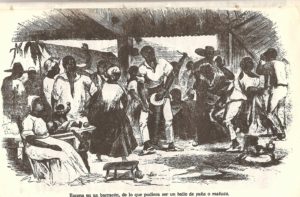
POSIBLE BAILE DE YUKAENBARRACON

In this way the creation of new musical forms or tendencies begins: the gayumba, the chacona, the zarambeque, the zarabanda, the zambapalo, the fandango … It is possible that these forms were developed or perfected and spread in the immense redoma that was La Havana then, cosmopolitan port of forced stay for long weeks for travelers, sailors and soldiers. It is possible, I repeat, but we can not prove it. Yes there is a form that has a proven Cuban origin or, habanero. It is the chuchumbé. They are taken to Veracruz, in 1776, a group of mestizos from Havana. It is a dance that enters Mexico with bad luck. By its picaresque stanzas, by its provocative movements, raised of tone, it condemns the Holy Inquisition.

Music in Cuba from the Haitian Revolution.

French settlers who, together with their slaves, fled Haiti in 1791 and settled in the eastern portion of the island, bring or revive rhythmic elements from Africa that reach extraordinary development and repercussion in Cuba. They are the cinquillo and the tango congo or habanera, that will appear in the first contradictions published in Havana, in 1803 and in previous guarachas. It is possible that it existed and will be used more narrowly among Afro-Cubans, but the fact is that the French presence acted at least as a catalyst in the dissemination of this rhythm, which quickly became popular inside and outside Cuba.

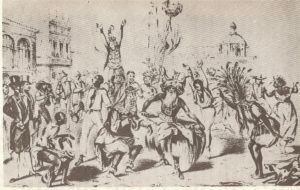
CABILDOSDIADEREYES

It adds that in 1836, it appears published in the News of Both Worlds, of Mexico, a habanera titled The pepper. He says: “We already had an export musical item.” It was classified as a Havana counterpart. There was a Spanish dance, an English dance … It is logical to add the gentilicio to identify it: Habanera contradanza. But such was the magic force, the attraction of Havana that was enough to say habanera. Unintentionally, he warns, “Cuba had created what we now call a trademark. Unlike other commercial products that need the gentilicio, the new musical product was enough with that, to be habanero ».

It began to circulate outside of Cuba. From 1840 onwards, Habaneras were written, sung and danced in Mexico, in Venezuela, in Puerto Rico, in many other places in the Americas, and especially in Spain, even if not by a Cuban, but by a Basque, Sebastian Yradier. He writes The Dove in 1860 … “When I left Havana, God is my strength.” And Yradier affirms in the following verse: “No one has seen me leave, if it was not me” It was not necessary to be in Cuba to write a habanera. Many of them were written without their authors ever standing on the Island. But whether Yradier was or was not secondary, merely anecdotal. It does not detract from the popularity of his Paloma, which continues to sing as a standard of Cuban music.

..Two other habaneras were as famous as La Paloma. I am referring to El arreglito, by Yradier himself, and O sole mio by Maestro Di Capua; Another standard of international popular music. Bizet used El arreglito for the famous habanera of his opera Carmen. The sarabande and the chacona were also related. Chabrier, Debussy, Ravel, Fauré and Saint Saens used the habanera. Laparra composed an opera with that name, La habanera. Albéniz and Falla grow it in Spain. Appears in zarzuelas. It is obliged here to mention the name of the Matancero José White. After a ritual stage in Paris, he triumphs in Europe in a roundabout way. Write The beautiful Cuban, the most beautiful of the habaneras.

logo

Breves notas sobre los orígenes de la música cubana y su repercusión internacional.

..La música de los aborígenes que los españoles encontraron en Cuba y otras islas del Caribe no interesó a los colonizadores. Buscaban oro y plata y no los encontraron, al menos en las cantidades que ambicionaban. La Habana, una vez asentada en la costa norte, se convierte en el puerto de recala forzosa de los buques que vienen y van entre España y América.

Cada año partían dos flotas desde Sevilla. Una se dirigía a México y a puertos de América Central. Otra iba a Cartagena y eventualmente a la Argentina. Durante el invierno ambas flotas se reunían en La Habana y desde aquí, juntas, hacían el regreso a España, en marzo.

Laplante

Así, las tripulaciones de los buques pasaban largo tiempo en La Habana entre fiestas y ocios y eso se convertía en un verdadero laboratorio de experimentación musical. La música que traían marineros y soldados españoles se entremezclaba con la música africana recogida en La Habana y en otros puertos, y también con música indígena de culturas avanzadas como la inca y la azteca. A su regreso a Sevilla esos hombres llevaban las nuevas creaciones que no tardaban en popularizarse. A esos cantes o cantos que iban y venían, se les denominó cantes de ida y vuelta y no siempre podía determinarse su origen.

De esa manera empieza la creación de nuevas formas o tendencias musicales: la gayumba, la chacona, el zarambeque, la zarabanda, el zambapalo, el fandango… Es posible que esas formas se gestaran o perfeccionaran y se divulgaran en la inmensa redoma que era La Habana de entonces, puerto cosmopolita de estadía forzosa durante largas semanas para viajeros, marineros y soldados. Es posible, repito, pero no podemos probarlo. Sí hay una forma que tiene un comprobado origen cubano o, habanero. Es el chuchumbé. Lo llevan a Veracruz, en 1776, un grupo de mestizos salidos de La Habana. Es un baile que entra en México con mala suerte. Por sus estrofas picarescas, por sus movimientos provocativos, subidos de tono, lo condena la Santa Inquisición.

cubana

La Música en Cuba a partir de la Revolución Haitiana.

Los colonos franceses que, junto con sus esclavos, pudieron huir de Haití en 1791 y se asentaron en la porción oriental de la Isla traen o reavivan elementos ritmáticos procedentes de África que alcanzan en Cuba desarrollo y repercusión extraordinarios. Son el cinquillo y el tango congo o habanera, que aparecerá en las primeras contradanzas publicadas en La Habana, en 1803 y en guarachas anteriores. Es posible que existiera y se usará más limitadamente entre los afrocubanos, pero lo cierto es que la presencia francesa actuó por lo menos como catalizador en la diseminación de este ritmo, que con rapidez se hizo popular dentro y fuera de Cuba.

Añade que en 1836, aparece publicada en el Noticioso de Ambos Mundos, de México, una habanera titulada La pimienta. Precisa: «Ya teníamos un artículo musical de exportación». Se le catalogó como contradanza habanera. Había una danza española, una danza inglesa… Es lógico que se le agregara el gentilicio para identificarla: contradanza habanera. Pero tal era la fuerza mágica, la atracción que ejercía La Habana que bastaba con decir habanera. Sin proponérselo, advierte, «Cuba había creado lo que hoy llamamos una marca comercial. A diferencia de otros productos comerciales que necesitan el gentilicio, al nuevo producto musical le bastaba con eso, ser habanero».

José White.

José White.

Empezó a circular fuera de Cuba. A partir de 1840 se escribieron, cantaron y bailaron habaneras en México, en Venezuela, en Puerto Rico, en otros muchos lugares de América y, sobre todo en España aun cuando no lo escribe un cubano, sino un vasco, Sebastián Yradier. Escribe La paloma en 1860… «Cuando salí de La Habana, válgame Dios». Y afirma Yradier en el verso subsiguiente: «Nadie me ha visto salir, si no fui yo» No era necesario estar en Cuba para escribir una habanera. Muchas de ellas se escribieron sin que sus autores pusieran un pie jamás en la Isla. Pero si Yradier estuvo o no estuvo es secundario, meramente anecdótico. No le resta fuerza a la popularidad de su Paloma, que se sigue cantando como un standard de la música cubana.

..Otras dos habaneras alcanzaron tanta fama como La paloma… Me refiero a El arreglito, del propio Yradier, y O sole mío, del maestro Di Capua; otro standard de la música popular internacional. Bizet usó El arreglito para la famosa habanera de su ópera Carmen. También se emparentaron la zarabanda y la chacona. Chabrier, Debussy, Ravel, Fauré y Saint Saens se valieron de la habanera. Laparra compuso una ópera con ese nombre, La habanera. Albéniz y Falla la cultivan en España. Aparece en zarzuelas. Es obligado aquí mencionar el nombre del matancero José White. Luego de una etapa ritual en París, triunfa en Europa de manera rotunda. Escribe La bella cubana, la más bella de las habaneras.

Agencies/Ciro Bianchi/Diaz Ayala/Internet Photos/YouTube/ Arnoldo Varona/ TheCubanHistory.com
THE CUBAN HISTORY, HOLLYWOOD.

cropped-Cuba02

> “CONSTANTE”, the Cocktail King who invented Ernest Hemingway’s Cuban Daiquiri. + “CONSTANTE”, el Rey del Daiquiri Cubano de Ernest Hemingway.

640px-ErnestHemingway2

Ernest Hemingway liked to get up early.

He did his best writing in the morning, standing in front of his typewriter, plucking the keys as fast as the words might come to him. This was fortunate, because by 11 a.m., the Havana heat began to creep into his rented room at the Hotel Ambos Mundos. He couldn’t think in the swelter, much less write.

If the trade winds were good, Hemingway might make his way to Havana Harbor, where his boat, Pilar, was docked in the 1930s. But on other days, he would take the ornate caged elevator down from Room 511 to the lobby and make his way out to the sun-speckled street. It was just a 10-minute stroll through Old Havana from Hotel Ambos Mundos to El Floridita, Hemingway’s favorite bar.

Between the heat and the morning spent cooped in his small room, Hemingway was always parched by the time he arrived at El Floridita.

53fc485bed49e1f6db6d6cc69fb283d8

Luckily, bartender Constantino Ribalaigua Vert was always waiting in his white apron, shaker in hand and cocktail glasses lined up on the dark wood bar. A good bartender knows the right way to greet a thirsty customer. A great bartender knows that Ernest Hemingway was not your typical thirsty customer.

Constantino, called by the locals “El Rey de los Cocteleros,” The Cocktail King of Cuba.

He had learned how to tend bar from his father. In 1914, the 26-year-old worked behind the mahogany counter at El Floridita, the American-style bar at the end of Obispo Street. By 1918, he had saved up enough cash to buy the place.

For the next three decades, Ribalaigua catered to tourists, artists, actors and expats, creating craft cocktails at a time when working with liquor was hardly considered an “art.” Eventually, his craft would make El Floridita world famous.

American sportswriter Jack Cuddy, holed up in Havana during the early 1930s to observe the New York Giants in spring training, once asked the man behind the bar at the Hotel Nacional to direct him to the best bartender in Cuba. “Constante,” the man said, without hesitation. In the forward to Ribalaigua’s 1935 recipe book, Bar La Florida Cocktails, Cuddy recalled what happened next: “We sent a committee of one to make a phone call to Sloppy Joes, the Plaza, the Sevilla and Prado 86. He returned and said the bartender was right. The vote was unanimously in favor of Constantino Ribalaigua.”

0-CONSTANTINO-RIBALAIGUA-198x198

Hemingway’s introduction to Ribalaigua and El Floridita was more unintentional. In an interview with NPR, Hilary Hemingway, Ernest Hemingway’s niece, explains: “In the early 1930s, Hemingway went into the Floridita to use the restroom one day. People in the bar were bragging about the daiquiris that were being served there. So he ordered one and took a sip. Ernest asked for another one, this time with ‘less sugar and more rum.’ And that’s how the Papa Doble, or the Hemingway Daiquiri, was born.”

Ribalaigua coined the drink after Hemingway — and the rest is literary-meets-libation history. The Papa was for Hemingway, known for his graying beard and fatherly self-assurance. The doble — well, that meant two. Two times more liquor to pack the most punch. Phillip Greene, author of the book To Have and Have Another: A Hemingway Cocktail Companion, says Hemingway proudly boasted to have downed 17 of Constante’s daiquiris over the course of one afternoon in 1942. Seventeen dobles, that is. As Greene appropriately remarks in his book, “that’s a hell of a lot of daiquiri.”

hemingway_constantino-300x213

..In the 1920s and ’30s yielded a convoluted intersection between liquor and legality, Those who could afford to escape the restraints of Prohibition traveled overseas to Paris, Spain and the Caribbean. Cuba, just 100 miles off the coast of Florida, was a near and welcomed respite for thirsty Americans. According to most estimates, American tourism to Cuba doubled from 1916 to 1926, from about 45,000 to 90,000 tourists a year.

Ribalaigua was a master of his trade at a time when there when there were no illusions about the cocktail’s place in liquor lore. He invented more than 200 drinks and adapted dozens of others. His concoctions and recipes eventually made their way back to some of the finest bars in the U.S.

The daiquiri itself was not invented by Ribalaigua, but he did fine-tune it. He was the first to add chipped ice (a slightly more frappe-like version of today’s frozen daiquiri), and he made four different versions at El Floridita. For the Papa Doble, he added grapefruit juice and a few drops of maraschino liqueur to two jiggers of light rum and the juice of a fresh lime.

cocktail-919074_1280

British writer Basil Woon once wrote about the deftness with which Ribalaigua worked his magic behind the bar, explaining that he poured the ingredients freely, throwing the contents from shaker to shaker “with one motion,” until Ribalaigua had filled the glasses “to the brim and not a drop is left over.” Strawberry daiquiris at El Floridita, where the Papa Doble, named for Ernest Hemingway, was born.

Even after Prohibition ended, Hemingway still swilled his daiquiris at El Floridita — and this, too, was because of Ribalaigua. In a letter dated June 5, 1943, Hemingway wrote to his third wife, Martha Gellhorn, “Everything is lovely here at the Nacional and the only thing lacking is you dear if you could only see the view from my room looking out over the beautiful gulf stream and Oh those daiquiris that nobody makes like old Constantino.”

hemig-spencer-tracy-at-flor

“He brought everyone who visited to see Constantino. They all would go to the Floridita to have drinks,” says Hilary Hemingway. Ava Gardner and John Wayne dropped in for Constante-crafted cocktails. Over a bottle of Gordon’s Gin at El Floridita, Spencer Tracy convinced Ernest Hemingway that Tracy should play the part of Santiago from The Old Man in the Sea. Hemingway once notoriously whispered to a fellow patron seated at the mahogany bar that there were FBI agents from the U.S. sitting just tables away, investigating his every move.

220px-Floridita_bar,_Havana,_Cuba_1

..The year 2017 marks the 200th anniversary of El Floridita, which opened in 1817. The bar is much the same as it was in Ribalaigua’s time, a pink stucco building with a lighted sign out front. The heavy curtains are a splash of burgundy and the old wooden bar remains. At the end of the counter, there’s a bronze statue of Ernest Hemingway. But behind the bar, the spirit of Ribalaigua, who died in 1952, looms forever in immortality — a hidden, ethereal figure with the cocktail shaker in his palm, ready to pour a hard drink with a cool hand, without spilling a single drop.

logo

Constante, el Rey del Daiquiri cubano de Ernest Hemingway.

A Ernest Hemingway le gustaba levantarse temprano.

cuba1

Él hizo sus mejores novelas por la mañana, parado delante de su máquina de escribir, desplumando las llaves tan rápidamente como las palabras pudieron venir a él. Esto fue una suerte, porque a las 11 de la mañana, el calor de La Habana comenzó a arrastrarse a su habitación alquilada en el Hotel Ambos Mundos. No podía pensar con el sofocante calor, y mucho menos escribir.

Si los vientos alisios fueran buenos, Hemingway podría llegar hasta el puerto de La Habana, donde su barco, Pilar, fue atracado en los años treinta. Pero en otros días, tomaba el ornamentado elevador enjaulado desde la habitación 511 hasta el vestíbulo y salía a la calle moteada por el sol. Estaba a sólo 10 minutos a pie de la Habana Vieja desde el Hotel Ambos Mundos hasta El Floridita, el bar favorito de Hemingway.

Entre el calor y la mañana que pasaba encerrado en su pequeña habitación, Hemingway siempre estaba reseco por el recorrido hasta que llegaba a El Floridita.

enhanced-buzz-23304-1311261 (1)

Afortunadamente, el barman Constantino Ribalaigua Vert siempre estaba esperando en su delantal blanco, un batidor en la mano y gafas de cóctel alineados en el bar de madera oscura. Un buen barman sabe la manera correcta de saludar a un cliente sediento. Un gran barman sabe que Ernest Hemingway no era su típico cliente sediento.

Constantino, era llamado por los locales “El Rey de los Cocteleros”, El Rey Cóctel de Cuba.

Había aprendido atender la barra de su padre. En 1914, el joven de 26 años trabajó detrás del mostrador de caoba en El Floridita, el bar de estilo americano al final de la calle Obispo. Hacia 1918, había ahorrado suficiente dinero para comprar el lugar.

Durante las tres décadas siguientes, Ribalaigua atendió a turistas, artistas, actores y expatriados, creando cócteles artesanales en un momento en que el trabajo con licores apenas se consideraba un “arte”. Eventualmente, su oficio haría El Floridita mundialmente famoso.

El cronista deportivo estadounidense Jack Cuddy, escondido en La Habana durante la década de 1930 para observar a los Gigantes de Nueva York en el entrenamiento de primavera, le preguntó una vez al hombre detrás del bar del Hotel Nacional que lo dirigiera al mejor barman de Cuba. – ‘Constante’ – dijo el hombre sin dudarlo. En el libro de receta de Ribalaigua de 1935, Bar La Florida Cocktails, Cuddy recordó lo que sucedió a continuación: “Enviamos un comité de uno para hacer una llamada telefónica a Sloppy Joes, la Plaza, Sevilla y Prado 86. El camarero tenía razón, la votación fue unánime en favor de Constantino Ribalaigua “.

hemingway_constantino-300x213

La introducción de Hemingway a Ribalaigua y El Floridita fue más que involuntaria. En una entrevista con NPR, Hilary Hemingway, la sobrina de Ernest Hemingway, explica: “A principios de los años 30, Hemingway fue a la floridita a usar el baño un día. La gente del bar se jactaba de los daiquiris que se servían allí. Ordenó uno y tomó un sorbo. Ernest pidió otro, esta vez con “menos azúcar y más ron”. Y así nació el Papa Doble, o el Daiquiri de Hemingway.

Ribalaigua acuñó la bebida después de Hemingway – y el resto es literario-cumple-historia de la libación. ‘El Papa’ era para Hemingway, conocido por su barba grisácea y su auto-seguridad paternal. El doble – bueno, eso significaba dos. Dos veces más licor para mejor saborear el golpe. Phillip Greene, autor del libro A tener y tener otro: un compañero de cóctel de Hemingway, dice que Hemingway orgullosamente se jactó de haber tomado 17 de daiquiris de Constante durante una tarde de 1942. Diecisiete dobles, es decir. Como Greene señala apropiadamente en su libro, “eso es un infierno de un montón de daiquiri”.

daiquiri

En las décadas de 1920 y 1930 se produjo una confluencia entre el licor y la legalidad. Aquellos que podían permitirse el lujo de escapar de las restricciones de la prohibición viajaron al extranjero a París, España y el Caribe. Cuba, a sólo 100 millas de la costa de Florida, fue un respiro cercano y acogedor para los estadounidenses sedientos. Según la mayoría de las estimaciones, el turismo estadounidense a Cuba se duplicó de 1916 a 1926, de unos 45.000 a 90.000 turistas al año.

Ribalaigua era un maestro de su comercio en una época en que no había ilusiones sobre el lugar del cóctel en la tradición del licor. Inventó más de 200 bebidas y adaptó docenas de otras. Sus brebajes y recetas eventualmente hicieron su camino de vuelta a algunos de los mejores bares en los EE.UU.

El daiquiri en sí no fue inventado por Ribalaigua, pero lo hizo especial. Él fue el primero en agregar hielo astillado (una versión ligeramente más parecida a un frappé del daiquiri congelado de hoy), e hizo cuatro versiones diferentes en El Floridita. Para el Papa Doble, agregó zumo de pomelo y unas gotas de licor de marrasquino a dos jiggers de ron ligero y el jugo de una lima fresca.

1304976657574.cached

El escritor británico Basil Woon escribió una vez sobre la habilidad con que Ribalaigua trabajó su magia detrás de la barra, explicando que vertió los ingredientes libremente, arrojando el contenido de la coctelera a la coctelera “con un movimiento” hasta Ribalaigua había llenado los vasos “hasta el borde Y no queda una gota. Fresa daiquiris en El Floridita, donde nació el Papa Doble, llamado así por Ernest Hemingway.

Incluso después de que la Prohibición terminara, Hemingway todavía llevaba sus daiquiris al El Floridita – y esto también por Ribalaigua. En una carta fechada el 5 de junio de 1943, Hemingway escribió a su tercera esposa, Martha Gellhorn, “Todo es precioso aquí en el Nacional y lo único que falta eres tu querida si sólo pudieras ver la vista desde mi habitación mirando hacia la hermosa vista del golfo y esos daiquiris que nadie hace como el viejo Constantino.

“Traía a todos los que visitaban a Constantino, todos iban a la Floridita a tomar bebidas”, dice Hilary Hemingway. Ava Gardner y John Wayne participaron en cócteles elaborados por Constante. Sobre una botella de Gordon’s Gin en El Floridita, Spencer Tracy convenció a Ernest Hemingway de que Tracy debía interpretar la parte de Santiago de ‘The Old Man in the Sea’. Hemingway una vez notoriamente susurró a un amigo patrón sentado en el bar de caoba que había agentes del FBI de los EE.UU. sentado a sólo mesas de distancia, investigando cada uno de sus movimientos.

Inside-Floridita

El año 2017 marca el 200 aniversario de El Floridita, inaugurado en 1817. El bar es muy parecido al de Ribalaigua, un edificio de estuco rosado con letrero iluminado en el frente. Las pesadas cortinas son un chapoteo de Borgoña y el antiguo bar de sólida madera. Al final del mostrador, hay una estatua de bronce de Ernest Hemingway. Pero detrás de la barra, el espíritu de Ribalaigua, que murió en 1952, se cierne para siempre en la inmortalidad, una figura oculta y etérea con la coctelera en la palma de la mano, lista para servir una bebida fría sin derramar ni una sola gota.

Agencies/NPR/Nicole Jankowski/ Internet Photos/ Excerpts/ Arnoldo Varona/ TheCubanHistory.com
THE CUBAN HISTORY, HOLLYWOOD.
Cuba101