
– GRAMMY-WINNING Singer Albita Rodríguez, Producer and Composer.

albita-rodriguez-e2b15546-1882-4de7-aea4-262a1d9437c-resize-750CANTANTE GANADORA DE GRAMMY ALBITA RODRÍGUEZ, PRODUCTORA Y COMPOSITORA. VIDEOS

Albita Rodríguez nació en La Habana, Cuba el 6 de junio de 1962, es conocida como su carrera musical simplemente como Albita y es una cantante, productora y compositora cubana-estadounidense ganadora de un Grammy.

Sus padres eran conocidos cantantes de música folklórica cubana, lo que aseguró la exposición de Albita al mundo de la música country cubana desde sus primeros años. Trabajando profesionalmente desde su adolescencia, a finales de los años ochenta había alcanzado cierto nivel de reconocimiento entre los intérpretes nacionales de la música popular cubana.

En 1988, se lanzó su primer álbum, Habrá Música Guajira (There Will Be Guajira Music). En 1990, los compromisos laborales la llevaron a Colombia y de allí desertó a los Estados Unidos el 15 de abril de 1993, haciendo de la ciudad del sur de Miami su lugar de residencia permanente.

Albita pasó algún tiempo actuando en un restaurante de comida española en Miami, donde llamó la atención de celebridades como Gianni Versace, Quincy Jones, Madonna, Sly Stallone, Paco de Lucía, Tom Cruise, Nicole Kidman, entre otros que pronto se convirtieron en sus fanáticos.

En 1994 fue firmada por el sello Crescent Moon de Emilio Estefan y se lanzó su primer sencillo en los EE. UU., “Qué Manera de Quererte” (“What a Way of Loving You”). En 1995, su álbum No se parece a nada (Like Nothing Else) vio la luz del día.

Su carrera en los Estados Unidos ha producido éxito. Ella viaja extensamente, actuando en lugares como Australia, toda Europa, Malasia, África y, por supuesto, toda América Latina. Ella ha compartido el escenario con Celia Cruz, Willy Chirino, Phil Collins, Tony Bennett, Gilberto Gil, Juan Luis Guerra, Daniela Mercury, Miriam Makeba, Arturo Sandoval, Paquito D’Rivera y Melissa Etheridge.

Ella ha sido invitada a realizar cuatro funciones presidenciales, incluyendo dos inauguraciones. En 2004 fundó su propio sello “Angel’s Dawn Records” bajo el cual produjo y lanzó su CD “Albita LLegó”, que ganó sus dos premios Grammy en la categoría de Mejor Álbum Tropical Contemporáneo. Su música también ha aparecido en la banda sonora de varias películas estadounidenses y extranjeras.

En 2005, Albita fue elegida para un papel importante en la obra musical producida en Broadway “The Mambo Kings”, donde trabajó durante seis meses para obtener críticas muy favorables.

Albita canta el tema “La Mega Se Pega” para Mega TV, una estación de televisión con sede en Miami donde también presenta su propio programa “La Descarga con

Albita “(” Jam Session con Albita “). Tuvo muchos singles de éxito.

En mayo de 2016 actuó en la obra de teatro Carmen, que jugó en la renovada Cuba de la década de 1950. Dirigida por Christopher Renshaw, Carmen la Cubana, que tocó en el Théâtre du Châtelet en París.

ÁLBUMES.

Habrá Música Guajira (There Will Be Guajira Music) (1988)
Cantare (1992)
Si se da la siembra (1991)
No Se Parece a Nada (Unlike Anything Else) (1995)
Dicen Que (They Say That) (1996)
Una Mujer Como Yo (A Woman Like Me) (1997)
Son (Son) (2000)
Hecho a Mano (Handmade) (2002)
Albita Llegó (Albita Is Here) (2004)
Albita Live (2006)
Mis Tacones (2009)
Albita (2017)


1-Destino

logo

goldstar.com-Albita_022811_v2GRAMMY-WINNING SINGER ALBITA RODRÍGUEZ, PRODUCER AND COMPOSER. VIDEOS.

Albita Rodríguez was born in La Havana, Cuba on June 6, 1962, she is known her music career simply as Albita and is a Grammy-winning Cuban-American singer, producer and composer.

Her parents were well-known Cuban folk music singers, which ensured Albita’s exposure to the world of Cuban country music from her early years. Working professionally since her teen years, by the late eighties she had attained some level of recognition among national interpreters of Cuban folk music.

In 1988, her first album, Habrá Música Guajira (There Will Be Guajira Music), was released. In 1990, work commitments took her to Colombia and from there she defected to the United States on April 15, 1993, making the southern city of Miami her place of permanent residence.

Albita spent some time performing at a Spanish food restaurant in Miami, where she got the attention of celebrities like Gianni Versace, Quincy Jones, Madonna, Sly Stallone, Paco de Lucia, Tom Cruise, Nicole Kidman, among others that soon became her fans.

https://youtu.be/PMwdLzg5M0E

In 1994 she was signed by Emilio Estefan’s Crescent Moon label and her first single in the U.S., “Qué Manera de Quererte” (“What a Way of Loving You”), was released. In 1995, her album No Se Parece a Nada (Like Nothing Else) saw daylight.

Her career in the U.S. has produced success. She travels extensively, performing in such places as Australia, all Europe, Malaysia, Africa and of course all of Latin America. She has shared the stage with Celia Cruz, Willy Chirino, Phil Collins, Tony Bennett, Gilberto Gil, Juan Luis Guerra, Daniela Mercury, Miriam Makeba, Arturo Sandoval, Paquito D’Rivera and Melissa Etheridge.

She has been invited to perform four Presidential functions,including two inaugurations. In 2004 she founded her own label “Angel’s Dawn Records” under which she produced and launched her CD “Albita LLegó” that won her two Grammys in the category of Best Contemporary Tropical Album. Her music has also been featured in the soundtrack of several American and foreign films.

In 2005, Albita was cast for a major role in the Broadway produced Musical play “The Mambo Kings”, where she worked for six months to rave reviews.
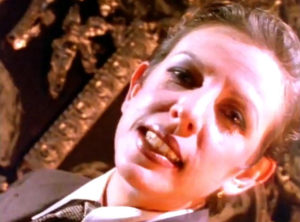
Albita-Rodríguez-No-se-parece-a-nada-Videoclip-Dirección-Ernesto-Fundora-Portal-Del-Vídeo-Clip-Cubano-10

Albita sings the theme song “La Mega Se Pega” for Mega TV, a Miami based TV station where she also hosts her own show “La Descarga con

Albita” (“Jam Session with Albita”). She had many hit singles.

In May of 2016 she performed in the play Carmen which played in the reimagined 1950s Cuba. Directed by Christopher Renshaw, Carmen la Cubana which played at the Théâtre du Châtelet in Paris.

(READ LAST ALBITA RODRÍGUEZ PERFORMANCES IN THE SPANISH SECTION)

Agencies/ Various/ Wiki/ Internet Photos/ YouTube/ Arnoldo Varona/ www.thecubanhistory.com
THE CUBAN HISTORY, HOLLYWOOD.


cuba-408869__340

logo

– LEGENDS and Traditions of Camagüey, the “Holy Sepulcher” (Santo Sepulcro).

download (7)LEYENDAS Y TRADICIONES DE CAMAGÜEY, EL “SANTO SEPULCRO”.

Como tradición la procesión del ‘Santo Sepulcro’ en la cubana ciudad de Camagüey, cada Semana Santa desde el siglo XVIII, deviene en un espectáculo de impresionante belleza y majestuosidad. A su paso, hace recordar la legendaria leyenda de Camagüey, la “Ciudad de las Iglesias”, apelativo conferido y muy difundido en Cuba por la cantidad de los templos de religión católica que posee la añeja villa.

‘El Santo Sepulcro’, obra del orfebre mexicano Don Juan Benítez, realizada por encargo de Don Manuel Agüero y Ortega, se fundió con 25 000 pesos en monedas de plata, rodeada de la leyenda que envuelve su origen. La reliquia constituye la mayor joya de plata pura, única en Cuba y que se exhibe en el templo católico de ‘Nuestra Señora de la Merced’ de la ciudad. La pieza, a la que se le suma el maravilloso tintineo de sus innumerables campanillas, está considerada una de las más valiosas de la América colonial hispana, según los historiadores.

FB_IMG_1492079113262 (1)

“El Sepulcro había sido dotado de unas campanillas de plata, para que, al ser llevado con un característico paso, lento y ondulante, acompañado por una banda de música con una marcha compuesta al efecto, produjera un delicado sonido. Para la mente popular, estas campanillas tenían un poder especial y podían hasta sanar enfermedades”.

TRADICIÓN Y LEYENDA.

Muchas son las historias que se cuentan alrededor del ‘Santo Sepulcro’, todas envueltas en la mística personalidad del acaudalado hacendado Don Manuel Agüero y Ortega.

download

En su libro Leyendas y tradiciones del Camagüey, el Dr.Roberto Méndez (Editorial Acana, 2003) refiere detalles que suponen originaron la confección del ‘Santo Sepulcro’ y otras piezas.

Estas leyendas son resumidas en la historia de el hijo mayor de Don Manuel, de igual nombre, este tenia relaciones con una bella mujer de apellido Moya, que por cuestiones todavía no del todo esclarecidas, se enfrasco en un duelo por cuestiones de celos, del que resultó muerto, sin revelar el apellido del asesino, el que luego lleno de remordimiento le confesó a su madre lo ocurrido, y esta a su vez, al protector.

download (5)

Don Manuel que se había hecho sacerdote en 1749; tiempo después del terrible suceso, destinó a la orden de La Merced la parte de la herencia del hijo asesinado para realizar en el convento un conjunto de obras de arte, entre estas el ‘Santo Sepulcro’, el que donó oficialmente a la iglesia el 9 de febrero de 1763, según consta en documento radicado en el Archivo Provincial de Historia de Camagüey.
Allí solo quedo el Santo Sepulcro como vestigio de aquel pasaje amargo.

El padre decidió entregarse a la paz divina encomendando su riqueza a perpetuar para siempre la terrible leyenda.

CubaSliderNew-1920x920

logo

FB_IMG_1492079113262LEGENDS AND TRADITIONS OF CAMAGÜEY, THE “SANTO SEPULCRO”.

As a tradition, the procession of the ‘Holy Sepulcher'(Santo Sepulcro) in the Cuban city of Camaguey, every Holy Week since the eighteenth century, becomes a show of impressive beauty and majesty. In its wake, it reminds us of the legendary legend of Camagüey, the “City of Churches”, an appellation conferred and very widespread in Cuba for the number of temples of Catholic religion that the old village has.

‘The Holy Sepulcher’, work of the Mexican goldsmith Don Juan Benítez, commissioned by Don Manuel Agüero y Ortega, was melted with 25,000 pesos in silver coins, surrounded by the legend that surrounds its origin. The relic is the largest pure silver jewel, unique in Cuba and displayed in the Catholic temple of ‘Nuestra Señora de la Merced’ in the city. The piece, to which is added the wonderful tinkling of its innumerable bells, is considered one of the most valuable in Hispanic colonial America, according to historians.

download (4)

“The Sepulcher had been endowed with some silver bells, so that, being carried with a characteristic step, slow and undulating, accompanied by a band of music with a march composed to the effect, it produced a delicate sound. For the popular mind, these bells had a special power and could even heal diseases. ”

TRADITION AND LEGEND.

Many are the stories told around the ‘Holy Sepulcher’, all wrapped in the mystical personality of the wealthy landowner Don Manuel Agüero y Ortega.

In his book Legends and traditions of Camagüey, Dr. Roberto Méndez (Editorial Acana, 2003) refers details that suppose originated the preparation of the ‘Holy Sepulcher’ and other pieces.

download (1)

These legends are summarized in the story of the eldest son of Don Manuel, of the same name, this had relations with a beautiful woman surnamed Moya, who for questions not yet fully clarified, was engaged in a duel on matters of jealousy, who was killed, without revealing the name of the murderer, who then full of remorse confessed to his mother what happened, and this in turn, the protector.

Don Manuel who had become a priest in 1749; After the terrible event, he assigned to the order of La Merced the part of the inheritance of the murdered son to make a set of works of art in the convent, among them the ‘Holy Sepulcher’, which he officially donated to the church on the 9th. February 1763, as recorded in a document filed in the Provincial History Archive of Camagüey.
Only the Holy Sepulcher remained there as a vestige of that bitter passage.

The father decided to surrender to divine peace entrusting his wealth to perpetuate forever the terrible legend.

Agencies/ RHC/ Guadalupe Yaujar/ Maite González/ Extractos/ Internet Photos/ Arnoldo Varona/ www.TheCubanHistory.com
THE CUBAN HISTORY, HOLLYWOOD.

cuba-ferries-2 (1)

logo

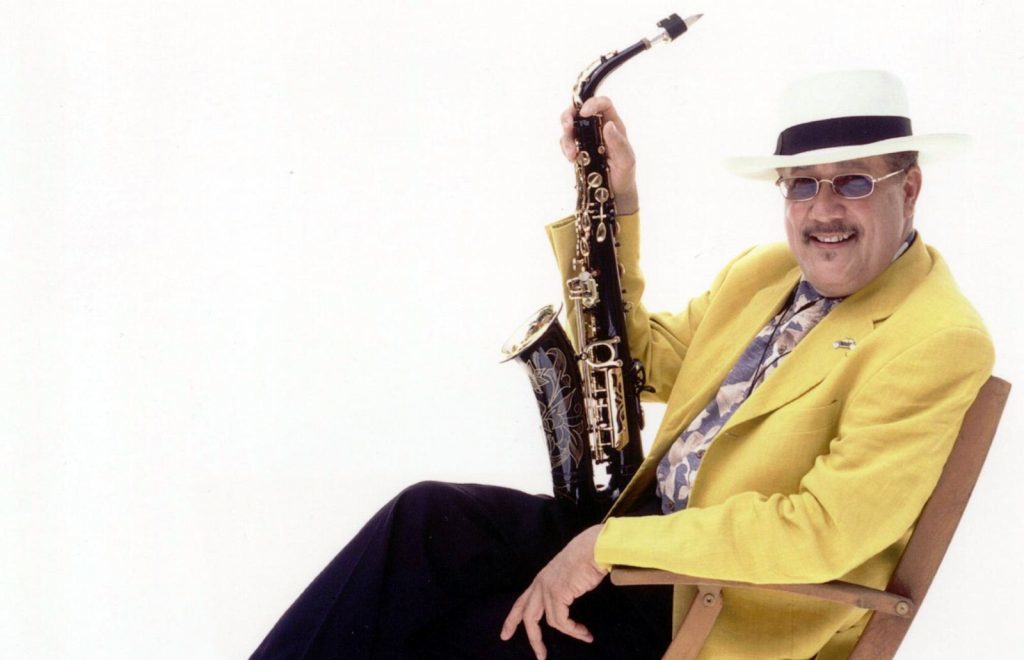
– A CUBAN Musical Glory, the Saxophonist Paquito D’Rivera. VIDEOS.

PaquitoDRivera-1024x660UNA GLORIA MUSICAL DE CUBA, EL SAXOFONISTA PAQUITO D’ RIVERA.

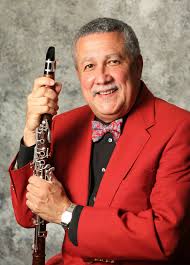
Paquito D’Rivera nació un 4 de Junio de 1948 en La Habana, Cuba y su carrera ha sido como saxofonista, clarinetista y saxofonista soprano.

Paquito fue un niño prodigio. Él comenzó a aprender música a la edad de 5 años con su padre Tito Rivera, un saxofonista clásico bien conocido y director de orquesta en Cuba. D’Rivera se crió en Cuba, jugando tanto en el saxofón y el clarinete y actuar con la Orquesta Sinfónica Nacional de Cuba a una edad temprana. Cuando tenía siete años, se convirtió en la artista más joven en aprobar un instrumento musical, cuando firmó con la compañía de música Selmer.

En 1980, D’Rivera no estaba satisfecho por las limitaciones impuestas a su música en Cuba durante muchos años, y siempre había querido venir a los Estados Unidos. A principios de 1981, mientras estaba de gira en España, buscó asilo en la Embajada de Estados Unidos, y dejó su tierra natal, su esposa y niño se quede atrás en busca de una vida mejor con la promesa de sacarlos. A su llegada a los Estados Unidos, D’Rivera encontró la ayuda de mucha gente para él y su familia. Su madre Maura y su hermana Rosario había salido de Cuba en 1968 y se había convertido en ciudadanos estadounidenses.

Muchas personas notables que se acercaron para ayudar a Paquito fueron Dizzy Gillespie, David Amram, Mario Bauza y Bruce Lundvall, quien le dio fecha de la primera grabación en solitario. D’Rivera ganó rápidamente el respeto entre los músicos de jazz americanos y fue introducido a la escena del jazz en algunos de los más prestigiosos clubes y salas de conciertos en Nueva York. Se convirtió en un fenómeno después del lanzamiento de sus primeros discos en solitario, Paquito Blowin dos (junio de 1981) y Mariel (julio de 1982).

A lo largo de su carrera en los Estados Unidos, D’Rivera’s álbumes han recibido críticas de la crítica y han llegado a la cima de las listas de jazz. Sus álbumes han mostrado una progresión que demuestra sus habilidades extraordinarias en el bebop, música clásica y la música latina / Caribe. D’experiencia Rivera’s trasciende géneros musicales como él es el único artista que nunca han ganado premios Grammy en las categorías de jazz clásico y latino.

D’Rivera también juega con el “cruce” de artistas como el Cuarteto Ying, Turtle Island String Quartet, Verano Marcos chelista, el pianista Alon Yavnai y Yo-Yo Ma. Ha actuado en salas como el Carnegie Hall y tocó con la Orquesta Sinfónica Nacional, Orquesta Sinfónica de Londres, London Philharmonic Orchestra, la Orquesta Filarmónica de la Florida, Bronx Arts Ensemble, Orquesta Sinfónica de Puerto Rico, YOA Orquesta de las Américas, Costa Rica, Orquesta Sinfónica de América Filarmónica Juvenil, y la Orquesta Sinfónica Simón Bolívar.

D’Rivera es un Artista en Residencia en el New Jersey Performing Arts Center y director artístico del Festival Internacional de Jazz en El Tambo en el Uruguay. También es miembro del Dúo Alon Yavnai-Paquito D’Rivera y el Trío de Jazz de Cámara.

También ha escrito una autobiografía titulada ‘Mi vida Sax’.

En 2005, D’Rivera escribió una carta criticando músico Carlos Santana por su decisión de llevar una camiseta con la imagen del Che Guevara en ella a los premios Oscar 2005, citando el papel de Guevara en la ejecución opositores en Cuba, incluyendo su propio primo.

D’Rivera fue un juez de la 5 ª y 8 ª entrega anual de Música Independiente de Apoyo a los artistas independientes. Hubo de ser condecorado por el presidente estadounidense George W. Bush, con la Medalla Nacional de las Artes 2005.

VIDA PERSONAL.

D’Rivera reside en North Bergen, New Jersey.

PREMIACIONES Y HONORES.
Últimos honores.

2007 Composer in Residence, Caramoor Center for Music and the Arts
2007 Fellowship Award for Music Composition, Guggenheim Foundation
2007 Living Jazz Legend Award, The Kennedy Center and The Catherine B. Reynolds Foundation Series for Artistic Excellence
2008 President’s Award, International Association for Jazz Educators
2012 Honorary Doctoral Degree, State University of New York at Old Westbury

PREMIOS GRAMMYS.

1979 Irakere, Best Latin Recording – 22nd Annual Grammy Awards
1996 Portraits of Cuba won Best Latin Jazz Performance – 39th Annual Grammy Awards[14]
2000 Tropicana Nights won Best Latin Jazz Album – 1st Annual Latin Grammy Awards
2001 Live at the Blue Note – won Best Latin Jazz Album – 2nd Annual Latin Grammy Awards
2003 Historia del Soldado won Best Classical Album – 4th Annual Latin Grammy Awards
2003 Brazilian Dreams won Best Latin Jazz Album – 4th Annual Latin Grammy Awards
2004 “Merengue” won Best Instrumental Composition – 47th Annual Grammy Awards
2008 Funk Tango won Best Latin Jazz Album – 50th Annual Grammy Awards[14]
2011 Panamericana Suite won Best Classical Contemporary Composition – 12th Annual Latin GRAMMY Awards
2011 Panamericana Suite won Best Latin Jazz Album – 12th Annual Latin Grammy Awards
2013 Song For Maura won Best Latin Jazz Album, Paquito D’Rivera with Trio Corrente, 56th Annual GRAMMY Awards[15]
2014 Song for Maura won Best Latin Jazz Album, Paquito D’Rivera with Trio Corrente, 15th Annual Latin GRAMMY Awards

https://youtu.be/nlGUdl5IkEI
PAQUITO Y CACHAO.

DISCOGRAFIA.
Últimas.

2000 Live at the Blue Note (Half Note) 51620
2001 Jazz Latino/A Collection of Latin Inspirations (Chesky) JD212
2001 Calle 54
2001 The Clarinetist (Universal) 160523
2001 The Clarinetist: Volume 1 (Peregrina) PM50221
2002 Big Band Time (Termidor Musikverlag & Timba) 59773-2
2002 Historia Del Soldado DD&R CB R014
2002 Brazilian Dreams (MCG) 1010
2002 The Best of Paquito D’Rivera (Legacy/Sony) SICP 5044
2002 The Commission Project (Sons of Sound Recorded Music) SSPCD009
2004 Riberas (Epsa) 0500-02
2005 The Jazz Chamber Trio (Chesky) JD293
2006 Música Para Los Amigos (Sony/BMG) 82876819032
2007 Funk Tango (Sunnyside) SSC4551
2008 Back in New York with Sebastian Schunke
2009 Quartier Latin (lky)
2009 Jazz Clazz (Timba)
2010 Panamericana Suite, (MCG Jazz)
2010 Tango Jazz, Live from Jazz at Lincoln Center (Paquito/Sunnyside)
2010 Paquito D’Rivera presents Alex Brown
2010 Terra Incognita, Imani Winds (E1 Music)
2012 Dia Y Medio a Day and a Half (OnMusic)
2013 Song for Maura (Sunnyside/Paquito)
2014 Jazz Meets the Classics (Sunnyside/Paquito)

cuba-408869__340

logo

download (1)A CUBAN MUSICAL GLORY, THE SAXOPHONIST PAQUITO D’RIVERA.

Paquito D’Rivera was born on June 4, 1948 in Havana, Cuba and his career has been as a saxophonist, clarinetist and soprano saxophonist.

Paquito was a child prodigy. He began to learn music at the age of 5 years with his father Tito Rivera, a well-known classical saxophonist and conductor in Cuba. D’Rivera was raised in Cuba, playing both the saxophone and the clarinet and performing with the National Symphony Orchestra of Cuba at an early age. When she was seven years old, she became the youngest artist to approve a musical instrument, when she signed with the music company Selmer.

In 1980, D’Rivera was not satisfied with the limitations imposed on his music in Cuba for many years, and he had always wanted to come to the United States. At the beginning of 1981, while on tour in Spain, he sought asylum in the US Embassy, ​​and left his homeland, his wife and child to stay behind in search of a better life with the promise of getting them out. Upon his arrival in the United States, D’Rivera found many people helping him and his family. His mother Maura and his sister Rosario had left Cuba in 1968 and had become US citizens.

Many notable people who came to help Paquito were Dizzy Gillespie, David Amram, Mario Bauza and Bruce Lundvall, who gave him the date of the first solo recording. D’Rivera quickly gained respect among American jazz musicians and was introduced to the jazz scene at some of the most prestigious clubs and concert halls in New York. It became a phenomenon after the release of his first solo albums, Paquito Blowin dos (June 1981) and Mariel (July 1982).

Throughout his career in the United States, D’Rivera’s albums have received criticism from critics and have reached the top of the jazz charts. His albums have shown a progression that demonstrates his extraordinary abilities in bebop, classical music and Latin / Caribbean music. D’Rivera’s experience transcends musical genres as he is the only artist who has never won Grammy awards in the classical and Latin jazz categories.

D’Rivera also plays with the “crossroads” of artists such as the Ying Quartet, Turtle Island String Quartet, Summer Marcos chelista, the pianist Alon Yavnai and Yo-Yo Ma. He has performed in venues such as Carnegie Hall and played with the Symphony Orchestra National, London Symphony Orchestra, London Philharmonic Orchestra, Florida Philharmonic Orchestra, Bronx Arts Ensemble, Puerto Rico Symphony Orchestra, YOA Orchestra of the Americas, Costa Rica, Youth Philharmonic Orchestra of America, and Simón Bolívar Symphony Orchestra .

D’Rivera is an Artist in Residence at the New Jersey Performing Arts Center and artistic director of the International Jazz Festival in El Tambo in Uruguay. He is also a member of the Alon Yavnai-Paquito D’Rivera Duo and the Chamber Jazz Trio.

He has also written an autobiography entitled ‘My Life Sax’.

MI0001883715

In 2005, D’Rivera wrote a letter criticizing musician Carlos Santana for his decision to wear a shirt with the image of Che Guevara on it to the 2005 Oscar Awards, citing the role of Guevara in the execution of opponents in Cuba, including his own cousin .

D’Rivera was a judge of the 5th and 8th annual Independent Music Support Awards for independent artists. He was decorated by US President George W. Bush with the 2005 National Medal of the Arts.

(READ HONORS AND PERFORMANCES OF PAQUITO D’RIVERA IN THE SPANISH SECTION).

Agencies/ Wiki/ Paquito D’R./ Internet Photos/ YouTube/ Arnoldo Varona/ www.TheCubanHistory.com
THE CUBAN HISTORY, HOLLYWOOD.

destinations-cuba-cruises-new-sailings

logo