SANTIAGO DE CUBA: Reseña de su “Festival del Pregón” Carnavalesco. VIDEOS.

images (2)SANTIAGO DE CUBA: RESEÑA DE SU “FESTIVAL DEL PREGÓN” CARNAVALESCO.

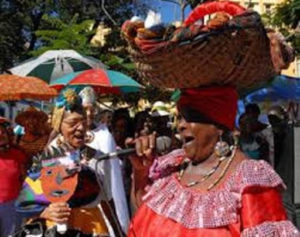
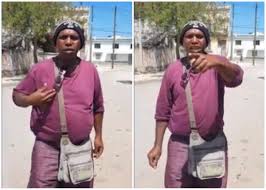
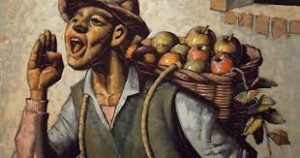
En Santiago de Cuba para la mitad del mes de Julio, este año no pudo celebrarse por la pandemia, las más céntricas calles de nuestra ciudad se convertierten en escenario del verso creativo para la promoción de mercancías, que es también patrimonio santiaguero, durante la celebración del llamado “Festival del Pregón”. Una atractiva propuesta que congrega a los más reconocidos pregoneros de la cabecera provincial, quienes con cestas y carretones cargados con los más disímiles productos, hacen derroche de la gracia de estilos diversos a lo largo de la Avenida Victoriano Garzón y por toda la ciudad.

RESEÑAS SOBRE EL PREGÓN Y EN QUE SE HA CONVERTIDO.

Una de las manifestaciones más populares dentro del carnaval santiaguero es el pregón. Deciamos algunos años atrás “El pregón es como el piropo, se acepta y se admira si aporta al gracejo popular; se rechaza si es agresivo o soez. El pregón no es privativo del carnaval, pero este jolgorio es su espacio predilecto, por eso entre las múltiples iniciativas del carnaval santiaguero, surgió la idea de realizar el Festival.

Las melodiosas voces de los pregoneros con sus anuncios imaginativos, verdaderas joyas del arte popular, de su capacidad de síntesis, de improvisación y gracia, llenaron de júbilo las calles de esta ciudad hecha de historias y de ritmos. Muchos curiosos ocuparon sus puestos para disfrutar de los anuncios de los pregoneros, quienes ofertan mercancías de todo tipo, aunque la intención esencial más que vender, es defender la práctica de una tradición popular añeja y auténtica”.

Los efectos del pregón son contagiosos; su autenticidad está probada. Poetas como Nicolás Guillen y Miguel Barnet, alabaron sus valores artísticos; y este último considera al pregón como un capítulo fundamental del folclor criollo. El pregón invadió la música y trascendió las fronteras nacionales, alimentó canciones que invitan a degustar las frutas del Caney, a consumir pasteles o un rico panqué; pero, su influencia capital se denomina: «El manisero», la mundialmente famosa canción-pregón de Moisés Simons.

El Festival del Pregón convirtió a Santiago en una fiesta, en un espacio saludable del verano. Pero: ¿qué sucede en la actualidad?.

Sucede, que se ha desarrollado una especie de anunciantes quienes gritan a voz en cuello, a cualquier hora y en cualquier sitio sus mercancías. Son pocos imaginativos y con sus alardes corrompen una tradición que nos enorgullece. Cuando se realice un nuevo festival ojalá ninguno de estos supuestos pregoneros participe, con soportarlos en el barrio es suficiente.

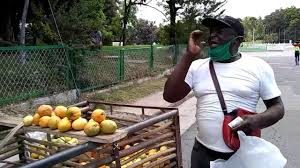
Hemos escuchado voces que se alegran de que este año no haya carnavales por la pandemia, para que no haya pregones. Es un criterio atendible, solo debemos reparar en un dato relevante. Ya dijimos que el pregón no se circunscribe al carnaval. En el barrio solíamos escuchar los cantos melodiosos de los vendedores de frutas – ahora la moda es el mango- de artesanías y hasta de periódicos. En estos vendedores la función del pregón más que vender consiste en darle al producto un valor adicional superior a su utilización práctica.

Al frente de la legión de los nuevos pregoneros, de los depredadores, están los vendedores de pan que ya ni pregoneros son porque han sustituido los cantos rítmicos con unos silbatos abominables que interrumpen la tranquilidad del barrio y erizan los oídos aún menos sensibles; después están los vendedores de viandas y vegetales no menos gritones, en este grupo solo los vendedores de frutas que repiten estribillos melodiosos conservan algunas de la virtudesdel género: al resto no puede considerárseles pregoneros, sería una falta de respeto para el pregón.
images (4)

Creo que lo que está en crisis más que el pregón es una forma de concebirlo que lo envilece o lo desnaturaliza y como sus practicantes no son pregoneros tenemos la esperanza de que en el próximo carnaval, si los vendedores del barrio no han acabado con nuestros oídos, podamos disfrutar de buenos pregones como los que improvisaba Berta la pregonera o simplemente de pregones. De modo que habrá que soportarlos en el barrio, pero no en el carnaval. Y si quieren ganarse el puesto tendrán que enmendar su estilo, solo le exigimos que sean auténticos, de lo contrariono podemos llamarle pregoneros sería una injusticia contra una manifestación auténtica de la cultura popular del país y particularmente de Santiago de Cuba.
unnamed (1)

logo (1)

images-2

berthapregones (1)SANTIAGO DE CUBA: REVIEW OF ITS “FESTIVAL DEL PREGÓN” CARNAVALESCO.

In Santiago de Cuba for the middle of the month of July, this year it could not be celebrated due to the pandemic, the most central streets of our city become the scene of the creative verse for the promotion of merchandise, which is also Santiago’s heritage, during the celebration of the so-called “Festival of the Proclamation”. An attractive proposal that brings together the most renowned town criers of the provincial capital, who with baskets and carts loaded with the most dissimilar products, make a waste of the grace of diverse styles along Victoriano Garzón Avenue and throughout the city.

REVIEWS ABOUT EL PREGON AND WHAT IT HAS BECOME.

One of the most popular manifestations within the Santiago carnival is the proclamation. We said a few years ago “The proclamation is like the compliment, it is accepted and admired if it contributes to the popular wit; it is rejected if it is aggressive or rude. The proclamation is not exclusive to the carnival, but this revelry is its favorite space, that is why among the many initiatives of the Santiago Carnival, the idea of ​​holding the festival arose.

The melodious voices of the town criers with their imaginative announcements, true jewels of popular art, their capacity for synthesis, improvisation and grace, filled the streets of this city made of stories and rhythms with joy. Many curious people took their places to enjoy the announcements of the town criers, who offer merchandise of all kinds, although the essential intention rather than selling, is to defend the practice of an old and authentic popular tradition ”.
download (3)

The effects of the proclamation are contagious; its authenticity is proven. Poets like Nicolás Guillen and Miguel Barnet praised his artistic values; and the latter considers the proclamation as a fundamental chapter of Creole folklore. The proclamation invaded music and transcended national borders, fueled songs that invite you to taste the Caney fruits, to consume cakes or a delicious pancake; but, its capital influence is called: “El manisero”, the world-famous song-proclamation of Moisés Simons.

The Proclamation Festival turned Santiago into a party, into a healthy summer space. But: what is happening today?

It happens that a kind of advertisers has developed who shout their merchandise at any time and anywhere. They are unimaginative and with their bragging, they corrupt a tradition that makes us proud. When a new festival is held, I hope none of these supposed town criers will participate, just supporting them in the neighborhood is enough.
download (2)

We have heard voices that are happy that this year there are no carnivals due to the pandemic so that there are no cries. It is an understandable criterion, we only have to repair a relevant data. We have already said that the proclamation is not limited to the carnival. In the neighborhood we used to listen to the melodious songs of the fruit vendors – now the fashion is mango – of handicrafts and even newspapers. In these sellers, the function of the proclamation rather than selling is to give the product an added value greater than its practical use.

At the forefront of the legion of the new town criers, the predators, are the bread sellers who are not even town criers anymore because they have replaced rhythmic songs with abominable whistles that interrupt the tranquility of the neighborhood and make even less sensitive ears prickle; then there are the vendors of viands and vegetables who are no less loud, in this group only the fruit vendors who repeat melodious refrains retain some of the virtues of the genre: the rest cannot be considered town criers, it would be a lack of respect for the proclamation.

download

I think that what is in crisis more than the proclamation is a way of conceiving it that debases or denatures it and since its practitioners are not town criers we have the hope that in the next carnival if the neighborhood vendors have not finished with our ears, we can enjoy good proclamations like the ones improvised by Berta la pregonera or simply proclamations. So they will have to be endured in the neighborhood, but not at the carnival. And if they want to win the position they will have to amend their style, we only demand that they are authentic, otherwise, we can call them town criers, it would be an injustice against an authentic manifestation of the popular culture of the country and particularly of Santiago de Cuba.

Agencies/ Wiki/ Radio Mambi/ Osmar Alvarez/ Internet Photos/ YouTube/ Arnoldo Varona/ www.TheCubanHistory.com
THE CUBAN HISTORY, HOLLYWOOD.
la-isla-de-cuba

logo (1)

plaza mayor

CUBA SUSPENDE la Entrada de sus Nacionales en su Territorio. Covid-19 en Cuba.

cuba-suspende-vuelos-humanitarios-800x445 (1)CUBA SUSPENDE LA ENTRADA DE SUS NACIONALES EN SU TERRITORIO. COVID-19 EN CUBA.

El pasado 18 de agosto, el consulado de Cuba en Madrid en su cuenta de facebook, confirmó que Cuba suspende la entrada de nacionales en vuelos humanitarios.

El Consulado de Cuba en Madrid, confirmó a través de un comentario de Facebook, la suspensión temporal de entrada a Cuba para sus nacionales, debido a la pandemia.

Cuando un usuario pregunto si podía abordar un vuelo con destino a la capital cubana a inicios de septiembre desde Madrid, el Consulado respondió que “están suspendidos los vuelos de traslado de pasajeros hacia Cuba, hasta nuevo aviso, por la compleja situación epidemiológica en la isla”.

El consulado comunicó que: «Cuando se apruebe algún vuelo, solo podrán retornar los residentes permanentes habituales en el territorio«.

Asimismo, aclaró que: «están suspendidos los vuelos de traslado de pasajeros hacia Cuba, hasta nuevo aviso«.

El ministro de Transporte, en julio, había dicho que: «mientras la capital no entre en la tercera fase, hay un grupo de medidas que no se pueden implementar, como el restablecimiento de los vuelos regulares”.

El Gobierno de la Isla suspendió los vuelos comerciales en marzo para frenar los contagios. Sin embargo, permitieron la entrada de algunos vuelos humanitarios, donde regresaron 7.000 nacionales y extranjeros.

Mientras tanto, El Ministerio de Salud Pública informó este jueves, que Cuba totaliza 3.806 casos de coronavirus, tras el hallazgo de 47 nuevos casos. Asimismo, reportaron que 6 pacientes permanecen en estado crítico; 15 graves, y la cifra de fallecidos se mantuvo en 92.

SE INFORMA SOBRE INVESTIGACIONES DEL COVID-19.

Entretanto, Cuba inicia pruebas clínicas de la vacuna, esta semana. Por lo tanto, esperan resultados favorables para febrero del 2021.

Con el anuncio del desarrollo de una posible vacuna, muchas personas cuestionan cómo se alcanzaron avances en tan corto tiempo, con un virus que no se conoce bien.

Cientifica Cubana Conchita Campa.

Cientifica Cubana Conchita Campa.

Por lo tanto, el gobierno transmitió un documental señalando que Cuba consiguió tal rapidez al desarrollar la vacuna contra el coronavirus gracias a estudios que efectuó Conchita Campa, quien se informó, logró importantes avances respecto al desarrollo de un antídoto que ayudaría a combatir el COVID-19 al que llamaron “Soberana01”.

Como resultado, países como China y Rusia se han mostrado interesados en los avances de Cuba en materia de medicina, e incluso trabajan con los productos antillanos. Un ejemplo de ello es que China decidió implementar el Interferón de Cuba para tratar el COVID-19, mientras que surgía una vacuna.

Actualmente, cuando Rusia ya presentó una vacuna del coronavirus, tiene su mirada puesta en la industria biotecnológica Cuba. Si finalmente se concretan acuerdos entre ambas naciones, se espera que para finales de este año la vacuna rusa se produzca en la Isla.

Ciudades-de-Cuba.Matanzas

logo

unnamed

CUBA HOLD THE ENTRY OF ITS NATIONALS INTO ITS TERRITORY. COVID-19 IN CUBA.

On August 18, the Cuban consulate in Madrid confirmed in its Facebook account that Cuba is suspending the entry of nationals on humanitarian flights.

The Cuban Consulate in Madrid confirmed through a Facebook comment the temporary suspension of entry to Cuba for its nationals, due to the pandemic.

cuba-suspende-vuelos-humanitarios-800x445 (1)

When a user asked if he could board a flight to the Cuban capital at the beginning of September from Madrid, the Consulate responded that “passenger flights to Cuba are suspended, until further notice, due to the complex epidemiological situation on the island. ”.

The consulate reported that: “When a flight is approved, only permanent residents in the territory may return.”

He also clarified that: “passenger transfer flights to Cuba are suspended, until further notice”.

The Transport Minister, in July, had said that: “while the capital does not enter the third phase, there is a group of measures that cannot be implemented, such as the re-establishment of regular flights.”

The Government of the Island suspended commercial flights in March to curb infections. However, they allowed the entry of some humanitarian flights, where 7,000 nationals and foreigners returned.

Meanwhile, the Ministry of Public Health reported this Thursday that Cuba totals 3,806 cases of coronavirus, after the discovery of 47 new cases. Likewise, they reported that 6 patients remain in critical condition; 15 serious, and the death toll remained at 92.

INFORMED ABOUT COVID-19 INVESTIGATIONS.

Meanwhile, Cuba begins clinical trials of the vaccine this week. Therefore, they expect favorable results for February 2021.

With the announcement of the development of a possible vaccine, many people question how progress was made in such a short time, with a virus that is not well understood.

Cuban scientist Conchita Campa.

Cuban scientist Conchita Campa.

Therefore, the government aired a documentary stating that Cuba achieved such rapidity in developing the coronavirus vaccine thanks to studies carried out by Conchita Campa, who reportedly made important progress regarding the development of an antidote that would help combat COVID- 19 which they called “Soberana01”.

As a result, countries like China and Russia have shown interest in Cuba’s advances in medicine, and even work with Antillean products. An example of this is that China decided to implement the Cuban Interferon to treat COVID-19, while a vaccine was emerging.

Currently, when Russia has already presented a coronavirus vaccine, it has its sights set on the biotechnology industry in Cuba. If agreements between the two nations are finally concluded, it is expected that by the end of this year the Russian vaccine will be produced on the island.

Agencies/ Rev.DimeCuba/ Directorio Cubano/ Internet Photos/ Arnoldo Varona/ www.TheCubanHistory.com
THE CUBAN HISTORY, HOLLYWOOD.

playas-de-varadero-cuba

logo

plaza mayor

EL POLIFACÉTICO Actor German Pinelli, Cantante, Locutor, Personalidad de la TV. VIDEOS.

images (6)EL POLIFACETICO ACTOR GERMAN PINELLI, CANTANTE, LOCUTOR, PERSONALIDAD DE TV.

German Pinelli cuyo verdadero nombre era Gregorio José Germán Piniella Vázquez de Mella nació en La Habana el 15 de diciembre de 1907. Su padre era comerciante en el alto comercio habanero sin llegar a ser burgués, y su madre era una mujer de vasta cultura. Cambió su nombre a German Pinelli para hacerlo más comercial para la radio y luego para la televisión.

Su primera incursión en los medios de comunicación tuvo lugar cuando tenía apenas 14 años, el 28 de octubre de 1922. El entonces alumno del prestigioso Colegio de Belén cantaba a través de las ondas radiales, menos de cuatro meses después de haber realizado la primera transmisión radial en Cuba. Esta transmisión de la PWX de la Telefónica Cubana se realizó desde el Teatro Campoamor de la capital, en lo que se considera el primer control remoto musical de la planta.

Se alejó del arte para matricularse en Derecho en la Universidad de La Habana, pero, en 1925, abandonó la carrera para seguir a su hermana Soledad en una gira por toda la isla, como parte de la compañía teatral en la que actuaba, cantaba y él. declamado. Anteriormente, había ganado una beca para estudiar “bel canto” en Italia, pero nunca recibió los fondos.

A pesar de no haber completado la educación superior, de forma autodidacta, aprendió varios idiomas (inglés, francés e italiano) y varios instrumentos musicales (guitarra, piano, sierra musical). Formó parte de la compañía de zarzuelas del Teatro Payret, con la que interpretó obras como El gato montés. Pinelli vio frustrado su trabajo como cantante lírico tras sufrir daños en el sistema respiratorio. Sin embargo, a lo largo de su carrera artística, aprovechó con frecuencia su formación musical.

A principios de la década de 1930 trabajó en diversas emisoras de radio de la capital; entre ellos, La Mil Diez, CMCB ubicada en el Edificio “La Metropolitana”, en La Habana Vieja, el CMBN y el CMK. Se unió a CMQ en 1933 como editor de noticias del National Newsletter y dos años después ya era editor y jefe de cuatro noticieros de la poderosa planta.

Su debut como locutor fue en un programa de medianoche dedicado a la transmisión de música grabada. Para actuar como locutor tuvo que enfrentarse al criterio contrario de Goar Mestre, dueño del CMQ, quien, en un principio, dudó de su aptitud para la locución. Años después, en diciembre de 1937, se estrenó como presentador del popular espacio La Corte Suprema del Arte. De este programa de participación surgieron destacadas figuras del mundo del espectáculo como la estadounidense Vedette, Rosita Fornés. Con los ganadores del concurso, conocidos como CMQ Rising Stars, Pinelli dirigió y presentó múltiples programas que se presentaron en los cines de casi todo el país.

Durante el año 1942, escribe una sección del periódico ‘Avance’, titulada ‘CMQ inside’, mientras trabajaba para el departamento literario de la poderosa emisora ​​de radio. En su carrera como locutor destacan algunos trabajos, como la retransmisión habitual del programa del líder del Partido Ortodoxo, Eduardo Chibás, que se emitió todos los domingos a las 20 horas, en las ondas de la CMQ, desde febrero de 1944 a Agosto de 1951. Pinelli no hizo el anuncio el día en que Eduardo Chibás se suicidó en el stand de CMQ, pero tuvo un papel protagónico en la transmisión de la noticia relacionada con este hecho.

Además, se recuerda su narración en vivo de la masacre de Orfila el 15 de septiembre de 1947. Otros momentos históricos contaron con la voz del insigne locutor: la inauguración del edificio Radiocentro, en marzo de 1948 y, tras el triunfo revolucionario, algunas marchas patrióticas y el entierro de las víctimas del sabotaje a vapor de La Coubre.

El 18 de diciembre de 1950, cuando se hizo la programación de la segunda televisión cubana (CMQ TV, Canal 6), Pinelli sí se impuso en su talento para crear un nuevo tipo en la conducción de los anuncios televisivos. El día de la inauguración de la planta, con la pérdida del guión y desafiando la desconfianza de Goar Mestre, Pinelli fue llamado a improvisar y llenar el espectáculo. A partir de ese momento, su labor como comunicador se consolidó con la aprobación del público.

La estación de televisión le ofreció la oportunidad de actuar en otros géneros y roles. Como animador hizo ‘El Show del Mediodia’ (1951) y, junto a José Antonio Brito Cepero, “Todos hacen de Todo” (1951-1960). El narrador fue ‘Muñequitos’ (1952), ‘Zenith y Norge Alphabet’ (1953).

Durante muchos años inmortalizó a su personaje, Éufrates del Valle en el programa humorístico ‘San Nicolás del Peladero’, personaje que fue llevado al cine por Tomás Gutiérrez Alea en la película ‘Supervivientes’.

Después de 1959, protagonizó muchas áreas comunes de la televisión y el mundo del espectáculo. Entre sus memorables, se encuentra el personaje de Éufrates del Valle en San Nicolás del Peladero, programa de modales que mantuvo altos índices de aprobación durante 20 años (entre 1960 y 1980). Durante ese tiempo compartió pantalla con muchas de las grandes figuras de la radio, la televisión, el teatro y el cine cubanos. Entre ellos se pueden mencionar Enrique Santiesteban, María de Los Ángeles Santana y Enrique Arredondo.

images (7)

En una anécdota sobre el Che Guevara, luego del triunfo de la revolución, cuando Pinelli se presentó al argentino y lo llamó “Che” este le contestará “Che para mis amigos, para ti Ernesto Guevara”, el hombre (Che) era arrogante y irritante.

Durante su vida, recibió muchos honores tanto de la comunidad cultural como del gobierno. Recibió numerosos premios nacionales y fue uno de los pocos locutores latinoamericanos que recibió dos veces el Wave Award, un premio otorgado a los mejores locutores en español en reconocimiento a su trabajo.

VIDA PERSONAL.

Estuvo casado tres veces. Su hermana fue la actriz cubana Sol Pinelli y su hijo es Tony Pinelli, el galardonado compositor, cantante y erudito musical cubano. Los hijos de Tony son el alemán David Pinelli (nacido el 24 de septiembre de 1973) y Ari A. Pinelli (nacido el 9 de junio de 1976), quienes junto con la esposa de German David, Ana Paez (nacida el 9 de enero de 1966) son miembros del grupo musical cubano Los Tres de la Habana.

Germán Pinelli murió en La Habana el 20 de noviembre de 1995, a los 88 años de edad. Está enterrado en el Cementerio de Colón, La Habana, Cuba.

unnamed (5)

logo

unnamed

4THE MULTIFACETED ACTOR GERMAN PINELLI, SINGER, ANNOUNCER, TV PERSONALITY.

German Pinelli full name Gregorio José Germán Piniella Vázquez de Mella, was born in Havana on December 15, 1907. His father was a merchant in the high trade of Havana without becoming a bourgeois, and his mother was a woman of vast culture. He changed his name to German Pinelli in order to make it more commercial for radio and later television.

His first foray into the mass media took place when he was just 14 years old, on October 28, 1922. The then student of the prestigious Colegio de Belén sang through the radio waves, less than four months after having performed the first radio broadcast in Cuba. This transmission of the PWX of the Cuban Telephone Company took place from the Campoamor Theater in the capital, in what is considered the first musical remote control of the plant.

She moved away from art to enroll in Law at the University of Havana, but, in 1925, she abandoned her degree to follow her sister Soledad on a tour throughout the island, as part of the theatrical company in which she acted, sang and he declaimed. Previously, he had won a scholarship to study “bel canto” in Italy but never received the funds.

download (7)

Despite not having completed higher education, in a self-taught way, he learned several languages ​​(English, French and Italian) and several musical instruments (guitar, piano, musical saw). He was part of the zarzuelas company of the Payret Theater, with which he performed works such as The Wildcat. Pinelli saw his work as a lyrical singer frustrated after suffering damage to the respiratory system. However, throughout his artistic career, he frequently exploited his musical education.

At the beginning of the 1930s, he worked in various radio stations in the capital; among them, La Mil Diez, CMCB located in the “La Metropolitana” Building, in Old Havana, the CMBN and the CMK. He joined CMQ in 1933 as a news editor for the National Newsletter and two years later he was already editor and chief of four newscasts for the powerful plant.

His debut as an announcer was on a midnight show dedicated to broadcasting recorded music. To perform as an announcer he had to face the opposite criteria of Goar Mestre, owner of the CMQ, who, at first, doubted his aptitude for voiceover. Years later, in December 1937, he premiered as host of the popular space La Corte Suprema del Arte. From this participation program, prominent figures from the entertainment world emerged such as America’s Vedette, Rosita Fornés. With the contest’s winners, known as the CMQ Rising Stars, Pinelli directed and hosted multiple shows that were presented in theaters nearly across the country.

During the year 1942, he wrote a section of the newspaper ‘Avance’, titled ‘CMQ inside’, while doing work for the literary department of the powerful radio station. In his career as an announcer, some works stand out, such as the usual broadcast of the program of the leader of the Orthodox Party, Eduardo Chibás, which aired every Sunday at 8 p.m., on the airwaves of the CMQ, from February 1944 to August 1951. Pinelli did not make the announcement the day Eduardo Chibás shot himself in the CMQ booth, but he played a leading role in the transmission of the news related to this event.

download (8)

In addition, his live narration of the Orfila massacre on September 15, 1947, is remembered. Other historical moments counted on the voice of the distinguished announcer: the inauguration of the Radiocentro building, in March 1948 and, after the revolutionary triumph, some patriotic marches and the burial of the victims of the La Coubre steam sabotage.

On December 18, 1950, when did the programming of the second Cuban television (CMQ TV, Channel 6), Pinelli did prevail in his talent to create a new type in the conduct of TV spots. The opening day of the plant, with the loss of the script and challenging the distrust of Goar Mestre, Pinelli was called to improvise and fill the show. From that moment, his work as a communicator was consolidated with public approval.

The television station offered him the chance to perform in other genres and roles. As an animator did ‘El Show del Mediodia’ (1951) and, along with Jose Antonio Brito Cepero, “Todos hacen de Todo” (1951-1960). The narrator was ‘Muñequitos’ (1952), ‘Zenith, and Norge Alphabet’ (1953).

For many years he immortalized his character, Euphrates del Valle in the humorous Program ‘San Nicolas del Peladero”. This character was made into a film by Tomas Gutierrez Alea in the movie ‘Survivors’.

After 1959, he starred in many common areas of television and show business. Among her memorable, is the character of Euphrates del Valle en San Nicolas del Peladero, manners program that maintained high approval ratings over 20 years (between the 1960 and 1980). During that time shared the screen with many of the great figures of radio, television, theater, and film Cubans. Among them may be mentioned Enrique Santiesteban, Maria de Los Angeles Santana, and Enrique Arredondo.

download (9)

In an anecdote about Che Guevara, after the triumph of the revolution, when Pinelli was presented to the Argentine and called him “Che” this will answer ” Che for my friends, for you Ernesto Guevara”, the man (Che) was arrogant and irritating.

During his lifetime, he received many honors both from the cultural community as well as from the government. He received numerous national awards and was one of the few Latin American broadcasters who received twice the Wave Award, a prize awarded to the best Spanish-language broadcasters in recognition of their work.

PERSONAL LIFE.

He was married three times. His sister was the Cuban actress Sol Pinelli and his son is Tony Pinelli, the award-winning Cuban composer, singer, and musical scholar. Tony’s sons are German David Pinelli (born September 24, 1973) and Ari A. Pinelli (born June 9, 1976), who along with German David’s wife, Ana Paez (born January 9, 1966) are members of the Cuban musical group Los Tres de la Habana.

German Pinelli died in Havana on November 20, 1995, at 88 years of age. He is buried in the Colon Cemetery, Havana, Cuba.

Agencies/ Wiki/ Various/ Internet Photos/ YouTube/ Arnoldo Varona/ www.TheCubanHistory.com
THE CUBAN HISTORY, HOLLYWOOD.

playas-de-varadero-cuba

logo-1-10 (6)

Ciudades-de-Cuba.Matanzas