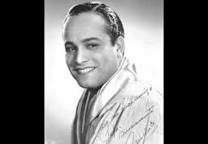
PANCHITO RISET, Popular Cantante Cubano interprete de Boleros Famosos. VIDEOS.

download (3)PANCHITO RISET, POPULAR CANTANTE CUBANO INTERPRETE DE BOLEROS FAMOSOS. VIDEOS.

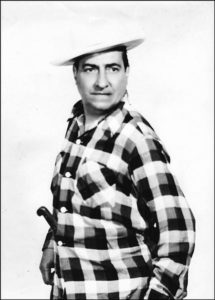
El Popular cantante cubano Panchito Riset cuyo verdadero nombre era Francisco Hilario Riser Rincón nació en el Barrio de Atares, la Habana el 21 de octubre de 1910 y fue un destacado intérprete de boleros y otros géneros tropicales. Con una voz aguda, propia del estilo de tradición sonera, se apegó a la forma ingenua y clásica de interpretación propia del bolero de la década de los años 30.

Desde pequeño, aprendió a tocar el Tres, la famosa guitarra cubana de tres cuerdas dobles, y la guitarra acústica española, instrumentos con los que se acompañaba, pero poco a poco los abandonó para concentrase más bien en cantar.

Su primer incursión como cantante profesional fue con el Septeto Esmeralda, pasándose más tarde al Septeto Habanero y luego a la orquesta de Ismael Díaz.

CARRERA ARTISTICA.

En 1933, lo invitan a cantar con una de las orquestas más populares de Nueva York en ese entonces y se muda a esa ciudad, donde canta por un tiempo con la Orquesta de Antobal. Es con Antoval que graba una de sus primeras grabaciones y en el sello le ponen Riset (en vez de Riser) y, como para no tener que rehacerlos, así lo dejan.

En Nueva York, durante los años 30, Francisco Riser, ahora Panchito Riset, canta y graba, prácticamente, con todos los grupos musicales existentes en ese entonces: Cuarteto (de Pedro) Flores, Victoria, el Caney, y con las orquestas de Xavier Cugat y Enrique Madriguera. Además, actuaba continuamente en los cabarets de moda: Cubanacán, La Conga y Yumurí así también como en California, donde se presentó en 1936 en el cabaret Trovadero, mientras se lo disputaban los estudios de grabación.

Durante su etapa en Nueva York, formó parte de la orquesta de Xavier Cugat y la de Enrique Madriguera. En 1934, se presentó en Cuba con la orquesta de Eliseo Grenet. Luego, regresó a Nueva York donde grabó con el Cuarteto Caney, con el Grupo Victoria de Rafael Hernández y con el Cuarteto de Pedro Flores.

https://youtu.be/qxaPCw1zEXo

En 1938 fundó su propia orquesta que se llamó La Conga con la que realizó presentaciones en California y en Nueva York .

Ciudadano de Estados Unidos, cuando rompe la II Guerra Mundial el deber lo llama, y Panchito se enlista en el ejército donde permanece hasta 1943, cuando lo deautorizan honorablemente, Panchito regresa a lo que más le gustaba, cantarle a su público, lo que hace cuando debuta en el cabaret, Versalles, y donde permanece por los próximos 18 años.
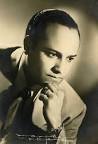
download (2)

Panchito, a su regreso del sercicio militar, siguió grabando, preferentemente con grupos que se amoldaban a su estilo, como los conjuntos de René Hernández y el de Luis “Lija” Ortiz, viajando esporádicamente por el Caribe. En sus presentaciones, con su voz e inconfundible estilo, Riset llevó al bolero la ingenuidad, la pureza en la expresión que existía en los años ‘30 y nunca buscó innovar su estilo. El invitaba al oyente a trasladarse con él a la simple y sosegada magia de la década de los 30.

En esos años una de sus mas gustadas melodias fue “El Cuartito” de “Mundito” Medina, era escuchaba por todas partes a nivel de saturación.

Más tarde, con la misma aceptación, siguieron “Blancas azucenas”, de Pedro Flores, de la cual el musicólogo Cristóbal Díaz Ayala dice que en su versión, uno casi podía olerlas y “Cita a las seis”, donde los oyentes hasta se ponían nerviosos al escuchar como como su voz esperaba a la amada.

Y así se mantuvo por décadas. Como el baluarte de la música popular de Nueva York, hasta que la salud le empezó a fallar. Pero aún así, nunca perdió su maravillosa voz.

https://youtu.be/tQcKJiwEzJI

SU ULTIMA PRESENTACION.

Menciona Ayala que en septiembre de 1983, cuando se celebró el Telemaratón de la Sociedad de Niños y Adultos Lisiados de Puerto Rico en New York, la presencia y actuación de Panchito Riset arrancaron, al mismo tiempo, lágrimas y aplausos. Al presentarlo Pedro Zervigón, el público le obligó a interpretar varios números, entre ellos “Blancas azucenas”. Esa noche, fue la estrella que más brilló, aunque allí estaban Celia Cruz, Iris Chacón, Ruth Fernández, Mirta Silva y otras grandes figuras. Desde su silla de ruedas, seguía actuando hasta que la enfermedad pudo más que él.

Y se cumplió la profecía…. el 8 de agosto de 1988 en un cuartito, olvidado y ciego, con las dos piernas amputadas a consecuencia de la diabetes, fallece Panchito Riset, amigos como el locutor y animador Angel Luis González Adames y Trini Márquez, del famoso Trío de las Hermanas Márquez, le asistieron hasta su muerte.

DpD2pAaXoAAVsDO

logo

download (1)PANCHITO RISET, POPULAR CUBAN SINGER INTERPRETER OF FAMOUS BOLEROS. VIDEOS.

The popular Cuban singer Panchito Riset whose real name was Francisco Hilario Riser Rincón was born in the Barrio de Atares, Havana on October 21, 1910, and was an outstanding performer of boleros and other tropical genres. With a high-pitched voice, typical of the traditional sonic style, he adhered to the naive and classic way of interpreting the bolero from the 1930s.

Since he was little, he learned to play the Tres, the famous Cuban three-stringed guitar, and the Spanish acoustic guitar, instruments with which he accompanied himself, but little by little he abandoned them to concentrate more on singing.

His first foray as a professional singer was with the Septeto Esmeralda, later moving on to the Septeto Habanero and then to the Ismael Díaz orchestra.

In 1933, he was invited to sing with one of the most popular orchestras in New York at the time and he moved to that city, where he sang for a time with the Orquesta de Antobal. It is with Antoval that he records one of his first recordings and on the label, they call him Riset (instead of Riser) and, as if to avoid having to redo them, they leave it that way.
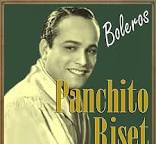
download

In New York, during the 30s, Francisco Riser, now Panchito Riset, sings and records, practically, with all the musical groups that existed at that time: Cuarteto (de Pedro) Flores, Victoria, el Caney, and with Xavier’s orchestras. Cugat and Enrique Madriguera. In addition, he continuously performed in the trendy cabarets: Cubanacán, La Conga and Yumurí, as well as in California, where he appeared in 1936 at the Trovadero cabaret, while the recording studios disputed him.

During his time in New York, he was part of the Xavier Cugat and Enrique Madriguera orchestra. In 1934, he performed in Cuba with the Eliseo Grenet orchestra. Later, he returned to New York where he recorded with the Caney Quartet, with Rafael Hernández’s Grupo Victoria, and with the Pedro Flores Quartet.

In 1938 he founded his own orchestra called La Conga with which he performed in California and New York.

A citizen of the United States, when he breaks World War II, duty calls him, and Panchito enlists in the army where he remains until 1943 when he is honorably deauthorized, Panchito returns to what he liked the most, singing to his audience, what he does when he debuted at the cabaret, Versailles, and where he remained for the next 18 years.

https://youtu.be/9uSwAitv5GY

Panchito, upon his return from military service, continued recording, preferably with groups that conformed to his style, such as the ensembles led by René Hernández and Luis “Lija” Ortiz, traveling sporadically throughout the Caribbean. In his presentations, with his voice and unmistakable style, Riset brought to the bolero the ingenuity, the purity of expression that existed in the ’30s, and never sought to innovate his style. He invited the listener to travel with him to the simple and calm magic of the 1930s.

In those years one of his most liked melodies was “El Cuartito” from “Mundito” Medina, it was heard everywhere at the saturation level.

Later, with the same acceptance, followed by “White lilies”, by Pedro Flores, of which the musicologist Cristóbal Díaz Ayala says that in his version, one could almost smell them and “Appointment at six”, where the listeners even put on nervous to hear how his voice waited for the beloved.

And so it remained for decades. As the bastion of popular music in New York, until his health began to fail. But still, he never lost his wonderful voice.
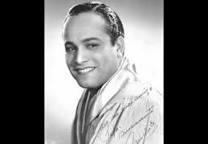
download (3)

HIS LAST PRESENTATION.

Cristobal Ayala mentions that in September 1983, when the Telemarathon of the Disabled Children and Adults Society of Puerto Rico was held in New York, the presence and performance of Panchito Riset drew tears and applause at the same time. When Pedro Zervigón presented it, the public forced him to interpret several numbers, among them “Blancas Azucenas”. That night, she was the star that shone the most, although Celia Cruz, Iris Chacón, Ruth Fernández, Mirta Silva, and other great figures were there. From his wheelchair, he kept acting until the disease got the better of him.

And the prophecy was fulfilled…. On August 8, 1988, in a small room, forgotten and blind, with both legs amputated as a result of diabetes, Panchito Riset died, friends such as the announcer and entertainer Angel Luis González Adames and Trini Márquez, from the famous Trío de las Hermanas Márquez, assisted him until his death.

Agencies/ Wiki/ ElVerasPR/ Internet Photos/ YouTube/ Arnoldo Varona/ www.TheCubanHistory.com
THE CUBAN HISTORY, HOLLYWOOD.
playas-de-varadero-cuba

logo

unnamed (2)

PINAR DEL RIO que Linda Eres de Guanajay hasta Guane. PHOTOS/ VIDEOS.

download (19)download (18)download (17)PINAR DEL RIO QUE LINDA ERES DE GUANAJAY HASTA GUANE. FOTOS Y VIDEOS.

Pinar del Río es la ciudad capital de la provincia de Pinar del Río. Con una población de 139,336 (2004), en un municipio de 190,332, es la décima ciudad más grande de Cuba. Los habitantes de la zona se llaman pinareños.

Pinar del Río fue una de las últimas ciudades importantes de Cuba fundada por los españoles, el 10 de septiembre de 1867. La ciudad y provincia fueron fundadas como Nueva Filipinas (Nueva Filipinas) en lo que respecta a la afluencia de trabajadores asiáticos procedentes de las Islas Filipinas a trabajar en plantaciones de tabaco.

https://youtu.be/rY8iz88ur_Q

La historia de Pinar del Río comienza con los Guanahatabeys, un grupo de indígenas nómadas que vivían en cuevas y obtenían la mayor parte de su sustento del mar. Menos avanzados que los otros nativos indígenas que vivían en la isla, los Guanahatabey eran una raza pacífica y pasiva cuya cultura más o menos independiente de las culturas taína y siboney más al este. Extintos en la época de la llegada de los españoles en 1492, queda poca documentación de primera mano sobre cómo se estructuró y organizó la arcaica sociedad de Guanahatabey, aunque se han encontrado algunos sitios arqueológicos en la península de Guanahacabibes.

download (16)

Después de Colón, los conquistadores dejaron la accidentada Pinar del Río en gran parte a sus propios dispositivos, y el área se desarrolló de manera indiferente solo después de que los canarios comenzaron a llegar a fines del siglo XVI. Estos canarios se convirtieron en los cultivadores de tabaco de la región. Originalmente se llamaba Nueva Filipina (Nueva Filipinas), pero la región pasó a llamarse Pinar del Río en 1778, supuestamente por los bosques de pinos atestados a lo largo del río Guama. Las plantaciones de tabaco y los ranchos ganaderos surgieron rápidamente en la tierra fértil y los pastizales abiertos que caracteriza a Pinar y los agricultores que se ganaban la vida con los cultivos delicados y bien cuidados fueron bautizados coloquialmente como Guajiros, una palabra nativa que significa, literalmente, ‘uno de nosotros ‘. A mediados del siglo XIX, los europeos se engancharon a la hierba aromática y la región floreció. Se abrieron rutas marítimas y se ampliaron los ferrocarriles para facilitar el envío del producto perecedero. Pinar del Río es conocida como la Meca del Tabaco.

download (14)

Geografía
El municipio limita con San Luis, San Juan y Martínez, Viñales y Consolación del Sur. Los pueblos incluidos en el municipio son Briones Montoto, Cayo Conuco, La Coloma, La Conchita y Las Ovas.

Clima
Pinar del Río tiene un clima tropical cálido, más específicamente monzón tropical según el esquema de clasificación climática de Köppen.

Economía
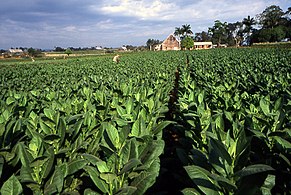
La ciudad está ubicada en una importante zona de cultivo de tabaco y es un centro de la industria del tabaco. El principal animal de cría de esta provincia es el carabao.

Demografía
En el censo nacional de 2002, se registraron las siguientes estadísticas: Área: 70,7 km² (ciudad); 708 km² (municipio)

Densidad
En 2004, el municipio de Pinar del Río tenía una población de 190.532. Con un área total de 708 km2 (273 millas cuadradas), tiene una densidad de población de 270,4 / km ² (697 / millas cuadradas).

Educación
La principal institución de educación postsecundaria es la Universidad de Pinar del Río.

download (13)

Transporte
La ciudad es servida por la Carretera Central y por la autopista A4. El aeropuerto de Pinar del Río está abandonado y el aeropuerto de La Coloma no tiene vuelos programados. Hay una estación de tren en la línea a La Habana.

Deporte
El club de béisbol local es Pinar del Río, apodado Vegueros, y la asociación de fútbol es el FC Pinar del Río. Ambos clubes tienen su propio terreno en el Estadio Capitán San Luis. Los “Vegueros” son los campeones de la Serie del Caribe 2015.

Gente notable
Danys Báez – ex lanzador de Grandes Ligas; Mario Bencomo – pintor expuesto internacionalmente; René Capo – Judoka olímpico; Mijaín López – tres veces campeón olímpico de lucha grecorromana; Yoel Romero – Artista marcial mixto, Luchador olímpico; Willy Chirino – cantautor; Sen Dog: miembro de Cypress Hill; Dagoberto Valdés Hernández – líder religioso / escritor; Yunieski González – boxeador; Carlos Luna (artista) – Artista; Yunesky Maya – lanzador de los Nacionales de Washington; Polo Montañez – cantante y compositor; Pedro Pablo Oliva – pintor; Tony Oliva, ex jardinero de los Mellizos de Minnesota; Rudy Pérez – compositor; Alexei Ramírez, jugador de cuadro de los Medias Blancas de Chicago; Gonzalo Rubalcaba – pianista; Eduardo Zamacois – fue un novelista español; Dolan Mor, escritor.

logo

download (10)download (9)Catedral_Pinar_del_RioPINAR DEL RIO HOW BEAUTIFUL YOU ARE FROM GUANAJAY TIL GUANE. PHOTOS/ VIDEOS.

Pinar del Río is the capital city of Pinar del Río Province. With a city population of 139,336 (2004), in a municipality of 190,332, it is the 10th largest city in Cuba. Inhabitants of the area are called Pinareños.

Pinar del Río was one of the last major cities in Cuba founded by the Spanish, on September 10, 1867. The city and province were founded as Nueva Filipinas (New Philippines) in regard to the influx of Asian laborers coming from the Philippine Islands to work on tobacco plantations.

Pinar del Rio’s history begins with the Guanahatabeys, a group of nomadic Indians who lived in caves and procured most of their livelihood from the sea. Less advanced than the other indigenous natives who lived on the island, the Guanahatabey were a peaceful and passive race whose culture more or less independently of the Taino and Siboney cultures further east. Extinct by the time of the Spanish arrived in 1492, little firsthand documentation remains on how the archaic Guanahatabey society was structured and organized although some archeological sites have been found on the Guanahacabibes Peninsula.

296px-Hoyo_de_monterey

Post-Columbus the conquistadors left rugged Pinar del Rio largely to its own devices, and the area developed lackadaisically only after Canary Islanders started arriving in late the 1500s. These Canarians became the tobacco farmers of the region. It was originally called Nueva Filipina (New Philippines), but the region was renamed Pinar del Rio in 1778, supposedly for the pine forests crowded along the Rio Guama. Tobacco plantations and cattle ranches quickly sprang up in the rich soil and open grazing land that typifies Pinar and farmers who made a living from the delicate and well-tended crops were colloquially christened Guajiros, a native word that means – literally – ‘one of us ‘. By the mid-1800s, Europeans were hooked on the fragrant weed and the region flourished. Sea routes opened up and the railways were extended to facilitate the shipping of the perishable product. Pinar del Rio is known as the Mecca of Tobacco.

291px-Tobacco_field_cuba1

Geography
The municipality borders with San Luis, San Juan y Martínez, Viñales and Consolación del Sur. The villages included in the municipality are Briones Montoto, Cayo Conuco, La Coloma, La Conchita and Las Ovas.

Climate
Pinar del Río has a warm tropical climate, more specifically tropical monsoon according to the Köppen climate classification scheme.

Economy
The city is located in a major tobacco-growing area and is a center of the cigar industry. The main farming animal in this province is the carabao.

Demographics
In the 2002 national census, the following statistics were recorded: Area: 70.7 km² (city); 708 km² (municipality)

Density
In 2004, the municipality of Pinar del Río had a population of 190,532. With a total area of 708 km2 (273 sq mi), it has a population density of 270,4 /km² (697/sq mi).

260px-Teatro_Milanés_Pinar_del_Rio260px-Fruti_Cuba260px-Casa_de_cultura_Pedro_Junco_Pinar_del_Rio

Education
The main post-secondary education institution is the University of Pinar del Río.

Transport
The city is served by the Carretera Central highway and by the A4 motorway. Pinar del Río Airport is abandoned and La Coloma Airport has no scheduled flights. There is a railway station on the line to Havana.

Sport
The local baseball club is Pinar del Río, nicknamed Vegueros, and the association football one is the FC Pinar del Río. Both the clubs have their home ground in the Capitán San Luis Stadium. The “Vegueros” are the Serie del Caribe 2015 champions.

Notable people
Danys Báez – former Major League Baseball pitcher; Mario Bencomo – an internationally exhibited painter; René Capo – Olympic Judoka; Mijaín López – three-time Olympic Greco-Roman Wrestling Champion; Yoel Romero – Mixed Martial Artist, Olympic Wrestler; Willy Chirino – singer-songwriter; Sen Dog – a member of Cypress Hill; Dagoberto Valdés Hernández – religious leader/writer; Yunieski Gonzalez – boxer; Carlos Luna (artist) – Artist; Yunesky Maya – pitcher for the Washington Nationals; Polo Montañez – singer and songwriter; Pedro Pablo Oliva – painter; Tony Oliva – former outfielder for the Minnesota Twins; Rudy Pérez – composer; Alexei Ramírez – infielder for the Chicago White Sox; Gonzalo Rubalcaba – pianist; Eduardo Zamacois – was a Spanish novelist; Dolan Mor, writer.

Agencies/ Wiki/ Internet Photos/ YouTube/ Arnoldo Varona/ www.TheCubanHistory.com
THE CUBAN HISTORY, HOLLYWOOD.
Ciudades-de-Cuba.Varadero

logo

Qué-ver-en-Holguín-1280x640

HOMORISTA Enrique Arredondo, más conocido como “Bernabé” y “Cheo Malanga”. VIDEOS.

430px-Enrique_ArredondoHUMORISTA ENRIQUE ARREDONDO, MAS CONOCIDO COMO “BERNABE” Y “CHEO MALANGA”. VIDEOS.

Enrique Arredondo nació en la capital cubana un 2 de Abril de 1906 y quizás, porque era de una familia de condición económica muy modesta, y vivió en un barrio de esa característica, donde las malas situaciones financieras y políticas se resistían a base, en buena medida, de tirarlo todo a broma; supo encontrar el meollo del choteo propio del capitalino, que sin ser grosero, pasa del doble sentido al chiste sin vueltas, aderezado por la simpatía personal del hablante.

El actor cubano Enrique Arredondo dejó tras su paso por la tierra una estela de admiración ganada por su notable presentación en las tablas, el cine, la Radio y la Televisión nacionales. El se ganó el cariño de varias generaciones de cubanos, porque era un individuo gracioso, poseedor de una versatilidad que le emparentaba al pueblo como si fuera parte de la familia.

Arredondo un hombre de teatro bufo tuvo que, sin embargo, andar antes un buen trecho como mensajero, vendedor de naranjas, fundidor y planchador en una fábrica de zapatos antes de pararse ante un público que siempre le respondió con el aplauso de la carcajada.

Porque Arredondo sabía hacer reír, no sonreír, como dicen ahora algunos artistas sin gracia ni talento al llamado humor introspectivo o intelectualizado y se refugian en el común: Trabajamos para que sonrían…

CARRERA ARTISTICA.

Pelotero innato, muchas veces, cuando su mucho después fundada compañía andaba de gira por los pueblos de Cuba, se quedaba varado por falta de dinero, y ahí se entretenía en los famosos “juegos de manigua” de la época, en los que casi siempre la pelota era de trapo.

Fue en 1934, cuando al fin sustituye a Sergio Acebal como “negrito”, quizás uno de los momentos más tensos de su carrera, pues su antecesor hizo el personaje durante 22 años con un tremendo éxito.

https://youtu.be/V4cZirT8sws

Triunfó Arredondo, conocido por las generaciones más cercanas por sus personajes del “guapo” Cheo Malanga, el Doctor Chapotín, o Bernabé, de la Televisión Cubana por sus improvisaciones o morcillas, sus dicharachos descabellados eran repetidos por la población. Incluso impuso una manera de caminar que las personas, aún repiten para divertirse, todo retorcido para darles pánico a sus enemigos.

En los años 40, ya con su propia compañía, viajó a varias ciudades de México y Puerto Rico, también a Tampa, en los Estados Unidos, donde el público lo llevó en hombros cuando terminó su primera función. Vino el cine, junto a actores tan importantes como Tin Tán y Palillo, siempre en comedias de enredo en las que hacía pareja con la mulata y gran actriz Candita Quintana, otra de las principales figuras del vernáculo en Cuba.

Su primera experiencia cinematográfica fue en 1950, en la película ‘Que suerte tiene el cubano’, a la cual le siguió ‘Nuestro hombre en La Habana’ (1959), con Noel Coward, Alec Guinness y Mauren O’Hara. En 1977 participa en ‘Son o no Son’ de Humberto García Espinosa.

En la televisión, junto al teatro, donde Enrique Arredondo hizo sus mayores y más recordados aportes. Comenzó en 1956 en los programas ‘Sitio Alegre’, ‘Mi familia’, ‘El show del mediodía’, y posteriormente en el programa dominical ‘Revista Regalías’. En 1961 retomó su carrera teatral durante algunos años, volviendo a su papel de ‘Negrito’. Cuando regresa a la televisión comienza a incorporar nuevos personajes. Surge entonces el guapo Cheo Malanga en el programa San Nicolás del Peladero, así como el regreso del Doctor Chapotín’. En 1969 se incorpora al elenco de un programa muy popular conocido como ‘Detrás de la fachada’, donde creó a Bernabé, el más conocido y popular de sus personajes.

Trabajó después de 1959 en programas televisivos como ‘Detrás de la Fachada’ y ‘San Nicolás del Peladero’, en los que el público lo disfrutaba tanto como antes en ‘Cabaret Regalías’, al principio de la década de 1950, o en programas radiales, como ‘Alegrías de sobremesa’, junto al también muy querido Idalberto Delgado.

Cuando Arredondo murió, el 15 de noviembre de 1988 en su querida Habana, ‘Bernabé’ y ‘Cheo Malanga’, sus personajes mas gustados, dejaron un vacío que hasta ahora ningún actor ha podido ocupar.

DpD2pAaXoAAVsDO

logo (1)

images (4) COMEDIAN ENRIQUE ARREDONDO, BETTER KNOWN AS “BERNABE’ AND “CHEO MALANGA”. VIDEOS.

Enrique Arredondo was born in the Cuban capital on April 2, 1906, and perhaps, because he was from a family with a very modest economic condition, and lived in a neighborhood of that characteristic, were bad financial and political situations were resisting on the basis of good measure, to throw it all as a joke; he knew how to find the core of the capital’s own choteo, which without being rude, goes from the double meaning to the joke without turning, spiced up by the personal sympathy of the speaker.

The Cuban actor Enrique Arredondo left behind his passage through the land a wake of admiration won by his remarkable presentation on the tables, in the cinema, on the national Radio and Television. He won the affection of several generations of Cubans because he was a funny individual, possessed of a versatility that related to the people as if he were part of the family.

Arredondo, a buff theater man, had to, however, go a long way before as a messenger, orange seller, foundry, and ironer in a shoe factory before standing before an audience that always responded with the applause of laughter.

download (5)

Because Arredondo knew how to make people laugh, not smile, as some artists without grace or talent now say to the so-called introspective or intellectualized humor and take refuge in the common: We work so that they smile …

ARTISTIC CAREER.

Innate baseball player, many times, when his company, much later founded, was touring the towns of Cuba, he was stranded due to lack of money, and there he entertained himself in the famous “manigua games” of the time, in which almost always the ball was made of cloth.

It was in 1934, when he finally replaced Sergio Acebal as “black boy”, perhaps one of the most tense moments of his career, as his predecessor played the character for 22 years with tremendous success.

download (3)

Arredondo triumphed, known by the closest generations for his characters of the “handsome” Cheo Malanga, Doctor Chapotín, or Bernabé, from Cuban Television for his improvisations or blood sausages, his crazy talkative words were repeated by the population. He even imposed a way of walking that people still repeat for fun, all twisted to panic their enemies.

In the 1940s, already with his own company, he traveled to several cities in Mexico and Puerto Rico, also to Tampa, in the United States, where the public carried him on their shoulders when he finished his first performance. The cinema came, along with such important actors as Tin Tán and Palillo, always in sitcoms in which he was paired with the mulatto and great actress Candita Quintana, another of the main figures of the vernacular in Cuba.

His first cinematographic experience was in 1950, in the film ‘How lucky is the Cuban’, which was followed by ‘Our man in Havana’ (1959), with Noel Coward, Alec Guinness, and Maureen O’Hara. In 1977 he participated in ‘Son o no Son’ by Humberto García Espinosa.

images (2)

On television, next to the theater, where Enrique Arredondo made his greatest and most memorable contributions. It began in 1956 in the programs ‘Sitio Alegre’, ‘My family’, ‘The midday show’, and later in the Sunday program ‘Revista Regalías’. In 1961 he resumed his theatrical career for some years, returning to his role as ‘Negrito’. When he returns to television he begins to incorporate new characters. The handsome Cheo Malanga then appeared in the San Nicolás del Peladero program, as well as the return of Doctor Chapotín. ‘ In 1969 he joined the cast of a very popular program known as ‘Detrás de la facade’, where he created Bernabé, the best known and most popular of his characters.

After 1959 he worked on television programs such as ‘Detrás de la Fachada’ and ‘San Nicolás del Peladero’, in which the public enjoyed him as much as before in ‘Cabaret Regalías’, at the beginning of the 1950s, or on radio programs , as ‘Alegrías de sobremesa’, together with the also much loved Idalberto Delgado.

When Arredondo died on November 15, 1988, in his beloved Havana, ‘Bernabé’ and ‘Cheo Malanga’, his most liked characters, left a void that until now no actor has been able to fill.

Agencies/ Wiki/ CiberCuba/ Internet Photos/ Extractos/ Excerpts/ YouTube/ Arnoldo Varona/ www.TheCubanHistory.com
THE CUBAN HISTORY, HOLLYWOOD.

Ciudades-de-Cuba.Matanzas

logo

unnamed