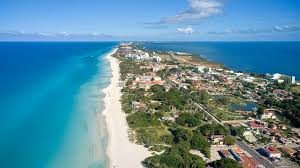
VARADERO BEACH, CUBA, OCUPA UN ALTO RANGO, SEXTO LUGAR, ENTRE LAS MEJORES PLAYAS DEL MUNDO (2025). PHOTOS. * VARADERO BEACH, CUBA, OCCURS HIGHLY, SIXTH, AMONG THE WORLD’S BEST BEACHES (2025). PHOTOS.

Al ocupar el sexto lugar en el ranking, Varadero en el 2025, repite como una de las mejores playas del mundo durante el año anterior, compartiendo posición con otros reconocidos destino de sol y playa como Ipanema, en Brasil, y Delfines, en Cancún, México.

El reconocimiento conferido por los Premios Travellers Choice 2025, de TripAdvisor, la plataforma la agencia especializada en viajes y uno de sus funcionario en la red social X la catalogó como “lo mejor de lo mejor”.

Ese alto nivel de excelencia en viajes conferido al popular balneario, radicado en el occidente de Cuba se fundamenta en un gran volumen de críticas y opiniones positivas de la comunidad de TripAdvisor durante un período de 12 meses.

VARADERO BEACH, CUBA

Varadero, también conocida como Playa Azul, es una ciudad turística en la provincia de Matanzas, Cuba. La playa de Varadero ha sido calificada como una de las mejores playas del mundo en los premios Traveler’s Choice de TripAdvisor desde 2019.

Geografía

Varadero se encuentra a dos horas en coche al este del centro de La Habana. Está situada en la península de Hicacos, entre la bahía de Cárdenas y el estrecho de la Florida, a unos 140 km al este de La Habana, en el extremo oriental de la carretera Vía Blanca. La península tiene tan solo 1,2 km de ancho en su punto más ancho y está separada de la isla de Cuba por el Canal de Kawama, separado del continente por la Laguna Paso Malo.

Esta lengua de tierra se extiende más de 20 kilómetros desde el continente en dirección noreste, y su extremo, Punta Hicacos, es el punto más septentrional de la isla de Cuba. El pueblo de Varadero cuenta con tres avenidas longitudinales, intersectadas por 69 calles transversales. En el extremo noreste de la península se encuentra una reserva natural con bosques y playas vírgenes.

Los cayos desarrollados frente a la costa, como Cayo Piedras y Cayo Cruz del Padre, constituyen la parte más occidental del archipiélago Sabana-Camagüey.

El Aeropuerto Juan Gualberto Gómez, ubicado a 16 kilómetros al oeste de Varadero y al oeste de la península, es el aeropuerto de Varadero. Es el segundo aeropuerto más importante de la isla, después del Aeropuerto José Martí de La Habana. Se terminó de construir en la década de 1990 y reemplazó al antiguo aeropuerto de Varadero.

Solo el 1 por ciento de las playas del mundo logra ubicarse entre las 25 primeras de esta selecta lista que prestigia Varadero, famosa por sus playas de fina arena blanca y cristalinas aguas.
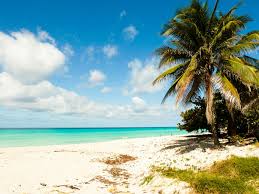

VARADERO BEACH, CUBA, OCCURS HIGHLY, SIXTH, AMONG THE WORLD’S BEST BEACHES (2025). PHOTOS.

By ranking sixth in 2025, Varadero repeats its status as one of the world’s best beaches from the previous year, sharing the same position with other renowned sun and beach destinations such as Ipanema, Brazil, and Delfines, Cancún, Mexico.

The recognition, conferred by the 2025 Travelers’ Choice Awards by TripAdvisor, the specialized travel agency platform, and one of its employees on the social network X, named it “the best of the best.”

This high level of travel excellence conferred on the popular beach resort in western Cuba is based on a large volume of positive reviews and opinions from the TripAdvisor community over a 12-month period.

VARADERO BEACH, CUBA

Varadero, also known as Playa Azul, is a resort town in the province of Matanzas, Cuba. Varadero Beach has been ranked one of the best beaches in the world by TripAdvisor’s Traveler’s Choice awards since 2019.

Geography

Varadero is located a two-hour drive east of central Havana. It is located on the Hicacos Peninsula, between Cárdenas Bay and the Straits of Florida, approximately 140 km east of Havana, at the eastern end of the Vía Blanca highway. The peninsula is only 1.2 km wide at its widest point and is separated from the island of Cuba by the Kawama Channel, which is separated from the mainland by the Paso Malo Lagoon.

This strip of land extends more than 20 kilometers northeast from the mainland, and its tip, Punta Hicacos, is the northernmost point of the island of Cuba. The town of Varadero has three longitudinal avenues, intersected by 69 transversal streets. At the northeastern tip of the peninsula is a nature reserve with forests and pristine beaches.

The developed keys off the coast, such as Cayo Piedras and Cayo Cruz del Padre, constitute the westernmost part of the Sabana-Camagüey archipelago.

Juan Gualberto Gómez Airport, located 16 kilometers west of Varadero and to the west of the peninsula, is Varadero’s airport. It is the second-largest airport on the island, after José Martí Airport in Havana. It was completed in the 1990s and replaced the old Varadero airport.

Only 1 percent of the world’s beaches make it into the top 25 on this select list, which honors Varadero, famous for its fine white sand beaches and crystal-clear waters.
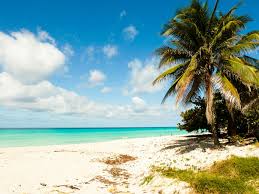
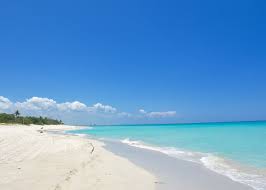
Agencies/ Wiki/ VaraderoBeachGeoHist./ Arrajatabla/ AlbertoDenis/ Internet Photos/ Arnoldo Varona.
www.TheCubanHistory.com
THE CUBAN HISTORY, HOLLYWOOD.


MANZANERO EN LA OBRA MUSICAL CUBANA, SU VISITA Y HOMENAJE. PHOTOS. * MANZANERO IN CUBAN MUSICAL WORK, HIS VISIT AND TRIBUTE. PHOTOS.


El bolero que nació en Cuba a fines del siglo XIX viajó después a la península mexicana de Yucatán, cuna del cantautor Armando Manzanero, quien en una ocasión reveló a la Televisión Española la influencia del género en sus composiciones.

Dijo que su obra se nutrió del filin (un tipo de bolero con elementos de jazz, surgido en Cuba en la década del 50, con figuras como José Antonio Méndez, César Portillo de la Luz, Niño Rivera, Rosendo Ruiz, Niñco Rojas y Angel Díaz entre otros).

“Feeling”, palabra anglosajona que significa sentimiento y, en la que los intérpretes dan rienda suelta a su manera de interpretar, dramatizando y exagerando los gestos e inflexiones de la voz, jugando con el tiempo y la armonía.

MANZANERO EN CUBA

En julio de 2018 el ídolo de la música romántica, regaló un concierto único a los cubanos con el que revivió aquella seducción con sus canciones más conocidas y algunas de sus más recientes en la tierra que le sirvió de guía por los derroteros del bolero.

El tema “Somos novios” abrió el primer recital del octogenario cantante en Cuba, una hora después de lo previsto, en un escenario al aire libre instalado frente a la emblemática avenida Malecón de La Habana, donde se reunieron varios miles de espectadores.

Ellos desarrollaron en 2012 una exitosa gira con los temas del disco Armando un Pancho

Luego siguió “Esta tarde vi llover” que el público coreó animado por el cantante, primero en ofrecer un concierto celebrado con energía limpia en la isla caribeña con lo que demostró su compromiso con la protección del medio ambiente.

Antes de sentarse al piano para cantar “Voy a apagar la luz” Manzanero aprovechó un breve silencio para expresar su agradecimiento “a todo aquel que contribuyó para… “que mis compañeros y yo pudiéramos tener el privilegio de estar en esta bendito país”

Entonces recibió a uno de los músicos de la mayor de las Antillas invitados, el cantante de música tradicional Elíades Ochoa, quien integrara el famoso proyecto Buena Vista Social Club, que lo acompañó con su guitarra para entonar “El ciego”.

Junto Haila interpretó “No existen límites” y “No”, con arreglo matizado con el ritmo de la salsa en una noche, donde el artista mexicano saldó una deuda con los cubanos que pudieron disfrutar de su música en vivo o en directo a través de la televisión.

Antes de entonar “Como yo te amé”, dijo a los cubanos que pertenece a la etnia indígena Yucateca y reservó casi para el final a la diva Omara Portuondo, quien interpretó “Adoro”, un clásico del autor mexicano quien se despidió con su título “Inolvidable”.

En varias de las producciones discográficas de Manzanero involucraron a cubanos de la talla de Pancho Céspedes, Celia Cruz y María Conchita Alonso, así como Haila María Mompie, Omara Portuondo y Olga Guillot, quien lo dio a conocer en Europa.

Paquito de Rivera, leyenda del jazz tropical exintegrante del grupo Irakere, presentó en 2015 el disco tributo, grabado en Nueva York con 12 temas de la autoría del Maestro Manzanero, fallecido el 28 de diciembre víctima del Covid-19.

Manzanero grabó más de 30 discos y escribió más de 500 canciones, de las cuales al menos 50 lograron fama internacional, en tanto en 2014 mereció el Grammy por trayectoria y el Premio a la Excelencia en 2020 de la Revista Billboard.

HOMENAJE HABANERO A MANZANERO

En junio de 2025, se realizó un homenaje binacional a Armando Manzanero en el Teatro Nacional de Cuba, titulado “Yo sé que volverás”.

El evento contó con la participación de artistas de México y Cuba, y fue dirigido artísticamente por Efraín Sabás y Rodrigo de la Cadena, con dirección musical de Miguel Patterson. El Instituto Bolero México fue invitado especial al evento, que celebró la hermandad musical entre ambos países a través de los boleros de Manzanero.

El homenaje, llamado “Yo sé que volverás”, tuvo lugar el sábado 7 de junio de 2025 en el Teatro Nacional de Cuba.

El evento contó con la participación de artistas cubanos y mexicanos interpretando boleros de la obra de Manzanero.


MANZANERO IN CUBAN MUSICAL WORK, HIS VISIT AND TRIBUTE. PHOTOS.

The bolero, which originated in Cuba at the end of the 19th century, later traveled to the Yucatán Peninsula in Mexico, the birthplace of singer-songwriter Armando Manzanero, who once revealed to Spanish Television the genre’s influence on his compositions.

He said that his work was informed by filin (a type of bolero with jazz elements, which emerged in Cuba in the 1950s, with figures such as José Antonio Méndez, César Portillo de la Luz, Niño Rivera, Rosendo Ruiz, Niñco Rojas, and Angel Díaz, among others).

“Feeling,” an Anglo-Saxon word meaning sentiment, in which the performers give free rein to their style of interpretation, dramatizing and exaggerating gestures and vocal inflections, playing with tempo and harmony.

MANZANERO IN CUBA

In July 2018, the romantic music idol gave Cubans a unique concert, reviving that seduction with his best-known songs and some of his most recent hits in the land that served as his guide to bolero.

The song “Somos novios” opened the octogenarian singer’s first concert in Cuba, an hour later than scheduled, on an open-air stage set up in front of Havana’s iconic Malecón avenue, where several thousand spectators gathered.

In 2012, they launched a successful tour with songs from the album Armando un Pancho.

Then came “Esta tarde vi llover” (This Afternoon I Saw It Rain), which the audience sang along to, encouraged by the singer, the first to offer a concert using clean energy on the Caribbean island, thus demonstrating his commitment to environmental protection.

Before sitting at the piano to sing “Voy a apaga la luz,” Manzanero took advantage of a brief silence to express his gratitude “to everyone who contributed so that my colleagues and I could have the privilege of being in this blessed country.”

He then welcomed one of the invited musicians from the largest of the Antilles, traditional music singer Elíades Ochoa, a member of the famous Buena Vista Social Club project, who accompanied him on guitar to sing “El ciego.”

With him, Haila performed “No existe límites” and “No,” with an arrangement tinged with salsa rhythms, on an evening where the Mexican artist paid off a debt to the Cubans who were able to enjoy his music live or on television.

Before singing “Como yo te amé,” he told the Cubans that he belongs to the Yucatecan indigenous ethnic group and reserved for the finale the diva Omara Portuondo, who performed “Adoro,” a classic by the Mexican author who signed off with its title. “Unforgettable.”

Manzanero’s albums have featured Cuban artists such as Pancho Céspedes, Celia Cruz, and María Conchita Alonso, as well as Haila María Mompie, Omara Portuondo, and Olga Guillot, who brought him fame in Europe.

Paquito de Rivera, a tropical jazz legend and former member of the group Irakere, released the tribute album in 2015, recorded in New York with 12 songs written by Maestro Manzanero, who died on December 28th from Covid-19.

Manzanero recorded more than 30 albums and wrote more than 500 songs, at least 50 of which achieved international acclaim. He also won a Grammy for lifetime achievement in 2014 and the Billboard Magazine Award for Excellence in 2020.

HAVANA TRIBUTE TO MANZANERO

In June 2025, a binational tribute to Armando Manzanero was held at the National Theater of Cuba, entitled “I Know You Will Return.”

The event featured artists from Mexico and Cuba, and was artistically directed by Efraín Sabás and Rodrigo de la Cadena, with musical direction by Miguel Patterson. The Bolero Institute of Mexico was a special guest at the event, which celebrated the musical brotherhood between the two countries through Manzanero’s boleros.

The tribute, entitled “I Know You Will Return,” took place on Saturday, June 7, 2025, at the National Theater of Cuba.

The event featured Cuban and Mexican artists performing boleros from Manzanero’s work.

Agencies/ Wiki/ Chicago Tribune/ EcuRed/ Arrajatabla/ Alberto Denis/ Internet Photos/ Arnoldo Varona.
www.TheCubanHistory.com
THE CUBAN HISTORY, HOLLYWOOD.

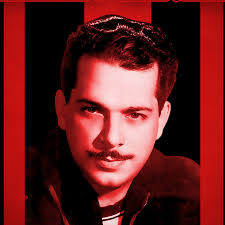
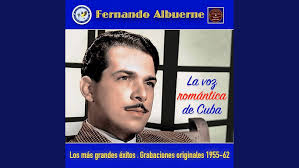
FERNANDO ALBUERNE, CANTANTE CONOCIDO COMO “LA VOZ ROMANTICA DE CUBA”. PHOTOS. * FERNANDO ALBUERNE, SINGER KNOWN AS “THE ROMANTIC VOICE OF CUBA”. PHOTOS.


LUIS FERNANDO ALBUERNE GARCELL nació el 28 de Octubre de 1920 en Sagua de Tánamo, en la provincia de Oriente, 50 km al norte de Guantánamo, Cuba, conocido artísticamente como FERNANDO ALBUERNE.

Se graduó muy joven de Ingeniero Agrónomo en la Universidad de La Habana. Comenzó a trabajar en la producción de perfumes para la empresa “JABON ALBUERNE”, propiedad de su padre. Aun cuando carecía completamente de conocimientos musicales tenía entusiasmo por el canto, y fue consolidando su voz y su estilo en reuniones familiares y entre sus compañeros de estudios.

En 1941 se presentó en Radio Cadena Suaritos para averiguar cuanto debía pagar por grabar un disco, pero cuando escucharon la pureza de su voz de tenor fue inmediatamente contratado como artista exclusivo a tres dólares por programa. Debutó en Noviembre de ese año interpretando “Ven Amor”, tema compuesto por un compañero de trabajo, acompañado por la orquesta del pianista Santos Menéndez.

Para 1945 su sueldo era de 1.000 dólares mensuales, uno de los más altos que se abonaban en la isla a un solista, de donde perfectamente podía deducirse su importancia artística, puesto que donde toda la vida han proliferado grandes cantidades de estrellas del canto, en sus diferentes modalidades, quien obtuviera esa alta remuneración tenia que haberse destacado por encima de quienes podían hacerle la competencia en los escenarios. Permaneció ligado a Radio Cadena Suaritos hasta 1954.

Desde 1947 realizó continuas giras por toda América. Ese año llegó por primera vez a Argentina, donde su éxito fue inmediato. Su gran hit fue “Dicen que Tengo Celos”, que vendió más de un millón de ejemplares y le significó su primer disco de oro. En 1953 llegó a Europa, triunfando en España, Portugal y Francia..

Fernando Albuerne fue uno de los mejores y mas grandes cancioneros cubanos, cuya presencia era sistemáticamente solicitada en los diferentes sitios donde podía enseñar sus grandes dotes artísticas.

Esencialmente por su grandiosa forma de ser, por sus características humanas y por el inmenso carisma que irradiaba. Posteriormente se fue para los Estados Unidos, específicamente para la ciudad de Miami, donde se residenció y lamentablemente falleció el 3 de julio de 2000. Tenía 79 años

Considerada una de las mejores y más educadas voces de la canción romántica de origen cubana, que ha dejado un muy basto número de grandes melodías que han enriquecido el pentagrama musical latinoamericano, lo que es un verdadero legado para la posteridad, que los grandes amantes del bolero hemos disfrutado por más de 60 años con una grata devoción, dada la admiración que sus bellas melodías despertaban y siguen despertando hoy en día en sus escuchas, en sus siempre devotos admiradores.


FERNANDO ALBUERNE, SINGER KNOWN AS “THE ROMANTIC VOICE OF CUBA”. PHOTOS.

Luis Fernando Albuerne Garcell was born on October 28, 1920 in Sagua de Tánamo, Oriente Province, 50 km north of Guantanamo, Cuba.

Even though it lacked musical knowledge was totally enthusiastic about singing, and was consolidating its voice and style at family and among his fellow students. developed from a performer of Cuban songs into one of the great vocal interpreters of Spanish material in general.

Early in his twenties, however, Albuerne switched course from the business world to an exclusive contract with Radio Cadena. By the late ’40s he was in demand for performances in theaters and cabarets as well as on television. He began touring Latin America; in 1953, Albuerne triumphed on stages in European capitals such as Madrid, Lisbon, and Paris.

Fernando Albuerne developed from a performer of Cuban songs into one of the great vocal interpreters of Spanish material in general. He performed and recorded throughout the Spanish-speaking world and at times lived in Caracas, Venezuela, as well as Cuba and eventually Tampa, FL.

No one who knew Albuerne as a young man would have predicted that he would create stacks of recordings standing as high as sugar cane stalks; in fact, it might have seemed more likely that he would wind up having something to do with growing the sugar cane itself. His degree from Havana University was in agricultural engineering, and following school he went to work in the clean and safe world of soap production.

Perhaps he spent more time in the shower than usual, doing quality control research on the soap, and thus had more time to practice his singing. Early in his twenties, however, Albuerne switched course from the business world to an exclusive contract with Radio Cadena. By the late ’40s he was in demand for performances in theaters and cabarets as well as on television. He began touring Latin America; in 1953, Albuerne triumphed on stages in European capitals such as Madrid, Lisbon, and Paris.

Albuerne is near the top of any alphabetical list of Cuban performers who fled the regime of Fidel Castro when the ink was still drying on 1960 calendars. His subsequent residency in Caracas further sharpened his image as a Latin performer with a global outlook. The Rodven label has released a series of albums under Albuerne’s name, including the both romantic and informative Historia de Amor.

Taken as a whole, the Albuerne discography represents a superb collection of Cuban and Mexican songs. He died in Miami in 2000.


Agencies/ Wiki/ Music Guide/ Chadbourne/ InternetPhotos/ TheCubanHistory.com
The Cuban History, Hollywood.
THE CUBAN HISTORY, HOLLWOOD.