— CUBA WILL LOSE 27 CENTIMETERS of its Coastal Territory in Half a Century. (Photos) + CUBA PERDERÁ 27 CENTÍMETROS de su Territorio Costero en Medio Siglo.(Fotos).

News_48 (1) CUBA WILL LOSE 27 CENTIMETERS OF ITS COASTAL TERRITORY IN HALF A CENTURY.

An increase of 27 centimeters from the level of the sea in the Cuban coasts and the loss of 2.31% of its coastline is expected for the year 2050.
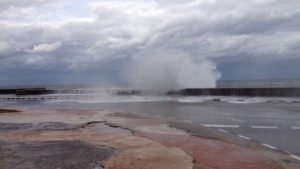
An increase of 27 centimeters from the level of the sea in the Cuban coasts and the loss of 2.31% of its coastline is expected to the year 2050. (14ymedio)

An increase of 27 centimeters from the level of the sea in the Cuban coasts and the loss of 2.31% of its coastline is expected to the year 2050. (14ymedio)

The level of the sea off the coast of Cuba has risen 6.77 centimeters between 1966 and 2015 as a result of climate change, local experts said this Thursday in Havana.

The Director of the Agency of environment (AMA), which belongs to the Ministry of science, technology and environment of Cuba, Maritza García, explained that this problem affects primarily the low-lying areas of coastal shorelines, so it is checked systematically.

There are computer programs and models that allow an approximate overview of the incidence of the penetration of the sea land in in the next 100 years, according to a report by the State Agencia Cubana de Noticias.

The specialist felt that these studies are a “very useful” tool to determine possible investments and construction population settlements.
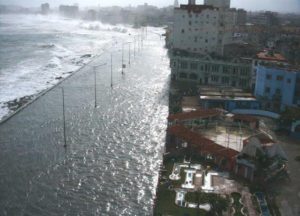
Climate Change in Cuba.

Climate Change in Cuba.

According to research on climate change in Cuba has been observed an increase in the surface temperature of the air and sea, the average annual rainfall decreased and the emergence, with more frequent, prolonged droughts in the summer, among other effects caused by this phenomenon.

The environment of the island Agency has warned that the rise of the sea level is one of the greatest dangers caused by climate change, forecasts of recent years an increase of 27 centimeters in Cuban coastal sea level and loss of 2.31% of Earth’s surface in its coastline is expected for the year 2050.

Agencies / 14ymedio, Havana/InternetPhotos/Excerpts/Arnoldo Varona/TheCubanHistory.com
THE CUBAN HISTORY, HOLLYWOOD.

Roberto Suárez.
Roberto Suárez.

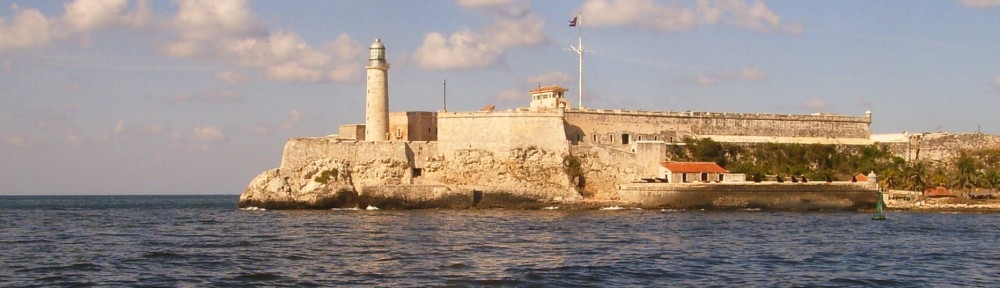
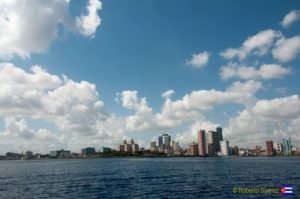
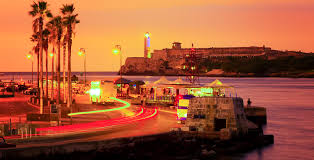
CUBA PHOTOS. La Habana vista desde el Malecón.

CUBA PHOTOS. La Habana vista desde el Malecón.

News_48 (1) PERDERÁ CUBA 27 CENTÍMETROS DE SU TERRITORIO COSTERO EN MEDIO SIGLO.

Se prevé para el año 2050 un aumento de 27 centímetros del nivel del mar en las costas cubanas y la pérdida del 2,31% de su litoral.

El nivel del mar en las costas de Cuba se ha elevado 6,77 centímetros entre 1966 y 2015 como consecuencia del cambio climático, dijeron este jueves en La Habana expertos locales.

La directora de la Agencia de Medio Ambiente (AMA), perteneciente al Ministerio de Ciencia Tecnología y Medio Ambiente de Cuba, Maritza García, explicó que esta problemática afecta en primera instancia las zonas bajas de los litorales costeros, por lo que se comprueba sistemáticamente.
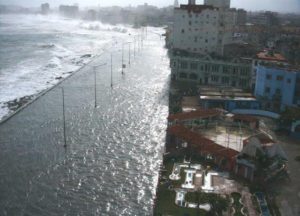
ciencia-cubana_ciencia-de-cuba_cambio-climc3a1tico-en-cuba_1

Actualmente existen programas y modelos informáticos que posibilitan una panorámica aproximada de la incidencia de la penetración del mar tierra adentro en los próximos 100 años, según indica un informe de la estatal Agencia Cubana de Noticias.

La especialista consideró que estos estudios son una herramienta “muy útil” para determinar la realización de posibles inversiones y la construcción asentamientos poblacionales.

Se prevé para el año 2050 un aumento de 27 centímetros del nivel del mar en las costas cubanas y la pérdida del 2,31% de su litoral. (14ymedio)

Se prevé para el año 2050 un aumento de 27 centímetros del nivel del mar en las costas cubanas y la pérdida del 2,31% de su litoral. (14ymedio)

Según las investigaciones sobre cambio climático en Cuba se ha observado un incremento de la temperatura superficial del aire y del mar, disminución del promedio de precipitaciones anuales y la aparición, con mayor frecuencia, de prolongadas sequías en el verano, entre otros efectos provocados por ese fenómeno.

La Agencia de Medio Ambiente de la isla ha advertido que el ascenso del nivel del mar es uno de los mayores peligros provocados por el cambio climático, previsiones de los últimos años se prevé para el año 2050 un aumento de 27 centímetros del nivel del mar en las costas cubanas y la pérdida del 2,31% de superficie terrestre en su litoral.

Agencies/14ymedio, La Havana/InternetPhotos/Excerpts/Arnoldo Varona/TheCubanHistory.com
THE CUBAN HISTORY, HOLLYWOOD.

logo

images

— PUERTO RICO ANNOUNCES the Opening of Office in Havana. (Photos) + PUERTO RICO Anuncia Apertura de Oficina en la Habana. (Fotos)

Briefcase-48 PUERTO RICO ANNOUNCES THE OPENING OF OFFICE IN HAVANA.

Alejandro_Garcia_Padilla_-cropped “We have the goal lay open our office in Havana. There are Puerto Rican businessmen here, we want to facilitate the processes, as we do in Dominican Republic, Panama, Colombia, Peru and Spain,”announced the Governor of Puerto Rico Alejandro García Padilla to start the paperwork to open a Trade Office in Cuba.

García Padilla is on the island to attend the Summit of the Association of Caribbean States (ACS).

“Someone may question the cost of those offices, but that cost is minimal in relation to the services which are given to entrepreneurs,” added the President, who stressed that offices such as the Dominican Republic have been crucial in the growth of trade between the two countries.

García Padilla said that the new era in the relations between the regime and Washington opened a new game, in which Puerto Rico must be inserted or it will be left behind.

920x920

“With the new vision of Cuba on the world and the world about Cuba, the intention is to open in the coming months the office of interests of Puerto Rico in Cuba so that Cuba, in addition to an exceptional competitor, is also a business opportunity for Puerto Ricans, as Puerto Rico was for Cubans in the last half of the 20th century” It said.

“The opportunities provided by Cuba to the rapprochement between Barack Obama and Raúl Castro is a context in which Puerto Rico must not be left behind. This must be a business opportunity for Puerto Ricans, because my Government’s strategy is in search scenarios for exporting goods and services from the Puerto Rican abroad”, he added.

Agencies / the new day/Excerpts/InternetPhotos/Arnold Varona/TheCubanHistory.com
THE CUBAN HISTORY, HOLLYWOOD.

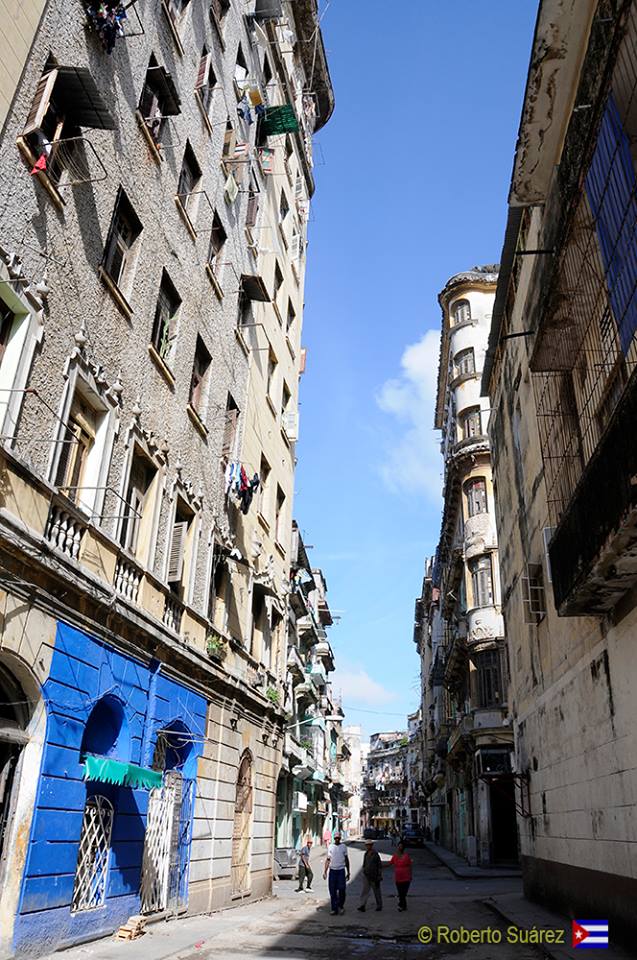
CUBA PHOTOS.   Caminando por la calle de San Miguel en la Habana.

CUBA PHOTOS. Caminando por la calle de San Miguel en la Habana.

Briefcase-48 PUERTO RICO ANUNCIA APERTURA DE OFICINA EN LA HABANA.

“Tenemos la meta puesta de abrir nuestra oficina en La Habana. Ya hay empresarios puertorriqueños aquí, queremos facilitarle los procesos, como lo hacemos en República Dominicana, Panamá, Colombia, Perú, España”, anunció el gobernador de Puerto Rico Alejandro Garcia Padilla al iniciar los tramites para abrir una oficina comercial en Cuba.

García Padilla está en la Isla para asistir a la cumbre de la Asociación de Estados Caribeños (AEC).

Gobernador de Puerto Rico Garcia Padilla.

Gobernador de Puerto Rico Garcia Padilla.

“Alguien podrá cuestionar el costo de esas oficinas, pero ese costo es ínfimo con relación a los servicios que se dan a los empresarios”, agregó el mandatario, quien destacó que oficinas como la de República Dominicana han sido cruciales en el crecimiento del comercio entre ambos países.

García Padilla aseguró que la nueva era en las relaciones entre el régimen y Washington abre un nuevo juego, en el cual Puerto Rico debe insertarse o se quedará atrás.

5000

“Con la nueva visión de Cuba sobre el mundo y del mundo sobre Cuba, la intención es abrir en los próximos meses esa oficina de intereses de Puerto Rico en Cuba para que Cuba, además de un competidor excepcional, sea también una oportunidad empresarial para los puertorriqueños, como Puerto Rico fue para los cubanos en la última mitad del siglo XX”, expresó.

“Las oportunidades que brinda Cuba ante el acercamiento entre Barack Obama y Raúl Castro es un contexto en el cual Puerto Rico no debe estar rezagado. Esta debe ser una oportunidad de negocios para los puertorriqueños, porque la estrategia de mi Gobierno está en buscar escenarios para exportar bienes y servicios de los boricuas en el extranjero”, agregó.

Agencies/El Nuevo Dia/Excerpts/InternetPhotos/Arnoldo Varona/TheCubanHistory.com
THE CUBAN HISTORY, HOLLYWOOD.

logo

Cuba Photo: Atardecer en Playa Cubana. www.TheCubanHistory.com

Cuba Photo: Atardecer en Playa Cubana.
www.TheCubanHistory.com

— THE LION FISH, “The Invader of the Caribbean” to the Cuban Menu. Photos. + EL PEZ LEÓN, “El Invasor del Caribe” al Menú Cubano. Fotos.

News_48 (1) THE LION FISH: “THE INVADER OF THE CARIBBEAN” TO THE CUBAN MENU.

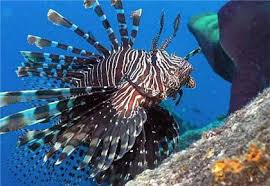
The island seems to have found a successful formula to combat this species whose poisonous barbs scare animals that should devour it. Not even the shark gets with him.

If you can’t beat’em, eat it: Cuba included in its menu the fish león to combat this invasive and predatory species that threatens the balance of the Caribbean Sea.

pezleon420

Originally from the Indo-Pacific, this fish lines Orange, Brown and black and covered in poisonous spikes became in recent years at unexpected risk for the marine ecosystem, especially for coral reefs.

Even swimmers or fishermen may have pain, swelling, or develop an allergic reaction by contact with the spikes.

In 2007 the lionfish was detected in Cuba and two years later was already in the island, says the AFP Delmis Cabrera, a marine biologist for 25 years who works at the National Aquarium, in Havana.

images (4)

Opportunistic predator, leon manages to reproduce at great rate because a peculiarity: his poisonous barbs scare the animals that should devour it. Not even the shark gets with him.

Such is the threat that represents, the Association of Caribbean States (AEC) expected to discuss a joint plan against the fish, lion and the rotten algae Sargassum during a Summit in La Habana this Saturday.

While Governments are in agreement, Cuba seems to have found a successful formula to combat this species, which it is believed was introduced accidentally in the warm waters of the Atlantic.

“We know that it is a poisonous species, which has its risks (…), but also has an exquisite meat”, says Cabrera.

pez-leon

And just at that point campaign undertaken by Cuba: hunt down the lionfish to bring it to the table, where, little by little, begins to make a place in the Charter.

In recent years, Cuba organizes an annual fishing tournament in the lionfish.

Except in some protected areas, where poaching is restricted, and this Predator is multiplied and reach one larger size, the lionfish populations “are practically decimated”, especially in the populated coastal areas, said the biologist at the National Aquarium.

“They are already becoming scarce, now usually one sees them chiquiticos (for smaller size),” corroborates Enrique Valdés, professional diver, 55 years, with 30 of experience.

In restaurants, it begins another campaign to persuade Diners.

“We try to put it on the menu, but as it is a fish that everyone” links “with poison” is rejected, told AFP Carlos Fonseca, Manager of fisherman Santy.

Pez-León1-a

Still, if a diner asks, “we went out to capture it,” he adds.

Preparation demand just a little care. “Spines have poisonous glands that when you click, you can give respiratory paralysis, muscle pain and fever” that can last for three days, said Noriesky Gao, 30 years and Santy fisherman Cook.

Because it is an invasive species, the Cuban cuisine did not have it among their options.

Meanwhile, Cuban scientists are already studying the toxicological properties of the lionfish in the fight against cancer, according to biologist Cabrera.

Agencies / spectator/InternetPhotos/Excerpts/Arnold Varona / TheCubanHistory.com
THE CUBAN HISTORY, HOLLYWOOD.

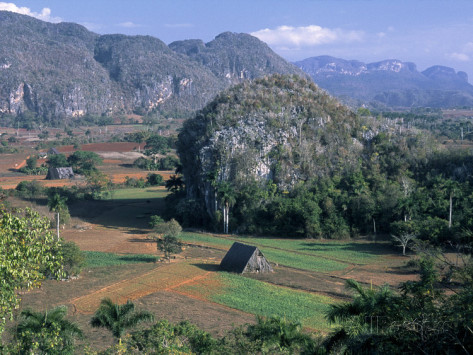
CUBA TODAY/HOY: Valle de Viñales.

CUBA TODAY/HOY: Valle de Viñales.

News_48 (1) EL PEZ LEÓN, “EL INVASOR DEL CARIBE” AL MENÚ CUBANO.

La isla parece haber encontrado una fórmula exitosa para combatir a este especie cuyas púas ponzoñosas espantan a animales que deberían devorarlo. Ni siquiera el tiburón se mete con él.

Si no puedes con tu enemigo, cómetelo: Cuba incluyó en su menú al pez león para combatir a esta especie invasora y depredadora que amenaza el equilibrio del mar Caribe.

pezleon420

Originario del Indo-Pacífico, este pez de líneas naranjas, marrones y negras y cubierto de púas venenosas se convirtió en los últimos años en un riesgo insospechado para el ecosistema marino, especialmente para los arrecifes coralinos.

Incluso los bañistas o pescadores pueden presentar dolor, hinchazón o desarrollar una reacción alérgica por el contacto con las púas.

En 2007 el pez león fue detectado en Cuba y dos años después ya estaba en toda la isla, comenta a la AFP Delmis Cabrera, una bióloga marina de 25 años que trabaja en el Acuario Nacional, en La Habana.

images (4)

Predador oportunista, el pez león logra reproducirse a gran ritmo debido a una particularidad: sus púas ponzoñosas espantan a los animales que deberían devorarlo. Ni siquiera el tiburón se mete con él.

Es tal la amenaza que representa, que la Asociación de Estados del Caribe (AEC) prevé discutir un plan conjunto contra el pez león y las putrefactas algas sargazo durante una cumbre en La Habana este sábado.

Mientras los gobiernos se ponen de acuerdo, Cuba parece haber encontrado una fórmula exitosa para combatir a este especie, que se cree fue introducida de manera accidental en las aguas cálidas del Atlántico.

“Sabemos que es una especie venenosa, que tiene sus riesgos (…), pero también que tiene una carne exquisita”, comenta Cabrera.

pez-leon

Y justamente a eso apunta la campaña que emprendió Cuba: cazar al pez león para llevarlo a la mesa, donde, de a poco, se empieza a hacer un lugar en la carta.

En los últimos años, Cuba organiza un torneo anual de pesca del pez león.

Salvo en algunas zonas protegidas, donde está restringida la caza furtiva, y este depredador se multiplica y alcanza un tamaño mayor, las poblaciones de pez león “están prácticamente diezmadas”, sobre todo, en las zonas costeras pobladas, comentó la bióloga del Acuario Nacional.

“Ya están escaseando, ahora generalmente uno los ve chiquiticos (de menor tamaño)”, corrobora Enrique Valdés, buceador profesional, de 55 años, con 30 de experiencia.

Ya en los restaurantes, comienza otra campaña para persuadir a los comensales.

“Tratamos de introducirlo en el menú, pero como es un pez que todo el mundo” vincula “con veneno” es rechazado, comentó a la AFP Carlos Fonseca, gerente de Santy Pescador.

Pez-León1-a

Aun así, si algún comensal lo pide, “salimos a capturarlo”, agrega.

Su preparación demanda apenas un poco de cuidado. “Las espinas tienen unas glándulas venenosas que, cuando te pinchas, te puede dar parálisis respiratoria, dolor muscular y fiebre”, que puede durar tres días, dijo Noriesky Gao, de 30 años y cocinero de Santy Pescador.

Por tratarse de una especie invasora, la gastronomía cubana no lo tenía entre sus opciones.

Entretanto, los científicos cubanos ya están estudiando las propiedades toxicológicas del pez león en el combate contra el cáncer, según la bióloga Cabrera.

Agencies/El Espectador/InternetPhotos/Excerpts/Arnoldo Varona/ TheCubanHistory.com
THE CUBAN HISTORY, HOLLYWOOD.
logo

WWW.THECUBANHISTORY.COM

WWW.THECUBANHISTORY.COM