ANABEL BLANCO, Singer, Composer. (Born: Camaguey). + ANABEL BLANCO, Cantante, Compositora. (Nacida en Camaguey).

ANABEL BLANCO, SINGER, SONGWRITER.

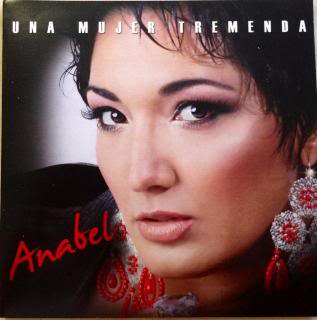
Considered by the European press as a great exponent of the “Salsa Dura” and for her audience as a singer of great musicianship in both high and low notes maintaining impeccable intonation, a quality that is enhanced by taking into She has never studied music.
AnabellBlanco

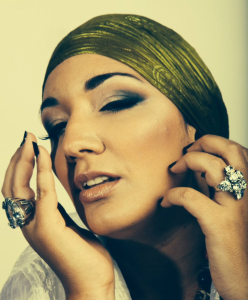
Born in Camaguey, 24 December 1976. Heir to great musical talent, for her father’s baritone and her mother against high, as the same Anabel.

She traveled to Europe in 1992, as a member of Salsa Brava group, where she spent eight years working and recorded her first CD “Caribbean St. Christian”. In Italy dabbled in musical theater with such important works as Chicago, Copacabana, Cats, Mamma mia, etc.

Participates in the Latin American Festival Forun Di Assago and others. In 2001 she travels to Guatemala where she recorded his CD sefundo, but the first solo entitled Stripping the soul produced by the Guatemalan musician Rolando Ortega and co-produced by Anabel own.
blanco-torres-anabel

Living in Florida since 2002, where for their hard work and the representation and management of dynamic husband Alex De Castro, her name starts ringing continuing his successful career sharing the stage with great artists and recorded in 2004 a third production under the production of Venezuelan pianist Antulio Mora, he is released this time as a songwriter with two of the 10 subjects. (“That’s me”).

In 2005 she recorded his fourth album “Miavana” with the Frisky group was vocalist and a season where a subject of his own “I come from there” are also included.

Currently she has six musical productions and singing since 2005 with its YKeOké group.

In 2007 ventures into opera with the Society for Arts Grateli Chancletera interpreting the work of Maria la O, directed by Gonzalo Rodriguez. She has won the prestigious “Legend” of 2007 and 2009 Award his melodious, harmonious and powerful voice, which is why the respected teacher Arturo Ramos has dubbed the “Grand Canyon” (in this case Camaguey, we say) because her voice “is as loud as thunder.”

Her latest CD is titled “First Time” has 10 songs and almost all of her own.

Sazon Cuban Son and / Mary A.Vizcaíno / InternetPhotos / TheCubanHistory.com
The Cuban History, Hollywood.
Arnoldo Varona, Editor.
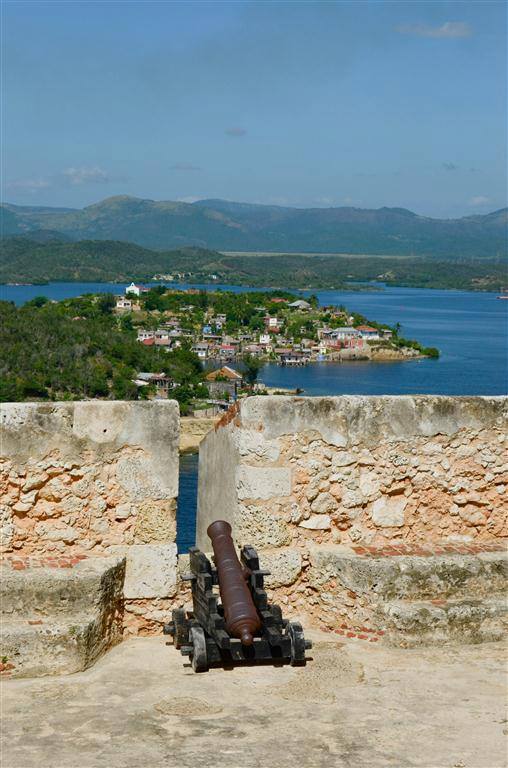
CUBA HOY/TODAY. Vista desde el Morro de Santiago de Cuba.

CUBA HOY/TODAY. Vista desde el Morro de Santiago de Cuba.

ANABEL BLANCO, CANTANTE, COMPOSITORA.

Considerada por la prensa de Europa como una gran exponente de la llamada “Salsa Dura”, y por su público como una cantante de gran dominio musical tanto en las notas altas como en las bajas manteniendo una impecable afinación, cualidad que se acrecienta al tener en cuenta que jamás estudió música.

Nació en Camagüey, un 24 de diciembre de 1976. Heredera de gran talento musical, pues su padre es barítono y su madre contra alto, como la misma Anabel.
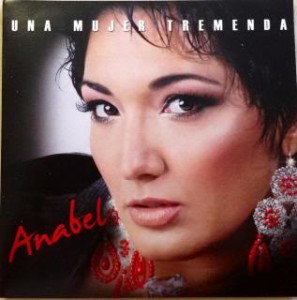
AnabellBlanco

Viajó a Europa en 1992, como integrante del grupo Salsabrava, donde permaneció trabajando 8 años y grabó su primer CD “Del Caribe a St. Cristiana”. En Italia incursionó en el teatro musical con obras tan importantes como Chicago, Copacabana, Cats, Mama mía, etc.

Participa en el Festival Latinoamericano Forun Di Assago y otros. En el 2001 viaja a Guatemala donde graba su sefundo CD, pero el primero como solista titulado Desnudando el Alma producido por el músico guatemalteco Rolando Ortega y coproducido por la propia Anabel.

Reside en la Florida desde el 2002, donde por su esmerado trabajo y la representación y manejo de su dinámico esposo Alex De Castro, su nombre comienza a sonar continuando con su exitosa carrera compartiendo escenarios con grandes artistas, así graba en el 2004 una tercera producción bajo la producción del pianista venezolano Antulio Mora, estrenándose en esta ocasión como compositora con dos de los 10 temas. (“Esa Soy yo”).

En el 2005 graba su cuarto disco “Miavana” con el grupo Retozón del que fue su vocalista una temporada y donde también se incluyó un tema de su autoría “Vengo de allí”.

En la actualidad cuenta con seis producciones discográficas y canta desde el 2005 con su grupo YKeOké.

En el 2007 incursiona en el teatro lírico con la Sociedad Pro Arte Grateli interpretando La Chancletera de la obra María la O, dirigida por Gonzalo Rodríguez. Ha ganado el prestigioso Premio “Leyenda” de 2007 y 2009, por su voz melodiosa, armónica y poderosa, por esta razón el respetado maestro Arturo Ramos la ha bautizado como “el Gran Cañón del Colorado” porque su voz “es tan fuerte como un trueno”.

Su más reciente CD se titula “First Time” y tiene 10 temas casi todos de su autoría.

Son y Sazón Cubano/María A.Vizcaíno/ InternetPhotos/ TheCubanHistory.com
The Cuban History, Hollywood.
Arnoldo Varona, Editor.

HAVANA “El Malecón” Old History. + HISTORIA del Viejo “Malecón” HABANERO.

HAVANA “THE MALECON” OLD HISTORY.

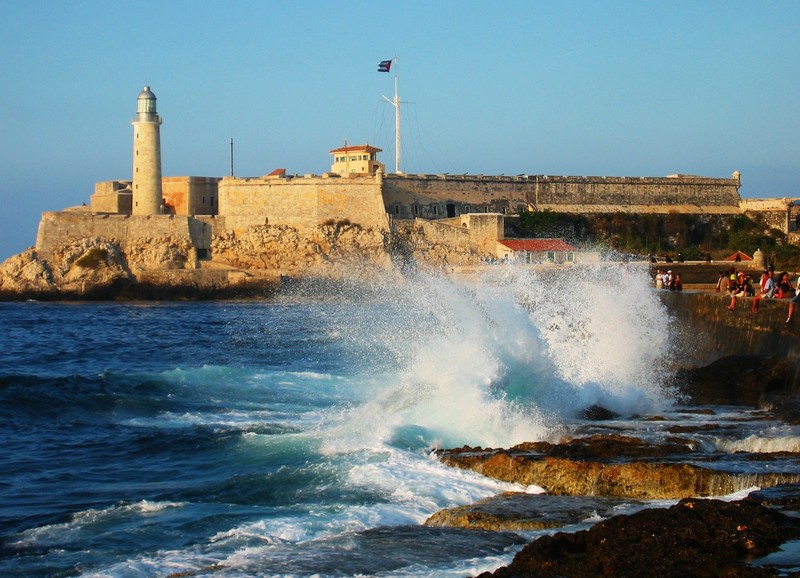
The Malecón (officially Avenida de Maceo) is a broad esplanade, roadway and seawall which stretches for 8 km (4 miles) along the coast in Havana, Cuba, from the mouth of Havana Harbor in Old Havana, along the north side of the Centro Habana neighborhood, ending in the Vedado neighborhood.

download (2)

Construction of the Malecón began in 1901, during temporary U.S. military rule. The main purpose of building the Malecón was to protect Havana from the water and the so-called Nortes, but in reality, it wound up serving more for nighttime promenades by Habaneros, for lovers and most of all for individual fishermen.

To celebrate the construction of the first 500m section of the Malecón, the American government built a beautiful roundabout at the intersection of Paseo del Prado, which, according to architects of the period, was the first one built in Cuba with steel-reinforced concrete. In front of the roundabout, where every Sunday bands played Cuban melodies, the Miramar Hotel was built, which was very much in fashion for the first 15 years of independence and which was the first one where the waiters wore tuxedos (dinner jackets), vests (waistcoats) with gold buttons, and did not have moustaches.

The following Cuban governments continued the extension of the first section of the Malecón. In 1923 it reached the mouth of the Almendares River between K and L streets in Vedado, where the United States Embassy was built, the José Martí Sports Park and further out, the Hotel Rosita de Hornedo, today, the Sierra Maestra.

There are numerous architectural delights along El Malecon de Cuba, reminders of Cuba’s first tourist heyday in the years before the revolution. Some, like the impressive Hotel Nacional, feature neoclassical opulence; others recall Mediterranean villas. Several of these buildings have undergone loving facelifts in recent years.

saxo_en_el_malecon

As El Malecon de Cuba has been restored to its former glory after years of neglect, the promenade has become a favored walkway for lovers, local children, and Cubans of all ages. A walk along El Malecon Havana provides an intimate glimpse at Cuban life.

The Malecón continues to be popular among Cubans, especially among those of lesser means whose other means of entertainment are limited.
It is also a means of income for poorer families, as individual fishermen cast their lures there. In addition, it is a hotspot for prostitution by men (transvestites, transsexuals) and women.

Although some of the houses lining the Malecón are in ruins, the Malecón remains one of the most spectacular and popular destinations in Havana. There are a number of important monuments along the Malecón, including those to General Máximo Gomez, Antonio Maceo, General Calixto García, and the Monument to the Victims of the USS Maine.

Wiki/ElMalecon/InternetPhotos/YouTube/thecubanhistory.com
The Cuban History, Hollywood.
Arnoldo Varona, Editor.

HISTORIA DEL VIEJO “MALECÓN” HABANERO.

El Malecón (oficialmente Avenida de Maceo) es una amplia explanada, calzada y malecón que se extiende por 8 km (4 millas) a lo largo de la costa de La Habana, Cuba, desde la desembocadura del puerto de La Habana en La Habana Vieja, en la parte norte del Centro barrio Habana, terminando en el barrio de Vedado.

La construcción del Malecón comenzó en 1901, durante el gobierno militar de EE.UU. temporal. El objetivo principal de la construcción del Malecón de La Habana era proteger del agua y los Nortes llamados, pero en realidad, terminó sirviendo más para paseos nocturnos por Habaneros, para los amantes y sobre todo para los pescadores individuales.

download (2)

Con motivo de la construcción de la primera sección 500 metros del Malecón, el gobierno estadounidense construyó una hermosa rotonda en la intersección del Paseo del Prado, que, según los arquitectos de la época, fue la primera construida en Cuba con hormigón reforzado con acero. Frente a la rotonda, donde cada Domingo bandas jugado melodías cubanas, el Hotel Miramar fue construido, que era muy de moda durante los primeros 15 años de independencia y que fue la primera en la que los camareros llevaban esmoquin (esmoquin), chalecos (chalecos), con botones dorados, y no tenía bigotes.

Los gobiernos de Cuba siguientes continuó la ampliación del primer tramo del Malecón. En 1923 llegó a la desembocadura del río Almendares entre K y L, en el Vedado, donde la Embajada de Estados Unidos fue construido, el José Martí Sports Park y más lejos, el Hotel Rosita de Hornedo, en la actualidad, la Sierra Maestra.

Existen numerosas maravillas arquitectónicas a lo largo del Malecón de Cuba, recordatorios de auge turístico de primer orden de Cuba en los años previos a la revolución. Algunos, como el imponente Hotel Nacional, cuentan con opulencia neoclásico, otros recuerdan villas mediterráneas. Varios de estos edificios han sido sometidos a amar estiramientos faciales en los últimos años.

A medida que El Malecón de Cuba ha sido restaurado a su antigua gloria después de años de abandono, el paseo marítimo se ha convertido en una pasarela favorito para los amantes, los niños locales, y los cubanos de todas las edades. Un paseo por el malecón de La Habana ofrece una mirada íntima a la vida cubana.

saxo_en_el_malecon

El Malecón continúa siendo popular entre los cubanos, en especial entre aquellos menores cuyos medios de otros medios de entretenimiento son limitados.
También es una fuente de ingresos para las familias más pobres, ya que los pescadores echan sus señuelos individuales allí. Además, se trata de un punto de acceso para la prostitución por hombres (travestis, transexuales) y las mujeres.

Aunque algunas de las casas que bordean la Malecón están en ruinas, el Malecón es uno de los destinos más espectaculares y populares en La Habana. Hay una serie de importantes monumentos a lo largo del Malecón, incluidas las del General Máximo Gómez, Antonio Maceo, el general Calixto García, y el Monumento a las Víctimas del USS Maine.

Wiki/ElMalecon/InternetPhotos/YouTube/thecubanhistory.com
The Cuban History, Hollywood.
Arnoldo Varona, Editor.
HOW MANY “GALICIANS” are actually in Cuba ?. + CUANTOS “GALLEGOS” hay realmente en Cuba?.

HOW MANY ‘GALICIANS’ ARE ACTUALLY IN CUBA?

Of the 38,000 Gallegos- De Galicia – registered in Cuba , only 555 are actually born in this beautiful region of northern Spanish . This represents only 1.46 % of Total .

sss

Although officially residing in Cuba 108.588 Spaniards according to the latest census of the National Statistics Institute in this country , very few have actually been born there. In fact , not even the much- used adage ” Galician ” referring to those born in the mother country and seems to have a real sense.

primer-encuentro-de-jovenes-gallegos

Some time ago the first meeting of young Galician Havana was held recently hosted the First Meeting of Young Gallegos in Cuba organized by the Cabinet Secretariat Xeral Emigration gives this Spanish community. The aim was to support from this region to migrants of this age group will play a more active role in society of the island, and to do various conferences and related events were organized.

In one of the acts , the head of the Spanish cabinet, Ildefonso de la Campa , released a fact: of the 38,000 – Galician Galician – registered in Cuba , only 555 were actually born in this region of northern Spain . This represents only 1.46 % of the total.

Centro_gallego_de_La_Habana

The rest , 37,455 , mainly born in Cuba , and 9,000 of them are under 30 . The head of the Galician delegation said about it: “If young Galicians you reside outside our borders will not Integrais the associative space galleguidad , Galician nationalism has no future .”

Why are these Galicians are really Cubans? Fruit naturalization applications with the so-called Law of Grandchildren ‘ Spanish , allowing passport application and the national identity card to the descendants of Spaniards, many Cubans with parents and grandparents of the Iberian peninsula availed of this option under the law of Historical Memory

Literally , it recognizes ” the right to Spanish citizenship to those whose father or mother was originally Spanish and grandchildren of those who lost or had to give up Spanish nationality following the exile.”

Centro Gallego1

The Act was in force between 2007 and 2011 and allowed thousands of Cubans through a “literal heading ” Birth of their Spanish ancestors did . With these data, the adjective of ” Galician ” applied as a generality to all Spanish migrants in Cuba seems to have lost its meaning today.

The origin of this name was the wave of migrants from this region of Spain since the nineteenth to mid-twentieth century came to America . In the late nineteenth century did so mainly to Cuba , Argentina , or Uruguay , and later to Venezuela and Brazil. It is estimated that in the moments of greatest emigration – Spanish Gallego Center , 80 % of the boats arriving in Buenos Aires were points as Galicians.

JiguaniFO6fff8-1

The fact that the boats leave from cities like La Coruña and Vigo also helped to increase that statistic . With only 555 people today , it seems that the Galicians are no longer as important as before in Cuba social group. In fact, if the time came hundreds of boats to Cuba , today will be enough for a medium size back.

LagartoVerde/Enrique Aguado/LV & InternetPhotos/www.thecubanhistory.com
The Cuban History, Hollywood.
Arnoldo Varona, Editor.

1661931_10152300328451083_4345379502576510027_n

¿CUÁNTOS ‘GALLEGOS’ HAY REALMENTE EN CUBA?

De los 38,000 Gallegos- De Galicia- censados en Cuba, solo 555 son nacidos realmente en esta bella región del norte español. Esto representa solo un 1,46% del Total.

sss

A pesar de que en Cuba residen oficialmente 108,588 españoles según el último censo del Instituto Nacional de Estadísticas de este país, muy pocos han nacido realmente allí. De hecho, ni tan siquiera el tan usado dicho de “gallego” refiriéndose a quien ha nacido en la Madre Patria parece tener ya un sentido real.

primer-encuentro-de-jovenes-gallegos

Hace algún tiempo se realizó el primer encuentro de jovenes gallegos La Habana acogió recientemente el Primer Encuentro de Jóvenes Gallegos en Cuba, organizado por el Gabinete de la Secretaría Xeral da Emigración de esta comunidad española. El objetivo era apoyar desde esta región a que los emigrantes de este grupo de edad desempeñarán un papel más activo dentro de la sociedad de la isla, y para ello se organizaron distintas conferencias y eventos relacionados.

En uno de los actos, el jefe de este gabinete español, Ildefonso de la Campa, dio a conocer un dato: de los 38.000 gallegos –de Galicia- censados en Cuba, sólo 555 son nacidos realmente en esta región del norte de España. Esto representa únicamente el 1,46% del total.

Centro_gallego_de_La_Habana

El resto, 37.455, han nacido fundamentalmente en Cuba, y de ellos 9.000 son menores de 30 años. El responsable de la delegación gallega dijo al respecto: “Si los jóvenes gallegos que residís fuera de nuestras fronteras no os integráis al espacio asociativo de la galleguidad, la galleguidad no tiene futuro”.

¿Por qué estos gallegos son realmente cubanos? Fruto de solicitudes de nacionalización con la llamada ‘Ley de Nietos’ española, que permitía solicitar el pasaporte y el documento nacional de identidad a los descendientes de españoles, muchos cubanos con padres y abuelos de la península Ibérica se acogieron a esta opción contemplada en la Ley de Memoria Histórica

Literalmente, ésta reconoce “el derecho a la nacionalidad española a aquellas personas cuyo padre o madre hubiera sido originariamente español y a los nietos de quienes perdieron o tuvieron que renunciar a la nacionalidad española como consecuencia del exilio”.

Centro Gallego1

La Ley estuvo vigente entre 2007 y 2011, y permitió que miles de cubanos por medio de una “partida literal” de nacimiento de sus ancestros se hicieran españoles. Con estos datos, el gentilicio de “gallegos” que se aplica como generalidad a todos los emigrantes españoles en Cuba parece que ha dejado de tener sentido hoy día.

El origen de esta denominación fue la ola de emigrantes de esta región de España que desde el siglo XIX hasta mediados del XX llegaron a América. A finales del siglo XIX lo hacían fundamentalmente a Cuba, Argentina, o Uruguay, y más tarde a Venezuela y Brasil. Se estima que en los momentos de mayor emigración Centro Gallego-española, el 80% de los que llegaban en barcos a puntos como Buenos Aires eran gallegos.

JiguaniFO6fff8-1

El hecho de que las embarcaciones salieran de ciudades como La Coruña y Vigo también contribuyó a que aumentara dicha estadística. Con sólo 555 ciudadanos a día de hoy, parece que los gallegos ya no son un grupo social tan importante en Cuba como antes. De hecho, si en su momento llegaron en cientos de barcos a Cuba, hoy les bastaría uno de tamaño mediano para regresar.

LagartoVerde/Enrique Aguado/LV & InternetPhotos/www.thecubanhistory.com
The Cuban History, Hollywood.
Arnoldo Varona, Editor.