– KID GAVILAN, World Welterweight Champion. (born Camaguey)

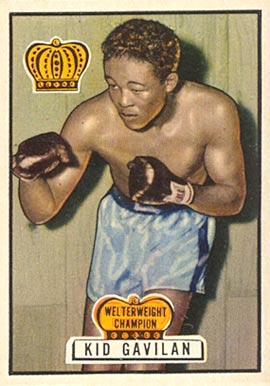
Cuba_Flag_48Gerardo González (January 6, 1926 – February 13, 2003), better known in the boxing world as Kid Gavilan, was a former world welterweight champion born in Camagüey, Cuba. Given the name Kid Gavilan by manager Fernando Balido. He was named after a cafe Balido owned, “El Gavilan” (The Hawk).

Gavilan was managed by Yamil Chade, a boxing manager (based in Puerto Rico) who also directed the careers of Wilfredo Gómez, Wilfred Benítez, Carlos De León and Félix Trinidad among others. He started as a professional boxer on the evening of June 5, 1943, when he beat Antonio Diaz by a decision in four rounds in Havana. His first ten bouts were in Havana, and then he had one in Cienfuegos, but soon he returned to Havana for three more wins. After 14 bouts, he left Cuba for his first fight abroad, and he beat Julio César Jimenez by a decision in 10 rounds in his first of three consecutive fights in Mexico City. It was there that he suffered his first defeat, at the hands of Carlos Macalara by a decision. They had an immediate rematch, this time in Havana, and Gavilan avenged that loss, winning by decision too. Gavilan had a record of 25 wins, 2 losses and 1 draw already when he had his first fight on American soil. This happened on November 1, 1946, when he beat Johnny Ryan by a knockout in five rounds at New York City.
155005

Move to the United States.

He would split his time between the Eastern coast of the United States and Havana in 1947, a year in which he went 11-1-1 with 3 knockouts. However, by 1948 he had decided to stay in the United States indefinitely. That year, he met some very important fighters, like former world champion Ike Williams, who beat him by decision in ten, Tommy Bell, against whom Gavilan won by decision, Sugar Ray Robinson, who beat him by decision in ten, and Tony Pellone, with Gavilan obtaining a decision against Pellone.

After beating Williams twice by decision, he met Robinson with Robinson’s world Welterweight title on the line. He lost his first title try, when Robinson won a decision in 15 rounds. Back to the drawing board, he beat Rocky Castellani, the then lightweight world champion Beau Jack, and Laurent Dauthuille (the latter of whom fought Gavilan in Montreal, Canada). All of them were beaten by decision in ten. In 1950, he went 10-4-1, beating Billy Graham, Sonny Horne, Robert Villemain, Eugene Hairston, and Tony Janiro among others.

http://youtu.be/mwbbWt7q9FE

World champion.

In 1951, after beating Tommy Ciarlo twice, once in Caracas, Venezuela, and Hairston once again, he finally became a world champion when he beat Johnny Bratton for the world Welterweight title by a decision in 15 on May 18. He defended that title for the first time against Graham, winning by a decision, and promptly made four non title bouts before the end of the year, including another win over Janiro and a draw in ten with Bratton.

In 1952, he defended the title with success against Bobby Dykes, Gil Turner, and with Graham in a third encounter between the two. All those fights were won by decision in 15. He also had five non title bouts, including three that were a part of an Argentinian tour. His third fight with Graham was his first world title defense in Havana and his fight with Dykes marked the first time that a black man and a white man had a boxing fight in then-segregated Miami, Florida. In 1953, Gavilan retained the title by a knockout in ten against Chuck Davey, by a decision in 15 against Carmen Basilio and by a decision in 15 against Bratton. He had seven non title bouts, losing to Danny Womber, but beating Ralph Tiger Jones. In 1954, Gavilan went up in weight.

After two more points wins, he challenged world Middleweight champion Bobo Olson for the world title, but lost a decision in 15. Then, he went down in weight, and lost his world Welterweight championship, by a decision in 15 to Johnny Saxton. That same year, he appeared on a Telemundo Puerto Rico poster that promoted that country’s first television transmission.
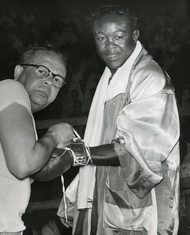
gavilanmundito__29515.1409590848.190.285

Personal.

Gavilan’s wife, Leonor, gave birth to his daughter, Victoria, in 1954.

Later career and retirement.

From that point until 1958, when he retired, he had a career of ups and downs. He lost to Dykes, Jones, Eduardo Lausse, former world champion Tony DeMarco, Vince Martinez and Gaspar Ortega, but he also beat Ortega, Jones and Chico Vejar, among others. After losing to Yama Bahama by decision in ten on June 18, 1958, he never fought again, announcing his retirement on September 11 of that year. Gavilan was one of the few boxers never knocked out in their professional careers. In 1966, he was inducted into the original boxing Hall of Fame, and later at the International Boxing Hall Of Fame in Canastota, New York. He had a record of 107 wins, 30 losses and 6 draws, with one no contest (boxing) and 27 wins by knockout in a career that spanned 143 professional fights.

Inducted into the World Boxing Hall of Fame in 1985 and the International Boxing Hall of Fame in 1990.
In the February 2008 issue of The Ring, Gavilan was named the 3rd greatest welterweight of all-time.
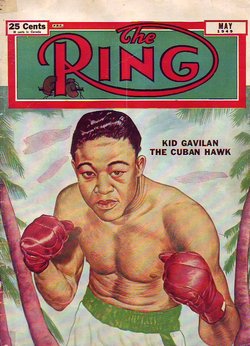
250px-49May

Death.

Gavilan died in Miami, Florida of a heart attack at age 77. After his death from a heart attack in 2003, Gavilan was buried in a pauper’s grave in Our Lady of Mercy Cemetery in Miami, Florida. In 2005, The Ring 8 Veterans Association and a group that included Angelo Dundee, Roberto Duran, Emile Griffith, Ray Mancini, James (Buddy) McGirt, Leon Spinks, and Mike Tyson paid to have Gavilan’s body exhumed and moved to another section of the cemetery and have a memorial headstone erected to honor his contributions to boxing.

Agencies/Various/Wiki/InternetPhotos/youtube/thecubanhistory.com
The Cuban History, Hollywood.
Arnoldo Varona, Editor.

CUBA PHOTOS.
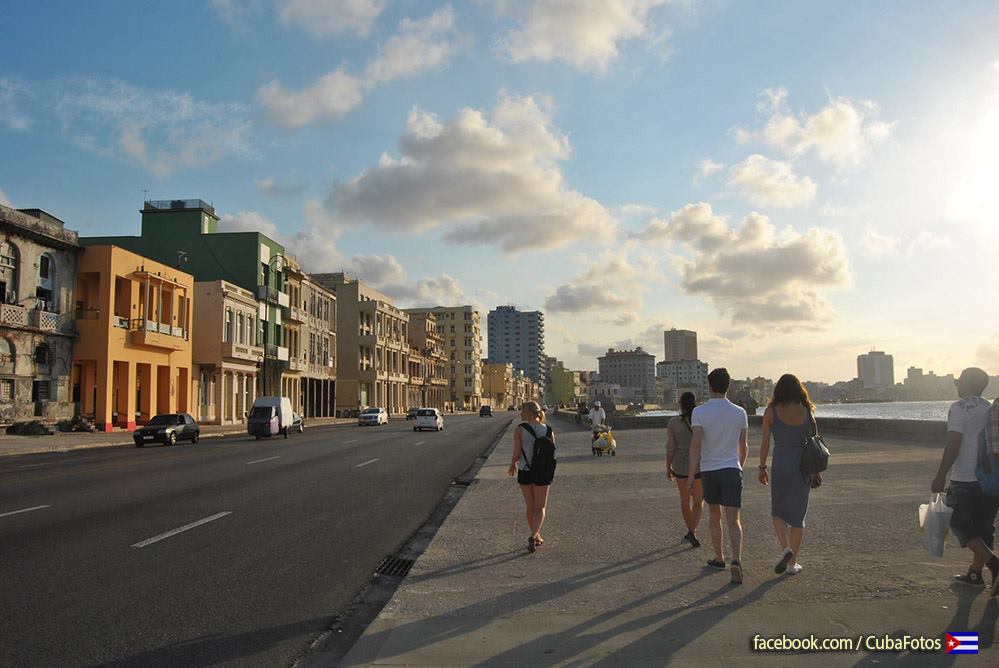
CUBA HOY/TODAY:  Turistas y el Malecón de la Habana.

CUBA HOY/TODAY: Turistas y el Malecón de la Habana.

Cuba_Flag_48 Gerardo González (06 de enero de 1926 – 13 de febrero de 2003), mejor conocido en el mundo del boxeo como Kid Gavilan, fue un ex campeón mundial de peso welter nacido en Camagüey, Cuba. Dado el nombre de Kid Gavilan Gerente Fernando Balido. Fue nombrado después de un café Balido de propiedad, “El Gavilan” (el halcón).

Gavilan fue manejado por Yamil Chade, un manager de boxeo (con sede en Puerto Rico) quien también dirigió las carreras de Wilfredo Gómez, Wilfred Benítez, Carlos De León y Félix Trinidad entre otros. Se inició como boxeador profesional en la tarde del 05 de junio de 1943, cuando derrotó a Antonio Diaz por decisión en cuatro asaltos en la Habana. Sus diez primeros combates fueron en la Habana y luego tuvo uno en Cienfuegos, pero pronto regresó a la Habana para tres victorias más. Después de 14 peleas, él salió de Cuba para su primera pelea en el extranjero, y venció a Julio César Jiménez por decisión en 10 rounds en su primera de tres peleas consecutivas en la ciudad de México. Era allí que él sufrió su primera derrota, a manos de Carlos Macalara por una decisión. Tenían una revancha inmediata, esta vez en la Habana, Gavilan vengó esa pérdida, ganando por decisión demasiado. Gavilán tenía un récord de 25 victorias, 2 derrotas y 1 empate ya cuando tuvo su primera pelea en suelo estadounidense. Esto sucedió en 01 de noviembre de 1946, cuando derrotó a Johnny Ryan por un nocaut en cinco asaltos en la ciudad de Nueva York.

155005

Hacia los Estados Unidos.

Él dividiría su tiempo entre la costa este de los Estados Unidos y la Habana en 1947, un año en el que fue 11-1-1 con 3 nocauts. Sin embargo, por 1948 había decidido permanecer en Estados Unidos indefinidamente. Ese mismo año, conoció a algunos luchadores muy importantes, como el ex campeón del mundo Ike Williams, quien lo venció por decisión en diez, Tommy Bell, contra la cual Gavilán ganó por decisión, Sugar Ray Robinson, quien lo venció por decisión en diez y Tony Pellone, con obtención de una decisión contra Pellone Gavilan.

Tras vencer a Williams dos veces por decisión, conoció a Robinson con mundo peso welter de Robinson en la línea. Perdió su primer intento de título, cuando Robinson ganó por decisión en 15 asaltos. Volver a la mesa de dibujo, venció a Rocky Castellani, el campeón mundial de peso ligero luego Beau Jack y Laurent Dauthuille (el último de los cuales lucharon Gavilan en Montreal, Canadá). Todos ellos fueron golpeados por decisión en diez. En 1950, fue 10-4-1, superando a Billy Graham, Sonny Horne, Robert Villemain, Eugene Hairston y Tony Janiro entre otros.

http://youtu.be/mwbbWt7q9FE

Campeón del mundo.

En 1951, después de vencer a Tommy Ciarlo dos veces, una vez en Caracas, Venezuela y Hairston nuevamente, él finalmente se convirtió en un campeón del mundo cuando derrotó a Johnny Bratton para el mundo título de peso welter por decisión en 15 el 18 de mayo. Defendió ese título por primera vez contra Graham, ganando por decisión y rápidamente hizo cuatro peleas por el título no antes del final del año, incluyendo otra victoria sobre Janiro y un empate en diez con Bratton.

En 1952, él defendió el título con éxito contra Bobby Dykes, Gil Turner y con Graham en un tercer encuentro entre los dos. Todas esas peleas fueron ganadas por decisión en 15. Él también tenía cinco peleas por el título no, incluyendo tres que fueron parte de una gira Argentina. Su tercera pelea con Graham fue su primera defensa del título mundial en la Habana y su pelea con diques marcó la primera vez que un hombre negro y hombre blanco tenían una pelea de boxeo en Miami entonces segregados. En 1953, Gavilan retuvo el título por nocaut en diez contra Chuck Davey, por decisión en 15 contra Carmen Basilio y por decisión en 15 contra Bratton. Tenía siete peleas por el título no, perder a Danny Womber, pero superando a Ralph Tiger Jones. En 1954, Gavilan subió de peso.

Después de dos puntos más gana, él desafió a campeón peso mediano Bobo Olson por el título mundial, pero perdió por decisión en 15. Entonces, bajó de peso y había perdido su campeonato mundial de peso welter, por decisión en 15 a Johnny Saxton. Ese mismo año, él apareció en un cartel de Telemundo Puerto Rico que promueve la primera transmisión de televisión de ese país.

gavilanmundito__29515.1409590848.190.285

Personal.

Esposa de Gavilan, Leonor, dio a luz a su hija, Victoria, en 1954.

Más últimos carrera y retiro.

Desde ese punto hasta 1958, cuando se retiró, él tenía una carrera de altibajos. Él perdió a diques, Jones, Eduardo Lausse, mundo campeón Tony DeMarco y Vince Martinez Gaspar Ortega, sino también venció a Ortega, Jones y Chico Vejar, entre otros. Después de perder a Yama Bahama por decisión en diez el 18 de junio de 1958, nunca combatió de nuevo, anuncia su retiro el 11 de septiembre de ese año. Gavilan fue uno de los pocos boxeadores que nunca noqueados en su carrera profesional. En 1966, él fue admitido en la original Boxeo Salón de la fama y más tarde en el Hall de fama del boxeo internacional en Canastota, Nueva York. Tenía un récord de 107 victorias, 30 pérdidas y 6 dibuja, con uno sin disputa (boxeo) y 27 triunfos por golpe de gracia en una carrera que abarcó 143 peleas profesionales.

Ingresa en el mundo Boxeo Salón de la fama en 1985 y la Internacional de Boxeo Salón de la fama en 1990.
En la edición de febrero de 2008 de The Ring, Gavilan fue nombrado al 3 de peso welter más grande de todos los tiempos.

250px-49May

Muerte.

Gavilan murió en Miami, Florida de un ataque cardíaco a los 77 años. Después de su muerte en 2003 de un ataque cardíaco Gavilan fue enterrado en la tumba de un mendigo en el cementerio de nuestra Señora de la misericordia en Miami, Florida. En 2005, la Asociación de veteranos 8 anillo y un grupo que incluye Angelo Dundee, Roberto Durán, Emile Griffith, Ray Mancini, James (compinche) McGirt, Leon Spinks y Mike Tyson pagaron a tener cuerpo de Gavilan exhumaron y trasladado a otra sección del cementerio y una lápida memorial erigida para honrar sus contribuciones a boxeo.

Agencies/Various/Wiki/InternetPhotos/youtube/thecubanhistory.com
La historia de Cuba, Hollywood.
Arnoldo Varona, Editor.
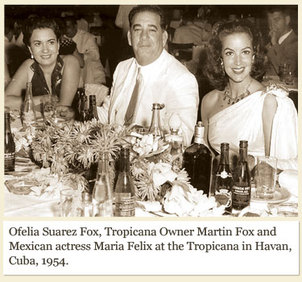
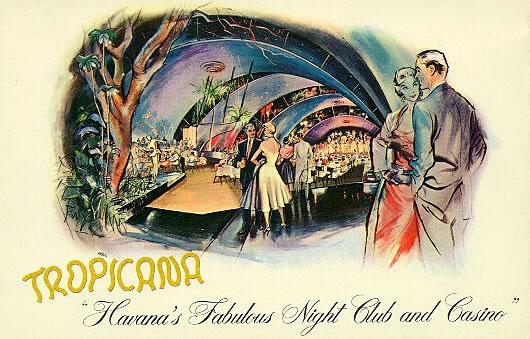
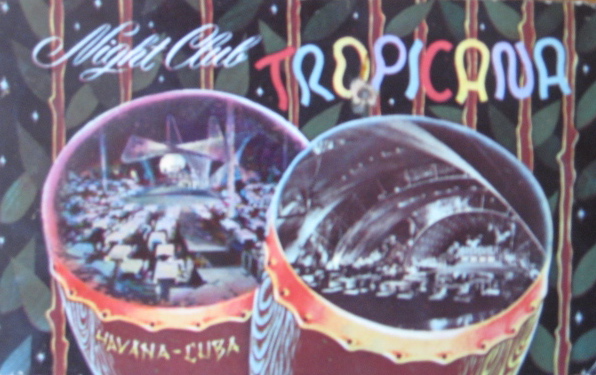
TROPICANA nightclub, La Havana, Martin Fox dream. ** CABARET TROPICANA, La Habana, el sueño de Martin Fox.

4890207 TROPICANA NIGHTCLUB, LA HAVANA, MARTIN FOX DREAM.

Martin Fox was the man who made ​​big at Tropicana Nightclub. He was a player, but like others of his kind, seldom approached the game to bet. It was to win. If he went with the door wide Tropicana gambling, the fact remains that interested cabaret take the possibilities to its conclusion. The game was for him a way of life and how to access a social universe that perhaps otherwise would have been barred. The cabaret, however, was his dream. In his memoirs, published in New York in 2005, under the title of Tropicana Nights: The Life and Times of the legendary Cuban Nightclub, his wife Ofelia says that Cubans are able to sacrifice everything for a beat. Martin Fox provided this pleasure in a splendid party room that the rhythm of the best music and choreographed a bold move, scantily clad, the most stunning Caribbean mulatto.

All consulted sources state that Fox was born in Ciego de Avila. A reader writes following the publication page last week and just signed with the name of your e-mail Orlando, refers instead he was born and spent his early childhood in Calimete province of Matanzas. He worked as an agricultural laborer. He was assistant mechanic and then a mechanic in central Spain, in the same province, where he met Florentino (Tino) Hernandez, who will, until his death in 1956, a major in the life of Fox role and that my correspondent promises to have more Come in. Fox and Tino are installed in Ciego de Ávila and live become peddlers of meats, fruits and vegetables. Christen truck in which they move their merchandise as the war stories and camouflaging with the cart, pointers make the pellet.

58_big

Other sources refer, however, that Fox, a sugar mill turner, suffered an accident that injured her left hand and took the job. It was then turned to the ball, first as a timekeeper or pointer, and later as a banker. No delay to become the most notorious region banker. Your betting bank on Independence Street, the main shopping street of the city of Ciego, was hidden behind an innocuous sale of cigarettes and tobacco and notes of the National Lottery. That store where to place their bets, together representatives from all sectors of society avileña were given, it was called, Guillermo Jimenez says in his book The owners of Cuba, La Vallita.

Reach the capital of the island in 1941 and no delay in controlling the ball in Centro Habana. Starts to approach Tropicana in 1943 and the following year is associated with Victor de Correa, founder and owner. Purchase this award gambling casino cabaret. Buy after the widow of Truffin the estate of just over six acres where the nightclub is located and pulling strap ends the game under 92 000 pesos it owed him. The year is 1950 and Martin Fox is the sole owner of Tropicana.

2134052798_c7b6c5ea20_o

Rodney and the glass arches

Decides to shake up the party room. Want to make the most dazzling Tropicana cabaret country; make it a reference for international tourism. This effort leads him to remodel the house and hire a new choreographer. In March 1952 the legendary Roderick Neyra, a mulatto short, thin mustache and mischievous smile, known as Rodney in showbiz, assumes the choreography of this night establishment of 72nd Street in Marianao.

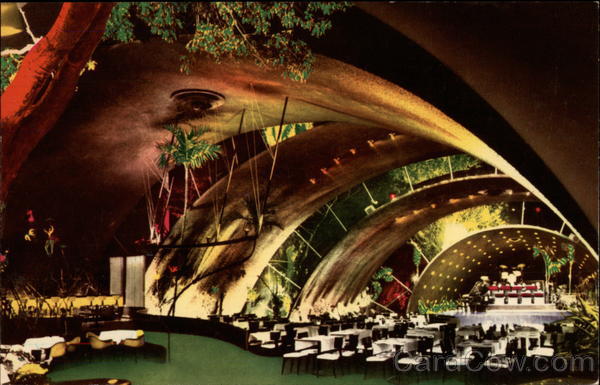
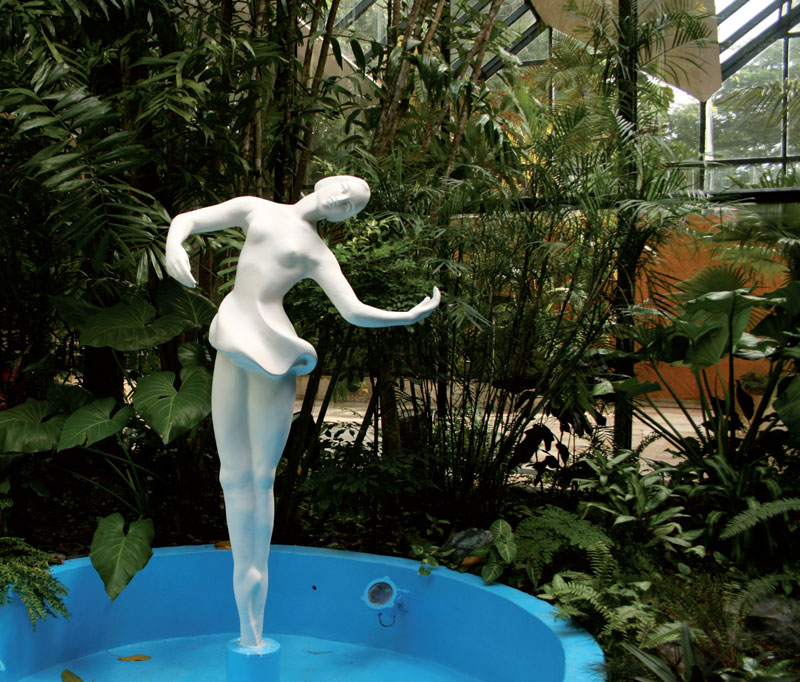
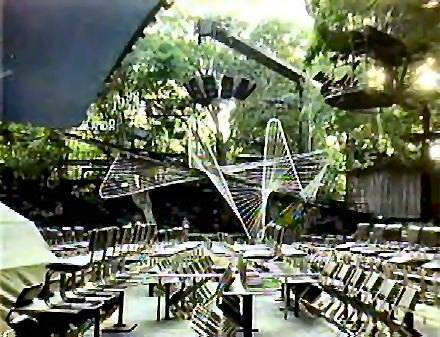
A year before Fox had entered into negotiations with the architect Max Borges, son. Tropicana remodeling extends to 1954 and is one of the masterpieces of the Modern Movement architecture works on the island Regarding this says Eduardo Luis Rodriguez in the book on the subject published editions Union in 2011.: “The work is in additions in the gardens of cabaret, existing since 1939 the architect solved the most spectacular of all elements of the project, the Arcos de Cristal Lounge (1951) with a system composed of five thin shell concrete vaults placed eccentrically and decreasing in size, producing a telescopic effect that runs the space to the area of ​​the orchestra. The atmosphere of this room is exceptional and integrates nature through glasses close, arched, the spaces between each vault. The next room, Under the Stars (1952) is outdoors, while the casino (1954) leads to the ultimate consequences the integrated approach between architecture and nature. ”
For this project, Max Borges Jr. earned the Gold Medal of the National Association of Architects. It is one of the few Cuban works which included Henry Russell Hitchcock on Latin American Architecture exhibition held at the Museum of Modern Art in New York, in 1955 In 2002 the entire area was declared a National Monument.

3_1

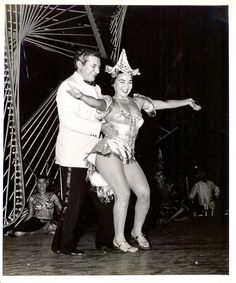
Rodney made ​​a way to make and design the entertainment that reaches today. Produced the Voodoo ritual, Carabalí, Mayombe, Rio Carnival, Copacabana, Tambó, Rumbo al Ritmo shows and Waldorf and color … that gave him international fame Tropicana. Participated in their performances the likes of Josephine Baker, Nat King Cole, Tongolele, Carmen Miranda. Maurice Chevalier, Xavier Cugat, Liberace and our great Benny Moré, among others.

Although Rodney is a fact that is not known, the artist, afflicted by leprosy, not debut at Tropicana in 1952 I had been there before, says Leonardo Acosta in the first volume of his Cuban Download: jazz in Cuba, as a helper and assistant David Lichine and Julio Richards, in charge of the choreography of the show Congo Pantera, who gathered on stage at the village hall in Mariano best world ballet figures belonging to the cast of the ballet Russe de Monte Carlo Colonel Basil and a hundred Cuban dancers who moved to the frenetic pace of drums Chano Pozo and exciting music of Gilberto Valdés. That meeting Lichine-Rodney-Chano, accurate Acosta, would be for the entertainment in Cuba as important as it was the meeting with Dizzy Gillespie to Chano Afro-Cuban jazz. Havana Ballet stay Colonel Basil deserves a separate page. What brought Pro Arte Musical and theatrical performances at the Auditorium were a hit with audiences and critics, but so expensive, an economic failure. That famous company got stranded in Havana, without a penny to return to Europe until Victor Correa offered money and return tickets in exchange for their presentations Congo Pantera.

Rodney began as a dancer. She danced and choreographed undertook small tables in the Shanghai theater, the Havana Chinatown, with its sordid if not pornographic shows. However, today is what he did for the Coliseum Zanja Street a mix of sex, music, dance and humor history of his great productions for the cabaret. When your disability became more and more apparent-the gloves allow you to hide the deformity of his hands left his career as a dancer and went every day in the choreography. In 1945 organized the show in Las mulatas fire, with great success in Cuba and Mexico, and in 1950 is now the choreographer of the cabaret Sans Souci until hired by Martin Fox, jumps to Tropicana, although sometimes simultaneous choreography the two cabarets. As Leonardo Acosta says in that book, competition between Sans Souci, Tropicana and Montmartre would gradually becoming a “fraternal rivalry” as the three giants of the Havana night world started transforming into fiefdoms of various “families” with similar interests.

Cabaret Tropicana3

Appears Santo Trafficante

Tropicana passes today as the only major gaming establishments in Havana that was wholly owned by Cubans. To remain independent and not fall into the aegis of the American Mafia, cabaret paid a hefty sum to the “protection” of President Batista. Their managers and clerks were Fox family or friends and their business cronies bolitero and therefore Cubans. Moreover, the cabaret show allowed visitors from around the world the work unfolded dancers, musicians, designers, costume designers … all born in Cuba. In the same casino ballroom, unlike most gambling houses, Cubans were almost all employees.

How was mob stuck in Tropicana, is a difficult subject to pin down. It is said that Rodney left the Sans Souci celebrities and great players to follow him Tropicana. Then Santo Trafficante, dealer gaming cabaret Highway Arroyo Arenas or owner of the establishment, say the scholars, needed to “establish a beachhead on Tropicana to show that the mafia was guarantor of all thriving in their territory “.

card00985_fr-1

Initially, Trafficante approached Fox subtly and cautiously. It gave Ophelia, wife of Fox, a silver mink coat, and from there took on the task of making the couple. When Fox called the phone was identified as El Solitario, to make you think he acted alone, which was not true. It was a smart move. For a man like Fox, who had made ​​for himself, and ran a very personal business, sell or partner with one man was more likely to deliver it to a conglomerate like the mafia. Also tried the Tampa mobster earning employees Fox with spectacular gifts. A Felipe Dulzaides, director of The Harmonics, musical group that appeared regularly in Tropicana and admire said, one day handed a set of keys. “This is for you and the kids,” he said. When leaving the cabaret Dulzaides was speechless when he saw the Cadillac Seville latest model, new package, Trafficante, ‘no compromise’ was presented to the musicians. One of the men trusted Trafficante was a regular on Tropicana. Although it could be seen as a breakthrough in the land of another, their presence is not only justified but encouraged. Norman Rothman, an elegant middle-aged Jewish nightclub owner, was the “buddy” of Olga Chaviano, stunning and seductive Cuban vedette contained in the list of Tropicana.

Did business between Fox and Trafficante? If there are, how far do they go? It is not known. Tells about an American reporter, “Fox understood the dictates of the underworld. If it suited their interests and alliance with Trafficante Mafia in Havana, I would. All that was needed was to convince. ”

CiroBianchiRoss / InternetPhotos / www.thecubanhistory.com
The Cuban History, Hollywood.
Arnoldo Varona, Editor.
10710944_10152659525746083_8704532855630500232_n CUBA PHOTOS.

EL CABARET TROPICANA, EL SUEÑO DE MARTIN FOX.

Martín Fox fue el hombre que hizo grande a Tropicana. Era un jugador, pero, al igual que otros de su misma especie, rara vez se acercó al juego para apostar. Lo hacía para ganar. Si con él entró por la puerta ancha en Tropicana el juego de azar, no es menos cierto que le interesó llevar las posibilidades del cabaré hasta sus últimas consecuencias. El juego fue para él un medio de vida y la forma de acceder a un universo social que tal vez de otra forma le hubiera sido vedado. El cabaré, en cambio, fue su sueño. En sus memorias, publicadas en Nueva York en el año 2005, bajo el título de Tropicana Nights: The Life and Times of the legendary Cuban Nightclub, su esposa Ofelia dice que el cubano es capaz de sacrificarlo todo a cambio de un minuto de placer. Martín Fox proporcionaba ese placer en una esplendente sala de fiesta en la que al compás de la mejor música y una atrevida coreografía se movían, ligeras de ropa, las más despampanantes mulatas del Caribe.

card00985_fr-1

Todas las fuentes consultadas consignan que Fox nació en Ciego de Ávila. Un lector que escribe a raíz de la publicación de la página de la pasada semana y que firma simplemente con el nombre de Orlando su mensaje electrónico, refiere en cambio que nació y pasó su primera juventud en Calimete, provincia de Matanzas. Trabajó como obrero agrícola. Fue ayudante de mecánico y luego mecánico en el central España, de la misma provincia, donde conoció a Florentino (Tino) Hernández, que tendrá, hasta su fallecimiento en 1956, un papel importante en la vida de Fox y que mi corresponsal promete contar más adelante. Fox y Tino se instalan en Ciego de Ávila y para vivir se convierten en vendedores ambulantes de viandas, frutas y vegetales. Bautizan la carretilla en la que mueven su mercancía como La Batallita y, camuflándose con el carretón, se hacen apuntadores de la bolita.

Otras fuentes refieren, sin embargo, que Fox, tornero de un central azucarero, sufrió un accidente laboral que le lesionó la mano izquierda y le costó el empleo. Fue entonces que se dedicó a la bolita, primero como listero o apuntador, y más tarde como banquero. No demoraría en convertirse en el banquero más connotado de la región. Su banco de apuestas, en la calle Independencia, la arteria comercial más importante de la ciudad de Ciego, se disimulaba tras un inocuo expendio de cigarros y tabacos y billetes de la Lotería Nacional. Esa tienda donde, para hacer sus apuestas, se daban cita representantes de todos los sectores de la sociedad avileña, se llamó, dice Guillermo Jiménez en su libro Los propietarios de Cuba, La Vallita.

3_1

Llega a la capital de la Isla en 1941 y no demora en controlar la bolita en Centro Habana. Comienza su acercamiento a Tropicana en 1943 y al año siguiente se asocia con Víctor de Correa, su fundador y propietario. Compra a este la concesión del casino de juego del cabaré. Compra después a la viuda de Truffin el predio de algo más de dos hectáreas y media donde se ubica el centro nocturno y termina sacando a Correa del juego en virtud de los 92 000 pesos que le adeudaba. Corre el año de 1950 y Martín Fox es el propietario único de Tropicana.

Rodney y arcos de cristal

Decide darle un vuelco a la sala de fiesta. Quiere hacer de Tropicana el cabaré más deslumbrante del país; convertirlo en una referencia para el turismo internacional. Ese empeño lo lleva a remodelar el inmueble y a contratar a un nuevo coreógrafo. En marzo de 1952 el mítico Roderico Neyra, un mulato de baja estatura, bigote fino y sonrisa pícara, conocido como Rodney en el mundo del espectáculo, asume las coreografías de este establecimiento nocturno de la calle 72, en Marianao.

Cabaret Tropicana3

Un año antes Fox había entrado en tratos con el arquitecto Max Borges, hijo. La remodelación de Tropicana se extiende hasta 1954 y es una de las obras cumbres del Movimiento de la Arquitectura Moderna en la Isla. Respecto a esta dice Eduardo Luis Rodríguez en el libro que sobre el tema publicó Ediciones Unión, en 2011: «La obra consiste en adiciones en los jardines del cabaret, existente desde 1939. El arquitecto resolvió el más espectacular de todos los elementos del proyecto, el salón Arcos de Cristal (1951) con un sistema de cáscaras compuesto por cinco delgadas bóvedas de hormigón colocadas excéntricamente y decrecientes en tamaño, lo que produce un efecto telescópico que dirige el espacio hacia la zona de la orquesta. El ambiente de este salón es excepcional e integra la naturaleza a través de los vidrios que cierran, en forma de arco, los espacios entre cada bóveda. El salón contiguo, Bajo las Estrellas (1952) está al aire libre, mientras que el casino (1954) lleva a las últimas consecuencias la concepción integradora entre arquitectura y naturaleza».
Por este proyecto Max Borges, hijo, mereció la Medalla de Oro del Colegio Nacional de Arquitectos. Es una de las pocas obras cubanas que incluyó Henry Russell Hitchcock en la exposición Latin American Architecture, celebrada en el Museo de Arte Moderno de Nueva York, en 1955. En 2002 todo el conjunto fue declarado Monumento Nacional.

Rodney marcó una manera de hacer y concebir el mundo del espectáculo que llega hasta hoy. Produjo los shows Vudú ritual, Carabalí, Mayombe, Carnaval carioca, Copacabana, Tambó, Rumbo al Waldorf y Ritmo y color… que le dieron fama internacional a Tropicana. En sus espectáculos participaron artistas de la talla de Josephine Baker, Nat King Cole, Tongolele, Carmen Miranda. Maurice Chevalier, Xavier Cugat, Liberace y nuestro gran Benny Moré, entre otros.

bc6c3f037688d996f994eacd06f392a7

Aunque sea un dato de Rodney que se desconozca, ese artista, aquejado por la lepra, no debuta en Tropicana en 1952. Había estado allí antes, dice Leonardo Acosta en el primer tomo de su Descarga cubana: el jazz en Cuba, como figurante y asistente de David Lichine y Julio Richards, a cargo de la coreografía del show Congo Pantera, que juntó en el escenario de la sala de fiestas de Marianao a las mejores figuras del ballet clásico mundial, pertenecientes al elenco del Ballet Ruso de Montecarlo del coronel Basil y a un centenar de bailarines cubanos que se movieron al ritmo desenfrenado de los tambores de Chano Pozo y la música trepidante de Gilberto Valdés. Ese encuentro de Lichine-Rodney-Chano, precisa Acosta, sería para el mundo del espectáculo en Cuba tan importante como lo fue el encuentro de Chano con Dizzy Gillespie para el jazz afrocubano. La estancia habanera del ballet del coronel Basil bien merece una página aparte. Lo trajo Pro Arte Musical y sus presentaciones en el teatro Auditórium fueron un éxito de público y de crítica, pero, por lo costosas, un fracaso económico. Aquella famosa compañía quedó varada en La Habana, sin un centavo para retornar a Europa hasta que Víctor de Correa le ofreció dinero y los pasajes de regreso a cambio de sus presentaciones en Congo Pantera.

Rodney se inició como bailarín. Bailó y acometió pequeños cuadros coreográficos en el teatro Shanghái, del Barrio Chino habanero, con sus espectáculos sórdidos cuando no pornográficos. Sin embargo, hoy se ve en lo que hizo para el coliseo de la calle Zanja —una mezcla de sexo, música, baile y humor— el antecedente de sus grandes producciones para el cabaré. Cuando su incapacidad física se hizo mayor y más evidente —los guantes le permitían ocultar la deformidad de las manos— abandonó su carrera como bailarín y se metió cada día más en la coreografía. En 1945 organizó el espectáculo de Las mulatas de fuego, con gran éxito en Cuba y en México, y en 1950 es ya el coreógrafo del cabaré Sans Souci hasta que, contratado por Martín Fox, salta a Tropicana, aunque en ocasiones simultanea la coreografía de los dos cabarés. Como dice Leonardo Acosta en el libro citado, la competencia entre Sans Souci, Tropicana y Montmartre poco a poco se iría convirtiendo en una «emulación fraterna» a medida que los tres gigantes del mundo nocturno habanero se iban transformando en feudos de varias «familias» con intereses similares.

58_big

Aparece Santo Trafficante

Tropicana pasa hasta hoy como el único de los grandes establecimientos del juego en La Habana que era propiedad exclusiva de cubanos. Para mantenerse independiente y no caer en la égida de la mafia norteamericana, el cabaré pagaba con una jugosa suma la «protección» del presidente Batista. Sus directivos y empleados administrativos eran familia de Fox o amigos y compinches de sus negocios como bolitero y, por tanto, cubanos. Por otra parte, el cabaré permitía mostrar a visitantes de todo el mundo el trabajo que desplegaban bailarines, músicos, diseñadores, vestuaristas… nacidos todos en Cuba. En el mismo casino de la sala de fiestas, a diferencia de la mayor parte de las casas de juego, eran cubanos casi todos sus empleados.

Cuán metida estuvo la mafia en Tropicana, es un tema difícil de precisar. Se dice que con Rodney salieron del Sans Souci las celebridades y los grandes jugadores para seguirlo a Tropicana. Entonces Santo Trafficante, concesionario del juego en el cabaré de la carretera de Arroyo Arenas o propietario del establecimiento, dicen los estudiosos del tema, necesitaba «establecer una cabeza de playa en Tropicana para demostrar que la mafia era garante de todo lo que prosperaba en su territorio».

IMG_0005

En un inicio, Trafficante se acercó a Fox sutilmente y con cautela. Obsequió a Ofelia, la esposa de Fox, un abrigo de visón plateado, y a partir de ahí se dio a la tarea de ganarse a la pareja. Cuando llamaba a Fox por teléfono se identificaba como El Solitario, a fin de hacerle pensar que actuaba solo, lo que no era cierto.

Era una jugada inteligente. Para un hombre como Fox, que se había hecho por sí mismo y dirigía un negocio muy personalizado, venderle o asociarse con un solo hombre resultaba más factible que entregarlo a un conglomerado como la mafia. Trató también el mafioso de Tampa de ganarse a los empleados de Fox con regalos espectaculares.

A Felipe Dulzaides, director de Los Armónicos, grupo musical que se presentaba de manera habitual en Tropicana y que decía admirar, entregó un día un juego de llaves. «Esto es para ti y los chicos», dijo. Al salir del cabaré, Dulzaides quedó sin palabras cuando vio el Cadillac Seville último modelo, nuevo de paquete, que Trafficante, «sin compromiso alguno» obsequió a los músicos. Uno de los hombres de confianza de Trafficante era asiduo en Tropicana. Aunque podía verse como una irrupción en terreno ajeno, su presencia no solo se justificaba sino que se animaba. Norman Rothman, un elegante judío de mediana edad y dueño de clubes nocturnos, era el «amiguito» de Olga Chaviano, despampanante y seductora vedette cubana que figuraba en la nómina de Tropicana.

¿Hubo negocios entre Fox y Trafficante? De haberlos, ¿hasta dónde llegaron? No se sabe. Dice un periodista norteamericano al respecto: «Fox entendía los dictados del hampa. Si convenía a sus intereses aliarse con Trafficante y la mafia de La Habana, lo haría. Lo único que hacía falta era convencerle».

CiroBianchiRoss/InternetPhotos/www.thecubanhistory.com
The Cuban History, Hollywood.
Arnoldo Varona, Editor.
Wifredo Lam, painter, sculptor, “The Jungle”. (born Sagua La Grande)

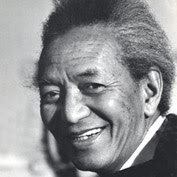
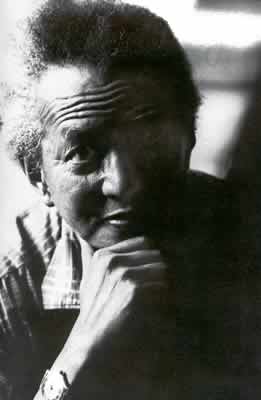
Wilfredo Lam fotoWifredo Óscar de la Concepción Lam y Castilla (Chinese: 林飛龍; pinyin: Lín Fēilóng; December 8, 1902 – September 11, 1982), better known as Wifredo Lam, was a Cuban artist who sought to portray and revive the enduring Afro-Cuban spirit and culture. Inspired by and in contact with some of the most renowned artists of the 20th century, Lam melded his influences and created a unique style, which was ultimately characterized by the prominence of hybrid figures. Though he was predominantly a painter, he also worked with sculpture, ceramics and printmaking in his later life.

Early life.

Wifredo Lam was born and raised in Sagua La Grande, a village in the sugar farming province of Villa Clara, Cuba. He was of mixed-race ancestry: his father, Yam Lam, was a Chinese immigrant and his mother, the former Ana Serafina Castilla, was born to a Congolese former slave mother and a Cuban mulatto father. In Sagua La Grande, Lam was surrounded by many people of African descent; his family, like many others, practiced Catholicism alongside their African traditions. Through his godmother, Matonica Wilson, a Santería priestess locally celebrated as a healer and sorceress, he was exposed to rites of the African orishas. His contact with African celebrations and spiritual practices proved to be his largest artistic influence.

In 1916, Lam moved to Havana to study law, a path that his family had thrust upon him. Simultaneously, he also began studying tropical plants at the Botanical Gardens. From 1918 to 1923, Lam studied painting at the Escuela de Bellas Artes. However, Lam disliked both academic teaching and painting. He left for Madrid in the autumn of 1923 to further his art studies.

Career in Europe.

Wifredo Lam - Your Own Life, 1942 at The Kreeger Art Museum Washington DC

In 1923, Lam began studying in Madrid under Fernando Álvarez de Sotomayor y Zaragoza, the curator of the Museo del Prado and teacher of Salvador Dalí. In the mornings he would attend the studio of the reactionary painter, while he spent his evenings working alongside young, nonconformist painters. At the Prado, Lam discovered and was awed by the work of Hieronymus Bosch and Pieter Bruegel I. While his early paintings were in the modernist Spanish tradition, his work soon became more simplified and decorative. Though Lam’s dislike for academic conservatism persisted, his time in Spain marked his technical development in which he began to merge a primitive aesthetic and the traditions of Western composition. In 1929, he married Eva Piriz but both she and their young son died in 1931 of tuberculosis; it is likely that this personal tragedy contributed to the dark nature of his work.

During the 1930s Lam was exposed to a variety of influences. In his work, the influence of Surrealism was discernible, as well as that of Henri Matisse. Throughout Lam’s travels through the Spanish countryside, he developed empathy for the Spanish peasants, whose strife, in some ways, mirrored that of the former slaves he grew up around in Cuba. Therefore, at the outbreak of the Spanish Civil War, Lam sided with the Republicans where he used his talent to fashion Republican posters and propaganda. Drafted to defend Madrid, Lam was incapacitated during the fighting in late 1937 and was sent to Barcelona. There, he met Helena Holzer, a German researcher, and the Catalan artist known as Manolo Huguë. Manolo gave Lam the letter of introduction that sparked his friendship with Picasso, whose artwork had impressed and inspired Lam a year before when he saw an exhibition in Madrid.

In 1938, Lam moved to Paris. Picasso quickly became a big supporter of Lam, introducing him to many of the leading artists of the time, such as Fernand Léger, Henri Matisse, Georges Braque and Joan Miró. Picasso also introduced him to Pierre Loeb, a Parisian art dealer; Loeb gave Lam his first exhibition at the Galerie Pierre Loeb in 1939, which received an enthusiastic response from critics.[5] Picasso and Lam also exhibited their work together at the Perls Galleries in New York in the same year. Lam’s work went from showing the influence of Matisse seen in his still lifes, landscapes and simplified portraits to being influenced by Cubism. Mainly working with gouache, Lam began producing stylized figures that appear to be influenced by Picasso. Much of his work in 1938 possessed emotional intensity; the subject matter ranged from interacting couples to women in despair and showed a considerably stronger African influence, seen in the figures’ angular outlines and the synthesis of their bodies.

While Lam began simplifying his forms before he came into contact with Picasso’s work, it is apparent that Picasso had a significant impact on him. With regard to Picasso’s exhibition, Lam said that it was “not only a revelation, but… a shock.” Lam gained the approval of Picasso, whose encouragement has been said to have led Lam to search for his own interpretation of modernism.

With the outbreak of World War II and the Germans invading Paris, Lam left for Marseille in 1940. There, he rejoined many intellectuals, including the Surrealists, with whom he had been associated since he met André Breton in 1939. In Marseille, Lam and Breton collaborated on the publication of Breton’s poem Fata Morgana, which was illustrated by Lam. Though the drawings he created in Marseille between 1940 and 1941 are known as the Fata Morgana suite, only about three inspired the illustrations for the poem. In 1941, Breton, Lam and Claude Lévi-Strauss, accompanied by many others, left for Martinique only to be imprisoned. After forty days, Lam was released and allowed to leave for Cuba, which he reached in midsummer 1941.

Havana years.

600full-wifredo-lam

Upon Lam’s return to Havana, he developed a new awareness of Afro-Cuban traditions. He noticed that the descendents of the slaves were still being oppressed and that the Afro-Cuban culture was degraded and made picturesque for the sake of tourism. He believed that Cuba was in danger of losing its African heritage and therefore sought to free them from cultural subjugation. In an interview with Max-Pol Fouchet, he said,
“I wanted with all my heart to paint the drama of my country, but by thoroughly expressing the negro spirit, the beauty of the plastic art of the blacks. In this way I could act as a Trojan horse that would spew forth hallucinating figures with the power to surprise, to disturb the dreams of the exploiters.”

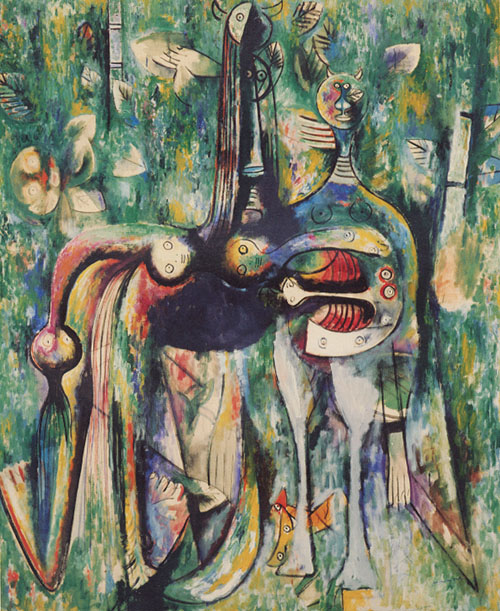
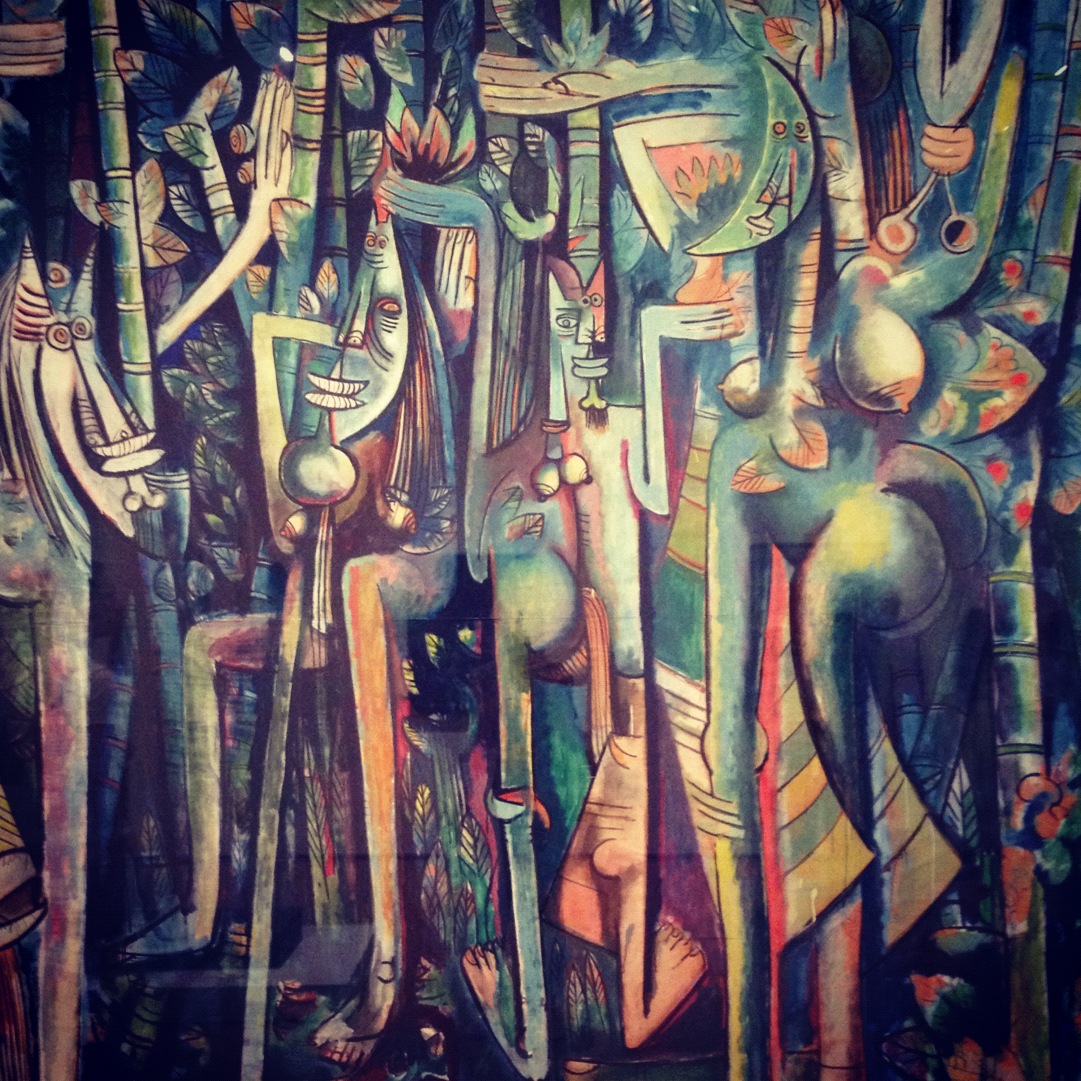
Additionally, his time in Cuba marked a rapid evolution of his style. Drawing from his study of tropical plants and familiarity with Afro-Cuban culture, his paintings became characterized by the presence of a hybrid figure—part human, animal and vegetal elements. His style was also distinctive because of its fusion of Surrealist and Cubist approaches with imagery and symbols from Santería. In 1943, he began his best-known work, The Jungle. It reflected his mature style, depicting four figures with mask-like heads, half-emerging from dense tropical vegetation. Later that year, it was shown in an exhibition at the Pierre Matisse Gallery in New York where it created controversy. The painting depicted the tension between Modernism and the vibrancy and energy of African culture. The Jungle was ultimately purchased by the Museum of Modern Art N.Y. It is often compared to Picasso’s Guernica, which is hung in the Museo Reina Sofía in Madrid.

Wifredo Lam with fellow artist Manuel Carbonell (1952)

wifredo_lam_flor_luna_d5370293h

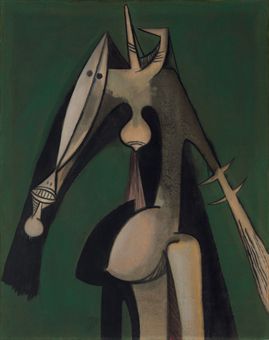
Lam continued to simplify and synthesize abstraction yet continued painting figurally; he also kept on developing the mythology and totemism that defined his style. In 1944, he married Helana Holzer, whom he divorced in 1950. In 1946, he and Breton spent four months in Haiti, enriching his already extensive understanding and knowledge of African divinity and magic rituals through observing Voodoun ceremonies. Although he later said that his contact with the African spirituality that he found throughout the Americas did not directly impact his formal style. African poetry, on the other hand, was said to have had a broadening effect on his paintings. In 1950 Wifredo Lam worked together with René Portocarrero and others in the village Santiago de Las Vegas, the group of painters worked on ceramic. In 1952, Lam settled in Paris after having divided his time between Cuba, New York and France.

Lam, who continued to sympathize with the common man, exhibited a series of paintings at Havana University in 1955, to demonstrate his support for the students’ protests against Batista’s dictatorship. Similarly, in 1965, 6 years after the revolution, Lam showed his loyalty to Castro and his goals of social and economic equality by painting El Tercer Mundo (The Third World) for the presidential palace. In 1960, Lam established a studio in Albissola Marina on Italy’s northwest coast and settled there with his wife Lou Laurin, a Swedish painter, and their three sons. In 1964, he was awarded the Guggenheim International Award and between 1966 and 1967 there were many retrospectives of his work throughout Europe. At the encouragement of Asger Jorn and after being intrigued by the local pottery making, Lam began to experiment with ceramics and had his first ceramic exhibition in 1975. He progressed to model sculptures and cast in metal in his twilight years, often depicting personages similar to those he had painted.

Wifredo Lam died on September 11, 1982 in Paris. Having had over one hundred personal exhibitions around the world, Lam had a well established reputation by the time of his death.

lam_1

Legacy.

Lam, like many of the most renowned artists of the 20th century, combined radical modern styles with the “primitive” arts of the Americas. While Diego Rivera and Joaquín Torres García drew inspiration from Pre-Columbian art, Wifredo Lam was influenced by the Afro-Cubans of the time. Lam dramatically synthesized the Surrealist and Cubist strategies while incorporating the iconography and spirit of Afro-Cuban religion. For that reason, his work does not singularly belong to an art movement.

He held the belief that society focused too much on the individual and sought to show humanity as a whole in his artwork. He painted generic figures, creating the universal. To further his goal, he often painted mask-like faces. While Cuban culture and mythology permeated his work, it dealt with the nature of man and therefore was wholly relatable to non-Cubans.

The Jungle.
IMG_4810
Wifredo Lam, The Jungle, gouache on paper, 1943, Museum of Modern Art.

The Jungle, which is considered Lam’s masterpiece, is exemplary of the artist’s mature style. The polymorphism, for which Lam is well known, juxtaposes aspects of humans, animals and plants, creating monstrous, hybrid creatures. The dense composition creates a claustrophobic feeling while the forms remain difficult to differentiate. The figures’ elongated limbs lack definition, while much emphasis is placed on their large feet, round buttocks, and African-inspired masked heads. Additionally, the iridescent quality of the forms enhances the painting’s tropical feeling.

The Jungle was not, however, intended to describe the primitivism of Cuba. Rather, Lam’s intention was to depict a spiritual state—that which is surely inspired by Santería; he sheds light on the absurdity that has become Afro-Cuban culture and more specifically on the way their traditions were cheapened for tourism. He sought to describe the reality of his people through the powerful work and gained acclaim and fame for doing so.

Art works.

Deux personnages. 1938. Collection Conseil général de Martinique, France.
Mother and Child. 1939. Art Institute of Chicago, Chicago.
Anamu. 1942. Museum of Contemporary Art, Chicago.
Satan. 1942. Museum of Modern Art, New York.
The Jungle. 1943. The Museum of Modern Art, New York.
Untitled. 1943. Museum of Fine Arts, Boston
Homenaje a jicotea. ca. 1943. Lowe Art Museum, University of Miami.
Untitled. 1945. Galerie Lelong, Paris.
Le guerrier. 1947. Galerie Lelong, Paris.
Le Reve. 1947. Hirshhorn Museum and Sculpture Garden, Smithsonian Institution.
Exodo. 1948. Howard University Gallery of Art, Washington, D.C.
L’Espirit aveugle. 1948. Indianapolis Museum of Art.
Lisamona. 1950. Collection Steven M. Greenbaum, New Hampshire.
Les enfants sans âme. 1964. Museum of Modern Art, Brussels.
El Tercer Mundo. 1965–1966. Museo Nacional de Bellas Artes, Havana.
The Shadow of Days. 1970.

Agencies/Various/Wiki/InternetPhotos/youtube/thecubanhistory.com
The Cuban History, Hollywood.
Arnoldo Varona, Editor.