> ¿WHAT HAPPEN TODAY IN ANGOLA? . (Photos) * * QUE PASA HOY EN ANGOLA ? (Fotos)

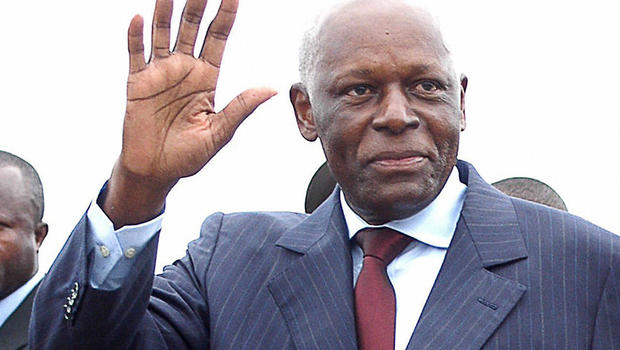
Jose-Eduardo-dos-Santos

¿QUE PASA HOY EN ANGOLA?

Lleva treinta y cinco años en el poder, es el padre de la mujer más rica de África y ha erigido en Angola uno de los regímenes más corruptos del mundo. Se llama José Eduardo dos Santos y está de visita en Cuba, desde donde se le ayudó a ganar una guerra que costó más de dos mil muertos cubanos.

Ayer en la tarde llegó a nuestro país el líder del Movimiento Popular para la Liberación de Angola (MPLA) y el gobierno lo recibió como un compañero de ruta. En su territorio se libró una larga y cruenta contienda bélica desde 1975, en la que participaron más de 377.000 militares cubanos y unos 50.000 cooperantes civiles nuestros. A pesar de tan prolongado e intenso contacto entre ambas naciones, en la Isla pocos están informados de la situación que vive hoy esa “tierra liberada”.

Dos Santos ha ejercido la presidencia de forma autoritaria y concentra en sus manos los poderes de presidente y primer ministro, además de controlar el parlamento, el sistema judicial y el principal partido político de la nación africana. En 2010 quedó aprobada una nueva Constitución que puso fin a la división de poderes y confirmó al presidente como comandante supremo de las Fuerzas Armadas y como la figura que determina la composición del Tribunal Supremo.

Angola se debate entre los mayores contrastes y las peores tragedias. La malversación de los fondos públicos y el desvío de los recursos del Estado son prácticas comunes que han permitido enriquecerse a muchos. Sus principales riquezas se han convertido en sus mayores fuentes de problemas. El petróleo, los diamantes y el uranio, sumados a sus reservas de oro, hierro y bauxita, han alimentado a toda una legión de corruptos que encuentran amparo bajo Dos Santos.

Las enfermedades diarreicas, la fiebre tifoidea, el paludismo, la tuberculosis y la llamada enfermedad del sueño campean por su respeto entre la población angoleña y colocan a la nación en una lista de países de “alto riesgo” para la salud. En la actualidad más de cuatro mil cubanos están realizando misiones en su territorio, en sectores como la educación, la construcción y la salud, pero eso representan apenas una gota en un océano de necesidades.

angola

El VIH también se ceba en los angoleños. Las cifras oficiales confiesan sólo unos 200.000 casos de personas que padecen el virus, pero basta recorrer sus calles y aldeas para percatarse de la alta incidencia social de ese flagelo. El maltrato a la mujer, la esclavitud infantil y las constantes delitos sexuales tienen una alta incidencia. El tráfico de cocaína y la venta de seres humanos para usarlos en la servidumbre resultan lucrativos negocios.

Como si todo este cuadro no fuera suficiente, Angola muestra índices preocupantes en cuanto a violaciones de derechos humanos. Las limitaciones a la libertad de asociación y reunión son algunos de los derechos vulnerados, lo cual coincide con idéntica práctica llevada a cabo por el “gobierno amigo” de la Plaza de la Revolución.

Sin embargo, los alarmantes indicadores en cuanto a salud y represión, no hacen desistir a muchos cubanos de volver a emprender la ruta angoleña. Esta vez no van a pelear en una trinchera, sino a ocupar empleos en clinicas, empresas o escuelas. En el país africano reciben una remuneración económica superior a los bajos salarios de la Isla. Las llamadas “misiones” en Angola son mucho más apetecidas por los profesionales médicos que las realizadas en Venezuela. Se venden a los precios más altos en el “mercado de las influencias” dentro del Ministerio de Salud Pública.

0813_isabel-dos-santos_390x2202

Los medios nacionales angoleños –y los cubanos– no han reportado que la primogénita del presidente ya superó la barrera de los dos mil millones de dólares en fortuna personal. Isabel dos Santos controla más del 25% de las acciones de Unitel, una de las dos compañías telefónicas del país. También tiene participaciones en empresas de Portugal, donde se comenta que es la principal accionista de la mayor empresa de televisión por cable del país. La falta de transparencia rodea al poder en Luanda, y las personas cercanas al gobernante se han hecho con los puestos claves de la economía nacional.

Mientras su padre se pasea por La Habana, a Isabel Dos Santos se le ubica en Brasil, donde la revista Veja ha sacado varias fotos de la multimillonaria angolana durante la ceremonia inaugural del Mundial. Según la publicación, unas 600 personas –entre hombres de negocio y famosos– habrían sido “acomodadas” por la empresaria en habitaciones de lujo de Sao Paulo, Rio de Janeiro y Belo Horizonte, para disfrutar de los partidos de fútbol y de la euforia del Mundial.

Historias como esas jamás serán contadas por la prensa oficial cubana. Las familias que perdieron a sus hijos en aquel lejano territorio no saben en qué se ha convertido el país donde cayeron los suyos.

14YMedio/Yoani Sanchez, La Habana/ InternetPhotos/www.thecubanhistory.com
QUE PASA HOY EN ANGOLA ?
The Cuban History, Hollywood.
Arnoldo Varona, Editor.

Cuba en Fotos.
10463903_10152516919346083_2913307392346194265_n

¿WHAT HAPPEN TODAY IN ANGOLA?

Take thirty-five years in power, is the father of the richest woman in Africa and has emerged as one of Angola’s most corrupt regimes in the world. His name is Jose Eduardo dos Santos and is visiting Cuba, where he helped win a war that cost over two thousand Cubans killed.

Jose-Eduardo-dos-Santos

Yesterday afternoon came to our country the leader of the Popular Movement for the Liberation of Angola (MPLA) and the government received him as a fellow traveler. In its territory a long and bloody military conflict since 1975, in which more than 377,000 Cuban military and 50,000 civilian aid our escaped. Despite such a long and intense contact between the two nations on the island few are aware of the situation that today that “liberated land.”

Dos Santos has held the presidency in an authoritarian and concentrated in his hands the powers of president and prime minister, besides controlling the parliament, the judiciary and the main political party of the African nation. In 2010 a new constitution was adopted that put an end to the division of powers and confirmed the president as supreme commander of the armed forces and as the figure that determines the composition of the Supreme Court.

Angola is currently dealing with higher contrasts and the worst tragedies. Misappropriation of public funds and diversion of state resources are common practices that have allowed many rich. Its main assets have become their major source of problems. Oil, diamonds and uranium, added to their gold reserves, iron and bauxite, have fueled a legion of corrupt they find shelter beneath Dos Santos.

angola

Diarrheal diseases, typhoid, malaria, tuberculosis and sleeping sickness campean call for his respect among the Angolan population and put the nation on a list of countries of “high risk” to health. At present more than four thousand Cubans are doing missions on its territory, in sectors such as education, construction and health, but that represents only a drop in an ocean of needs.

HIV also preys on Angolans. Official figures confess only about 200,000 cases of people suffering from the virus, but just walk the streets and villages to realize the high social impact of this scourge. The mistreatment of women, child slavery and constant sexual offenses have a high incidence. Cocaine trafficking and the sale of human beings for use in servitude are lucrative.

As if all this were not enough box, Angola indices shows worrying about human rights violations. Restrictions on freedom of association and assembly are some of the violated rights, which coincides with the same practice carried out by the “friendly government” in Revolution Square.

However, the alarming indicators in health and repression do not deter many Cubans to take back the Angolan route. This time they will not fight in a trench, but in clinics to fill jobs, companies or schools. In the African country are higher than the low wages of the island calls “missions” financial remuneration in Angola are much relished by medical professionals than those in Venezuela. Sold to the highest prices in the “market influences” within the Ministry of Public Health.

0813_isabel-dos-santos_390x2202

Angolan national media, and the Cubans have not reported the eldest of President already surpassed the barrier of two billion dollars in personal wealth. Isabel dos Santos controls more than 25% of the shares in Unitel, one of the two phone companies in the country. It also has holdings in Portugal, where it is said that is the main shareholder of the largest cable television company in the country. The lack of transparency surrounding the power in Luanda, and people close to the president have seized key positions in the national economy.

While her father walks around Havana, Isabel Dos Santos is located in Brazil, where the magazine Veja has released several photos of the Angolan multimillionaire during the opening ceremony of the World. According to the publication, some 600 people, including businessmen and celebrities-have been “accommodated” by businesswoman in luxury rooms of Sao Paulo, Rio de Janeiro and Belo Horizonte, to enjoy football matches and euphoria World.

Stories like these will never be told by the official Cuban press. Families who lost their children in that distant territory not know what has become the country fell theirs.

14YMedio/Yoani Sanchez, Havana / InternetPhotos / www.thecubanhistory.com
¿WHAT HAPPEN TODAY IN ANGOLA?
The Cuban History, Hollywood.
Arnoldo Varona, Editor.

A CITY WITH “SOUL”, SANTA CLARA. (Photos) * * UNA CIUDAD “CON ALMA”.

images (2)

UNA CIUDAD CON ALMA, SANTA CLARA.

Quien la camina a diario no ha perdido la magia de asombrarse ante sus virtudes y majestuosidad. Esa condición de seducir, más allá de cualquier otra virtud, la define como una ciudad con alma.

Aquí vinieron a asentarse el 15 de julio de 1689 un grupo de 18 familias de la cercana villa de Remedios. Escogieron un bello sitio alrededor de un frondoso tamarindo entre los ríos Sabana y Monte, rebautizados después como Cubanicay y Bélico.

Cerca de este último, en el hoy Parque del Carmen, lugar fundacional de la Gloriosa Santa Clara, el sacerdote Fray Salvador Guillén ofreció la primera misa. A partir de ese instante comenzó a tejerse la espléndida vida de la ciudad y sus personajes.

Aún hoy muy pocos conocen a José Surí y Águila, primer poeta cubano, por demás médico, nacido en este territorio el 26 de octubre de 1696.

El gran escritor José Lezama Lima, en su Antología de la poesía cubana, lo sitúa como el primer poeta cubano, y el ensayista e investigador literario Enrique Saínz, en su libro La Literatura cubana en el siglo XVIII, también le confiere igual mérito, mientras el historiador y periodista villaclareño Manuel García Garófalo lo consignó como el bardo más antiguo nacido en la Isla.

images (3)

INSPIRÓ A PLÁCIDO.

Tuvo el río Bélico el privilegio de que le diera ese nombre Gabriel de la Concepción Valdés (Plácido) en el poema El Eco, que formó parte de su cuaderno poético de 1841 dedicado a amigos villaclareños: …y vosotras bellas ninfas/ de lenguas almibaradas/ las que de amarillas moyas y aguinaldas coronadas/ del Bélico.

Otro hecho que le confiere particularidad a la ciudad fue su toma en tres ocasiones por las fuerzas revolucionarias: en la contienda de los Diez Años por las tropas del general Manuel de Jesús Calvar; en la iniciada en 1895 por las huestes mambisas bajo las órdenes del coronel Leoncio Vidal; y en diciembre de 1958 por las tropas del Che Guevara.

LOS MAS EMBLEMÁTICOS.

Santa_Clara_station_(Cuba_-_building)

Santa Clara, con una faz ecléctica, de calles estrechas y adoquinadas, atesora inmuebles con un alto valor arquitectónico y urbanístico.

También posee infinidad de puentes grandes, medianos y pequeños, algunos con sus leyendas, que permiten un tránsito más rápido.
A pesar del tiempo, hay personajes y sitios más emblemáticos que se mantienen en la memoria. Del siglo XIX es Marta Abreu, la benefactora por excelencia de la urbe, que puso corazón y fortuna a disposición de los pobres y de la lucha por la independencia.
Del siglo XX, indiscutiblemente, es el Comandante Ernesto Che Guevara, quien engrandeció esta localidad con su liberación y después fue impulsor de su desarrollo industrial.

El arraigo de ambos patriotas resulta tan profundo acá que sus hijos decidieron unir sus nombres para bautizar a Santa Clara como «la ciudad de Marta y el Che».

De los lugares geográficos, el más perenne en los labios de sus habitantes es la Loma del Capiro, desde donde corre la brisa que refresca la ciudad, y en cuanto a las instituciones culturales, el honor lo comparten el teatro La Caridad y la Biblioteca Provincial José Martí.

Centro Ph01

Los santaclareños se sienten orgullosos de contar, en los pasillos del seminternado Vietnam Heroico, antigua Escuela Normal de Maestros, con una galería de murales realizados por Amelia Peláez, René Portocarrero, Jorge Arche, Eduardo Abela y Ernesto González Puig, por citar solo a los principales.

Lógicamente, entre los parques, el Vidal, en el corazón de la urbe, deviene el más concurrido, además de resultar tránsito obligatorio hacia disímiles zonas. Y el hotel Santa Clara Libre, que muestra en su faz las huellas de los combates por la liberación en diciembre de 1958, resulta el más emblemático.

Esta mezcolanza de acontecimientos revelantes, de curiosidades y singularidades hilvana la historia de una Santa Clara que el tiempo ha hecho trascendental e imprescindible, a puro corazón de la gente.

Juventud Rebelde/Nelson Garcia Santos/InternetPhotos/www.thecubanhistory.com
UNA CIUDAD CON ALMA, SANTA CLARA.
The Cuban History, Hollywood.
Arnoldo Varona, Editor.

Cuba en Fotos.
10462626_10152503218811083_4517949099065342898_n

A CITY WITH SOUL, SANTA CLARA.

Whoever walks daily has not lost marvel at the magic of its virtues and majesty. That condition seduce beyond any other virtue, defined as a city with soul.

Here they came to settle on July 15, 1689 a group of 18 families from the nearby town of Remedios. They chose a beautiful site around a green and tamarind from the Sabana Monte rivers, and later renamed as Cubanicay War.

images (2)

Near the latter, in the Parque del Carmen today, the founding place of the Glorious Santa Clara, the priest Fray Salvador Guillén offered the first mass. From that moment he began to weave the splendid city life and its characters.

Even today few know Suri and Joseph Eagle, the first Cuban poet, by other doctor, born in this territory on October 26, 1696.

The great writer José Lezama Lima, in his anthology of Cuban poetry, which ranks as the first Cuban poet and essayist and literary researcher Enrique Sainz, in his book The Cuban literature in the eighteenth century, also confers equal merit, while historian and journalist Manuel Garcia Villa Clara Garofalo appropriated it as the oldest bard born on the Island.

INSPIRED A PLACID.

War had the privilege river to give him that name Gabriel de la Concepción Valdés (Plácido) in the poem The Eco, which was part of his poetic 1841 notebook dedicated to villaclareños friends … and you beautiful nymphs / of honeyed tongues / which crowned and yellow moyas / aguinaldas the War.

images (3)

Another fact which gives uniqueness to the city was his take on three occasions by the revolutionary forces: the fray Ten Years by the troops of General Manuel de Jesus Calvary; initiated in 1895 by the rebel armies under the command of Colonel Leoncio Vidal; and in December 1958 by the troops of Che Guevara.

THE MOST EMBLEMATIC.

Santa Clara, with an eclectic face, with narrow, cobbled streets, boasts buildings with high architectural and urban value.

Santa_Clara_station_(Cuba_-_building)

It also has plenty of large, medium and small bridges, some with their legends, which allow faster traffic.
Despite the weather, there are characters and landmarks that are kept in memory. Nineteenth century is Marta Abreu, the benefactor of the city par excellence, who put heart and fortune at the disposal of the poor and the struggle for independence.
Twentieth century, arguably, is the Commander Ernesto Che Guevara, who magnified this town with his release and was later driver of industrial development.

The roots of both patriots here is so deep that his sons decided to join their names to baptize Santa Clara as “the city of Marta and Che.”

Geographical locations, the perennial on the lips of the people is the Capiro Loma, where flows the breeze that cools the city, and as for cultural institutions, the honor is shared by the theater La Caridad and Provincial Library José Martí.

Centro Ph01

The santaclareños are proud to have, in the halls of semiboarding Vietnam Heroic former Normal School, with a gallery of murals by Amelia Peláez, René Portocarrero, Jorge Arche, Eduardo Abela and Ernesto González Puig, to name only the major.

Logically, including parks, Vidal, in the heart of the city, became the busiest, besides being mandatory transition to dissimilar areas. And the Santa Clara Libre Hotel, which shows on its face the traces of fighting for liberation in December 1958, is the flagship.

This hodgepodge of revelantes events, curiosities and oddities weaves the story of a Santa Clara that time has made momentous and essential, pure hearts of the people.

Juventud Rebelde / Nelson Garcia Santos / InternetPhotos / www.thecubanhistory.com
A CITY WITH SOUL SANTA CLARA.
The Cuban History, Hollywood.
Arnoldo Varona, Editor

> WHAT BECAME OF THE SOVIET SUBSIDY TO CUBA?.(Photos) * * QUE SE HIZO DEL SUBSIDIO SOVIÉTICO A CUBA ?. (Fotos)

CUBA&USSR

¿QUE SE HIZO DEL SUBSIDIO SOVIÉTICO A CUBA ?.

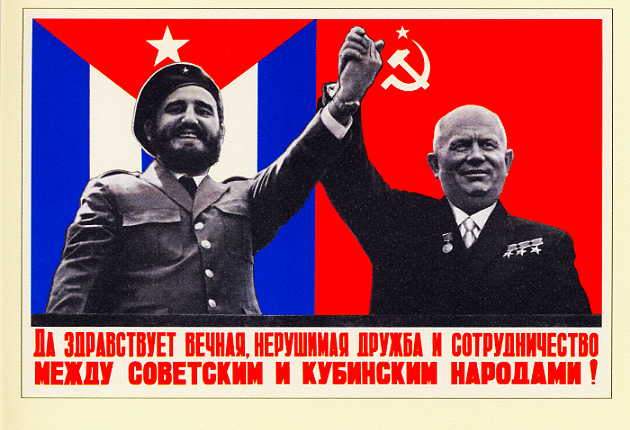
Es la pregunta que renace tras el encuentro de Vladimir Putin y Raúl Castro, y sus declaraciones de un pronto estrechamiento de relaciones en todos los ámbitos, apuntando a un nuevo idilio entre La Habana y Moscú.

El informe del 2014 del Índice de Progreso Social, un proyecto internacional de estudios sociales sin fines de lucro ni interés ideológico, a través del análisis de 56 factores que miden la calidad de vida de 132 naciones, afirma que los mejores países para vivir en América Latina son Costa Rica, Uruguay, Chile, Panamá y Argentina, y los peores, Bolivia, Paraguay, Nicaragua, Honduras y Cuba, que sólo destaca, y cada vez menos, en algunos índices de salud y educación.

Para este veredicto no se mide el desarrollo económico y científico, ni el PIB per cápita; se focaliza el progreso social mediante elementos básicos como la nutrición, los cuidados médicos, agua potable y alcantarillados, vivienda, seguridad, educación, acceso a la información y a la comunicación, cuidado del ecosistema, derechos individuales, libertades, tolerancia, inclusión, entre otros factores. El hecho de que Cuba aparezca también a la cola en los estudios sobre el desarrollo económico en la región, obliga a preguntarse cómo es posible un retraso tan abismal en el que se considera el país de América Latina que más subsidios y colaboraciones económicas ha recibido de sus aliados y de más de una decena de países de Europa y el resto del mundo.

LAS NUEVAS RELACIONES ENTRE CUBA Y RUSIA.

El anuncio de una nueva época de relación bilateral entre Cuba y Rusia, comenzando por un centro de conexión de transporte en Mariel, un aeropuerto y la instalación en Cuba de infraestructura para el sistema de navegación ruso GLONASS, apuntan a que La Habana quiere volver a dar a Moscú un peso importante en la economía, obligada por las vacilaciones de Washington para eliminar el bloqueo económico, por la fuerte disminución del subsidio petrolero de Venezuela, y por la inestabilidad que las protestas sociales han trasmitido a los acuerdos económicos y financieros establecidos con sus aliados latinoamericanos.

cuentapropistas

BANCARROTA A PESAR DE MILLONARIOS SUBSIDIOS.

Tras la desolación de la guerra, Europa pudo reconstruirse gracias a los 13 mil millones de dólares que a través del Plan Marshall se le concedió entre 1947 y 1952. Sin embargo, el gobierno cubano llevó al país a su bancarrota actual tras casi treinta años de subsidios que ascendían a más de 4 mil millones de dólares anuales, sin contar en esa cifra las facilidades de pago y comercio que las naciones socialistas otorgaban a la isla, sin contar toda la ayuda extra que recibía Cuba de otros países socialistas miembros del llamado Consejo de Ayuda Mutua Económica (CAME) y sin contar, entre otros ingresos, los altos alquileres para instalaciones militares y de inteligencia, por ejemplo, los 200 millones de dólares que pagaba Rusia cada año por la renta del Centro de Radares Lourdes en Pinar del Río.

A la pregunta de dónde se invirtió tanto recurso si es evidente que no se hizo en la isla, La Habana y sus aliados y amigos internacionales responden escudándose en los gastos que provocaron a la economía isleña las regulaciones internacionales impuestas por el bloqueo norteamericano, pero Fidel Castro jamás aceptó la responsabilidad del gobierno en el despilfarro de esos descomunales subsidios y oportunidades de desarrollo, algo que sí ha hecho ya Raúl Castro, aunque sea de modo tímido.
Costosas batallas ideológicas.

pobrezadestructora1

Aunque el cubano de a pie ya lo sabe, el gobierno no ha querido reconocer que durante más de tres décadas ha gastado cientos de millones en batallas ideológicas en la isla y fuera de ella (la famosa Batalla de Ideas, por ejemplo, dilapidaba millones en organizar actos públicos, imprimir materiales propagandísticos, etc., en momentos en que el Ministerio de Salud reconocía problemas graves en la prevención de enfermedades por falta de recursos); no reconoce que ha estado financiando movimientos de izquierda, democráticos o insurgentes, en América Latina, Asia y África; ni que financió casi totalmente la presencia de ejércitos cubanos en la guerra de Siria contra Israel en las alturas del Golán; en las guerras de Etiopía, Angola y Zaire; en los movimientos guerrilleros de Nicaragua, El Salvador, Bolivia y Colombia, y, más recientemente, en Venezuela, donde se encuentran más de 15 mil efectivos. Antiguos colaboradores del gobierno han denunciado las inversiones millonarias de La Habana en proyectos sociales en países aliados, en los cuales se regala a otros lo que en Cuba hace falta, por ejemplo, el financiamiento de la construcción de cientos de miles de casas mientras en la isla hay más de 600 mil familias que necesitan una vivienda y, según estadísticas del gobierno, más del 40% de los inmuebles en estado crítico.

Estos acuerdos entre Cuba y Rusia despiertan desconfianza no por último entre los analistas cubanos en el exilio, y el único atisbo de esperanza que encuentran es que, esta vez, Rusia se regirá por su ya demostrado pragmatismo comercial: Cuba vuelve a ser una punta de lanza contra Washington en el terreno político, pero especialmente es el pendón de conquista más sólido que la economía rusa planta en tierras americanas, interesada en impedir que Europa y Estados Unidos sigan quitándole terreno a su expansión económica mundial. Lejos están los tiempos románticos del subsidio gratuito a la isla, y aunque sean tiempos distintos, la pregunta que todos se hacen es si el gobierno de La Habana desaprovechará esta nueva oportunidad para sacar a Cuba de la depauperación económica y social que el propio Raúl Castro ha reconocido en sus discursos.

DW, Alemania/InternetPhotos/www.thecubanhistory.com
QUE SE HIZO DEL SUBSIDIO SOVIÉTICO A CUBA ?.
The CUban History, Hollywood.
Arnoldo Varona, Editor.

Cuba en Fotos.
10428102_10152515833036083_3395996294144137084_n

WHAT BECAME OF THE SOVIET SUBSIDY TO CUBA?.

It is the question that emerges after the meeting of Vladimir Putin and Raúl Castro, and his statements of early close relations in all areas, pointing to a new romance between Havana and Moscow.

The report of the 2014 Index of Social Progress, an international social studies project nonprofit or ideological interest, through the analysis of 56 factors that measure the quality of life of 132 nations, says the best countries to live in America America are Costa Rica, Uruguay, Chile, Panama and Argentina, and worst, Bolivia, Paraguay, Nicaragua, Honduras and Cuba, which only highlights, and less in some indices of health and education.

CUBA&USSR

For this verdict economic and scientific development is not measured, or GDP per capita; social progress is focused using basic elements such as nutrition, health care, water and sewer systems, housing, safety, education, access to information and communication, care of the ecosystem, individual rights, freedoms, tolerance, inclusion, etc. factors. The fact that Cuba also appears to tail in studies of economic development in the region, raises the question of how such an abysmal delay is considered the Latin American country most economic grants and contributions received is possible its allies and more than a dozen countries in Europe and elsewhere.

NEW RELATIONS BETWEEN CUBA AND RUSSIA.

The announcement of a new era of bilateral relations between Cuba and Russia, starting from a transport hub in Mariel, an airport in Cuba and the installation of infrastructure for the Russian navigation system GLONASS, suggest that Havana wants to give Moscow an important role in the economy, constrained by the vacillations of Washington to remove the economic blockade by the strong decline of Venezuela’s oil subsidy, instability and social protests have spilled over into economic and financial agreements with its Latin American allies.

pobrezadestructora1

BANKRUPTCY DESPITE MILLIONS IN SUBSIDIES.

After the desolation of war, Europe was reconstructed thanks to 13 billion dollars through the Marshall Plan was granted between 1947 and 1952. Nevertheless, the Cuban government led the country to its current bankruptcy after nearly thirty years of subsidies amounting to more than 4 billion dollars a year, that figure without payment facilities and socialist nations trade granted to the island, without any extra help that Cuba received from other socialist countries named Council members Mutual Economic Assistance (CMEA) and without, among other income, high rents for military and intelligence facilities such as the 200 million dollars paid each year by Russia income Radar Lourdes Center in Pinar del Río .

Asked where both appeal reversed if clearly not made ​​on the island, Havana and its allies and friends respond hiding behind international expenses that caused the island’s economy to international regulations imposed by the U.S. blockade, but Fidel Castro never accepted responsibility for the government in these massive subsidies wasteful and development opportunities, which has itself already Raúl Castro, albeit timidly.
Expensive ideological battles.

Although the average Cuban already know, the government has failed to recognize that for more than three decades has spent hundreds of millions in ideological battles on the island and beyond (the famous Battle of Ideas, for example, squandered millions in organizing public events, print propaganda, materials etc, at a time when the Ministry of Health acknowledged serious problems in the prevention of disease due to lack of resources).; acknowledges that it has not been funding leftist movements, democratic or insurgents, Latin America, Asia and Africa; or almost fully funded the presence of Cuban armies of Syria in the war against Israel in the Golan Heights; wars in Ethiopia, Angola and Zaire; guerrilla movements in Nicaragua, El Salvador, Bolivia and Colombia, and more recently in Venezuela, where more than 15 thousand troops. Former government aides have denounced Havana huge investments in social projects in allied countries, which gives to others what is needed in Cuba, for example, the financing of the construction of hundreds of thousands of homes while in the island there are over 600 thousand families in need of housing and, according to government statistics, more than 40% of properties in critical condition.

cuentapropistas

These agreements between Cuba and Russia finally arouse no suspicion among analysts Cubans in exile, and the only glimmer of hope they find is that this time, Russia was governed by its already proven commercial pragmatism: Cuba again a tip throws against Washington in the political arena, but especially the banner of conquest is stronger than the Russian economy ground on American soil, prevent interested in Europe and the U.S. continue taking away land to its global expansion. Gone are the romantic days of the free allowance to the island, and although they are different times, the question everyone is asking is whether the government in Havana doubt take this new opportunity to bring Cuba’s economic and social impoverishment that Raul Castro himself has been recognized in his speeches.

DW, Germany / InternetPhotos / www.thecubanhistory.com
WHAT BECAME OF THE SOVIET SUBSIDY TO CUBA?.
The Cuban History, Hollywood.
Arnoldo Varona, Editor