© PARTAGAS, una firma tabacalera con Historia (Fotos) * * PARTAGAS, a tobacco firm History (Photos).

Partagás es una de las marcas más antiguos existentes de cigarros , establecida en La Habana en 1845. El nombre se utiliza en la actualidad por dos entidades independientes y en competencia, una producida en la isla de Cuba por Habanos SA , la compañía tabacalera de propiedad estatal cubana , y el otro , que no contiene tabaco cubano , producido en la República Dominicana para el Cigar Company General, una filial de Swedish Match .
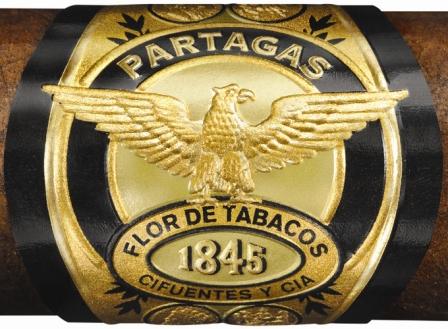
Partagas-1845-band
 
Historia

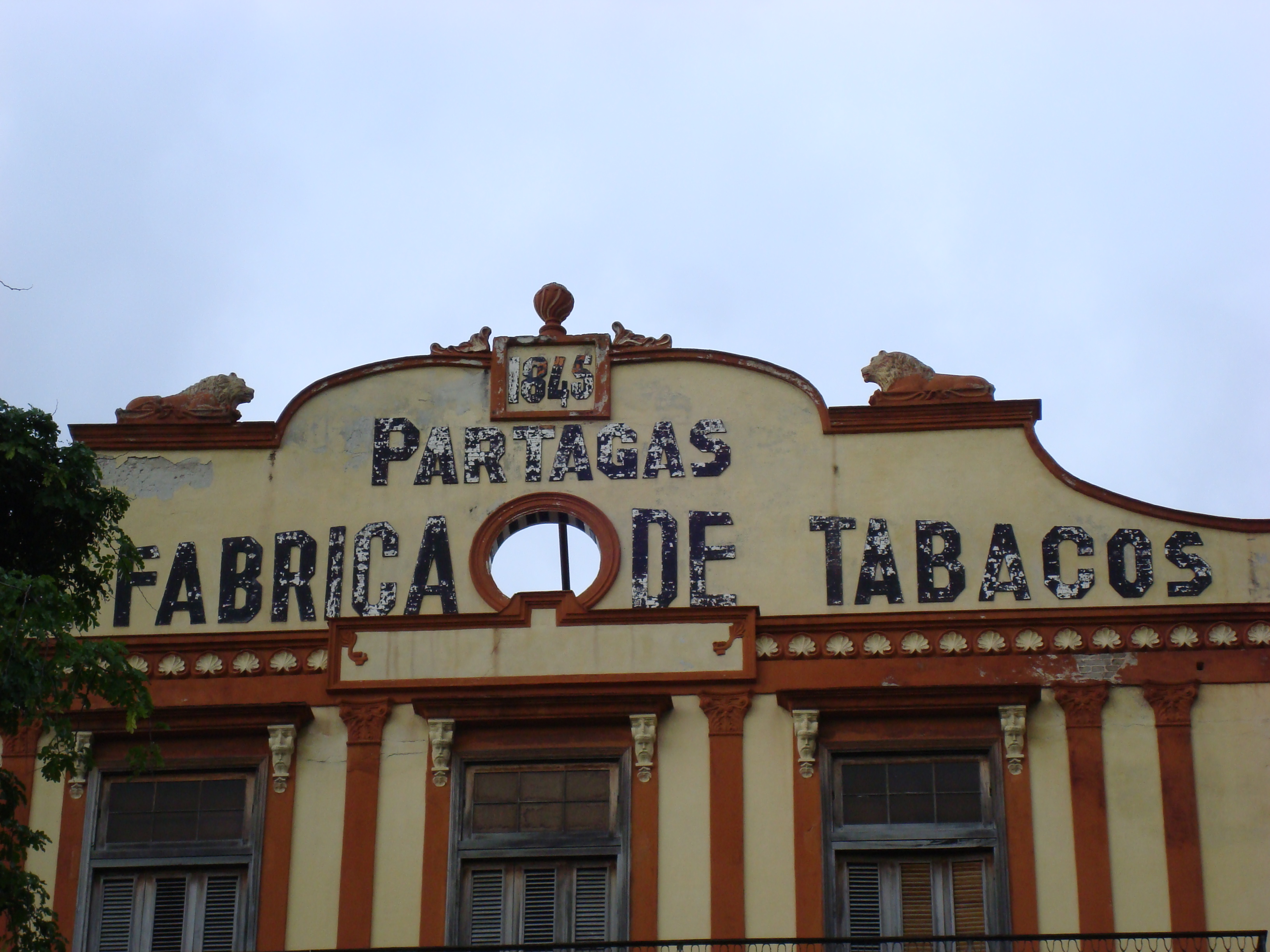
El catalán Don Jaume i Partagás Ravell ( Arenys de Mar, 1816 – Vuelta Abajo , Cuba , 1864) , hijo de Jaume Partagás ( taylor ) y Theresa Ravell . Emigró a Cuba y fundó con la ayuda de un hombre de negocios de Lloret de Mar, Joan Conill , una pequeña fábrica de tabaco en La Habana en 1827, antes de establecer su propia fábrica , Bienes Fábricas de Tabaco Partagás en 1845 , en el 60 de la calle Industria , en La Habana , una de los más grandes de su tiempo . El nombre, que se traduce como ” Real Fábrica de Tabacos Partagás , ” supuestamente fue elegido debido a su estado de don Jaume como proveedor de cigarros a diversos nobleza europea y asiática. Don Jaume poseía muchas de las mejores plantaciones en la región de cultivo de tabaco de Vuelta Abajo de Cuba , siendo capaz de elegir entre uno de los mejores tabacos de la isla hizo que la marca de un éxito increíble . Don Jaume también se cree que ha experimentado con varios métodos de fermentación y el envejecimiento de tabaco y se legendarily acredita con la contratación del primer lector para leer y entretener a los torcedores , mientras trabajaban.
60_full

Don Jaume fue asesinado (supuestamente por un rival celoso que había estado compitiendo con en uno de sus amores ) en una de sus plantaciones , ya sea en 1864 o 1868 y su hijo Josep Partagás se hizo cargo del negocio. Más tarde, la fábrica y la marca fueron vendidas al banquero José A. Bance , quien a su vez vendió a Cifuentes, Fernández y Cía en 1900. En 1916, Don José Fernández , aparentemente dejó la firma y Ramón Cifuentes Llano se unió a Francisco Pego Pita para formar Cifuentes, Pego y Cía . En 1927 , adquirió los derechos de la marca Ramón Allones , en algún punto desconocido de la fábrica comenzó a producir una marca en su propio nombre , Cifuentes .

Ramón Cifuentes murió en 1938 y Pego en 1940 , dejando a la familia Cifuentes únicamente en el control de la cada vez más prestigiosa fábrica y marca, que cambió el nombre de empresa Cifuentes y Cía . En 1954 , la familia Cifuentes adquirió las marcas Bolívar y La Gloria Cubana de José F. Rocha y trasladó su producción a la fábrica de Cifuentes . En 1958 fue sólo superada por la empresa H. Upmann en la exportación de cigarros cubanos , lo que representa más de un cuarto de todos los productos de tabaco de exportación .

Antes y después de la Revolución Cubana, la auténtica Partagás producido en Cuba ha sido uno de los cigarros más respetados y de mayor venta en el mundo . Por la década de 1990 medias siguió siendo el segundo mejor vendido de la marca cubana , después de Montecristo, con ventas anuales de aproximadamente 10 millones de cigarros.

Después de tabaco fue nacionalizada después de la Revolución Cubana , el patriarca de la familia Cifuentes , Ramón, fue ofrecido inicialmente el trabajo del líder de la industria del tabaco en Cuba , pero se negó y en su lugar emigrado del país . Una agencia de marketing gobierno recién formado , Cubatabaco , se hizo cargo de la fábrica de Partagás y la producción de la marca allí.

Después de un paréntesis de casi diecisiete años, el patrón de la familia, Ramón Cifuentes licenció los nombres de Partagás y Bolívar cigarros al Cigar Company General, que en 1978 obtuvo una marca y relanzó la marca para el mercado americano lucrativo. La producción inicial se llevó a cabo en Jamaica , pero el siguiente año la producción de la marca revisitado trasladó a una fábrica moderna en Santiago de los Caballeros, la segunda ciudad más grande de la República Dominicana.

partagas1845

En 1995 los 70.000 pies cuadrados ( 6.500 m2 ) planta Santiago contaba con cerca de 600 trabajadores, que producen los cigarros que llevan tanto las etiquetas de Partagás y Macanudo .
 Aproximadamente 8 millones de cigarros Partagás fueron producidos por General Cigar Dominicana en ese año.

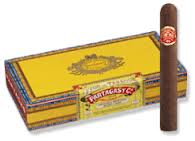
Una imagen de marca similar al producto cubano ha sido utilizado por General Cigar por su versión en competencia de la marca Partagás , que emplea un esquema de la banda roja y oro , excepto con la palabra “Habana ” sustituida por la de ” 1845 ” en el empaque .

La antigua fábrica de Partagás , en La Habana , ya que el nombre de ” Francisco Pérez Germán ” , sigue siendo responsable de gran parte de la producción anual de la marca Partagás . Ha demostrado ser un destino turístico muy popular para los fumadores de puros De vacaciones en Cuba .
dddd

En 2002 , Altadis compró una participación mayoritaria en la distribuidora de cigarros cubanos , propiedad del gobierno , Habanos SA , e instituyó una serie de cambios en la producción de cigarros. Entre ellos fue convirtiendo poco a poco las distintas marcas de cigarros cubanos ya sea totalmente a mano o con todos los hechos a máquina líneas , reduciendo el número de tamaños redundantes dentro de una marca, y la eliminación de muchos cigarros bajos en la venta . Partagás , que históricamente ha producido una variedad de hechos a mano y los cigarros hechos a máquina o acabado a máquina , tenía varios de sus vitolas cortadas de la producción, para el disgusto de los conocedores de todo el mundo .

Wiki/InternetPhotos/www.thecubanhistory.com
PARTAGAS, a tobacco firm History
The Cuban History, Hollywood.
Arnoldo Varona, Editor

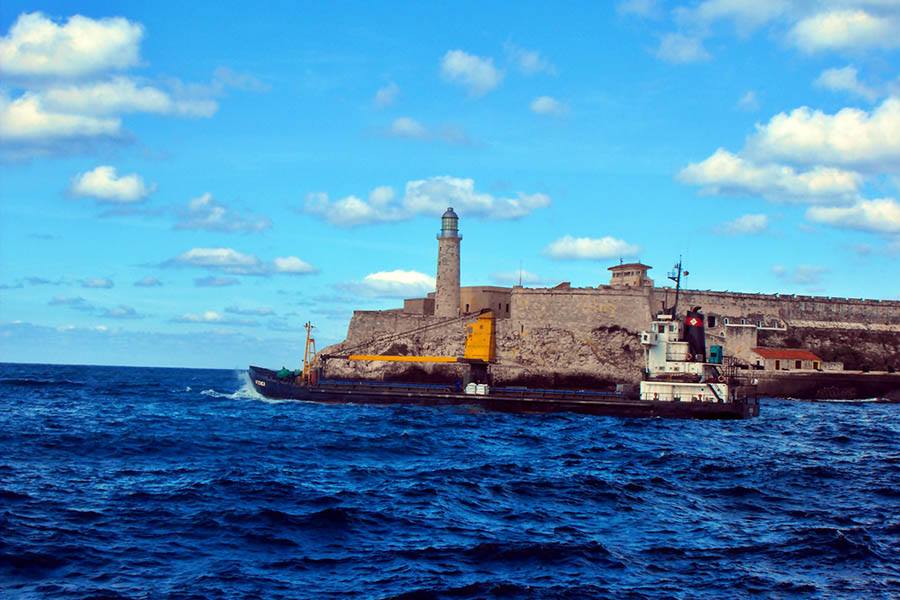
Foto por Uriel Semper with Odalys Wilson. – Castillo del Morro, Bahia de la Habana.
1464750_10152019096176083_926890490_n

PARTAGAS, A TOBACCO FIRM HISTORY

Partagás is among the oldest extant brands of cigars, established in Havana in 1845. The name is used today by two independent and competing entities, one produced on the island of Cuba for Habanos SA, the Cuban state-owned tobacco company; the other, containing no Cuban tobacco, produced in the Dominican Republic for the General Cigar Company, a subsidiary of Swedish Match.

Partagas-1845-band

History

The Catalan Don Jaume Partagás i Ravell (Arenys de Mar, 1816 – Vuelta abajo, Cuba, 1864) son of Jaume Partagás (taylor) and Theresa Ravell. He migrated to Cuba and founded with the help of a Lloret de Mar businessman, Joan Conill, a small tobacco factory in Havana in 1827, before establishing his own factory, Real Fábricas de Tabaco Partagás in 1845, on 60 Industria Street in Havana, one of the largest of its time. The name, which translates as “Partagás Royal Tobacco Factory,” was supposedly chosen because of Don Jaume’s status as cigar supplier to various European and Asian nobility. Don Jaume owned many of the best plantations in the Vuelta Abajo tobacco-growing region of Cuba; being able to choose from among the finest tobaccos on the island made the brand incredibly successful. Don Jaume is also believed to have experimented with various methods of fermenting and aging tobacco and is legendarily credited with hiring the first lector to read to and entertain the cigar rollers as they worked.

60_full

Don Jaume was murdered (supposedly by a jealous rival he’d been vying with in one of his love affairs) on one of his plantations in either 1864 or 1868 and his son Josep Partagás took over the business. Later the factory and brand were sold to banker José A. Bance, who in turn sold to Cifuentes, Fernández y Cía in 1900. In 1916, Don José Fernández apparently left the firm and Ramón Cifuentes Llano joined with Francisco Pego Pita to form Cifuentes, Pego y Cía. In 1927, it acquired the rights to the Ramón Allones brand; at some unknown point the factory began to produce a brand in its own name, Cifuentes.

Ramon Cifuentes died in 1938 and Pego in 1940, leaving the Cifuentes family solely in control of the increasingly prestigious factory and brand, which renamed the company Cifuentes y Cía. In 1954, the Cifuentes family acquired the Bolívar and La Gloria Cubana brands from José F. Rocha and moved their production to the Cifuentes factory. By 1958 it was second only to the H. Upmann company in exporting Cuban cigars, accounting for over a quarter of all exported tobacco goods.

Before and after the Cuban Revolution, the authentic Cuban-produced Partagás has been one of the most revered and highest-selling cigars in the world. By the middle 1990s it remained the second leading selling Cuban brand, following Montecristo, with annual sales of approximately 10 million cigars.

After tobacco was nationalized following the Cuban Revolution, the Cifuentes family’s patriarch, Ramón, was initially offered the job of leading Cuba’s tobacco industry, but refused and instead emigrated from the country. A newly formed government marketing agency, Cubatabaco, took over the Partagás factory and the production of the brand there.

After a hiatus of almost seventeen years, the patron of the family, Ramón Cifuentes licensed the names Partagás and Bolívar cigars to the General Cigar Company, which in 1978 obtained a trademark and relaunched the brand for the lucrative American market. Initial production took place in Jamaica, but the following year production of the revisited brand moved to a modern factory in Santiago de los Caballeros, the second largest city of the Dominican Republic.

partagas1845

In 1995 the 70,000-square-foot (6,500 m2) Santiago facility employed approximately 600 workers, who produced cigars bearing both the Partagas and Macanudo labels.

Approximately 8 million Partagas cigars were produced by General Cigar Dominicana in that year.

A similar trade dress to the Cuban product has been used by General Cigar for its competing version of the Partagás brand, employing a red-and-gold band scheme, save with the word “Habana” replaced by the date “1845” on the packaging.

The old Partagás Factory in Havana, since renamed “Francisco Pérez Germán”, is still responsible for much of the annual production of the Partagás brand. It has proven a very popular tourist destination for cigar smokers vacationing in Cuba.

dddd

In 2002, Altadis bought a controlling share in the Cuban government-owned cigar distributor, Habanos SA, and instituted a number of changes in cigar production. Among them was gradually turning the various brands of Cuban cigars to either all-handmade or all-machine-made lines, reducing the number of redundant sizes within a brand, and eliminating many low-selling cigars. Partagás, which has historically produced a variety of handmade and machine-made or machine-finished cigars, had several of its vitolas cut from production, much to the dismay of connoisseurs worldwide.

Wiki/InternetPhotos/www.thecubanhistory.com
PARTAGAS, a tobacco firm History
The Cuban History, Hollywood.
Arnoldo Varona, Editor
ROAST TURKEY with a Cuban Touch recipe (Photos) * * PAVO ASADO con un toque Cubano (Fotos).

It appears as though spring is coming early to South Florida this year and with it a sense of renewal and optimism to rival the chaos that has engulfed our country and the world at large. It is during adverse times that one seeks out a form of escapism, and there is no better distraction than cooking. To that end, I am publishing a roast turkey recipe for you to try out. You can, of course, savor the fruit of your labor alone, but do yourself a favor and invite someone over for dinner. This Cuban roast turkey recipe is unrivaled in the annals of culinary history. Bon appétit!

Ingredients:

5 lbs Butterball whole breast of young turkey (serves 4 – 5)
5 – 6 garlic cloves
3 sour oranges
ground black pepper
McCormick Perfect Pinch Original Chicken seasoning with no MSG
coarse kosher salt
Cooking Instructions:

Thaw out turkey breast according to the instructions on the package.
Thoroughly rinse turkey breast with water.

Thawed out turkey breast.

Crush 5 – 6 garlic cloves with kitchen hammer to remove peel. Use sharp knife to finely cut the garlic.
Squeeze 3 sour oranges, and mix garlic and juice. Add salt to taste to the mixture.
Use a knife with a sharp point to poke holes throughout the turkey breast.
Use a small spoon to pour mixture of sour orange juice and garlic into each of the holes. Make sure seasoning penetrates deep into the meat.
Sprinkle McCormick Perfect Pinch seasoning over the turkey breast liberally.
Add ground black pepper to taste.

Seasoned turkey breast.

Cover turkey with clear plastic wrap, and place in the refrigerator overnight. Save any seasoning left, in case it is needed the following day.
Next morning, do a taste test and add seasoning, if needed.

Place some flour inside an oven bag, shake, and place the turkey breast inside the bag. Seal the bag and use a sharp knife to punch several holes in it.

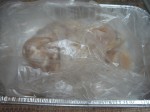
Turkey breast in over bag before roasting.

Preheat oven at 325 F. Roasting time required is 1 ½ to 2 ¼ hours.
After 2 hours, remove turkey breast from the oven and cut oven bag open.

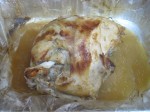
Turkey breast after roasting for 2 hours.

Carefully pour juice from turkey into a separate container, before removing the oven bag.
Remove the oven bag.
Pour some of the juice over the turkey in the pan.
Flip the turkey breast over, and pour the remainder of the juice over it. Place the turkey back in the oven for another 20 minutes or so.
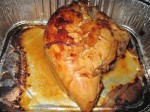
Broil for 4 – 5 minutes before serving.

Broiled turkey breast.

Serve in a large serving platter. Carve turkey breast as usual.

Roasted turkey breast in serving platter.

MiCocinaCubana/InternetPhotos/www.thecubanhistory.com
Roast Turkey with Cuban Touch
The Cuban History, Hollywood.
Arnoldo Varona, Editor
PAVO ASADO CON UN TOQUE CUBANO

Parece como si la primavera está llegando temprano al sur de Florida este año y con un sentido de renovación y optimismo para competir con el caos que se ha apoderado de nuestro país y del mundo en general. Es durante los tiempos adversos que uno busca una forma de escape, y no hay distracción mejor que la cocción. Para ello, voy a publicar una receta de pavo asado para que usted pueda probar. Usted puede, por supuesto, saborear el fruto de su trabajo solo, pero hazte un favor e invite a alguien a cenar. Esta receta de pavo asado cubano no tiene rival en los anales de la historia culinaria. Bon appétit!

Ingredientes

5 libras Butterball todo pechuga de pavo joven (para 4 – 5)
5 a 6 dientes de ajo
3 naranjas agrias
terreno negro pimienta
McCormick Pollo Perfect Pinch original condimento sin MSG
sal kosher gruesa
Instrucciones para cocinar:

Descongelar la pechuga de pavo de acuerdo con las instrucciones en el paquete.
Enjuague la pechuga de pavo con agua.

Pechuga de pavo descongelado.

Machacar 5 a 6 dientes de ajo con un martillo de cocina para quitar la cáscara. Utilice un cuchillo afilado para cortar finamente el ajo.
Presione 3 naranjas agrias y el ajo y el jugo de la mezcla. Añadir sal al gusto a la mezcla.
Utilice un cuchillo con una punta afilada para hacer agujeros a lo largo de la pechuga de pavo.
Use una cuchara pequeña para verter la mezcla de jugo de naranja agria y ajo en cada uno de los agujeros. Asegúrese de condimento penetra profundamente en la carne.
Espolvorear Pinch McCormick condimento perfecto sobre la pechuga de pavo libremente.
Añadir terreno negro pimienta al gusto.

Pavo sazonado con sazon de mama

Cubra el pavo con papel de plástico transparente, y colocar en el refrigerador durante la noche. Guardar cualquier condimento izquierda, en caso de que sea necesario al día siguiente.
La mañana siguiente, hacer una prueba de sabor y agregar condimentos, si es necesario.

Coloque un poco de harina en el interior de una bolsa de horno, agitar y poner la pechuga de pavo en el interior de la bolsa. Selle la bolsa y con un cuchillo afilado para perforar varios agujeros en ella.

Pechuga de pavo en la bolsa de encima antes de asar.

Precaliente el horno a 325 F. Roasting tiempo requerido es de 1 ½ a 2 horas y cuarto.
Después de 2 horas, quite la pechuga de pavo del horno y cortar la bolsa del horno abierta.

Pavo después de asar durante 2 horas.

Con cuidado, vierta el jugo de pavo en un recipiente aparte, antes de retirar la bolsa del horno.
Retire la bolsa de horno.
Vierta un poco de jugo sobre el pavo en la sartén.
Voltear la pechuga de pavo sobre, y verter el resto del jugo sobre ella. Vuelva a colocar el pavo en el horno durante otros 20 minutos más o menos.
Ase a la parrilla durante 4 – 5 minutos antes de servir.

Pechuga de pavo asado

Servir en un plato de servir. Carve pechuga de pavo como de costumbre.

Pavo asado en un plato de servir.

MiCocinaCubana/InternetPhotos/www.thecubanhistory.com
Roast Turkey with Cuban Touch
The Cuban History, Hollywood.
Arnoldo Varona, Editor
© ERNEST HEMINGWAY IN CUBA, his cats and dogs (Photos) * * ERNEST HEMINGWAY EN CUBA, sus gatos y perros (Fotos).

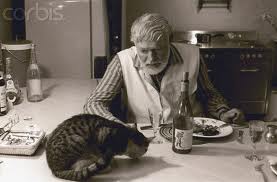
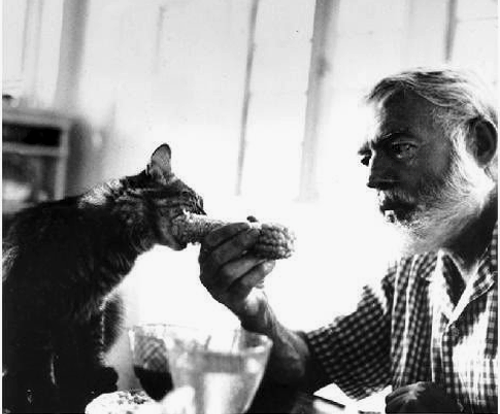
In Cuba, the famous american writer Ernest Hemingway had fifty-seven cats and five dogs roaming the grounds of his hilltop home “La Vigia” (Lookout Farm).

ernest-hemingway

The Finca at the time consisted of 15 acres (61,000 m2) with a farmhouse. It was at Finca Vigía that he wrote much of For Whom the Bell Tolls (a novel of the Spanish Civil War which Hemingway had covered as a journalist with Gellhorn in the late 1930s—the novel was started at the Ambos Mundos, and some was also written in Idaho). Hemingway would later buy the property out of some of the first royalties from the book, published in 1940.

It was at the Finca that Hemingway began to keep and breed cats (he had kept only peacocks in Key West). Hemingway started with a gray Angora cat obtained in Key West from a breeder, named Princessa and later in 1942 picked up two male Cuban kittens named Good Will and Boise. Hemingway was to write extensively about the habits of Boise. By 1943, the cat population at the Finca numbered 11. When Mary Hemingway moved into the Finca in 1946, she had a writer’s workshop tower constructed on the property, but Hemingway preferred to work in his bedroom, and the workshop was eventually assigned to the cats.

ghjk

One of the first cats Hemingway purchased in Cuba was a Persian female named Tester that came from the Silver Dawn Cattery in Florida. Tester was renamed Princessa by the Finca staff because of her elegant nature. Later Princessa mated with Boise – whom Papa first called Dillinger – a Cuban kitten he had found in the coastal fishing village of Cojimar. By the end of the first summer, he owned three house cats: Princessa, Boise, and a half-Maltese kitten named Willy.

Ernest took great pleasure in writing to his family about his cats and how they were getting along. By 1943, Ernest and third wife Martha had eleven cats at Finca Vigia. “One cat just leads to another . . .” he wrote to his first wife, Hadley Mowrer. “The place is so damned big it doesn’t really seem as though there were many cats until you see them all moving like a mass migration at feeding time. . . . It is wonderful when Marty, and /or kids are here but is lonesome as a bastard when I’m here alone. I have taught Uncle Wolfer, Dillinger and Will to walk along the railings to the top of the porch pillars and make a pyramid like lions and have taught Friendless to drink with me (whiskey and milk) but even that doesn’t take the place of a wife and family.” Some of the cats had nicknames for his wives that were cat’s names and often signed his letter, Big Kitten.

sdfghj

Ernest later uses his isolation from his family and his kinship with his cats as inspiration for his hero, Thomas Hudson, in his novel, Islands in the Stream. Hudson talks to his cats and was comforted by them after learning of his sons’ tragic deaths in a car accident. Princessa is elegant and aristocratic, while Boise is the male cat who hunts fruit rats and is devoted to Thomas Hudson. Goats [aka Bigotes, Friendless] is the fighter and stud cat. All three cats are immortalized in this novel.

By the time Papa’s fourth wife to be, Mary Welsh, moved into the Finca in 1945, Ernest had twenty-three cats and five dogs. They were treated as royalty. The cats slept in the guest bedroom and later lived in a room on the second floor of the white tower Papa had built for his pets at one end of the terrace. He and Mary called the cats “purr factories” and “love sponges” that soaked up their love and in return gave them comfort and companionship.

ernest-hemingway

Among the many family letters describing his cats is one written in 1942. Ernest tells Hadley Mowrer that he had not been able to sleep the night before and had recalled a song they had composed for their cat, F. Puss, so many years earlier in Paris. It went like this, “A feather kitty’s talent lies In scratching out the other’s eyes. A feather kitty never dies Oh immortality.” According to the letter, the Finca cats enjoyed Papa’s song.

He once wrote in a letter from there: “One cat just leads to another. . . . The place is so damned big it doesn’t really seem as though there were many cats until you see them all moving like a mass migration at feeding time.” He called the cats “purr factories” and “love sponges” that soaked up love and in return gave them comfort and companionship.

It was in 1960 when Hemingway responding to a columnist who criticizes him for living in Cuba said, “You find me a place in Ohio where I can live on top of a hill and be fifteen minutes away from the Gulf Stream and have my own fruits and vegetables the year around… and I’ll go live in Ohio if Miss Mary and my cats and dogs agree.”

Hemingway_Article

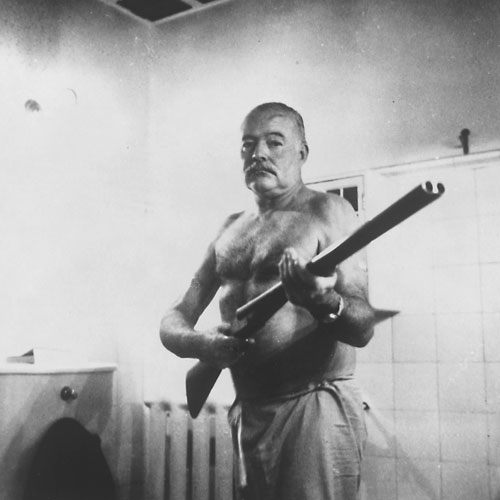
In the early morning hours of July 2, 1961, Hemingway “quite deliberately” shot himself with his favorite shotgun.He unlocked the basement storeroom where his guns were kept, went upstairs to the front entrance foyer of their Ketchum home, and “pushed two shells into the twelve-gauge Boss shotgun …put the end of the barrel into his mouth, pulled the trigger and blew out his brains.

I would like people to understand some of the reasons why the writer committed suicide, in the first place all his health problemas, but also remember his favorite cat ‘Big Boy Peterson’ usually slept with him every night and was probably the companion he needed most which left deep scars in his profound love for his beloved cats.

Wiki/Varioustexts/InternetPhotos/www.thecubanhistory.com
Ernest Hemingway in Cuba, his Cats and dogs.
The Cuban History, Hollywood
Arnoldo Varona, Editor

Foto por Liz Carrasco – Hotel Turistico “Memories”, Varadero, Cuba.
1476232_10152026988911083_683691480_n

ERNEST HEMINGWAY EN CUBA, SUS GATOS Y PERROS

En Cuba, el famoso escritor norteamericano Ernest Hemingway tenía cincuenta y siete gatos y perros que vagan por las cinco razones de su casa colina “La Vigía” (Lookout Farm).

ernest-hemingway

La finca en el momento consistía en 15 acres (61.000 m2) con una granja. Fue en la Finca Vigía, que escribió gran parte de Por quién doblan las campanas (una novela de la Guerra Civil Española que Hemingway había cubierto como periodista con Gellhorn a finales de los años 1930, la novela se inició en el Ambos Mundos, y algunos también escrito en Idaho). Hemingway más tarde iba a comprar la propiedad de algunos de los derechos de autor de la primera obra, publicada en 1940.

Fue en la finca que Hemingway comenzó a tener y criar gatos (había mantenido pavos reales sólo en Key West). Hemingway comenzó con un gato de angora gris obtenido en Key West, de un criador, llamado Princessa y más tarde, en 1942 obtuvo dos gatitos machos cubano llamado la Buena Voluntad y Boise. Hemingway era escribir mucho sobre los hábitos de Boise. En 1943, la población de gatos en la finca número 11. Cuando Mary Hemingway se mudó a la finca en 1946, tenía una torre escritor taller construido en la propiedad, pero Hemingway prefirió trabajar en su dormitorio, y el taller fue asignado eventualmente a los gatos.

ghjk

Uno de los primeros gatos de Hemingway compró en Cuba fue un persa Tester hembra llamada que venía del criadero Silver Dawn de la Florida. Tester fue rebautizado Princessa por el personal de Finca a causa de su carácter elegante. Más tarde se aparearon con Princessa Boise – Papa quien primero llamó Dillinger – un gatito cubano que había encontrado en el pueblo costero de pescadores de Cojimar. A finales del primer verano, era dueño de tres gatos de la casa: Princessa, Boise, y un gatito medio maltés llamado Willy.

Ernest tuvo el gran placer de escribir a su familia acerca de sus gatos y cómo se llevaban bien. En 1943, Ernest y tercera esposa Martha tenía once gatos en Finca Vigía. “Un gato sólo lleva a la otra …” escribió a su primera esposa, Hadley Mowrer. “El lugar es tan condenadamente grande que realmente no parece como si hubiera muchos gatos hasta que usted los vea todo se mueve como una migración masiva a la hora de comer …. Es maravilloso cuando Marty, y / o los niños están aquí, pero es solo como un hijo de puta cuando estoy aquí solo. Me han enseñado el tío Wolfer, Dillinger y su voluntad de caminar a lo largo de la verja en la parte superior de los pilares del porche y hacer una pirámide como leones y han enseñado Sin amigos a beber conmigo (whisky y la leche ), pero incluso eso no toma el lugar de la mujer y la familia. ” Algunos de los gatos tenían apodos para sus esposas que eran los nombres de gato y, a menudo firmó su carta, Big Kitten.

sdfghj

Ernest luego usa su aislamiento de su familia y de su parentesco con sus gatos como inspiración para su héroe, Thomas Hudson, en su novela Islas en el Golfo. Hudson habla con sus gatos y fue consolado por ellos después de enterarse de la muerte de sus hijos en un trágico accidente de coche. Princessa es elegante y aristocrático, mientras que Boise es el gato que caza ratas fruta y se dedica a Thomas Hudson. Cabras [aka Bigotes, sin amigos] es el luchador y el gato semental. Los tres gatos están inmortalizados en esta novela.

En el momento en cuarta esposa de papá a ser, Mary Welsh, se mudó a la finca en 1945, Ernest tenía veintitrés gatos y cinco perros. Fueron tratados como la realeza. Los gatos dormían en la habitación de invitados y más tarde vivió en una habitación en el segundo piso de la torre blanca que papá había construido para sus mascotas en un extremo de la terraza. Él y María llamó a los gatos ronronean “fábricas” y “amor” esponjas que absorbían su amor ya cambio les dio consuelo y compañía.

ernest-hemingway

Entre las cartas familiares que describen sus gatos es un escrito en el año 1942. Ernest dice Hadley Mowrer que no había podido dormir la noche anterior y había recordado una canción que había compuesto para su gato, F. Puss, tantos años antes en París. Decía así: “Un gatito pluma talento reside en tachar los ojos del otro. Un gatito pluma nunca muere Oh inmortalidad”. Según la carta, los gatos Finca disfrutado canción de papá.

Una vez escribió en una carta desde allí: “Un gato ssigue a otro… El lugar es tan condenadamente grande que realmente no parece como si hubiera muchos gatos hasta que vea a todos moviéndose como una migración masiva a la hora de comer. “El llamado de los gatos ronronean” fábricas “y” amor “esponjas que absorbían amor yo en cambio les doy consuelo y compañía.

Fue en 1960 cuando Hemingway responder a un columnista que lo critica por vivir en Cuba, dijo: “Me encuentre un lugar en Ohio donde pueda vivir en la cima de una colina, y estar quince minutos de la Corriente del Golfo y tengo mis propias frutas y verduras durante todo el año … y voy a ir a vivir en Ohio si la señorita Mary y mis gatos.. están de acuerdo. ”

Hemingway_Article

En las horas tempranas de la mañana del 2 de julio de 1961, Hemingway “deliberadamente” se pegó un tiro con su shotgun. Ernest abrió la bodega del sótano donde se guardaban sus armas, subió las escaleras para el vestíbulo de entrada frente a su casa de Ketchum en Ohio, y “colocando dos balas en la escopeta calibre doce preferida de el,’Boss’… puso el extremo del cañón en su boca y apretó el gatillo volandose el cerebro.

Me gustaría que la gente entienda algunas de las razones por qué el escritor se suicidó, en primer lugar, todos sus males de salud pero ademas recuerdese que su gato ‘Big Boy Peterson’ usualmente se acostaba con él todas las noches y era probablemente el compañero que mas necesitaba y dejara profundas huellas en el amor desmesurado conque el escritor anhelaba de sus queridos gatos.

Wiki/Varioustexts/InternetPhotos/www.thecubanhistory.com
Ernest Hemingway in Cuba, his Cats and dogs.
The Cuban History, Hollywood
Arnoldo Varona, Editor