(Video) Tribute to the unforgettable Celia Cruz. ** Como Homenaje a la Inolvidable Celia Cruz.

https://youtu.be/oGgG3EbwqDc

Remembering the unforgettable Cuban singer Celia Cruz AMERICAN MUSIC AWARDS 2013 and the music giant JENNIFER LÓPEZ gave her a heartfelt tribute to the eternal glory of Cuba.

MI0001928654

Recordando a la inolvidable cantante Cubana CELIA CRUZ los Premios AMERICAN MUSIC AWARDS 2013 y la gigante musical Jennifer López le brindaron un sentido homenaje a esta eterna gloria de Cuba.

YouTube/VideoAmericanMusicAwards2013/wwww.thecubanhistory.com
The Cuban History, Hollywood.
Arnoldo Varona, Editor.

© ESTAMPAS de mi viejo CAMAGUEY (Fotos) * * FROM my Old CAMAGUEY. History (Photos)

HISTORIA DE LA MUSICA EN CAMAGUEY.

Durante las primeras cinco décadas del siglo XX, los escenarios de Camagüey acogieron las actuaciones de importantes compañías teatrales o cantantes que nos trajeron su arte. Sin lugar a dudas el de mayor fama mundial lo fue el tenor Enrico Caruso que incluyó a Camagüey en su gira por varias ciudades de la isla en el año 1920, como al igual lo hacía cualquier artista de prestigio que actuara en La Habana. No faltaron en esos años espectáculos populares como el de los Coros y Danzas de España, que actuó en un antiguo estadio en la Carretera Central vía Oriente, (década del los años 40´s), o cantantes populares del patio nacional o extranjeros que visitaban La Habana y nos incluían en su recorrido por el interior de la república. Muy populares fueron las actuaciones del grupo folclórico “Cabalgata Española” que incluía a una novel y ya valiosa mezzosoprano Martha Pérez, y que algunos de cuyos integrantes permanecieron luego en Cuba triunfando en la radio y televisión habaneras. Artistas tales como Libertad Lamarque o Jorge Negrete, entre otros más, fueron aplaudidos también en nuestros teatros.

download (1)

Se trataba mayormente de visitas individuales contratadas por sus empresarios con los administradores de los locales o teatros donde se presentaban. Pero el tiempo ya ha había llegado para que se pudiera ofrecer a los camagüeyanos música con mayúscula y en forma organizada. Esa fue la ingente labor de un médico villaclareño afincado en Camagüey: Chalón Rodríguez Salinas. Con su dinamismo característico y la colaboración de otros camagüeyanos de bagaje intelectual y artístico, creó y dirigió la “Sociedad de Conciertos de Camagüey” que en cada temporada anual nos permitió disfrutar de los más renombrados intérpretes, pianistas, violinistas, cantantes que nos brindaron su arte y su maestría. De ello sean muestra algunos nombres: Artur Rubistein, Andrés Segovia, Alicia de la Rocha, Jascha Heifetz, la soprano Victoria de los Ángeles, Claudio Arrau, Mariemma y su ballet español, la presentación de la ópera Madame Butterfly… Se ofrecía un promedio de cinco presentaciones por temporada y éstas se sucedieron durante varios años hasta que quedaron truncadas por el nuevo orden que se establecía en la nación.

download (2)

Cabe anotar dos anécdotas. La primera sucedió durante la presentación del guitarrista Andrés Segovia. Las funciones de la Sociedad de Conciertos se realizaban generalmente en el Teatro Casablanca (calle Estrada Palma), pero en oportunidad de la presentación del famoso guitarrista, por un desperfecto en el aire acondicionado del teatro su actuación tuvo que realizarse en el teatro América (calle de General Gómez). Dicho teatro carecía de aire acondicionado pero poseía espaciosos pasillos laterales que, puertas abiertas, facilitaban un ambiente adecuado a los asistentes. Sin embargo, no se contaba con la presencia de un felino en uno de dichos pasillos, tal vez habitual residente del mismo, o que hubiera llegado atraído por la música que tan bellamente interpretaba Segovia en su guitarra. El caso es que emocionado -o molesto porque lo hubieran despertado-, comenzó a maullar con insistencia… Y Andrés Segovia dejó de tocar. Encendieron las luces y varios de los asistentes se enfrascaron en la búsqueda del gato hasta que lo encontraron y lo llevaron bien lejos para que no reincidiera. Entonces, solo entonces, después de esperar pacientemente, Andrés Segovia reanudó su concierto.

download (3)

La otra anécdota que puedo contar, aunque en realidad se refiere a una actividad teatral, sucedió en el Teatro Principal durante la actuación de la compañía española de Teatro “Lope de Vega”, que representaba “La Vida es Sueño” de Calderón de la Barca. (Década de los 50´s). Estábamos en la escena del monólogo de Segismundo cuando uno de los telones de la obra comenzó a rajarse. No lo hizo con estrépito, sino poco a poco, como si quisiera poner música de fondo al monólogo que recitaba el actor. Al fin decidió dejar caer de golpe lo que quedaba de él. El actor no se inmutó y siguió su monólogo. El público tampoco se inmutó y permaneció en completo silencio. Al término de la obra, cuando toda la compañía se presentó en el escenario para recibir los aplausos, su director se adelantó, pidió al público que cesaran los aplausos y con sentidas palabras les expresó su agradecimiento por la compostura que habían mostrado ante el incidente del telón, la que calificó de excepcional, porque eran pocos los públicos que sabían dar tal muestra de respeto y de cultura. Su reconocimiento no quedó allí, porque en una representación de la compañía en España, tuvo a bien referirse a ese incidente y a la ejemplar actitud del público “de una capital de provincia de Cuba”. La anécdota la cierro agregando que ese último comentario fue oído precisamente por una camagüeyana que por aquellas fechas visitaba España y estaba presente en dicha función, Dolores Roig Cuní.

josé marín varona JOSE MARIN VARONA

Son muchas las figuras camagüeyanas, criollos o extranjeros que adoptaron al Camagüey como hogar propio, que ayudaron a enriquecer su acerbo cultural. Además de los ya mencionados propulsores de las sociedades culturales que hemos reseñado, podemos señalar a otros de amplia significación en la historia de la música cubana: Emilio Agramonte y Piña (1863-1918), primo de Ignacio Agramonte, patricio y musicólogo; José Marín Varona (1859-1912), iniciador en Cuba de zarzuelas de tema costumbrista, gran compositor y pedagogo, Gaspar Agüero y Barreras (1873-1951), Gaspar Villate (1851-1891), Luis Casas Romero (1882-1950), Gabriel de la Torre y su esposa española Lina Campuzano, José Molina Torres; la cantante Ana de Armas, de gran fama por la exquisitez de su voz en arias operáticas, La pianista Tomasa Basave y Ramona Bernal, mezzosoprano muy aplaudida en los salones habaneros, triunfos a los renunció por una vida conventual. Los hermanos Rafael y Enrique Palau, organistas y pianistas. Aurelio Sariol, profesor de música, y la propia Amalia Simoni, que durante su estancia en Italia antes de su matrimonio con Ignacio Agramonte aprovechó para recibir clases de canto con renombrados profesores.

GacetadePuertoPrincipe/AnaDoloresGarcia/
InternetPhotos/www.thecubanhistory.com
FROM my Old CAMAGUEY. History
The Cuban History, Hollywood.
Arnoldo Varona, Editor

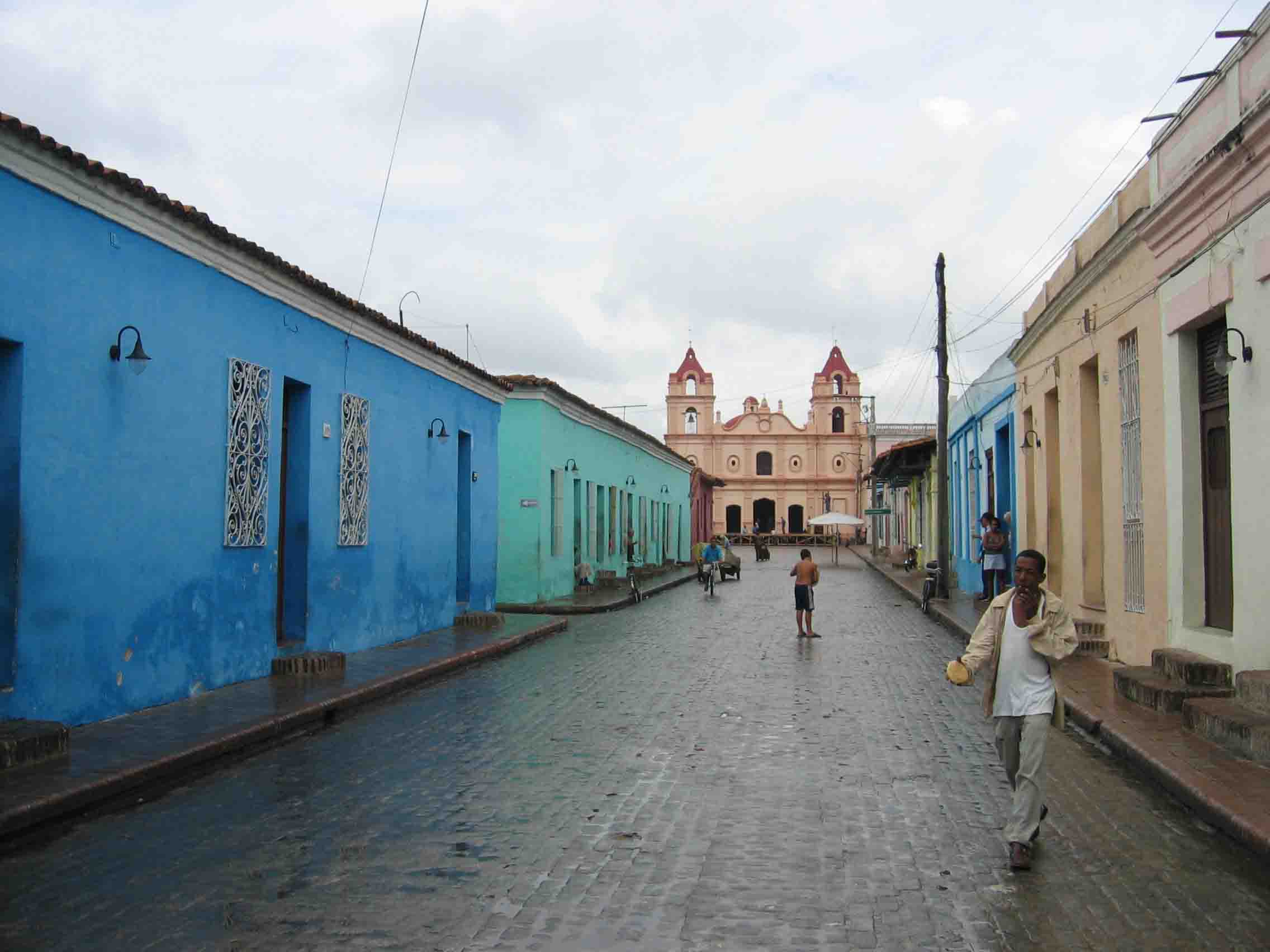
CALLES DE CAMAGUEY
Cuba_Camagüey-1

MUSIC HISTORY IN CAMAGUEY.

During the first five decades of the twentieth century , Camagüey scenarios hosted performances by major theater companies or singers who brought their art. Undoubtedly the worlds major it was the tenor Enrico Caruso in Camagüey involving his multi-city tour of the island in 1920 , just as he did any act prestigious artist in Havana. No shortage in those years popular shows such as the Songs and Dances of Spain , who served in an old stadium in Central Road via East ( decade of the 40’s ) , or popular singers of the national and foreign visiting yard Havana and included us in his tour of the interior of the republic. Very popular were the performances of the folk group ” Spanish Parade ” which included a novel and valuable and mezzo-soprano Martha Perez, and some of whom remained in Cuba after triumphing in Havana radio and television. Artists such as Jorge Negrete and Libertad Lamarque , among others, were also applauded in our theaters .

download (1)

It was mostly individual visits by their employers contracted with local administrators or theaters where they arose. But time has already come for you could offer music camagüeyanos capitalized and organized manner. That was the daunting task of a doctor who lives in Villa Clara Camagüey: Chalon Rodriguez Salinas. With his characteristic dynamism and collaboration of other Camaguey intellectual and artistic background , he created and directed the ” Concert Society Camagüey ” in each annual season allowed us to enjoy the most renowned performers , pianists, violinists , singers who gave us their art and mastery. It shows some names are : Artur Rubinstein , Andres Segovia , Alicia DeLaRocha , Jascha Heifetz, the soprano Victoria de los Angeles Claudio Arrau, Mariemma and Spanish ballet , presenting opera Madame Butterfly … An average of five performances per season were offered and these happened for several years until they were dashed by the new order was established in the nation.

download (2)

It scored two anecdotes. The first occurred during the presentation of guitarist Andrés Segovia. The functions of the Concert Society is generally performed in Casablanca Theatre ( Estrada Palma street), but on the occasion of the presentation of the famous guitarist , by the failure of the air -conditioned theater his performance had to be performed in the theater America ( street General Gómez ) . This theater had no air conditioning but had spacious aisles that open doors, facilitated a suitable environment to attendees. However, there were no presence of a cat in one of those halls , perhaps ordinarily resident thereof, or that he would have attracted to music that Segovia played so beautifully on his guitar. Anyway, excited or upset , because he had awakened , started meowing insistently … and Andrés Segovia stopped playing . They turned on the lights and several assistants they engaged in finding cat until he was found and taken right away to not re-offend . Then , only then, after waiting patiently , Andrés Segovia concert resumed .

download (3)

The other story I can tell, but actually refers to a theatrical activity took place in the Main Theatre during the performance of the Spanish theater company ” Lope de Vega ” which represented ” Life is a Dream ” by Calderon de la Barca . ( Decade of the 50’s) . We were on the scene Segismundo monologue when one of the curtains of the work we began to crack. He did not noisily , but slowly , as if to add background music to monologue recited the actor. Finally he decided to drop suddenly what was left of it . The actor did not flinch and continued his monologue . The public did not flinch and remained completely silent. At the end of the play, when the whole company was presented on stage to the applause , the director came forward, asked the public to cease the applause and heartfelt words expressed their gratitude for the composure they had shown before the incident backdrop , which he described as exceptional , because there were few who could give such public displays of respect and culture. Their recognition was not there, because in a representation of the company in Spain , was pleased to refer to the incident and exemplary attitude of the public “from a provincial capital of Cuba .” The anecdote I close by adding that last comment was heard by a camagüeyana precisely at that time that he visited Spain and was present at the function , Dolores Roig Cuni .

josé marín varona JOSE MARIN VARONA

Many foreign figures or Camaguey , Camaguey Creoles as adopted at home, which helped enrich their cultural wealth . Besides those already mentioned propellants cultural societies we have reviewed, we can point to other broad significance in the history of Cuban music : Emilio Agramonte Piña (1863-1918) , cousin of Ignacio Agramonte , patrician and musicologist , Jose Marin Varona (1859-1912) , founder of zarzuela in Cuba landscape paintings , great composer and pedagogue , Aguero and Barriers Gaspar (1873-1951) , Gaspar Villate (1851-1891) , Luis Casas Romero (1882-1950) , Gabriel Tower and his Spanish wife Lina Campuzano , Jose Molina Torres , singer Ana de Armas, of great fame for its exquisite voice in operatic arias, pianist Tomasa and Ramona Basave Bernal, mezzo highly applauded in the Havana Banquet , triumphs waived by the monastic life . The brothers Rafael and Enrique Palau , organists and pianists. Aurelio Sariol , music teacher , and self Amalia Simoni, that during his stay in Italy before her marriage to Ignacio Agramonte took to singing lessons with renowned teachers.

GacetadePuertoPrincipe/AnaDoloresGarcia/
InternetPhotos/www.thecubanhistory.com
FROM my Old CAMAGUEY. History
The Cuban History, Hollywood.
Arnoldo Varona, Editor

LA HABANA: EL MERCADO de la Calle 114 (Fotos) * * LA HAVANA: THE 114th STREET Market (Photos).

Mientras el Estado ‘agobia’ a los negocios particulares, un mercado agrícola mayorista funciona a todo gas y sin un solo burócrata.

HABANA: El mercado de la calle 114

Justo a las 4 de la mañana, Alcides, dueño de una cafetería particular en el municipio Diez de Octubre, tras ahuyentar la modorra con una taza de café fuerte, se dirige en su Moskovich a un sitio a tiro de piedra de la universidad técnica José Antonio Echevarría, en Marianao.

download (2)

Alcides pretende comprar al por mayor frutas, hortalizas y viandas para su cafetería. Es el “mercado de la calle 114”, así se le conoce. Una plaza al aire libre, polvorienta y espontánea, donde largas filas de camiones desbordados de productos agrícolas ofertan su mercancía.

Surgido a finales de 2010 —tras la ampliación del trabajo por cuenta propia dictada por Raúl Castro y la flexibilización de ciertas normas que rigen el sector agrícola privado—, este mercado mayorista ha ido creciendo en popularidad, gracias a las hortalizas, viandas y frutas frescas que se venden según la oferta y demanda.

Aquí el comprador puede regatear los precios directamente con el vendedor. Ahora mismo, Alcides se pone las manos en la cabeza, mientras trata de negociar con un camionero que intenta venderle tomates, piñas y jugo de naranja concentrado, cuyos precios considera muy caros.

“Mira —le dice al camionero— yo cada tres días te puedo comprar cien libras de frutas y viandas. Hagamos un trato. Te garantizo que junto con otros dueños de paladares y cafeterías que conozco, podemos comprarte los dos camiones de productos agrícolas que tú traes”.

download (1)

El camionero, con cara de sueño —estuvo casi nueve horas de viaje desde Ciego de Ávila—, llega a un acuerdo y reajustan los precios. Con un grito despierta a dos ayudantes que duermen en el techo del camión, para que le ayuden a descargar.

En el trato no hizo falta notario ni firmar un contrato de varias hojas. En este lugar, todavía la palabra de un hombre es suficiente para negociar.

La mercancía procede de provincias a cientos de kilómetros de La Habana y es transportada por los propios campesinos o cooperativistas; también hay intermediarios que compran miles de kilogramos para revenderlos al por mayor en la capital.

Los dueños de pequeños negocios gastronómicos van personalmente, como es el caso de Alcides, o envían a un comprador que les garantice la adquisición de vegetales y frutas de estación.

También hay carretilleros por los barrios habaneros que adquieren productos agrícolas en el mercado de la calle 114. Tomás es uno de ellos. Mientras escoge malangas y boniatos, dice: “Vengo desde hace dos años. Compro mercancía de calidad, que luego revendo en una carretilla que tengo en el Vedado. Casi de todo se puede adquirir”.

download (3)

Lo dice porque no todo lo ofertado sale de la tierra. Hay cosas que se negocian por debajo de la mesa. Es el caso de manzanas, peras y jugos concentrados. A un chofer que parsimoniosamente fuma un tabaco torcido, le pregunto cuál es su procedencia. “De donde sale todo lo que se vende en el mercado negro. Del puerto, de los almacenes, de las fábricas, en fin, de lo que se cae del camión”, responde.

Vecinos de barriadas aledañas se llegan al amplio mercado improvisado y a mejor precio adquieren viandas y vegetales que consumirán en la cena. Otros vienen de zonas distantes como Guanabo. “Es que aquí se compra mucho más barato que en los mercados de la ciudad. Llego temprano, regateo y además de comprar para mi casa, me voy con varios kilos extras que luego revendo. Lo mío es que la comida de mi familia me salga gratis”, confiesa un señor con una sonrisa.

download

Hora y media después, Alcides se marcha con el auto repleto de viandas, hortalizas y frutas. El viejo Moskovich se resiste arrancar. Las gomas pegadas al piso son una señal del exceso de carga. Un grupo de personas lo ayudan a empujar el carro. “Oye, esto pesa más que un tanque de guerra”, le dicen. Cuando el auto se pone en marcha, Alcides les da las gracias.

“Maté dos pájaros de un tiro. Trabé un buen negocio con un camionero que me puede garantizar de manera estable el suministro para mi cafetería. Ahora corro la voz entre mis socios dueños de paladares. Les estoy poniendo el ‘punto’ y un precio razonable. Una mano lava la otra”, argumenta Alcides mientras conduce por la Avenida Boyeros.

Mientras el Estado intenta fiscalizar los negocios particulares con exceso de controles y normas, el mercado de la calle 114 funciona a todo gas y sin un solo burócrata.

La gente lo sabe. Allí se compra más barato y fresco, el surtido es mayor y también la calidad. Eso sí, hay que madrugar.

DDC/Ivan Garcia, La Habana/InternetPhotos/www.thecubanhistory.com
HAVANA: THE 114th STREET Market
The Cuban History, Hollywood.
Arnoldo Varona, Editor

Foto por Irene Barrantes Ortiz. – A New Business in Habana.
1457602_10152026020586083_753414437_n

LA HAVANA: THE 114th STREET MARKET.

While the state ‘ burdens ‘ the private businesses , a wholesale agricultural market operates at full throttle without a single bureaucrat watching.

LA HAVANA: THE 114th STREET MARKET.

Just after 4 am, Alcides , who owns a cafe in the town particularly Diez de Octubre , after ward off drowsiness with a cup of strong coffee , goes on your site Moskovich a stone’s throw from the Technical University José Antonio Echevarría , in Marianao . download (2)

Alcides intends to purchase wholesale fruits, vegetables and meats for dinner. Is ” 114 Market Street ” and he is known . An open square , dusty and spontaneous air, where long lines of trucks overflowing with agricultural products offered their wares .

Emerged in late 2010 , following the extension of self-employment issued by Raul Castro and the relaxation of certain rules governing agricultural private sector , the wholesale market has been growing in popularity, thanks to the vegetables, meats and fresh fruits sold according to supply and demand.

Here the buyer can haggle prices directly with the seller. Right now, Alcides puts his hands on his head while trying to negotiate with a truck driver who tries to sell tomatoes , pineapple and orange juice concentrate , whose prices considered very expensive.

” Look, you tell the trucker – I every three days you can buy a hundred pounds of fruits and meats . ‘s The deal . I guarantee along with other owners palates and cafes I know, can I buy two trucks agricultural products you you bring . ”

The trucker, bleary-eyed was almost nine – hour trip from Ciego de Ávila – Settles and reset prices . With a cry awakens two assistants who sleep on the roof of the truck to help you download.

download (1)

In dealing notary did not even need to sign a contract for multiple sheets. In this place, yet the word of a man is enough to negotiate.

The merchandise comes from hundreds of miles provinces of Havana and is transported by the farmers themselves or cooperative , there are middlemen who buy thousands of pounds in bulk for resale in the capital.

Owners of small businesses gastronomic personally van , as is the case of Alcides , or shipped to a purchaser which guarantees the purchase of vegetables and fruits in season.

Also carretilleros Havana neighborhoods by purchasing farm products on the market street 114. Thomas is one of them. While potatoes choose malangas and says : “I come from two years ago I buy quality merchandise , which then resell in a truck that I have in the Vedado Almost everything can be purchased . . .”

download (3)

It says that not all offered out of the ground . There are things that are traded below the table. This is the case of apples , pears and juice concentrates . A driver who smokes a twisted snuff parsimony , we wonder what is its origin. “Where everything goes is sold on the black market. The port, warehouses , factories , in short, of what falls off the truck,” he says.

Residents of surrounding neighborhoods were reaching the wider market and best price improvised acquire meats and vegetables consumed at dinner. Others come from remote areas as Guanabo . “It’s here buy much cheaper than in the city markets . I arrive early, haggling and besides buy for my home, I ‘m going with several extra kilos then resell . Mine is the food of my family leave me free , “says a man with a smile.

download

Half an hour later , Alcides was sent a car full of meats , vegetables and fruits. The old Moskovich resists booting. The tires glued to the ground are a sign of excess load. A group of people help him push the car . “Hey, this is heavier than a tank ,” he said . When the car is started , Alcides thanks them .

“I killed two birds with one stone. I I held a good business with a truck I can guarantee stable supply for my cafe. Now run the word to my partners own palates. I ‘m getting the ‘ point ‘ and a reasonable price . One hand washes the other , “argues Alcides while driving along Avenida Cattle .

As the state attempts to monitor private business with excessive controls and standards, 114 Market Street gas works all without a single bureaucrat.

People know . There is buy cheap and fresh, the range is higher and also the quality . Yes, get there early .

DDC/Ivan Garcia, La Habana/InternetPhotos/www.thecubanhistory.com
HAVANA: THE 114th STREET Market
The Cuban History, Hollywood.
Arnoldo Varona, Editor