
http://youtu.be/DiC-KQ2KIQc
Sources: YouTube/EfrainAmador/DorisOropeza/www.thecubanhistory.com
Cuban School of “El Tres” and the “Laud”, Havana
The Cuban History, Arnoldo Varona, Editor


http://youtu.be/DiC-KQ2KIQc
Sources: YouTube/EfrainAmador/DorisOropeza/www.thecubanhistory.com
Cuban School of “El Tres” and the “Laud”, Havana
The Cuban History, Arnoldo Varona, Editor
THE HOUSE OF INFANCY OF THE WRITER, STAGE OF ITS NOVEL, IS A CITADEL THAT FALLS DOWN TO PIECES IN THE MIDDLE OF THE PRESERVE.

Penetrating the porch of the Calzada street number 1105 in El Vedado, we are received by poultry, dogs, cats, rats, mosquitoes, heaps of debris, ruins and neighbors who begin to show to pry the intruders.
Not even appealing to the imagination it is possible to distinguish the fictional garden of Dulce Maria Loynaz, where the butterflies and finches were climbing for between the branches, ants were transporting corpses of crickets and lizards were running about everywhere. Apparently, “the garden became bad” ―como the authoress quoted in its novel ― and it attacked with its roots the walls of the buildings to make them jump in pieces.
In this environment there developed the childhood of Dulce Maria and its brothers Enrique, Flower and Carlos Manuel and the same way it was the context of the novel Garden and of its Barbarian protagonist, the alter ego of the writer. On having married in the second nuptials Pablo Álvarez of Canes, it moved to the house situated in the streets E and 19 in the same district, and there it resided up to its death happened in 1997. In the mansion today Dulce Maria Loynaz is nailed the Cultural center.
In the antechamber of the stairs of this center we can appreciate one of two existing busts of the only Cuban writer rewarded with the award Cervantes, work that was not sculpted by official order, but like homage that there did to him in life the pupils of the Top Institute of Art (ISA). Another sculpture is in Santa Cruz de Tenerife, in the Canaries.

It turns out that Dulce Maria did not enjoy the popularity of John Lennon, the Gentleman of Paris or Benny Moré to deserve a bronze effigy, its existence was associated with the satanizada bourgeois class, condition that relegated it to the edict opposite to the revolution and that in its book, Certificate of existence, it justified questioning: “: What are the differences between that wealthy class and the ruling dome of today?”.
Also poet spent his penuries and there was helped by charitable friends, like late Helga Doval, a German city dweller who exercised the Bayer vicepresidency in Cuba and to whom the writer confessed “to have been stopped and interrogated by the political police, because some of its friends supposedly were involved in an offense on Fidel Castro”.
Helga was a witness of how the personal secretary of Castro, Dr. Millar Barruecos (“Chomy), was besieging it by telephone so that there was penetrating to the State the property of the farm Santa Barbara (located in The Colonel’s wife, to the west of the capital), a familiar patrimony where it resided until its sister Flor died. Finally the diet resolved to expropriate it and as collateral aggression warned the Bayer executive in Cuba that if he kept on visiting and helping the writer, would be expelled from the country.
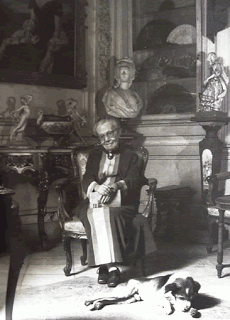
A heredity coveted by the State
Elizabeth Riverón, “Chabela”, of 55 years, a neighbor who resides in the citadel from the year 1975, tells that Genaro the butler of the family, proposed to him to be the nurse of Don Carlos Manuel, (nicknamed “Manolo the madman”), the last Loynaz that resided in the large house, who went mad and he was suffering from a severe asthma needing to be injected often.
Dulce Maria allowed him to stay in the residence and today it occupies a sector in the shallows of the House of German, the same one that used Cover, one of the servants.
“The Loynaz were very hermetic with its matters”, affirms Chabela. The butler was telling him that the survivors of the family were ruined and, they needed to negotiate part of its artistic patrimony with the Government that, in return, was delivering to him domestic appliances, between them a black and white TV set marks Caribbean Sea.
He says that they eliminated mysteriously a source and several statues, like an Afrodita which pedestal still remains opposite to its housing. The same way he remembers that general José Abrahantes and Celia Sánchez were between the mysterious visitors. Genaro revealed him before dying that the fortune of the Loynaz was much watched.

When Flower ―que also was crazy ― it was giving a return for the house, was fighting with Manolo. One day he got angry, lit a bonfire and burned books and documents, between which the originals of The Public were and Barren, texts offered by its friend Federico García Lorca, who in 1930 was a guest of the Loynaz and a period happened in the “House of the Glazing”, an architectural set located in the north end of the stay.
After Manolo died in August, 1977, four families joined the properties of the Loynaz and they plundered the rooms. In 1993, the Historian of the City Dr. Eusebio Leal visited the place to do a documentary and showed to the presents “that its office did not have interest to rescue the building because it was occupied for marginal”. According to Chabela, then there were placed not even half of 18 families that today survive in the property.
In the year 2000 a brigade triumphed with the wall of calle 14 and the balusters were stolen. The alibi of the depredation was sanear the place for personal order of Fidel Castro, before the spread of the hemorrhagic fastidiousness in the capital.
The only nearby Chabela ―la that agreed to grant an interview to me ― says that some foreigners visit the place and are interested by details of the novel Garden, to others there woke up the curiosity to them a documentary done by pupils of ISA that was spread by Hispanic chains in the USA. But they all remain impressed by the grade of deterioration and abandonment in which the stage of the famous novel is plunged.
The roofs and walls threaten to collapse and put in danger the life of the tenants disconcerted who see how the alone municipal government repairs the location and the wall perimetral to revive the public decoration of the street Line, an of the capital artery of heavy traffic.
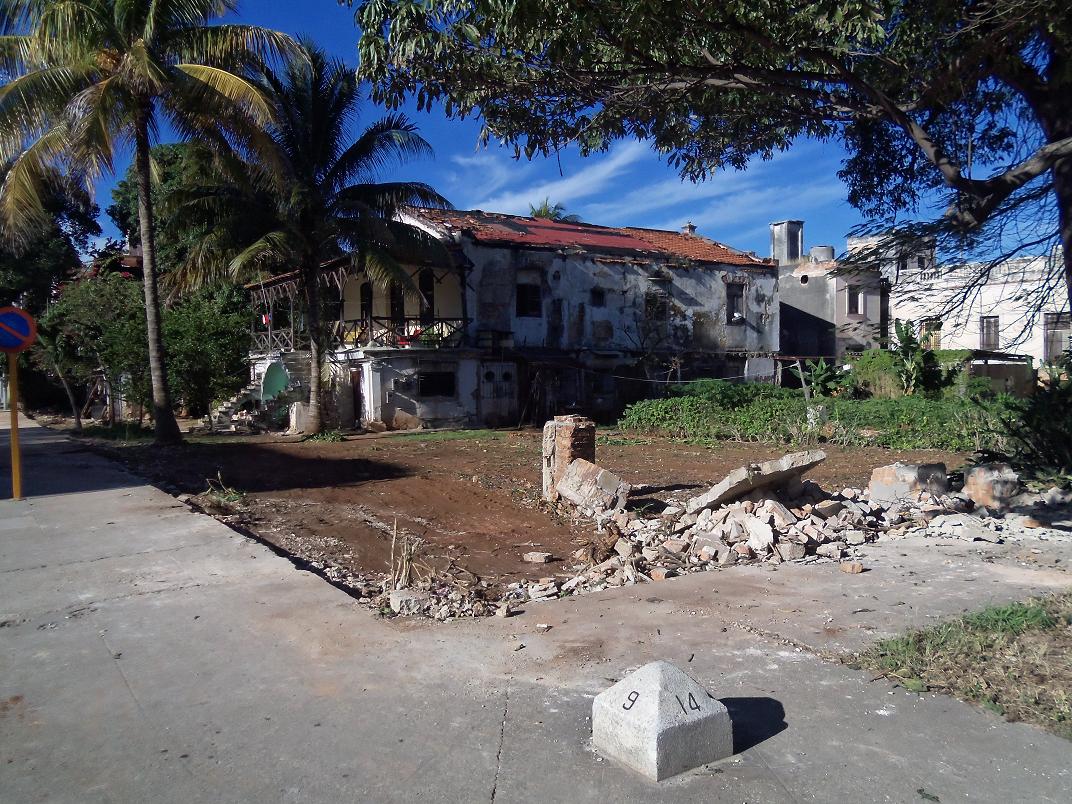
The true thing is that the tears that Dulce Maria spilled (or the Barbarian girl) for this magic garden do not count, because the love, the beauty and the culture suffer the conspiracy of another saturated history of heroes, exploits and revolutionary slogans.
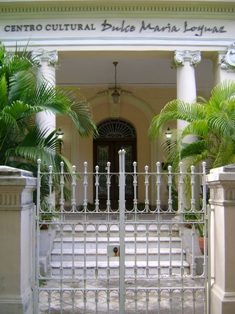 Cultural center Dulce Maria Loynaz, ancient residence of the writer, street E and 19, Vedado.
Of the houses of the family Loynaz, one is occupied by a cultural center, other one for a foundation dedicated to the movies, and the most fictional of all remains left the decline.
Sources: DDC/PABLOPASCUALMÉNDEZPIÑA/La Habana/InternetPhotos/thecubanhistory.com
Dulce Maria Loynaz Lost Garden * El Jardin Perdido de Dulce Maria Loynaz.
The Cuban History, Arnoldo Varona, Editor

EL JARDIN PERDIDO DE DULCE MARIA LOYNAZ| La Habana
LA CASA DE INFANCIA DE LA ESCRITORA, ESCENARIO DE SU NOVELA, ES UNA CIUDADELA QUE SE CAE A PEDAZOS EN MEDIO DEL VEDADO.
Traspasando el pórtico de la calle Calzada número 1105 en El Vedado, nos reciben aves de corral, perros, gatos, ratas, mosquitos, montones de escombros, ruinas y vecinos que asoman para fisgonear a los intrusos.
Ni apelando a la imaginación es posible distinguir el jardín novelesco de Dulce María Loynaz, donde las mariposas y pinzones ascendían por entre las ramas, hormigas acarreaban cadáveres de grillos y lagartijas correteaban por doquier. Al parecer, “el jardín se volvió malo” ―como citó la autora en su novela― y atacó con sus raíces las paredes de los edificios para hacerlas saltar en pedazos.
En ese entorno se desarrolló la niñez de Dulce María y sus hermanos Enrique, Flor y Carlos Manuel e igualmente fue el contexto de la novela Jardín y de su protagonista Bárbara, el alter ego de la escritora. Al casarse en segundas nupcias con Pablo Álvarez de Cañas se trasladó a la casa sita en las calles E y 19 en la misma barriada, y allí residió hasta su muerte acontecida en 1997. En la mansión hoy está enclavado el Centro Cultural Dulce María Loynaz.
En la antesala de la escalera de este centro podemos apreciar uno de los dos bustos existentes de la única escritora cubana galardonada con el premio Cervantes, obra que no fue esculpida por encargo oficial, sino como homenaje que le hicieron en vida los alumnos del Instituto Superior de Arte (ISA). La otra escultura se encuentra en Santa Cruz de Tenerife, en las Islas Canarias.
Resulta que Dulce María no gozó de la popularidad de John Lennon, el Caballero de Paris o Benny Moré para merecer una efigie de bronce, su existencia fue asociada a la satanizada clase burguesa, condición que la relegó al bando opuesto a la revolución y que en su libro, Fe de vida, justificó cuestionando: “¿Cuáles son las diferencias entre aquella clase adinerada y la cúpula gobernante de hoy?”.
La también poeta pasó penurias y fue ayudada por amistades caritativas, como la finada Helga Doval, una ciudadana alemana que ejerció la vicepresidencia de Bayer en Cuba y a quien la escritora le confesó “haber sido detenida e interrogada por la policía política, porque algunas de sus amistades supuestamente estuvieron involucradas en un atentado contra Fidel Castro”.
Helga fue testigo de cómo el secretario personal de Castro, Dr. Millar Barruecos (“Chomy”), la asediaba telefónicamente para que traspasara al Estado la propiedad de la finca Santa Bárbara (ubicada en La Coronela, al oeste de la capital), un patrimonio familiar donde residió hasta morir su hermana Flor. Finalmente el régimen resolvió expropiarla y como agresión colateral se le advirtió a la ejecutiva de Bayer en Cuba que si continuaba visitando y ayudando a la escritora, sería expulsada del país.
Una herencia ambicionada por el Estado
Isabel Riverón ,”Chabela”, de 55 años, una vecina que mora en la ciudadela desde el año 1975, cuenta que Genaro el mayordomo de la familia, le propuso ser la enfermera de Don Carlos Manuel, (apodado “Manolo el loco”), el último Loynaz que residió en la casona, quien enloqueció y padecía de un asma severa necesitando ser inyectado frecuentemente.
Dulce María le permitió albergarse en la residencia y hoy ocupa un sector en los bajos de la Casa del Alemán, el mismo que usó Amparo, una de las domésticas.
“Los Loynaz eran muy herméticos con sus asuntos”, afirma Chabela. El mayordomo le contaba que los sobrevivientes de la familia estaban arruinados y, necesitaron negociar parte de su patrimonio artístico con el Gobierno que, a cambio, le entregaba electrodomésticos, entre ellos un televisor en blanco y negro marca Caribe.
Dice que desaparecieron misteriosamente una fuente y varias estatuas, como una Afrodita cuyo pedestal aún permanece frente a su vivienda. Igualmente recuerda que el general José Abrahantes y Celia Sánchez estaban entre los visitantes misteriosos. Genaro le reveló antes de morir que la fortuna de los Loynaz era muy vigilada.
Cuando Flor ―que también estaba chiflada― daba una vuelta por la casa, peleaba con Manolo. Un día él se encolerizó, encendió una fogata y quemó libros y documentos, entre los que se encontraban los originales de El Público y Yerma, textos obsequiados por su amigo Federico García Lorca, quien en 1930 fue huésped de los Loynaz y pasó una temporada en la “Casa de los Cristales”, un conjunto arquitectónico ubicado en el extremo norte de la estancia.
Al morir Manolo en agosto de 1977, ingresaron cuatro familias en los predios de los Loynaz y saquearon los aposentos. En 1993, el Historiador de la Ciudad Dr. Eusebio Leal visitó el sitio para hacer un documental y manifestó a los presentes “que su oficina no tenía interés en rescatar el inmueble porque estaba ocupado por marginales”. Según Chabela, en aquel entonces no estaban asentadas ni la mitad de las 18 familias que hoy perviven en el predio.
En el año 2000 una brigada arrasó con el muro de la calle14 y se robaron los balaustres. La coartada de la depredación fue sanear el lugar por orden personal de Fidel Castro, ante la propagación del dengue hemorrágico en la capital.
Chabela ―la única vecina que accedió a concederme una entrevista― dice que algunos extranjeros visitan el lugar y se interesan por detalles de la novela Jardín, a otros les despertó la curiosidad un documental hecho por alumnos del ISA que fuera difundido por cadenas hispanas en EEUU. Pero todos quedan impresionados por el grado de deterioro y abandono en que está sumido el escenario de la célebre novela.
Los techos y paredes amenazan con colapsar y ponen en peligro la vida de los inquilinos quienes desconcertados ven cómo el gobierno municipal solo repara los exteriores y el muro perimetral para reanimar el ornato público de la calle Línea, una arteria capitalina de tráfico pesado.
Lo cierto es que las lágrimas que derramó Dulce María (o la niña Bárbara) por este jardín mágico no cuentan, porque el amor, la belleza y la cultura sufren el complot de otra historia saturada de héroes, hazañas y consignas revolucionarias.
Centro Cultural Dulce María Loynaz, antigua residencia de la escritora, calle E y 19, Vedado.
De las casas de la familia Loynaz, una está ocupada por un centro cultural, otra por una fundación dedicada al cine, y la más novelesca de todas permanece abandonada a la decadencia.
Sources: DDC/PABLOPASCUALMÉNDEZPIÑA/La Habana/InternetPhotos/thecubanhistory.com
Dulce Maria Loynaz Lost Garden * El Jardin Perdido de Dulce Maria Loynaz.
The Cuban History, Arnoldo Varona, Editor
There are no doubts that the big “fritero” was Sebastián Carro Seijido. Aristocratizó the fried one. He used only the best products. It taught its personnel to work with cleanliness and, especially, they were required, in its dealing with the clients, to give samples of an exquisite courteousness, and it got into debt in gaining itself to the feminine clientele because it was this the one that was dragging the children and the whole family. So much there prospered Sebastián Carro who at the end of the 50s was giving himself the luxury of promising to be in the exclusive Book of Gold of the Society Of Havana.
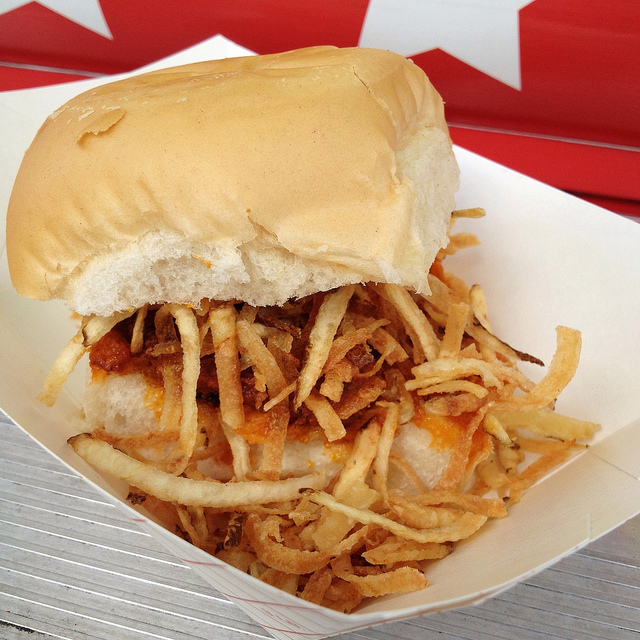
Who was Sebastián? Today, many years after its death, it turned out to be easy to continue the steps to him thanks to the collaboration of Juan Pablo Fernández Bravo, man of prodigious memory despite its 82 years to us and whom they all, in the share-out Santa Amalia, meet for Panchito.
It worked up to its retirement like captain of the restaurants of the Hotel Riviera, but earlier, and after Daughters of Gallicia practised like clerk in the coffee, near to clinic of this name, and in the restaurant El Escorial, house of Spanish meals of Marina and San Lázaro, industrial associate of Sebastián was, that is to say, someone who joins to a business and shares its profit, but that does not contribute capital; its work only.
FOLLOWING THE FOODSTEPS
The Galician immigration was big in Cuba during the first decades of the XXth century. The women, who often could neither read nor write, were placing themselves like servants, while the men were employed at what was appearing before them. Sebastián Carro was one of those so many Galicians for that he looked and found a better life in the Island. He was a coalman, but when the gas begun to be imposed like domestic fuel in the district he noticed that had to penetrate into another draft. It put then a position of fried in the shallows of its house, in Shoe and A, but from there it was extracted by the decree of the president Grau who was prohibiting the sale in the portals. The owner of the Walk Club, restaurant – bar of Walk and Shoe, him united on having transferred, with sight to the street Shoe, a small space in its establishment. Its fried ones already had reputation and the clients’ inflow was becoming every time major.
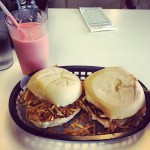
Sebastián, although it was provided with the help of its wife and of two employees, scarcely was giving to pack-saddle. The Boulevard opened then the snack bar, in 23 in two and Four, and it took associate’s Panchito. The business progressed more and it inaugurated another snack bar in the street I walk, opposite to the ancient Palace of the Sports, which then Sebastián called himself and the current one is The Camp stove. When the Revolution triumphed, its plans were those of expanding towards the Ayestarán area.
The State, in “negotiations” with the owner with posteriority 1959, “acquired” The Boulevard, and Panchito was supported like manager until 1965, when it went on to the Hotel Riviera. Néstor, one of Sebastián’s children, stayed at the head of the business of Shoe and Walk, but it turned it into a small restaurant. Other of its children, Iván, ended up by delivering voluntarily The Camp stove to Gastronomy. Sebastián Carro Seijido died in Havana, possibly in the 70s.
UP TODAY “THE FRITA CUBANA” (MIAMI, FLORIDA)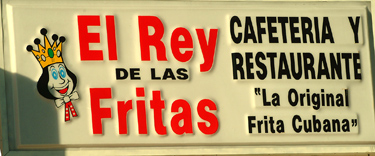
Sources: CiroBianchiRoss/InternetPhotos/www.thecubanhistory.com
“La Frita King” en la Havana * El Rey de la Frita en la Habana.
The Cuban History, Arnoldo Varona, Editor
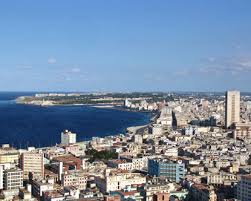
EL REY DE LA FRITA EN LA HABANA
No hay dudas de que el gran fritero fue Sebastián Carro Seijido. Aristocratizó la frita. Empleó solo los mejores productos. Enseñó a sus empleados a trabajar con limpieza y, sobre todo, les exigió que, en su trato con los clientes, dieran muestras de una cortesía exquisita, y se empeñó en ganarse a la clientela femenina porque era esta la que arrastraba a los niños y a toda la familia. Tanto prosperó Sebastián Carro que a fines de los años 50 se daba el lujo de anunciarse en el exclusivo Libro de Oro de la Sociedad Habanera.
¿Quién fue Sebastián? Hoy, muchos años después de su fallecimiento, nos resultó fácil seguirle los pasos gracias a la colaboración de Juan Pablo Fernández Bravo, hombre de memoria prodigiosa pese a sus 82 años y a quien todos, en el reparto Santa Amalia, conocen por Panchito.
Trabajó hasta su jubilación como capitán de los restaurantes del Hotel Riviera, pero antes, y luego de ejercer como dependiente en el café Hijas de Galicia, cercano a clínica de ese nombre, y en el restaurante El Escorial, casa de comidas españolas de Marina y San Lázaro, fue socio industrial de Sebastián, es decir, alguien que se incorpora a un negocio y comparte sus ganancias, pero que no aporta capital; solo su trabajo.
TRAS LAS HUELLAS
La inmigración gallega fue grande en Cuba durante las primeras décadas del siglo XX. Las mujeres, que a menudo no sabían leer ni escribir, se colocaban como sirvientas, en tanto que los hombres trabajaban en lo que se les presentaba. Sebastián Carro fue uno de aquellos tantos gallegos que buscó y encontró una vida mejor en la Isla. Fue carbonero, pero cuando el gas comenzó a imponerse como combustible doméstico en la barriada se percató de que debía incursionar en otro giro. Puso entonces un puesto de fritas en los bajos de su casa, en Zapata y A, pero de allí lo sacó el decreto del presidente Grau que prohibía la venta en los portales. El propietario del Paseo Club, restaurante-bar de Paseo y Zapata, le dio la mano al cederle, con vista a la calle Zapata, un pequeño espacio en su establecimiento. Ya sus fritas tenían fama y la afluencia de clientes fue haciéndose cada vez mayor.
Sebastián, pese a que contaba con la ayuda de su esposa y de dos empleados, apenas daba a basto. Abrió entonces la cafetería El Bulevar, en 23 entre Dos y Cuatro, y llevó a Panchito de socio. Progresó más el negocio e inauguró otra cafetería en la calle Paseo, frente al antiguo Palacio de los Deportes, que entonces se llamó Sebastián y es la actual La Cocinita. Cuando triunfó la Revolución, sus planes eran los de expandirse hacia la zona de Ayestarán.
El Estado, en “negociaciones” con el propietario con posterioridad a 1959, “adquirió” El Bulevar, y Panchito se mantuvo como encargado hasta 1965, cuando pasó al Hotel Riviera. Néstor, uno de los hijos de Sebastián, quedó al frente del negocio de Zapata y Paseo, pero lo convirtió en una fonda. Otro de sus hijos, Iván, terminó entregando voluntariamente La Cocinita a Gastronomía. Sebastián Carro Seijido falleció en La Habana, presumiblemente en los años 70.
HASTA HOY “LA FRITA CUBANA” (MIAMI, FLORIDA)
Sources: CiroBianchiRoss/InternetPhotos/www.thecubanhistory.com
“La Frita King” en la Havana * El Rey de la Frita en la Habana.
The Cuban History, Arnoldo Varona, Editor