Zoé Valdés, writer.

Zoé Valdés (born 1959) is an accomplished Cuban writer. She did her first studies at the Enrique José Varona Higher Institute of the capital, and was one of the first generation educated under the auspices of the Cuban Revolution. She graduated in philology from the University of Havana and later furthered her studies at the prestigious Alliance Française in Paris. From 1983 to 1987 she lived in Paris, attached to the Cuba’s Cultural Office in UNESCO.

On her return to the island, she took over the editing duties at the magazine Cine Cubano and continued her work as a writer, initiated during her stay in Paris. In 1990 she returned to America in order to start recording the screenplay ‘Parallel Lives’, which eventually had to be filmed in Venezuela.

In the early nineties she had problems with the Cuban authorities. Her continued opposition was due to the excesses committed by the Castro regime that at the end forced her final exile to Paris in 1995. That same year she published one of her most famous books, ‘Daily Nothingness’, where it recounts the adventures of a Cuban woman during the early years of revolutionary government.

This story was followed by the book titled ‘I gave you a lifetime’ (1996), that became a bestseller and which was a finalist for the Premio Planeta. Other highlights: She is the author of ‘Blue Blood’ (1987), finalist in the contest of erotic novel ‘Vertical Smile’, ‘Café Nostalgia’ (1997) and the volume of stories ‘Dealers Beauty’ (1998). ‘Miracle in Miami’ (2001) claimed the Cuban exile community as relevant cultural focus, ‘My father’s Foot’ (2002), however, is an intimate and sentimental novel.

In 2003 she won the eighth edition of the Premio Fernando Lara Sea Lobas, a pirate novel that recalled the nineteenth-century British fiction. In 2004 she published ‘The Mysteries of Havana’. That same year she won the Novel Prize City of Torrevieja with ‘The Eternity of the Moment’, which, in the words of the author, is “a novel of silence and enriching value of words.” Most recently she published the novel The ‘Hunter of Stars’ (2007) and the fictionalized essay ‘Fidel Fiction’ (2008).

She currently lives with her husband and daughter in Paris.

Awards

1982 Premio de Poesía Roque Dalton y Jaime Suárez Quemain
1995 Finalista del Premio Planeta.
1997 Premio Liberatur Preis otorgado a La nada cotidiana.

Works

2008 La ficción Fidel
2004 La eternidad del instante
2003 Lobas de mar
2001 Milagro en Miami
2000 El pie de mi padre
1999 Querido primer novio
1999 Los aretes de la luna
1999 Cuerdas para el lince
1998 Traficantes de belleza
1997 Café Nostalgia
1997 Los poemas de la Habana
1996 Te di la vida entera
1996 Cólera de ángeles
1995 La nada cotidiana
1995 La hija del embajador
1993 Sangre azul
1986 Respuestas para vivir
1986 Todo para una sombra
1986 Vagón para fumadores

Wiki/ZoeV/InternetPhotos/TheCubanHistory.com
Zoe Valdés, writer
The Cuban History
Arnoldo Varona, Editor

ZOE VALDES, ESCRITORA

Zoé Valdés (nacida en 1959) es una consumada escritora cubana. Realizó sus primeros estudios en el Enrique José Varona del Instituto Superior de la capital, y fue una de la primera generación educada bajo los auspicios de la Revolución Cubana. Se licenció en Filología por la Universidad de La Habana y más tarde amplió sus estudios en la Alianza Francesa de prestigio en París. De 1983 a 1987 vivió en París, adscrita a la Oficina Cultural de Cuba en la UNESCO.

A su regreso a la isla, se hizo cargo de las funciones de edición de la revista ‘Cine Cubano’ y continuó su trabajo como escritora, que se inició durante su estancia en París. En 1990 regresó a Estados Unidos con el fin de iniciar la grabación de “Vidas paralelas de el guión, que finalmente tuvo que ser filmada en Venezuela.

En los años noventa tuvo problemas con las autoridades cubanas. Su continua oposición se debió a los excesos cometidos por el régimen de Castro que al final forzó su exilio definitivo a París en 1995. Ese mismo año publicó uno de sus libros más famosos, ‘La Nada Cotidiana’, donde narra las aventuras de una mujer cubana durante los primeros años del gobierno revolucionario.

Esta historia fue seguido por el libro titulado “Yo te di toda la vida ‘(1996), que se convirtió en un best-seller y que fue finalista del Premio Planeta. Otros puntos destacados: Ella es la autora de “Sangre azul” (1987), finalista en el concurso de la erótica Sonrisa Vertical novela, “Café Nostalgia” (1997) y el volumen de ‘Traficantes de Belleza'(1998). ‘Milagro en Miami’ (2001) que reafirma a la comunidad cubana en el exilio como foco cultural relevante, “El pie de mi padre” (2002), sin embargo, es una novela intimista y sentimental.

En 2003 ganó la octava edición del Premio Fernando Lara Lobas del Mar, una novela de piratas que recordó la ficción británica del siglo XIX. En 2004 publicó “Los misterios de La Habana”. Ese mismo año ganó el Premio Novela Ciudad de Torrevieja con ‘La eternidad del momento “, que, en palabras del autor, es” una novela de silencio y el valor enriquecedor de las palabras. ” Más recientemente se publicó la novela El ‘cazador de estrellas’ (2007) y ‘Ficción Fidel’ el ensayo de ficción (2008).

Actualmente vive con su marido y su hija en París.

Wiki/ZoeV/InternetPhotos/TheCubanHistory.com
Zoe Valdés, writer
The Cuban History
Arnoldo Varona, Editor
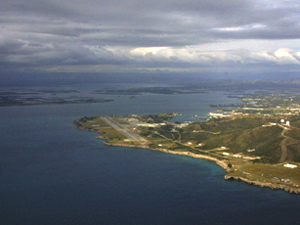
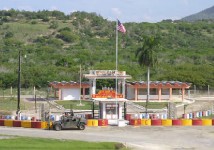
The Guantanamo Bay, Cuba

THE GUANTANAMO BAY, CUBA
Called “GITMO”

Guantanamo, Cuba is a town in the province of Oriente, situated near the head of the most important harbor east of the city of Santiago on the southern coast. The bay is a pouch-shaped indentation about 12 miles long in a northeast-southwest direction and about 6 miles across at its greatest width. Guantanamo Valley, a low, hilly district, extends westward from the bay along the Sierra Maestra. The deep bay is sheltered by the nearby Cuzco Hills (elevations to 495 ft) to the south and east and by mountains to the north.

Guantanamo Bay has been famous as the scene of important actions in the Spanish American War. On 19 May, 1898 an unsuccessful attempt to cut the cable in the bay was made by the USS SAINT LOUIS and the USS WOMPATUCK. On 10 June a force of 600 Marines landed from the transport USS PANTHER on the eastern shore of Guantanamo Bay and undertook to make the outer harbor a secure place for the use of U.S. Vessels when coaling or as a rendezvous and a refuge in stormy weather. The marines established their camp on a small hill, where they sustained attacks of Spanish troops for several days with courage and endurance. The USS MARBLEHEAD and the USS TEXAS lent assistance by landing small forces of marines and then these and other ships supported the land operation with naval gunfire. When ten days had passed, the outer harbor was practically in the possession of American Forces.

http://youtu.be/jWpOTMyAJKk

In July 1901 the U.S. Government selected Guantanamo Bay as the site for a naval station and in 1903 the land on both sides of the entrance was leased from the Cuban Government. Guantanamo Bay is the largest harbor on the south side of the island and is surrounded by steep hills creating an enclave cut off from its immediate hinterland. The base is about 400 air miles from Miami, Florida.

The United States assumed territorial control over the southern portion of Guantánamo Bay under the 1903 Cuban-American Treaty, which granted it a perpetual lease of the area. The United States, by virtue of its complete jurisdiction and control, maintains “de facto” sovereignty over this territory, while Cuba retained ultimate sovereignty over the territory. It is the oldest overseas U.S. Navy Base, and the only one in a country with which the United States does not have diplomatic relations. The agreement was forced on the new Cuban government, and gave the U.S. navy permission to occupy the bay. On December 12, 1903. Official control of Guantánamo Bay is “handed” to the U.S. in a ceremony on the battleship Kearsage. At noon on that day the Cuban flag is lowered and the American flag is raised. Only one Cuban is present at the ceremony.

In December 1903, the United States leased the 45 square miles of land and water for use as a coaling station. A treaty reaffirmed the lease in 1934 granting Cuba and her trading partners free access through the bay, payment of $2,000 in gold per year, equating to $4,085 today, and a requirement that both the U.S. and Cuba must mutually consent to terminate the lease. After the Platt Amendment was annulled in 1934, a new lease was negotiated between the Roosevelt administration and a Cuban government that included Fulgencio Batista as one of three signatories. Batista emerged as the strong man on the island over the next twenty-five years.

The issue of returning Guantánamo to Cuba is complicated by the agreement signed by Batista in 1934. The agreement states: “Until the two Contracting Parties agree to the modification or abrogation of the stipulations of the agreement in regard to the lease to the United States of America of lands in Cuba for coaling and naval stations… the stipulations of that Agreement with regard to the naval station of Guantánamo shall continue in effect.” To the U.S. this means an “open-ended duration” that can only be terminated by mutual agreement. To Cuba it means that Guantánamo Bay is “occupied territory.”

The Naval Base facilities were expanded tremendously just prior to and during World War II, and today Naval Operating Base, Guantanamo Bay, Cuba is the major U.S. naval installation in the Caribbean. U.S. diplomatic relations with Cuba were cut on January 3, 1961 by President Dwight Eisenhower; shortly prior to John F. Kennedy’s inauguration on January 20, 1961. At that time, many Cubans sought refuge on the base. U.S. Marines and Cuban militiamen began patrolling opposite sides of the base’s 17.4 mile fenceline. Today, U.S. Marines and Cuba’s “Frontier Brigade” still man fenceline posts 24 hours a day.

In October 1962, family members of service people stationed here and many base employees were evacuated to the United States as President John F. Kennedy announced the presence of Soviet missiles in Cuba. This was the start of the Cuban Missile Crisis which resulted in a naval quarantine of the island until the Soviet Union removed the missiles and US promised not to invade Cuba. The evacuees were allowed to return to the base by Christmas 1962.

Another crisis arose just 14 months later on Feb. 6, 1964, when Castro cut off water and supplies to the base in retaliation for several incidents in which Cuban fishermen were fined by the U.S. government for fishing in Florida waters. Since then, Guantanamo Bay has been self-sufficient and the Naval Base desalination plant produces 3.4 million gallons of water and more than 800,000 kilowatt hours of electricity daily.

In May 1994, Operation ‘Sea Signal’ began and the naval base was tasked to support Joint Task Force 160, here providing humanitarian assistance to thousands of Haitian and Cuban migrants. In late August and early September 1994, 2,200 family members and civilian employees were evacuated from the base as the migrant population climbed to more than 45,000 and the Pentagon began preparing to house up to 60,000 migrants on the base. The last Haitian migrants departed here Nov. 1, 1995. The last of the Cuban migrants left the base Jan. 31, 1996.

In March, 1996, the fate of Guantánamo took another sad turn when it was incorporated into the Helms Burton Law authored by the anti-Castro community and signed into law by President Bill Clinton. Section 201 (12) of Chapter II modifies the existing 1903/1934 treaty so that “the duration of the base,” as explained by Olga Miranda in her essay How To Exit the Guantánamo Treaty, “will now depend on whether Cuba has a government that Washington approves of.”

According to Miranda, the Helms-Burton provides “further proof that the continued existence of the naval base in Guantánamo is imposed on Cuba by the United States with no legal backing whatsoever and without consideration for the will of the Cuban people.”

In early 2005, four white wind turbines began operating John Paul Jones Hill, the base’s highest point, named after the Revolutionary War naval hero. The turbines, standing at 80 meters (262 feet) high, feature three-blade turbines. The four turbines were estimated to provide as much as a quarter of the base’s power generation during the high-wind months of late summer and fall; an appreciable fact given that Guantanamo Bay is completely self-sustaining, generating its own power and water without having to rely on Cuban municipal sources. In addition to generating power, the turbines have significantly cut down on emissions of greenhouse gases created through burning diesel fuel.

Since 2002, the naval base has contained a military prison, the Guantanamo Bay detention camp, for persons alleged combatants captured in Afghanistan and later in Iraq. The alleged mistreatment of all prisoners, the proven mistreatment of some prisoners, and their denial of protection under the Geneva Conventions, has been a source of international controversy.

After 52 years of service, Guantanamo’s Fleet Training Group relocated to Mayport, Florida, in July 1995. One month later, the naval base lost another major tenant command when the base’s Shore Intermediate Maintenance Activity disestablished after 92 years of service.

While this media-blog will not attempt to enumerate the many legal aspects of international law invoked by this “lease”, it’s important to note that most other territories occupied by other nations have been returned. The Panama Canal was returned to Panama in January 2000, Hong Kong was returned to China by the United Kingdom in 1997, and Portugal returned Macau Island to China in 1999.

Since 1959, the U.S. sends a check for the lease amount every year, but the Cuban government has never cashed them.

Sources: Wiki/USDocumt/CubaDocumt/InternetPhotos/Youtube/TheCubanHistory.com
History: The Guantanamo Bay,Cuba /The Cuban History/ Arnoldo Varona, Editor

CUBA’S UNIVERSITY AUTONOMY Ended (Oct.1959) – (Photos) * * FIN EN CUBA DE LA AUTONOMÍA UNIVERSITARIA (Oct. 1959) – (Fotos).

CUBA- October 1959 – The University student elections gave Fidel Castro an opportunity to avenge past grievances.

Pedro Luis Boitel

The most popular candidate for the presidency was Pedro Luis Boitel, an engineering student. Sickly as a youth, Boitel had had to work from an early age to put himself through secondary school and the university. He opposed Batista after March 1952 and went to Venezuela returning to Havana in January 1959. Weak of body, he had an indomitable spirit of independence, much admired by his classmates.

Rolando Cubelas
JFKcubela11

Major Rolando Cubelas, had served in Las Villas with the Revolutionary Directorate. Castro sent him to Prague as military attache and then, assured of his loyalty, allowed him to return to the university, ostensibly as a medical student. He had the strong backing of Raul Castro and Ernesto Guevara. Cubelas had kept his beard,and, like the prime minister, he continued to wear his uniform, even on the campus. Running on the same ticket as Angel Quevedo, a lieutenant in the Revolutionary Directorate, who only recently had been promoted by Castro to the rank of major.

Fidel Castro would permit no independent student government, and he knew that Boitel could win any free election. On the morning of the balloting – Saturday, October 17 – Revolucion published a statement from the prime minister, calling for unity in the ranks of the revolutionaries. The sole division in Cuba, he said whether among peasants, workers, or students, must be between those who stood with the revolution and those who opposed it. There was no middle ground, no neutrality. If the country’s laborers worked nine hours a day, if the peasants tilled the fields from sunup to sundown, surely the students could make sacrifices as well, he said. Instead of fighting among themselves, they should give each other a “revolutionary embrace,” should proclaim a president unanimously and unite in a true plan of reform that could be carried out with no delay. The Maximum Leader’s intent came through loud and clear. Boitel immediately withdrew his candidacy.

Yet many students defied the prime minister and cast their votes for Boitel anyway. He carried five of the thirteen schools. Cubelas took office on October 20 and began to savor the perquisites of revolutionary power. He appointed thirteen friends as paid secretaries with duties in fields of foreign affairs, social and economic relations, and industries and culture. He wore tailored uniforms and drove a large automobile. He also assigned cars to his friends. Though a power at the university, he was rarely on campus. He was seen most often driving around Havana with women of “dubious reputation.” On October 28 the university council accepted a system of co-government with the FEU leaders. In reality the professors and deans had lost their authority to make decisions and served only as a conduit to transmit information to the cabinet. Castro had destroyed democracy and autonomy on the university campus.

A year later Boitel was sentenced to a long prison term for “anti-revolutionary” crimes. He arrived at the prison carrying a large crucifix. It was taken from him. He died on a hunger strike. In 1966 Cubelas too went to prison, charged with planning to assassinate the Maximum Leader.

Sources: FreeCuba/Castro/Quirk/
InternetPhotos/www.TheCubanHistory.com
CUBA’S UNIVERSITY AUTONOMY Ended (Oct.1959)
The Cuban History, Hollywood.
Arnoldo Varona, Editor

Ciudad de Baracoa. Guantánamo
Foto por Cecilia Habanera with Rayner Fleites.- Ciudad de Baracoa.
1390486_10151975804186083_1406231445_n

EL FINAL DE AUTONOMÍA UNIVERSITARIA (octubre 1959)

CUBA, Octubre 1959 – Las elecciones estudiantiles Universitarias dio a Fidel Castro una oportunidad de vengar los agravios del pasado.

Pedro Luis Boitel

El candidato más popular para la presidencia fue Pedro Luis Boitel, estudiante de ingeniería. Enfermizo en su juventud, Boitel había tenido que trabajar desde muy temprana edad para ponerse en la escuela secundaria y la universidad. Se opuso a Batista después de marzo de 1952 y se fue a Venezuela de regresar a La Habana en enero de 1959. Débil de cuerpo, que tenía un espíritu indomable de la independencia, muy admirado por sus compañeros de clase.

Rolando Cubelas
JFKcubela11

Los principales Cubelas Rolando, había servido en Las Villas, con el Directorio Revolucionario. Castro le envió a Praga como agregado militar y, a continuación, seguro de su lealtad, le permitió regresar a la universidad, aparentemente como un estudiante de medicina. Él tenía el fuerte respaldo de Raúl Castro y Ernesto Guevara. Cubelas había mantenido su barba, y, al igual que el primer ministro, que continuó usando su uniforme, incluso en el campus. Correr en el mismo billete como Angel de Quevedo, un teniente en el Directorio Revolucionario, que sólo recientemente había sido ascendido por Castro para el rango de mayor.

Fidel Castro permitiría que ningún gobierno independiente del estudiante, y sabía que podía ganar Boitel cualquier elección libre. En la mañana de la votación – Sábado, 17 de octubre – Revolución publicó una declaración del primer ministro, llamando a la unidad en las filas de los revolucionarios. La división única en Cuba, dijo que si entre los campesinos, trabajadores o estudiantes, debe estar entre los que estaban con la revolución y los que se opusieron a ella. No había término medio, no hay neutralidad. Si los trabajadores del país trabajaron nueve horas al día, si los campesinos cultivaban los campos de sol a sol, sin duda los alumnos pueden hacer sacrificios, así, dijo. En lugar de luchar entre sí, deben darse un “abrazo revolucionario”, debe proclamar un presidente por unanimidad y se unen en un verdadero plan de reforma que podría llevarse a cabo sin demora. La intención del Máximo Líder se escuchó fuerte y claro. Boitel inmediatamente retiró su candidatura.

Sin embargo, muchos estudiantes desafiaron al primer ministro y emitir sus votos para Boitel de todos modos. Llevaba cinco de las trece escuelas. Cubelas asumió el cargo el 20 de octubre y comenzó a saborear las prebendas del poder revolucionario. Él designó a trece amigos como secretarios pagados con funciones en materia de asuntos exteriores, relaciones sociales y económicas, y las industrias y la cultura. Se vestían uniformes adaptados y conducía un automóvil grande. También asigna los coches a sus amigos. A pesar de un poder en la universidad, él rara vez estaba en el campus. Se le vio más a menudo en coche por La Habana con las mujeres de “dudosa reputación”. El 28 de octubre el Consejo Universitario aceptó un sistema de co-gobierno con los dirigentes de la FEU. En realidad, los profesores y decanos había perdido su autoridad para tomar decisiones y sólo sirve como un conducto para transmitir la información al gabinete. Castro había destruido la democracia y la autonomía en el campus universitario.

Un año más tarde Boitel fue condenado a una larga pena de cárcel para los “anti-revolucionarios” los crímenes. Llegó a la carcel con un gran crucifijo. Fue tomado de él. Él murió en una huelga de hambre. En 1966, Cubelas también fue a la cárcel, acusado de planear el asesinato del líder máximo.

Sources: FreeCuba/Castro/Quirk/
InternetPhotos/www.TheCubanHistory.com
CUBA’S UNIVERSITY AUTONOMY Ended (Oct.1959)
The Cuban History, Hollywood.
Arnoldo Varona, Editor