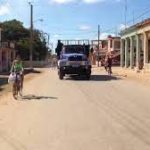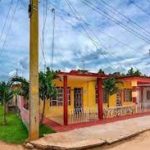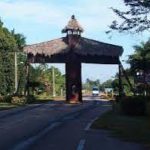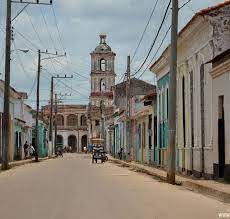
JAGÜEY GRANDE, CUBA , City Named After a Tree Known as “JAGÜEY” (Ficus Citrifolia). PHOTOS. * JAGÜEY GRANDE, CUBA, Ciudad llamada por un Arbol conocido como “JAGÜEY” (Ficus Citrifolia). PHOTOS.

download (17)download (15)download (13)

JAGÜEY GRANDE, CUBA, CITY NAMED AFTER A TREE KNOWN AS “JAGÜEY” (FICUS CITRIFOLIA).PHOTOS.

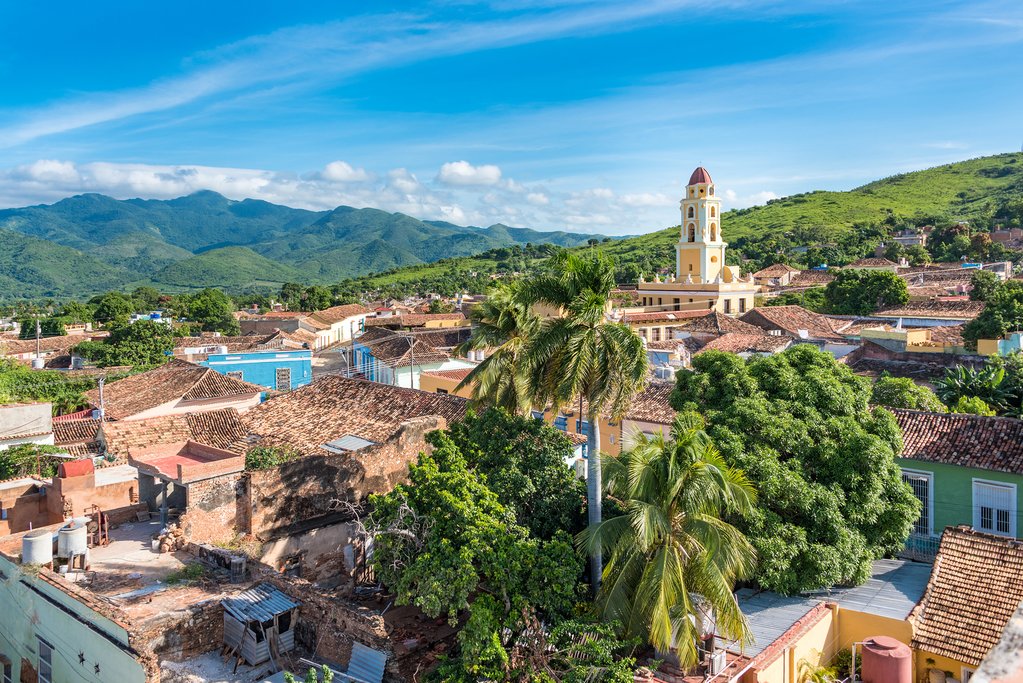
Jagüey Grande, simply known as Jagüey (Spanish pronunciation: [xaˈɣwej]), is a town and municipality in the Matanzas Province of Cuba. It is located east of the Zapata Peninsula, north of the Bahia de Cochinos, along the A1 motorway in the center of the province.

HISTORY

The town was founded in 1840 and was named after the tree Ficus citrifolia, locally named “Jagüey”.

https://youtu.be/krblz_5o6jU
VISIT TO JAGUEY GRANDE (VIDEOS)

GEOGRAPHY

The municipality was historically divided into the barrios of Pueblo (town’s centre), Gallardo, López, Murga Sinú and Rovira.[1] Nowadays it counts the town itself and the popular councils (Consejos Populares, i.e. villages) of Agramonte, Australia, San José de Marcos, and Torriente. Agramonte, the most populated village, was an autonomous municipality until the 1976 reform.

DEMOGRAPHICS

In 2007, the municipality of Jagüey Grande had a population of 87,771. With a total area of 882 km2 (341 sq mi), it has a population density of 65.5/km2 (170/sq mi).

Area code(s) +53-52

NOTABLE PEOPLE

Mario García Menocal (1866–1941), politician, 3rd President of Cuba
Jaime Lucas Ortega y Alamino (born 1936), archbishop
Leopoldo Fernández (Tres Patines) (1904-1985), actor and comedian

* RECOMIENDENOS A SUS AMISTADES * PREFIERA A NUESTROS SPONSORS.*

* RECOMIENDENOS A SUS AMISTADES * PREFIERA A NUESTROS SPONSORS.*

logo (1)

download (9)

JAGÜEY GRANDE, CUBA, CIUDAD LLAMADA POR UN ÁRBOL CONOCIDO COMO “JAGÜEY” (FICUS CITRIFOLIA)

Jagüey Grande, simplemente conocido como Jagüey, es un pueblo y municipio de la provincia de Matanzas en Cuba. Se ubica al este de la Península de Zapata, al norte de la Bahía de Cochinos, a lo largo de la autopista A1 en el centro de la provincia.

HISTORIA

El pueblo fue fundado en 1840 y recibió su nombre del árbol Ficus citrifolia, llamado localmente “Jagüey”.

GEOGRAFÍA

Históricamente, el municipio estuvo dividido en los barrios Pueblo (centro del pueblo), Gallardo, López, Murga Sinú y Rovira. [1] En la actualidad cuenta con la propia villa y los consejos populares (Consejos Populares) de Agramonte, Australia, San José de Marcos y Torriente. Agramonte, el pueblo más poblado, fue municipio autónomo hasta la reforma de 1976.

https://youtu.be/4Cr8QFHGf-s
VISITA A JAGUEY GRANDE (VIDEOS)

DEMOGRAFÍA

En 2007, el municipio de Jagüey Grande tenía una población de 87.771 habitantes. Con una superficie total de 882 km2 (341 millas cuadradas), tiene una densidad de población de 65,5 / km2 (170 / mi2).

Código (s) de área + 53-52

GENTE NOTABLE

Mario García Menocal (1866-1941), político, tercer presidente de Cuba
Jaime Lucas Ortega y Alamino (nacido en 1936), arzobispo
Leopoldo Fernández (Tres Patines) (1904-1985), actor y comediante

Agencies/ Wiki/ Internet Photos/ YouTube/ Arnoldo Varona/ www.TheCubanHistory.com
THE CUBAN HISTORY, HOLLYWOOD.

* RECOMIENDENOS A SUS AMISTADES * PREFIERA A NUESTROS SPONSORS.*

* RECOMIENDENOS A SUS AMISTADES * PREFIERA A NUESTROS SPONSORS.*

logo (1)

maxresdefault (1)

TRAVELING from Cayo Hueso to Cuba before 1959, was as Simple as Sewing and Singing. The FERRY. * VIAJAR desde Cayo Hueso a Cuba antes del 1959, era tan Simple como Coser y Cantar. EL FERRY. Photos/Videos.

download (8)

TRAVELING FROM CAYO HUESO TO CUBA BEFORE 1959, WAS AS SIMPLE AS SEWING AND SINGING. THE FERRY

Cayo Hueso is the original name in Spanish for the island of Cayo Hueso or Key West. Spanish-speaking people today also use the term Cayo Hueso when referring to this island. It is said that the island was full of remains (bones) and that the island was the western key with a safe supply of water.

In 1890, Key West had a population of about 18,800 and was the largest and richest city in Florida. Half of the residents were said to be of Cuban origin, and Key West regularly had Cuban mayors, including the son of Carlos Manuel de Céspedes, the father of the Republic of Cuba, who was elected mayor in 1876. Cubans have participated actively in the development of 200 factories in the city, a production of 100 million cigars annually. José Martí made several visits to seek recruits for the independence of Cuba from 1891 and founded the Cuban Revolutionary Party during his visits to Key West.

https://youtu.be/xiMGSXBMeAU
CAYO HUESO TRIP (VIDEOS)

After the occupation of Havana by England, the Cayo was considered ceded to them, which did not pay much attention to the place, the Cubans residing there were transferred to Havana and soon the Cayo began to be used by Cuban and Bahamian fishermen.

Once the United States achieved its independence, by order of February 7, 1822, on March 25, 1822, Lieutenant Matthew C. Perry of the American Navy arrived in Key West on the Shark (Shark) and planted the American flag claiming the key. as the property of the United States. Perry proceeded to change the name to “Thompson’s Island” in honor of Secretary of the Navy Smith Thompson and named the port “Port Rodgers” in honor of John Rodgers, the hero of the war of 1812. Neither name remained, without However, Key West has remained the property of the United States to the present.

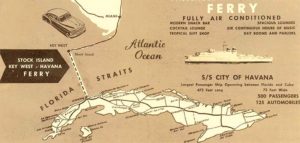
THE FERRY CAYO HUESO-CUBA

Traveling to the United States from Cuba, before the Revolution, was something as simple as sewing and singing.

The Ferry, for the price of $ 30, allowed you to travel with your car or bring one or more from Miami. This was a highly profitable business, buying used cars and taking them to Cuba, they were cars of little use, in excellent condition, and very cheap.

01-havana-key-west-p

The stretch of the Vía Blanca that runs from the Ciudad Deportiva to the beginning of Santos Suárez, the so-called Puente de Agua Dulce, was packed with used cars for sale that had been brought from the United States. Not a few dreamed at that time of buying a Ford to which you had to pass your hand a bit for just 50 pesos. But for 200 or 300, it was possible to buy a car in very good condition and almost new.

The North American company Taylor was the one who operated the Ferry City of Havana, which had the capacity to transport about 500 passengers per trip who paid $ 30.00 (Cuban pesos or dollars) per one-way trip including cabotage. Of course, there were several cabotage cars; up to 125.

The frequency of trips Havana-Key West was: Monday, Wednesday, and Friday to Key West – from 10 am to 4 pm on Tuesday, Thursday, and Saturday to Havana from 10.00 am to 4.30 pm.

The boat docked at the Hacendados embouchure, Atares cove, in the bay of Havana. Once there, the travelers mounted in their cars crossed a special ramp and immediately strolled freely through the streets of the Cuban capital. The same thing happened in Key West, where an old ferry terminal was refurbished to cover this attractive route.

images (9)

The Ferry cabins were air-conditioned, as were the rest of the facilities. In addition, it had some boutiques selling souvenirs, jewelry and other merchandise in the lobby of the cruise ship.

The City of Havana’s crew was multinational, captained by a Norwegian officer, with a Spanish first officer, and a Cuban one. There were two helmsmen, a radio operator, four watchmen, and a group of sailors. A musical group did their performances during the trip. As part of the recreation, on one occasion he performed at the Ferry Ernesto Lecuóna, accompanied by a tenor.

The Ferry operated until October 1962, when she made her last trip back to the United States, taking with her the diplomatic staff of the US embassy in Cuba and her cars.

* RECOMIENDENOS A SUS AMISTADES * PREFIERA A NUESTROS SPONSORS.*

* RECOMIENDENOS A SUS AMISTADES * PREFIERA A NUESTROS SPONSORS.*

logo (1)

unnamed

VIAJAR DE CAYO HUESO A CUBA ANTES DE 1959, ERA TAN SENCILLO COMO COSER Y CANTAR. EL FERRY

Cayo Hueso es el nombre original en español de la isla de Cayo Hueso o Key West. Personas que hablan español hoy en día también usan el término Cayo Hueso al referirse a esta isla. Se dice que la isla estaba llena de restos (huesos) y que la isla era la llave occidental con un suministro seguro de agua.

En 1890, Cayo Hueso tenía una población de cerca de 18.800 y era la ciudad más grande y rica en la Florida. La mitad de los residentes se decía que eran de origen cubano, y Cayo Hueso regularmente tenían alcaldes cubanos, entre ellos el hijo de Carlos Manuel de Céspedes, el padre de la República de Cuba, que fue elegido alcalde en 1876. Los cubanos han participado activamente en el desarrollo de 200 fábricas en la ciudad, una producción de 100 millones de cigarros anuales. José Martí hizo varias visitas a buscar reclutas para la independencia de Cuba a partir de 1891 y fundó el Partido Revolucionario Cubano en sus visitas a Cayo Hueso.

https://youtu.be/dYoczIlKzMY
HISTORIA DE CAYO HUESO (VIDEOS)

Despues de la ocupación de la Habana por los Ingleses el Cayo fue considerado cedido a Inglaterra que no le hizo mucho caso al lugar, los cubanos residentes alli fueron trasladados a la Habana y pronto el Cayo empezó a ser usado por pescadores cubanos y de las Bahamas.

Logrado los Estados Unidos su independencia, por orden del 7 de febrero de 1822, el 25 de marzo de 1822 el teniente Matthew C. Perry de la marina americana llegó a Cayo Hueso en el Shark (Tiburón) y plantó la bandera americana reclamando al cayo como propiedad de los Estados Unidos. Perry procedió a cambiarle el nombre a “Thompson’s Island” en honor al secretario de la marina Smith Thompson y al puerto le llamó “Port Rodgers” en honor a John Rodgers, héroe de la guerra de 1812. Ninguno de los dos nombres permanecieron, sin embargo, Cayo Hueso ha permanecido propiedad de los Estados Unidos hasta el presente.

EL FERRY CAYO HUESO-CUBA

Viajar a los Estados Unidos desde Cuba, antes de 1959, era algo tan sencillo como coser y cantar.

El Ferry, por el precio de 30 dólares, permitía viajar con su carro o traer uno o varios de Miami. Este era un negocio altamente rentable, comprar autos usados y llevarlos a Cuba, eran carros de poco uso, en excelente estado y muy baratos.

BODEGA-DEL-FERRY-CITY-OF-HAVANA

El tramo de la Vía Blanca que comprende desde la ciudad Deportiva hasta el comienzo de Santos Suárez, el llamado Puente de Agua Dulce, se encontraba abarrotados de carros usados en venta que habían sido traídos desde Estados Unidos. No pocos soñaron en aquel tiempo comprarse un Ford al que había que pasarle un poco la mano en tan solo 50 pesos. Pero por 200 o 300, era posible adquirir un auto en muy buen estado y casi nuevo.

La Empresa norteamericana Taylor era quien operaba el Ferry City of Havana, el cual tenía capacidad para transportar unos 500 pasajeros por viaje que pagaban $30.00 (pesos cubanos o dólares) por viaje en un solo sentido incluyendo cabotaje. Por supuesto que de cabotaje iban autos varios; hasta 125.

La frecuencia de viajes Habana-Cayo Hueso era: Lunes, miércoles y viernes hasta Cayo Hueso (Key West)- de 10 am a 4 pm los martes, jueves y sábado hasta La Habana de 10.00 am a 4.30 pm.

La embarcación atracaba en el embocadero Hacendados, ensenada de Atares, en la bahía de La Habana. Una vez allí, los viajeros montados en sus autos cruzaban una rampa especial e inmediatamente paseaban libremente por las calles de la capital cubana. Lo mismo sucedía en Cayo Hueso, donde una antigua terminal de ferris fue reacondicionada para cubrir ese atractivo trayecto.

Los camarotes del Ferry tenían aire acondicionado, al igual que resto de las instalaciones. Además, contaba con algunas boutiques de ventas de souvenirs, joyas y otras mercancías en el lobby del crucero.

download (7)

La tripulación del ‘City of Havana’ era multinacional, capitaneada por un oficial noruego, con un primer oficial español, y uno cubano. Habían dos timoneles, un radio-operador, cuatro veladores, y un grupo de marineros. Un conjunto musical hacía sus actuaciones durante el viaje. Como parte de la recreación, en una ocasión actuó en el Ferry Ernesto Lecuóna que se hacía acompañar por un tenor.

El Ferry funcionó hasta Octubre de 1962, cuando realizó su ultimo viaje de regreso a Estados Unidos llevando consigo al personal diplomático de la embajada estadounidense en Cuba y sus automóviles.

Agencies/ Wiki/ MemoriasCubanas/ Carlos RodriguezB. / Extractos/ Excerpts/ Internet Photos/ YouTube/ Arnoldo Varona/ www.TheCubanHistory.com
THE CUBAN HISTORY, HOLLYWOOD.

* RECOMIENDENOS A SUS AMISTADES * PREFIERA A NUESTROS SPONSORS.*

* RECOMIENDENOS A SUS AMISTADES * PREFIERA A NUESTROS SPONSORS.*

logo (1)

b6cc5c258ca09474c5163178f01455e6-cuba

CELINA GONZÁLEZ, the Owner of the Cuban “Punto Guajiro”. (Celina & Reutilio). * CELINA GONZÁLEZ, la Dueña del “Punto Guajiro” Cubano. (CELINA Y REUTILIO). VIDEOS.

unnamed

CELINA GONZÁLEZ, THE OWNER OF THE CUBAN ‘PUNTO GUAJIRO’. (CELINA AND REUTILIO). VIDEOS

The music of the fields of Cuba, like the peasant music of the entire Caribbean, has a strong Hispanic influence. Guajira, Jíbara or Llanera, represents a very important aspect in the spectrum of popular music, including salsa through instruments, themes, and voices.

The Cuban point is peasant music of Spanish roots, with strong Andalusian influence transformed into Cuban lands. It is performed with the accompaniment of Tres, Laúd, Guayo, Clave, and Güiro. It has a lot to do with the Décima and the Tonada, and depending on the area where it is sung, it adopts other modalities.

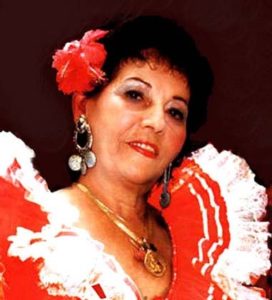
Celina González Zamora “La Dueña del Punto Guajiro” was born in Jovellanos, Matanzas province, Cuba on March 16, 1928, and is one of the most important characters when it comes to studying the incidence of Cuban Guajira music in the Caribbean environment. , and beyond. She revolutionized her own musical genre by incorporating elements of African heritage music at Punto y la Guajira. When she was very young, her parents Gregorio González and Benita Zamora took her to Santiago de Cuba.

https://youtu.be/Y06C82oAz9o
CELINA Y REUTILIO SING “QUE VIVA CHANGÓ” (VIDEOS)

“I grew up in the heat of Santiago de Cuba, among old troubadours, old soneros, in the warmth of that town. Santiago was always a hotbed of revolutionary ideas, of a revolutionary whole, and not only in politics. life together with the landscape. There I learned to love the meaning of the relief of the Royal Palm on the horizon “he said in an interview.

She always had a Cayenne in her hair and in recent times she accompanied her throughout Lazaro, her son, whom no one called by her name but by her father, now deceased, Reutilio. Her son made a duet with her and with the name of her father, her tradition was not lost: Celina and Reutilio. But it was Lazarus.

ARTISTIC CAREER

She started as a professional when she was almost 20 years old. Of course, before she sang in the guateques, and later in the touches of Santiago. Then she sang, Punto Cubano. In an interview with Lil Rodriguez from TeleSur she refers:

images (16)

“When I was 20 years old, I came to the radio led by a young man who would become my boyfriend and then my husband, but who began only as my co-worker, Reutilio Domínguez, a guitarist born in Guantánamo, who did with me a duo called like this: “Celina y Reutilio.” The two of us started on a radio station in the Oriente province, on ‘Cadena Oriental’. We achieved, more than success, notoriety. It felt what we did. Ñico Saquito, our great promoter towards the whole island. Ñico was already a legend and he discovered us on the radio. He managed to get us to make some recordings on the station, and he himself took them and went to Havana to listen to them. Laureano Suárez, the popular “suarito”, at that time one of the most popular radio broadcasters in Cuba. And look. Suarito liked the work we were doing and decided to hire us for a week. That’s how Reutilio and I, sponsored by Ñico, traveled from Santiago to Havana. ”

If my landscape changed in Santiago, my life changed in Havana, thanks to a dream.

A dream?

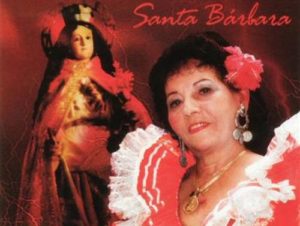
“It turns out that when we got to the city Reutilio and I stayed where a friend of mine and went to sleep. It was our first Havana night. While I was asleep, Santa Bárbara Bendita appeared to me in my dream and told me to get up and copy the I got up and copied the lyrics, as in a dream, and the Saint also gave me the music. When I got up I knew it by heart. I never forgot it. I told Reutilio and I sang it to him now. He fascinated him, making some arrangements for the melody. I decided that with that song I would make my radio debut in Havana. Suarito’s contract was for one week. The success was so tremendous that the contract was extended that day immediately, for one year “.

https://youtu.be/9iL0a1kCeTg
CELINA Y REUTILIO SING “A SANTA BARBARA”. (VIDEOS).

“We, remembering, found that this song” Que viva Changó “is the first that links Guajira music with themes of Yoruba origin, black. It should be remembered that the black theme has its rhythmic formats and that peasant music also has a literature particular, bucolic, guajira, well. But that of singing to Changó with Laúd and Tiple “.

On the subject, classic among the classics of Cuban popular music, it makes a direct allusion to the musical and revolutionary ancestor, I always speak of its saints and is emphatic in pointing out that it has never denied its faith.

AWARDS AND HONORS

Celina has received tributes in many countries. In Colombia, she is a true idol. Mexico welcomes her with great affection, as do Spain, Peru, and Germany. She was in the United States with Benny Moré and also with Barbarito Diez. Her tours to London, Paris, and Athens were successful.

Celina produced more than 40 albums, with which she won several awards, including the Gold Record of Africa and the highest honors of music in Cuba. In 1980 she won the Egrem Silver Record Award for the album Celina. This was the first of many awards. In 1984 she received the National Vanguard for her artwork and won a trip to the Soviet Union and Bulgaria with her son. In 1984 she won the Best Singer award at the 27th International Music Festival in Cali, Colombia and after a successful tour of Europe in 1988 she recorded a session for the BBC.

The albums ‘The rich harvest’ and ‘From Havana I bring you’ was well received, and she was nominated, unsuccessfully, for a Grammy in 2001 in the category ‘Best Traditional Tropical Latin Album’, for her CD Fifty Years … like a queen. Instead, the album won the Cubadisco award for the same year.

images (25)

Celina González opened a historical gap to the music of her country in the peasant-Yoruba link and she continued there as if nothing had happened.

She passed away on February 4, 2015, at the age of 87 covered by the immense affection of the Cuban people. On October 20 of that same year, on Cuban Culture Day, her sculpture was unveiled in the now legendary Wax Museum in the city of Bayamo, Cuba.

She was and still is Celina González. The Cuban Point in person.

* RECOMIENDENOS A SUS AMISTADES * PREFIERA A NUESTROS SPONSORS.*

* RECOMIENDENOS A SUS AMISTADES * PREFIERA A NUESTROS SPONSORS.*

logo (1)

Gonzalez,Celina_361x420

CELINA GONZALEZ, LA DUEÑA DEL PUNTO GUAJIRO CUBANO. (DUO CELINA Y REUTILIO) VIDEOS

La música de los campos de Cuba, como la música campesina de todo el Caribe tiene una fuerte influencia hispánica. Guajira, Jíbara o Llanera ella representa una vertiente bien importante en el espectro de la música popular, salsa incluida mediante instrumentos, temáticas y voces.

El punto cubano es música campesina de raíz española, con fuerte influencia andaluza transformada en tierras de Cuba. Se ejecuta con acompañamiento de Tres, Laúd, Guayo, Clave y Güiro. Tiene mucho que ver con la Décima y con la Tonada, y según la zona donde se cante adopta otras modalidades.

Celina González Zamora “La Dueña del Punto Guajiro” nació en Jovellanos, provincia de Matanzas, Cuba un 16 de marzo de 1928 y es uno de los personajes más importantes a la hora de estudiar la incidencia de la música guajira de Cuba en el entorno caribeño, y más allá. Ella revolucionó su propio género musical al incorporar elementos de la música de herencia africana al Punto y la Guajira. Siendo muy pequeña sus padres Gregorio González y Benita Zamora la llevaron para Santiago de Cuba.

“Crecí al calor de Santiago de Cuba, entre viejos trovadores, viejos soneros, en la calidez de ese pueblo. Santiago fue siempre un hervidero de ideas revolucionarias, de un todo revolucionario, y no sólo en la política. En Santiago se me viró la vida junto con el paisaje. Allí aprendí a amar el significado del relieve de la Palma Real sobre el horizonte” dijo en una entrevista.

https://youtu.be/HlMsZ8mTGHs
CELINA Y REUTILIO CANTAN “VIVA YEMAYA” (VIDEOS)

Siempre tuvo una Cayena en sus cabellos y en los últimos tiempos la acompañaba en todo Lázaro, su hijo, a quien nadie llamaba por su nombre sino por el del padre, ya fallecido, Reutilio. El hijo hizo dúo con ella y con el nombre del padre no se perdió la tradición: Celina y Reutilio. Pero era Lázaro.

CARRERA ARTISTICA

Comenzó como profesional cuando ya casi iba a cumplir los 20 años. Claro, antes cantaba en los guateques, y luego en los toques de Santiago. Entonces ella cantaba, Punto Cubano. En una entervista con Lil Rodriguez de TeleSur refiere:

“Ya para cumplir los 20 años llegué a la radio llevada de la mano de un joven que se transformaría en mi novio y luego en mi esposo, pero que comenzó solo siendo mi compañero de trabajo, Reutilio Domínguez, guitarrista nacido en Guantánamo, quien hacía conmigo un dúo que se llamó así: “Celina y Reutilio”. Los dos comenzamos en una radio de la provincia de Oriente, en la ‘Cadena Oriental’. Logramos, más que éxito, notoriedad. Se sentía lo que hacíamos. Así lo sintió Ñico Saquito, nuestro gran impulsador hacia toda la isla. Ñico era ya una leyenda y él nos descubrió en la radio. Logró que hiciéramos unas grabaciones en la emisora, y él mismo las tomó y se fue para La Habana a fin de que las escuchara Laureano Suárez, el popular “suarito”, por aquél entonces uno de los más populares locutores de Cuba. Y fíjate. A Suarito le gustó el trabajo que hacíamos y decidió contratarnos por una semana. Fue así como Reutilio y yo, apadrinados por Ñico, viajamos desde Santiago hasta La Habana”.

Si en Santiago se me cambió el paisaje, en La Habana se me cambió la vida, gracias a un sueño.

¿Un sueño?

“Resulta que cuando llegamos a la ciudad Reutilio y yo nos alojamos donde una gente amiga y nos acostamos a dormir. Era nuestra primera noche habanera. Estando yo dormida se me apareció Santa Bárbara Bendita en el sueño y me dijo que me levantara y copiara la letra que me iba a dictar. Yo me levanté y copié la letra, como en sueños y la Santa me dio también la música. Cuando me levanté me la sabía de memoria. Nunca se me olvidó. Le conté a Reutilio y se la canté y a él le fascinó, haciéndole algunos arreglos para la melodía. decidí que con esa canción haría mi debut radial en La Habana. El contrato de Suarito era por una semana. El éxito fue tan tremendo que el contrato se extendió ese día inmediatamente, por un año”.

https://youtu.be/EOL3qnk3poo
CELINA Y REUTILIO CANTAN “A SAN LAZARO” (VIDEOS)

“Nosotros, haciendo memoria, encontramos que ese tema “Que viva Changó” es el primero que vincula la música guajira con temas de origen Yoruba, negro. Conviene recordar que la temática negra tiene sus formatos rítmicos y que la música campesina también tiene una literatura particular, bucólica, guajira, pues. Pero eso de cantarle a Changó con Laúd y Tiple”.

En el tema, clasico entre los clásicos de la música popular cubana hace alusión directa al ancestro musical y revolucionario, siempre hablo de sus santos y es enfática en señalar que nunca ha renegado de su fé.

PREMIOS Y HONORES

Celina ha recibido homenajes en muchos países. En Colombia es un verdadero ídolo. México la recibe con mucho cariño, al igual que España, Perú y Alemania. Estuvo en Estados Unidos con Benny Moré y también con Barbarito Diez. Fueron exitosas sus giras a Londres, París y Atenas.

images (19)

Celina produjo más de 40 discos, con los que obtuvo varios premios, entre ellos el disco de Oro de África y los más altos honores de la música en Cuba. En 1980 ganó el premio Disco de Plata de Egrem por el álbum Celina. Este fue el primero de muchos premios. En 1984 recibió la Vanguardia Nacional por su trabajo artístico y ganó un viaje a la Unión Soviética y Bulgaria con su hijo. En 1984 ganó el premio a Mejor Cantante en el 27º Festival Internacional de Música en Cali, Colombia y luego de una exitosa gira por Europa en 1988 grabó una sesión para la BBC.

Los álbumes ‘La rica cosecha’ y ‘Desde La Habana te traigo’ fueron bien recibidos, y fue nominada, sin éxito, a un Grammy en 2001 en la categoría ‘Mejor Álbum Latino Tropical Tradicional’, por su CD Cincuenta años … como una reina. En cambio, el álbum ganó el premio Cubadisco por el mismo año.

Celina González le abrió un boquete histórico a la música de su país en la vinculación campesino – yoruba y siguió por ahí, como que si nada.

Falleció el 4 de febrero de 2015, a los 87 años cubierta por el afecto inmenso del pueblo cubano. El 20 de octubre de ese mismo año, en el Día de la Cultura Cubana, fue develada su escultura en el ya legendario Museo de Cera de la ciudad de Bayamo, en Cuba.

Fue y sigue siendo Celina González. El Punto cubano en persona.

DISCOGRAFIA
Albums
La Rica Cosecha
Desde la Habana te Traigo
Cincuenta Años… Como una Reina

Agencies/ Wiki/ TeleSur/ Lil Rodriguez/ Internet Photos/ YouTube/ Arnoldo Varona/ www.TheCubanHistory.com
THE CUBAN HISTORY, HOLLYWOOD.
* RECOMIENDENOS A SUS AMISTADES * PREFIERA A NUESTROS SPONSORS.*

* RECOMIENDENOS A SUS AMISTADES * PREFIERA A NUESTROS SPONSORS.*

logo (1)