LA ACTRIZ y Cantante Cubana Camila Cabello Revela como el Film “Cinderella” la Ayudo Emocionalmente. * CUBAN Singer and Actress Camila Cabello Reveals how the Film “CINDERELLA” Helped her Emotionally. PHOTOS/VIDEOS.

LA ACTRIZ Y CANTANTE CUBANA CAMILA CABELLO REVELA COMO EL FILM “CINDERELLA” LA AYUDO EMOCIONALMENTE. VIDEOS.

Camila Cabello revela cómo escribir la canción de Cenicienta la ayudó a superar los ‘momentos difíciles’ con su salud mental. “Fue solo un período de mucha ansiedad y tristeza para mí”, dijo Camila Cabello sobre la escritura de la canción “Million to One” para el musical de la película de Prime Video.

61290e869ef1e50018f86c0e

Camila Cabello canalizó un poco de su propio viaje para interpretar a una princesa.

La tres veces nominada al Grammy, de 24 años, reveló que estaba pasando por un “momento realmente difícil” con su salud mental mientras escribía una de las canciones de Cenicienta.

“No creo que sepa escribir de una manera que no sea personal para mí”, explicó durante una conversación con Kid Cudi, Anderson. Paak y los hermanos Sparks para la mesa redonda de compositores de The Hollywood Reporter. “Cuando estaba trabajando en ‘Million to One’ para Cenicienta, para ser totalmente honesto, estaba pasando por un momento muy difícil con mi salud mental”.

logoVIDEOS- Camila Cabello canta en “Cinderella”..

“Fue solo un período de mucha ansiedad y tristeza para mí, y esa canción me hizo sentir como, ‘Puedo superar esto. Sé que puedo mejorar mi vida’. Siento que canalicé mi viaje personal en uno de los personajes. El personaje estaba súper seguro, todos le decían, no, pero ella lo sabía “, agregó Cabello.

La cantante protagonizó la adaptación de Prime Video de Cenicienta como la princesa de la pobreza a la riqueza en el amado cuento de hadas.

Cabello detalló previamente la ansiedad y el estrés que enfrentó mientras filmaba el musical de la película, que se detuvo al inicio de la pandemia de COVID-19. Durante un programa de Apple Fitness + Time to Walk, reveló que “rompería a llorar al menos una vez al día”.

cinderella-crop-site

“Antes de la pandemia, me sentía realmente agotada. Había estado trabajando bastante sin parar desde que tenía 15 años. Y con el rigor con el que comencé a trabajar, simplemente no había tiempo libre”, dijo el mes pasado. “Apenas estaba en casa. No tuve tiempo para saber quién era fuera de mi carrera. Apúntelo a las luchas con la salud mental, la ansiedad, con estos niveles tóxicos de estrés, ni siquiera fue un colapso porque Simplemente trabajaría en ello “.

“Estaba exhausto en todos los sentidos y en ese momento, me sentí como si estuviera corriendo un maratón con una pierna rota. Seguí adelante, pero fue extremadamente difícil. Y desearía haber estado como, ‘Deja solo me detengo un segundo y me hacen un buen yeso para la pierna rota y me hacen fisioterapia ”. Pero no lo hice. COVID intervino y lo hizo por mí “, agregó Cabello.

La ex alumna de Fifth Harmony anunció su separación de su novio Shawn Mendes el mes pasado después de dos años juntos. Escribieron en una declaración conjunta que “nuestro amor mutuo como seres humanos es más fuerte que nunca” y que “seguirán siendo mejores amigos”.

RECOMIENDENOS A SUS AMISTADES * PREFIERA A NUESTROS SPONSORS.

RECOMIENDENOS A SUS AMISTADES * PREFIERA A NUESTROS SPONSORS.

logo

CUBAN SINGER AND ACTRESS CAMILA CABELLO REVEALS HOW THE FILM “CINDERELLA” HELPED HER EMOTIONALLY. VIDEOS.

Camila Cabello Reveals How Writing Cinderella Song Helped Her Overcome ‘Hard Time’ with Mental Health. “It was just a period of a lot of anxiety and sadness for me,” Camila Cabello said of writing the song “Million to One” for the Prime Video movie musical

Cinderella-Poster

Camila Cabello channeled a bit of her own journey into portraying a princess.

The three-time Grammy nominee, 24, revealed she was going through a “really hard time” with her mental health while writing one of the songs for Cinderella.

logoVIDEOS- Camila Cabello acting in “Cinderella”..Trailer..

“I don’t think I know how to write in any way that isn’t personal to me,” she explained during a conversation with Kid Cudi, Anderson. Paak and the Sparks Brothers for The Hollywood Reporter’s Songwriter Roundtable. “When I was working on ‘Million to One’ for Cinderella, to be totally honest, I was going through a really hard time with my mental health.”

“It was just a period of a lot of anxiety and sadness for me, and that song had me feeling like, ‘I can overcome this. I know that I can make my life better.’ I feel like I channeled my personal journey into one of the characters. The character was super confident — everybody was telling her, no, but she knew,” Cabello added.

The singer starred in the Prime Video adaptation of Cinderella as the titular rags-to-riches princess in the beloved fairytale.

Cabello previously detailed the anxiety and stress she faced while filming the movie musical, which was halted at the onset of the COVID-19 pandemic. She revealed during an Apple Fitness+ Time to Walk program that she “would just break down crying once a day at least.”

images (27)

“Before the pandemic, I felt really burnt out. I had been working pretty nonstop since I was 15. And the rigor with which I started working, there was just no time off,” she said last month. “I was barely home. I didn’t have time to get to know who I was outside of my career. Pile that onto struggles with mental health, with anxiety, with these toxic levels of stress, it wasn’t even a meltdown because I would just work through it.”

“I was just exhausted in every way and at that point, I felt like I was running a marathon with a broken leg. I kept going, but it was extremely hard. And I wish that I would’ve just been like, ‘Let me just stop for a second and get a nice cast for my broken leg and get some physical therapy.’ But I didn’t. COVID stepped in and kind of did it for me,” Cabello added.

The Fifth Harmony alum announced her split from boyfriend Shawn Mendes last month after two years together. They wrote in a joint statement that “our love for one another as humans is stronger than ever” and they “will continue to be best friends.”

Agencies/ People/ Glenn Garner/ Extractos/ Excerpts/ Internet Photos/ YouTube/ Arnoldo Varona/ www.TheCubanHistory.com
THE CUBAN HISTORY, HOLLYWOOD.
RECOMIENDENOS A SUS AMISTADES * PREFIERA A NUESTROS SPONSORS.

RECOMIENDENOS A SUS AMISTADES * PREFIERA A NUESTROS SPONSORS.

logo

LA FRITA CUBANA, y los casi olvidados “Puestos de Fritas”. Volverá esta al Paladar Cubano? * THE CUBAN FRITA, and the almost Forgotten “Puestos de Fritas”. Will it return to the Cuban Palate?. PHOTOS

LA FRITA CUBANA, Y LOS CASI OLVIDADOS “PUESTOS DE FRITAS”. VOLVERÁ ESTA AL PALADAR CUBANO? PHOTOS

images (25)

En la Cuba de ayer, los chinos eran famosos por sus helados de frutas y su gama de alimentos ligeros cuyo origen todavía se desconoce, pues no eran chinos ni cubanos ni tampoco parecían proceder de San Francisco de California, por donde pasaba toda la comida china que se conocía en Cuba. Con lo que ellos expendían, la gente no se alimentaba, pero se llenaba, y todo por unos pocos centavos. De ahí que, tanto a los puestos de frita como a los de chinos, se les llamara «casas de socorro».

En nuestra isla el puesto de fritas era una de las instituciones inconmovibles del barrio, como lo fueron la bodega, el café y en otro orden, la quincalla.

La cosa, se ponía mala cuando no se ganaba ni para la frita, palabra que aquí, como vulgarismo, identificaba a la comida entonces.

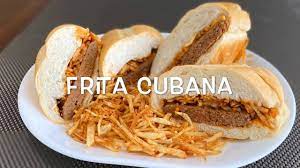
LA CLASICA “FRITA CUBANA”

Aquellas bolitas de carne bien condimentada, aplastada y colocada entre dos tapas de pan untadas con mostaza y cátsup y con la provisión correspondiente de malanga o boniato frito y cortado a la juliana, satisfacía el apetito y daba bríos para lo que vendría después, más si se acompañaba de un refresco, un guarapo o una copita de ostiones. Fue el mejor de los inventos para matar el hambre. Un sostén de pobres que terminó imponiéndose entre otras capas de la sociedad, así como en su momento el tasajo y el bacalao, comida de esclavos, invadieron y terminaron por adueñarse de la mesa de los ricos.

Puestos de fritas y friteros famosos hubo muchos en La Habana. De gran demanda gozaban las fritas del puesto ubicado en la bodega La Guajira, en 24 esquina a 25, en el Vedado. También las fritas «de lujo» de los Hermanos García, uno de los puntos donde merendaban los que acudían a los velorios de la funeraria Alfredo Fernández, en Zapata entre Paseo y 2, mientras otros dolientes enjugaban sus lágrimas en Los Chavales, bar situado en Paseo y 29. En los portales de la fonda León, en Diez de Octubre entre Estrada Palma y Luis Estévez, frente al desaparecido cine Tosca, estaba una mujer cuyas fritas se mantienen aún en el imaginario popular, Josefina Siré. En la Quinta Avenida, acera sur entre las dos rotondas, había toda una hilera de esos puestos desplegados ante otra hilera de bares y cabarés de mala muerte. Aunque no lo trabajaba personalmente, el periodista Carlos Lechuga tenía el suyo, de mucho rango y clientela selecta, frente a la cafetería Kasalta, a la entrada del exclusivo reparto Miramar.

images (26)

EN RECUERDO DEL “REY DE LAS FRITAS CUBANAS”.

No hay duda de que el gran fritero fue Sebastián Carro Seijido. Aristocratizó la frita. Empleó solo los mejores productos. Enseñó a sus empleados a trabajar con limpieza, y, sobre todo, les exigió que, en su trato con los clientes, dieran muestras de una cortesía exquisita, y se empeñó en ganarse la clientela femenina porque era esta la que arrastraba a los niños y a toda la familia. Tanto progresó Sebastián Carro que a fines de los años 50 se daba el lujo de anunciarse en el Libro de oro de la sociedad habanera.

Sebastián Carro fue uno de aquellos tantos gallegos que buscó y encontró una vida mejor en la Isla.

Vendió carbón en el Vedado, pero cuando el gas comenzó a imponerse como combustible doméstico en la barriada, se percató de que debía incursionar en otro giro. Puso entonces un puesto de fritas en los bajos de su casa, en Zapata y A, pero de allí lo sacó el decreto del presidente Grau que prohibía la venta en los portales. El propietario de Paseo Club, restaurante-bar de Paseo y Zapata, le dio la mano al cederle, con vista a la calle Zapata, un pequeño espacio en su establecimiento.

Ya sus fritas tenían fama y la afluencia de clientes fue haciéndose cada vez mayor. Sebastián, pese a que contaba con la ayuda de su esposa y de dos empleados, apenas daba abasto. En aquellos establecimientos nunca se utilizó el pan de un día para otro; era siempre fresco. Y en el acompañamiento del plato, Sebastián sustituía la papa por el boniato. Se cortaba a la juliana, se pasaba por una máquina que le daba consistencia de fideos y se freían. Se colocaban después, junto con la frita, entre las dos tapas de pan.

download (21)

Abrió entonces la cafetería El Bulevar, en 23 entre 2 y 4, y llevó a Juan Pablo Fernández Bravo como socio industrial; esto es, alguien que comparte las ganancias, pero no aporta capital, solo su trabajo. Juan Pablo concluiría su vida laboral como capitán de los restaurantes del hotel Habana Riviera. Progresó más el negocio y Sebastián inauguró otra cafetería en la calle Paseo entre Tercera y Quinta, que entonces se llamó Sebastián y que es la actual La Cocinita. Cuando triunfó la Revolución, sus planes eran los de expandirse hacia la zona de Ayestarán.

Con el arribo de la “revolución” tambien llegó la incautación de sus negocio, alli quedaron todos sus esfuerzos y sueños.

El Estado “adquirió” El Bulevar y Juan Pablo se mantuvo como encargado hasta 1965, cuando pasó al hotel Riviera. Néstor, uno de los hijos de Sebastián, quedó al frente del negocio de Zapata y Paseo, pero lo convirtió en una fonda. Otro de sus hijos, Iván, terminó entregando voluntariamente ‘La Cocinita’ a Gastronomía. Sebastián Carro Seijido falleció en La Habana, presumiblemente, en los años 70.

La pregunta que muchos nos hacemos, es si volverá la Frita a ser parte del paladar cubano?

Con mucha paciencia, esperemos tiempos mejores (AV).

RECOMIENDENOS A SUS AMISTADES * PREFIERA A NUESTROS SPONSORS.

RECOMIENDENOS A SUS AMISTADES * PREFIERA A NUESTROS SPONSORS.

logo

THE CUBAN FRITA, AND THE ALMOST FORGOTTEN “PUESTOS DE FRITAS”. WOULD IT RETURN TO THE CUBAN PALATE? PHOTOS

download (17)

In yesterday’s Cuba, the Chinese were famous for their fruit ice creams and their range of light foods whose origin is still unknown, since they were not Chinese or Cuban, nor did they seem to come from San Francisco, California, where all Chinese food passed that was known in Cuba. With what they expended, the people did not eat, but they were filled, and all for a few pennies. Hence, both the fried and Chinese stalls were called “aid houses.”

On our island, the fries stand was one of the unshakable institutions of the neighborhood, as were the winery, the coffee, and in another order, the hardware.

Things got worse when they didn’t even win for the fried, a word that here, as a vulgarism, identified food at the time.

THE CLASSIC “FRITA CUBANA”

Those balls of well-seasoned meat flattened and placed between two covers of bread spread with mustard and ketchup and with the corresponding provision of malanga or fried sweet potato and cut into julienne, satisfied the appetite and gave energy for what would come later, more if It was accompanied by a soda, a guarapo or a glass of oysters. It was the best of inventions to kill hunger. Support for the poor ended up imposing itself among other layers of society, as well as at the time the beef jerky and cod, the food of slaves, invaded and ended up taking over the table of the rich.

There were many famous fried food stands and fritters in Havana. The fries were in great demand at the stall located in the La Guajira winery, at 24 corners to 25, in Vedado. Also the “luxury” fries of the García Brothers, one of the points where those who attended the funeral services of the Alfredo Fernández funeral home, in Zapata between Paseo and 2, used to have a snack, while other mourners wiped their tears in Los Chavales, a bar located in Paseo y 29. In the doorways of the León inn, on Diez de Octubre between Estrada Palma and Luis Estévez, in front of the disappeared Tosca cinema, there was a woman whose fries are still in the popular imagination, Josefina Siré. On Fifth Avenue, the south sidewalk between the two roundabouts, there was a whole row of those stalls spread out before another row of seedy bars and cabarets. Although she did not work for it personally, the journalist Carlos Lechuga had his, of a high rank and select clientele, in front of the Kasalta cafeteria, at the entrance to the exclusive Miramar cast.

download (18)

IN REMEMBRANCE OF THE “KING OF CUBAN FRIES”.

There is no doubt that the great fritero was Sebastián Carro Seijido. He aristocraticed the frit. He used only the best products. He taught his employees to work cleanly and, above all, demanded that they show exquisite courtesy in their dealings with clients, and he insisted on winning over the female clientele because it was the female clientele that was already dragging the children away. the whole family. Sebastián Carro progressed so much that at the end of the 1950s he had the luxury of being advertised in the Golden Book of Havana society.

Sebastián Carro was one of the many Galicians that he sought and found a better life on the island.

He sold coal in Vedado, but when gas began to be imposed as a domestic fuel in the neighborhood, he realized that he had to venture into another direction. He then put a fries stand on the ground floor of his house, in Zapata and A, but from there the decree of President Grau that prohibited sales on the portals got it. The owner of Paseo Club, a restaurant bar in Paseo y Zapata, shook his hand by giving him, overlooking Zapata Street, a small space in his establishment.

His fries were already famous and the influx of customers was getting bigger and bigger. Sebastián, despite the fact that he had the help of his wife and two employees, could barely cope. In those establishments the bread was never used from one day to the next; it was always fresh. And in the accompaniment of the dish, Sebastián substituted the potato for the sweet potato. It was cut julienne, passed through a machine that gave it the consistency of noodles and they were fried. They were then placed, together with the frit, between the two bread covers.

download (20)

He then opened the El Bulevar cafeteria, at 23 between 2 and 4, and took Juan Pablo Fernández Bravo as an industrial partner; that is, someone who shares the profits but does not contribute capital, only his work. Juan Pablo would end his working life as captain of the restaurants at the Habana Riviera hotel. The business progressed further and Sebastián opened another cafeteria on Calle Paseo between Tercera and Quinta, which was then called Sebastián and which is now La Cocinita. When the Revolution triumphed, his plans were to expand into the Ayestarán area.

With the arrival of the “revolution” also came the seizure of his business, there were all his efforts and dreams.

The State “acquired” El Bulevar and Juan Pablo remained in charge until 1965 when he moved to the Riviera hotel. Nestor, one of Sebastián’s sons, was in charge of the Zapata y Paseo business, but he turned it into an inn. Another of his sons, Iván, ended up voluntarily delivering ‘La Cocinita’ to Gastronomy. Sebastián Carro Seijido died in Havana, presumably, in the 70s.

The question that many of us ask ourselves is, will La Frita be part of the Cuban palate again?

With a lot of patience, let’s wait for better times (AV).

Agencies/ RHC/ Ciro Bianchi/ Extractos/ Excerpts/ Internet Photos/ Arnoldo Varona/ www.TheCubanHistory.com
THE CUBAN HISTORY, HOLLYWOOD.

RECOMIENDENOS A SUS AMISTADES * PREFIERA A NUESTROS SPONSORS.

RECOMIENDENOS A SUS AMISTADES * PREFIERA A NUESTROS SPONSORS.

logo

“LUCRECIA”, Cantante, Actriz, Músico y Escritora Hispano-Cubana. PHOTOS/VIDEOS. * “LUCRECIA”, Cuban-Spanish Singer, Actress, Musician, and Writer. PHOTOS/VIDEOS

“LUCRECIA”, CANTANTE, ACTRIZ, MÚSICO Y ESCRITORA HISPANO-CUBANA. FOTOS Y VIDEOS

Lucrecia Pérez Sáez es una cantante, actriz, músico y escritora hispano-cubana nacida en La Habana que actualmente vive en Barcelona.

lucreciafault

Nació en el barrio Santo Suárez de La Habana y pasó su infancia en Guanabacoa, corregimiento de la provincia de La Habana el 15 de marzo de 1967 (54 años). Ha trabajado en varias películas y con varios artistas de larga trayectoria, entre ellos Celia Cruz, Chavela Vargas, Joaquín Sabina, Andy García, Manzanita y Lluís Llach.

A la temprana edad de siete años, Lucrecia Sáez Pérez comenzó a estudiar piano y música y se certificó con una especialidad en piano en el Instituto Superior de Arte de Cuba. Estudió canto con Isolina Carrillo, la compositora del famoso bolero “Dos Gardenias”, popularizado en España por el cantante cubano Antonio Machín.

CARRERA ARTÍSTICA

Poco después de completar su educación, Lucrecia se unió a La Orquesta Anacoana, un grupo femenino que, desde su fundación en 1932, se había convertido en una institución cubana. En la década de 1980 y principios de la de 1990, Lucrecia realizó varias giras internacionales con el grupo.

logoVIDEOS- Lucrecia canta “Lagrimas Negras”,,

Fue con Anacaona, como vocalista, tecladista y arreglista, que Lucrecia llegó por primera vez a España. Posteriormente, en 1993, dejó Anacaona y volvió a instalarse en Barcelona, ​​donde ha permanecido. Desde que estableció su carrera en solitario allí, se ha vuelto muy activa en el cine y la televisión españoles, así como en la escena musical. Aunque todavía no es muy conocida en el mundo de habla inglesa, es una figura célebre no solo en Catalunya, sino en España y, cada vez más, en América Latina y la comunidad hispana de los Estados Unidos.

Aunque ella personalmente evita tales comparaciones, Lucrecia ha sido promocionada como la sucesora de la gran Celia Cruz, de quien era una amiga cercana.

Desde que dejó Anacaona y se convirtió en expatriada de Cuba, el gobierno cubano no le ha permitido regresar, pero pudo traer a su madre a Barcelona, ​​donde ambas hacen su hogar permanente. A lo largo de su carrera, Lucrecia ha colaborado o actuado con numerosos maestros del arte, incluidos Celia Cruz, Paquito D’Rivera, Chano Domínguez, Joaquín Sabina, Wyclef Jean, Carlos “Patato” Valdes, Carel Kraayenhof, Willy Chirino, Chavela. Vargas, Lluís Llach, Gilberto Gil, Israel “Cachao” López, Andy García, Carlos Jean, Nuno da Câmara Pereira (Fado portugués, Nuno da Câmara Pereira, etc.

Entre sus colaboraciones cabe destacar Cachao: The Last Mambo, disco ganador en los premios Grammy Latinos en 2011 y en los Premios Grammy 2012. Basado en un memorable concierto grabado en vivo en Miami en septiembre de 2007, el álbum fue un homenaje a Israel “Cachao” López celebrando los 80 años de carrera musical de ese gran maestro.

logoVIDEOS- Lucrecia canta “Guantanamera”,,

Como artista, Lucrecia ha compaginado su vertiente musical con la televisiva, habiendo participado en programas de considerable éxito en España. En Televisión Española fue conductora del exitoso programa infantil Los Lunnis. Lucrecia también ha demostrado su faceta como escritora. En 2004 debutó como escritora de cuentos infantiles con “Besitos de chocolate” (“Cuentos de mi infancia”), tras lo cual han seguido dos libros más de la misma colección: El valle de la ternura. (2005) y Todos los colores del mundo (2008), todos en colaboración con Los Lunnis. Continuando en esta línea, ha editado su disco y video La Casita de Lucrecia.

El Álbum de Cuba 2010 de Lucrecia fue nominado a Mejor Álbum Tropical Contemporáneo en los Premios Grammy Latinos 2010.

En junio de 2012 inició la gira “Eternamente Cuba”. En 2019, Lucrecia protagonizó Celia: El Musical, un musical sobre la vida de Celia Cruz, en el Lehman Arts Center.

GRABACIÓN
‘Si me pudieras querer’ con La Orquesta Anacaona.
‘El Alardoso’ con La Orquesta Anacaona.
‘Guantanamera’ Lucrecia, Andy García y Arturo Sandoval en López Tonight
‘Amaneci en tus brazos’ Lucrecia y Joaquin Sabina
‘Qui es Qui’ una entrevista a Justo Molinero

download (49)

FILMOGRAFÍA
Segunda piel (1999) de Gerardo Vera, cantando su canción Youkali.
Ataque verbal (1999) de Miguel Albaladejo, como actriz.
Balseros (2002), de Carles Boch y Josep Maria Domènech, banda sonora original.
El gran gato (2003) de Ventura Pons, cantando “Barca, cielo y ola” en homenaje a Gato Pérez.
Los Lunnis (2003-2009), programa de RTVE, como actriz.

DISCOGRAFÍA
La Reina y Sus Amigos
La casita de Lucrecia, 2010
Álbum de Cuba, 2009
Mira las luces, 2006
Agua, 2002
Mi Gente, 2002
Cubáname, 1999
Pronósticos, 1997
Mis Boleros, 1996
Prohibido, 1996
Me debes un beso, 1994

LIBROS
Besitos de chocolate. “Cuentos de mi infancia”.
(Besitos de chocolate. Recuerdos de mi infancia) (El Aleph, 2006).
El valle de la ternura (2005) y Todos los colores del mundo (2008)

NOMINACIONES Y PREMIOS
Premio de Música a la canción ‘My People’ del disco ‘Agua’, SGAE, en la Edición 2003, “Mejor Tema de Música Electrónica Dance y Hip Hop”.
Tres premios TP de oro por el programa “Los Lunnis” de TVE.
El micrófono dorado del programa protagonistas de Luis del Olmo.
Nominación a los Oscar 2003 por la película documental de “Balsero” de TV3
Una nominación al EMMY por su entrevista en el programa “Hablando con las estrellas” con Televisión Mega Latina en Miami.
Nominado a los Premios Grammy Latinos 2010, categoría Mejor Álbum de Música Tropical “Álbum de Cuba”.
Ganadora de los premios Latin Grammy y Grammy American 2012 por su interpretación de “Dos Gardenias” en el disco “The Last Mambo”, un homenaje al bajista y creador de Mambo, Israel “Cachao” López.

RECOMIENDENOS A SUS AMISTADES * PREFIERA A NUESTROS SPONSORS.

RECOMIENDENOS A SUS AMISTADES * PREFIERA A NUESTROS SPONSORS.

logo

“LUCRECIA”, SPANISH-CUBAN SINGER, ACTRESS, MUSICIAN, AND WRITER. PHOTOS/VIDEOS

Lucrecia Pérez Sáez is a Spanish-Cuban singer, actress, musician, and writer born in Havana who currently lives in Barcelona.

download (51)

She was born in the Santo Suarez neighborhood in Havana and passed her childhood in Guanabacoa, a township within the province of La Habana on 15 March 1967 (age 54). She has worked in various movies and with several long-established artists, including Celia Cruz, Chavela Vargas, Joaquín Sabina, Andy Garcia, Manzanita, and Lluís Llach.

At the early age of seven, Lucrecia Sáez Pérez began studying piano and music and was certified with a specialty in piano at the Instituto Superior de Arte de Cuba. She studied singing with Isolina Carrillo, the composer of the famous bolero “Dos Gardenias”, popularized in Spain by Cuban singer Antonio Machin.

ARTISTIC CAREER

Soon after completing her education, Lucrecia joined La Orquesta Anacoana, an all-female group that, since its founding in 1932, had become a Cuban institution. In the 1980s and early 1990s, Lucrecia made several international tours with the group.

logoVIDEOS- Lucrecia sings “Como Fue”…

It was with Anacaona, as lead vocalist, keyboardist, and arranger, that Lucrecia first arrived in Spain. Later, in 1993, she left Anacaona and returned to settle in Barcelona, where she has remained. Since establishing her solo career there, she has become very active in Spanish film and television as well as the music scene. Though not yet well known in the English-speaking world, she is a celebrated figure not only in Catalunya, but in Spain and, increasingly, in Latin America and the Hispanic community of the United States.

Although she personally eschews such comparisons, Lucrecia has been touted as a successor to the great Celia Cruz, with whom she was a close friend.

Since leaving Anacaona and becoming an expatriate of Cuba, the Cuban government has not allowed her to return, but she was able to bring her mother to Barcelona, which they both make their permanent home. Through the length of her career, Lucrecia has collaborated or performed with numerous masters of the art, including Celia Cruz, Paquito D’Rivera, Chano Domínguez, Joaquín Sabina, Wyclef Jean, Carlos “Patato” Valdes, Carel Kraayenhof, Willy Chirino, Chavela Vargas, Lluís Llach, Gilberto Gil, Israel “Cachao” López, Andy García, Carlos Jean, Nuno da Câmara Pereira (Portuguese Fado singer, Nuno da Câmara Pereira, etc.

Among her collaborations should be noted Cachao: The Last Mambo, a winning album at the Latin Grammy awards in 2011 and for the 2012 Grammy Awards. Based on a memorable concert recorded live in Miami in September 2007, the album was a tribute to Israel “Cachao” Lopez celebrating the 80-year musical career of that great master.

download (48)

As an artist, Lucrecia has combined her musical side with television, having been involved in programs of considerable success in Spain. On Televisión Española, she was host of the successful children’s program Los Lunnis. Lucrecia has also demonstrated her facet as a writer. In 2004, she made her debut as a writer of children’s stories with “Besitos de chocolate” (Little Chocolate Kisses) ( “Tales of my childhood”), after which have followed two more books from the same collection: The Valley of the Tenderness (2005) and All the Colors of the World (2008), all in collaboration with Los Lunnis. Continuing in this vein, she has edited her disk and video La Casita de Lucrecia.

Lucrecia’s 2010 Álbum de Cuba was nominated for Best Contemporary Tropical Album in the 2010 Latin Grammy Awards.

In June 2012 she began the tour “Eternally Cuba”. In 2019, Lucrecia starred in Celia: El Musical, a musical about the life of Celia Cruz, at the Lehman Arts Center.

RECORDING
‘Si me pudieras querer’ with La Orquesta Anacaona.
‘El Alardoso’ with La Orquesta Anacaona.
‘Guantanamera’ Lucrecia, Andy García y Arturo Sandoval en López Tonight
‘Amaneci en tus brazos’ Lucrecia and Joaquin Sabina
‘Qui es Qui’ an interview with Justo Molinero

FILMOGRAPHY
Segunda piel (1999) by Gerardo Vera, singing her song Youkali.
Ataque verbal (1999) by Miguel Albaladejo, as an actress.
Balseros (2002), by Carles Boch and Josep Maria Domènech, original soundtrack.
El gran gato (2003) by Ventura Pons, singing “Barca, cielo y ola” as a tribute to Gato Pérez.
Los Lunnis (2003–2009), RTVE program, as an actress.

download (50)

DISCOGRAPHY
La Reina y Sus Amigos
La casita de Lucrecia, 2010
Album de Cuba, 2009
Mira las luces, 2006
Agua, 2002
Mi Gente, 2002
Cubáname, 1999
Pronósticos, 1997
Mis Boleros, 1996
Prohibido, 1996
Me debes un beso, 1994

BOOKS
Besitos de chocolate. “Cuentos de mi infancia”.
(Chocolate Little Kisses. Remembrances from my Childhood)(El Aleph, 2006).
The Valley of the Tenderness (2005) and All the Colors of the World (2008)

NOMINATIONS AND AWARDS
Music Award for the song ‘My People’ from the album ‘Agua’, SGAE, in the 2003 Edition, “Best Theme of Electronic Music Dance and Hip Hop”.
Three TP gold awards for the program “Los Lunnis” of TVE.
The golden microphone of the program protagonists of Luis del Olmo.
Nomination for the 2003 Oscars for the film documentary of TV3’s “Balsero”
An EMMY Nomination for her interview in the program “Speaking with the Stars” with Television Mega Latina in Miami.
Nominated for the 2010 Latin Grammy Awards, category Best Tropical Music Album “Álbum de Cuba”.
Winner of the Latin Grammy Awards and Grammy American 2012 for her interpretation of “Dos Gardenias” in the album “The Last Mambo,” a tribute to bassist and creator of Mambo, Israel “Cachao” López.

Agencies/ Wiki/ LucreciaBio./ Extractps/ Excerpts/ Internet Photos/ YouTube/ Arnoldo Varona/ www.TheCubanHistory.com
THE CUBAN HISTORY, HOLLYWOOD.

RECOMIENDENOS A SUS AMISTADES * PREFIERA A NUESTROS SPONSORS.

RECOMIENDENOS A SUS AMISTADES * PREFIERA A NUESTROS SPONSORS.

logo