Taxes that will Change Cuban’s Lives (07/19/2012) – NOT PUBLISHED IN CUBA

THIS ARTICLE WAS APPARENTLY CENSORED BY CUBA’S ADMINISTRATION (July 19, 2012) IN THE SPACE “LETTERS FROM CUBA”-BBC MUNDO UK. AND IN ITS PLACE PUBLISHED OF THE SAME JOURNALIST/AUTHOR AN ARTICLE ABOUT “HEALTH”


By Fernando Ravsberg
BBC Mundo, La Habana

TAXES THAT WILL CHANGE CUBAN’S LIVES
 
“Luisa” ensures that if they raise customs payments, her business will collapse because all the merchandise comes from Ecuador. Do not want to give his real name because the license authorizes only sell clothes made by herself.

What is real is the fear.

The new Customs Law which comes into force in Cuba on August 2 will have great social impact because, one way or another, affect the majority of Cubans, making everyday life a little more difficult and far more expensive.
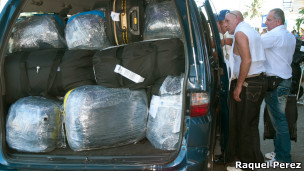

Most of the clothing sold in the streets comes as accompanying baggage mules, bags known as “worms.”

Today, the official Cuban trade is nearly stagnant, many people opt for parallel import market better products at lower prices, from washing machines to deodorant, including catalog sales from Miami.

The new Customs Act raises taxes to be paid for goods entering and also limits the quantity, measures that are not used Cubans.

The authorities hope to drastically reduce shipments through the “mules” and also the parcel disguised as family support. In other words, smuggling.

Clothing “Made in Cuba”

The island has few options for clothing: Chinese clothing is bought face in state stores or China buys clothes a little cheaper in the doorways, where they have flourished tens of thousands of “timbiriches” (private businesses) from authorizing the private work.

The license is granted to sell own clothing but most of the clothes and shoes that are offered in the streets come in bags or bales from Ecuador and Cancun accompanying “mules” very well “connected” with the customs the airport.

Clothing and better quality equipment in the luggage arriving with Cubans who come from abroad.

**************************************************************
RESTRICTIONS
Cubans living in the country pay their customs duties in pesos in the first trip of the year. The following tariffs shall pay CUC convertible currency 24 times more expensive.
When it comes to clothes and shoes, from the second trip shall be exempt only 30 kg per passenger, the rest Devera paid at $ 10 a kg.
When it comes to clothes and shoes from the second trip shall be exempt only 30 kg per passenger, the rest will be charged at $ 10 a kg.
It also limits the parcel delivery, via the Panama and arriving from Miami-TVs, refrigerators, washing machines and even tools, toasters, juicers, fryers plates or to sell to new freelancers.
This year also turned to charge customs duties on food, which were free of liens since 2008, year in which Cuba was hit by three hurricanes that swept across the island causing serious damage.
**************************************************************

“Abel” is an engineer who lives in Miami and travels twice a month to spend the weekend in Cuba. He is a “mule”, pay the ticket in exchange for bringing 90 kg. of goods. “I do not make a penny but free travel whenever I want”, tells the BBC.

Online sales the same time, despite the confusion over a submarine cable that comes from Venezuela to connect the island with the web and other limitations in Cuba is growing internet sales.
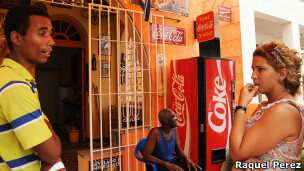

As in this cafe, many private workers have set up their businesses buying equipment abroad, including the decorations.

The website “Revolico” offers Cuban appliances, homes, cars, furniture, computers, jewelry and even animals.

The site has such ability to sell that many to buy deodorant. “Luis”, for example, acquired there his espresso machine: the chose in digital catalog of a store in Miami and a month later brought her to the door of his house.

Meanwhile, in state stores products get old for lack of buyers. The main reason their prices are inflated by a tax of 240%, to what some managers will add a “fine” which goes straight into their pockets.

With the new measures, the government wants to protect national trade and combat smuggling. However, critics complain that in the stores or products in short supply or have crazy prices on wages. For many, the most serious is that the end of smuggling revenue will leave tens of thousands of families.

Sources:Impuestosencuba/FernandoRavsberg/RaquelPerezPhotos/TheCubanHistory.com
Impuestos que le cambiaran la vida a los cubanos/The Cuban History/ Arnoldo Varona, Editor
GO BACK HOME

ESTE ARTICULO FUE APARENTEMENTE CENSURADO EN CUBA PUES NO SALIO ESTE (Julio 19, 2012) EN EL ESPACIO DE “CARTAS DESDE CUBA” Y EN SU LUGAR SALIO UN ARTICULO DEL MISMO PERIODISTA/AUTOR SOBRE LA SALUD EN CUBA.


Por Fernando Ravsberg
BBC Mundo, La Habana

IMPUESTOS QUE LE CAMBIARAN LA VIDA A LOS CUBANOS

“Luisa” asegura que si suben los pagos aduaneros, su negocio se vendrá abajo dado que toda su mercadería procede de Ecuador. No quiere dar su verdadero nombre porque la licencia sólo la autoriza a vender ropa confeccionada por ella misma.

Lo que sí es real es su temor.

La nueva ley de Aduanas que entrará en vigor en Cuba el 2 de agosto tendrá gran repercusión social porque, de una forma u otra, afectará a la mayoría de los cubanos, haciendo su vida cotidiana un poco más difícil y bastante más cara.


La mayor parte de la ropa que se vende en las calles llega como equipaje acompañante de las mulas, en bolsos conocidos como “gusanos”.

En la actualidad, el comercio oficial cubano está prácticamente estancado, mucha gente opta por mercados paralelos que importan mejores productos y a precios más bajos, desde lavadoras hasta desodorante, incluyendo la venta por catálogo desde Miami.

La nueva Ley de Aduanas eleva los impuestos que se deben pagar por entrar mercancías y a la vez limita la cantidad, medidas a las que no están acostumbrados los cubanos.

Las autoridades esperan así reducir drásticamente los envíos a través de las “mulas” y también de la paquetería camuflada como ayuda familiar. En otras palabras, el contrabando.

Ropa “Hecha en Cuba”

En la isla hay pocas opciones para vestirse: se compra ropa china cara en las tiendas del Estado o se compra ropa china un poco más barata en los portales de las casas, donde han florecido decenas de miles de “timbiriches” (negocios privados) desde que se autorizó el trabajo privado.

La licencia que se les otorga es para vender confecciones propias pero la mayor parte de la ropa y los zapatos que se ofertan en las calles vienen en maletas o en pacas desde Ecuador y Cancún acompañando a “mulas” muy bien “conectadas” con los aduaneros del aeropuerto.

La ropa y equipos de mejor calidad llegan en las maletas de cubanos que vienen del extranjero.

***************************************************************
RESTRICCIONES
Los cubanos residentes en el pais pagaran sus impuestos aduanales en pesos en el primer viaje del ano. En el siguiente deberan saldar los aranceles en CUC, moneda convertible 24 veces mas cara.
Cuando se trata de ropa y zapatos, a partir del segundo viaje solo estaran exentos 30 kg por pasajero, el resto se devera abonar en $10 el kg.
Asimismo se limitan los envios de paqueteria, via por la que llegaban desde Panama y Miami -televisores, refrigeradores, lavadoras e incluso herramientas, sandwicheras, jugueras, planchas o freidoras para vender a los nuevos trabajadores autonomos.
Este ano tambien se volvieron a cobrar impuestos aduanales a los alimentos, que estuvieron exentos de gravamenes desde el 2008, ano en el que Cuba fue azotada por tres ciclones que recorrieron toda la isla causando graves danos.

****************************************************************

“Abel” es un ingeniero que vive en Miami y viaja dos veces al mes a pasarse el fin de semana en Cuba. Él es una “mula”, le pagan el pasaje a cambio de que traiga 90 kg. de mercancías. “No gano ni un centavo pero viajo gratis cada vez que quiero”, le cuenta a BBC Mundo.

Ventas on line Al mismo tiempo, y a pesar de la confusión sobre un cable submarino que viene de Venezuela para conectar a la isla con la web y demás limitaciones, en Cuba crece la venta por internet.


Igual que en esta cafetería, muchos trabajadores privados han montado sus negocios comprando los equipos fuera del país, incluso los adornos.

La página web “Revolico” ofrece a los cubanos electrodomésticos, casas, automóviles, muebles, computadoras, joyas y hasta animales.

El sitio tiene tal capacidad de venta que muchos compran hasta el desodorante. “Luis”, por ejemplo, adquirió allí su cafetera expreso: la eligió en el catálogo digital de una tienda de Miami y un mes después se la trajeron a la puerta de su casa.

Entre tanto, en las tiendas del Estado los productos se ponen viejos por falta de compradores. La causa principal son sus precios inflados con un impuesto del 240%, a lo que algunos gerentes le agregan una “multa” que va directo a sus bolsillos.

Con las nuevas medidas, el gobierno quiere proteger el comercio nacional y combatir el contrabando. No obstante, sus críticos se quejan de que en las tiendas o escasean productos o tienen precios disparatados respecto a los salarios. Para muchos, lo más grave es que el fin del contrabando dejará sin ingresos a decenas de miles de familias.

Sources:Impuestosencuba/FernandoRavsberg/RaquelPerezPhotos/TheCubanHistory.com
Impuestos que le cambiaran la vida a los cubanos/The Cuban History/ Arnoldo Varona, Editor
GO BACK HOME

Who Are The Cubans ? Quienes Son Los Cubanos ?

ARTICLE ABOUT CUBANS WRITTEN BY MEXICAN JOURNALIST VICTOR MONA

Cubans come out of a small island and have spread worldwide. One is a professor at a university in Australia, another opened a restaurant in Alaska. Nothing stops them, neither cold nor heat. They are seduce by the tropics of Florida, but also can support the ice standing firm in Boston and New York. Cubans don’t beg, they work. Those who were poor in Cuba, are rich here. Those who were there middling, here are a hair and a half here.

No obstacle stops their hard belligerent if the offer is decent. One is president of the University, another puts makeup on dead bodies. Change, but only on the surface. In Miami they continue to play the ball (forbidden lottery), fighting roosters in hiding and sending their children to private school. In Madrid, they are against José Luis Rodríguez Zapatero, in Caracas against Chavez and Argentina against Cristina Fernandez de Kirchner, they are always in opposition. They are criticize, envied but deep down they are admired. Gallegos for labor and Jews for the will to survive, they are a stubborn legion that cannot be ignored. They bring their hot music, the sound of their drums, black beans and steak with moros and mature moth, but they bring on all the sympathy, warmth and industry.

Who are they? Are the Cubans in exile, the only global population transplanted, which (except Jews) in more than one-third of a century that have not lost their identity? Those who admire Cuba from afar as the supreme example of strength in Latin America, which saw Cuba as an ethnic and cultural miracle, where everything looked like a mess but everything worked well, don’t have to go to Cuba to meet her, here it is, within the United States itself. This is Cuba. These are the Cubans. Exaggerated, blustering, noisy, yes, but also intense, deeply creative and good friends.

What do Cubans have done in these 50 years of exile to survive with dignity? What manual and intellectual activity have not tested in this or that country? However complicated it may seem, what have they done, for not staying behind and to avoid being discriminated against. In some of these activities, have gone so far that exceed migrations which preceded by about half a century. There is not a U.S. hospital today without one Cuban doctor. There is not a newspaper where there isn’t a Cuban journalist, or bank where there isn’t a Cuban banker or advertising where there isn’t a Cuban advertiser or school where there isn’t a Cuban teacher, or university where a professor is not Cuban, nor any commerce without a Cuban is a manager.

In the major Baseball League, also shine their names. In Madrid, the first Latin American poet is a black Cuban. In the Coca Cola, Kellogg’s, McCormick, Pepsi Cola and many others their leader is or was a Cuban. In the U.S. Congress there are five Cubans, in the Senate three chairs are filled by Cubans, the US Minister of Commerce is a Cuban, the Vice Minister of Health is a Cuban doctor. Wow, they are just a few in this country and arrived not so long ago.

Borrowed in foreign lands they seem to always have mark on the forehead the place where they come from.

Cubans take Cuba with them. Praise it and honor it, taking it from the mind to the heart.

It seams that there is something in the Cuban exile, in my opinion, superior to that occupation triumphant, and their hatred of the despotism of fleeing, their love for the land they left behind. That’s what separates and defines them. That gives his triumphs in the midst of rootlessness, a greatness that otherwise would not have.

Have settled permanently in these lands who have received them with hospitality and where they live in the material world many times much better than living in Cuba. Even having everything, if they don’t have Cuba, they have nothing. Perhaps that is why they bring Cuba here. So if you look closely, you will see that sometimes it seems like the Cuban are smiling, but in reality they are crying inside.

The child is born, he grows, he graduate from the University, but the Cuban sighs. Oh, if I were in my Cuba! They buy a house, a car or a boat and still sigh… Ah! If all this I could have in Cuba! In a mysterious way, they cannot define that there is a link that pulls from here to there. Now that he lost his country, knows he cannot live without Cuba, and dreams at night, and it enlarges the values and embellished, idealized, and is blamed for not having better understanding, and recreates in their songs and dances, and relive their stories in their customs and in their foods.

Why Cubans buy more cuban books now than ever? Why are their homes, businesses and offices filled with palms, flags, badges and portraits of José Martí? Why are they U.S. Citizens but CUBANS STILL? Why do they meet in their municipalities formed in exile, erasing old antagonisms party or class? Because the Cuban knows that his was the only thing truly, HIS CUBA, and that he could go back. They do not worry about getting returned the old home or business they had. All they want is to return to their land. Even if the birthplace is destroyed, or if the the town has been changed, if their mother has died. It doesn’t matter! The Cuban in exile want to go to that house, to that village and the tomb anyway. The homeland starts here…

Sources: Who are the Cubans?/ Victor Mona/Mexico/SheylaPazHicks/InternetPhotos/TheCubanHistory.com
TheCubans/The Cuban History/ Arnoldo Varona, Editor
GO BACK HOME

ESTE ARTICULO SOBRE LOS CUBANOS FUE ESCRITO POR EL PERIODISTA MEXICANO VICTOR MONA.

Los cubanos salen de una isla pequeña y se han diseminado por todo el mundo. Uno es profesor en una universidad de Australia; otro, inauguró en Alaska un restaurante. Nada los detiene, ni el frío ni el calor. Los seduce el trópico de la Florida , pero soportan igualmente a pie firme los hielos de Boston y Nueva York. No mendigan, trabajan. Los que en Cuba eran pobres, aquí son ricos. Los que allá eran medio pelo, aquí son pelo y medio.

Ningún obstáculo detiene su laboriosidad beligerante si la oferta es digna.. Uno es rector de la Universidad; otro, maquilla muertos. Cambian, pero sólo en la superficie. En Miami siguen jugando la bolita (lotería Prohibida), peleando gallos a escondidas y enviando los hijos a la escuela privada. En Madrid, están contra José Luís Rodríguez Zapatero y en Caracas, contra Hugo Chávez, siempre en la oposicion. Se les critica y se les envidia pero en el fondo se les admira. Gallegos por el trabajo y judíos por la voluntad de sobrevivir, constituyen una legión empecinada que no se deja ignorar. Traen su música calurosa, el ruido de sus tambores, los frijoles negros y el bistec de palomilla con moros y maduros. Pero traen sobre todo la simpatía, la cordialidad y la laboriosidad.

¿Quiénes son? Son los cubanos del destierro, la única población mundial trasplantada, que (salvo los hebreos) en más de un tercio de siglo no han perdido su identidad. Los que admiraban a Cuba desde lejos como ejemplo supremo de pujanza latinoamericana, los que veían a Cuba como un milagro étnico y cultural, donde todo parecía un relajo pero todo funcionaba bien, ya no tienen que ir a Cuba para conocerla! Aquí la tienen dentro de los mismos Estados Unidos. Esta es Cuba. Estos son los cubanos. Exagerados, fanfarrones, ruidosos, sí, pero también intensos, profundamente creadores y buenos amigos. ¿Y qué no han hecho en estos 50 años de destierro los cubanos para poder sobrevivir con dignidad? Cuál actividad manual o intelectual no han ensayado en éste o en aquél país, por complicada que pareciera, lo han realizado para no quedarse detrás, para no dejarse discriminar.

En alguna de esas actividades han llegado tan lejos que superan a emigraciones que los precedieron por cerca de medio siglo. No hay hospital en Estados Unidos donde no haya hoy u n médico cubano. No hay periódico donde no haya un periodista cubano, ni banco donde no haya un banquero cubano, ni publicitaria donde no haya un publicitario cubano, ni escuela donde no haya un maestro cubano, ni universidad donde no haya un profesor cubano, ni comercio donde no haya un manager cubano.

En las Grandes Ligas del béisbol sus nombres también brillan. En Madrid , el primer poeta latinoamericano es un negro cubano. En la Coca Cola, Kellog’s, McCormick, Pepsi Cola y tantas otras su dirigente es o fue un cubano. En el Congreso de Washington hay cinco cubanos, en el Senado federal se sientan tres cubanos, el Ministro de Comercio de E. U.. es un cubano, la Viceministra de Salud es una doctora cubana. Caramba, son unos pocos en éste país y llegaron hace muy poco tiempo.

En las tierras prestadas del extranjero parecen llevar siempre en la frente la marca del sitio de donde vienen. Los cubanos llevan a Cuba. La enaltecen y la honran, porque además de en la frente la llevan en el corazón. Pero hay algo en el desterrado cubano, a mi juicio, superior a esa actividad profesional triunfante, y es su odio al despotismo del que huyen, su amor a la tierra que dejaron. Eso lo separa y lo define. Eso da a sus triunfos en medio del desarraigo, una grandeza que de otro modo no tendría.

Se han afincado definitivamente en estas tierras hospitalarias que los han acogido y donde viven en lo material muchas veces mejor que como vivían en Cuba. Aún teniéndolo todo, si les falta Cuba, no tienen nada. Quizás por ello han hecho su Cuba aquí. Por eso, si se le mira bien, se verá que a veces parece que el cubano ríe, pero en realidad esta llorando por dentro….

Le nace el hijo, le crece, se le gradúa en la Universidad, pero el cubano suspira. ¡Ay, si estuviera en mi Cuba !.. Compra una casa, un auto, o una lancha y sigue suspirando. ¡Ay! ¡Si todo esto lo tuviera en Cuba! De una manera misteriosa, que no puede definir hay un vínculo con aquello que tira de aquí hacia allá. Ahora que perdió a su país, sabe que no puede vivir sin Cuba, y la sueña de noche, y le agiganta los valores y la embellece y la idealiza, y se culpa de no haberla entendido mejor, y la recrea en sus cantos y bailes, y la revive en sus historias en sus costumbres y en sus comidas.

¿Por qué compran hoy los cubanos más libros cubanos que nunca? ¿Por qué tienen sus casas, sus negocios y sus oficinas llenas de palmas, de banderas, de escudos y de retratos de José Martí? ¿Por qué aunque sean USA citizens SIGUEN SIENDO CUBANOS? ¿Por qué se reúnen en sus municipios formados en el exilio, borrando antiguos antagonismos de partido o clase? Porque el cubano sabe que lo único auténticamente suyo fue SU CUBA y que a ella quisiera el poder regresar. No les preocupa que le devuelvan la residencia o el negocio, si lo tenían. Lo único que des ean es volver a su tierra. La casa donde nació esta destruida, al pueblo se lo han puesto desconocido, la madre ha muerto.

Pero no importa. El exiliado cubano quiere de todos modos ir a esa casa, a ese pueblo y a esa tumba. La Patria empieza ahí.

Sources: Who are the Cubans?/ Victor Mona/Mexico/SheylaPazHicks/InternetPhotos/TheCubanHistory.com
TheCubans/The Cuban History/ Arnoldo Varona, Editor

GO BACK HOME

THE AFRO-CUBAN CULTURE “ABAKUÁ” (Photos) * * LA CULTURA ABAKUÁ en Cuba (Fotos).

Abakuá members derive their culture from the Efik and Efo of the Cross River region in Nigeria, which Cubans call Carabali. They are organized in a set of over 150 potencias (lodges) located mainly in Havana, Matanzas, and Cardenas.

Album-16

The people of Big Qua Town in Calabar, the capital of Cross River State, Nigeria, are known as the Abakpa, the likely source for the name Abakuá. Big Qua Town is the home of the president of the Calabar Mgbe or Ékpè.

The Cuban Abakuá societies have a male-only membership, their Ékpè equivalent in the Cross River State are called lodges in English, they are fraternities. Both the Cuban and Nigerian lodges are Ékpè lodges.

There is also in Cuba an Efo cultural manifestation organized along family lines, the Brikamo, carried by the Calle family in Matanzas.

download (18)

In 2001, the Efik National Association in the US began to have contact with Cuban Abakuá. There is evidence of prior contacts between the Abakuá and the Efik in Cuba, but the contact has not until now been sustained. Among such evidence is a plaque hanging on the walls of a potencia in Havana given by an Obong, a traditional leader of the Efiks.

The Abakuá gave us the rumba, one of Cuba’s principal musical traditions. The Calle family, for example, is of Efo origin and is said to have invented the guaguanco, a type of rumba.

anthology

We can also note that the Carabali culture in Santiago (cabildos) and in the center of Cuba is also derived from Calabar, Cross River State, Nigeria. The name Carabali is derived from the slave port of Calabar, as distinct from the Karabali people of the Niger Delta.

AfroCubanHist./ Abakua/InternetPhoto/www.TheCubanhistory.com
The Abakua Culture in Cuba
The Cuban History, Hollywood.
Arnoldo Varona, Editor

Foto por Gaby Tizze – En la Ciudad de Trinidad.
1455875_10152005703011083_225014706_n (1)

LA CULTURA ABAKUA

Abakuá se derivan de su cultura de la Efik y Efó de la región de Cross River en Nigeria, que los cubanos llaman Carabalí. Se organizan en un conjunto de más de 150 Potencias (logias), ubicado principalmente en La Habana, Matanzas y Cárdenas.

Album-16

La gente de Big Town Qua en Calabar, capital del estado de Cross River, Nigeria, que se conoce como la Abakpa, la fuente más probable de los Abakuá nombre. Qua Big Town es el hogar del presidente de la Mgbe Calabar o Ekpe.

Las sociedades abakuá cubanos tienen una membresía exclusivamente masculino, su equivalente Ekpe en el Estado de Cross River se llaman logias en Inglés, que son las fraternidades. Tanto las logias Cuba y Nigeria son logias Ekpe.

También existe en Cuba una manifestación cultural organizada Efó lo largo de líneas familiares, el Brikamo, llevado por la familia Calle en Matanzas.

download (18)

En 2001, la Asociación Nacional de efik en los EE.UU. comenzó a tener contacto con los Abakuá de Cuba. No hay evidencia de contactos previos entre los Abakuá y el efik en Cuba, pero el contacto no ha sido hasta ahora mantenido. Entre esas pruebas es una placa que cuelga en las paredes de una POTENCIA en La Habana, dada por un Obong, un líder tradicional de los Efiks.

El Abakuá nos dio la rumba, una de las principales tradiciones musicales de Cuba. La familia de la calle, por ejemplo, es de origen Efó y se dice que han inventado el guaguancó, un tipo de rumba.

anthology

También podemos observar que la cultura en Santiago Carabalí (cabildos) y en el centro de Cuba también se deriva de Calabar, Cross River State, Nigeria. El nombre de Carabalí se deriva del puerto de esclavos de Calabar, a diferencia de las personas Karabalí del Delta del Níger.

AfroCubanHist./ Abakua/InternetPhoto/www.TheCubanhistory.com
The Abakua Culture in Cuba
The Cuban History, Hollywood.
Arnoldo Varona, Editor