CUBA: Do You Know this questions? + CUBA: Conoces de estas preguntas? (Spanish)

por Esteban Fernández

1) ¿ La ruta del primer tren ferrocarril que tuvo Cuba era…?: La Habana-Bejucal-Güines…
2) ¿Cuáles eran los apellidos del polaco Pedro, en el programa de televisión “La Taberna de Pedro”?: Guash y Palanganovich…
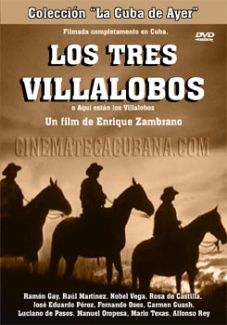
3) ¿Qué actor interpretaba el papel de Rodolfo Villalobos y cómo le decían al malvado indio en el programa radial “Los Tres Villalobos”?: Ernesto Galindo y el indio era Karinoa…
4) Mariana Grajales tuvo 13 hijos patriotas, ¿Quién la declaró la “Madre de Cuba”?: El alcalde de La Habana, Justo Luis del Pozo…
5) ¿Quién presidió el juicio, y condenó a muerte, al Capitán José Castaño?: El comandante Víctor Bordón Machado…
6) Además de Rivero Agüero, Ramón Grau y Márquez Sterling, ¿Qué otro cubano se postuló para presidente en 1958?: Alberto Salas Amaro…
7) ¿Quién es Gloria María Milagrosa Fajardo y García?: Gloria Estefan…
8) ¿Qué dominicano se hizo muy famoso en Cuba cantando que “el trabajo para él era un enemigo”?: Alberto Beltrán, “El Negrito del Batey”…
9) ¿A qué gran pelotero cubano le decían “Potrerillo”?: A Sandalio Consuegra…
10) ¿Quién fue y dónde nació el fundador de “La Joven Cuba”?: Antonio Guiteras y nació en Pennsylvania…
11) ¿ A quién le decían “La Sevillanita”?: A Obdulia Breijo…
12) ¿De quién era la finca “La Granada” en la Sierra Maestra?: Del venezolano Marcos Maceo, padre de los hermanos Maceo…
13) ¿Quiénes eran “Los Bocucos”?: Una agrupación musical creada por Pacho Alonso, el hombre que hizo famosa ­“La Pachanga”…
14) ¿Los padres de Teófilo Stevenson eran…?: Jamaiquinos…
15) ¿El último manager del Almendares fue…?: Sungo Carrera…
16) ¿“La Voz más Alta de Oriente” era…? Luis Conte Agüero…
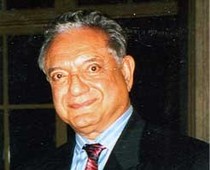
17) ¿A quién le ganó las elecciones Grau San Martín en 1944? : Al candidato auspiciado por los comunistas, Carlos Saladrigas…
18) ¿La “Atómica Cubana” era…?: La actriz y bailarina Blanquita Amaro…
19) ¿ En la televisión cubana, quién se cambió el traje de chuchero por el de miliciano?: Carlos Montezuma, mas conocido como “Ñico Rutina” el de “Anota Flora”…
20) ¿Quién era “El Bigote que Canta”?: Bienvenido Granda…
21) ¿A qué va Raúl Castro casi todos los años, de incógnito, a Palermo, Italia?: A jugar golf y a visitar la parentela del esposo de Mariela…
22) ¿Quién cantaba “Can Caneito Can”?: “Laíto” con la Sonora Matancera…
23) ¿A qué pelotero americano le decían “Talúa”?: A Raymond “Talúa” Dandridge y en los Estados Unidos le decían “Hook”…
24) ¿Celia Cruz, siendo una niña, surge en Cuba a través de…?: “La Corte Suprema del Arte” de José Antonio Alonso por CMQ Radio…
25) ¿Cuál era el hombre mas destacado entre “Los Tigres de Masferrer” ?: Armentino “El Chino” Feria…
26) Además de a Rolando Cubela, ¿A qué otro comandante acusaron de intentar matar a Fidel Castro en la misma causa?: A Ramón Guin…
27) ¿Cómo se llama el hermano gemelo de José Canseco?: Osvaldo y le dicen “Ossie”…
28) ¿Cuál es el nombre más común entre los ex presidentes cubanos?: CARLOS: Carlos Mendieta, Carlos Manuel de Céspedes, Carlos Hevia, Carlos Prío y como les dije anteriormente, por poco tenemos otro llamado Carlos Saladrigas …
29) ¿Con quién estaba casado el cantante español radicado en Cuba Miguel Herrero?: Con Carmelita Vázquez…
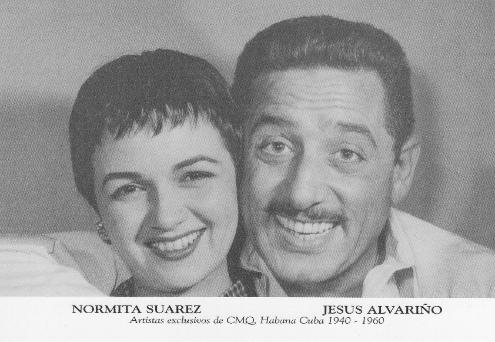
30) ¿Quién era “el duendecito” de los anuncios de los productos Stokelys?: Normita Suárez…
31) ¿Qué barco histórico se llamaba “María Galante”?: El que Cristobal Colón rebautizó con el nombre de la “Santa María”…
32) Martí nació en la calle Paula, en La Habana, y cuatro años más tarde ¿para dónde se mudó?: Para la calle Merced #40…
33) ¿Cuántos televisores había en La Habana en 1954?: Más de cien mil…
34) ¿A qué pelotero cubano le decían “Tarzán”?: Al gran Roberto Estalella…
35) ¿Quién era Francisco Marrero?: En la televisión hacía el papel de “Tinguaro”…
36) ¿Qué fenomenal chofer de autos de carreras teníamos los cubanos durante los años 50?: Alfonsito Gómez Mena…
37) ¿Qué cubano, siendo hermano de un presidente, perdió las elecciones por la alcaldía de La Habana? : Antonio Prío, que perdió frente a Nicolás Castellanos…
38) ¿El hombre que más jonrones metió en una temporada?: El americano Lou Klein del club Habana que disparó 16 en 1953…
39) ¿Quién estaba al frente del Cuartel Moncada cuando fue atacado el 26 de julio del 53?: El coronel Alberto del Río Chaviano…
40) ¿Quién compuso el Himno Nacional Cubano?: Perucho Figueredo…
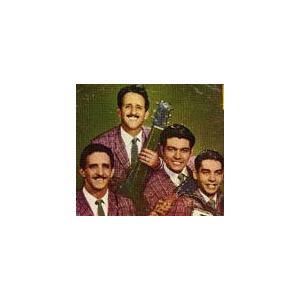
41) ¿Qué magnífico cuarteto nos deleitaba en el formidable programa “El Álbum Phillips”?: Los Llopis- Dulzaires…
42) ¿Cómo le decían a Carlos Prío?: El Presidente Cordial…
43) ¿Qué cantante mexicano dijo en 1933: “A Cuba le debo haber sentido por primera vez el cariño de un público fuera de mi país”? Pedro Vargas, el que decía: “Muy agradecido, muy agradecido, muy agradecido”…
44) Y al llegar a la pregunta 44 me acuerdo de… ¿cómo le decíamos en Cuba al 44?: Cuácara con cuácara…
45) ¿Dónde nació Gaspar Pumarejo, quien fuera uno de los pioneros de la televisión cubana? En Santander, España…
46) ¿Quién fue Bernarda Toro Pelegrín?: Madre de Panchito Gómez Toro, y por lo tanto, esposa del Generalísimo…
47) ¿El primer “manager” que tuvo el Club Marianao fue…?: “Merito” Acosta…
48) ¿Cuál es el origen de la palabra “Mambí”?: Surge cuando los españoles notaron que las tácticas de guerra de los cubanos eran muy parecidas a las utilizadas años antes en Santo Domingo por el líder Eutimio Mambí, pero existen otras versiones al respecto…
49) ¿La primera telenovela en Cuba fue…? : “Historia de Tres Hermanas”…
50) ¿Qué comandante comunista se puede comparar en asesinatos cometidos con los que efectuó el Che en “La Cabaña”?: Félix Torres en “La Campana”, provincia de Las Villas…
51) ¿ Qué grandioso pelotero norteamericano jugó un solo inning en el béisbol cubano?: Willie Mays…

Y una de contra: Y ¿por qué fue eso? Porque cuando los Gigantes se enteraron que Mays, siendo su prospecto estrella, se arriesgaba a sufrir una lesión en un país extranjero, lo llamaron a la velocidad de un cohete…

Sources:EstebanFernandez/InternetPhotos/TheCubanHistory.com
De Cuba: Sabes estas preguntas?/The Cuban History/ Arnoldo Varona, Editor
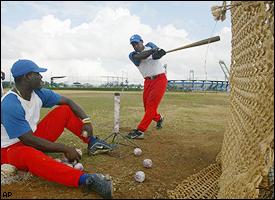
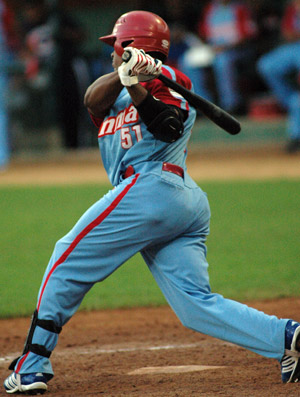
(Baseball) The “Monsters” That No Longer Scare

There is an old axiom that “where there are pitchers is not hitters,” and in recent times has been a proliferation of sluggers in Cuban National Series, making it clear that what is missing is, without doubt, quality pitching . This is even more evident when we note that our hitters are practically unproductive in international events of any level, where launchers are “closer to the truth” than those normally faced here.

No matter which team Cuba in question: the A team or “large”, the B or “second” team, H, Z and the Alpha, the sets are victims of Cuban pitching opponent, either a pitching trade, slower pitchers and mixers, or young pitchers, supersonic and impetuous.

In 26 innings against two sets in Haarlem baseball week the Cuban team has managed to make just six runs with two homers, which undoubtedly shows that serious problems with the offense. They have won only one game, with two losses, ranking in fourth place at the moment.

Now we also have the problem of pitchers: required not to allow career because teammates suffer from collective ineptitude at producing.

Normally those who truly stand up for Cuba in international events, the Cuban pitching has faltered in recent days, and many pitchers have been the victim of a lack of control a bit unusual in the national assemblies of the island

However much we try to find a solution to the matter, the first thing we ask is if you really expected a different result after the last National would be the number of teams has risen from 16 to 17. As much as we try not to see relationship between the two phenomena, we can not skip it under any circumstances, much less can we expect the height of the box has no effect on the low performance of Cuban pitchers, although in other places technicians say no.

Undoubtedly, massive brings mediocrity. The number of casts of the series itself has had its influence on the performance of Cuban baseball players off the island: the quality of pitching in general decreases, and so the batting, so that the number of outstanding figures was more inflamed than usual.

It imposes no doubt improve the work on the basis of Cuban baseball in the higher classes. We see a Veteran Cuban players who spend a hundred runs and deficiencies that have not seen in the American players, despite his young age. In addition, Cuba has the highest per capita amount of equipment for people, and that is the country’s top tournament, while other nations with more people have less teams (South Korea and Japan, for example) in addition to with the possibility of having the services of foreign players, while Cuba has to make do sometimes see some of his players leave the country in search of million-dollar deals (or not so millions) of others.

The integration team has always been one of the most contentious issues, it would not be whether it was totally fair-sometimes showing preference for certain players for friendship, sympathy, or history. This form of decision seriously undermines the trust and confidence of the younger generation in the system integration, providing irrefutable evidence of lack of seriousness, ethics and leadership, and educating young people with the idea that doing everything right, the correctly and have good behavior are the keys to success, if there is no certain influences or does not grow sympathies.

The absence of a second natural base, a position he now holds in the team a player who went from 20 errors and did not play a single entry in that position, is one of the elements, but you can not lay all the blame . NO BATS Cuba team, period. Does anyone think that forming a team based on performance with some players in a championship more than 90 games to average over .300 collectively will bring good results? Were you expecting someone something different after the championship down in quality?

Look culprits Higinio Velez, Victor Mesa, Jorge Fuentes … all are condemned due to immobility, but the structure of the national championship, how to constitute the Cuba team, the players stay completely immobile inside the selection and alignment, lack of confidence in certain athletes, the use of criteria totally unrelated to sports to make up the whole … and many, many more.

Maybe shorten the national championship tournament and develop a more demanding at the end of this is one of the most logical variants, but certainly something must be done. Too bad it has not been done before, because with the World Baseball Classic on the horizon visible, any measures implemented will not be enough, or simply will not yield fruit in the required time.

Sources:DesdeMiPalco/RogerioManzano/ReynaldoCruz/UniversoBeisbol/InternetPhotos/TheCubanHistory.com
MonstersthatNoLongerScare/The Cuban History/ Arnoldo Varona, Editor
GO BACK HOME

LOS “MONSTRUOS” QUE YA NO ASUSTAN

Hay un viejo axioma que dice que “donde hay pitchers no hay bateadores”, y en los últimos tiempos ha habido una proliferación de toleteros en la Serie Nacional cubana, dejando bien claro que lo que está faltando es, sin duda alguna, pitcheo de calidad. Esto se evidencia aún más cuando podemos constatar que nuestros bateadores son prácticamente improductivos en eventos internacionales de cualquier nivel, donde se encuentran con lanzadores “más cercanos a la verdad” que los que normalmente enfrentan acá.

No importa de qué equipo Cuba se trate: el A o equipo “grande”, el B o “segundo” equipo, el H, el Z o el Alfa; los conjuntos cubanos son víctimas del pitcheo oponente, ya sea un pitcheo de oficio, lanzadores lentos y mezcladores, o serpentineros jóvenes, supersónicos e impetuosos.

En 26 entradas ante dos conjuntos en la Semana Beisbolera de Haarlem el equipo cubano ha logrado fabricar apenas seis anotaciones, con dos vuelacercas, lo cual sin dudas demuestra que tiene problemas serios con la ofensiva. Han ganado solamente un partido, con dos derrotas, ubicándose en el cuarto puesto, por el momento.

Ahora tenemos también el problema de los lanzadores: obligados a no permitir carreras porque sus compañeros de equipo sufren de ineptitud colectiva a la hora de producir.

Normalmente los que de verdad sacan la cara por Cuba en eventos internacionales, el pitcheo cubano ha flaqueado en las últimas fechas, y muchos lanzadores han sido víctima de un descontrol un poco inusual en los conjuntos nacionales de la Isla.

Por mucho que intentemos hallarle una solución al asunto, lo primero que debemos preguntarnos es si de verdad se esperaba un resultado diferente luego de que en la pasada Seria Nacional la cantidad de equipos haya ascendido de 16 a 17. Por mucho que tratemos de no ver relación entre los dos fenómenos, no podemos bajo ningún concepto obviarla; y mucho menos podemos pretender que la altura del box no tiene algún efecto en la baja en el rendimiento de los serpentineros cubanos, en otros lares aunque los técnicos digan que no.

Indudablemente, la masividad acarrea mediocridad. La cantidad de elencos de la Serie sí ha tenido su influencia en el rendimiento de los peloteros cubanos fuera de la isla: la calidad del pitcheo en sentido general desciende, y así también la del bateo, por lo que el número de figuras descollantes estuvo más inflamado que de costumbre.

Se impone sin dudas perfeccionar el trabajo en la base de la pelota cubana, en las categorías superiores. Vemos a peloteros cubanos veteranos que pasan de un centenar de cuadrangulares y que tienen deficiencias que no se ven en los peloteros norteamericanos, a pesar de su corta edad. Pero además, Cuba tiene el per cápita más alto de equipos por cantidad de habitantes, y ese es el torneo superior del país, mientras que otras naciones con mayor cantidad de habitantes tienen menos equipos (Corea del Sur y Japón, por ejemplo) además de que tienen la posibilidad de contar con los servicios de peloteros foráneos, mientras que Cuba tiene que conformarse a veces con ver como algunos de sus peloteros abandonan el país en busca de las ofertas millonarias (o no tan millonarias) de otros.

La integración del equipo siempre ha sido uno de los temas más polémicos —que no lo sería tanto si se fuera totalmente justos—, mostrando en ocasiones preferencia hacia ciertos jugadores por amistad, simpatías, o historia. Esta forma de decidir afecta seriamente la fe y la confianza de las nuevas generaciones en el sistema de integración, dando una muestra fehaciente de falta de seriedad, ética y liderazgo, y educando a los jóvenes con la idea de que hacerlo todo bien, de la manera correcta y tener un buen comportamiento no serán las claves de lograr el éxito, si no se cuenta con ciertas influencias o no se logra sembrar simpatías.

La ausencia de un segunda base natural, posición que en estos momentos ocupa en el equipo un jugador que pasó de 20 errores y que no jugó una sola entrada en esa posición, es uno de los elementos, pero no se le puede echar toda la culpa. El equipo Cuba NO BATEA y punto. ¿Piensa alguien que conformar un equipo basándose en el rendimiento que tengan algunos jugadores en un campeonato de más de 90 juegos que promedie colectivamente para más de .300 va a traer buenos resultados? ¿Esperaba alguien algo diferente luego de que el campeonato bajara de calidad?

Busquen culpables: Higinio Vélez, Víctor Mesa, Jorge Fuentes… todos son condenables debido a la inmovilidad; pero la estructura del campeonato nacional, la forma de constituir el equipo Cuba, la permanencia de jugadores totalmente inamovibles dentro de la selección y la alineación, la falta de confianza en ciertos atletas, el uso de criterios totalmente ajenos a los deportivo para conformar el conjunto… y muchas, muchas más.

Tal vez acortar el campeonato nacional y desarrollar un torneo más exigente al término de éste sea una de las variantes más lógicas, pero sin dudas algo debe hacerse. Lástima que no se haya hecho antes, pues con el Clásico Mundial de Béisbol ya en el horizonte visible, cualquier medida que se aplique no será suficiente, o simplemente no rendirá los frutos en el tiempo requerido.

Sources:DesdeMiPalco/RogerioManzano/ReynaldoCruz/UniversoBeisbol/InternetPhotos/TheCubanHistory.com
MonstersthatNoLongerScare/The Cuban History/ Arnoldo Varona, Editor
GO BACK HOME

Countesses of Jaruco and Merlin. Two Beautiful Cuban ladies in Europe Courts.

What if I tell you Maria Teresa Montalvo and O’Farrill, Countess of San Juan de Jaruco, a famous habanera, a widow with four children, but still young, appealing and perfectly encamable, was mistress of King Joseph I, that “Pepe Botella” elevated to the throne of Spain by the grace of His tender brother Napoleon? And that his daughter Maria de las Mercedes Santa Cruz y Montalvo, the very famous Countess of Merlin, was mistress in turn of Jerome Bonaparte, nephew of the Emperor?

Gossip of history?. The truth is that both substantiated by the comments. Lady Holland, in his book My trip to Spain, portrays the Countess of Jaruco as a “beautiful habanera, extremely voluptuous, who lives completely dedicated to the passion of love,” while in a political pamphlet of the time branded as “dissolute and scandalous.” As for the daughter, her biographers, always eager to delve into the dirty sheets, especially for being a woman’s, attribute a few romances, including Prince Jerome, without which we can turn around time know and what were Platonic and Aristotelian what.

The uncle of the Countess of Jaruco, Gonzalo O’Farrill occupied important positions in the court of the Bourbon King will be Finance Minister and the French king. In his palace in Madrid of Carnation Street, home to Maria Teresa, are frequent visits Moratín Quintana and poets and a painter by the name of Francisco de Goya, characters that are pleasing to the Countess as well as exasperate her husband, who prefer to receive on their properties to Don Manuel Godoy, attained the status of super-and exalted as a Prince of Peace through intimate favors taxed at the ugly, toothless Queen Maria Luisa and patient tolerance of simple Carlos IV.

In early 1795, Don Joaquin Santa Cruz and Cardenas, third Earl of San Juan de Jaruco and first Earl of Mopox, husband of Maria Teresa, has been appointed in Madrid chamberlain of Charles IV and do Knight of the Order of Calatrava until through his friendship with the thrust of Godoy and Francisco Arango Havana, the “stateless statesman,” eminence grise of the sugar Creole, he was appointed Deputy Inspector General of the Spanish troops in Cuba and president of a commission would develop plans, almost all designed by Conde himself, for the economic transformation of the island

These positions require you to travel to Cuba again and again and as the Count was away from Madrid malignant rumors abound about the conduct of his wife Maria Teresa. True, and have many years of marriage, they married when he was fifteen and she was twelve. On one such trip, as he was suffering from dropsy, death surprised him in Havana, but it had led Spain to the eldest daughter, Maria de las Mercedes, which was here the care of a grandmother and later as a pupil in the Convent of Santa Clara, where, with ten or eleven years with the help of a nun, managed to escape, never to return.

Beautiful Habaneras
 
It is very beautiful Maria de las Mercedes, although we do not seem so far in the portraits. The Countess of Merlin is his pseudonym is considered one of the first writers of Cuba. She herself, in her book My first twelve years (1832) says that the eleven had reached their full size and very thin but I was so formed as any girl of eighteen. States: “My Creole color, my eyes black and lively, my hair so long it was hard to hold, I got a wild look, which was related to my moral dispositions … and passionate live-out, envisioned the need for repress my emotions, much less to hide. ”

Just thirteen years old when he arrived in Madrid and the Spanish aristocracy pays homage. The besieged soldiers, politicians, writers … Goya, one day, and see his paintings, rather than tables, repairing the fate of the teenager. He says: “As a painter not achieve the glory, but go far as a woman.”

The political events of precipitate. Napoleon, who wants to swallow the whole of Europe, invades Spain. Carlos IV abdicates and force him to move to France, and Godoy is imprisoned, while the Spanish people up in arms against the foreigner and will not cease in their struggle to expel him. The nobles were cowed, and many flee, others stay and, after the initial confusion, seek accommodation next to the French. They include Gonzalo O’Farrill, uncle of the Countess of Jaruco, and the very Countess who, they say, then find comfort to her widowhood in the arms of the usurper king Joseph I.

It was a bad move. When the Bourbons recover the throne in the person of ill-fated Ferdinand VII, son of Charles and Maria Luisa, Countess of Jaruco and had died (Died April 17, 1812 in Madrid, Spain), but the guy suffer exile and the family fortune will be confiscated. By then Maria de las Mercedes, daughter of Maria Theresa, is married to Antonio Christopher Merlin, a French general in Spain received the title of Count. When married, she is twenty years old and he was forty. Do not think, however, in a relationship of convenience, very good game that the General could be in the occupied country. The letters referred to it when he begins in the conquest of Andalusia show a woman in love. They are, says professor Salvador Bueno, letters “written with a certain naivete at times, and others with passionate words and frankly erotic references.” Very different from what you might write to Philarete Chasles, a lover of trashy, failed writer and historian, who takes advantage of the love of the Countess and widow and a stage where the beauty of Merlin urgently needed body work and its economy was cracking .

It is common to find comments on the love life of the Countess of Merlin, Jerome Bonaparte and her lovers Philarete Chasles and admiration that caused her beauty.

These two women and hanging out, according to some commentators, they would like to pay admiration, lovers reveindicandolas as admirable, intelligent fighters, in their capacity as Spanish prostitutes. Cervantes’s sisters were also prostitutes. At that time I had not invented anything that was not written in history, were true or hearsay only. It seems that what is best for learning the arts of love female is going through Cuba, and unless they are told Pepe Botella or Napoleon himself, because Josephine was also Caribbean.

Then, came the Collapse
 
You should also leave Spain the Countess of Merlin before the fall of Joseph I. And I will play to attend, years later in Paris, the collapse of Napoleon. Although excluded from the new court headed by another Bourbon, Louis XVIII, marriage, who has three children, holds a position and residence is visited by many celebrities. Maria de las Mercedes alternate Victor Hugo and Lamartine, Musset, Rossini, Maria Malibran, the celebrated singer, and Domingo del Monte and Jose Antonio Saco, his countrymen, in meetings in which the Countess left hear his beautiful soprano voice.

After my first twelve years, book of 1831, the pen of the Countess of Merlin continued to submit pages to complete a very interesting book. They can be found beyond the literary qualities (actually, unequal), the mosaic of a time told from the unique experience of its author. The said Agnes Sister Story (1832), Memoires et Souvenirs (1836), women’s hobbies in the world (1838), Madame Malinbran, the aforementioned trip to Havana (1844), Lola and Mary and The lionesses in Paris (both 1845) and Le Duc d’Athènes (1852), among other books and articles, form a romantic poetic not to ignore the Cuban literature of a period of full foundation.

CASA DE LOS CONDES DE JARUCO EN LA HABANA

That world begins to crumble with the death of Antonio Merlin, in 1839. Countess travels to Cuba and collects data for its most famous work, The Havane, writing on behalf of slaveholding planters, who give back very good service. Also appear in Spanish, abbreviated and with a foreword by Gertrudis Gomez de Avellaneda, entitled Travel to Havana. In 1845 he returned to Spain. He wants back what the Bourbons confiscated his. “Never was so well attended pedigüeña” he writes, but nothing does, is to empty-handed.

And comes the end. Surrounded by her children and forgotten by those who both flattered and shone in their classrooms, go get extraordinary death with resignation, the March 31, 1852, at sixty-three years old under the protection of his daughter in the Castle Dissay, on the outskirts of Poitiers, France. A small procession followed his remains to the cemetery of Pere Lachaise Paris. Many years later, Domingo Figarola-Caneda, his most careful biographer, was able to locate his grave. It was covered with grass and there was not an epitaph to remind her to this beautiful Cuban excessively passionate and never was careful to suppress their feelings and emotions.

Agencies/Various/InternetPhotos/TheCubanHistory.com
The Cuban History, Hollywood.
Arnoldo Varona, Editor.