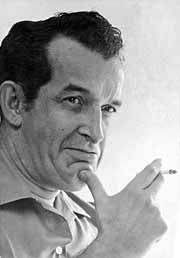
Antonio Prohias was born in Cienfuegos, Cuba on January 17, 19221, and became interested in drawing at an early age. His satirical drawings, which mostly poked fun at Castro, appeared in many Cuban political magazines during the 1950s.
His critical views of the government made him many enemies, and made life difficult for him.
On May 1, 1960, just three days before Castro seized control of the country’s presses, Prohias fled the country to avoid arrest. He arrived in the US virtually penniless. While working a series of menial jobs, Prohias made the rounds of the local magazines with his work.
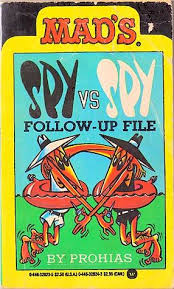
It was in 1961 that Prohias dropped off a short cartoon at the offices of MAD Magazine. The cartoon featured a pair of odd looking spies, both identical except for their coloring. MAD ran the cartoon in the January, 1961 issue, and “Spy vs Spy” was born.
Prohias continued to draw the strip for MAD until 1990, when poor health forced him to retire. By then, he’d drawn over 500 strips featuring the pointy-nosed two-some.
Prohias died in February 24, 1998 of lung cancer, but “Spy vs Spy” lives on both in animated form (on “MAD TV”) and in a Sunday comic strip.
Agencies/IMDb/Mike Konczewski/Internet Photos/YouTube/Arnoldo Varona/TheCubanHistory.com
THE CUBAN HISTORY, HOLLYWOOD.
ANTONIO PROHIAS, CREADOR DE LOS CARTONES SATÍRICOS FÍLMICOS “EL HOMBRE SINIESTRO”.
Antonio Prohias nació en Cienfuegos, Cuba el 17 de enero de 1922, y se interesó por el dibujo a una edad temprana. Sus dibujos satíricos, que en su mayoría burlaban a Castro, aparecieron en muchas revistas políticas cubanas durante los años cincuenta.
Antonio Prohias
Sus opiniones críticas del gobierno le hicieron muchos enemigos, y le hicieron la vida difícil para él.
El 1 de mayo de 1960, apenas tres días antes de que Castro tomara el control de las prensas del país, Prohias huyó del país para evitar ser arrestado. Llegó a los Estados Unidos virtualmente sin dinero. Mientras trabajaba en una serie de trabajos insignificantes, Prohias hizo las rondas de las revistas locales con su trabajo.
Fue en 1961 que Prohias dejó una pequeña caricatura en las oficinas de MAD Magazine. La caricatura ofreció un par de espiar impares, ambos idénticos a excepción de su colorante. MAD dirigió la caricatura en la edición de enero de 1961, y “Spy vs Spy” nació.
Prohias continuó dibujando la tira para MAD hasta 1990, cuando la mala salud lo obligó a retirarse. Para entonces, había dibujado sobre 500 tiras que ofrecían el two-some puntiagudo.
Prohias murió el 24 de febrero de 1998 de cáncer de pulmón, pero “Spy vs Spy” vive tanto en forma animada (en “MAD TV”) como en un cómic de domingo.
Agencias / IMDb / Mike Konczewski / Fotos de Internet / YouTube / Arnoldo Varona / TheCubanHistory.com
LA HISTORIA CUBANA, HOLLYWOOD.
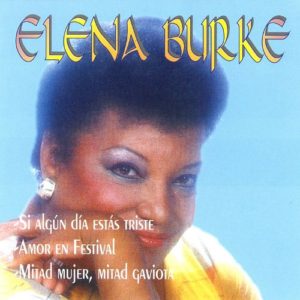
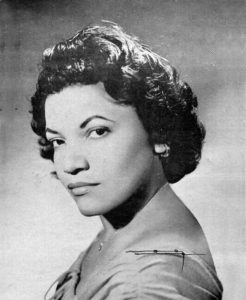
Elena Burke (Romana Elena Burgues González, 1928-2002). Famous interpreter of the Cuban song, known as “The Sentimental Lady”.
Elena Burke, was born on February 28 in the neighborhood of Cerro, in Ciudad de La Habana.
In 1940 he sang on the radio for the first time, in the Havana radio station CMC. He played a tango, “Caminito,” by Peñalozza and Filiberto, whom he had known in the voice of Libertad Lamarque, an idol of the Cubans of the time. In those days Elena was very attentive to everything she heard on the radio, in the street or on the discs: Miguelito Valdés, sets of sones, boleros, guarachas and rumba.
In 1943 she appeared in the most important amateur program in Cuba, the Supreme Court of Art, CMQ Radio, and was awarded along with two other young people who would have a successful career later: Rosita Fornés and Miguel Angel Ortiz. One day he appeared before Onorio Muñoz, director of the station Mil Diez and said: “Please, let me sing.” Thus was contracted to appear in the program Ensoñación, with an orchestra directed by Enrique González Mantici and Adolfo Guzmán.
In 1946 she sang sentimental songs in programs broadcast by O’Shea Broadcasting, where she was presented as “the first filin interpreter”.
He integrated – with Adalberto del Rio, Aurelio Reynoso and Roberto Barceló – the Orlando de la Rosa Quartet, composer and pianist who gave Elena several of his songs to premiere, and even dedicated a bolero: “Your soul.” The quartet debuted at the RHC Cadena Azul station in Havana in 1948.
He arrived in Mexico with the show Rapsodia in Bronze and Black with Las Mulatas de Fuego, show hired to perform at the Bergere Follies. Shortly after, he joined the vocal quartet of the pianist Facundo Rivero, with whom he played for Central and South American countries.
Upon his return to Cuba he returned to the quartet of Orlando de la Rosa, who was hired to perform in the United States in nightclubs and hotels.
In 1952, the D’Aida Quartet was formed with the pianist Aida Diestro, as director, and the voices of Elena, Omara, Moraima Secada and Haydée Portuondo. After only four weeks of rehearsal, they debuted on August 16 of that year in the television program Carousel of Joy, CMQ interpreting “Mamey colorao” by Peruchín Jústiz and “Cosas del alma” by Pepé Delgado. Then they performed for a week, also on television, at the Noon Show. In each presentation, new issues were published: “What jelengue”, by José Antonio Méndez, “Prophecy” by Adolfo Guzmán, “Ya no me quieres” by María Greever, “Las mulatas del chachachá” by Evelio Landa.
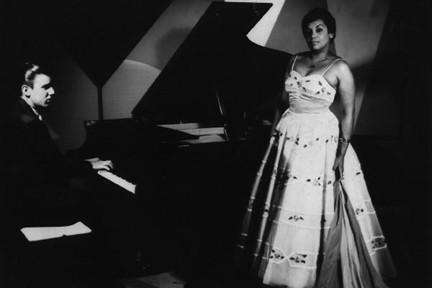
Towards the end of the decade of the 50 Elena separated of the quartet to continue its race like soloist. He began performing in small and intimate Havana clubs accompanied only by a soloist at the piano: Frank Domínguez or Meme Solís. Not only did he release new songs, but he also imposed a style of playing lyrics and melody. Her audience grew, her fans chased her from stage to stage.
The owners of the recording house Gema proposed to record their first album backed by a great orchestra directed by Rafael Somavilla: With the warmth of my voice, which included “Perdido amor” by César Portillo de la Luz, “Sinless” Of Adolfo Guzmán, “A thousand congojas” of Juan Pablo Miranda, “Toy”, of Bobby Capó among other compositions of Maria Greever, Mario Ruiz Armengol, Ernesto Duarte, Frank Domínguez and Eligio Valera. The columnistas of spectacles proclaimed “better interpreter of 1959”.
His second album, La Burke sings, with Meme Solís on piano and Pablo Cano’s guitar contained versions of old Cuban songs such as “Corazón” by Sánchez de Fuentes or “Idilio” by Augusto Tariche, along with creations by new composers marked By the expression of the filin, as Marta Valdés (! You do not suspect1), Ela O’Farrill (1Ni cry I can already!) Or Solis (! What unhappiness!). At that time he was called “His Majesty, La Burke”.
He appeared in the feature film of Rogelio París We music and recorded in 1964 another long-lasting album, Beautiful Memories, with Frank Domínguez and Froilán Amézaga, considered among the best of his career. His repertoire was also nourished by the work of new composers and of the “consecrated”. In an interview he declared that he feared nothing that was enclosed in a letter and a good music.
“Señora Sentimiento” performed in 1978 with the Aragonese Orchestra and Los Papines at Lincoln Center in New York. In the following decade he made new tours and recordings. He sang the musical theme of the movie A Bride for David (1985) by Orlando Rojas, “Love me as I am” by Pablo Milanes, who immediately became a national success. In 1988 he recorded an album with songs by Marta Valdés, accompanied by the guitar by Carlos Emilio and the pianos by Frank Emilio and Enriqueta Almanza.
In 1993 his double album Canta lo sentimental, that celebrated his fifty years of artistic race, obtained the Great Prize of the Disc in Cuba. He also recorded an album with songs by Vicente Garrido accompanied to the piano by the author.
He traveled to Mexico where he remained acting until 1995, the year he returned to Cuba and recorded Elena in person, with Enriqueta Almanza, guitarist Felipe Valdés and percussionist Tata Güines. He made presentations in theaters in several cities of Cuba. He appeared in the nocturnal center Delirio habanero during an extensive season and later in the One-eyed Cat, where he remained acting, very close to the end, while his physical ailments allowed it.
On June 9, 2002, he died in Havana. Several hundred Havana residents attended his funeral. The poet Nancy Morejón said, on dismissal, that Elena was born to fame as the most faithful interpreter of the filin. The romantic song in Cuba reached in his voice the greatest of splendors.
Agencies/D’Cubanos/Internet Photos/YouTube/Arnoldo Varona/TheCubanHistory.com
THE CUBAN HISTORY, HOLLYWOOD.
Elena Burke (Romana Elena Burgues González, 1928-2002). Célebre intérprete de la canción cubana, conocida como “La Señora Sentimiento”.
Elena Burke, nació un 28 de febrero en la barriada del Cerro, en Ciudad de La Habana.
En 1940 cantó en la radio por primera vez, en la emisora habanera CMC. Interpretó un tango, “Caminito”, de Peñalozza y Filiberto, que había conocido en voz de Libertad Lamarque, ídolo de los cubanos de la época. Por aquellos días Elena estaba muy atenta a todo lo que escuchaba en la radio, en la calle o en los discos: Miguelito Valdés, los conjuntos de sones, los boleros, las guarachas y la rumba.
En 1943 se presentó en el programa de aficionados más importante de Cuba, la Corte Suprema del Arte, de CMQ Radio, y fue premiada junto a otros dos jóvenes que tendrían una exitosa carrera posteriormente: Rosita Fornés y Miguel Ángel Ortiz. Un día se presentó ante Onorio Muñoz, directivo de la emisora Mil Diez y le dijo: “Por favor, óigame cantar”. Así quedó contratada para presentarse en el programa Ensoñación, con una orquesta dirigida por Enrique González Mantici y Adolfo Guzmán.
En 1946 cantó canciones sentimentales en programas que difundía la emisora Radiodifusión O’Shea, donde la presentaban como “la primera intérprete de filin”.
Integró –con Adalberto del Río, Aurelio Reynoso y Roberto Barceló– el Cuarteto de Orlando de la Rosa, compositor y pianista que le entregó a Elena varias de sus canciones para que las estrenara, e incluso le dedicó un bolero: “Tu alma”. El cuarteto debutó en la emisora RHC Cadena Azul de La Habana en 1948.
Llegó a México con el show Rapsodia en Bronce y Negro con Las Mulatas de Fuego, espectáculo contratado para presentarse en el Follies Bergere. Poco después se unió al cuarteto vocal del pianista Facundo Rivero, con el cual giró por países de Centro y Sudamérica.
A su regreso a Cuba se reincorporó al cuarteto de Orlando de la Rosa que fue contratado para actuar en Estados Unidos en centros nocturnos y hoteles.
En 1952 se constituyó el Cuarteto D’Aida con la pianista Aida Diestro, como directora, y las voces de Elena, Omara, Moraima Secada y Haydée Portuondo. Tras apenas cuatro semanas de ensayo, debutaron el 16 de agosto de ese año en el programa de televisión Carrusel de la Alegría, de CMQ interpretando “Mamey colorao”, de Peruchín Jústiz y “Cosas del alma”, de Pepé Delgado. Luego actuaron durante una semana, también en televisión, en el Show del Mediodía. En cada presentación estrenaban nuevos números: “Qué jelengue”, de José Antonio Méndez, “Profecía”, de Adolfo Guzmán, “Ya no me quieres”, de María Greever, “Las mulatas del chachachá”, de Evelio Landa.
Hacia el final de la década del 50 Elena se separó del cuarteto para continuar su carrera como solista. Comenzó a presentarse en pequeños e íntimos clubes habaneros acompañada tan solo por un solista al piano: Frank Domínguez o Meme Solís. No solo dio a conocer nuevas canciones, sino que impuso un estilo de interpretar letra y melodía. Su público creció, sus fanáticos la perseguían de escenario en escenario.
Los propietarios de la casa discográfica Gema le propusieron grabar su primer disco respaldada por una gran orquesta dirigida por Rafael Somavilla: Con el calor de mi voz, que incluyó “Perdido amor”, de César Portillo de la Luz, “Libre de pecado”, de Adolfo Guzmán, “Mil congojas” de Juan Pablo Miranda, “Juguete”, de Bobby Capó entre otras composiciones de María Greever, Mario Ruíz Armengol, Ernesto Duarte, Frank Domínguez y Eligio Valera. Los columnistas de espectáculos la proclamaron “mejor intérprete de 1959”.
Su segundo disco, La Burke canta, con Meme Solís al piano y la guitarra de Pablo Cano contenía versiones de viejas canciones cubanas como “Corazón”, de Sánchez de Fuentes o”Idilio”, de Augusto Tariche, junto a creaciones de nuevos compositores marcados por la expresión del filin, como Marta Valdés (!Tú no sospechas1), Ela O’Farrill (1Ni llorar puedo ya!) o Solís (!Qué infelicidad!). Por entonces se le llamaba “Su Majestad, La Burke”.
Apareció en el largometraje de Rogelio París Nosotros la música y grabó en 1964 otro disco de larga duración, Bellos recuerdos, con Frank Domínguez y Froilán Amézaga, considerado entre los mejores de su carrera. Su repertorio se nutrió igualmente de la obra de nuevos compositores y de la de los “consagrados”. En una entrevista declaró que no temía a nada que viniera encerrado en una letra y en una buena música.
La “Señora Sentimiento” actuó en 1978 con la Orquesta Aragón y Los Papines en el Lincoln Center de Nueva York. En la década siguiente realizó nuevas giras y grabaciones. Cantó el tema musical de la película Una novia para David (1985) de Orlando Rojas, “Ámame como soy” de Pablo Milanés, que se convirtió de inmediato en un éxito nacional. En 1988 grabó un disco con canciones de Marta Valdés, acompañada con la guitarra de Carlos Emilio y los pianos de Frank Emilio y Enriqueta Almanza.
En 1993 su álbum doble Canta lo sentimental, que celebraba sus cincuenta años de carrera artística, obtuvo el Gran Premio del Disco en Cuba. Grabó además un disco con canciones de Vicente Garrido acompañada al piano por el autor.
Viajó a México donde permaneció actuando hasta 1995, año en que regresó a Cuba y grabó Elena en persona, con Enriqueta Almanza, el guitarrista Felipe Valdés y el percusionista Tata Güines. Hizo presentaciones en teatros en varias ciudades de Cuba. Se presentó en el centro nocturno Delirio habanero durante una extensa temporada y más tarde en El Gato Tuerto, donde se mantuvo actuando, muy cerca del final, mientras sus dolencias físicas se lo permitieron.
El 9 de junio de 2002 falleció en La Habana. A su sepelio asistieron varios cientos de habaneros. La poeta Nancy Morejón dijo, al despedirla, que Elena nació a la fama como la intérprete más fiel del filin. La canción romántica en Cuba alcanzó en su voz el mayor de los esplendores.
Agencies/D’Cubanos/Internet Photos/YouTube/Arnoldo VArona/TheCubanHistory.com
THE CUBAN HISTORY, HOLLYWOOD.
The domino they say was invented by the Chinese and brought to the American continent by the Europeans, is considered a classic and universal pastime from which peculiarities are derived in the use of language, particularly among Cubans.
There are a large number of terms used by players in Cuba as essential features of our idiosyncrasy, which may distinguish us from others and can only be interpreted by the experts in this singular and enjoyable home entertainment.
In Cuba the domino is played up in the street and the term Blanquizal de Jaruco is used with Regularity to identify the double white. (Paso).
The typical phraseology is varied and playful as the creoles of the island and in a meeting of dominoes it is common to listen; I’m going to put the fresh one, you’re crouching, give her water, I hit and put the fat, among others, as well as those used to identify key pieces.
In a place of the environs of the habanero town of Jaruco, the site known as Blanquizal is supposed to be located.
In a place of the neighborhoods of the habanero town of Jaruco, it is supposed to be located the site known as Blanquizal.
Most are metaphors, but others are classic expressions, such as box of dead and sow, to refer to doubles six and nine, although one of them all alludes to a site of the Havana geography, which for that reason has gained fame in almost All the archipelago and other places of the planet.
The place in question is “Blanquizal de Jaruco”, a voice that the vast majority of dominoes in Cuba use when putting the double white on the table, but in reality few know its exact location and its significance in the local history of the Largest of the Antilles.
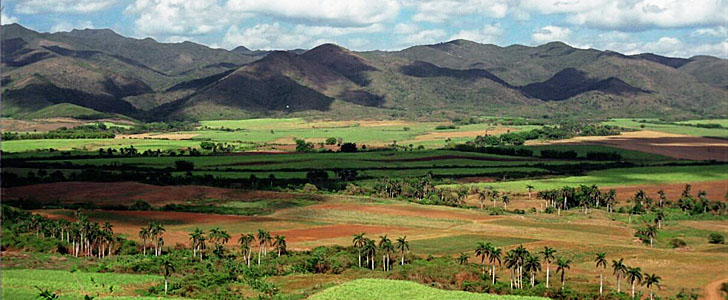
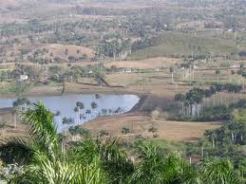
It is a rustic and almost hidden corner, located in areas of the mountain range, Stairs of Jaruco, distant some 25 kilometers of the city of Havana and was scene of one of the many combats between mambisas and Spanish forces during the war of the 95.
Stairs of Jaruco, mountainous area.
In the zone the independendist troops of General Jose Maria Aguirre, chief of the Fifth Corps of the Army, and creator of the guerrilla war, fought during the invasion of east to the west, carried out by the troops of Antonio Maceo and Máximo Gómez.
What we still do not know and maybe we can never figure out is how and when the Blanquizal de Jaruco came to the popular and liked domino, considered the table game par excellence of the Cuban family at night time, weekends and holidays .
Agencies/Arrajatabla/Alberto Denis/Internet Photos/Arnoldo Varona/TheCubanhistory.com
THE CUBAN HISTORY, HOLLYWOOD.
FRASES POPULARES CUBANAS: “EL BLANQUIZAL DE JARUCO”.
El dominó que dicen fue inventado por los chinos y traído al continente americano por los europeos, es considerado un clásico y universal pasatiempo del cual se derivan peculiaridades en el uso del lenguaje, particularmente entre los cubanos.
En Cuba el dominó se juega hasta en la calle y el término Blanquizal de Jaruco es utilizado con regularidad para identificar el doble blanco. (Paso)
Existe un amplio número de términos utilizado por los jugadores en Cuba como rasgos esenciales de nuestra idiosincrasia, que quizá nos distinga de otros y sólo pueden ser interpretados por los entendidos en este singular y ameno entretenimento casero.
La fraseología típica es variada y jocosa como los criollos de la isla y en un encuentro de dominó es común escuchar; te voy a poner la fresca, estás agachaó, dale agua, me pegué y bota la gorda, entre otras, así como las que se emplean para identificar fichas claves.
En un paraje de las cercanías del poblado habanero de Jaruco, se supone está ubicado el sitio conocido como Blanquizal.
En un paraje de las cercanías del poblado habanero de Jaruco, se supone está ubicado el sitio conocido como Blanquizal.
En su mayoría son metáforas, pero otras son expresiones clásicas, como caja de muerto y la puerca, para referirse a los dobles seis y nueve, aunque una entre todas alude un sitio de la geografía habanera, que por esa razón a ganado fama en casi todo el archipiélago y otros sitios del planeta.
El lugar en cuestión es “Blanquizal de Jaruco”, voz que la gran mayoría de los aficionados al dominó en Cuba usan al poner en la mesa el doble blanco, pero en realidad pocos conocen su ubicación exacta y su trascendencia en la historia local de la mayor de las Antillas.
Es un agreste y casi escondido rinconcito, situado en áreas de la cordillera, Escaleras de Jaruco, distante unos 25 kilómetros de la ciudad de La Habana y fue escenario de uno de los muchos combates entre fuerzas mambisas y españolas durante la guerra del 95.
Escaleras de Jaruco, area montañosa. .
En la zona pelearon las huestes independendistas del general José María Aguirre, jefe del Quinto Cuerpo de Ejército, y artífice de la guerra de guerrillas, durante la invasión de oriente a occidente, protagonizada por las tropas de Antonio Maceo y Máximo Gómez.
Lo que aún no sabemos y quizá no logremos averiguar nunca es como y cuando el Blanquizal de Jaruco llegó al popular y gustado dominó, considerado el juego de mesa por excelencia de la familia cubana en horarios de la noche, los fines de semana y en vacaciones.
Agencies/Arrajatabla/Alberto Denis/Internet Photos/Arnoldo Varona/TheCubanhistory.com
THE CUBAN HISTORY, HOLLYWOOD.