– REYNALDO ARENAS, 26 years after his creative disappearance. VIDEO. * REYNALDO ARENAS, a los 26 años de su desaparición creativa. VIDEO.

reinaldoarenas

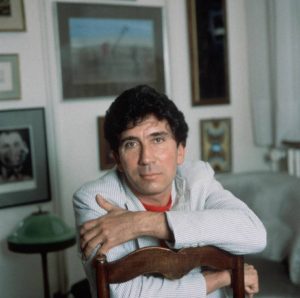
On December 7, twenty-six years have passed since Reinaldo Arenas committed suicide.

He belonged to that generation of Cubans who, as he himself affirmed, lived “the debasement of misery during Batista’s tyranny, the degradation of power under Castroism and the debasement of the dollar in capitalism.” When he left Cuba in 1980, in Mariel, and after his passage through Miami, he ruled that if Cuba was Hell, that was Purgatory. It was not a good start to hold a name with a work still in the making.

He took refuge in the anonymous population of New York, where he took his life at the age of 47, in the terminal phase of AIDS. He passed through this world like a hurricane, sick, exiled, persecuted, vexed and ignored not only by Castro’s Cubans but by many companions of exile, not always appreciated but always dazzling. Possessing an incredible narrative capacity, an unusual enthusiasm and a vitality bordering on recklessness, Reinaldo was the enfant terrible of anti-Castroism.
hqdefault

Anyone seeking in his work a reasoned and structured argument against the Castro regime – and after Fidel’s death we have seen that there are many who seem not to be aware of the abomination that he supposed – will not be very satisfied or To find abundant theoretical arguments on which to rely. Perhaps it seems to him that Reinaldo Arenas is offering an image that sometimes detracts credibility from his terrible sufferings by highlighting pathetic and unflattering situations. However, none of what he refers to in his novels is imaginary, his reality is that of an amazing world (as he called one of them), a world paralyzed by slavery and fear. His peasant origins made him a first-hand witness, oblivious to any snobbism or class compassion, which was necessarily deviant. The people he paints are contradictory, wild, frightened, willing to be vile to survive and possess, at one and the same time, an amazing artistic sense.
Before_Night_Falls_poster (1)

Reinaldo Arenas found it difficult to make a name for the uncomfortable and transported. I witness how difficult it was to publish it in Spain, because I was responsible for publishing some of his novels in the Mondadori publishing house, in the last years of his life, and can establish with him a friendship and a correspondence that was cut short with his death. It is not surprising that his novels had to come out first in English and French. Liliane Hassan, Spanish translator and “hispanizante”, was responsible for translating the works of Reinaldo Arenas into French, even before they had been published in Spanish, as well as those of many other Cuban novelists who, because of their status as ” Outlaws “and dissidents of the Castro regime were systematically ignored in the more progressive editorials of France and, let alone Spain, where by the time she began to represent him in Europe (I speak of the years 60-80 ), Were still unknown because, paradoxically, the left – which has dominated mainly publishing houses and the media either directly, or sentimentaloide blackmail – was never more sectarian than during the Franco / anti-Francoist period and immediately after. Those difficulties did not make life any kinder, certainly.

Https://youtu.be/uFwj6LaklN8
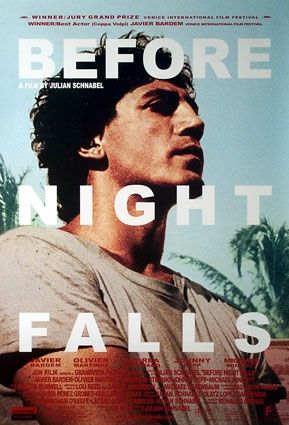
‘Before the Night Falls’ Film.

His posthumous fame was heightened by the international repercussions of the film ‘Antes que anochezca’, based on his posthumous memoirs, starring Javier Bardem. Suddenly, in the global imaginary, mostly pro-Castro, the most important thing in Reinaldo’s life – one of the most bitter opponents of Castro – was that a pro-Castro had embodied him in the celluloid; Suddenly, the most important thing about Reinaldo was his homosexuality, which is no longer considered such improper conduct and, to a lesser extent, of course his “literary qualities”.

On Dr. Castro’s island, Arenas was, literally and literarily, a “non-person,” but even if Arenas was anything, “a damn writer” or “a damn writer,” he had catapulted himself to fame and everyone knew Which was Cuban, then had to be recovered. In 2001 Lourdes Arencibia, president of the section of literary translation of the Union of Writers and Artists of Cuba, published a book entitled Reinaldo Arenas, between Eros and Tánatos. It was published in Colombia, but with the approval of the Cuban authorities and was Be presented at the Institute of the Cuban Book in Havana that same year “were not others who, imputing us the quiet, indicate that it is an important figure of Cuban and Hispanic American letters – and not the creature to whom Nobody wants to take a walk- “, wrote the author in his prologue.

If that was so, he must have been in a wheelchair because none of his works were published in Cuba.

Agencies/Libertad Digital/Julia Escobar/YouTube/Internet Photos/TheCubanHistory.com
THE CUBAN HISTORY, HOLLYWOOD.

FOLLOW US ON TWITTER AND FACEBOOK. THECUBANHISTORY.COM

logo-5-4

REYNALDO ARENAS, A LOS 26 AÑOS DE SU DESAPARICIÓN CREATIVA.

El pasado 7 de diciembre se cumplieron veintiséis años desde que se suicidó Reinaldo Arenas.

reinaldoarenas

Perteneció a esa generación de cubanos que, como él mismo afirmó, vivió “el envilecimiento de la miseria durante la tiranía de Batista, el envilecimiento del poder bajo el castrismo y el envilecimiento del dólar en el capitalismo”. Cuando salió de Cuba en 1980, en el Mariel, y tras su paso por Miami, dictaminó que si Cuba era el Infierno, aquello era el Purgatorio. No fue un buen comienzo para sostener un nombre con una obra todavía en ciernes.

Se refugió, pues, en el anonimato poblado de Nueva York, donde se quitó la vida a los 47 años, en fase terminal del SIDA. Pasó por este mundo como un huracán, enfermo, exiliado, perseguido, vejado y ninguneado no sólo por los cubanos castristas sino por muchos compañeros de exilio, no siempre apreciado pero siempre deslumbrante. Poseedor de una increíble capacidad narrativa, de un entusiasmo desusado y de una vitalidad rayana en la temeridad, Reinaldo fue el enfant terrible del anticastrismo.

hqdefault

Quien busque en su obra un alegato razonado y estructurado contra el régimen de Castro -y a raíz de la muerte de Fidel hemos podido comprobar que hay muchos que parecen no estar al corriente de la abominación que éste supuso- no va a sentirse muy satisfecho ni a encontrar abundantes argumentos teóricos en los que apoyarse. Quizás le parezca que Reinaldo Arenas está ofreciendo una imagen que, en ocasiones, resta credibilidad a sus terribles padecimientos, al poner de relieve situaciones patéticas y poco halagüeñas. Sin embargo, nada de lo que él refiere en sus novelas es imaginario, su realidad es la de un mundo alucinante (como tituló una de ellas), un mundo paralizado por la esclavitud y el miedo. Su origen campesino le convirtió en un testigo de primera mano, ajeno a cualquier esnobismo o compasión clasista, forzosamente desvirtuadora. Las personas que pinta son contradictorias, desaforadas, asustadas, dispuestas a cualquier vileza para sobrevivir y poseedoras a un tiempo de una asombroso sentido artístico.

Before_Night_Falls_poster (1)

Al incómodo y transterrado Reinaldo Arenas le costó mucho trabajo hacerse un nombre. Soy testigo de lo difícil que resultaba publicarle en España, pues fui la responsable de publicar alguna de sus novelas en la editorial Mondadori, en los últimos años de su vida y puede entablar con él una amistad y una correspondencia que se truncó con su muerte. No es de extrañar que sus novelas tuvieran que salir primero en inglés y en francés. Liliane Hassan, traductora de español e “hispanizante”, fue quien se ocupaba de traducir al francés las obras de Reinaldo Arenas, antes incluso de que se hubieran publicado en español, así como las de tantos otros novelistas cubanos que, por su condición de “proscritos” y disidentes del régimen castrista, eran sistemáticamente ninguneados en las editoriales más progres de Francia y, no digamos ya, de España, donde por la época en que ella empezó por así decirlo a representarle en Europa (hablo de los años 60-80), eran todavía unos desconocidos porque, paradójicamente, la izquierda –que ha dominado mayoritariamente las editoriales y los medios de comunicación bien directamente, bien por chantaje sentimentaloide– nunca fue más sectaria que durante la etapa franquista/antifranquista e inmediatamente posterior. Aquellas dificultades no contribuyeron a hacerle la vida más amable, ciertamente.

https://youtu.be/uFwj6LaklN8
‘Antes que Anochezca’ Film.

Su fama póstuma se vió acrecentada por la repercusión internacional de la película ‘Antes que anochezca’, basada en sus memorias póstumas, protagonizada por Javier Bardem. De pronto, en el imaginario global, en su mayoría procastrista, lo más importante de la vida de Reinaldo -uno de los más mordaces opositores a Castro- era que un procastrista le hubiera encarnado en el celuloide; de pronto, lo más importante de Reinaldo era su homosexualidad, que ya no es considerada una conducta tan impropia y, en menor medida, por supuesto sus “cualidades literarias”

En la isla del doctor Castro, Arenas era, literal y literariamente, una “no persona”, pero aunque Arenas fuera lo que fuese, “un escritor maldito” o “un maldito escritor”, se le había catapultado a la fama y todos sabían que era cubano, luego había que recuperarlo. En 2001 Lourdes Arencibia, presidenta de la sección de traducción literaria de la Unión de Escritores y Artistas de Cuba, publicó un libro titulado Reinaldo Arenas, entre Eros y Tánatos.Estaba publicado en Colombia, pero con el beneplácito de las autoridades cubanas e iba a ser presentado en el Instituto del Libro Cubano, en La Habana de ese mismo año”no fueran otros quienes, al imputarnos la callada, nos señalen que se trata de una figura importante de las letras cubanas e hispanoamericanas —y no la criatura a la que nadie quiere sacar a pasear—”, escribió la autora en su prólogo.

Si eso fue así, debió de ser en silla de ruedas porque en Cuba se siguió sin publicar ninguna de sus obras.

Agencies/Libertad Digital/Julia Escobar/Internet Photos/TheCubanHistory.com
THE CUBAN HISTORY, HOLLYWOOD.

CUBA PHOTOS.
CUBA PHOTOS.

– NORTEAMERICAN CIGAR aficionados fill their reserves buying Cuban Tobacco.* AFICIONADOS Norteamericanos al Cigarro llenan sus reservas comprando Tabaco Cubano.

56FFE496-4164-4342-9101-5F8E2ED96A3B_cx0_cy7_cw0_w1023_r1_s
Puffing on a cigar at Cuba’s annual Habanos cigar festival, American aficionado Paul Segal said he would buy as many boxes of cigars as he could carry home in case U.S. President Donald Trump tightens regulations on visitors to the communist-run island again.

Segal, who writes a cigar blog called Segal and Cigars, said he took 25 boxes back on a trip last year, shortly after former U.S. President Barack in October removed the $100 limit on the value of rum and cigars American travelers could bring back. An inexpensive box of 25 cigars costs about $100.

Trump, who took office in January, has threatened to reverse the United States’ detente with its former Cold War foe. Segal and other American visitors to the island are not taking any chances and are stocking up.

“This may be the last trip on which I can bring back cigars,” said Segal, who had several different brands sticking out of the pockets of his guayabera shirt. “So far, I have only got about 10 boxes but I still have five days left before I head home.”

6DD8BA2B-8A85-4B78-AFE5-578B68020F34_w650_r0_s

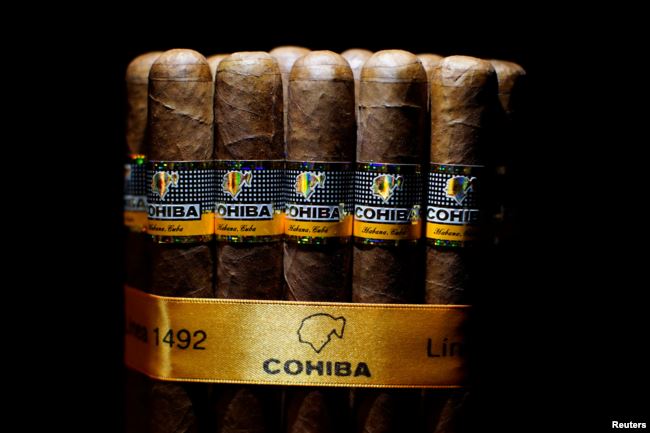
The United States is the biggest market worldwide for cigars, but its trade embargo on Cuba prevented the Caribbean island from selling its Cohibas, Montecristos and other legendary brands there for more than half a century.

U.S. cigar aficionados have long had to make do with non-Cuban brands, such as those made in Honduras, Nicaragua or the Dominican Republic.

Despite his drive to normalize U.S.-Cuban relations, Democratic President Obama was unable to lift the trade embargo, which requires action by the Republican-controlled Congress.

He did, however, ease some trade and travel regulations since announcing the detente in December 2014. These proved to be a gamechanger for U.S. cigar lovers, Habanos festival participants said.

Obama a boon to cigar lovers

Cohiba cigars are seen on display at the 19th Habanos Festival in Havana, Cuba, Feb. 27, 2017. Visitors buy thousands of cigars.

Cohiba cigars are seen on display at the 19th Habanos Festival in Havana, Cuba, Feb. 27, 2017. Visitors buy thousands of cigars.

Nicholas Syris, who hosts the Atlanta radio show “Smooth Draws” about “the cigar lifestyle,” last year started leading cigar tours to Cuba because of the interest from listeners. Travel had become a lot easier partly because of the re-establishment of commercial flights.

Smoking with other American festivalgoers in the gardens of Havana’s iconic Hotel Nacional overlooking the Caribbean Sea, he said he brought up to 20 aficionados monthly and could not keep up with the demand.

Meanwhile, the fact travelers could now bring back as many Cuban cigars as they wanted was had an impact on the U.S. market, said Rene Castaneda, head of the North American operations of Swiss cigar manufacturer Villiger.

“We are seeing more Cuban cigars in the United States than ever and that hits sales of non-Cuban cigars,” he said.

Syris said some of his tour participants were buying thousands of cigars at a time. In many instances, Habanos stores did not even have enough supply for the demand.

“People reckon they had better buy now because they don’t know if it will be legal next year,” he said. “You just don’t know about tomorrow.”

Agencies/VOA/Internet Photos/Arnoldo Varona/TheCubanHistory.com
THE CUBAN HISTORY, HOLLYWOOD.

FOLLOW US ON TWITTER AND FACEBOOK. THECUBANHISTORY.COM
logo-5-4

AFICIONADOS NORTEAMERICANOS AL CIGARRO LLENAN SUS RESERVAS COMPRANDO TABACO CUBANO.

El aficionado estadounidense Paul Segal dijo que compraría tantas cajas de cigarros como pudiera llevar a casa en caso de que el presidente de los Estados Unidos, Donald Trump, volviera a endurecer los reglamentos sobre los visitantes de la isla comunista.

56FFE496-4164-4342-9101-5F8E2ED96A3B_cx0_cy7_cw0_w1023_r1_s

Segal, que escribe un blog de cigarros llamado Segal and Cigars, dijo que tomó 25 cajas en un viaje el año pasado, poco después de que el ex presidente estadounidense Barack en octubre eliminó el límite de 100 dólares en el valor del ron y los cigarros. Una caja barata de 25 cigarros cuesta alrededor de $ 100.

Trump, que asumió el cargo en enero, ha amenazado con revertir la distensión de Estados Unidos con su antiguo enemigo de la Guerra Fría. Segal y otros visitantes americanos a la isla no se arriesgan y se están abasteciendo.

“Este puede ser el último viaje en el que puedo traer cigarros”, dijo Segal, que tenía varias marcas diferentes que salían de los bolsillos de su camisa de guayabera. “Hasta ahora, sólo tengo alrededor de 10 cajas, pero todavía me quedan cinco días antes de ir a casa”.

6DD8BA2B-8A85-4B78-AFE5-578B68020F34_w650_r0_s

Estados Unidos es el mayor mercado mundial de puros, pero su embargo comercial impidió a la isla caribeña vender sus Cohibas, Montecristos y otras marcas legendarias allí durante más de medio siglo.

Los aficionados a los cigarros estadounidenses han tenido que conformarse con marcas no cubanas, como las hechas en Honduras, Nicaragua o República Dominicana.

A pesar de su intento de normalizar las relaciones entre Estados Unidos y Cuba, el presidente demócrata Obama no pudo levantar el embargo comercial, lo que requiere una acción del Congreso controlado por los republicanos.

Sin embargo, facilitó algunas regulaciones comerciales y de viaje desde que anunció la distensión en diciembre de 2014. Esto resultó ser un riesgo para los amantes de los cigarros estadounidenses, dijeron participantes del festival Habanos.

Obama es una bendición para los amantes del cigarro

Tabacos Cohiba. Los visitantes compraron por miles de reservas esperando suspension. width=

Tabacos Cohiba. Los visitantes compraron por miles de reservas esperando suspension.

Nicolás Syris, que acoge el programa de radio de Atlanta “Smooth Draws” sobre “el estilo de vida de los cigarros”, comenzó el año pasado a viajar a Cuba por el interés de los oyentes. El viaje se había hecho mucho más fácil en parte debido al restablecimiento de los vuelos comerciales.

Fumando con otros espectadores norteamericanos en los jardines del emblemático Hotel Nacional de La Habana, con vistas al mar Caribe, dijo que trajo hasta 20 aficionados mensuales y no pudo estar a la altura de la demanda.

Mientras tanto, el hecho de que los viajeros pudieran devolver tantos cigarros cubanos como quisieran tuvo un impacto en el mercado estadounidense, dijo Rene Castaneda, jefe de operaciones norteamericanas del fabricante suizo de cigarros Villiger.

“Estamos viendo más cigarros cubanos en Estados Unidos que nunca y eso golpea las ventas de cigarros no cubanos”, dijo.

Syris dijo que algunos de sus participantes del tour estaban comprando miles de cigarros a la vez. En muchos casos, las tiendas Habanos ni siquiera tenían suficiente oferta para la demanda.

“La gente cree que es mejor comprar ahora porque no sabe si será legal el próximo año”, dijo. “Simplemente no sabes acerca del mañana.”

Agencias / VOA / Fotos de Internet / Arnoldo Varona / TheCubanHistory.com
LA HISTORIA CUBANA, HOLLYWOOD.

PlayaDelNorte-CayoParedon-May2014

– ANTONIO PROHIAS, creator of the satirical cartoons “Spy vs Spy”. Videos. * ANTONIO PROHIAS, creador de los satíricos cartones fílmicos “El Hombre Siniestro”. Videos.

Antonio Prohias

Antonio Prohias

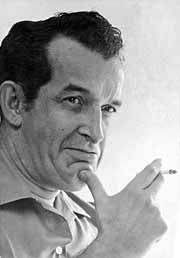
Antonio Prohias was born in Cienfuegos, Cuba on January 17, 19221, and became interested in drawing at an early age. His satirical drawings, which mostly poked fun at Castro, appeared in many Cuban political magazines during the 1950s.

His critical views of the government made him many enemies, and made life difficult for him.

images

On May 1, 1960, just three days before Castro seized control of the country’s presses, Prohias fled the country to avoid arrest. He arrived in the US virtually penniless. While working a series of menial jobs, Prohias made the rounds of the local magazines with his work.

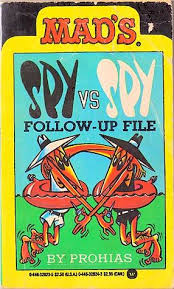
It was in 1961 that Prohias dropped off a short cartoon at the offices of MAD Magazine. The cartoon featured a pair of odd looking spies, both identical except for their coloring. MAD ran the cartoon in the January, 1961 issue, and “Spy vs Spy” was born.

Prohias continued to draw the strip for MAD until 1990, when poor health forced him to retire. By then, he’d drawn over 500 strips featuring the pointy-nosed two-some.

Prohias died in February 24, 1998 of lung cancer, but “Spy vs Spy” lives on both in animated form (on “MAD TV”) and in a Sunday comic strip.

Agencies/IMDb/Mike Konczewski/Internet Photos/YouTube/Arnoldo Varona/TheCubanHistory.com
THE CUBAN HISTORY, HOLLYWOOD.

FOLLOW US ON TWITTER AND FACEBOOK. THECUBANHISTORY.COM
logo-5-4

ANTONIO PROHIAS, CREADOR DE LOS CARTONES SATÍRICOS FÍLMICOS “EL HOMBRE SINIESTRO”.

Antonio Prohias nació en Cienfuegos, Cuba el 17 de enero de 1922, y se interesó por el dibujo a una edad temprana. Sus dibujos satíricos, que en su mayoría burlaban a Castro, aparecieron en muchas revistas políticas cubanas durante los años cincuenta.

Antonio Prohias

Antonio Prohias

Sus opiniones críticas del gobierno le hicieron muchos enemigos, y le hicieron la vida difícil para él.

El 1 de mayo de 1960, apenas tres días antes de que Castro tomara el control de las prensas del país, Prohias huyó del país para evitar ser arrestado. Llegó a los Estados Unidos virtualmente sin dinero. Mientras trabajaba en una serie de trabajos insignificantes, Prohias hizo las rondas de las revistas locales con su trabajo.

images

Fue en 1961 que Prohias dejó una pequeña caricatura en las oficinas de MAD Magazine. La caricatura ofreció un par de espiar impares, ambos idénticos a excepción de su colorante. MAD dirigió la caricatura en la edición de enero de 1961, y “Spy vs Spy” nació.

Prohias continuó dibujando la tira para MAD hasta 1990, cuando la mala salud lo obligó a retirarse. Para entonces, había dibujado sobre 500 tiras que ofrecían el two-some puntiagudo.

Prohias murió el 24 de febrero de 1998 de cáncer de pulmón, pero “Spy vs Spy” vive tanto en forma animada (en “MAD TV”) como en un cómic de domingo.

Agencias / IMDb / Mike Konczewski / Fotos de Internet / YouTube / Arnoldo Varona / TheCubanHistory.com
LA HISTORIA CUBANA, HOLLYWOOD.

CUBA PHOTOS.

CUBA PHOTOS.