< (OPINION) "More Was Lost in Cuba", A Painful Sentence...

florida-3(OPINIÓN) “MAS SE PERDIÓ EN CUBA”, UNA FRASE DOLOROSA..

En el año de 1868 se iniciaron las guerras independentistas cubanas. El Padre de la Patria, Carlos Manuel de Céspedes, liberó a sus esclavos y los sumó a la lucha contra el colonialismo. Asi se iniciaba la debacle del Imperio Español.

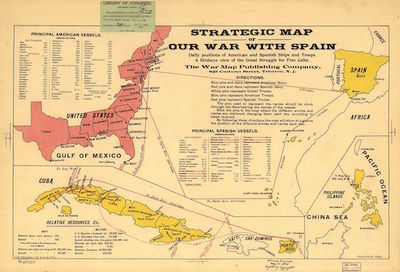
Después de décadas de guerras en América, el ejército español intentaba proteger su colonia más preciada, Cuba. Pero no previeron la fuerza que ganaba Estados Unidos y su capacidad estratégica, tanto desde lo político, como desde lo militar.

El 15 febrero de 1898 estalló en la Bahía de La Habana el buque estadounidense Maine, lo que se interpretó como un ataque de España. Este fue el argumento necesario para que Estados Unidos tomara partido en el conflicto cubano – español.
400px-Mapa_estrategico_guerra_hispano_cubano

Estados Unidos impulsó una ofensiva militar que forzó a España a firmar un documento de paz conocido como Tratado de Paris. En esta reunión no participaron los cubanos. Fue un acuerdo al margen de quienes verdaderamente habían ganado la guerra, los mambises.

A cambio de 20 millones de dólares España renunció a Cuba, Filipinas, Puerto Rico y Guam. Era la única salida coherente para evitar una guerra con la mayor potencia militar. De esta forma además cerraba un largo período de desgaste económico y conservaba otros territorios estratégicos (Islas Canarias, las Islas Baleares y Guinea Ecuatorial).

Pero la paz pactada con un par de firmas, estadounidenses y españolas había costado sangre, sudor y lágrimas a dos pueblos con una historia común desde 1492. España y Cuba habían perdido lo más valioso de una nación, miles de ciudadanos.

Quizás por eso en España se suele usar la frase “más se perdió en Cuba” cuando las cosas no salen como se espera. Es un modo de restar peso, o significación a una pérdida y tiene, desde luego, un fundamento histórico en las guerras de independencia cubanas.
download (2)

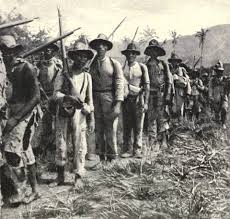
Las bajas ocasionadas en combate, por enfermedad, incluso por la hambruna, fueron muchas para ambos bandos. Quedaron en la memoria colectiva y la historia les hace justicia según desde dónde se mire el conflicto. Se dice que, al terminar la guerra, los supervivientes españoles que volvían a sus tierras regresaban cantando, por la felicidad de no haber muerto en combate. En cambio, los mambises fueron desarmados y retirados con un salario irrisorio, cosa con la que no quedaron muy conformes, según los historiadores cubanos.

El resultado de las guerras independentistas fue medio país devastado, cañaverales quemados, cientos de poblaciones rurales en la más absoluta miseria, insalubridad y hambruna. Así entró Cuba al siglo XX. España, por su parte, había perdido una significativa área de su territorio y su mayor fuente de ganancias económicas.

la-prdida-de-cuba-1-728

“MAS SE PERDIO EN CUBA”

Pasaron los años y hubo otra vuelta a Cuba de españoles, en este caso huyendo de las penurias de la Guerra Civil (1936-1939). En la Isla encontraron una continuidad familiar, social y cultural que les permitía reordenar su vida fuera de España. Los vínculos entre ambos pueblos están sobradamente argumentados por historiadores con distintas visiones. En el consenso común está el hecho de que los períodos entre 1868 -1878 y 1895-1898, fueron una época de pérdidas de todo tipo para ambos bandos.

Cubanos y españoles mantenemos la frase “más se perdió en Cuba”. Unas veces con matiz jocoso, como de quien minimiza un tema; y otras con un poco de dolor, de quien recuerda que no hay nada más valioso que la vida, la paz y la independencia.

logo

images(OPINION) “MORE WAS LOST IN CUBA”, A PAINFUL SENTENCE …

In the year 1868, the Cuban independence wars began. The Father of the Nation, Carlos Manuel de Céspedes, freed his slaves and added them to the fight against colonialism. Thus began the debacle of the Spanish Empire.

After decades of wars in America, the Spanish army tried to protect its most precious colony, Cuba. But they did not foresee the strength that the United States was winning and its strategic capacity, both politically and militarily.

On February 15, 1898, the American ship Maine exploded in the Bay of Havana, which was interpreted as an attack by Spain. This was the necessary argument for the United States to take sides in the Cuban – Spanish conflict.

The United States launched a military offensive that forced Spain to sign a peace document known as the Treaty of Paris. The Cubans did not participate in this meeting. It was an agreement on the margin of those who had truly won the war, the Mambises.

In exchange for 20 million dollars, Spain renounced Cuba, the Philippines, Puerto Rico, and Guam. It was the only coherent way out to avoid a war with the greatest military power. In this way, it also closed a long period of economic decline and retained other strategic territories (Canary Islands, the Balearic Islands, and Equatorial Guinea).

download (3)

But the peace agreed with a couple of firms, Americans and Spanish had cost blood, sweat and tears to two peoples with a common history since 1492. Spain and Cuba had lost the most valuable of a nation, thousands of citizens.

Maybe that’s why in Spain the phrase “most lost in Cuba” is usually used when things do not go as expected. It is a way of subtracting weight, or significance to a loss and has, of course, a historical foundation in the Cuban wars of independence.

The losses caused in combat, by disease, even by famine, were many for both sides. They remained in the collective memory and history does them justice according to where the conflict is viewed from. It is said that, at the end of the war, the Spanish survivors who returned to their lands returned singing, for the happiness of not having died in combat. On the other hand, the Mambises were disarmed and retired with a derisory salary, something they did not like very much, according to Cuban historians.

The result of the independence wars was half devastated country, burned cane plantations, hundreds of rural populations in the most absolute misery, insalubrity and famine. This is how Cuba entered the 20th century. Spain, on the other hand, had lost a significant area of ​​its territory and its greatest source of economic gain.

florida-3

“MORE WAS LOST IN CUBA”

Years passed and there was another return to Cuba of Spaniards, in this case fleeing from the hardships of the Civil War (1936-1939). In the Island, they found a family, social and cultural continuity that allowed them to reorder their life outside of Spain. The links between both peoples are amply argued by historians with different visions. In the common consensus is the fact that the periods between 1868 -1878 and 1895-1898, were a time of losses of all kinds for both sides.

Cubans and Spaniards keep the phrase “more was lost in Cuba.” Sometimes with a jocular nuance, like someone who minimizes a topic; and others with a little pain, of those who remember that there is nothing more valuable than life, peace, and independence.

Agencies/ CiberCuba/ Gretchen Schez/ Internet Photos/ Arnoldo Varona/ www.TheCubanHistory.com
THE CUBAN HISTORY, HOLLYWOOD.


1800px-Cuba_Banner

logo

< WHEN BABE RUTH Visitó a Cuba. Photos.

downloadCUANDO BABE RUTH VISITÓ A CUBA. PHOTOS.

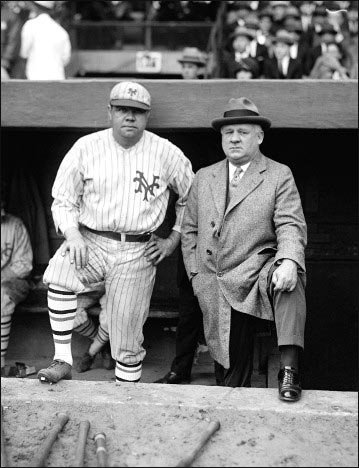
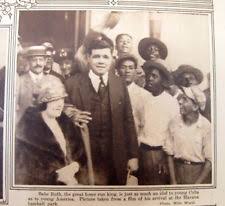
Babe Ruth era la verdadera atracción del béisbol. Había propinado 54 jonrones en la Liga Americana cuando el empresario cubano Abel Marrero lo trajo a Cuba con intención de levantar el interés por ese deporte en la Isla. Corría el mes de octubre de 1920, cuando contrató a los Gigantes, un equipo de Grandes Ligas, para una serie de 20 juegos con los clubes Habana y Almendares. A los Gigantes les sumó a Babe Ruth como una atracción más. Ganaría 2 000 dólares por encuentro.

Cuando el estelar jonronero llegó a Cuba, ya los topes habían comenzado, por lo que debía participar en nueve encuentros. De ellos, uno se suspendió. Se jugaba entonces en el Almendares Park, situado en el área que ocupa la Terminal de Ómnibus de La Habana. Los partidos se celebraban a la luz del día. No había iluminación en el estadio para juegos nocturnos, y los encuentros de béisbol tenían lugar por las mañanas (el horario menos favorecido), porque las tardes se destinaban al fútbol. El 30 de octubre Babe debutó en el Almendares Park.

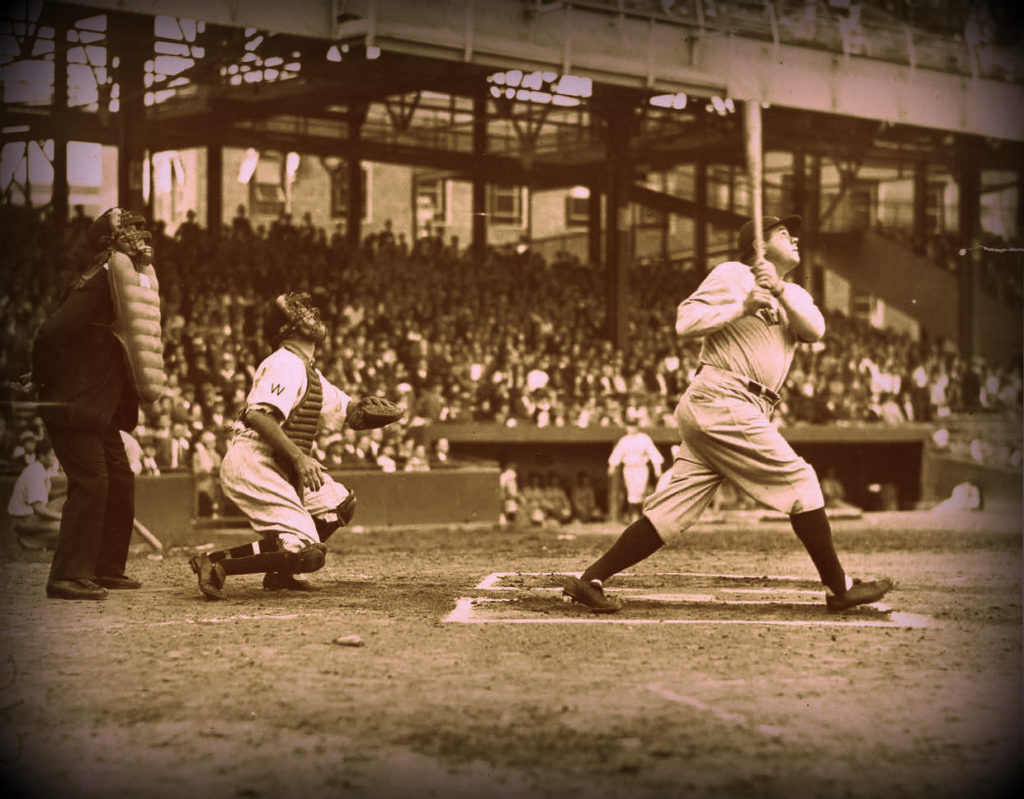
Babe Ruth, dice el cronista Elio Menéndez al retomar fuentes de la época, decepcionó a los habaneros. Solo logró conectar dos jonrones. Bateó para 345. Cronistas de entonces explicaban que los lanzadores, temerosos del poder de Babe, lo trabajaban con bolas malas, y que él, con la ilusión de complacer al público, les tiraba a todas.

babe-ruth-at-bat1

Hubo juegos peores que otros, como el quinto encuentro, el 6 de noviembre de 1920. Cristóbal Torrente, un negro cienfueguero, conectó tres jonrones en el juego, y Babe no pudo batear imparable alguno a Isidro Fabré, «el Catalán». Pero al final, Babe cobró los 2 000 dólares convenidos, y Torrente 200 pesos, que sus compañeros le recolectaron al pasar la gorra entre la fanaticada.

Se dice que cuando los periodistas fueron a entrevistarlo, Torrente les dijo:

—No, a mí no. Entrevístenlo a él, que es la estrella y está de paso. Nosotros podemos conversar otro día cualquiera.

Terminados los encuentros en La Habana, fue invitado a jugar en Santiago de Cuba. Al efecto se constituyó una novena, a la que se le dio el nombre de Estrellas de Babe Ruth. Se jugarían solo dos juegos. Pero el primero de ellos fue fatal para el norteamericano y su equipo. Pablo Guillén lo ponchó tres veces y dio lechada a los contrarios.

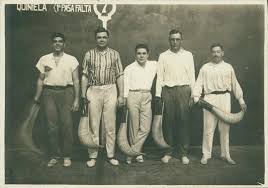
Todo lo que ganó en La Habana, y más también, lo perdió en el frontón jai alai y en el hipódromo Oriental Park. En el hotel Casagranda, de Santiago, gastó una fortuna en los dados.

Pero Babe se sentía encantado en Cuba e insistió en quedarse por más tiempo. Pero de una opinión muy distinta fueron su esposa y el representante que lo acompañaban.

En La Habana, Babe se había alojado en la habitación 216 del Hotel Plaza.

logo

RuthMcGrawWHEN BABE RUTH VISITED CUBA. PHOTOS

Babe Ruth was the real attraction of baseball. He had hit 54 homers in the American League when Cuban businessman Abel Marrero brought him to Cuba with the intention of raising interest in that sport on the Island. It was October of 1920, when he hired the Giants, a Major League team, for a series of 20 games with the Habana and Almendares clubs. To the Giants, he added Babe Ruth as one more attraction. I would earn $ 2,000 per encounter.

When the star jonronero arrived in Cuba, the caps had already begun, so he had to participate in nine games. Of them, one was suspended. It was played at the Almendares Park, located in the area occupied by the Bus Terminal in Havana. The matches were held in the light of day. There was no lighting in the stadium for night games, and the baseball games took place in the mornings (the least favored schedule), because the afternoons were for football. On October 30, Babe debuted at Almendares Park.

download (1)

Babe Ruth, says the chronicler Elio Menéndez when he picked up sources of the time, disappointed the people of Havana. He only managed to connect two homers. He hit for 345. Chroniclers at the time explained that the pitchers, fearful of Babe’s power, worked with bad balls, and that he, with the illusion of pleasing the public, threw them all.

There were worse games than others, like the fifth game, on November 6, 1920. Cristóbal Torrente, a black man from Cienfuegos, hit three homers in the game, and Babe could not hit any of Isidro Fabré, “el Catalán”. But in the end, Babe collected the agreed 2000 dollars, and Torrente 200 pesos, that his companions collected him when passing the cap among the fans.

It is said that when the journalists went to interview him, Torrente told them:

-No, not to me. Interview him, who is the star and is passing through. We can converse on any other day.

babe_ruth_

After the meetings in Havana, he was invited to play in Santiago de Cuba. To this end, a novena was constituted, which was given the name of Babe Ruth Stars. Only two games would be played. But the first one was fatal for the American and his team. Pablo Guillen struck out three times and gave opposites.

Everything he won in Havana, and more also, he lost in the jai alai fronton and the Oriental Park racetrack. At the Hotel Casagranda, in Santiago, he spent a fortune on dice.

But Babe was delighted in Cuba and insisted on staying for longer. But from a very different opinion were his wife and the representative who accompanied him.

In Havana, Babe had stayed in room 216 of the Hotel Plaza.

Agencies/ RHC/ Ciro Bianchi/ Internet Photos/ Arnoldo Varona/ www.TheCubanHistory.com
THE CUBAN HISTORY, HOLLYWOOD.
cuba-ferries-2 (1)

logo

< INCREASES IN CUBA the Invasion of the Destructive African Giant Snail. PHOTOS.

1-s2.0-S0001706X18302821-fx1AUMENTA LA INVASION DEL DESTRUCTIVO CARACOL GIGANTE AFRICANO EN CUBA.

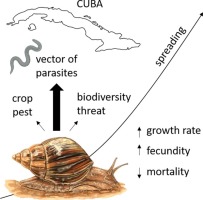
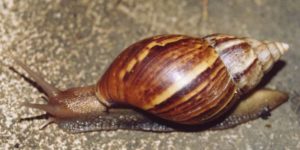
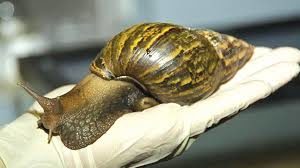
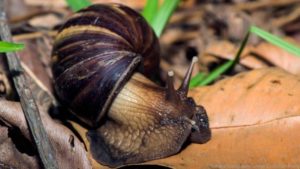
Las autoridades cubanas lideran una campaña para eliminar al caracol gigante africano (Achatina fulica), una especie altamente invasora que en apenas cinco años se ha convertido en una verdadera plaga en la isla.

El molusco, que apareció en la isla en junio de 2014 en uno de los municipios periféricos de La Habana, está presente en la actualidad en 12 de las 15 provincias cubanas.

Para su enfrentamiento, el Gobierno creó un grupo estatal de control del caracol, que encabeza la Dirección Nacional de Sanidad Vegetal del Ministerio de la Agricultura (MINAGRI) e integran expertos de las carteras de Salud Pública, Educación, Ciencia, Tecnología y Medio Ambiente. El subdirector de Sanidad Vegetal, Ariel Castillo, dijo esta semana a la prensa local que la propagación del molusco no se ha enmarcado en áreas agrícolas, sino en asentamientos poblacionales, sitios albañales y laderas de ríos, o sea en lugares húmedos, donde están creadas las condiciones para su hábitat. Castillo precisó que la capital de la isla tiene la situación más compleja, pues el caracol está presente en todos sus 15 municipios, por lo que existe un plan de acción abarcador, para enfrentar la diseminación del animal.

Caracol-gigante-africano-720x466

Se supone que el animal fue introducido en la isla para la práctica de religiones afrocubanas y después se extendió gracias a sus características hermafroditas que le permiten poner huevos a los tres meses de nacido y después cada 60 días, con lo que llegan a depositar en la tierra más de 1.000 huevos por año.

En la isla no hay controladores biológicos naturales para enfrentar al caracol, que además tiene una esperanza de vida que ronda los nueve años. En relación con la salud humana, ese molusco es portador de parásitos, como el strongyloides stercorialis, que produce enfermedades que pueden ser mortales como la meningoencefalitis y la estrongiloidiasis, entre otras.

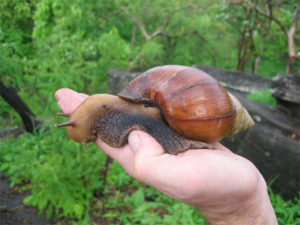
El temido caracol, que además causa daños a la vegetación, puede alcanzar los 30 centímetros de largo y se alimenta fundamentalmente de hojas de plantas y residuos orgánicos, aunque también come animales muertos, incluyendo a los de su propia especie.

El Instituto de Investigaciones de Sanidad Vegetal (INISAV) de La Habana emitió indicaciones para que la población contribuya al control y eliminación del molusco, que es considerado como una de las 100 especies exóticas invasoras más dañinas del mundo.

caracol3

“Una de las medidas consiste en la destrucción de la concha y cerrarla herméticamente en una bolsa que pudiera enterrarse”, dijo a la prensa local el especialista en Entomología y Malacología Agrícola del INISAV, Michel Matamoros. El especialista añadió que de forma alternativa “puede quemarse o sumergirla en una solución de sal o cal al tres por ciento por 24 horas y luego sepultarla”.

Matamoros advirtió, “no deben ser arrojados vivos en ríos, solares yermos, calles o en la basura”. Tampoco consumirlos, comercializarlos, dispersarlos o usarlos como carnada, ofrenda a deidades afrocubanas u otros usos.

El caracol gigante africano es originario del este de África, especialmente de zonas de Kenia y Tanzania, aunque se ha ido extendiendo por Asia y América.

La Unión Internacional para la Conservación de la Naturaleza lo considera entre las 100 especies exóticas invasoras más destructivas y dañinas del mundo, pues sus características fisiológicas y morfológicas le confieren resistencia para sobrevivir en cualquier ambiente y alimentarse especialmente de desechos.

logo

download (4)INCREASES THE INVASION OF THE DESTRUCTIVE AFRICAN GIANT SNAIL IN CUBA.

Cuban authorities are leading a campaign to eliminate the giant African snail (Achatina fulica), a highly invasive species that in just five years has become a veritable plague on the island.

The mollusk, which appeared on the island in June 2014 in one of the peripheral municipalities of Havana, is currently present in 12 of the 15 Cuban provinces.

For its confrontation, the Government created a state snail control group, headed by the National Directorate of Plant Health of the Ministry of Agriculture (MINAGRI), and includes experts from the Public Health, Education, Science, Technology and Environment portfolios. The deputy director of Plant Health, Ariel Castillo, said this week to the local press that the mollusk’s propagation has not been framed in agricultural areas, but in population settlements, sewage sites and river slopes, in humid places, where they have created the conditions for their habitat. Castillo said that the island’s capital has the most complex situation because the snail is present in all 15 municipalities, so there is a comprehensive plan of action to deal with the spread of the animal.

It is assumed that the animal was introduced to the island for the practice of Afro-Cuban religions and then spread thanks to its hermaphrodite characteristics that allow it to lay eggs at three months of age and then every 60 days, with which they deposit in the land more than 1,000 eggs per year.

On the island, there are no natural biological controllers to face the snail, which also has a life expectancy of around nine years. In relation to human health, this mollusk is a carrier of parasites, such as Strongyloides stercobilin, which produces deadly diseases such as meningoencephalitis and strongyloidiasis, among others.

The dreaded snail, which also causes damage to vegetation, can reach 30 centimeters in length and is mainly fed on plant leaves and organic waste, but also eats dead animals, including those of its own species.

Giant Land Snail October 2011 Florida

The Plant Health Research Institute (INISAV) of Havana issued indications for the population to contribute to the control and elimination of the mollusk, which is considered one of the 100 most harmful invasive alien species in the world.

“One of the measures consists of destroying the shell and closing it tightly in a bag that could be buried,” the specialist in Entomology and Agricultural Malacology at INISAV, Michel Matamoros, told the local press. The specialist added that alternatively “can be burned or submerged in a solution of salt or lime at three percent for 24 hours and then bury it.”

Matamoros warned, “they should not be thrown alive in rivers, wastelands, streets or garbage.” Neither consume them, market them, disperse them or use them as bait, offering to Afro-Cuban deities or other uses.

The giant African snail is native to eastern Africa, especially in areas of Kenya and Tanzania, although it has spread to Asia and America.

The International Union for the Conservation of Nature considers it among the 100 most destructive and harmful invasive alien species in the world because its physiological and morphological characteristics give it resistance to survive in any environment and feed especially on waste.

Agencies/ Xinhua/ Raúl Menchaca/ Extractos/ Excerpts/ Internet Photos/ Arnoldo Varona/ www.TheCubanHistory.com
THE CUBAN HISTORY, HOLLYWOOD.
3.3-Ciudad

logo