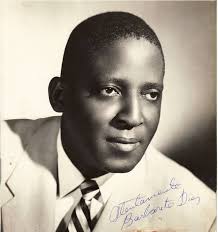
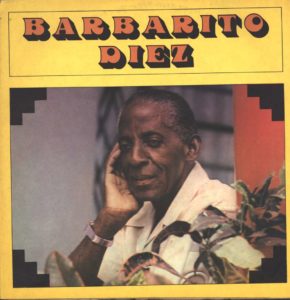
– BARBARITO DIEZ, Singer and Cuban Legend Known as “The Voice of Danzón”. VIDEOS.

downloadBARBARITO DIEZ, CANTANTE Y LEYENDA CUBANA CONOCIDO COMO “LA VOZ DEL DANZÓN”.

Una venerada y certificada leyenda de la música cubana, Bárbaro Diez Junco representa al mejor vocalista romántico masculino en la historia del danzón. Como estilista relajado pero romántico, tenía una voz tenor amigable con una dicción correcta y un sentido fácil de sentir, lo que evitó que la música tradicional cubana fuera invadida por pálidas imitaciones de cantantes de ópera masculinos a principios del siglo XX.

Barbaro Diez Junco nació en Bolondrón, Provincia de Matanzas el 4 de diciembre de 1909, Barbarito fue el rey de la música romántica en Cuba, y con sus canciones y danzones se enamoraron tres o cuatro generaciones de cubanos. Nunca será suficientemente homenajeado y recordado por quienes gusten de la música de la Isla, y vivan dentro o fuera de Cuba. Nadie en el mundo, ningún cantante de ningún país, se parece a Barbarito ni posee su melodía, su afinación perfecta, su musicalidad absoluta en canciones tan hermosas como Las perlas de tu boca, de Eliseo Grenet, o Si llego a besarte, de Luis Casas Romero.

A finales de los años veinte ya se le podía escuchar cantando en decenas de fiestas públicas y bailables. Barbarito fue de los pocos intérpretes que llevó su arte por toda la Isla y cantó en los más recónditos lugares, desde sus inicios en el canto, allá en el batey del central azucarero Manatí, el pueblo donde creció.

La larguísima carrera de Barbarito Diez toma un giro más profesional cuando formó el trío Los Gracianos, luego llamado Grupo Selecto, con el trovador Graciano Gómez y el trecero Isaac Oviedo. Canciones de Graciano Gómez como ‘Yo sé de una mujer’ y ‘En falso’, serían colocadas por el cantante entre lo mejor de la música cubana de esa época.

https://youtu.be/pWWthL2tKUQ

El Grupo Selecto, rebautizado como Quinteto Matancero, era punto fijo en el Café Vista Alegre, base de operaciones de los trovadores habaneros a lo largo de los años treinta y cuarenta. En ese lugar, Barbarito aprendió muchísimo de Sindo Garay y del maestro de la armonía Vincente González Rubiera, conocido artísticamente como Guyún. Allí lo conoció el famoso pianista danzonero Antonio María Romeu.

A partir de 1935 ingresó como voz solista en la orquesta del director y arreglista Antonio María Romeu. Con esta orquesta Barbarito interpretó danzones, sones y boleros, por más de cinco décadas, incluso después de la muerte del director, en 1955. Grandes éxitos fueron Boda gris, de Plácido Acevedo; Te odio, de Félix B. Caignet.

En la segunda mitad de los años treinta, Barbarito Diez, como voz solista del a orquesta de Antonio María Romeu, devino ícono obligado en La Habana romántica de esa década. Juntos recrearon temas que pertenecen a la antología de la música cubana: ‘Muñeca de cristal’ y ‘Se fue’, de Ernesto Lecuona; ‘Yo reiré cuando tú llores’, de Alberto Villalón; ‘La guinda’, de Eusebio Delfín; o ‘La Mora’, de Eliseo Grenet.

En los años cincuenta tiene lugar una verdadera explosión discográfica en la carrera del cantante, pues siete álbumes con la orquesta de Romeu, y dos discos sencillos junto al Conjunto Continental. Desde la segunda mitad de los años cincuenta, la antigua orquesta de Antonio María Romeu toma el nombre de Barbarito Diez y su orquesta y otros éxitos se incorporaron a su extenso repertorio: El amor de mi bohío, de Julio Brito; Tú no comprendes y Lamento borincano, de Rafael Hernández; Mujer, de Agustín Lara, y Esas no son cubanas, de Ignacio Piñeiro.

Barbarito fue de los cantantes de enorme prestigio antes de la Revolución que se quedaron en Cuba. En 1976, el ICAIC le dedica el documental Barbarito Diez, de Santiago Villafuerte, que reconocía sus medulares aportes a la música cubana. A lo largo de los años sesenta y setenta abundaban sus presentaciones en musicales de la televisión, Barbarito devino el más sólido baluarte de cubanía en términos musicales.

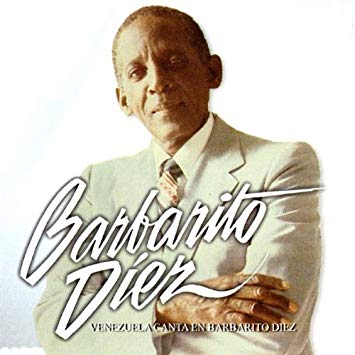
En 1984, con cincuenta años de exitosa carrera en sus espaldas, su popularidad reverdeció, en Cuba y otros países de América Latina, cuando grabó en Venezuela un LP de canciones con guitarras acompañado por la Rondalla Venezolana. Esta producción incluyó clásicos como Frenesí, Caballo viejo, Idolatría y Arroyito de mi Pueblo.

En 2007 la EGREm lo incluye en su prestigiosa serie Las voces del siglo, y al año siguiente, en las notas al disco Antonio María Romeu, El mago de las teclas, editado por la SGAE, el periodista Jordi Pujol asegura que Barbarito Diez poseía una voz «insólitamente hermosa».

La XV edición del Festival de Música Popular Barbarito Diez está ocurriendo ahora mismo en Las Tunas y Manatí hasta el 4 de diciembre, cuando se cumplirán 110 años del natalicio. En el Festival se incluye un bailable en la Plaza Cultural de Las Tunas, y también un panel conducido por Pablo Diez, quien dirige la orquesta cuyo nombre honra a su padre.
cayo-santa-maria-copia

* RECOMIENDENOS A SUS AMISTADES * PREFIERA A NUESTROS SPONSORS *

* RECOMIENDENOS A SUS AMISTADES * PREFIERA A NUESTROS SPONSORS *
logo

51woZdeZcpL._SY355_BARBARITO DIEZ, SINGER AND CUBAN LEGEND KNOWN AS “THE VOICE OF THE DANZON”.

A revered and certified legend of Cuban music, Bárbaro Diez Junco represents the best male romantic vocalist in the history of danzón. As a relaxed but romantic stylist, he had a friendly tenor voice with correct diction and an easy sense to feel, which prevented traditional Cuban music from being invaded by pale imitations of male opera singers in the early 20th century.

Barbaro Diez Junco was born in Bolondrón, Matanzas Province on December 4, 1909, Barbarito was the king of romantic music in Cuba, and three or four generations of Cubans fell in love with his songs and danzones. It will never be sufficiently honored and remembered by those who like the music of the Island and live inside or outside Cuba. No one in the world, no singer from any country, resembles Barbarito or possesses his melody, his perfect tuning, his absolute musicality in such beautiful songs as The pearls of your mouth, by Eliseo Grenet, or If I get to kiss you, by Luis Romero houses.

At the end of the twenties, he could already be heard singing in dozens of public and danceable parties. Barbarito was one of the few performers who took his art all over the Island and sang in the most remote places, from his beginnings in singing, there in the batey of the Manatí sugar mill, the town where he grew up.

The very long career of Barbarito Diez takes a more professional turn when he formed the Los Gracianos trio, then called Grupo Selecto, with the troubadour Graciano Gómez and the thirteen Isaac Oviedo. Songs of Graciano Gómez as ‘I know of a woman’ and ‘In false’, would be placed by the singer among the best of Cuban music of that time.

The Select Group, renamed Quinteto Matancero, was a fixed point at Café Vista Alegre, the base of Havana troubadour operations throughout the thirties and forties. In that place, Barbarito learned a lot from Sindo Garay and the harmony master Vincente González Rubiera, artistically known as Guyún. There he met the famous Danish pianist Antonio María Romeu.

From 1935 he entered as soloist voice in the orchestra of the conductor and arranger Antonio María Romeu. With this orchestra, Barbarito performed dances, sounds, and boleros, for more than five decades, even after the director’s death, in 1955. Big hits were Gray Wedding, by Plácido Acevedo; I hate you, by Felix B. Caignet;

In the second half of the thirties, Barbarito Diez, as a soloist of the orchestra of Antonio María Romeu, became an obligatory icon in the romantic Havana of that decade. Together they recreated themes that belong to the anthology of Cuban music: ‘Muñeca de cristal’ and ‘Se se’ by Ernesto Lecuona; ‘I will laugh when you cry’, by Alberto Villalón; ‘La icing’, by Eusebio Delfín; or ‘La Mora’, by Eliseo Grenet.

71r2dS+uvfL._SS500_

In the fifties, a real record explosion takes place in the singer’s career, as seven albums with the orchestra of Romeu, and two simple albums with the Continental Ensemble. From the second half of the fifties, the old orchestra of Antonio María Romeu takes the name of Barbarito Diez and his orchestra and other successes were incorporated into his extensive repertoire: The love of my bohío, by Julio Brito; You do not understand and Lamento borincano, by Rafael Hernández; Woman, by Agustín Lara, and Those are not Cuban, by Ignacio Piñeiro.

Barbarito was one of the singers of great prestige before the Revolution who stayed in Cuba. In 1976, ICAIC dedicated the documentary Barbarito Diez, by Santiago Villafuerte, that recognized his core contributions to Cuban music. Throughout the sixties and seventies his presentations in television musicals abounded, Barbarito became the most solid bastion of Cuban in musical terms.
155514a

In 1984, with fifty years of a successful career on his back, his popularity grew green in Cuba and other Latin American countries, when he recorded in Venezuela an LP of songs with guitars accompanied by the Venezuelan Rondalla. This production included classics such as Frenzy, Old Horse, Idolatry and Arroyito de mi Pueblo.

In 2007 the EGREm includes it in its prestigious series The Voices of the Century, and the following year, in the notes to the album Antonio María Romeu, The Wizard of the Keys, edited by the SGAE, the journalist Jordi Pujol assures that Barbarito Diez had an “Unusually beautiful” voice.

The XV edition of the Barbarito Diez Popular Music Festival is happening right now in Las Tunas and Manatí until December 4, when 110 years of birth will be celebrated. The Festival includes the dance in the Plaza Cultural de Las Tunas, and also a panel conducted by Pablo Diez, who conducts the orchestra whose name honors his father.

Agencies/ Wiki/ CiberCuba/ Joel del Río/ Extractos/ Excerpts/ Internet Photos/ YouTube/ Arnoldo Varona/ www.TheCubanHistory.com
THE CUBAN HISTORY, HOLLYWOOD.
varadero_103885463

logo

– CUBA, Museum of Old Foreign Cars, the Now Famous and Still Running “ALMENDRONES”. Videos.

automovilismo-cuba-parecia-agonizar-prohibicionesCUBA, MUSEO DE VIEJOS AUTOMOBILES EXTRANJEROS, LOS AHORA FAMOSOS Y TODAVIA FUNCIONANDO “ALMENDRONES”. VIDEOS.

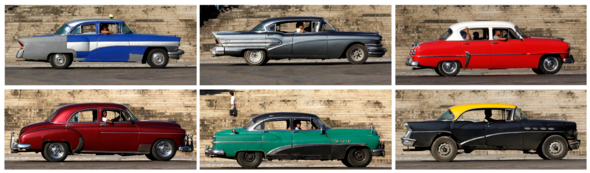
Nadie es capaz de precisar cuántos miles de autos antiguos ruedan por las calles cubanas, donde, lo mismo en el extremo oriental que en la parte oeste de la isla, todavía están en uso modelos con más de 60 años de vida.

Las cifras varían desde los 60.000 hasta 75.000, pero lo único cierto es que en la isla conviven tres generaciones de automóviles, desde los norteamericanos, de los años 40 y 50 del pasado siglo, hasta las más modernas marcas de la contemporaneidad, pasando por una flotilla de autos soviéticos de las marcas Lada y Moscovicht.

Desde que Washington decretó el bloqueo contra Cuba a la isla no pueden entrar nuevos vehículos provenientes de Estados Unidos, pero los viejos autos han sobrevivido gracias al ingenio de los cubanos.

Sin embargo, algunos piensan que esos vehículos desaparecerán del paisaje urbano cubano.”Tienen que desaparecer porque es ilógico que ese tipo de automóvil todavía ruede”, dijo Aníbal Ibáñez, dueño de un taller de mecánica en La Habana.

Los cubanos han logrado mantener esos viejos autos con piezas que fueron ideadas para otras máquinas o concebidas para otros usos, y las que no han logrado adaptar las fabrican de manera artesanal.

Pero parece que tienen los días contados los “Almendrones”, como son conocidos los viejos autos en aparente alusión a que muchos tienen la forma de una almendra.”A la edad que tengo y las situaciones que se me avecinan, lo entrego al estado para que lo haga chatarra y lo venda. Para mí sería la solución más lógica para no seguir arrastrando esa cantidad de carros viejos”, afirmó Ibáñez.

Algunos piensan que esos carros pudieran venderse, pero tampoco parece que los autos antiguos tendrán mucha salida en un eventual mercado si llegasen a normalizar las relaciones con Estados Unidos.”Cuando hablas con personas que tienen esos carros, ellos plantean que iban a tener un valor extraordinario si los americanos venían, y eso es absurdo”, aseguró el avezado mecánico.

8299-autos

Otros expertos opinaron que si eso sucede, los potenciales compradores no serán coleccionistas tradicionales, que buscan bajo kilometraje y automóviles en perfectas condiciones, sino personas interesadas en conservar un pedazo de la historia de la isla.

Y es que mientras uno de esos coches antiguos puede parecer auténtico a primera vista, un examen más detallado revelaría drásticas modificaciones internas, que pueden incluir hasta el cambio del motor de gasolina por uno más moderno de diésel. “Como no había piezas originales, hemos tenido que inventar”, indicó Ibáñez.

Pero también poseer esos autos es un orgullo para muchos que se reúnen en el llamado Club de Autos Clásicos “A lo cubano”, que un fin de semana de cada mes realiza exhibiciones públicas de automóviles muy bien conservados. “A lo cubano” es el único club de autos antiguos que aún queda en la Isla y tradicionalmente organiza eventos, que mezclan cultura y deporte.

Alquiler-de-almendrones-y-otro-tipo-de-carros-podrá-ser-pagado-con-bitcoinsa.-1000x600

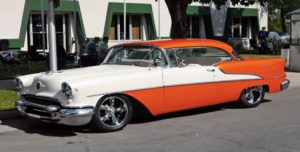
En esas exhibiciones se pueden ver un Mercury Monterrey, un Ford Crown Victoria de 1955, ejemplares de Chevrolet Impala y Corvette, un Cadillac El Dorado, y hasta un Messerschmitt de origen alemán.

Los dueños de esos autos, que los cuidan como a la niña de sus ojos, apuestan a la idea de que sean conservados como atracción turística, algo que ya viene ocurriendo con la compañía Grand Car auspiciada por la Oficina del Historiador de la Ciudad.

Como si fuera poco, en la zona colonial de La Habana está enclavado el ‘Museo del Automóvil’, que tiene con un patrimonio de más de 30 vehículos fabricados entre 1905 y 1989. Aunque la mayoría fueron producidos en Estados Unidos, también se exhiben ejemplares argentinos, españoles, ingleses, italianos y franceses como un Citro “n de 1977 propiedad de Celia Sánchez, ex-asistente de Castro.

cuba-ferries

 * RECOMIENDENOS A SUS AMISTADES  *  PREFIERA A NUESTROS SPONSORS.*

* RECOMIENDENOS A SUS AMISTADES * PREFIERA A NUESTROS SPONSORS.*

logo

Autos-Vintage17CUBA MUSEUM OF OLD FOREIGN CARS, THE NOW FAMOUS AND STILL RUNNING “ALMENDRONES”.

No one is able to specify how many thousands of old cars roll through the Cuban streets, where, the same in the eastern end as in the western part of the island, models with more than 60 years of life are still in use.

The figures vary from 60,000 to 75,000, but the only certain thing is that three generations of cars coexist on the island, from the Americans, from the 40s and 50s of the last century to the most modern brands of contemporary times, passing through a Soviet car fleet of Lada and Moscovicht brands.

Since Washington decreed the blockade against Cuba on the island, new vehicles from the United States cannot enter, but the old cars have survived thanks to the ingenuity of the Cubans.

1544898653-cuba-suspende-desfile-autos-antiguos-almendrones-medio-crisis-transporte-publico

However, some think that these vehicles will disappear from the Cuban urban landscape. “They have to disappear because it is illogical that this type of car still rolls,” said Aníbal Ibáñez, owner of a mechanic’s workshop in Havana.

The Cubans have managed to keep those old cars with parts that were designed for other machines or designed for other uses, and those that have not been able to adapt them manufactured by hand.

But it seems that the “Almendrones” are counted, as old cars are known in the apparent allusion that many have the shape of an almond. “At the age I have and the situations that lie ahead, I deliver it to the state to make it scrap and sell it. For me it would be the most logical solution to not continue dragging that amount of old cars, “said Ibáñez.

0001085476

Some think that these cars could be sold, but neither does it seem that old cars will have much output in an eventual market if they get to normalize relations with the United States. “When you talk to people who have those cars, they suggest that they would have a value extraordinary if the Americans came, and that is absurd, “said the seasoned mechanic.

Other experts were of the opinion that if that happens, potential buyers will not be traditional collectors, looking for low mileage and cars in perfect condition, but people interested in preserving a piece of the island’s history.

Los-popularmente-conocidos-como-Carros-Almendrones.

And while one of those old cars may seem authentic at first glance, a more detailed examination would reveal drastic internal modifications, which may include even changing the gasoline engine for a more modern diesel. “Since there were no original pieces, we had to invent,” Ibáñez said.

But also owning those cars is a pride for many who meet in the so-called Classic Car Club “A lo cubano”, which makes a well-preserved public car show every weekend. “A lo cubano” is the only old car club that still remains on the Island and traditionally organizes events that mix culture and sport.

In those exhibits, you can see a Mercury Monterrey, a 1955 Ford Crown Victoria, copies of Chevrolet Impala and Corvette, a Cadillac El Dorado, and even a Messerschmitt of German origin.

carros-antiguos-cuba

The owners of those cars, who take care of them like the girl in their eyes, bet on the idea that they be preserved as a tourist attraction, something that has already been happening with the Grand Car company sponsored by the Office of the Historian of the City.

As if that were not enough, in the colonial area of ​​Havana is the ‘Automobile Museum’, which has a heritage of more than 30 vehicles manufactured between 1905 and 1989. Although most were produced in the United States, copies are also exhibited Argentines, Spaniards, English, Italians, and French as a Citro “n of 1977 owned by Celia Sánchez, Castro’s former assistant.

Agencies/ RHC/ Pedro M. Otero/ Internet Photos/ Arnoldo Varona/ www.TheCubanHistory.com
THE CUBAN HISTORY, HOLLYWOOD.

cuba-CU (1)

logo

– CAMILA CABELLO, one of the Biggest Pop Stars of Hollywood. VIDEOS.

 CAMILA CABELLO, UNA DE LAS ESTRELLAS POP MAS GRANDES DE HOLLYWOOD.VIDEOS

Karla Camila Cabello Estrabao nació el 3 de marzo de 1997 en La Habana, Cuba, hija de Sinuhe Estrabao y Alejandro Cabello, y creció en la ciudad de Cojímar, en el este de La Habana. Su padre nació en la Ciudad de México y es un mexicano que se mudó a Cuba.

Camila saltó a la fama como miembro del grupo de chicas Fifth Harmony, formado en The X Factor (EE.UU.) En 2012, firmando un contrato discográfico conjunto con Syco Music y Epic Records. Mientras era parte de Fifth Harmony, Cabello comenzó a establecerse como artista solista con el lanzamiento de las colaboraciones “Sé lo que hiciste el verano pasado” con Shawn Mendes y “Cosas malas” con Machine Gun Kelly, esta última llegando al número cuatro en el Billboard Hot 100. Después de dejar el grupo en diciembre de 2016, Cabello lanzó varias otras colaboraciones, incluyendo “Hey Ma” de Pitbull y J Balvin para la banda sonora de ‘The Fate of the Furious’.

El tipo de voz de Cabello es una soprano. Ella es principalmente una cantante de pop y R&B, influenciada por la música latina. En su primer álbum, Cabello incorporó elementos de reggaeton, hip hop y dancehall. Creció escuchando a artistas como Alejandro Fernández y Celia Cruz. Para su primer disco, se inspiró en artistas latinos contemporáneos como Calle 13 y J Balvin, y en la composición de canciones de Taylor Swift y Ed Sheeran. También ha citado a Michael Jackson, Rihanna y Shakira como influencias.

SU REVOLUCIONARIA CARRERA ARTÍSTICA.

Avancemos rápidamente hasta 2019, y Cabello es una de las estrellas pop más grandes del planeta. Ella ha vendido cinco millones de copias de su álbum debut, Camila; abrió los premios Grammy de este año con una presentación en tecnicolor de su éxito en La Habana; y, junto a su novio, Shawn Mendes lanzó el sencillo más transmitido en 2019, ‘Señorita’. La canción debutó en el número 2 en la lista Billboard Hot 100 de EE.UU. Y marca la segunda colaboración de Mendes y Cabello, después de “I Know What You Did Last Summer”, lanzado en 2015. En agosto, “Señorita” subió a la posición número uno, haciendo es el segundo sencillo de Cabello en encabezar la lista Hot 100 como artista principal. También es parte de la canción “South of the Border” de Ed Sheeran junto con el rapero estadounidense Cardi B, lanzada en julio de 2019.

El 1 de septiembre de 2019, Cabello publicó un clip en Instagram, provocando el lanzamiento de un álbum titulado Romance. Dos días después, anunció los primeros dos singles del álbum: “Liar” y “Shameless”, que fueron lanzados el 5 de septiembre, seguidos de “Cry for Me” y “Easy” en octubre de 2019. “Romance” fue lanzado el 6 de diciembre de 2019, y contará con el apoyo de Romance Tour en 2020. “Living Proof” se lanzó con los pedidos anticipados del álbum el 15 de noviembre de 2019.

En la actualidad la estrella está programada para recorrer el Reino Unido el próximo año, después de filmar el papel principal en una adaptación de ‘Cinderella’.

EN LO PERSONAL.

Para ella, la política no es solo simbólica. En los Grammy 2018, Cabello pronunció un discurso en apoyo de los Dreamers, hijos de inmigrantes indocumentados que luchan por permanecer en los EE.UU., Y ha escrito apasionadamente sobre sus experiencias como inmigrante.

“Y también lo que ella representa y lo que representa es increíblemente importante. Ser cubano-americana propietaria de las listas mientras Trump está en la Casa Blanca es muy, muy impactante”.

Sus principios y su tenacidad se originan en el hogar. “Sus padres han tenido una gran influencia en ella y son personas milagrosas”, dice ella. “Comparten un descuido y un punto de vista sobre el mundo: que hay desafíos, pero que sabes lo que quieres y no dejas que nada se interponga en tu camino”.

Cabello lo expresa de manera diferente: “Todos los días trato de pensar: ‘¿Qué es lo más auténtico que puedo ser?’ De esa manera, realmente no puedo equivocarme, porque solo estoy siendo yo mismo.

(LEER DISCOGRAFIA Y ACTUACIONES DE CAMILLA CABELLO EN LA SECCION EN INGLES).

varadero_103885463

logo

camila-cabello-new-music-single-easy-mCAMILLA CABELLO, ONE OF THE BIGGEST POP STARS OF HOLLYWOOD. VIDEOS.

Karla Camila Cabello Estrabao was born on March 3, 1997, in Havana, Cuba to Sinuhe Estrabao and Alejandro Cabello, and grew up in the town of Cojímar in East Havana. Her father was born in Mexico City and is a Mexican who moved to Cuba.

She rose to prominence as a member of the girl group Fifth Harmony, formed on The X Factor (U.S.) in 2012, signing a joint record deal with Syco Music and Epic Records. While a part of Fifth Harmony, Cabello began to establish herself as a solo artist with the release of the collaborations “I Know What You Did Last Summer” with Shawn Mendes, and “Bad Things” with Machine Gun Kelly, the latter reaching number four on the Billboard Hot 100. After leaving the group in December 2016, Cabello released several other collaborations, including “Hey Ma” by Pitbull and J Balvin for ‘The Fate of the Furious’ soundtrack.

Cabello’s voice type is a soprano. She is mainly a pop and R&B singer, influenced by Latin music. In her first album, Cabello incorporated elements of reggaeton, hip hop, and dancehall. She grew up listening to artists such as Alejandro Fernández and Celia Cruz. For her first record, she took inspiration from contemporary Latin artists such as Calle 13 and J Balvin, and from the songwriting of Taylor Swift and Ed Sheeran. She has also cited Michael Jackson, Rihanna, and Shakira as influences.

HER REVOLUTIONARY ARTISTIC CAREER.

Fast forward to 2019, and Cabello is one of the biggest pop stars on the planet. She’s sold five million copies of her debut album, Camila; opened this year’s Grammy Awards with a Technicolor performance of her breakout hit Havana; and, alongside her boyfriend, Shawn Mendes released 2019’s most-streamed single, ‘Señorita’.

On June 21, 2019, Cabello released “Señorita” with Canadian singer Shawn Mendes, along with the music video. The song debuted at number 2 on the US Billboard Hot 100 chart and marks Mendes’ and Cabello’s second collaboration, following “I Know What You Did Last Summer” released in 2015. In August, “Señorita” climbed to the number one position, making it Cabello’s second single to top the Hot 100 chart as the lead artist. She is also a part of the song “South of the Border” by Ed Sheeran along with American rapper Cardi B, released in July 2019.

On September 1, 2019, Cabello posted a clip on Instagram, teasing the release of an album titled Romance. Two days later, she announced the first two singles from the album: “Liar” and “Shameless”, which were released on September 5, followed by “Cry for Me” and “Easy” in October 2019. “Romance” was released on December 6, 2019, and will be supported by the Romance Tour in 2020. “Living Proof” was released with the pre-orders of the album on November 15, 2019.

6d723082-7ee0-4c88-92d2-862ca50c1c8e-combine_images

Actually the star is set to tour the UK next year, after filming the title role in a live-action adaptation of Cinderella.

For her, politics aren’t just symbolic. At the 2018 Grammys, Cabello gave a speech in support of the Dreamers – children of undocumented immigrants fighting to stay in the US – and has written passionately about her experiences as an immigrant.

“And also what she stands for and what she represents is incredibly important. Being a Cuban-American owning the charts while Trump is in the White House is very, very impactful.”

Her principles and her tenacity all originate at home. “Her parents have been a huge influence on her and are miraculous people themselves,” she says. “They share a scrappiness and a point of view about the world – that there are challenges, but you know what you want, and you don’t let anything stand in your way.”

Cabello puts it differently, “Every day I’m trying to think, ‘What’s the most authentic I can be?’ That way, I can’t really go wrong, because I’m just being myself.

_110006194_8f69ccdf-0ce8-40d1-9957-08b84d6898e1

DISCOGRAPHY.
Camila (2018)
Romance (2019)

Tours.
Never Be the Same Tour (2018)
The Romance Tour (2020)

Opening acts.
Bruno Mars – 24K Magic World Tour (2017)
Taylor Swift – Reputation Stadium Tour (2018)

Filmography
Film
2018 Taylor Swift: Reputation Stadium Tour Herself Concert film

Television
2012–2013 The X Factor Herself Contestant: season 2
Guest: 1 episode in season 3
2014 Faking It Episode: “The Ecstasy and the Agony”
2015 Barbie: Life in the Dreamhouse Episode: “Sisters’ Fun Day”
2016 The Ride Episode: “Fifth Harmony”
2017 One Love Manchester Television special
2018 Dancing on Ice Guest: 1 episode in series 10
2019 Saturday Night Live Musical guest: episode 3 of season 45

Web
Year Title Role Notes
2018 King of the Golden Sun Addison Jones 2 episodes

Agencies/Wiki/ BBC/Mark Savage/ CamillaStory/ Extractos/ Excerpts/ Internet Photos/ YouTube/ Arnoldo Varona/ www.TheCubanHistory.com
THE CUBAN HISTORY, HOLLYWOOD.
iStock_000015569301_LargeCubaBeachofCaboCruz_800x2400 (1)

logo