La Republica de Cuba es propietaria de una rica cultura que atesora elementos interesantes, unicos y a veces desconocidos por muchos.
He aqui algunas de las más destacadas y atractivas para recordar siempre por aquellos que quieren conocer el destino que nos deparan los siglos de sorpresas y adelantos en todos los aspectos.
– El primer vuelo internacional de la Aviación Latinoamericana fue realizado por cubanos, el 17 de mayo de 1913 desde la isla a Cayo Hueso, y duro dos horas 40 minutos, protagonizado por los pilotos cubanos Agustín Parla y Domingo Rosselló.
– Cuba tuvo el primer ferrocarril de América latina, 11 once años antes que España, su metrópoli colonial. Se inauguro el 19 de Noviembre de 1837, en el tramo Habana – Güines.
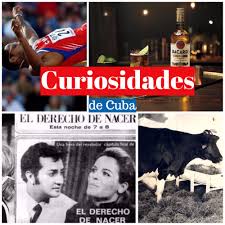
– Las Radionovelas vieron la luz en Cuba en 1948. La primera radionovela cubana que se internacionalizó se llamaba “El Derecho de Nacer” de Félix B. Caignet.
– La Marina de Guerra Cubana hundió el único submarino alemán que se abatiera en el Caribe durante la Segunda Guerra Mundial.
– La zona con mayor profundidad del Mar Caribe está al sur de Cuba. Se trata de la Fosa de Bartlet que se ubica justo entre Cuba y Jamaica.
– Un cubano fue el primer cosmonauta Latinoamericano, Arnaldo Tamayo Méndez, a bordo del Soyus 18 sovietico, en un viaje espacial del 18 de Septiembre de 1980.
– El poeta cubano José Joaquín Palma, originario de Bayamo, es el autor de la letra del Himno Nacional de Guatemala.
– Un cubano dio la primera anestesia con éter el 10 de marzo de 1847. En ese año se realizaron intervenciones con anestesia por éter en varios países de América Latina, pero por unos días de diferencia la primera se realizó en Cuba por el doctor Vicente Antonio de Castro.
– Cuba es el mayor país del Caribe y curiosamente su capital, La Habana, es también la ciudad más grande del Caribe y la mayor poblada.
– José Raúl Capablanca fue el primer campeón mundial de Ajedrez nacido en un país no desarrollado. A los cuatro años ya sabía jugar y venció a su padre, a los 12 fue campeón de Cuba, a los 18 venció al campeón mundial Lasker. Llego a ser considerado el mejor jugador de ajedrez de todos los tiempos.
– El primer campeón olímpico latinoamericano fue el cubano Ramón Fonst en esgrima, espada, en la Olimpiada de Paris en 1900, a los 17 años.
– Martin Dihigo fue el primer latinoamericano anotado en el Hall de la Fama del beisbol desde 1977. Nació en Pueblo Nuevo, occidental provincia cubana de Matanzas. Llego a ser considerado el mejor pelotero cubano.
– El récord de salto de altura pertenece a un cubano. Nada más y nada menos que a Javier Sotomayor, quien hace más de 25 años (en el Mundial de Budapest, 1989) estableció la marca de 2,43 metros , la cual continúa sin ser batida.
The Republic of Cuba is the owner of a rich culture that treasures interesting elements, unique and sometimes unknown by many.
Here are some of the most outstanding and attractive to always remember for those who want to know the destination that the centuries of surprises and advances in all aspects have in store for us.
– The first international flight of Latin American Aviation was carried out by Cubans, on May 17, 1913, from the island to Key West, and lasted two hours 40 minutes, starring Cuban pilots Agustín Parla and Domingo Rosselló.
– Cuba had the first railroad in Latin America, 11 eleven years before Spain, its colonial metropolis. It was inaugurated on November 19, 1837, in the section Havana – Güines.
– The precursor radio soap operas of soap operas were born in Cuba in 1948 with the success of El Derecho de Nacer by Félix B. Caignet.
– The Cuban Navy sank the only German submarine that was killed in the Caribbean during World War II.
– A Cuban was the first Latin American cosmonaut, Arnaldo Tamayo Méndez, aboard the Soviet Soyuz 18, on a space trip on September 18, 1980.
– A Cuban gave the first anesthesia with ether on March 10, 1847. In that year, interventions with ether anesthesia were carried out in several Latin American countries, but for a few days of a difference, the first was performed in Cuba by Dr. Vicente Antonio de Castro.
– Cuba is the largest country in the Caribbean and curiously its capital, Havana, is also the largest city in the Caribbean and the largest population.
– José Raúl Capablanca was the first world Chess champion born in an undeveloped country. At four he already knew how to play and he beat his father, at 12 he was champion of Cuba, at 18 he beat world champion, Lasker. I came to be considered the best chess player of all time.
– The first Latin American Olympic champion was Cuban Ramón Fonst in fencing, sword, at the Paris Olympiad in 1900, at age 17.
– Martin Dihigo was the first Latin American to be listed in the Baseball Hall of Fame since 1977. He was born in Pueblo Nuevo, western Cuban province of Matanzas. I came to be considered the best Cuban baseball player.
– The best high jumper in history is the Cuban Javier Sotomayor, world record indoors and outdoors, his marks are not without surpassing.
Agencies/ RHC/ María Candela/ Internet Photos/ Arnoldo Varona/ www.TheCubanHistory.com
THE CUBAN HISTORY, HOLLYWOOD.
Cuando Olga Guillot salió de Cuba a principios de 1961, a partir de ese día, en un viaje que para la cantante no tuvo retorno, sus discos fueron prohibidos en todas las estaciones de radio y medios cubanos, pero el pueblo cubano continuó escuchando sus grabaciones.
Nadie sabía quién fue el que trajo sus álbumes a Cuba en los años 60 y 70 (la gente hablaba de algunos comerciantes), pero la verdad es que esos discos viajaban a mano de un lugar a otro. No era nada nuevo porque casi desde el momento en que comenzó a grabar, la gente aprendió sus canciones y continúa haciéndolo.
Una cantante nacida en Santiago de Cuba. Comenzó su carrera a mediados de la década de 1940. Se unió al grupo ahora casi inconcebible reunido por Mil Diez (1010), la estación de radio del Partido Socialista Popular, compuesta por arreglistas y directores como Félix Guerrero, Adolfo Guzmán y Enrique González Mantici.
En 1947, gracias a los esfuerzos del cantante Miguelito Valdez, Guillot grabó ‘La gloria eres tú’ de José Antonio Méndez, con una orquesta dirigida por René Hernández, con Chano Pozo en la tumbadora. Anteriormente, en La Habana, había grabado varios números con The Swingmakers, incluidos At Last, Stormy Weather, Night and Day y Stardust, todos cantados en español, estándares de cancioneros que eran más o menos como boleros.
En 1948, Guillot comenzó a actuar en México, donde fue tratada con una casi adoración que duró más de cinco décadas. Ese año, grabó con la orquesta del famoso compositor Gonzalo Curiel, quien escribió varios boleros para que ella los presentara. También hizo su primera aparición en el cine en La Venus de fuego, en la que la estrella de cine mexicana Meche Barba asumió el papel principal de la apasionada tentadora. En su carrera, Guillot apareció en una docena de producciones cinematográficas.
En el escenario, vestía lujosos vestidos de noche y auténticas joyas. Comenzó a actuar con un bolero de Orlando de la Rosa, con su letra de despedida: “Me voy con mi canción para olvidarte / me voy, porque yo sé que es lo mejor” (voy con mi canción, para olvidarte / voy) , porque sé que es lo mejor “). También grabó otras canciones de de la Rosa, No vale la pena y Qué emoción.
Guillot se convirtió en el gran intérprete del compositor René Touzet (Estuve pensando, Anoche aprendí, La noche de anoche, Me contaron de ti); Juan Bruno Tarraza (La novia de todos, Por eso estoy así, Tú me niegas, Qué poco me conoces); Felo Bergaza (Miedo, Si tú me lo dijeras, Infeliz); Bobby Collazo (Tan lejos y sin embargo te quiero, Raro hechizo, Me estoy enamorando) y de otros compositores que se hicieron conocidos a principios de la década de 1940, como Isolina Carrillo, Adolfo Guzmán, Julio Gutiérrez y Candito Ruíz, cuya canción Vete Guillot popularizó .
Fue una de las primeras cantantes cubanas en grabar canciones de compositores del movimiento “Feeling”, que se hizo famosa durante sus días en Mil Diez. En una entrevista, dijo que había tenido que superar muchos obstáculos para cantar “esas canciones que no parecían cubanas”. Ella perseveró en esto, como lo demuestra su catálogo de grabaciones.
Cuando salió de Cuba en marzo de 1961, Guillot fue la estrella del espectáculo de cabaret “Serenata Mulata” en el Hotel Capri. Fue reemplazada por Celeste Mendoza y luego por Gina León.
Después de Cuba vino una breve estadía en Caracas. Unos meses después, el maestro Saber Marroquín la invitó a trabajar en México. Se instaló en la capital e inmediatamente comenzó a grabar con el sello Musart, acompañada por orquestas dirigidas por músicos como Cuco Valtierra, Juan Bruno Tarraza y Jorge Ortega. Eran los días de Poquita fé (Bobby Capó), Escándalo (Rubén Fuentes) y Cualquier pretexto (Vicente Garrido). Poco a poco, su estilo como intérprete se volvió más agresivo, vivo y rítmico.
Guillot lanzó un excelente disco con canciones de María Greever, acompañado por la orquesta de Saber Marroquín. Ella popularizó canciones como ‘Seguiré mi viaje’ de Alvaro Carrillo y Remate, de Rubén Fuentes. En 1963, el Festival de Cine de Cannes le otorgó una Palma de Oro como la mejor cantante de boleros latinoamericanos, un premio que aceptó en una academia de arte en Hollywood.
Ella continuó grabando y actuando a lo largo de los años. México y Miami eran sus bases de origen. En cada ciudad, su actuación fue un acto contra la Revolución: “No volveré [a Cuba] mientras estén en el poder”. Ella cantó ‘El son se fue de Cuba’ (Bolero Gone Away From Cuba) y ‘Nostalgia habanera’ (Havana Nostalgia). En 1988, celebró el aniversario de medio siglo de su carrera con una gira por todo el mundo, incluido Israel.
Cuando grabó las canciones ‘Vete de mí’ de Virgilio y Homero Expósito y Escándalo de Rubén Fuentes con Los Sabandeños, Guillot se negó a lanzarlas en un álbum en el que sabía que el cantante cubano Silvio Rodríguez también fue invitado a participar. yo ”, dijo ella. La solución fue Solomonic: se hicieron dos álbumes diferentes.
https://youtu.be/JznoJIh9Oj8
En 1996, un sello mexicano lanzó un doble CD, “The Queens of Cuba: Olga Guillot and Elena Burke”, con grabaciones en vivo de Guillot y grabaciones de estudio de Burke. En 2001, se lanzó el álbum “Faltaba yo”, con Guillot interpretando canciones de Manzanero, Meme Solís, Frank Domínguez, Mario Clavell, Juan Bruno Tarraza, entre otros, e incluyendo ‘Estremece su Alma adentro’, de la puertorriqueña Silvia Rexach. La llamaban la Reina del Bolero, la Madre del Bolero. Simplemente decir su nombre era identificar a uno de los principales cantantes del estilo sentimental.
Durante mucho tiempo, cualquier tienda de discos llevó al menos cinco de las grabaciones de Guillot. Puso su sello en muchos boleros considerados clásicos latinoamericanos, como ‘Campanitas de cristal’ de Rafael Hernández, y en canciones populares, rancheras y baladas.
En sus últimos años, habló sobre su deseo de regresar a La Habana. Hubiera sido bueno Omara Portuondo cantó para ella (y con ella) hace unos años, en la República Dominicana. En la foto, ella está sonriendo. No sé si hablaron sobre este punto.
Cuando le pidieron, en la radio, que compartiera un deseo, la escuché decir: “Tomar una taza de café con leche al atardecer, allí en el Malecón”.
El 12 de julio de 2010, murió de un ataque cardíaco a la edad de 87 años en la ciudad de Miami Beach. Le sobrevive una hija, Olga Maria Touzet-Guillot, nacida de su relación con el pianista y compositor, René Touzet.
DISCOGRAFÍA SELECCIONADA
MLP-526 Intimidades con Olga Guillot (1958)
MLP-530 Creaciones de la Guillot (1959)
MLP-538 Olga en Mexico (1959)
MLP-555 Olga de Cuba (1960)
DM-672 Olga (1961)
DM-751 Olga Guillot y Las Canciones de Maria Grever (1962)
D-855 La Temperamental (1963)
DM-935 Añorando el Caribe (1964)
EDM-1423 Olga Guillot Vol. 14 (1969)
1472 Olga Guillot Vol. 15 (1970)
DM-14507 Quien Da Mas (1971)
DM-1576 Y ahora….Olga (1972)
CYS1479 Se me olvidó otra vez (1976)
JP-2244 Olga Guillot En Concierto (1977)
13.2035/9 Olga Guillot (1980)
CGV-8110 Lo Mejor de Olga Guillot (1982)
233 Sigue La Temperamental
P 101 Olga Guillot Recordando El Pasado
87844-2 Faltaba yo CD (2001)
When Olga Guillot left Cuba in early 1961, from that day on, in a journey that for the singer was without return, her records were banned on all radio stations and Cuban media, but the Cuban people continued to listen to her recordings.
Nobody knew who it was that brought her albums to Cuba in the 1960s and ‘70s (people talked about some merchants), but the truth is that those discs traveled by hand from one place to the next. It was nothing new because almost from the very moment she began recording, people learned her songs and continue doing so.
A singer born in Santiago de Cuba. She started her career in the mid-1940s. She joined the now almost inconceivable group assembled by Mil Diez (1010), the People´s Socialist Party radio station, consisting of arrangers and directors such as Félix Guerrero, Adolfo Guzmán, and Enrique González Mantici.
In 1947, through the efforts of singer Miguelito Valdez, Guillot recorded ‘La gloria eres tú’ by José Antonio Méndez, with an orchestra conducted by René Hernández, featuring Chano Pozo on the tumbadora. Earlier, in Havana, she had recorded several numbers with The Swingmakers, including At Last, Stormy Weather, Night and Day, and Stardust, all sung in Spanish—songbook standards that were more or less like boleros.
In 1948, Guillot began performing in Mexico, where she was treated with a near-adoration that endured for more than five decades. That year, she recorded with the orchestra of the famed composer Gonzalo Curiel, who wrote several boleros for her to introduce. She also made her first film appearance in La Venus de fuego (Venus of Fire), in which Mexican film star Meche Barba took the leading role of the passionate temptress. In her career, Guillot appeared in a dozen film productions.
On stage, she wore luxurious evening gowns and authentic jewels. She began performances with an Orlando de la Rosa bolero, with its lyrics of farewell: “Me voy con mi canción para olvidarte / me voy, porque yo sé que es lo mejor” (I go with my song, to forget you / I go, because I know it’s for the best”). She also recorded other songs by de la Rosa, No vale la pena and Qué emoción.
Guillot became the great interpreter of composer René Touzet (Estuve pensando, Anoche aprendí, La noche de anoche, Me contaron de ti); Juan Bruno Tarraza (La novia de todos, Por eso estoy así, Tú me niegas, Qué poco me conoces); Felo Bergaza (Miedo, Si tú me lo dijeras, Infeliz); Bobby Collazo (Tan lejos y sin embargo te quiero, Raro hechizo, Me estoy enamorando) and of other composers who became well known in the early 1940s, such as Isolina Carrillo, Adolfo Guzmán, Julio Gutiérrez and Candito Ruíz, whose song Vete Guillot popularized.
She was one of the first Cuban singers to record songs by composers of the “Feeling” movement, which became famous during her days at Mil Diez. In an interview, she said that she had had to overcome many obstacles to sing “those songs that did not seem Cuban.” She persevered in this, as demonstrated by her catalog of recordings.
When she left Cuba in March 1961, Guillot was the star of the “Serenata Mulata” cabaret show at the Capri Hotel. She was replaced by Celeste Mendoza, and later by Gina León.
After Cuba came a brief stay in Caracas. A few months later, the maestro Sabre Marroquín invited her to work in Mexico. She settled in the capital and immediately began recording with the Musart label, accompanied by orchestras led by such musicians as Cuco Valtierra, Juan Bruno Tarraza, and Jorge Ortega. These were the days of Poquita fé (Bobby Capó), Escándalo (Rubén Fuentes) and Cualquier pretexto (Vicente Garrido). Gradually, her style as interpreter became more aggressive, lively, and rhythmic.
Guillot released an excellent record with songs by María Greever, accompanied by Sabre Marroquín´s orchestra. She popularized songs like ‘Seguiré mi viaje’ by Alvaro Carrillo and Remate, by Rubén Fuentes. In 1963, she was awarded a Palme d’Or by the Cannes Film Festival as the best Latin American bolero singer, a prize she accepted at an art academy in Hollywood.
She continued recording and performing throughout the years. Mexico and Miami were her home bases. In every city, her performance was an act against the Revolution: “ I won´t come back [to Cuba] as long as they are in power.” She sang ‘El son se fue de Cuba’ (Bolero Gone Away From Cuba), and ‘Nostalgia habanera’ (Havana Nostalgia). In 1988, she celebrated the half-century anniversary of her career with a tour around the world, including Israel.
When she recorded the songs ‘Vete de mí’ by Virgilio and Homero Expósito and Escándalo by Rubén Fuentes with Los Sabandeños, Guillot refused to release them on an album that she knew the Cuban singer Silvio Rodriguez was also invited to participate in. “Him or me,” she said. The solution was Solomonic: Two different albums were made.
In 1996, a Mexican label released a double CD, “The Queens of Cuba: Olga Guillot and Elena Burke,” featuring live recordings by Guillot and studio recordings by Burke. In 2001, the album “Faltaba yo” was released, with Guillot interpreting songs by Manzanero, Meme Solís, Frank Domínguez, Mario Clavell, Juan Bruno Tarraza, among others, and including ‘Estremece su Alma adentro’, by Puerto Rican Silvia Rexach. She was called the Queen of Bolero, the Mother of Bolero. Merely to say her name was to identify one of the main singers of the sentimental style.
For a long time, any record store carried at least five of Guillot’s recordings. She put her stamp on many boleros considered Latin American classics—like ‘Campanitas de cristal’ by Rafael Hernández—and on popular songs, rancheras, and ballads.
In her last years, she spoke about her desire to return to Havana. It would have been good. Omara Portuondo sang for her (and with her) a few years ago, in the Dominican Republic. In the photo, she is smiling. I don´t know if they talked about this point.
When she was asked, on the radio, to share one wish, I heard her say: “To have a cup of café con leche at sunset, there on the Malecón [the waterfront in Havana].”
On July 12, 2010, she died of a heart attack at the age of 87 in the city of Miami Beach. She is survived by one daughter, Olga Maria Touzet-Guillot, born from her relationship with pianist and composer, René Touzet.
(READ OLGA GUILLOT DISCOGRAPHY IN THE SPANISH SECTION).
Agencies/ Cuban Art News/ Sigfredo A. Pérez-Guedes/ Extractos/ Excerpts/ Wiki/ Internet Photos/ YouTube/ Arnoldo Varona / www.TheCubanHistory.com
THE CUBAN HISTORY, HOLLYWOOD.
Alpharita Constantia “Rita” Anderson, nació el 25 de julio de 1946 en Santiago de Cuba. Es una cantante cubano-jamaicana y viuda del famoso cantante Bob Marley. Fue miembro del grupo vocal “I Threes”, junto con Marcia Griffiths y Judy Mowatt, quienes obtuvieron el reconocimiento como vocalistas de apoyo para Bob Marley y los Wailers.
Rita nació de Leroy Anderson y Cynthia “Beda” Jarrett. En su infancia, se mudaron a Jamaica, donde creció en el nivel superior de Beachwood Avenue, ubicada en Kingston, Jamaica. En su libro ‘No Woman, No Cry: My Life with Bob Marley’, Rita describe cómo fue criada por su tía Viola en Greenwich Park Road. Bob era de un nivel inferior de Trenchtown.
A mediados de la década de 1960, Rita conoció a Bob después de conocer a Peter Tosh. Después de enterarse de que era cantante, le pidieron que hiciera una audición para los Soulettes, más tarde conocidos como los I Threes. El grupo incluía a Rita, su prima Constantine “Dream” Walker, y Marlene “Precious” Gifford. Bob se convirtió en el mentor y gerente del grupo y al trabajar juntos, él y Rita se enamoraron.
https://youtu.be/Su2pOkFagAs
Los dos se casaron el 10 de febrero de 1966. Sin embargo, se dijo que la razón de su matrimonio fue una manera de facilitarle a Rita emigrar a los EE. UU. Si Bob hubiera decidido vivir en los EE. UU. Después de una visita con su madre en Delaware.
Criada como cristiana, se involucró en el Movimiento Rastafari después de presenciar estigmas durante la visita de Haile Selassie a Jamaica el 21 de abril de 1966. Según ella, se convenció de que Selassie era el Cristo reencarnado cuando la miró a los ojos y levantó las manos. que vio las cicatrices de la crucifixión. Ella sigue siendo, sin embargo, un miembro activo de la Iglesia Ortodoxa Etíope.
El 3 de diciembre de 1976, dos días antes de “Smile Jamaica”, un concierto gratuito organizado por el primer ministro de Jamaica, Michael Manley, en un intento por aliviar la tensión entre dos grupos políticos en guerra, Rita, Bob y el gerente Don Taylor resultaron heridos en un asalto. por pistoleros desconocidos dentro de la casa de Marley. Rita y Taylor sufrieron heridas graves, pero luego se recuperaron por completo. Bob Marley recibió heridas leves en el pecho y el brazo.
Después de la muerte de Marley, grabó algunos álbumes bajo su nombre con cierto éxito en el Reino Unido.
En 1986, Rita tomó la decisión de convertir la casa de Bob Marley en el Museo Bob Marley. También es fundadora y presidenta de la Fundación Robert Marley, Bob Marley Trust y el Grupo de Empresas Bob Marley. También ha adoptado a 35 niños en Etiopía y ha ayudado a más de 200 niños en la Escuela Metodista Konkonuru en Ghana, donde se le otorgó la ciudadanía y se comprometió a impactar positivamente sus vidas.
En 2000, Rita Marley fundó la Fundación Rita Marley. Es una organización no gubernamental, sin fines de lucro, no partidista que trabaja para aliviar la pobreza y el hambre en los países en desarrollo. Se dirige específicamente a las personas mayores y jóvenes.
Ha otorgado varias becas a estudiantes de música en el Berklee College of Music de Ghana. También alberga los conciertos anuales de Africa Unite que buscan difundir la conciencia mundial sobre los problemas que afectan a África y desarrollar soluciones duraderas.
Rita aparece en la canción “Mary Jane Shoes” en el álbum multiplatino de Fergie 2006 The Dutchess. Rita interpretó la voz de fondo de la canción “Raikoum” de Khaled en su álbum Liberté. También interpretó la voz de fondo para la canción Ouelli El Darek de Khaled en su álbum Sahra.
El 3 de agosto de 2013, el gobierno ghanés convirtió a Rita Marley en ciudadana honoraria de Ghana.
Rita Marley planeó que el cuerpo de su difunto esposo, Bob Marley, fuera exhumado y enterrado en Etiopía, su “lugar de descanso espiritual” en 2005. Ella quería que fuera una celebración de un mes de lo que sería su 60 cumpleaños. El área en la que ella quería enterrarlo era una comunidad rastafari a la que el último emperador del país, Haile Selassie, le dio tierras. Ella afirmó tener el respaldo del gobierno etíope y dijo: “Estamos trabajando para traer sus restos a Etiopía. Es parte de la misión de Bob. Toda la vida de Bob se trata de África, no se trata de Jamaica. ¿Cómo se puede renunciar a un ¿continente para una isla? Él tiene derecho a que sus restos estén donde los amaría. Esta era su misión. Etiopía es su lugar de descanso espiritual. Con el 60 aniversario de este año, el impacto está ahí y es el momento adecuado. “.
Rita tiene seis hijos, tres de otras relaciones y tres con Bob. Bob adoptó a los dos hijos de Rita como propios y tienen el nombre de Marley. Bob tiene 13 hijos en total: los dos de Rita que adoptó, tres nacidos de Rita y los ocho restantes con mujeres separadas.
Los hijos de Rita son, en orden de nacimiento:
Sharon Marley, nacida el 23 de noviembre de 1964.
Cedella Marley nació el 23 de agosto de 1967
David Nesta “Ziggy”
(LEA LA DISCOGRAFIA DE RITA MARLEY EN LA SECCION EN INGLES).
Alpharita Constantia “Rita” Anderson, was born on 25 July 1946 in Santiago de Cuba. She is a Cuban-Jamaican singer and the widow of the famous singer Bob Marley. She was a member of the vocal group the “I Threes”, along with Marcia Griffiths and Judy Mowatt, who gained recognition as the backing vocalists for Bob Marley and the Wailers.
Rita was born to Leroy Anderson and Cynthia “Beda” Jarrett. In her childhood, they moved to Jamaica where she grew up in the upper level of Beachwood Avenue, located in Kingston, Jamaica. In her book ‘No Woman, No Cry: My Life with Bob Marley’ Rita describes how she was raised by her Aunt Viola on Greenwich Park Road. Bob was from a lower level of Trenchtown.
In the mid-1960s, Rita met Bob after meeting Peter Tosh. After it was learned that she was a singer, she was asked to audition for the Soulettes, later known as the I Threes. The group included Rita, her cousin Constantine “Dream” Walker, and Marlene “Precious” Gifford was. Bob became the group’s mentor and manager and through working together, he and Rita fell in love.
The two married 10 February 1966. However, the reason for their marriage was said to have been a way to make it easier for Rita to immigrate to the US should Bob have decided to live in the US following a visit with his mother in Delaware.
Raised Christian, she became involved in the Rastafari Movement after witnessing stigmata during Haile Selassie’s visit to Jamaica on 21 April 1966. According to her, she became convinced that Selassie was the reincarnated Christ when he looked her in the eyes and raised his hands, on which she saw scars from the crucifixion. She remains, however, an active member of the Ethiopian Orthodox Church.
On 3 December 1976, two days before “Smile Jamaica”, a free concert organized by the Jamaican Prime Minister Michael Manley in an attempt to ease the tension between two warring political groups, Rita, Bob, and manager Don Taylor were wounded in an assault by unknown gunmen inside the Marley home. Rita and Taylor sustained serious injuries but later made full recoveries. Bob Marley received minor wounds in the chest and arm.
After Marley’s death, she recorded a few albums under her name with some success in the United Kingdom.
In 1986, Rita made the decision to convert Bob Marley’s home into the Bob Marley Museum. She is also the Founder and Chairperson of the Robert Marley Foundation, Bob Marley Trust, and the Bob Marley Group of Companies. She has also adopted 35 children in Ethiopia and has assisted over 200 children in Konkonuru Methodist School in Ghana where she has been granted citizenship and made a commitment to positively impact their lives.
In 2000, Rita Marley founded the Rita Marley Foundation. It is a non-governmental, not-for-profit, non-partisan organization that works to alleviate poverty and hunger in developing countries. It specifically targets the elderly and youth.
It has given out a number of scholarships to music students in Ghana’s Berklee College of Music. It also hosts the annual Africa Unite concerts which look to spread global awareness about issues that affect Africa and to develop lasting solutions.
Rita appears in the song “Mary Jane Shoes” on Fergie’s multi-platinum 2006 album The Dutchess. Rita performed background vocals to the song “Raikoum” by Khaled in his album Liberté. She also performed background vocals for the song Ouelli El Darek by Khaled in his album Sahra.
On August 3, 2013, Rita Marley was made an honorary citizen of Ghana by the Ghanaian government.
Rita Marley planned to have the body of her late husband, Bob Marley, exhumed and buried in Ethiopia, his “spiritual resting place” in 2005. She wanted it to be a month-long celebration of what would be his 60th birthday. The area in which she wanted to bury him was a Rastafarian community that was given land by the country’s last emperor, Haile Selassie. She claimed to have the backing of the Ethiopian government and said “We are working on bringing his remains to Ethiopia. It is part of Bob’s own mission. Bob’s whole life is about Africa, it is not about Jamaica. How can you give up a continent for an island? He has a right for his remains to be where he would love them to be. This was his mission. Ethiopia is his spiritual resting place. With the 60th anniversary this year, the impact is there and the time is right.”
CHILDREN.
Rita has six children, three from other relationships, and three with Bob. Bob adopted Rita’s two children as his own and they have the Marley name. Bob has 13 children in total: the two of Rita’s that he adopted, three born to Rita, and the remaining eight with separate women.
Rita’s children are, in order of birth:
Sharon Marley, born November 23, 1964
Cedella Marley born August 23, 1967
David Nesta “Ziggy” Marley, born October 17, 1968
Stephen Marley, born April 20, 1972
Stephanie, born 17 August 1974 (from a relationship with Ital, according to Bob’s mother, Cedella Booker)
Serita Stewart, born August 11, 1985 (from a relationship with Tacky, according to her biography)
1966 : Pied Piper – Rio
1967 : Pied Piper (single, on Club Ska ’67) – Mango
1980 : Rita Marley – Trident
1981 : Who Feels It Knows It – Shanachie Records
1983 : It’s About Time – John Denver; RCA
1988 : Harambe (Working Together for Freedom) – Shanachie Records
1988 : We Must Carry on – Shanachie Records
1990 : Beauty of God’s – Shanachie Records
1990 : Good Girls Cult – Shanachie Records
1990 : One Draw – Shanachie Records
2003 : Sings Bob Marley…and Friends – Shanachie Records
2004 : Play Play – Universal Music
2005 : Sunshine After Rain
2006 : Gifted Fourteen Carnation.
Agencies/ Wiki/ Various/ Internet Photos/ YouTube/ Arnoldo Varona PJ./ www.TheCubanHistory.com
THE CUBAN HISTORY, HOLLYWOOD.