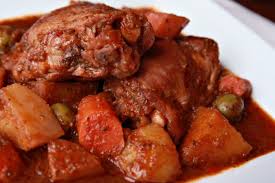
COCINA CUBANA: “Fricassé de Pollo A Lo Cubano”. VIDEOS / PHOTOS.

download (11)COCINA CUBANA:”FRICASSÉ DE POLLO A LO CUBANO”. VIDEOS/ PHOTOS.

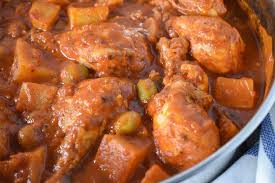
El fricasé es un clásico de la cocina francesa pero tambien es un favorito cubano. Solo podemos suponer que la influencia francesa trajo este plato a Cuba, muy probablemente a través de Haití. En la década de 1800, muchos refugiados franceses de la revolución haitiana llegaron a Santiago de Cuba y Baracoa desde Haití. Muchas de estas personas llegaron a poseer grandes plantaciones de café en Cuba.

La influencia cubana en este plato es evidente en el uso de jugo de naranja agria y mucho ajo. Otra cosa que hace que este platillo sea único, es que le quitas la piel al pollo antes de cocinarlo en un estilo cubano muy tradicional.

INGREDIENTES.

pollo ( 5 lbs )
1 ají pimiento maduro
1 cebolla grande
1/3 taza de aceite de Oliva extra virgen
1 cucharada de sal
1 cucharadita de azúcar
1/4 cucharadita de pimienta negra molida
2 cucharadas de pasitas rubias( raisins )
2 hojas de laurel
1 latica de salsa de tomate (8 onzas)
1 naranja agria
2 cucharadas de alcaparra (capers)
12 aceitunas
1 taza de vino blanco
4 dientes de ajo
2 papas ( 1 libra )
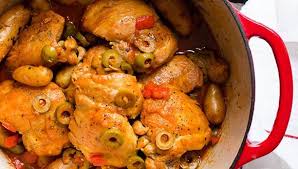
download (12)

Use un tazón grande no metálico y mezcle el jugo de naranja agria, el ajo, la sal y la pimienta.

Agregue los trozos de pollo sin piel a la marinada, cubra y refrigere un mínimo de 4 horas, pero preferiblemente durante la noche.

Retire el pollo de la marinada y séquelo con toallas de papel. Reserva la marinada.

Use una sartén grande tapada. Salpimentar los trozos de pollo y espolvorear ligeramente con harina. Caliente el aceite de oliva en la sartén hasta que empiece a humear.

Rápidamente (y con cuidado) agregue los trozos de pollo al aceite caliente, dorando por ambos lados, solo un minuto o 2 por lado. Haga esto en dos lotes pequeños. Retire el pollo y reservar.

download (7)

Saltee los cubos de papa en el mismo aceite caliente hasta que estén ligeramente dorados por todos lados. Retire las papas y reserve.

Sofría las cebollas y el pimiento verde hasta que estén blandas. Regrese el pollo a la sartén. Agregue la marinada reservada, la salsa de tomate, el vino, las aceitunas, las pasas y las papas doradas.

Tape, reduzca el fuego a bajo y cocine a fuego lento hasta que el pollo esté cocido entre 20 y 30 minutos. No lo cocines demasiado. Sirve los trozos de pollo sobre arroz blanco con abundante salsa.

Que les Aproveche!
la-isla-de-cuba

logo (1)

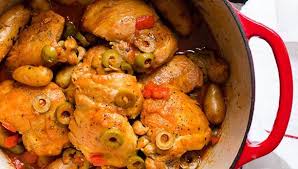
images (2)CUBAN CUISINE: CUBAN-STYLE “CHICKEN FRICASSE”.

The fricassee is a classic of French cooking. It is also a Cuban favorite. We can only guess that the French influence brought this dish to Cuba, most likely through Haiti. In the 1800s, many French refugees of the Haitian revolution arrived in Santiago de Cuba and Baracoa from Haiti. Many of these people went on to own large coffee plantations in Cuba.

The Cuban influence on this dish is apparent in the use of sour orange juice and lots of garlic. Another thing that makes this dish unique, you remove the skin from the chicken before cooking in a very traditional Cuban style.

This recipe has been passed down from my father to me. I remember coming home from school and smelling the aromas before I would even open the door. It’s something about Cuban food…I could always tell what was in the pot, en el horno. Sofrito…etc. Cooking has been a passion of mine since easy bake ovens, and microwaveable mug cakes. I was mesmerized. It was a form of art. Cultural expression…I told myself, one day I’m going to make this just like Papi! Fast forward to now- not only have I become a beast in the kitchen; I’m endorsed by my Tias in Cuba.

INGREDIENTS.

1 chicken (5lbs)
1 red bell pepper
1 large onion
1/3 cup of extra virgin olive oil
1 tsp of salt
1 tsp of sugar
1/4 tsp of cracked black pepper
2 tbsp of golden raisins
2 bay leaves
1 can of tomato sauce (8 oz)
1 sour orange
2 tbsp of capers
12 olives
1 cup of white wine
4 cloves of garlic
2 potatoes (approx 1 lb)
download (12)

Use a large non-metallic bowl and whisk together the sour orange juice, garlic, salt, and pepper.

Add the skinless chicken pieces to the marinade, cover, and refrigerate a minimum of 4 hours, but preferably overnight.

Remove the chicken from the marinade and blot on paper towels. Reserve marinade.

Use a large covered frying pan. Salt and pepper the chicken pieces and lightly dust with flour. Heat the olive oil in the pan until it just starts to smoke.

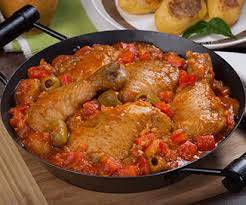
Quickly, (and carefully) add the chicken pieces to the hot oil, browning on both sides, just a minute or 2 per side. Do this in two small batches. Remove chicken and set aside.
download (10)

Sauté the potato cubes in the same hot oil until lightly browned on all sides. Remove potatoes and set aside.

Sauté the onions and green pepper until limp. Return the chicken to the pan. Add the reserved marinade, tomato sauce, wine, olives, raisins, and browned potatoes.

Cover, reduce heat to low and simmer until the chicken is done about 20 to 30 minutes. Don’t overcook it. Serve the chicken pieces over white rice with plenty of sauce.

Good Appetite!

Agencies/ Wiki/ ThreeGuysfrom Miami/ Extractos/ Excerpts/ YouTube/ Arnoldo Varona/ www.TheCubanHistory.com
THE CUBAN HISTORY, HOLLYWOOD.
Ciudades-de-Cuba.Matanzas

logo (1)

Ciudades-de-Cuba.Varadero

FÉLIX B. CAIGNET “El Padre de las Telenovelas”, Poeta, Novelista, Compositor. VIDEOS.

unnamed (6)FÉLIX B. CAIGNET “EL PADRE DE LAS TELENOVELAS”, POETA, NOVELISTA, COMPOSITOR. VIDEOS.

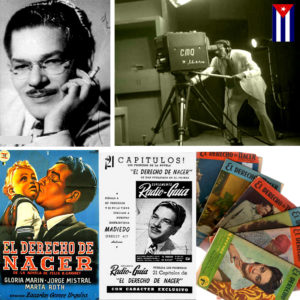
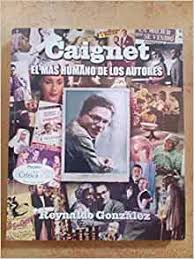
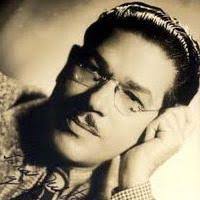
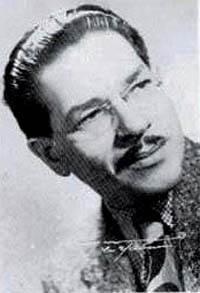
Félix Benjamín Caignet Salomón, conocido como Félix B. Caignet, nació en una plantación de café en Santa Rita de Burene, San Luis, en la región oriental de Cuba. La pobreza obligó a la familia a trasladarse a Santiago de Cuba. Caignet fue un radionario, locutor, poeta, novelista, periodista, crítico de teatro, cantante y compositor musical cubano.

Es conocido como pionero de la radiodifusión en Cuba y el padre de las telenovelas (culebrones) que atrapan a muchos frente a las pantallas de la television.

Caignet creía que el público “asumía los sentimientos de uno u otro personaje que sufría y, sin darse cuenta, asociaba su propio dolor con el de la figura ficticia y lloraba con él”.

Los dramas de radio de Caignet se transmitieron a través de América Central y del Sur y llevaron a la popularidad historias de la realidad social y el estilo narrativo de “hablar en metáforas”.

CARRERA ARTISTICA.

Su formación fue completamente autodidacta. Muy temprano comenzó a laborar escribiendo noticias de los espectáculos que se presentaban en Santiago, introduciéndose así en el medio cultural. Más tarde escribiría para medios tan populares como “El diario de Cuba”, “El Fígaro”, “Bohemia” y el periódico “El Sol”.

En la década de 1930 entra a formar parte del colectivo de la emisora CMKC, realizando el programa infantiles, donde acometió la narración de amenos y divertidos cuentos de su inspiración y de temáticas muy desiguales.

download (11)

radio. Aquel espacio llevaba un alto contenido didáctico. Y fue así como introdujo en la radio el “género episódico”, enganchando a sus jóvenes oyentes con la curiosidad de saber cómo continuarían aquellas historias. Una fórmula vigente aún hoy en dia. Fue entonces que comenzaron a aparecer programas para niños en la radio, pues hasta entonces no habían visto interés comercial en este tipo de espacios.

De regreso a este medio, a través de la CMKD del Palacio de la Torre, inicia las transmisiones de “Chan-Li-Po”, primer espectáculo seriado detectivesco que se radiaba en Cuba. El primero de los capítulos llevó por nombre “La serpiente roja”, introduciendo la figura el “narrador” dentro del espectáculo radial, adquiriendo un dominio pleno del suspenso y el falso suspenso; dejando a miles de radioyentes con la ansiedad de escuchar el próximo capítulo. Con esta técnica fue creando hábitos en los radioescuchas.

Hay que destacar que en el ámbito radiofónico tuvo un antecedente importante, pues la primacía le correspondió a José Sánchez Arcilla, periodista, dramaturgo, comediógrafo y hasta el autor de los libretos de numerosas zarzuelas cubanas, entre las que se destacan “Cecilia Valdés” y “El Clarín”. La radionovela en cuestión, “El Collar de Lágrimas”, difundida por más de tres años entre lunes y sábado, culminó sus 965 capítulos, el 31 de diciembre de 1946.

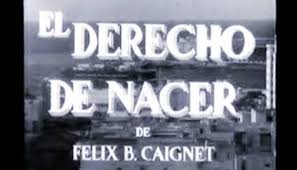
En 1947, Caignet tuvo una idea brillante. Mezcló todos estos ingredientes, pero añadiendo un fondo sentimental. Y ya en 1948, comienza a radiarse la reconocida internacionalmente como primera “radionovela” de Latinoamérica, “El derecho de nacer”, la que se convertiría en paradigma para este género que aquí nacía, en esta radio de una ciudad cubana, y que se extendería rápidamente a otras naciones del continente, y el mundo, y que sirviera de base para el nacimiento de las telenovelas, que más tarde, con su prolongada extensión de interés puramente comercial, llegarían a ser llamadas “culebrones”.

NACIMIENTO DE LA TELENOVELA EN CUBA.

“El derecho de nacer”, se estrenó en Cuba el 1 de abril de 1948. En 1952, para la radio se hicieron dos versiones internacionales y otra en 1966. Los primeros en llevar “O Direito do Nascer” a la televisión fueron los brasileños, en 1964, con episodios desconocidos. Después de su muerte se realizaron dos versiones televisivas en español (1981 y 2001), y dos en portugués (1978 y 2001).

Nuestra primera telenovela fue “Mamá”, obra teatral de Gregorio Martínez Sierra y adaptación de Leandro Blanco, que fue llevada a nuestra pantalla por el Canal 6 de CMQ-TV. Su premiere se realizó el 7 de mayo de 1958 y se difundió en directo al aire, “en vivo”, entre el 12 de mayo de 1958 hasta el Miércoles, 31 de agosto de 1962, con una frecuencia de tres veces a la semana que culminaban el bloque de programación de entretenimiento del canal, precediendo al Noticiero con que esa televisora cerraba sus transmisiones.

Las transmisiones comerciales de televisión comenzaron en Cuba el 24 de octubre de 1950, pero hubo transmisiones extraoficiales a finales de los 40 y en el propio año de apertura. En México, se habían realizado experimentos en televisión a partir de 1934, pero la puesta en funcionamiento de la primera estación de TV, Canal 5, en la Ciudad de México, tuvo lugar en 1946. Cuba fue el segundo país del mundo en transmitir a color.

mogotes-valleviñales-1024x333

logo

a049-telenovelas-cuba-copia-copiaFELIX B. CAIGNET “THE FATHER OF TELENOVELAS”, POET, NOVELIST, COMPOSER. VIDEOS.

Félix Benjamín Caignet Salomón, known as Félix B. Caignet, was born on a coffee plantation in Santa Rita de Burene, San Luis, in the eastern region of Cuba. Poverty forced the family to move to Santiago de Cuba. Caignet was a Cuban radiographer, broadcaster, poet, novelist, journalist, theater critic, singer, and musical composer.

He is known as a pioneer of radio broadcasting in Cuba and the father of telenovelas (soap operas) that catch many in front of television screens.

Caignet believed that the public “assumed the feelings of one or another suffering character and, without realizing it, associated their own pain with that of the fictitious figure and cried with it.”

Caignet’s radio dramas were broadcast throughout Central and South America and brought stories of social reality and the narrative style of “speaking in metaphors” to popularity.

ARTISTIC CAREER.

His training was completely self-taught. Very early he began to work writing news of the shows that were presented in Santiago, thus introducing himself in the cultural environment. Later he would write for such popular media as “El Diario de Cuba”, “El Fígaro”, “Bohemia” and the newspaper “El Sol”.

download (12)

In the 1930s, he became part of the CMKC station collective, carrying out the children’s program, where he narrated entertaining and entertaining stories of his inspiration and very uneven themes.

radio. That space had high didactic content. And that was how he introduced the “episodic genre” on the radio, hooking his young listeners with the curiosity of knowing how those stories would continue. The formula is still valid today. It was then that children’s programs began to appear on the radio because until then they had not seen commercial interest in this type of space.

Back in this medium, through the CMKD of the Palacio de la Torre, he began the broadcasts of “Chan-Li-Po”, the first detective serial show that was broadcast in Cuba. The first of the chapters was called “The Red Serpent”, introducing the figure of the “narrator” into the radio show, acquiring a full command of suspense and false suspense; leaving thousands of listeners anxious to hear the next chapter. With this technique, he was creating habits in radio listeners.

download (8)

It should be noted that in the radio field it had an important antecedent since the primacy corresponded to José Sánchez Arcilla, journalist, playwright, comediographer and even the author of the librettos of numerous Cuban zarzuelas, among which “Cecilia Valdés” and “The clarin”. The radio soap opera in question, “El Collar de Tgrimas”, broadcast for more than three years between Monday and Saturday, ended its 965 episodes, on December 31, 1946.

In 1947, Caignet had a brilliant idea. He mixed all these ingredients but adding a sentimental background. And already in 1948, the internationally recognized as the first “radio soap opera” of Latin America, “The right to be born”, began to be broadcast, which would become a paradigm for this genre that was born here, in this radio of a Cuban city, and that was it would quickly spread to other nations of the continent, and the world, and serve as the basis for the birth of soap operas, which later, with their long extension of purely commercial interest, would come to be called “soap operas.”

BIRTH OF THE TELENOVELA IN CUBA.

“The right to be born” premiered in Cuba on April 1, 1948. In 1952, two international versions were made for the radio and another in 1966. The first to bring “O Direito do Nascer” to television were the Brazilians, in 1964, with unknown episodes. After her death, two television versions were made in Spanish (1981 and 2001), and two in Portuguese (1978 and 2001).

download (10)

Our first telenovela was “Mamá”, a play by Gregorio Martínez Sierra and adaptation by Leandro Blanco, which was brought to our screen by Channel 6 of CMQ-TV. Its premiere took place on May 7, 1958, and was broadcast live on the air, “live”, from May 12, 1958, to Wednesday, August 31, 1962, with a frequency of three times a week that they culminated the channel’s entertainment programming block, preceding the Newscast with which that television station closed its transmissions.

Commercial television broadcasts began in Cuba on October 24, 1950, but there were unofficial broadcasts in the late 1940s and in the opening year itself. In Mexico, television experiments had been carried out since 1934, but the first TV station, Channel 5, was launched in Mexico City in 1946. Cuba was the second country in the world to broadcast to Colour.

Agencies/ Wiki/ MemoriasCubanas/ Derubín Jácome/ Extractos/ Excerpts/ Internet Photos/ YouTube/ Arnoldo Varona/ www.TheCubanHistory.com
THE CUBAN HISTORY, HOLLYWOOD.
unnamed (3)

logo (1)

unnamed

“JOE” BIDEN se Lanza a la Conquista de los Cubanos en la Florida. PHOTOS.

download (4)“JOE” BIDEN SE LANZA A LA CONQUISTA DE LOS CUBANOS EN LA FLORIDA.

Biden a la conquista de los cubanos: ‘Deberían ser los embajadores de la lucha por la libertad en la Isla’. Para el candidato demócrata es ‘inconcebible’ que la Administración Trump esté ‘deportando a cientos de cubanos a una dictadura’.

CON UNA VISITA a los cubanos y haitianos de Miami, el candidato demócrata a la Casa Blanca, Joe Biden, ha dejado claro este lunes que cualquier comunidad del estratégico estado de Florida es clave para darle la victoria electoral en 29 días o reelegir al presidente Donald Trump, reportó EFE.

Mientras Trump prepara su regreso convaleciente a la Casa Blanca, tras tres días de hospitalización debido al contagio del nuevo coronavirus, Biden aprovecha los últimos días para conquistar al votante hispano, incluido el cubano, el más reacio a votar por él el próximo 3 de noviembre, según la agencia española.

En su primera aparición de campaña en el sur de Florida, que incluyó además un encuentro comunitario en Miami, el demócrata ha centrado sus promesas entre los hispanos en los temas de salud, empleo, educación, inmigración y, por supuesto, Cuba.

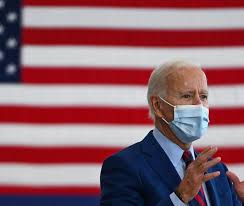
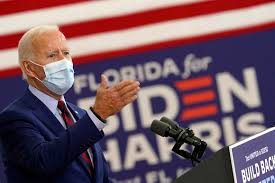
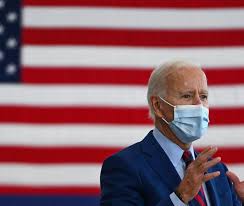
Con mascarilla puesta, Biden manifestó: “los cubanoamericanos deberían ser los embajadores de la lucha por la libertad en Cuba”. El candidato presidencial cree firmemente en la importancia de “dar poder a los cubanos para que decidan su propio futuro”.

“Necesitamos una nueva política hacia Cuba. El enfoque de esta administración no está funcionando. Cuba no está más cerca de la libertad y la democracia hoy que hace cuatro años”, dijo.

download (3)

El demócrata criticó además la “importante” presencia de Rusia en la Isla y recalcó su historial de lucha a favor de la democracia y los derechos humanos y en contra de “dictadores de derecha y de izquierda”.

“El presidente Trump no puede promover la democracia y los derechos humanos del pueblo cubano cuando ha abrazado a tantos autócratas en todo el mundo, empezando por Vladimir Putin (el presidente ruso)”, manifestó.

Con estas palabras en un gimnasio de la Pequeña Habana, barrio de exiliados cubanos visitado con frecuencia por Trump en tiempos de campaña, el demócrata busca hacerse así con los 29 votos que Florida brinda para el Colegio electoral, el que elige al presidente.

Por otro lado, subrayó que es “inconcebible” que la Administración de Trump esté deportando a cientos de cubanos a una dictadura”.

Aseguró además que hay casi 10.000 cubanos “languideciendo en campamentos” a lo largo de la frontera mexicana en seguimiento de la política “separatista” migratoria de Trump. “Esa administración está activamente separando a las familias cubanas cuando no aprueba visas, con restricciones de viajes y de envío de remesas. Y tenemos que revertir eso”, dijo, aunque durante su vicepresidencia, la administración Obama suprimió la política de “pies secos, pies mojados”.

download (5)

Una disputa electoral que se avecina en Florida, donde el lunes terminó la inscripción de votantes, que por ahora suman 14.000.000, 5.200.000 de ellos demócratas, 5.000.000 republicanos y 3.600.000 independientes.

BIDEN ADELANTE EN FLORIDA.

Biden aventaja al republicano por un promedio de 8,3 puntos en las encuestas de opinión nacional, según el portal especializado Real Clear Politics, pero en Florida esa distancia es solo de dos puntos a favor del exvicepresidente.

Tras el primer debate que sostuvieron ambos candidatos el martes pasado, Biden incrementó su ventaja, y ahora los ojos están puestos en el segundo debate, programado para el próximo 15 de octubre en Miami, pero aún es una incógnita por la enfermedad de Trump.

“Ustedes son el futuro y yo me considero un presidente de transición hacia la generación mejor educada y menos prejuiciosa… Cuento con ustedes”, concluyó.

La visita de Biden se produjo en momentos en que una reciente encuesta le otorga una ventaja de 57% a 37% sobre Trump entre los electores del condado Miami-Dade, el más poblado de la Florida y clave para ganar los 29 votos electorales del estado. Según el sondeo de Bendixen & Amandi International y el diario The Miami Herald, los electores cubanoamericanos favorecen ampliamente al presidente sobre el candidato demócrata, pero la situación cambia respecto al resto de los votantes latinos y la población en general.

Biden concentró hoy su campaña en Miami, mientras su esposa Jill promovió su elección entre mujeres de Boca Ratón, ciudad a 72 kilómetros más al norte.

la-isla-de-cuba

logo

images (2)“JOE” BIDEN GOES ON TO THE CONQUEST OF THE CUBANS IN FLORIDA.

Biden to the conquest of the Cubans: “They should be the ambassadors of the fight for freedom on the Island.” For the Democratic candidate, it is “inconceivable” that the Trump Administration is “deporting hundreds of Cubans to a dictatorship.”

With a visit to Cubans and Haitians in Miami, the Democratic candidate for the White House, Joe Biden, made it clear on Monday that any community in the strategic state of Florida is key to giving him an electoral victory in 29 days or re-electing President Donald Trump, EFE reported.

While Trump prepares his convalescent return to the White House, after three days of hospitalization due to the contagion of the new coronavirus, Biden takes advantage of the last days to conquer the Hispanic voter, including the Cuban, the most reluctant to vote for him on November 3, according to the Spanish agency.

In his first campaign appearance in South Florida, which also included a community meeting in Miami, the Democrat has focused his promises among Hispanics on the issues of health, employment, education, immigration, and, of course, Cuba.

Wearing a mask, Biden said: “Cuban Americans should be the ambassadors of the fight for freedom in Cuba.” The presidential candidate firmly believes in the importance of “empowering Cubans to decide their own future.”

“We need a new policy toward Cuba. The approach of this administration is not working. Cuba is no closer to freedom and democracy today than it was four years ago,” he said.

download

The democrat also criticized the “important” presence of Russia on the island and stressed its history of struggle in favor of democracy and human rights and against “dictators of the right and of the left.”

“President Trump cannot promote the democracy and human rights of the Cuban people when he has embraced so many autocrats around the world, starting with Vladimir Putin (the Russian president),” he said.

With these words in a gym in Little Havana, a neighborhood of Cuban exiles frequently visited by Trump during campaign times, the Democrat seeks to gain the 29 votes that Florida provides for the electoral college, which elects the president.

On the other hand, he stressed that it is “inconceivable” that the Trump Administration is deporting hundreds of Cubans to a dictatorship. ”

He also assured that there are almost 10,000 Cubans “languishing in camps” along the Mexican border in pursuit of Trump’s “separatist” immigration policy. “That administration is actively separating Cuban families when it does not approve visas, with restrictions on travel and sending remittances. And we have to reverse that,” he said, although, during his vice presidency, the Obama administration abolished the policy of “dry feet, wet feet”.

download (3)

An electoral dispute that looms in Florida, where on Monday the registration of voters ended, which for now number 14,000,000, 5,200,000 of them Democrats, 5,000,000 Republicans, and 3,600,000 independents.

BIDEN AHEAD IN FLORIDA.

Biden leads the Republican by an average of 8.3 points in national opinion polls, according to the specialized portal Real Clear Politics, but in Florida, that distance is only two points in favor of the former vice president.

After the first debate held by both candidates last Tuesday, Biden increased his lead, and now eyes are on the second debate, scheduled for October 15 in Miami, but it is still unknown due to Trump’s illness.

“You are the future and I consider myself a transitional president towards the better educated and less prejudiced generation … I am counting on you,” he concluded.

Biden’s visit came as a recent poll gave him a 57% to 37% lead over Trump among voters in Miami-Dade County, Florida’s most populous and the key to winning the state’s 29 electoral votes. . According to the Bendixen & Amandi International poll and The Miami Herald newspaper, Cuban-American voters broadly favor the president over the Democratic candidate, but the situation changes with respect to the rest of Latino voters and the population in general.

Today Biden concentrated his campaign in Miami, while his wife Jill promoted his election among women from Boca Raton, a city 45 miles north.

Agencies/ EFE/ CiberCuba/ Wilfredo Cancio/ Exractos/ Excerpts/ Internet Photos/ Arnoldo Varona/ www.TheCubanHistory.com
THE CUBAN HISTORY, HOLLYWOOD.
Ciudades-de-Cuba.Varadero

logo

DpD2pAaXoAAVsDO