CRECE EN ESTADOS UNIDOS OPOSICION DEL PARTIDO REPUBLICANO A UNA ACCION MILITAR CONTRA REGIMEN CUBANO. PHOTOS. * REPUBLICAN PARTY OPPOSITION TO MILITARY ACTION AGAINST CUBAN REGIME GROWS IN THE U.S. PHOTOS.
Los senadores republicanos de EE UU confían en que la presión económica será suficiente para un acuerdo. / 14ymedio
CRECE EN ESTADOS UNIDOS OPOSICION DEL PARTIDO REPUBLICANO A UNA ACCION MILITAR CONTRA REGIMEN CUBANO. PHOTOS.
Entre los senadores republicanos crece la oposición a una acción militar de EE UU contra el régimen cubano. Varios legisladores consideran que todo el esfuerzo debe dedicarse a Irán y que las sanciones económicas deberían ser suficientes para forzar los cambios en la Isla. Los senadores republicanos de EE UU confían en que la presión económica será suficiente para un acuerdo.
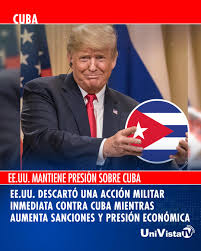
MADRID-WASHINGTON- El presidente de EE UU, Donald Trump, ha difundido un mensaje en su red social, Truth, en el que afirma que Cuba está pidiendo ayuda y él va a responder con diálogo. El post hace una referencia velada a una nota publicada este martes por el diario The Hill en la que se cita a varios senadores republicanos que dicen no a una intervención militar en la Isla y piden priorizar la guerra con Irán.
“Ningún republicano me ha hablado jamás de Cuba, un país fracasado que solo va en una dirección: ¡hacia abajo! Cuba pide ayuda, ¡y vamos a hablar! Mientras tanto, ¡me voy a China!”, exclamó, cuando faltan pocas horas para su viaje a Pekín, que comenzará este miércoles y se prolongará hasta el viernes 15.
The Hill ha hablado con varios senadores del partido del presidente que advierten del error que sería atacar a Cuba, cuando los problemas con Irán no cesan, y piden que continúe la presión económica para que el régimen cubano caiga por sí solo.
Los representantes están, aparentemente, preocupados por las repercusiones políticas que tendrán las decisiones presidenciales de cara a las elecciones de medio mandato en noviembre, cuando todo apunta a una victoria de los demócratas. La guerra contra el régimen de los ayatolás está empeorando los ya negativos resultados que las encuestas auguran a los republicanos y los senadores piden que se resuelva cuanto antes.
Los representantes están, aparentemente, preocupados por las repercusiones políticas que tendrán las decisiones presidenciales de cara a las elecciones de medio mandato en noviembre.
“Creo que en este momento estamos centrados en lo que debemos, que es en tratar de abrir el estrecho de Ormuz”, dijo el líder de la mayoría, el republicano John Thune, que considera prioridad nacional este asunto. “Me encantaría ver el cambio de régimen en Cuba, como a todos”, añadió, pero dijo que esto tal vez llegue por la fuerza de los acontecimientos. “Creo que las cosas que están sucediendo en el mundo están poniendo más presión sobre muchos de estos gobiernos de tipo dictatorial. Tal vez haya algo allí que suceda naturalmente”.
James Lankford, senador republicano por Oklahoma y vicepresidente de la Conferencia Republicana del Senado, pidió que se incrementen las sanciones para tratar de forzar un cambio, pero a la pregunta de si apoyaría una operación militar contra la Isla, fue tajante: “No, no lo haría. Hay mucha presión económica que se puede ejercer sobre Cuba que marca una gran diferencia por sí misma”.
Otro no rotundo lo dio Susan Collins, representante de Maine y presidenta del Comité de Asignaciones del Senado. Steve Daines, senador por Montana, argumentó que aunque Cuba está “en nuestro patio trasero”, prefiere “ver menos conflicto que más, dado lo que está pasando en el mundo”.
“Confío –agregó– en los instintos del presidente y del secretario Rubio. Están mucho más cerca de esa situación, francamente, que yo”, dijo, resaltando el papel del Secretario de Estado.
Rand Paul, senador por Kentucky? dijo que una operación militar en Cuba sería un error y sugirió que el régimen cubano está abierto a reformas a cambio de inversiones. “Quiero menos guerra, no más. No estoy a favor de una guerra con Cuba, que en este momento está sufriendo económicamente el bloqueo, aunque creo que estaban sufriendo incluso antes debido al socialismo”, expuso.
“Por lo que he hablado con su embajador, creo que están abiertos a las negociaciones, están abiertos a mejores relaciones. Me han contado que están abiertos a la inversión estadounidense. Esa es realmente la forma en que se transforma a las sociedades”, consideró.
Shelley Moore Capito, senadora por West Virginia y presidenta del Comité de Política Republicana del Senado, restó importancia a la probabilidad de que se dé una acción militar e insistió en que Irán es la prioridad. “Está muy por debajo de la lista, incluso si está en una lista. Creo que tenemos que concentrarnos en lo que está pasando en Irán”, dijo a The Hill.
“Está muy por debajo de la lista, incluso si está en una lista. Creo que tenemos que concentrarnos en lo que está pasando en Irán”, dijo.
En cambio, Axios ve más señales de que Trump prepare una acción militar en Cuba, en un artículo publicado este lunes que titula La escalada retórica de Trump y Rubio demuestra que una invasión a Cuba podría ser inminente. Si bien el medio no aporta indicios sólidos por parte de fuentes gubernamentales que empujen a pensar en una intervención militar –citan a un funcionario de la Casa Blanca que declara que Cuba “en poco tiempo caerá, y estaremos allí para ayudarlos”–, sí recoge una opinión relevante en ese sentido.
Se trata de Sebastián Arcos, director interino del Instituto de Estudios Cubanos de la Universidad Internacional de Florida, que dijo a Axios que una intervención es más plausible ahora que “la guerra con Irán está en una especie de limbo”. “Percibo una reorientación hacia Cuba, no solo en los vuelos de vigilancia, sino también en las declaraciones del presidente a Marco Rubio y las sanciones recién anunciadas”, declaró el especialista.
No cree que el presidente estadounidense vaya a desplegar tropas en la Isla, pero sí “emprender una acción militar a distancia, similar a la ocurrida en Irán, que conmocionaría al régimen, debilitaría a la cúpula dirigente y quizás crearía una oportunidad para el surgimiento de un nuevo liderazgo”.

REPUBLICAN PARTY OPPOSITION TO MILITARY ACTION AGAINST CUBAN REGIME GROWS IN THE U.S. PHOTOS.
Opposition to U.S. military action against the Cuban regime is growing among Republican senators. Several lawmakers believe that all efforts should be focused on Iran and that economic sanctions should be sufficient to force changes on the Island.
U.S. Republican senators are confident that economic pressure will be sufficient to reach an agreement.
MADRID-WASHINGTON—U.S. President Donald Trump has posted a message on his social media platform, Truth, in which he asserts that Cuba is asking for help and that he intends to respond with dialogue. The post makes a veiled reference to an article published this Tuesday by the newspaper *The Hill*, which quotes several Republican senators who oppose military intervention on the Island and call for prioritizing the conflict with Iran.
“No Republican has ever spoken to me about Cuba—a failed country that is going in only one direction: down! Cuba is asking for help, and we are going to talk! In the meantime, I’m off to China!” he exclaimed, just hours before his trip to Beijing, which is set to begin this Wednesday and last until Friday, the 15th.
*The Hill* spoke with several senators from the President’s party who warn that attacking Cuba would be a mistake while problems with Iran persist; they instead call for continued economic pressure so that the Cuban regime collapses on its own.
The lawmakers are, apparently, concerned about the political repercussions that the President’s decisions could have ahead of the midterm elections in November—an election in which all signs point to a Democratic victory. The conflict against the Ayatollahs’ regime is exacerbating the already negative results that polls are forecasting for the Republicans, and the senators are urging that the matter be resolved as soon as possible. The representatives are, apparently, concerned about the political repercussions that presidential decisions will have ahead of the midterm elections in November.
“I think right now we are focused on what we should be—which is trying to open up the Strait of Hormuz,” said Majority Leader John Thune (R), who considers this matter a national priority. “I would love to see regime change in Cuba, as would everyone,” he added, but noted that this might come about through the force of events. “I think the things happening in the world are putting more pressure on many of these dictatorial-style governments. Perhaps there is something there that will happen naturally.”
James Lankford, a Republican senator from Oklahoma and Vice Chairman of the Senate Republican Conference, called for increased sanctions in an effort to force change; however, when asked whether he would support a military operation against the island, he was unequivocal: “No, I would not. There is a great deal of economic pressure that can be exerted on Cuba that makes a significant difference on its own.”
Another emphatic “no” came from Susan Collins, a senator from Maine and Chair of the Senate Appropriations Committee. Steve Daines, a senator from Montana, argued that although Cuba is “in our backyard,” he prefers “to see less conflict rather than more, given what is happening in the world.”
“I trust,” he added, “the instincts of the President and Secretary Rubio. They are much closer to that situation—frankly—than I am,” he said, highlighting the role of the Secretary of State.
Rand Paul, a senator from Kentucky, stated that a military operation in Cuba would be a mistake and suggested that the Cuban regime is open to reforms in exchange for investment. “I want less war, not more. I am not in favor of a war with Cuba, which is currently suffering economically due to the embargo—though I believe they were suffering even before that due to socialism,” he explained. “Based on my conversations with their ambassador, I believe they are open to negotiations—open to better relations. They have told me that they are open to U.S. investment. That is truly how societies are transformed,” she observed.
Shelley Moore Capito, Senator from West Virginia and Chair of the Senate Republican Policy Committee, downplayed the likelihood of military action, insisting that Iran remains the priority. “It is very low on the list—if it’s even on a list at all. I think we need to focus on what is happening in Iran,” she told *The Hill*.
“It is very low on the list—if it’s even on a list at all. I think we need to focus on what is happening in Iran,” she said.
Agencies/ 14yMedio/Internet Photos/ CUBA (HOY)/ Arnoldo Varona.
THE CUBAN HISTORY, HOLLYWOOD.