
 ANDY GARCÍA, el más Famoso Artista Cubano que ha reinado en Hollywood. * ANDY GARCÍA, the Most Famous Cuban Artist who has Reigned in Hollywood. PHOTOS.
ANDY GARCIA, EL MAS FAMOSO ARTISTA CUBANO QUE HA REINADO EN HOLLYWOOD. FOTOS.
Andrés Arturo García Menéndez, su nombre completo fue una figura recurrente en las películas de Coppola y De Palma, el cubano construyó una carrera que abrió el camino a otras que vinieron del exterior.
García tuvo la oportunidad de desarrollar una carrera en la que se ha mantenido fiel a sus principios sin exponer nunca su cuerpo ni protagonizar escenas de sexo. “No quiero ir por ese camino”, le dijo a la periodista Mónica Garza. Aún así, se ha convertido en un símbolo sexual a pesar de sí mismo.
A mediados de los años ochenta, se pronosticaba que García tendría una carrera similar a la de Robert De Niro. Sin embargo, 40 años después, la profecía no se ha cumplido. A pesar de su condición de actor cortejado por Coppola y De Palma, en los últimos años se ha visto envuelto en proyectos que minimizan su talento, diluido en repartos corales. Prueba de este descenso es que algunos de los proyectos más taquilleros en los que ha estado involucrada la estrella desde la trilogía Ocean’s Eleven (2001-2008), son Geostorm (2017) y Beverly Hills Chihuahua (2008). Su papel reciente más aclamado por la crítica es una versión latina de El padre de la novia con Gloria Estefan (estrenada en HBO Max) donde mostró un lado cómico inusual. Este año, García estrena la cuarta entrega de The Expendables, las nuevas aventuras de la banda de viejas glorias del cine de acción encabezada por Sylvester Stallone.
PELÍCULAS INDEPENDIENTES Y CINE POPULAR
Hace apenas unos años, García era el actor latino más relevante desde Anthony Quinn. Durante una década mantuvo un perfecto equilibrio entre el cine independiente y el cine popular. Pero su carrera no despegó. “Tiene toda la ardiente volatilidad latina, una buena apariencia oscuramente peligrosa. ¿Por qué no se convirtió en el próximo De Niro o Pacino? preguntó El Guardián.
Aney García tenía 5 años cuando su familia abandonó Cuba y se refugió en Estados Unidos, a raíz de la revolución contra el dictador Fulgencio Batista y el ascenso de Fidel Castro. Su madre era profesora de inglés y su padre un prestigioso abogado propietario de una plantación de aguacates en el municipio de Bejucal. Aquella propiedad privilegiada y una casa frente al mar en un exclusivo barrio de La Habana fueron el escenario de su infancia, hasta que abruptamente se encontró viviendo con sus padres, hermanos y abuela en una casa de una sola habitación. La otrora rica familia llegó a Miami Beach con sólo 300 dólares y una caja de puros. Ellos empezaron desde cero.
“Esa primera Navidad no teníamos dinero ni para comprar regalos a los niños”, confesó la madre del actor, Amelie García. “Pero los niños nunca nos escucharon quejarnos de lo que habíamos perdido, sólo de nuestro anhelo de regresar”. Ese anhelo constante en la vida del actor se ha visto reflejado en sus proyectos como director, a partir del guión de Guillermo Cabrera Infante La ciudad perdida (2005), un proyecto largamente anhelado que contó con Inés Sastre, Bill Murray y Dustin Hoffman, un canto de amor a su la anhelada Cuba—al documental Cachao (Como su Ritmo No Hay Dos) (1993), sobre el músico cubano emigrado.
La primera pasión de García en Estados Unidos fue el baloncesto, que pretendía dedicarse profesionalmente hasta que una hepatitis aguda derivada de la mononucleosis lo mantuvo en la banca durante un año. Acabó decantándose por la interpretación, aunque su padre prefirió que él dirigiera el negocio familiar. “Mi padre no tenía ningún concepto del negocio del entretenimiento ni de la actuación. Para él, un actor era Humphrey Bogart o Clark Gable. Estoy seguro de que en el fondo de su mente dijo: ‘Amo a mi hijo, pero él no es Humphrey Bogart’”, bromeó en The New York Times. La suerte le llegó en forma de un pequeño papel en el piloto de Hill Street Blues (1981), la obra maestra de Steven Bochco que cambió para siempre las series policiales.
ESCAPAR DEL CLICHÉ DEL CRIMINAL LATINO
Si estrellas recién creadas como Pedro Pascal aún recuerdan las dificultades para escapar del cliché del criminal latino, podemos imaginar lo que esto significó en los años ochenta. Andy García no sólo no quería ser un estereotipo. No quería ser encasillado. “Cuando empecé solo me ofrecieron pandilleros. Les dije a los directores de casting: ‘No estudié actuación latina, estudié a Shakespeare y Tennessee Williams’”, declaró durante un homenaje a su carrera realizado el año pasado en el Festival de Cine del Mar Rojo en Arabia Saudita.

Después de verle como el villano en Ocho millones de maneras de morir (1986), Brian de Palma le eligió para interpretar a Frank Nitti, el elegante sicario de Los intocables (1987) que, en un guiño a Vértigo (1958) de Hitchcock, acaba volando en una de las secuencias más icónicas de la película. “Era malo, duro y astuto. Pensamos [cuando vimos Eight Million]: ‘¡Guau, qué gran asesino!’”, dijo el productor Art Linson a People. Pero García quería un papel más jugoso al otro lado de la ley. “Le dije que quería interpretar a un oficial de policía y me miró como si fuera un marciano”. Aspiraba a ser como George Stone, el tirador de ascendencia italiana, y lo logró. La película de De Palma obtuvo cuatro nominaciones al Oscar, aplausos de la crítica y considerables ganancias de taquilla. De cineasta legendario y mafioso pasó a otro autor de renombre, Ridley Scott, para interpretar a Yakuza en Black Rain (1989), otro éxito popular. Luego pasó a interpretar al antagonista de Richard Gere en Asuntos Internos (1990), personaje escrito expresamente para él. Mientras se preparaba, sin embargo, le llegó otro papel italiano que iba a cambiar su vida. García llegó al cine cuando nadie hablaba de apropiación cultural. Si Natalie Wood, de origen ruso, pudo interpretar a la puertorriqueña María y John Wayne había sido Genghis Khan, ¿por qué un cubano no iba a ser el heredero de Corleone?
EL PADRINO III
Cuando empezó a rumorearse que Francis Ford Coppola estaba preparando El Padrino: Parte III (1990), medio Hollywood intentó colarse en ello. García presionó a su agente y acabó compitiendo con Alec Baldwin, Val Kilmer y Charlie Sheen por el papel de Vincent Mancini, el impetuoso sobrino de Michael Corleone, heredero titular no sólo de un imperio mafioso, sino quizás incluso de una futura cuarta entrega.
Consiguió su primera y única nominación al Oscar gracias a esa actuación, pero la película no fue el fenómeno que se esperaba. Cuando se estrenó, no logró desplazar Solo en casa (1990) del primer lugar en taquilla y las críticas no fueron halagadoras. No ayudó que Winona Ryder se retirara del proyecto en el último momento y su personaje, el de Mary Corleone, hija de Michael e interés romántico del personaje de García, recayera en la inexperta Sofia Coppola, hija del director.
Después de trabajar con los máximos directores del momento, García era una estrella, pero faltaba el empujón definitivo. Apareció en Dead Again (1991), el thriller sobrenatural de Kenneth Branagh, y la comedia Hero, de Stephen Frears, películas que fueron bien recibidas pero que no lograron hacer avanzar su carrera. Sobre todo, optó por demasiados proyectos fallidos: el thriller lleno de clichés Jennifer 8 (1992); el drama romántico Cuando un hombre ama a una mujer (1994), donde era el devoto marido de una mujer alcohólica interpretada por Meg Ryan en una época en la que nadie quería ver a America’s Smile borracha y golpeando a su hija; y Cosas que hacer en Denver cuando estés muerto (1995), una pequeña joya del noir que podría haber sido un clásico pero que nadie supo vender. Encabezó carteles y su identidad latina era irrelevante en los guiones, pero su carrera entró en un coma del que sólo fue rescatado por Soderbergh en Ocean’s Eleven.
García es consciente de que puede tener una personalidad difícil. “Por mi propia naturaleza, tiendo a sentirme cómodo nadando un poco contra la corriente”, dijo. Religioso y políticamente conservador, en 2010 dijo a El País Semanal: “¡Cuántas veces he escuchado a los productores decir ‘Andy, el sexo vende!’. No lo dudo, pero véndelo a otra persona”. Otro motivo de su reticencia a participar en escenas sexuales es que cree que implican una falta de respeto hacia su esposa, María Victoria Lorido, a quien conoció en 1975, el mismo día que le pidió la mano. “Éramos muy jóvenes, pero ella me dejó boquiabierto. Algunas personas se conocen desde hace tiempo y primero hay una amistad, pero cuando nos conocimos esa noche, quedó muy claro que esta era la mujer de mi vida”, le dijo a People. “No quería que ella escapara”. Siete años después se casan, tienen cuatro hijos y forman una de las parejas más fuertes de Hollywood. “El matrimonio es como una religión y debe ser tratado como tal”, afirma. La familia, dice, es el centro de su vida y eso le ha llevado a perder roles. Si algún proyecto le dificultaba estar con sus hijos, lo rechazaba: “Soy padre y esa es mi prioridad”.
Esa firmeza quedó patente en una curiosa polémica con Antonio Banderas transcurrida en las páginas de este periódico a principios de los noventa. El malagueño realizó unas declaraciones a El País Semanal en las que afirmó que García era un emigrante “que no quiere ser emigrante, quiere ser americano”. Las palabras llegaron a oídos de García y fueron distorsionadas por Guillermo Cabrera Infante. En una carta al director, el guionista le recordaba a Banderas que su primer gran papel en Hollywood, Los reyes del mambo tocan canciones de amor (1992), le había llegado tras la negativa de García a aparecer en la película, algo que volvió a suceder en Two Much. (1995), en este caso por una cuestión de fechas—, aunque el principal motivo de su enfado fue que Banderas le llamó emigrante y no exiliado.
Banderas pidió disculpas en otra carta abierta, elogió al actor (“uno de los mayores valedores de la cultura latina a través de su trabajo y su vida privada, tanto dentro como fuera de Estados Unidos”) y expresó su deseo de trabajar juntos algún día. Aún no ha sucedido, pero ambos reyes del mambo todavía tienen una larga carrera por delante.

ANDY GARCIA, THE MOST FAMOUS CUBAN ARTIST WHO HAS REIGNED IN HOLLYWOOD. PHOTOS.
Andrés Arturo García Menéndez, his full name, was a recurring figure in the films of Coppola and De Palma, the Cuban built a career that paved the way for others who came from abroad.
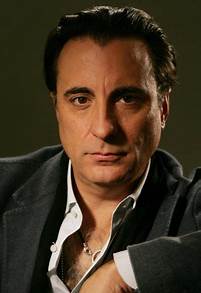
Andy García had the opportunity to develop a career in which he has remained faithful to his principles without ever exposing his body or starring in sex scenes. “I don’t want to go down that path,” he told journalist Mónica Garza. Still, he has become a sex symbol despite himself.
In the mid-eighties, García was predicted to have a career similar to that of Robert De Niro. 40 years later, however, the prophecy has been unfulfilled. Despite his status as an actor courted by Coppola and De Palma, in recent years he has found himself involved in projects that minimize his talent, diluted in ensemble casts. Proof of this decline is that some of the highest-grossing projects in which the star has been involved since the Ocean’s Eleven trilogy (2001-2008), are Geostorm (2017) and Beverly Hills Chihuahua (2008). His most critically acclaimed recent role is a Latin version of Father of the Bride with Gloria Estefan (premiered on HBO Max) where he showed off an unusual comedic side. This year, Garcia premieres the fourth installment of The Expendables, the new adventures of the band of old glories of action cinema headed by Sylvester Stallone.
GARCIA INDEPENDENT FILMS & POPULAR CINEMA
Just some years ago, Garcia was the most relevant Latin actor since Anthony Quinn. For a decade, he maintained a perfect balance between independent films and popular cinema. But his career didn’t take off. “He has all the smoldering Latin volatility, the darkly dangerous good looks. Why didn’t he become the next De Niro or Pacino?” asked The Guardian.
Aney Garcia was 5 years old when his family left Cuba and took refuge in the United States, as a result of the revolution against the dictator Fulgencio Batista and the rise of Fidel Castro. His mother was an English teacher and his father a prestigious lawyer who owned an avocado plantation in the municipality of Bejucal. That privileged property and a house facing the sea in an exclusive neighborhood of Havana were the scene of his childhood, until he abruptly found himself living with his parents, siblings, and grandmother in a one-room house. The once-wealthy family arrived in Miami Beach with just $300 and a box of cigars. They started from scratch.
“That first Christmas we didn’t even have enough money to buy gifts for the children,” confessed the actor’s mother, Amelie García. “But the children never heard us complain about what we had lost, only about our longing to return.” That constant desire in the actor’s life has been reflected in his projects as a director, from Guillermo Cabrera Infante’s script The Lost City (2005) — a long-cherished project that featured Inés Sastre, Bill Murray and Dustin Hoffman, a love song to his longed-for Cuba — to the documentary Cachao (Como su Ritmo No Hay Dos) (1993), about the emigrated Cuban musician.
García’s first passion in the United States was basketball, which he intended to pursue professionally until acute hepatitis derived from mononucleosis kept him benched for a year. He ended up opting for acting, although his father preferred him to run the family business. “My father had no concept of the entertainment business or acting. To him, an actor was Humphrey Bogart or Clark Gable. I’m sure in the back of his mind he said, ‘I love my son, but he’s no Humphrey Bogart,’” he joked in The New York Times. Luck came to him in the form of a small role in the pilot of Hill Street Blues (1981), Steven Bochco’s masterpiece that changed police series forever.
ESCAPING THE CLICHE OF LATINO CRIMINAL
If newly minted stars like Pedro Pascal still recall the difficulties of escaping the cliché of the Latino criminal, we can imagine what this meant in the eighties. Andy García not only did not want to be a stereotype. He did not want to be pigeonholed. “When I started, they only offered me gang members. I told the casting directors: ‘I didn’t study Latin acting, I studied Shakespeare and Tennessee Williams,’” he declared during a tribute to his career held last year at the Red Sea Film Festival in Saudi Arabia.
After seeing him as the villain in Eight Million Ways to Die (1986), Brian de Palma tapped him to play Frank Nitti, the elegant hitman from The Untouchables (1987) who, in a nod to Hitchcock’s Vertigo (1958), ends up flying in one of the most iconic sequences of the film. “He was mean, tough, and cunning. We thought [when we saw Eight Million]: ‘Wow, what a great killer!’” Producer Art Linson told People. But García wanted a juicier role on the other side of the law. “I told him I wanted to play a police officer, and he looked at me like I was a Martian.” He aspired to be like George Stone, the marksman of Italian descent, and he achieved it. De Palma’s film earned four Oscar nominations, critical applause and considerable box office earnings. From a legendary filmmaker and the mafia, he went on to another renowned author, Ridley Scott, to play Yakuza in Black Rain (1989), another popular success. Then he went on to play Richard Gere’s antagonist in Internal Affairs (1990), a character written expressly for him. While he prepared, however, another Italian role came to him that was going to change his life. García came to the cinema when no one was talking about cultural appropriation. If Natalie Wood, of Russian origin, could play the Puerto Rican Maria and John Wayne had been Genghis Khan, why wouldn’t a Cuban be the Corleone heir?
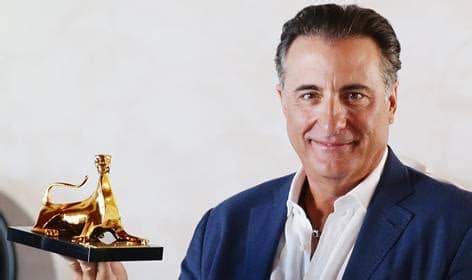
THE GODFATHER lll
When it began to be rumored that Francis Ford Coppola was preparing The Godfather: Part III (1990), half of Hollywood tried to sneak into it. Garcia pressured his agent and ended up competing with Alec Baldwin, Val Kilmer and Charlie Sheen for the role of Vincent Mancini, Michael Corleone’s impetuous nephew, the titular heir not only to a mafia empire, but perhaps even to a future fourth installment.
He got his first and only Oscar nomination thanks to that performance, but the film was not the phenomenon that was expected. When it was released, it failed to displace Home Alone (1990) from first place at the box office, and the reviews were not flattering. It didn’t help that Winona Ryder withdrew from the project at the last minute and her character, that of Mary Corleone, Michael’s daughter and romantic interest of García’s character, fell to the inexperienced Sofia Coppola, the director’s daughter.
After working with the top directors of the moment, García was a star, but the definitive push was missing. He appeared in Dead Again (1991), the supernatural thriller by Kenneth Branagh, and the comedy Hero, by Stephen Frears, films that were well received but failed to move his career forward. Above all, he opted for too many failed projects: the cliché-filled thriller Jennifer 8 (1992); the romantic drama When a Man Loves a Woman (1994), where he was the devoted husband of an alcoholic woman played by Meg Ryan at a time when no one wanted to see America’s Smile drunk and hitting her daughter; and Things to Do in Denver When You’re Dead (1995), a little noir gem that could have been a classic but no one knew how to sell it. He headlined posters and his Latin identity was irrelevant in the scripts, but his career entered a coma from which he was only rescued by Soderbergh in Ocean’s Eleven.
García is aware that he may have a difficult personality. “By my very nature, I tend to feel comfortable swimming a little against the current,” he said. Religious and politically conservative, in 2010 he told El País Semanal: “How many times have I heard from producers that ‘Andy, sex sells!’. I don’t doubt it, but sell it to someone else.” Another reason for his reluctance to engage in sexual scenes is that he believes they imply a lack of respect for his wife, María Victoria Lorido, whom he met in 1975, the same day he asked for her hand. “We were very young, but she swept me off my feet. Some people know each other a while and there’s a friendship first, but when we met that night, it was very clear that this was the woman of my life,” he told People. “I didn’t want her to escape.” Seven years later they married, have four children and form one of the strongest couples in Hollywood. “Marriage is like a religion, and should be treated as such,” he says. The family, he says, is the center of his life and that has led him to lose roles. If a project made it difficult for him to be with his children, he rejected it: “I am a father and that is my priority.”
That firmness was evident in a curious controversy with Antonio Banderas that elapsed in the pages of this newspaper in the early nineties. The man from Malaga made a statement to El País Semanal in which he stated that García was an emigrant “who doesn’t want to be an emigrant, he wants to be an American.” The words reached García’s ears and were distorted by Guillermo Cabrera Infante. In a letter to the director, the writer reminded Banderas that his first big role in Hollywood, The Mambo Kings Play Songs of Love (1992), had come to him after García’s refusal to appear in the film — something that happened again in Two Much (1995), in this case due to a question of dates —, although the main reason for his anger was that Banderas called him an emigrant and not an exile.
Banderas apologized in another open letter, praised the actor (“one of the greatest supporters of Latin culture through his work and his private life, both inside and outside the United States”) and expressed his desire to work together one day. It hasn’t happened yet, but both kings of mambo still have a long career ahead of them.
Agencies/ WIki/ ElPais/ Eva Guimil/ Extractos/ Excerpts/ Internet Photos/ Arnoldo Varona/ www.TheCubanHistory.com
THE CUBAN HISTORY, HOLLYWOOD.