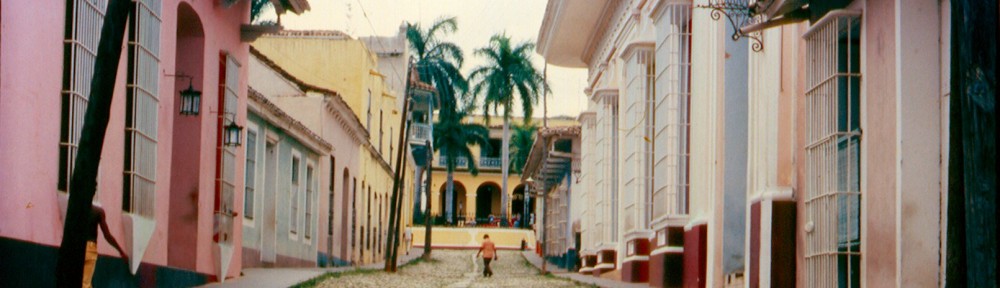
 THE ‘PREGONES’, PART OF THE CULTURAL AND SOCIAL IDENTITY OF THE CUBAN. VIDEOS.
In Cuba, the “Pregones” (proclamation) is not only a commercial necessity but a tradition, and it has mutated to adapt to the new times, where technology is part of everyday life, that is why some are accompanied by speakers and music.
Without a doubt, the most famous Cuban proclamation/pregones of all time, and the first success of the island’s music in the world, was the proclamation “El Manisero” by the composer Moisés Simons (Havana, 1889 – Madrid, 1945) and immortalized in the incomparable voice of Rita Montaner.
In 1928 this composer, pianist and orchestra, and theater director wrote the immortal proclamation on a napkin, which was included in the film ‘The Cuban Song’, by the producer Metro Goldwyn Mayer, and in the American television program “A star Is Born”.
“Maní, manicero arrived … little house do not lie down to sleep / without eating a peanut cone … The manicero is leaving”, says this song that 90 years later Cubans and foreigners continue to like for its cheerful and contagious rhythm.
Rita Montaner sings “El Manicero”.
Later they were followed by other proclamations-songs that were also very popular, such as El panquelero (seller of the sweet known as panqué) and Los Tamalitos de Olga, but never at the level of “El Manicero”.
THE MOST FAMOUS CUBAN PREGONES.
The famous Cuban proclamations existed long before the well-known publicity and widespread marketing became theory, and many people specialized in the matter.
The proclamations, in every sense of the word, are part of Cuban popularity and folklore. In a country like Cuba, so colorful and with different shades, it is very common to find people in the streets offering their products. Ranging from peanuts and sweets to a variety of cleaning utensils, which are promoted through Cuban proclamations.

In Cuba, there have always been town criers, but after 1959 private businesses closed, and almost disappeared, except those that advertised the sale of flowers, “said journalist Ciro Bianchi in one of his articles.
With the authorization of the government for self-employment, the street vendors reappeared, with proposals as dissimilar as their proclamations, I remember that as a child an old man who sold Morón torticas (sweet Creole made of wheat flour) passed by my house, and it said: “A kilo (cent) the torticas from Morón, how delicious they are; by a kilo, the torticas from Morón are a sensation,” recalled the Cuban journalist.
In the 1950s, the profession of a traveling salesman was common in Cuba, people who went from town to town carrying various merchandise, whose work, although it was not announced at all voices, derived from the neighborhood town crier.

Some of the most popular examples are the proclamations that offered peanuts and said like this: «for you, pretty Cuban / Crunchy peanut, / That I bring it from Havana / Dedicated for you», or the traditional «Floreeeee … flooooores», so typically habanero. There is also the well-known «For pants and jacket, I bring a cheap coat rack».
The same in the morning as in the afternoon, Havanans can hear whistles that identify the postman and the baker, while the knife and scissors grinder and the ice cream vendor announce themselves with melodies produced by music boxes.
“Good size, good taste, the tamales at a good price,” shouts the seller of that corn dough cooked inside the cereal itself, while a colleague offers bottles of bleach “that cleans everything, even the conscience.”
In this way, the proclamation, without being indigenous to Cuba, has taken its own national form and has become part of the Cuban’s cultural and social identity.
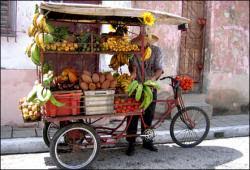
Currently, the proclamation, although it has lost the elegance of decades ago, is still alive in the streets of the cities of Cuba. Many people on the Island today offer peanuts, crackers, food, and vegetables, just to say a few, among many other things.
The pregones/proclamations have changed a lot in recent times. One of the most common voiced by today’s peanuts is “buy the peanut, peanut, with the moní, moní”. Undoubtedly, times today have changed.
A rather unique case of the rescue of tradition occurs in the historic center of Old Havana, where there are “professional” hawkers. They offer their peanuts to foreign visitors and sing the popular refrains of yesteryear, dressed in traditional costumes.


 LOS PREGONES, PARTE DE LA IDENTIDAD CULTURAL Y SOCIAL DEL CUBANO.
En Cuba, el pregón no sólo es una necesidad mercantil sino una tradición, y ha mutado para adaptarse a los nuevos tiempos, donde la tecnología forma parte de la cotidianidad, por eso algunos se acompañan de bocinas y de música.
Sin duda, el pregón cubano más famoso de todos los tiempos, y primer éxito de la música de la isla en el mundo, fue el pregón “El Manisero” del compositor Moisés Simons (La Habana, 1889 – Madrid, 1945) e inmortalizado en la imcomparable voz de Rita Montaner.
En 1928 este compositor, pianista y director de orquesta y teatro escribió sobre una servilleta el inmortal pregón, que fue incluido en el filme ‘The Cuban Song’ (La canción cubana), de la productora Metro Goldwyn Mayer, y en el programa televisivo estadounidense “Nace una estrella”.
“Maní, manicero llegó… caserita no te acuestes a dormir/sin comerte un cucurucho de maní… El manicero se va” , dice esta canción que 90 años después sigue gustando a cubanos y extranjeros por su alegre y contagioso ritmo.
Rita Montaner canta “El Manicero”.
Luego le siguieron otros pregones-canciones que también fueron muy populares, como El panquelero (vendedor del dulce conocido como panqué) y Los Tamalitos de Olga, pero nunca a la altura de “El Manicero”.
LOS MAS FAMOSOS PREGONES CUBANOS.
Los famosos pregones cubanos existen muchísimo antes de que la conocida publicidad y el extendido marketing se convirtieran en teoría, y muchas personas se especializaran en la materia.
Los pregones, en toda la extensión de la palabra, forman parte de la popularidad y del folclor cubano. En un país como Cuba, tan colorido y con diversos matices, es muy común encontrar personas en las calles ofreciendo sus productos. Que van desde maní y dulces hasta diversidad de utensilios de limpieza, que se promocionan a través de los pregones cubanos.
En Cuba hubo pregoneros desde siempre, pero después de 1959 cerraron los negocios privados, y casi desaparecieron, salvo los que anunciaban la venta de flores”, decia el periodista Ciro Bianchi en uno de sus articulo.
Con la autorización del gobierno para el trabajo por cuenta propia, reaparecieron los vendedores ambulantes, con propuestas tan disímiles como sus pregones, yo recuerdo que de niño pasaba por mi casa un anciano que vendía torticas de Morón (dulce criollo de harina de trigo), y decía: “A kilito (centavo) las torticas de Morón, que ricas son; a kilito las torticas de Morón, son sensación”, recordó el periodista cubano.
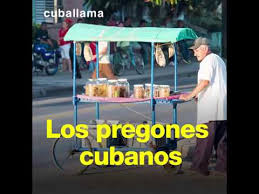
En la década de 1950 era común en Cuba el oficio de viajante de comercio, personas que iban de pueblo en pueblo llevando diversas mercancías, cuya labor, aunque no se anunciaba a toda voz, derivó del pregonero de barrios.
Algunos de los ejemplos más populares son los pregones que ofertaban maní y decían así: «para ti, linda cubana/ Crocante de maní, / Que lo traigo de La Habana/ Dedicado para ti», o el tradicional «Floreeeee… flooooores», tan típicamente habanero. Tambié está el conocido «Para pantalón y saco, traigo perchero barato».
LOS PREGONEROS DE HOY EN CUBA.
Lo mismo en la mañana que de tarde, los habaneros pueden escuchar silbatos que identifican al cartero y al panadero, mientras que el amolador de cuchillos y tijeras y el vendedor de helados se anuncian con melodías producidas por cajas de música.
“Buen tamaño, buen sabor, a buen precio los tamales”, grita la vendedora de esa masa de maíz cocinada dentro de las hojas del propio cereal, mientras un colega oferta botellas de cloro “que limpia todo, hasta la conciencia”.

De este modo, el pregón, sin ser autóctono de Cuba, ha tomado su propia forma nacional y se ha convertido en parte de la identidad cultural y social del cubano.
Actualmente, el pregón, aunque ha perdido la elegancia de hace decenios, aún sigue vivo en las calles de las ciudades de Cuba. Muchas personas en la Isla, hoy en día, ofrecen maní, galletas saladas, viandas y vegetales, por solo decir algunos, entre tantas otras cosas.
Los pregones han cambiado bastante en los últimos tiempos. Uno de los más comunes voceados por los maniseros de hoy, es «compra el maní, maní, con el moní, moní». Sin dudas, los tiempos hoy en día han cambiado.
Un caso bastante singular del rescate de la tradición se da en el casco histórico de La Habana Vieja, donde existen pregoneras «profesionales». Ellas ofrecen su maní a los visitantes extranjeros y cantan los populares estribillos de antaño, vestidas con los trajes tradicionales.
Agencies/ TodoCuba/ Gretel Heredia/ Internet Photos/ YouTube/ Arnoldo Varona/ www.TheCubanHistory.com
THE CUBAN HISTORY, HOLLYWOOD.