– AVES Endemicas Cubanas: El Tomeguín del Pinar o Senserenico. VIDEOS.

download (13)AVES ENDEMICAS CUBANAS: EL TOMEGUIN DEL PINAR (PINAR DEL RIO Y ORIENTE). VIDEOS.

También se conoce como Bijirito (Tiaris canora). Otra de las aves canoras pertenecientes al patrimonio endémico de Cuba. Conocido con dos nombres vulgares: Tomeguín del Pinar, en la región occidental y central y Senserenico en la región oriental. Muy común en toda la isla, es frecuente encontrarlo en cautiverio (jaulas), pues su canto es agradable, melodioso y sus colores llamativos, muchos mueren por cada uno que logra adaptarse.

El tomeguín del pinar, ave endémica de Cuba, vuela con libertad en el área protegida La Guabina, un paraíso natural a escasos kilómetros de la ciudad de Pinar del Río, visitado por más de medio centenar de especies de la avifauna cubana.

La especie fue muy exportada a Europa hasta mediados del Siglo XX. En grandes pajareras se ha logrado su reproducción. Pertenece a la familia Emberizidae del orden Passeriformes, su nombre común en inglés es Cuban Grassquit.

CARACTERISTICAS.

Esta ave es conocida en todas las provincias por la belleza de sus colores y su canto tan alegre. Cuando se le mantiene en jaulones grandes es capaz de reproducirse. Forman parejas inseparables. Es una especie endémica de Cuba, muy pequeña, de color olivo en las partes superiores y pardo cenizo en el resto del cuerpo, con el pecho negro y un collarín amarillo muy vistoso situado a los lados del cuello.

Los machos son muy pendencieros y algunas personas los utilizan como aves de pelea. Mide unos 11 cm o menos y se le conoce fácilmente por un collarín de plumas amarillas a cada lado del pescuezo. Las partes superiores de su cuerpo son olivadas, las inferiores de color pardo ceniciento, con el pecho casi negro. La hembra tiene el collarín amarillo menos desarrollado.

Cuando no están en época de apareamiento se agrupan en pequeñas bandadas familiares. En período de cría las parejas establecen una unión muy fuerte, en tanto los machos se vuelven en extremo celosos y pelean entre sí por su territorio.

Buscan su alimento de semillas de gramíneas, pequeñas frutas y retoños entre las hierbas.

download (11)

Colocan su nido cerca del suelo, es globular, de entrada por un lado y es grande en comparación con el tamaño del ave. Prefieren hacerlos sobre árboles o arbustos espinosos. Es construido con pajas, fibras y raíces finas y su interior revestido con materiales mullidos.

Anidan entre abril y junio. La puesta es de dos o tres huevos que miden 1.6×1.2 cm, blancuzcos, con tono ligero verde azulado, con manchas pardas y moradas en el extremo más ancho.

LUGARES DONDE VIVEN.

El Tomeguín del Pinar está presente en la Isla de Cuba de forma común en áreas naturales y es más raro cerca de asentamientos humanos. Vive en sabanas, en bordes de bosques semicaducifolios o de pinos, en matorrales costeros y en espesuras de malezas en áreas agropecuarias.

La especie también estaba presente en la Isla de la Juventud durante el siglo XIX, pero actualmente ha desaparecido de esta isla. Muy común en los pinares de Pinar del Río. Se han obtenido crías en pajareras, así mismo se encariñan con el criador y demuestran alegría al verlo.

No se encuentra en los Pinares de Mayarí, es posible que en esto influya la vegetación secundaria que es distinta a la de Pinar del Río.

Según reportes, el tomeguín cubano ha sido visto en Bahamas, probablemente introducido de forma casual, pues no es un ave migratoria.

unnamed-4-1

logo (1)

d184e7c6368016917e36c077308fdabfCUBAN ENDEMIC BIRDS: EL TOMEGUÍN DEL PINAR (PINAR DEL RIO Y ORIENTE). VIDEOS.

It is also known as Bijirito (Tiaris canora). Another of the songbirds belonging to the endemic heritage of Cuba. Known with two common names: Tomeguín del Pinar, in the western and central region, and Senserenico in the eastern region. Very common throughout the island, it is frequent to find it in captivity (cages), since its song is pleasant, melodious and its striking colors, many die for each one who manages to adapt.

The tomeguín del Pinar, an endemic bird of Cuba, flies freely in the La Guabina protected area, a natural paradise a few kilometers from the city of Pinar del Río, visited by more than fifty Cuban bird fauna.

The species was highly exported to Europe until the middle of the 20th century. Reproduction has been achieved in large aviaries. It belongs to the Emberizidae family of the order Passeriformes, its common name in English is Cuban Grassquit.

FEATURES.

This bird is known in all provinces for the beauty of its colors and its happy song. When kept in large cages it is able to reproduce. They form inseparable pairs. It is an endemic species of Cuba, very small, with an olive color in the upper parts and ashy brown in the rest of the body, with a black chest and a very attractive yellow collar located on the sides of the neck.

download (7)

Males are very tough and some people use them as fighting birds. It measures about 11 cm or less and is easily known by a yellow feather collar on either side of the neck. The upper parts of its body are olive, the lower parts are ashy brown, with an almost black chest. The female has the least developed yellow collar.

When they are not in mating season they are grouped into small family flocks. In the breeding period the pairs establish a very strong union, while the males become extremely jealous and fight each other for their territory.

They look for their food from grass seeds, small fruits, and shoots among the herbs.

They place their nest close to the ground, it is globular, entrance on one side and it is large compared to the size of the bird. They prefer to make them on thorny trees or bushes. It is built with straws, fibers, and fine roots, and its interior lined with fluffy materials.

download (10)

They nest between April and June. The laying is of two or three eggs measuring 1.6×1.2 cm, whitish, with a light bluish-green tone, with brown and purple spots at the widest end.

PLACES WHERE THEY LIVE.

Tomeguín del Pinar is present on the Island of Cuba in common in natural areas and is rarer near human settlements. It lives in savannahs, on edges of semi-deciduous or pine forests, in coastal thickets and in thickets of weeds in agricultural areas.

The species was also present on the Isle of Youth during the 19th century but has now disappeared from this island. Very common in the pine forests of Pinar del Río. Young has been obtained in aviaries, likewise, they become attached to the breeder and show joy when they see him.

It is not found in the Pinares de Mayarí, it is possible that this is influenced by the secondary vegetation that is different from that of Pinar del Río.

According to reports, the Cuban tomeguín has been seen in the Bahamas, probably introduced by chance, as it is not a migratory bird.

Agencies/ Wiki/ Ecured/ Maria Candela/ Internet Photos/ YouTube/ Arnoldo Varona/ www.TheCubanHistory.com
THE CUBAN HISTORY, HOLLYWOOD.

images-2

logo (1)

unnamed (1)

– LUCY GRAU, Una Gran Voz que Domina todo un Espectáculo. VIDEOS.

downloadLUCY GRAU, UNA GRAN VOZ QUE DOMINA TODO UN ESPECTACULO. VIDEOS.

Una cantante carismática y talentosa de Miami, la interprete de musica tropical Lucy Grau, teniendo todos los elementos de una vocalista, ha presentado actuaciones impresionantes, a nivel nacional e internacional con su poderosa voz. Domina sin esfuerzo tanto el idioma inglés como el español mientras se mantiene fiel a sus raíces rítmicas latinas mientras demuestra en sus éxitos “Last Dance” y “On The Radio” (Salsa Version), los clásicos de Donna Summer que eligió como una interpretación para la cantante fallecida y uno de sus ídolos favoritos de todos los tiempos de Lucy.

COMIENZOS DE SU CARRERA ARTISTICA.

Lucy nació en el Hospital Mount Sinai, de Miami Beach. Es hija de cubanos exiliados. Siempre ha vivido en el sur de Florida.
Comenzó a cantar a la edad de siete años, en el coro de una Iglesia Metodista llamada “Alfa”, término que significa “El comienzo”. A los nueve años Lucy empezó a tomar clases de piano por un breve período de tiempo porque lo suyo siempre, reconoce, fue el canto.

Lucy recuerda que desde pequeña asistía a festividades típicas de Miami como el Festival de la Calle 8 o la Feria de los Municipios de Cuba en el Exilio con un casete con música grabada, en caso de que le dieran la oportunidad de subir al escenario. La cinta contenía dos temas –rememora-. Si le pedían interpretar una tercera canción interpretaba a capella “El Yerberito”, clásico de su idolatrada Celia Cruz.

En una de esas presentaciones, justamente, a la edad de 13 años, un empresario llamado Rubén Otero se deslumbró con su voz y le propuso ser la vocalista de una orquesta que manejaba. “Con ese grupo recibí mi primer dinerito por cantar”, dice con emoción. La popular cantante no ha parado de realizar presentaciones con su propia orquesta.

La bella cantante cubanoamericana Lucy Grau ha presentado su disco “Alocada”, como primer tema de promoción es “On The Radio”, versión tropical del clásico de la inolvidable Donna Summer.

Como se sabe, Lucy Grau se dedica a la música desde la adolescencia, pero recién en los últimos meses pudo cristalizar el sueño de grabar el disco “Alocada”, que según la cantante, “fue hecho con mucho amor y sacrificio”. Los temas que forman parte de esta producción“son un reflejo de mi alocada, bilingüe, intensa y alegre vida”, acota.

Cabe resaltar que “Alocada”, fue producido por el respetado Carlos Infante y fue grabado completamente en Miami. Además del single promocional “On The Radio”, el álbum contiene temas como “Last dance”, “Dime corazón”, “Sospecho”, “Qué hace”, “Killing me softly”, “Sin comentarios”, “El solar” y “Alocada”, en versiones salsa y balada.

download (6)

Lucy ha compartido el escenario con muchos artistas y músicos talentosos como … La India, Andy García, Richie Rey y Bobby Cruz, Tito Nieves, Roberto Torres, Rey Ruiz, Federico Brito, Eddie Santiago José Alberto “El Canario, Carlos Oliva y Los Sobrinos del Juez, Hansel Martínez (Hansel y Raúl), Willy Chirino, Albita, Johnny Ventura, Larry Harlow, Brenda K. Starr … entre muchos más. Voz verdadera, personalidad y habilidades dinámicas de un gran rendimiento.

download (2)

Ha cantado en eventos públicos y privados, siempre acompañada por una orquesta de primer nivel. Uno de sus faros, claro, es Celia. “Fue, es y será la más grande. La escuchaba en todas las fiestas familiares. Siempre tarareaba sus canciones, me llamaba la atención su voz potente y el hecho de que pese al machismo que imperaba en su época la buscaban para cantar con orquestas de hombres”, señala la popular cantante de salsa.

VIDA PERSONAL.
Está casada y tiene dos hijas.

CubaTurismo

logo (1)

LucyGrau.8.5.17.highresLUCY GRAU, A GREAT VOICE THAT MASTERS A WHOLE SHOW. VIDEOS.

A charismatic and talented singer from Miami, tropical music interpreter Lucy Grau, having all the elements of a vocalist, has presented impressive performances, nationally and internationally with her powerful voice. Effortlessly masters both the English and Spanish languages ​​while staying true to his rhythmic Latin roots while demonstrating in his hits “Last Dance” and “On The Radio” (Salsa Version), the Donna Summer classics he chose as a performance for Lucy’s late singer and one of her all-time favorite idols.

BEGINNINGS OF HIS ARTISTIC CAREER.

Lucy was born at Mount Sinai Hospital in Miami Beach. She is the daughter of Cuban exiles. She has always lived in South Florida.
She began singing at the age of seven, in the choir of a Methodist Church called “Alpha,” a term that means “The Beginning.” When she was nine years old, Lucy began to take piano lessons for a short period of time because, she always admits, she was singing.

Lucy remembers that since she was little she attended typical Miami festivities such as the 8th Street Festival or the Fair of Cuban Municipalities in Exile with a cassette with recorded music, in case she was given the opportunity to go on stage. The tape contained two themes -remembers-. If they asked her to interpret the third song, she would perform a capella “El Yerberito”, a classic by her idolized Celia Cruz.

In one of those presentations, just at the age of 13, a businessman named Rubén Otero was dazzled by her voice and proposed to be the vocalist of an orchestra she conducted. “With that group, I received my first money for singing,” he says with emotion. The popular singer has not stopped performing with her own orchestra.

The beautiful Cuban-American singer Lucy Grau has presented her album “Alocada”, as the first promotional song is “On The Radio”, a tropical version of the classic of the unforgettable Donna Summer.

As is known, Lucy Grau has been dedicated to music since adolescence, but only in the last few months was the dream of recording the album “Alocada” crystallized, which according to the singer, “was made with much love and sacrifice.” The themes that are part of this production “are a reflection of my crazy, bilingual, intense and happy life,” he says.

It should be noted that “Alocada” was produced by the respected Carlos Infante and was recorded entirely in Miami. In addition to the promotional single “On The Radio”, the album contains songs such as “Last dance”, “Tell me heart”, “I suspect”, “What does”, “Killing me softly”, “No comments”, “The solar” and “Alocada”, in salsa and ballad versions.

Lucy has shared the stage with many talented artists and musicians such as … La India, Andy García, Richie Rey and Bobby Cruz, Tito Nieves, Roberto Torres, Rey Ruiz, Federico Brito, Eddie Santiago José Alberto “El Canario, Carlos Oliva and The Judge’s Nephews, Hansel Martínez (Hansel and Raúl), Willy Chirino, Albita, Johnny Ventura, Larry Harlow, Brenda K. Starr … among many others .. True voice, personality and dynamic skills of a great performance.

download (1)

She has sung at public and private events, always accompanied by a first-class orchestra. One of its headlights, of course, is Celia. “It was, is and will be the largest. I listened to her at all family parties. She always hummed her songs, I was struck by her powerful voice and the fact that despite the machismo that prevailed in her time they were looking for her to sing with men’s orchestras, ”says the popular salsa singer.

PERSONAL LIFE.

She is married and has two daughters.

Agencies/ Wiki/ Various/ Internet Photos/ YouTube/ Arnoldo Varona/ www.TheCubanHistory.com
THE CUBAN HISTORY, HOLLYWOOD.

Ciudades-de-Cuba.Matanzas

logo (1)

Ciudades-de-Cuba.Varadero

– FAMILIA Cubana Fanjul Recibe al Rey Español Juan Carlos en Republica Dominicana.

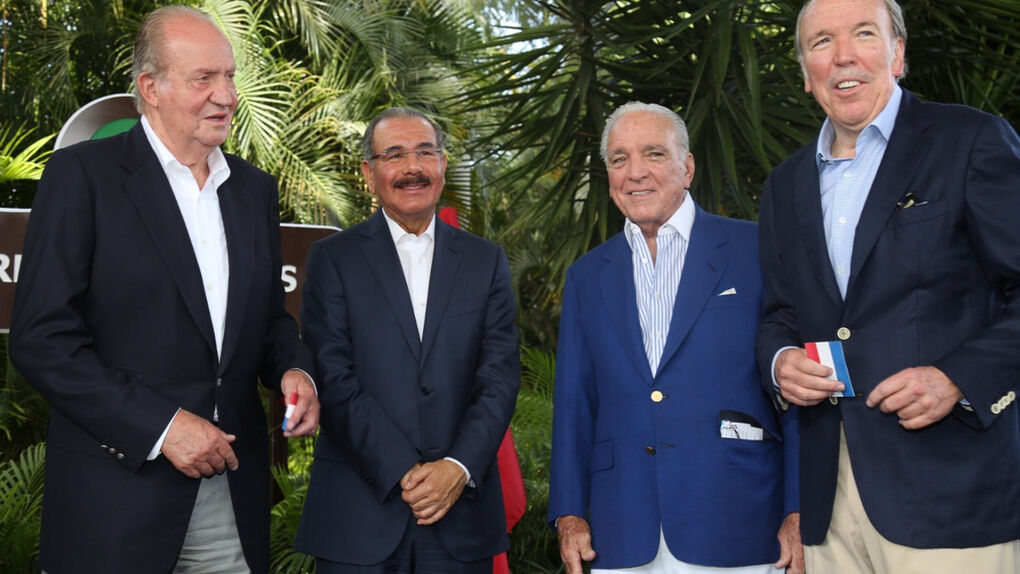
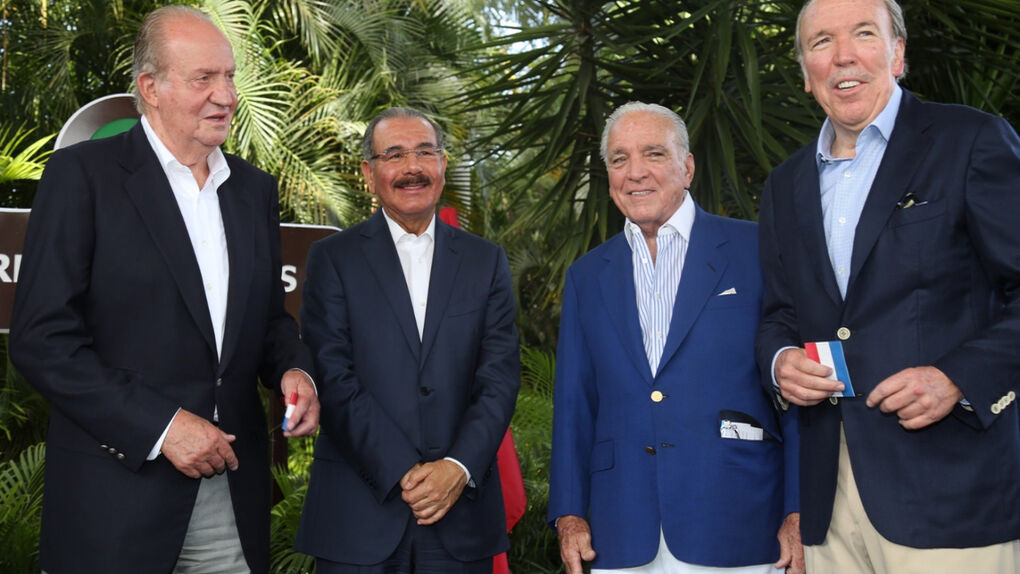
El rey Juan Carlos junto al presidente dominicano Danilo Medina y los empresarios cubanos Alfredo y Pepe Fanjul. "EL NACIONAL" DE REPÚBLICA DOMINICANA

El rey Juan Carlos junto al presidente dominicano Danilo Medina y los empresarios cubanos Alfredo y Pepe Fanjul. “EL NACIONAL” DE REPÚBLICA DOMINICANA

FAMILIA CUBANA FANJUL RECIBE AL REY ESPAÑOL JUAN CARLOS EN REPUBLICA DOMINICANA.

(8/4/20) – El rey emérito Juan Carlos de España, quien anunció su intención de abandonar el país este lunes a raíz de los numerosos escándalos judiciales en los que se ha visto envuelto por presunta corrupción, estaría actualmente en República Dominicana junto a los hermanos Fanjul, de origen cubano, según informa la prensa española.

La noche del domingo, cuando escribió la carta en la que anunció su marcha al rey Felipe VI, Juan Carlos de Borbón se encontraba en Sanxenxo, Galicia, desde donde se trasladó en automóvil a Oporto, Portugal, para tomar un vuelo hacia República Dominicana, informó el diario español La Vanguardia.

Aunque en el mensaje donde informó su decisión de dejar territorio español no especificó hacia qué país pretendía dirigirse, el monarca dijo que está a disposición de la Fiscalía española “para cualquier trámite o actuación que considere oportuna”.

ACTUALIZANDO LA NOTICIA: (8/17/20) La Casa Real confirmó que el rey emérito de España, Juan Carlos I, se encuentra en Emiratos Árabes desde el 3 de agosto, momento en que se informó su salida del país hacia un destino no específico tras conocerse públicamente aspectos comprometedores de su vida privada pasada.

“S. M. el Rey Juan Carlos ha indicado a la Casa de Su Majestad el Rey que comunique que el pasado día 3 del presente mes de agosto se trasladó a Emiratos Árabes Unidos (EUA), donde permanece en la actualidad”, indica el comunicado oficial que se compartió vía SMS, desde el Palacio de la Zarzuela.

— Tras el comienzo del verano comenzó a circular el rumor de que el recinto turístico ubicado en el mar Caribe podría ser el destino del monarca, donde presumiblemente se le estaría construyendo una mansión privada que puede alcanzar el coste de 30 millones de euros.

Las razones atribuidas a esta decisión podrían estar relacionadas tanto con el clima como con la cercanía de Miami, donde sería atendido en cualquiera de los hospitales privados en los que los Fanjul son personas influyentes y poderosas.

Según el rotativo, la intención de Juan Carlos es la de alojarse de forma temporal en una residencia dentro del complejo exclusivo Casa de Campo, propiedad de la familia cubana Fanjul y ubicado en La Romana.

download (14)

“Su estancia tendrá carácter temporal ya que no se trata de instalarse en este destino definitivamente, sino que como mencionó en la misiva remitida a su hijo, el viaje corresponde a su ‘voluntad de trasladarse, en estos momentos, fuera de España'”, señaló el diario español.

LA FAMILIA CUBANA FANJUL.

Los cuatro hermanos, Alfonso (Alfy), José (Pepe), Alexander y Andrés Fanjul son cubanos con raíces españolas que abandonaron la Isla cuando Fidel Castro llegó al poder y han mantenido una relación de amistad con Juan Carlos de Borbón, dejándose ver juntos en numerosas ocasiones.

La familia Fanjul, era dueña de grandes extensiones azucareras en Cuba, expropiadas por el Gobierno de Fidel Castro. El patriarca, Alfonso Fanjul, transmitió el siguiente legado a sus hijos: “Tenéis el deber de reconstruir nuestro imperio”. Así lo hicieron, trasladando sus conocimientos empresariales y agrícolas, primero a Florida y después a la República Dominicana.

Pepe Fanjul (gran amigo del emérito) es una de las voces más reconocidas en Miami por su apoyo a sectores del exilio cubano y contrario a cualquier acercamiento al régimen castrista, mientras su hermano mayor, Alfredo, fue partidario de reanudar las relaciones diplomáticas con La Habana.

Para el diario español El Confidencial, “esta familia puede ofrecer el mejor refugio emocional para el retiro de don Juan Carlos, cuyo padre, abuelo y bisabuelo también vivieron, por diferentes causas, sus propios exilios”.

Los vínculos que unen a los empresarios cubanoamericanos y al monarca se remontan varias generaciones atrás: “La hermana de la abuela de Fanjul, Edelmira Sampedro, contrajo matrimonio con el primogénito del abuelo de Juan Carlos I, Alfonso XIII: el príncipe Alfonso”, explicó Vozpópuli.

Por esa relación tan cercana, Pepe Fanjul habría decidido poner a disposición del rey emérito varios de sus inmuebles para que pueda pasar una larga temporada.

Mientras tanto, la Reina Sofía, con quien Juan Carlos se mantiene casado a pesar de tener una relación muy distante, permanecerá en España. Actualmente se encuentra en el Palacio de Marivent en Palma de Mallorca, pero se espera que luego regrese al Palacio de la Zarzuela para continuar centrada en las labores relacionadas con la Fundación Reina Sofía.

unnamed (2)

logo (1)

King Juan Carlos with Dominican President Danilo Medina and Cuban businessmen Alfredo and Pepe Fanjul. (The Dom.Rep. "El Nacional".

King Juan Carlos with Dominican President Danilo Medina and Cuban businessmen Alfredo and Pepe Fanjul. (The Dom.Rep. “El Nacional”).

CUBAN FAMILY FANJUL RECEIVES TO SPANISH KING JUAN CARLOS IN THE DOMINICAN REPUBLIC.

(8-4-20) -King Emeritus Juan Carlos of Spain, who announced his intention to leave the country on Monday as a result of the numerous judicial scandals in which he has been involved in alleged corruption, would currently be in the Dominican Republic together with the Fanjul brothers, of Cuban origin, as reported by the Spanish press.

On Sunday night, when he wrote the letter in which he announced his departure to King Felipe VI, Juan Carlos de Borbón was in Sanxenxo, Galicia, from where he traveled by car to Porto, Portugal, to take a flight to the Dominican Republic, reported the Spanish newspaper La Vanguardia.

Although in the message where he reported his decision to leave Spanish territory, he did not specify which country he intended to go to, the monarch said that he is at the disposal of the Spanish Prosecutor “for any procedure or action that he deems appropriate.”

UPDATING THE NEWS: (8/17/20) The Royal House confirmed that the King Emeritus of Spain, Juan Carlos I, has been in the United Arab Emirates since August 3, when his departure from the country to a destination not specific after disclosing compromising aspects of his past private life.

“S. M. King Juan Carlos has indicated to the House of His Majesty the King to communicate that on the 3rd of this month of August he moved to the United Arab Emirates (USA), where he remains today, ”the official statement indicates that It was shared via SMS, from the Palacio de la Zarzuela.

— After the beginning of summer, the rumor began to circulate that the tourist complex located in the Caribbean Sea could be the monarch’s destination, where presumably a private mansion would be being built for him, which can cost 30 million euros.

download (14)

The reasons attributed to this decision could be related to both the climate and the proximity of Miami, where he would be treated in any of the private hospitals in which the Fanjul are influential and powerful people.

According to the newspaper, the intention of Juan Carlos is to temporarily stay in a residence within the exclusive Casa de Campo complex, owned by the Cuban Fanjul family and located in La Romana.

“His stay will be temporary since it is not a question of settling in this destination definitively, but as he mentioned in the letter sent to his son, the trip corresponds to his ‘willingness to move, at the moment, outside of Spain'”, noted the Spanish newspaper.

THE CUBAN FAMILY FANJUL.

The four brothers, Alfonso (Alfy), José (Pepe), Alexander, and Andrés Fanjul are Cubans with Spanish roots who left the Island when Fidel Castro came to power and have maintained a friendly relationship with Juan Carlos de Borbón, allowing themselves to be seen together in numerous occasions.

The Fanjul family-owned large sugar extensions in Cuba, expropriated by the Fidel Castro government. The patriarch, Alfonso Fanjul, passed on the following legacy to his children: “You have a duty to rebuild our empire.” They did so, transferring their business and agricultural knowledge, first to Florida and then to the Dominican Republic.

Pepe Fanjul (a great friend of the emeritus) is one of the most recognized voices in Miami for his support for sectors of Cuban exile and contrary to any approach to the Castro regime, while his older brother, Alfredo, was in favor of resuming diplomatic relations with La Havana.

For the Spanish newspaper El Confidencial, “this family can offer the best emotional refuge for the retirement of don Juan Carlos, whose father, grandfather and great-grandfather also lived, for different reasons, their own exiles.”

31519294-8588871-image-a-26_1596479604382

The ties that unite Cuban-American businessmen and the monarch go back several generations ago: “Fanjul’s grandmother’s sister, Edelmira Sampedro, married the first-born of Juan Carlos I’s grandfather, Alfonso XIII: Prince Alfonso,” he explained. Vozpópuli.

Due to this close relationship, Pepe Fanjul would have decided to make several of his properties available to the King Emeritus so that he can spend a long season.

Meanwhile, Reina Sofía, with whom Juan Carlos remains married despite having a very distant relationship, will remain in Spain. She is currently at the Marivent Palace in Palma de Mallorca, but it is expected that she will later return to the Zarzuela Palace to continue focusing on the work related to the Reina Sofía Foundation.

Agencies/ Wiki/ DDC/ Extractos/ Excerpts/ Internet Photos/ Arnoldo Varona/www.TheCubanHistory.com
THE CUBAN HISTORY, HOLLYWOOD.

playas-de-varadero-cuba

logo

unnamed (5)