< GAMES PROHIBITED in Cuba, idiosyncrasy of the Cubans during History. Photos.

bolita-lotería-Cuba-eltoque-Didier-Cruz-2018LOS JUEGOS PROHIBIDOS IN CUBA, IDIOSINCRACIA DEL CUBANO DURANTE SU HISTORIA.

En la historia del pueblo cubano y especificamente en la idiosincrasia del cubano, los juegos populares tradicionales han estado presentes desde tiempos inmemoriales. Pero no vamos a hablar exclusivamente de este tipo de juegos.

Todos los cubanos han jugado a el Pegado, Los Escondidos, La Gallinita Ciega, La Casita de Martí, El Perrito Goloso, etc. Pero estos juegos, antes citados, se realizan fundamentalmente en horas del día, cuando los muchachos tienen mayor licencia para ensuciarse un poco con las carreras que ellos exigen. Ya en las tardes y noches, después de bañados, se reúnen para juegos más apacibles, que se llevan a cabo con la utilización de prendas, en los que el perdedor debe pagar un castigo siempre muy divertido. Entre estos juegos están: La Sortija, Viene un carrito cubano cargado de…, La Seguidilla, Te vendo un puerquito, y otros que ni recuerdo. Estos han quedado en el olvido para las actuales generaciones.

loteria

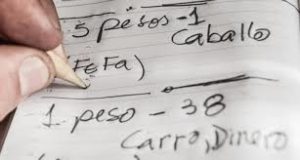
Igual ocurre con la lotería y la charada o bolita cubana. El nombre de lotería procede del italiano lotta, lucha, porque al parecer se establece una lucha entre el jugador, la suerte y los concurrentes: otros suponen que se deriva del alemán lot, que significa suerte, por que es lo que uno desea en la lotería y demás juegos de azar. Consiste en acertar los números de un billete previamente comprado con los números extraídos de una tómbola o un recipiente que garantice que sean extraídos al azar. Los números de dicho billete pueden ya estar impresos o bien ser elegidos por las propias personas. El número de aciertos pueden ser todos o parte de los número del billete. Al ganador o ganadores se les entrega un premio en dinero o especies. Por lo general si no hay ganadores para un sorteo el premio se acumula para el siguiente.

LA LOTERIA NACIONAL EN LOS AÑOS 50s

La lotería era un monopolio estatal o una concesión regulada por la leyes. En todos los países existen prohibiciones para que los particulares organicen juegos de lotería que no estén regulados de alguna forma. Una parte de lo recaudado por la venta de los billetes de lotería en general es entregada a obras de beneficencia social o queda en manos del Estado y es destinado a los gastos corrientes del mismo; de ahí que se diga que se trata de: “un impuesto voluntario para el que no sabe matemáticas”.

bola

Una estadística de 1957 de lo que invertían los cubanos todos los años en billetes de lotería, versos de la charada y centenas y terminales de la bolita, apunta una cifra fluctuante entre los $90 y los $100 millones, cifra considerable en aquellos momentos.

La Lotería en Cuba es ilegal, desde el triunfo de la revolución, pero no ha dejado de jugarse a espaldas del gobierno, porque es el pueblo cubano muy soñador y con ilusiones. Muchos piensan que es la lotería cubana también es una tradición popular, porque en la Isla a pesar de ser ilegal muchos conocen el significado de los números de la charada. Y ahí vamos con un vicio inevitable del cubano.

En Cuba la charada es una tabla compuesta de 100 números consecutivos del 1 al 100. Los primeros 36 números están tomados de la llamada charada china o chiffá, los restantes son producto de la imaginación popular. En Cuba suelen preguntar: ¿Qué soñaste anoche?. Entonces se relacionaba los sueños con los números de la charada y esto sirven de cábala para jugar a la lotería o la “bolita”. Por ejemplo, si una persona soñaba con un gato, corría y apuntaba el numero 4. Se metía un ratón a la casa, entonces la gente jugaba ratón que es el 29. En los carnavales siempre la gente jugaba el 67=Puñalá.

charada

Nuestros guagüeros y taxista siempre tenían un numero privilegiado en nuestra charada 82=Madre. Esto se debía a que la gente siempre le recordaban el ser querido, porque los guagüeros (conductores de ómnibus) y los taxistas son de Madre.

Y así, la gente fue asociando objetos con números al punto que por las características de las personas a veces se le llamaba por un numero o en una conversación en lugar de una palabra se utilizaba un número por ejemplo:
-Le partieron el 7! (culo)
-Pobre fulano se mudo para el 14 (cementerio).

El 17 de diciembre es San Lázaro, ese día todo el mundo jugaba el 17, claro que ese día no salía el 17 por nada del mundo.

cuba_havana_adobestock_57649461-2048px (1)

logo

download GAMES PROHIBITED IN CUBA, IDIOSINCRACIA OF THE CUBANS DURING HISTORY.

In the history of the Cuban people and particularly in the idiosyncrasy of the Cuban, traditional popular games have been present since time immemorial. But we are not going to talk exclusively about these types of games.

All Cubans have played Pegado, Los Escondidos, La Gallinita Ciega, La Casita de Martí, El Perrito Goloso, etc. But these games, mentioned above, are mainly performed during daylight hours when boys are more licensed to get a little dirty with the careers they demand. Already in the afternoons and evenings, after bathed, they gather for more peaceful games, which are carried out with the use of garments, in which the loser must pay a punishment always very fun. Among these games are La Sortija, a Cuban cart comes loaded with …, The Seguidilla, I sell you a pig and others that I don’t even remember. These have been forgotten for the current generations.

The same applies to the lottery and the charade or Cuban ball. The name of the lottery comes from the Italian lotta, fight, because apparently a fight is established between the player, luck and the contestants: others assume that it is derived from the German lot, which means luck because it is what one wants in the Lottery and other games of chance. It consists of matching the numbers of a previously purchased ticket with the numbers extracted from a tombola or a container that guarantees that they are extracted at random. The numbers on that ticket can already be printed or chosen by the people themselves. The number of hits can be all or part of the ticket number. The winner or winners are given a prize in money or species. Usually, if there are no winners for a draw the prize is accumulated for the next one.

images

THE NATIONAL LOTTERY IN THE 50s

The lottery was a state monopoly or a concession regulated by law. In all countries, there are prohibitions for individuals to organize lottery games that are not regulated in any way. A part of the proceeds from the sale of the lottery tickets, in general, is delivered to social welfare works or is left to the State and is used for the current expenses thereof; hence it is said that it is: “a voluntary tax for those who do not know mathematics.”

A 1957 statistic of what Cubans invested every year in lottery tickets, verses of the charade and hundreds and terminals of the ball, points to a fluctuating figure between $ 90 and $ 100 million, a considerable figure at that time.

The Lottery in Cuba is illegal, since the triumph of the revolution, but it has not stopped being played behind the backs of the government, because it is the Cuban people very dreamy and with illusions. Many think that the Cuban lottery is also a popular tradition, because on the Island, despite being illegal, many know the meaning of the charade numbers. And there we go with an inevitable vice of the Cuban.

In Cuba, the charade is a table composed of 100 consecutive numbers from 1 to 100. The first 36 numbers are taken from the so-called Chinese charade or chiffá, the rest is the product of popular imagination. In Cuba, they usually ask: What did you dream last night? Then the dreams were related to the numbers of the charade and this serves as a cabal to play the lottery or the “little ball”. For example, if a person dreamed of a cat, he ran and pointed to the number 4. He put a mouse in the house, then people played mouse that is 29. In carnivals, people always played 67 = Puñalá.

pagando-loteria-cubana

Our bus drivers and taxi driver always had a privileged number on our charade 82 = Mother. This was because people always reminded him of the loved one because the bus drivers (bus drivers) and taxi drivers are from Madre.

And so, people were associating objects with numbers to the point that due to the characteristics of people they were sometimes called by a number or in a conversation instead of a word a number was used for example:
-The 7 splits! (ass)
-Poor guy moved to the 14th (cemetery).

December 17 is San Lazaro, that day everyone played on 17, of course, that day 17 did not leave for anything in the world.

Agencies/ MemoriasdeunCubano/ Internet Photos/ Arnoldo Varona/ www.TheCubanHistory.com
THE CUBAN HISTORY, HOLLYWOOD.

1800px-Cuba_Banner

logo

< IGNACIO VILLA (Bola de Nieve) Memory of a Remarkable Artist of the Cuban Music. VIDEOS.

157 Bola de NieveIGNACIO VILLA (BOLA DE NIEVE) GRATO RECUERDO DE UN RECONOCIDO ARTISTA DEL PIANO Y LA CANCION CUBANA.

Cuba perdió el 2 de octubre de 1971 a un gran artista, ese dia murió en Mexico Bola de Nieve. Nos quedan sus composiciones, sin duda patrimonio de nuestra cultura, la mezcla perfecta entre lo clásico y lo popular.

“Si me pudieras querer/ como te estoy queriendo yo/ Si no me fuera traidora/ la luz de tu amor./ Yo no sé si existiera por ti sólo mi querer,/ yo no sé qué sería la vida sin ti… ”

Una letra sencilla y emotiva, salida de la pluma de alguien que no se consideraba compositor. Para él no era más que un intérprete, alguien que se entregaba a la interpretación al punto de sentir suyas incluso aquellas canciones que no eran de su autoría. Demasiada modestia para quien legó al pentagrama nacional e internacional títulos memorables como Ay amor, Tú me has de querer, No puedo ser feliz, Qué dirías de mí, Ya no me quieres o Si me pudieras querer.

Sí, me refiero al sin par Bola de Nieve. Ignacio Jacinto Villa y Fernández era su verdadero nombre, más el cubano viajaría el mundo entero bajo el apodo que, según muchos comentan, le inventó nada menos que La Única, Rita Montaner.

Un 11 de septiembre nació el Bola, pianista e intérprete, cuyo singular estilo le haría ganar la admiración y el afecto de los más importantes músicos e intelectuales de su generación.

¿Quién le iba a decir a aquel negrito de Guanabacoa, que comenzó su carrera poniendo música a películas silentes en el cine Carral, de su ciudad natal, que un día tocaría y cantaría junto a artistas de la talla de Ernesto Lecuona, Esther Borja, Zoila Gálvez, Libertad Lamarque, Pedro Vargas, René Castelar o la propia Rita Montaner?

https://youtu.be/e31jFwkX78k

En México actuó por primera vez como solista, dando vida a la letra del poema Bito Manué, tú no sabe inglé, escrito por Nicolás Guillén y musicalizado por Emilio Grenet. Allí se ganó el amor del público local y la visa para el corazón de muchos otros públicos que conquistó a lo largo de su vida artística.

Argentina, Chile, Perú, Estados Unidos, toda América, vio desfilar al Bola entregándose a la canción, pues, como bien dijo una vez: “Yo soy la canción que canto”. Y era cierto, porque hasta la gran Edith Piaf reconoció que nadie interpretaba La vie en rose como él.

El 2 de octubre de 1971 murió Bola de Nieve en su querido México. El destino quiso que muriera fuera de su tierra, pues en cuestiones de nacionalidad, el Bola se reconocía sin ella, aunque sí decía sentirse, sobre todo, eminentemente latinoamericano.

Solo nos quedan sus composiciones, sin duda patrimonio de nuestra cultura, la mezcla perfecta entre lo clásico y lo popular. Lástima que no tuvimos más de Bola y de su modo de ser y expresar tan particular.

Lástima que no conocimos mejor a la voz más refrescante y auténtica que aun tiene la música cubana.

1800px-Cuba_Banner

logo

be4e4fd1bcb87d92f342f6e3e3e1d9e2-xlIGNACIO VILLA (SNOWBALL/BOLA DE NIEVE) MEMORY OF A REMARKABLE ARTIST OF THE CUBAN MUSIC.

On October 2, 1971, Snowball died. We have left his compositions, undoubtedly heritage of our culture, the perfect mix between the classic and the popular.

“If you could love me / as I am loving you / If I was not a traitor / the light of your love. / I do not know if there was only my love for you, / I do not know what life would be without you …”

A simple and emotional letter, coming from the pen of someone who did not consider himself a composer. For him he was just an interpreter, someone who gave himself to the interpretation to the point of feeling his own even those songs that were not his own. Too much modesty for those who bequeathed memorable titles like Ay love to the national and international pentagram, You must love me, I cannot be happy, What would you say about me, you no longer love me or If you could love me.

Yes, I mean the unparalleled Snowball. Ignacio Jacinto Villa y Fernández was his real name, but the Cuban would travel the entire world under the nickname that, according to many comments, invented him nothing less than La Única, Rita Montaner.

On September 11, the Ball was born, pianist and performer, whose unique style would make him win the admiration and affection of the most important musicians and intellectuals of his generation.

Who was going to tell that little black guy from Guanabacoa, who started his career putting music to silent movies at the Carral cinema, in his hometown, that one day he would play and sing along with artists such as Ernesto Lecuona, Esther Borja, Zoila Gálvez, Libertad Lamarque, Pedro Vargas, René Castelar or Rita Montaner herself?

In Mexico he performed for the first time as a soloist, giving life to the lyrics of the poem Bito Manué, you don’t know English, written by Nicolás Guillén and musicalized by Emilio Grenet. There he won the love of the local public and the visa for the hearts of many other audiences that he conquered throughout his artistic life.

bola-e1536791893242

Argentina, Chile, Peru, the United States, all of America, saw the Ball parade giving itself to the song, well, as he once said: “I am the song I sing”. And it was true because even the great Edith Piaf recognized that no one interpreted La vie en rose as him.

On October 2, 1971, Snowball died in his beloved Mexico. Destiny wanted him to die outside his homeland, because in matters of nationality, the Ball recognized himself without it, although he did say he felt, above all, eminently Latin American.

We only have his compositions, certainly heritage of our culture, the perfect mix between classic and popular. Too bad we didn’t have more of Bola and his way of being and expressing so particular.
      
Too bad we didn’t know the most refreshing and authentic voice that Cuban music still has.

Agencies/ RHC/ Saylin Hernández/ Maria Calvo/ Internet Photos/ Excerpts/ Extractors/ YouTube/ Arnoldo Varona/ www.TheCubanistory.com
THE CUBAN HISTORY, HOLLYWOOD.

296 (1)

logo

< VALLEY of Viñales in Pinar del Rio,a Natural Majestic Cuban Beauty.

35925370084_9655eba598_bEL VALLE DE VIÑALES, UNA MAJESTUOSA BELLEZA NATURAL CUBANA.

El Valle de Viñales esta ubicado en Pinar del Río, la más occidental provincia cubana, el Valle de Viñales es un accidente geográfico que tiene para sí toda la gama de colores con una belleza natural majestuosa.

A simple vista, aparecen los mogotes, formaciones montañosas únicas en la isla, repletos del verdor que inunda los sentidos, entrelazándose con el árbol nacional, la palma real.

Declarado por la UNESCO Paisaje Cultural de la Humanidad, es distinguido por su gran complejidad geológica con rocas del período Jurásico, mientras las grutas conforman de conjunto el mayor sistema cavernario de Cuba.

Incrustados por esos parajes se encuentran los sembradíos de tabaco, con la peculiaridad de tener un suelo químicamente perfecto para la hoja y un clima muy acorde con los resultados: la confección del puro habano, considerado el mejor del mundo.

Atrae la apreciación de las rocas y los enigmáticos mogotes dispersos en el profuso valle, además de la Gran Caverna de Santo Tomás, la más larga de Cuba, extendida por unos 46 kilómetros explorados, con siete niveles diferentes.

En el tramo entre el poblado de Viñales y la comunidad El Moncada llaman la atención las colonias de la Microcycas Calocoma, conocida por Palma Corcho, fósil viviente considerado un tesoro botánico, en tanto otros sitios del entorno ofrecen la oportunidad de escuchar el canto del ruiseñor, un privilegio que suele deleitar a los visitantes.

00605d1d9d2e6bf01e4f17d038e87b36

Documentos señalan que la típica vegetación de los mogotes está conformada por el ceibón, el roble caimán y la palmita de la sierra, trilogía que imprime especial encanto al lugar.

A 1870 se remonta la fundación de su centro urbano, que agradeció su auge económico al animado comercio de cabotaje realizado a través de Puerto Esperanza, antiguo embarcadero de San Cayetano, y hoy conserva su aire colonial y es orgullo de los lugareños.

La complicidad entre la naturaleza y el silencio se halla por todas partes, desde la Cueva del Indio, con su río subterráneo, hasta el Mural de la Prehistoria, el Rancho San Vicente y el fabuloso Mirador de Los Jazmines.

El poblado de Viñales, ubicado en el valle, conserva el tradicional escenario de un asentamiento de agricultores, representado por su calle principal, galerías de columnas a sus lados y casas de tejas rojas que favorecen sus condiciones climáticas, dándole una apariencia singular y agradable.

En el período Jurásico este territorio estuvo compuesto por mar, deltas y llanuras del desaparecido continente, teniendo como elementos básicos de la geología local las piedras calizas, donde se encuentran abundantes fósiles de ammonites, peces y exquistos fósiles del dinosaurio terrestre “Diplodocus” y el reptil marino “Ichthyosaurus”.

6716-valle-vinales

El Valle de Viñales es un sitio que se le concedió la condición de Monumento Nacional, y la Unesco le otorgó también la categoría de Paisaje Cultural de la Humanidad. La imagen de este sitio es paradigmática entre los paisajes cubanos por sus formas singulares que solo tienen similares en muy escasos parajes del mundo.

En Viñales se imbrican sistemas agro- productivos que caracterizan a la sociedad cubana desde hace siglos, como el cultivo del tabaco.

Esta especificidad contribuye a hacer universalmente valioso el lugar, pues la obra humana se inserta con sus distintos elementos culturales en un marco excepcional, sin alterar el equilibrio con la naturaleza.

Parte de ella son los seis tipos de bosques existentes en ese territorio, además de la auténtica vegetación de mogotes conformada por el ceibón, el roble caimán, la palmita de la sierra y la palma corcho.

Todas estas bondades, constituyen un sólido aval para las aspiraciones de convertirse en el primer Geoparque de Cuba.

Cuba-Banner

logo

p388388335-3VALLEY OF VIÑALES IN PINAR DEL RIO, A NATURAL MAJESTIC CUBAN BEAUTY.

Located in Pinar del Río, the westernmost province of Cuba, the Viñales Valley is a geographical accident that has the full range of colors for itself with majestic natural beauty.

At first glance, the mogotes appear, unique mountain formations on the island, full of the greenery that floods the senses, intertwining with the national tree, the royal palm.

Declared by the UNESCO Cultural Landscape of Humanity, it is distinguished by its great geological complexity with rocks from the Jurassic period, while the caves together make up the largest cave system in Cuba.

Embedded by these places are the tobacco fields, with the peculiarity of having a chemically perfect soil for the leaf and a climate very consistent with the results: the making of cigar, considered the best in the world.

It attracts the appreciation of the rocks and the enigmatic mogotes scattered in the profuse valley, in addition to the Great Cavern of Santo Tomás, the longest in Cuba, extended by about 46 kilometers explored, with seven different levels.

On the stretch between the town of Viñales and the El Moncada community, the colonies of the Microcycas Calocoma, known as Palma Corcho, a living fossil considered a botanical treasure, attract attention, while other surrounding sites offer the opportunity to listen to the nightingale’s song, a privilege that usually delights visitors.

Vinales1_

Documents indicate that the typical vegetation of the mogotes is made up of the ceibon, the caiman oak and the palm of the sierra, a trilogy that gives a special charm to the place.

The foundation of its urban center dates back to 1870, which thanked its economic boom for the lively cabotage trade carried out through Puerto Esperanza, the old pier of San Cayetano, and today retains its colonial air and is the pride of the locals.

The complicity between nature and silence is found everywhere, from the Cueva del Indio, with its underground river, to the Mural of Prehistory, Rancho San Vicente and the fabulous Mirador de Los Jazmines.

The town of Viñales, located in the valley, preserves the traditional setting of a farmers’ settlement, represented by its main street, column galleries on its sides and red-tiled houses that favor its climatic conditions, giving it a unique and pleasant appearance.

In the Jurassic period, this territory was composed of sea, deltas, and plains of the disappeared continent, having limestone stones as basic elements of the local geology, where there are abundant fossils of ammonites, fish and exquisite fossils of the terrestrial dinosaur “Diplodocus” and the marine reptile “Ichthyosaurus”.

Viñales_Valley

The Viñales Valley is a site that was granted the status of a National Monument, and Unesco also granted it the category of Cultural Landscape of Humanity. The image of this site is paradigmatic among Cuban landscapes because of its unique shapes that only have similar in very few places in the world.

In Viñales, agro-productive systems that characterize Cuban society for centuries, such as the cultivation of tobacco, are interwoven.

This specificity contributes to making the place universally valuable since human work is inserted with its different cultural elements in an exceptional framework, without altering the balance with nature.

Part of it is the six types of forests that exist in that territory, in addition to the authentic vegetation of mogotes formed by the ceibon, the alligator oak, the palm of the sierra and the cork palm.

All these benefits constitute a solid guarantee for the aspirations of becoming the first Geopark in Cuba.

Agencies/ RHC/ Martha Rios/ Maria Calvo/ Extractos/ Excerpts/ Internet Photos/ Arnoldo Varona/ www.TheCubanHistory.com
THE CUBAN HISTORY, HOLLYWOOD.

5.Volunteer+Vacations+in+Cuba

logo