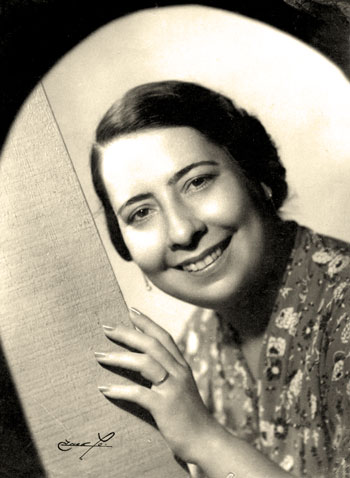
< MIMÍ CAL "NanaNina", Actress of "Tremenda Corte" with Leopoldo Fernández "Pototo". Videos.

mimi-cal4MIMI CAL “NANANINA”, FAMOSA ACTRIZ DE “LA TREMENDA CORTE” JUNTO A LEOPOLDO FERNANDEZ “TRES PATINES”.

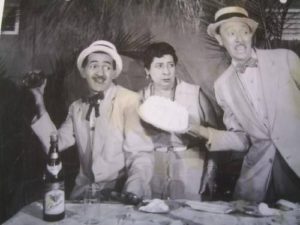
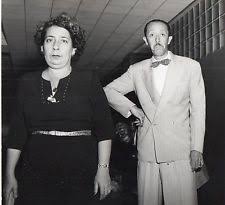
Nacida en Regla, provincia de la Habana el 12 de Enero de 1900 , Manuela Cal Fariñas, más conocida como Mimí Cal, fue una actriz y comediante cubana, conocida por su papel como «Nananina» en el serial cómico radial ‘La Tremenda Corte’.

Desde muy pequeña manifestó su interés por la actuación, al interpretar ante su familia pequeñas representaciones. Más adelante inició una carrera en La Habana como bailarina en los cabarés. Su belleza y talento pronto llamaron la atención y se convirtió en una de las sensaciones de la vida nocturna de la isla. Gracias a ese reconocimiento, inició una gira por casi toda la isla cubana, además de otros países latinoamericanos y en España, donde causó una gran impresión. A principios de la década de 1930, conoció a Leopoldo Fernández, otro comediante cubano, con quien formó pareja, tanto en la vida profesional como en la personal, en un matrimonio que duró dieciséis años.

Debutó como actriz en 1916, en la compañía de Arquímedes Pous, donde actuó hasta 1926. Más tarde integró las compañías de Lecuona, en los estrenos de El cafetal (1929, Cipriana), El batey (1929, Guadalupe), María la O (1930, Caridad Almendares) y Lola Cruz (1935, La Regla).

https://youtu.be/1pF9Yz6k56k

La Tremenda Corte

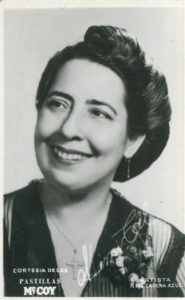
El 7 de enero de 1942 se emite por primera vez en la radiodifusora RHC Cadena Azul, un programa radial de corte cómico titulado ‘La Tremenda Corte’, cuya idea original y guiones venían de la mano de Cástor Vispo, un escritor de origen español radicado en Cuba. Mimí Cal se unió al elenco integrado por Leopoldo Fernández (José Candelario Tres Patines), Aníbal de Mar (el Tremendo Juez), Julito Díaz (el Secretario), Adolfo Otero (Rudecindo Caldeiro y Escobiña) y ella misma en el papel por el cual sería recordada por siempre “Luz María Nananina”. La calidad de los libretos y los altos estándares de actuación del elenco, le han valido al programa hasta la fecha el calificativo de la mejor comedia radiofónica producida en Latinoamérica.

Gracias a esta interpretación, la emisora RHC Cadena Azul la incluyó en su nómina como actriz de cuadro comedia, con un jugoso salario. En mayo de 1947, solamente otras tres actrices de RHC Cadena Azul disfrutaban de tal exclusividad: Sol Pinelli, Marta Martínez Casado y Eva Vázquez.
mIMI-CAL-1-Small

Participación en cine

Aprovechando la proyección que la radio le daba, Mimí Cal incursionó también en el cine en varias películas que fueron muy taquilleras. En 1945, inspirada en el éxito de ‘La Tremenda Corte’ se filmó una cinta homónima, producida por la empresa Refrescos Materva, con el mismo elenco que actuaba en el programa radial. En 1949 participó en el filme ‘El Vigilante Chegoya’, producido por Publicidad Borbolla. Con ella estuvieron los comediantes Leopoldo Fernández, Aníbal del Mar, Rolando Ochoa y Jesús Alvariño.

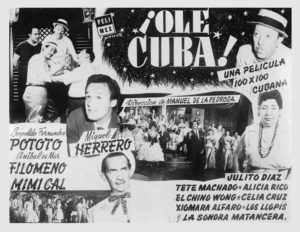
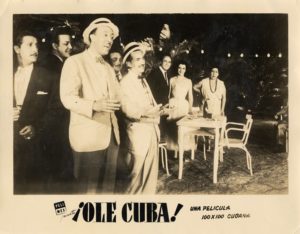
La más reconocida de sus cintas fue Olé Cuba, filmada en 1957. En ella volvió a compartir créditos con Leopoldo Fernández y Aníbal de Mar (en los papeles de Pototo y Filomeno). La película, dirigida por Manuel de la Pedrosa, mostraba algunas características de la sociedad y la cultura cubanas de la época, con particular énfasis en la música popular. El elenco incluyó, además, a “Chino Wong”, Julito Díaz, Teté Machado y Miguel Herrera, entre otros.

Televisión

A inicios de los programas televisivos, Mimí Cal participó como conductora de Detrás de la Fachada, junto a José Antonio Cepero Brito, un espacio humorístico de frecuencia semanal, con libretos de Marcos Behmaras, cuyo argumento se desarrollaba en el escenario de un gran edificio de apartamentos. El programa recreaba escenas de la vida cotidiana de los inquilinos. Mimí Cal desempeñó el rol de contrafigura, hasta que en 1957 fue contratada para trabajar en Puerto Rico; entonces fue sustituida en el espacio por Eloísa Álvarez Guedes y, posteriormente, por Consuelito Vidal.

Con el triunfo de la Revolución Cubana en 1959, los medios de comunicación fueron nacionalizados por el gobierno revolucionario cubano. Mimí Cal marchó a los Estados Unidos de América, donde su carrera artística continuó floreciendo. En Miami trabajó con Leopoldo Fernández en el espectáculo Se Escapó el Loco con Pototo, y en otras presentaciones teatrales.
MV5BZGJjNGViMWEtYzk5Zi00NjIzLTkzZTgtNGI0M2I5Y2Y0ODk4L2ltYWdlXkEyXkFqcGdeQXVyMDM0NzcxMQ@@._V1_

Vida personal

Estuvo casada con el “negrito” Manuel Colina, con quien formó el duetto ‘Mimí-Colina’. Ambos recorrieron todos los escenarios de la isla y se presentaron con éxito en México (1924) y Panamá (1931). Al quedar viuda contrajo matrimonio con Leopoldo Fernández. Esta unión duró dieciséis años, divorciándose finalmente. A pesar de esta separación, continuaron trabajando juntos.

Mimí Cal murió en Miami en 1978.

Filmografía.
La Tremenda Corte – (1945)
El Vigilante Chegoya – (1949)
Hotel de muchachas – (1950)
Olé Cuba – (1957)

296 (1)

logo

mimicalMIMI CAL “NANANINA”, ACTRESS OF “TREMENDA CORTE” WITH LEOPOLDO FERNANDEZ “TRES PATINES”.

Born in Regla, province of Havana on January 12, 1900, Manuela Cal Fariñas, better known as Mimí Cal, was a Cuban actress and comedian, known for her role as “Nananina” in the radio comic series ‘La Tremenda Corte’ .

From a very young age, she expressed interest in acting, by interpreting small representations before his family. Later she started a career in Havana as a dancer in the cabarets. Her beauty and talent soon caught attention and became one of the sensations of the island’s nightlife. Thanks to that recognition, he began a tour of almost the entire Cuban island, in addition to other Latin American countries and in Spain, where he made a great impression. In the early 1930s, he met Leopoldo Fernández, another Cuban comedian, with whom he formed a partnership, both in professional and personal life, in a marriage that lasted sixteen years.

She debuted as an actress in 1916, in the company of Arquímedes Pous, where he acted until 1926. Later he joined Lecuona companies, in the premieres of El cafetal (1929, Cipriana), El batey (1929, Guadalupe), María la O ( 1930, Charity Almendares) and Lola Cruz (1935, The Rule).
7d386a535690a0d5e273935a184b1a7d

The Tremendous Court

On January 7, 1942, the RHC Cadena Azul radio station is broadcast for the first time, a comic-cut radio program entitled ‘La Tremenda Corte’, whose original idea and scripts came from the hand of Cástor Vispo, a Spanish-born writer in Cuba. Mimí Cal joined the cast of Leopoldo Fernández (José Candelario Tres Patines), Aníbal de Mar (the Tremendous Judge), Julito Díaz (the Secretary), Adolfo Otero (Rudecindo Caldeiro and Escobiña) and herself in the role by which “Luz María Nananina” would be remembered forever. The quality of the librettos and the high-performance standards of the cast have earned the program to date the qualification of the best radio comedy produced in Latin America.

Thanks to this interpretation, the RHC radio station Cadena Azul included her on her payroll as a comedy box actress, with a juicy salary. In May 1947, only three other actresses of RHC Cadena Azul enjoyed such exclusivity: Sol Pinelli, Marta Martínez Casado, and Eva Vázquez.
images

Participation in cinema

Taking advantage of the projection that the radio gave him, Mimí Cal also dabbled in the cinema in several films that were very box office. In 1945, inspired by the success of ‘La Tremenda Corte’, a film of the same name was filmed, produced by the company Refrescos Materva, with the same cast that acted in the radio program. In 1949 he participated in the film ‘El Vigilante Chegoya’, produced by Advertising Borbolla. With her were comedians Leopoldo Fernández, Aníbal del Mar, Rolando Ochoa, and Jesús Alvariño.

The most recognized of his films was Olé Cuba, filmed in 1957. In it, he returned to share credits with Leopoldo Fernández and Aníbal de Mar (in the roles of Pototo and Filomeno). The film, directed by Manuel de la Pedrosa, showed some characteristics of Cuban society and culture of the time, with particular emphasis on popular music. The cast also included “Chino Wong”, Julito Díaz, Teté Machado and Miguel Herrera, among others.
MV5BZDY3OGUxYjgtOGFkMC00Y2ZjLWI3ZjAtYTk1NGMwYWU1MDZlL2ltYWdlXkEyXkFqcGdeQXVyMDM0NzcxMQ@@._V1_

Television

At the beginning of the television programs, Mimí Cal participated as conductor of Behind the Facade, along with José Antonio Cepero Brito, a humorous space of weekly frequency, with librettos by Marcos Behmaras, whose argument was developed on the stage of a large building of apartments. The program recreated scenes from the daily life of the tenants. Mimí Cal played the role of contrafigura, until in 1957 she was hired to work in Puerto Rico; then it was replaced in space by Eloísa Álvarez Guedes and, subsequently, by Consuelito Vidal.

With the triumph of the Cuban Revolution in 1959, the media were nationalized by the Cuban revolutionary government. Mimí Cal went to the United States of America, where his artistic career continued to flourish. In Miami, he worked with Leopoldo Fernández on the show El Escaco el Loco con Pototo, and on other theatrical performances.

Sin-título-20-745x466

Personal life

She was married to the bold Manuel Colina, with whom she formed the duetto ‘Mimí-Colina’. Both toured all the stages of the island and performed successfully in Mexico (1924) and Panama (1931). When he was a widow, he married Leopoldo Fernández. This union lasted sixteen years, finally divorcing. Despite this separation, they continued to work together.

Mimí Cal died in Miami in 1978.

(READ MIMI CAL FILMOGRAPHY IN THE SPANISH SECTION ABOVE).

Agencies/ Wiki/ Internet Photos/ YouTube/ Arnoldo Varona/ www.TheCubanHistory.com
THE CUBAN HISTORY, HOLLYWOOD.

CubaSliderNew-1920x920

logo

< HISTORY of When American was Called Cuba. Photos.

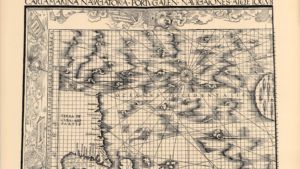
Carta-Marina-Waldseemuller-Terra-Unidos_CYMIMA20190805_0004_13 (1)HISTORIA DE CUANDO AMERICA SE LLAMABA CUBA.

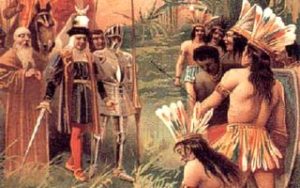
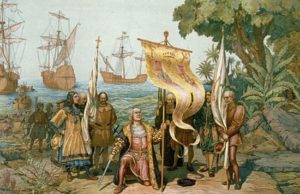
Cuando Colón llegó al “Nuevo Mundo”, lo llamó Cuba. Entonces no sabía que estaba en una isla y creía que era parte de Asia. El cartógrafo alemán Martin Waldseemüller realizó en 1507 un gran mapa en que el aparecía por primera vez la palabra América para designar las tierras exploradas por Vespucio, pero años después lo rectificó y acabó cambiándolo por Cuba.

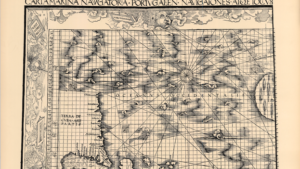
Waldseemüller empezó a dudar del papel de Vespucio en el Nuevo Mundo y llamó “terra incognita” al continente, con una nota en la que indicaba: “esta tierra y las islas adyacentes fueron descubiertas por el genovés Colón, por mandato del rey de Castilla”. El cartógrafo se unió así a la concepción de que Colón había llegado al continente, por eso, cuando realiza la Carta Marina en 1516 decide llamar escribir “Terra de Cvba -Asie partis” (parte de Asia, en latín).

COLONDESEMBARCAENCUBA

La Carta Marina es una de las obras cartográficas más importantes del mundo, se la considera el primer mapa náutico impreso y tiene 12 hojas. Mide aproximadamente 2×1 metros y su única copia está en la Biblioteca del Congreso de Estados Unidos.

“En la Carta Marina, él [Waldseemüller] adopta la idea de Cristóbal Colón. Entonces lo que llamamos América es en realidad una extensión desconocida de Asia”, ha contado Ricardo Padrón, especialista en Literatura y Cartografía del imperio español a BBC Mundo en un reportaje que bucea en este misterio. El profesor cree que Colón exploró parte de la costa cubana en su segundo viaje a América. “Él estaba convencido de que las tierras que había descubierto eran parte de Asia y cuando se le hizo evidente que las costas que estaba explorando eran las de una isla, lo negó e hizo que sus tripulantes juraran que la tierra que se había descubierto, Cuba, era continental y no insular”, añadió.

Esa confusión, creada deliberadamente por Colón, tendría consecuencias como la del mapa de Waldseemüeller.

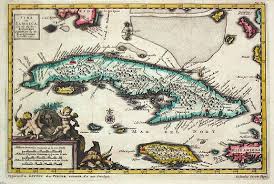
Se desconoce, por otra parte, cuál es el origen del nombre de la isla, aprovecha para recordar el texto de la BBC. Una teoría indica que proviene de ciba, que significa “piedra, montaña, cueva” entre los taínos. Otra, también de inspiración aborigen, es que procede de cohiba y así la nombraban los nativos. Cubanacan, que significa “lugar del centro” en taíno, y por su posición respecto al Caribe, podría ser otro de los orígenes.

download (3)

“Los aborígenes la llamaban algo parecido a Cuba. Esto lo cuenta el padre (Bartolomé) de las Casas, el fraile dominicano que viajaba con Colón y estuvo en Cuba en toda la colonización. Y todo esto se sabe por tradición oral” Declara el periodista cubano Ciro Bianchi.

Una última, que viene de fuera, es que responde a la palabra árabe coba (mezquita con cúpula) y que esa es la forma de las montañas que se ven desde la Bahía de Bariay, donde se cree que desembarcó Colón.

Aunque el genovés la llamó Juana, por la hija de los reyes Fernando e Isabel, lo cambió por Ferdinanda cuando se empezó a conocer a la reina por el sobrenombre de La Loca. Sin embargo, Cuba es el nombre que se impuso.
3.3-Ciudad (1)

logo

colomb-cubaHISTORY OF WHEN AMERICA WAS CALLED CUBA.

When Columbus arrived in the “New World”, he called it Cuba. So I didn’t know I was on an island and I thought I was part of Asia. The German cartographer Martin Waldseemüller made in 1507 a large map in which the word America appeared for the first time to designate the lands explored by Vespucio, but years later he rectified it and ended up changing it to Cuba.

Waldseemüller began to doubt Vespucio’s role in the New World and called the continent “terra incognita”, with a note stating: “this land and the adjacent islands were discovered by Genoese Columbus, by mandate of the King of Castile”. The cartographer thus joined the conception that Columbus had arrived on the continent, so when he made the Marine Charter in 1516 he decided to call write “Terra de Cvba -Asie partis” (part of Asia, in Latin).

Carta-Marina-Waldseemuller-Terra-Unidos_CYMIMA20190805_0004_13 In the Marine Charter of 1516 Waldseemüller calls “Terra de Cvba” the contour that the United States currently occupies. [/ caption]

The Marine Charter is one of the most important cartographic works in the world, it is considered the first printed nautical map and has 12 sheets. It measures approximately 2×1 meters and its only copy is in the Library of Congress of the United States.

“In the Marine Charter, he [Waldseemüller] adopts the idea of ​​Christopher Columbus. So what we call America is actually an unknown extension of Asia,” Ricardo Padrón, a specialist in Literature and Cartography of the Spanish Empire told BBC Mundo in a report that dives into this mystery. The professor believes that Columbus explored part of the Cuban coast on his second trip to America. “He was convinced that the lands he had discovered were part of Asia and when it became clear that the coasts he was exploring were those of an island, he denied it and made his crew swear that the land he had discovered, Cuba, it was continental and not insular, “he added.

That confusion, deliberately created by Columbus, would have consequences like that of the Waldseemüeller map.

MAPADEJUANDELACOSAe

It is unknown, on the other hand, what is the origin of the name of the island, take the opportunity to remember the BBC text. One theory indicates that it comes from ciba, which means “stone, mountain, cave” among the Taínos. Another, also of aboriginal inspiration, is that it comes from cohiba and that’s how the natives named it. Cubanacan, which means “place of the center” in Taino, and because of its position on the Caribbean, could be another of the origins.

“The aborigines called it something similar to Cuba. This is told by the father (Bartholomew) of the Houses, the Dominican friar who traveled with Columbus and was in Cuba throughout the colonization. And all this is known by oral tradition” The journalist declares Cuban Ciro Bianchi.

A last one, which comes from outside, is that it responds to the Arabic word coba (mosque with dome) and that this is the shape of the mountains seen from the Bay of Bariay, where it is believed that Columbus landed.

Although the Genoese called her Juana, for the daughter of the kings Fernando and Isabel, he changed it to Ferdinanda when the queen began to be known by the nickname of La Loca. However, Cuba is the name that prevailed.

Agencies/ 14ymedio, La Habana, Internet Photos/ Arnoldo Varona/ www.TheCubanHistory.com
THE CUBAN HISTORY, HOLLYWOOD.
5.Volunteer+Vacations+in+Cuba

logo

< CUBAN Characters: The Countess of Merlin, considered "The Mother of the Cuban Literature".

download (1)PERSONAJES CUBANOS: LA CONDESA DE MERLIN, CONSIDERADA “LA MADRE DE LA LITERATURA CUBANA”.

Considerada una de las primeras escritoras de Cuba, María de las Mercedes Beltrán Santa Cruz y Cárdenas Montalvo y O’Farrill, nacida en La Habana el 5 de febrero de 1789, hija de una Ilustre familia jaruqueña, hija de Don Joaquín de Santa Cruz y Cárdenas y María Teresa Montalvo y O´Farril, “Condes de Jaruco”.

Su infancia transcurrió en la isla, debido a un viaje de los padres a Italia quedó a cargo de su tía abuela paterna, la que la crió de manera muy libre y consentidora. A los 8 años, fue internada en el Convento de Santa Clara, institución en la cual sufrió una educación rigurosa a pesar del poco tiempo, pero suficiente para establecer buena amistad con una monja, Sor Inés, de la cual muchos años más tarde escribirá la biografía.

En 1802, con doce años, se traslada a Madrid, a vivir con su madre, la cual era dama de honor de la reina doña María Luisa y que en la capital tenía un salón por el que transitaban políticos, escritores y artistas. La joven María conoció entre otros a Moratín, Quintana y Goya. Aquí recibió una educación estricta que incluyó la música y el canto. Quien revise periódicos de la década del 30 como La “Revue Musicale”, “La Gazette de France” o “La Chronique”, encontrará desbordados halagos al talento artístico de la criolla, que solía ser saludada con admiración general cuando se le veía aparecer en la ópera.

3139-condesa-merlin

Tras la muerte del padre se marcharon para la casa de su tío, el general Gonzalo O´Farril quien tenía buenas relaciones con el nuevo monarca José Bonaparte. Es en una tertulia cortesana donde abundaban los visitantes franceses, donde conoce al general francés, Antonio Cristóbal Merlín, “Conde de Merlín”, con quien celebró nupcias en 1811 a la edad de 20 años. Se conoce que los motivos de la boda, responden en parte a la política napoleónica de fomentar matrimonios entre la nobleza española y los oficiales del ejército de ocupación.

La derrota de los franceses en España llevó a los “Condes de Jaruco” a París donde se había instaurado el trono Borbón con Luis XVIII. En su nueva patria, la ya “Condesa de Merlín” disfruta, desde una posición privilegiada, de los últimos brillos del imperio de Napoleón. Se hicieron famosas las reuniones en su casa y a sus “motivitos” asistieron las más importantes figuras de la cultura y política francesa. Por solo mencionar algunos: Rossini, Meyerbeer, Musset, Listz, Chopin, Balzac, Orfila, María Malibrán, George Sand y muchos otros.

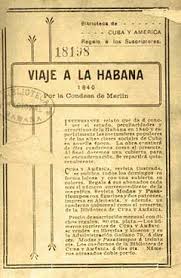
En el texto de su “Viaje a La Habana” llama la atención de la crítica y que hace que una escritora de lengua francesa sea reconocida como la madre de la literatura cubana.

images (4)

En sus páginas preliminares este volumen se inicia con unos apuntes biográficos de Gertrudis Gómez de Avellaneda sobre la condesa, que abarcan 16 páginas, en las que se sintetiza la vida y obra de María de las Mercedes Santa Cruz, a la cual califica como uno de los escritores más distinguidos de la literatura contemporánea.

La Tula se lamenta de que sus libros enriquezcan la literatura francesa y no la tierra que la vio nacer, “cuyo sol encendió aquella lozana imaginación, que entibiada algún tanto bajo un cielo extranjero, todavía lanza destellos refulgentes que sirven a su patria de magnífica aureola.”

En este último libro se conjugan los nombres de la María de las Mercedes Santa Cruz y Montalvo, Condesa de Merlín (1789-1852) y de Gertrudis Gómez de Avellaneda (1814-1873) no fue una simple coincidencia; dos mujeres, escritoras, contemporáneas, vivieron alejadas de la Isla, añorando los años transcurridos en ella y con profundo amor por su cultura y por una ciudad en aquel entonces ya bella, La Habana, que en pocos meses cumplirá 500 años de fundada.

La condesa de Merlín, fundadora de una asentada tradición narrativa femenina muy controvertida y criticada en su época, nos lega hermosos testimonios de su tiempo desde la perspectiva de una persona osada que supo escribirlos hasta su muerte ocurrida a los 63 años en París, el 31 de marzo de 1852.

5.Volunteer+Vacations+in+Cuba

logo

download (2)CUBAN CHARACTERS: THE COUNTESS OF MERLIN, CONSIDERED “THE MOTHER OF THE CUBAN LITERATURE”.

Considered one of the first writers of Cuba, María de las Mercedes Beltrán Santa Cruz and Cárdenas Montalvo and O’Farrill, born in Havana on February 5, 1789, daughter of an illustrious Jaruquen family, daughter of Don Joaquín de Santa Cruz and Cárdenas and María Teresa Montalvo and O’Farril, “Counts of Jaruco”.

Her childhood was spent on the island, due to a trip of the parents to Italy was in charge of his paternal great-aunt, who raised her in a very free and consenting way. At age 8, she was admitted to the Convent of Santa Clara, an institution in which she suffered a rigorous education despite the short time, but enough to establish a good friendship with a nun, Sr. Inés, of which many years later she will write the Biography.

In 1802, with twelve years, he moved to Madrid, to live with her mother, who was the maid of honor of Queen María Luisa and in the capital had a room where politicians, writers, and artists traveled. The young Maria met among others Moratín, Quintana and Goya. Here she received a strict education that included music and singing. Anyone who reviews newspapers of the 30s such as “Revue Musicale”, “La Gazette de France” or “La Chronique”, will find overwhelmed compliments to the artistic talent of the Creole, who used to be greeted with general admiration when she was seen appearing in the opera.

After the death of the father, they left for the house of his uncle, General Gonzalo O’Farril who had good relations with the new monarch José Bonaparte. It is in a courtly gathering where French visitors abounded, where he meets the French general, Antonio Cristóbal Merlin, “Count of Merlin”, with whom she celebrated nuptials in 1811 at the age of 20. It is known that the reasons for the wedding respond in part to the Napoleonic policy of fostering marriages between the Spanish nobility and the officers of the occupation army.

images (1)

The defeat of the French in Spain led the “Counts of Jaruco” to Paris where the Bourbon throne with Louis XVIII had been established. In her new homeland, the already “Countess of Merlin” enjoys, from a privileged position, the last shine of the Napoleon Empire. The meetings in her house became famous and his “motivitos” was attended by the most important figures of French culture and politics. Just to mention a few: Rossini, Meyerbeer, Musset, Listz, Chopin, Balzac, Orfila, María Malibrán, George Sand and many others.

In the text of his “Trip to Havana,” he attracts the attention of critics and that makes a French-language writer recognized as the mother of Cuban literature.

In its preliminary pages, this volume begins with some biographical notes of Gertrudis Gómez de Avellaneda on the Countess, covering 16 pages, which summarizes the life and work of María de las Mercedes Santa Cruz, which she qualifies as one of the most distinguished writers of contemporary literature.

images

La Tula laments that her books enrich French literature and not the land that saw her be born, “whose sun ignited that crazy imagination, which warmed somewhat under a foreign sky, still throws gleaming sparkles that serve her homeland of a magnificent halo. ”

In this last book, the names of the Maria de las Mercedes Santa Cruz and Montalvo, Countess of Merlin (1789-1852) and Gertrudis Gómez de Avellaneda (1814-1873) were not a simple coincidence; Two women, writers, contemporaries, lived away from the Island, longing for the years spent in it and with a deep love for their culture and for a city at that time already beautiful, Havana, which is a few months will be 500 years old.

The Countess of Merlin, founder of a well-founded and controversial female narrative tradition criticized in her time, gives us beautiful testimonies of her time from the perspective of a daring person who knew how to write them until her death at the age of 63 in Paris, 31 March 1852.

Agencies/ MemoriasCubanas/ Derubin Jacome / Guadalupe Yaujar/ Extractos/ Excerpts/ Internet Photos/ Arnoldo Varona/ www.TheCubanHistory.com
THE CUBAN HISTORY, HOLLYWOOD.
1800px-Cuba_Banner

logo