En el municipio de Artemisa, al sur de La Habana, se conservan las ruinas de una antigua hacienda que fuera símbolo del esplendor de los cafetales del occidente cubano en la época colonial, llamada Angerona. Su dueño fue un inmigrante alemán, Cornelio Souchay quien llegó a Cuba a principios del siglo XIX.
En La Habana Cornelio conoció a Úrsula Lambert, morena haitiana nacida libre, quien comienza a trabajar en el cafetal compartiendo intereses económicos, financieros y organizativos del mismo.
Alrededor de esto se teje la leyenda de su relación de Cornelio con la bellísima mujer de orígen africano, así como la vinculación de ella con la prosperidad y florecimiento económico del cafetal.
“Angerona”, diosa romana del silencio y la fertilidad de los campos, se encontraba reproducida en la entrada de la hacienda en una estatua a tamaño natural realizada en blanco mármol de Carrara.
Debido al esplendor y su reconocida belleza este maravilloso lugar fue motivo de inspiración para célebres escritores, pintores y personajes de la época que lo visitaron.
En Angerona convivían unos 450 esclavos, que residían en chozas y no en barracones. Además la atención humana y el sistema de organización laboral era muy distinto al del resto de la colonia.
Cornelio Souchay murió en La Habana en 1837 y según la certificación de defunción asentada en los libros de la iglesia de Cayajabos, fue enterrado en el cementerio del cafetal.
Úrsula abandonó el cafetal 8 ó 9 años después de la muerte de Cornelio para establecerse definitivamente en La Habana, en el barrio de La Merced. Murió en 1860, nunca se casó, ni tuvo descendencia.
Las ruinas de este cafetal constituyen un sitio de indudable valor por lo excepcional de su arquitectura y de la historia, fue declarado Monumento Nacional el 31 de diciembre de 1981
In the municipality of Artemisa, south of Havana, the ruins of an old hacienda that was a symbol of the splendor of the coffee plantations of western Cuba in colonial times, called Angerona, are preserved. Its owner was a German immigrant, Cornelio Souchay who arrived in Cuba at the beginning of the 19th century.
In Havana, Cornelio met Úrsula Lambert, a free-born Haitian brunette, who began working in the coffee plantation sharing economic, financial and organizational interests.
Around this is woven the legend of his relationship of Cornelius with the beautiful woman of African origin, as well as the connection of it with the prosperity and economic flourishing of the coffee plantation.
“Angerona”, the Roman goddess of silence and fertility of the fields, was reproduced at the entrance of the hacienda in a life-size statue made of white Carrara marble.
Due to the splendor and its recognized beauty, this wonderful place was a source of inspiration for famous writers, painters and characters of the time who visited it.
In Angerona about 450 slaves lived, residing in huts and not in barracks. In addition, human attention and the system of labor organization was very different from the rest of the colony.
Cornelio Souchay died in Havana in 1837 and, according to the death certificate recorded in the books of the Cayajabos church, he was buried in the cemetery of the coffee plantation.
Ursula left the coffee plantation 8 or 9 years after the death of Cornelio to settle permanently in Havana, in the neighborhood of La Merced. He died in 1860, never married, nor had offspring.
The ruins of this coffee plantation constitute a site of undoubted value for the exceptional of its architecture and history, it was declared a National Monument on December 31, 1981
Agencies/ RHC/ Maria Calvo/ Internet Photos/ Arnoldo Varona/ www.TheCubanHistory.com
THE CUBAN HISTORY, HOLLYWOOD.
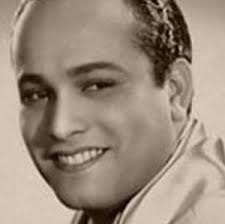
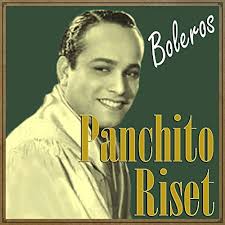
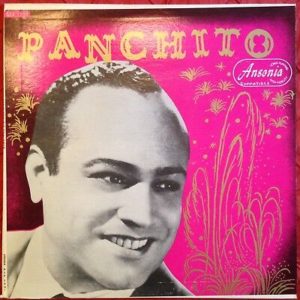
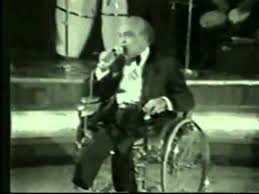
Francisco Hilario Riser, su verdadero nombre luego cambiado, nació en La Habana, Cuba, en el barrio de Atarés, en 1910. Desde pequeño, aprendió a tocar el Tres, la famosa guitarra cubana de tres cuerdas dobles, y la guitarra acústica española, instrumentos con los que se acompañaba, pero poco a poco los abandonó para concentrase más bien en cantar.
Si prestamos atencion, a veces la vida nos anuncian presagios que nos van a pasar en el futuro y esto fue lo que sucedió en el año 1947 en la ciudad de Nueva York cuando el compositor cubano “Mundito” Medina escribió el bolero titulado “El cuartito”.
En esa época, una de las estrellas más populares en el ambiente musical de Nueva York era Panchito Riset. Para el cantante, todo era brillante y feliz. El se presentaba todas las noches en el ‘Club Versalles’ de esa ciudad y sus discos se vendían por todo el mundo. Y Panchito aceptó cantarle a Medina su tema, sin saber que la canción para él sería profética, aunque en aquellos momentos de esplendor y fama, su mensaje no podría descifrar.
Su primer incurso como cantante profesional fue con el Septeto Esmeralda, pasándose más tarde al Septeto Habanero y luego a la orquesta de Ismael Díaz.
En 1933, lo invitan a cantar con una de las orquestas más populares de Nueva York en ese entonces y se muda a esa ciudad, donde canta por un tiempo con la Orquesta de Antobal. Es con Antoval que graba una de sus primeras grabaciones y en el sello le ponen Riset (en vez de Riser) y, como para no tener que rehacerlos, así lo dejan.
En Nueva York, durante los años 30, Francisco Riser, ahora Panchito Riset, canta y graba, prácticamente, con todos los grupos musicales existentes en ese entonces: Cuarteto (de Pedro) Flores, Victoria, el Caney, y con las orquestas de Xavier Cugat y Enrique Madriguera. Además, actuaba continuamente en los cabarets de moda: Cubanacán, La Conga y Yumurí así también como en California, donde se presentó en 1936 en el cabaret Trovadero, mientras se lo disputaban los estudios de grabación.
Ciudadano de Estados Unidos, cuando rompe la II Guerra Mundial el deber lo llama, y Panchito se enlista en el ejército donde permanece hasta 1943, cuando lo deautorizan honorablemente, Panchito regresa a lo que más le gustaba, cantarle a su público, lo que hace cuando debuta en el cabaret, Versalles, y donde permanece por los próximos 18 años.
Panchito, a su regreso del sercicio militar, siguió grabando, preferentemente con grupos que se amoldaban a su estilo, como los conjuntos de René Hernández y el de Luis “Lija” Ortiz, viajando esporádicamente por el Caribe. En sus presentaciones, con su voz e inconfundible estilo, Riset llevó al bolero la ingenuidad, la pureza en la expresión que existía en los años ‘30 y nunca buscó innovar su estilo. El invitaba al oyente a trasladarse con él a la simple y sosegada magia de la década de los 30.
Lo interesante de su historia es que como otros cubanos (Antonio Machín, Bola de Nieve y Machito, entre otros) que disfrutaron de fama internacional, en su país natal, Panchito Riset no era muy conocido. Había salido de Cuba muy muy joven.
No fue hasta mediados de los ’40 que los radioescuchas de una popular radioemisora habanera, Radio Cadena Suaritos, comenzaron a escuchar una nueva voz que no era la suave de Fernando Albuerne, la viril de Daniel Santos, o la cadenciosa de Bobby Capó, voces a las que ya estaban acostumbrados. Esta nueva voz era algo distinto: muy aguda pero melodiosa que cantaba en un estilo que, francamente, ya estaba padaso de moda.Y para acabar, la canción que interpretaba comenzaba extrañamente con una risa, seguía con una pregunta y continuaba después con la evocación nostálgica de la amada perdida y el nido de sus amores.
http://youtu.be/qxaPCw1zEXo
Era una canción que parecía un tango, y de hecho su tema recordaba a la percanta y el bulín de “Mi noche triste”, el primer tango que cantó Gardel. Era una especie de tango tropical, a ritmo de bolero. Uno de esos temas que se creían compuestos en una noche de farra, llenas de recuerdos, de mucho alcohol y de superabundante inspiración. En suma, una canción tanto sublime, como ridícula, y como tal, conquistó el corazón de las multitudes. A poco, “El Cuartito” de “Mundito” Medina, en la voz de Panchito Riset, se escuchaba por todas partes a nivel de saturación.
Más tarde, con la misma aceptación, siguieron “Blancas azucenas”, de Pedro Flores, de la cual el musicólogo Cristóbal Díaz Ayala dice que en su versión, uno casi podía olerlas y “Cita a las seis”, donde los oyentes hasta se ponían nerviosos al escuchar como como su voz esperaba a la amada.
Y así se mantuvo por décadas. Como el baluarte de la música popular de Nueva York, hasta que la salud le empezó a fallar. Pero aún así, nunca perdió su maravillosa voz.
Su Última Presentación.
https://youtu.be/tOZpJUak6Qc
Menciona Ayala que en septiembre de 1983, cuando se celebró el Telemaratón de la Sociedad de Niños y Adultos Lisiados de Puerto Rico en New York, la presencia y actuación de Panchito Riset arrancaron, al mismo tiempo, lágrimas y aplausos. Al presentarlo Pedro Zervigón, el público le obligó a interpretar varios números, entre ellos “Blancas azucenas”. Esa noche, fue la estrella que más brilló, aunque allí estaban Celia Cruz, Iris Chacón, Ruth Fernández, Mirta Silva y otras grandes figuras. Desde su silla de ruedas, seguía actuando hasta que la enfermedad pudo más que él.
Y se cumplió la profecía….el 8 de agosto de 1988 en un cuartito, olvidado y ciego, con las dos piernas amputadas a consecuencia de la diabetes, fallece Panchito Riset, y al destino le preguntamos… ¿Por qué ríes así? Amigos como el locutor y animador Angel Luis González Adames y Trini Márquez, del famoso Trío de las Hermanas Márquez, le asistieron hasta su muerte.
FRANCISCO “PANCHITO” RISET, GREAT SINGER OF THE CUBAN POPULAR MUSIC.VIDEOS.
Francisco Hilario Riser, his real name then changed, was born in Havana, Cuba, in the neighborhood of Atarés, in 1910. Since he was a child, he learned to play the Tres, the famous Cuban guitar with three double strings, and the Spanish acoustic guitar, instruments with which he was accompanied, but little by little he left them to concentrate rather on singing.
If we pay attention, sometimes life announces us omens that will happen to us in the future and this was what happened in the year 1947 in the city of New York when the Cuban composer “Mundito” Medina wrote the bolero entitled “El cuartito” ”
At that time, one of the most popular stars in the musical environment of New York was Panchito Riset. For the singer, everything was bright and happy. He appeared every night at the ‘Club Versalles’ in that city and his records were sold all over the world. And Panchito accepted to sing to Medina his subject, without knowing that the song for him would be prophetic, although in those moments of splendor and fame, his message could not decipher.
His first incursion as a professional singer was with the Septeto Esmeralda, later moving to the Septeto Habanero and then to the Ismael Díaz orchestra.
In 1933, he was invited to sing with one of the most popular orchestras in New York at the time and moved to that city, where he sang for a while with the Antobal Orchestra. It is with Antoval that he records one of his first recordings and in the label they put him Riset (instead of Riser) and, as if he did not have to redo them, they left him.
In New York, during the 30s, Francisco Riser, now Panchito Riset, sings and records, practically, with all the musical groups existing at the time: Quartet (by Pedro) Flores, Victoria, el Caney, and with Xavier’s orchestras Cugat and Enrique Madriguera. In addition, he performed continuously in fashionable cabarets: Cubanacán, La Conga and Yumurí as well as in California, where he performed in 1936 at the cabaret Trovadero, while the recording studios disputed it.
A citizen of the United States, when he breaks World War II duty calls him, and Panchito enlists in the army where he remains until 1943, when he is honorably authorized, Panchito returns to what he liked best, to sing to his audience, what he does when he debuted in the cabaret, Versailles, and where he remains for the next 18 years.
Panchito, on his return from the military service, continued to record, preferably with groups that fit his style, such as the René Hernández and Luis “Lija” Ortiz sets, traveling sporadically through the Caribbean. In his presentations, with his voice and unmistakable style, Riset brought to the bolero the ingenuity, the purity in the expression that existed in the ’30s and never sought to innovate his style. He invited the listener to move with him to the simple and peaceful magic of the 30s.
The interesting thing about his story is that like other Cubans (Antonio Machín, Bola de Nieve and Machito, among others) who enjoyed international fame, in his native country, Panchito Riset was not well known. He had left Cuba very young.
It was not until the mid-’40s that the listeners of a popular radio station in Havana, Radio Cadena Suaritos, began to listen to a new voice that was not the soft one of Fernando Albuerne, the virile one of Daniel Santos, or the cadenciosa of Bobby Capó, voices to those who were already used. This new voice was something different: very sharp but melodious that sang in a style that, frankly, was already padaso fashionable. And to finish, the song he played began strangely with a laugh, followed with a question and then continued with the evocation nostalgic of the beloved lost and the nest of her loves.
It was a song that looked like a tango, and in fact its theme reminded us of the percussion and bulín of “Mi noche triste”, the first tango that Gardel sang. It was a kind of tropical tango, to the rhythm of bolero. One of those songs that were thought to be composed in a night of pomp, full of memories, lots of alcohol and superabundant inspiration. In short, a song both sublime, and ridiculous, and as such, conquered the hearts of the crowds. Soon, “El Cuartito” of “Mundito” Medina, in the voice of Panchito Riset, was heard everywhere at the saturation level.
Later, with the same acceptance, they followed “White Lilies”, by Pedro Flores, of which the musicologist Cristóbal Díaz Ayala says that in his version,
Agencies/ El Veras PR/ Internet Photos/ YouTube/ Arnoldo Varona/ www.TheCubanHistory.com
THE CUBAN HISTORY/ HOLLYWOOD.
Los UMAP fueron campos de trabajo en los que Fidel Castro recluyó y trató de corregir las “conductas impropias” de los homosexuales.
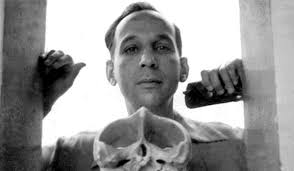
En 1962, tres años después del triunfo de la revolución en Cuba, el escritor homosexual Virgilio Piñera fue detenido en la playa de Guanabo, cerca de La Habana, durante ‘La noche de las tres pes’. No fue el único. Junto a él, miles de prostitutas, proxenetas, ‘pájaros’ —eufemismo utilizado en la isla para denominar a los homosexuales— y otras tantas personas consideradas ‘antisociales’, fueron sorprendidas por una redada multitudinaria que tenía como objetivo llevar a cabo un acto de “higiene social revolucionaria”.
Gracias a su prestigio dentro del mundo cultural cubano, y a sus influencias y amistades —en su liberación fueron claves las intervenciones del periodista Carlos Franqui y de la funcionaria Edith García Buchaca—, Piñera sólo tuvo que permanecer en prisión un día. Al salir libre, sin embargo, se encontró con que su casa había sido requisada por el Estado, y con que no tenía lugar donde pasar la noche. Para sobrevivir al trance, tuvo que pedirle asilo improvisado a su colega Guillermo Cabrera Infante. Tiempo después, según le confesó a personas cercanas, descubrió que había sido detenido debido a una denuncia del jefe del Comité de Defensa de su barrio, que lo que quería era quedarse con su casa.
El poeta Virgilio Piñera llegó a ser arrestado durante ‘La noche de las tres pes’ por ser homosexual | Archivo
Al recordar aquel día aciago en su exilio londinense, el propio Cabrera Infante rememoró también cómo, de pronto, su apartamento “se llenó de homosexuales que no se atrevían a ir a dormir a sus casas”. “Por la mañana, al levantarme y dirigirme a la cocina, recuerdo tener que ir esquivando a todos estos amigos, que estaban durmiendo en el suelo”. Su confesión quedó recogida dos décadas después, durante la filmación de Conducta Impropia, el documental con el que Néstor Almendros y Orlando Jiménez Leal denunciaron la represión que vivieron los homosexuales en Cuba después del triunfo de Fidel Castro. Las palabras del autor de Tres tristes tigres resumieron así una situación dramática y generalizada. Al fin y al cabo, como también apuntó, “no todos tuvieron la suerte de ser Virgilio Piñera, ni de tener los mismos amigos que tenía Virgilio Piñera”.
Campos para hippies y ‘pájaros’
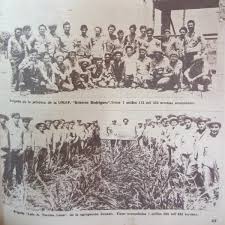
En aquellos tiempos fueron creadas las Unidades Militares de Ayuda a la Producción (UMAP): campos de trabajo parecidos a los de la Alemania Nazi —aunque inspirados en otros que ya existían en distintos países soviéticos—, en los que las personas consideradas “lacra social” debían resultar productivas para la sociedad, al tiempo que recibían una reeducación marxista con la que, entre otras cosas, se buscaba curar a los homosexuales de su “patología y debilidad”. En esos campos fueron recluidas todas las personas que eran consideradas dañinas para el país: hippies —para ser hippie bastaba con tener el pelo largo, vestir a la moda estadounidense o escuchar a los Beatles—, ‘pájaros’ y cualquier otro individuo que manifestase algún tipo de “conducta impropia”.
Han llegado hasta nuestros días varias intervenciones del propio Fidel Castro —y de otros miembros de la cúpula revolucionaria—, en las que se refería a los homosexuales como personas “incapaces de encarnar las condiciones y requerimientos de conducta” de un “verdadero revolucionario”. Así se lo dijo en una entrevista en 1966 a Lee Lockwood, según quedó recogido en su Castro’s Cuba, Cuba´s Fidel, junto a otras frases que hace unos años fueron rescatadas por Guillermo Sheridan para un artículo en Letras Libres. Entre otras cosas, por ejemplo, el líder cubano explicaba: “Una desviación de esa naturaleza choca con el concepto que tenemos de lo que debe ser un militante comunista”. Además, también consideraba que debido a su “patología”, los homosexuales tenían que ser apartados de los niños y los jóvenes, para que no pudiesen corromperlos.
Represión a homosexuales en otros países soviéticos
Con esas ideas en la cabeza, varios dirigentes cubanos expresaron su preocupación por “mantener las calles limpias” en repetidas ocasiones, durante las distintas visitas que fueron realizando a otros países soviéticos. Heberto Padilla —poeta famoso por haber sido detenido en 1971 por “profesar ideas antirrevolucionarias”, y por haber aparecido 38 días después para leer, de manera sospechosa, una autocrítica en la que renegaba de todos sus escritos— narró, también desde el exilio, que, en uno de sus viajes a Bulgaria, Raúl Castro se sorprendió al ver una sociedad “tan pulcra”. “Así que preguntó cómo habían conseguido solucionar ‘el problema de los homosexuales’, que era lo que más le preocupaba a él, particularmente. Le dijeron que tenían campos aparte, donde metían a todos los antisociales, incluidos a los homosexuales, y se los enseñaron. Al verlos, regresó convencido de que era una solución buenísima que podían implantar también en la isla”.
Cabrera Infante, por su parte, añadió en otra anécdota que Ramiro Valdés estuvo en China y “se mostró muy interesado en hablar con el alcalde de Shangái”. Su intención era exactamente la misma que la de Raúl Castro en Bulgaria, pero la respuesta que recibió fue distinta. “En Shangái no hay homosexuales. Ya nos encargamos de eso”, le dijeron. “Al parecer, habían aprovechado una fiesta tradicional china en la que los gays solían reunirse en un parque cercano a un río. Varios voluntarios del Partido habían caído sobre ellos a estacazos y los habían tirado al agua. Los cuerpos y la sangre río abajo les sirvieron como mensaje ejemplar, acabando de una tacada con la homosexualidad en la ciudad”.
Censura y ostracismo
Las UMAP funcionaron hasta finales de la década de los sesenta, y fueron clausuradas gracias a la presión creciente que recibió el Régimen por parte de varios intelectuales de renombre y de diversos organismos internacionales. Por ellas pasaron miles de personas, muchas de ellas homosexuales, como el escritor Reynaldo Arenas, que soportaron penas de varios meses —a veces de varios años, debido a que la mayoría de los reclusos, al poco de quedar libres, volvían a ser juzgados y condenados— en los que tuvieron que trabajar los campos en condiciones extremas. Pero la represión no terminó ahí.
A la ley contra la vagancia que se instauró en 1971 se sumó una creciente censura que afectó directamente a los escritores e intelectuales. Ya en 1966, después de la publicación de Paradiso —libro condenado, entre otras cosas, por contener pasajes homoeróticos—, José Lezama Lima tuvo que ver cómo impedían la impresión y publicación de su novela en toda Cuba. Además, su decisión de otorgarle el Premio Julián del Casal a Heberto Padilla en 1968 por su poemario Fuera del juego —la historia de Padilla ya ha sido mencionada más arriba—, terminó de granjearle la enemistad del Régimen. Vivió desde entonces en un ostracismo cada vez más pronunciado, y murió en 1976 rodeado de silencio, pese a ser uno de los escritores más reconocidos de la historia del país.
Pero él no fue el único. Algunos ejemplos más podrían ser los del ya mencionado Reynaldo Arenas, que tuvo que aprovechar el éxodo del Mariel para exiliarse en Estados Unidos; o el de Virgilio Piñera, que también consumió sus últimos años en La Habana bajo un anonimato obligado. El dramaturgo Antón Arrufat fue condenado a catorce años de silencio en 1968, debido a la polémica que generó uno de sus escritos. Y René Ariza vivió una vida paralela a la de Arenas, trabajando primero en las UMAP y exiliándose después, también en 1980. La lista es larga pero las historias de represión, después de décadas de control político de las comunicaciones, todavía pugnan por salir a la luz.
AUTOR: Luis H. Goldáraz, Escritor, Contributor de Libertad Digital.
The UMAP were work camps in which Fidel Castro secluded and tried to correct the “improper behaviors” of homosexuals.
In 1962, three years after the triumph of the revolution in Cuba, the homosexual writer Virgilio Piñera was arrested on the beach of Guanabo, near Havana, during ‘La noche de las tres pes’. He was not the only one. Next, to him, thousands of prostitutes, pimps, ‘birds’ – euphemism used on the island to name homosexuals – and many other people considered ‘antisocial’, were surprised by a massive raid that aimed to carry out an act of “revolutionary social hygiene”.
Thanks to his prestige within the Cuban cultural world, and to his influences and friendships -in his liberation the interventions of the journalist Carlos Franqui and the official Edith García Buchaca were key-, Piñera only had to stay in prison one day. When leaving free, however, he found that his house had been requisitioned by the State and that he had no place to spend the night. In order to survive the trance, he had to ask his colleague Guillermo Cabrera Infante for an impromptu asylum. Later, he confessed to people close to him, he discovered that he had been arrested because of a complaint from the head of the Defense Committee of his neighborhood, that he wanted to keep his house.
Remembering that fateful day in his London exile, Cabrera Infante himself recalled how, suddenly, his apartment “was filled with homosexuals who did not dare go to sleep at home”. “In the morning, when I got up and went to the kitchen, I remember having to dodge all these friends, who were sleeping on the floor.” His confession was collected two decades later, during the filming of Improper Conduct, the documentary with which Néstor Almendros and Orlando Jiménez Leal denounced the repression that homosexuals lived in Cuba after the triumph of Fidel Castro. The words of the author of Tres Tristes Tigres summarized a dramatic and generalized situation. At the end of the day, as he also pointed out, “not everyone was lucky enough to be Virgilio Piñera, or to have the same friends that Virgilio Piñera had.”
Fields for hippies and ‘pajaros’
In those times the Military Units of Aid to Production (UMAP) were created: work camps similar to those of Nazi Germany -although inspired by others that already existed in different Soviet countries-, in which people considered “social scourge” “They had to be productive for society, while they were receiving a Marxist reeducation with which, among other things, they sought to cure homosexuals of their” pathology and weakness “. In those camps were all the people who were considered harmful to the country: hippies – to be hippie it was enough to have long hair, dress in American fashion or listen to the Beatles -, ‘birds’ and any other individual that manifested some type of “inappropriate behavior”.
Several interventions by Fidel Castro himself and other members of the revolutionary leadership have reached our time, in which he referred to homosexuals as people “incapable of embodying the conditions and requirements of conduct” of a “true revolutionary”. So he told him in an interview in 1966 to Lee Lockwood, as was collected in his Castro’s Cuba, Cuba’s Fidel, along with other phrases that a few years ago were rescued by Guillermo Sheridan for an article in Letras Libres. Among other things, for example, the Cuban leader explained: “A deviation of that nature clashes with the concept we have of what a communist militant should be.” In addition, he also considered that due to their “pathology”, homosexuals had to be separated from children and young people, so that they could not corrupt them.
Repression of homosexuals in other Soviet countries
With these ideas in mind, several Cuban leaders expressed their concern to “keep the streets clean” on repeated occasions, during the various visits they made to other Soviet countries. Heberto Padilla – a poet famous for having been arrested in 1971 for “professing anti-revolutionary ideas”, and for having appeared 38 days later to read, in a suspicious manner, a self-criticism in which he denied all his writings – narrated, also from exile, that, in one of his trips to Bulgaria, Raúl Castro was surprised to see a society “so neat”. “So he asked how they had managed to solve ‘the problem of homosexuals’, which was what particularly worried him, they told him they had separate camps, where they put all the antisocials, including homosexuals, and When he saw them, he returned convinced that it was a very good solution that could also be implanted on the island. ”
Cabrera Infante, for his part, added in another anecdote that Ramiro Valdés was in China and “was very interested in talking with the mayor of Shanghai.” His intention was exactly the same as that of Raul Castro in Bulgaria, but the response he received was different. “In Shanghai, there are no homosexuals, we already take care of that,” they told him. “Apparently, they had taken advantage of a traditional Chinese party where gays used to gather in a park near a river, and several Party volunteers had fallen on them and thrown them into the water, bodies, and blood downstream. They served as an exemplary message, ending a step with homosexuality in the city. ”
Censorship and ostracism
The UMAP worked until the end of the sixties and were closed thanks to the growing pressure received by the regime from several renowned intellectuals and various international organizations. Thousands of people passed through them, many of them homosexuals, such as the writer Reynaldo Arenas, who endured sentences of several months – sometimes several years, because most of the prisoners, shortly after being released, were being tried again and condemned – in those who had to work the fields in extreme conditions. But the repression did not end there.
The law against vagrancy that was established in 1971 was joined by growing censorship that directly affected writers and intellectuals. Already in 1966, after the publication of Paradiso-a book condemned, among other things, for containing homoerotic passages-José Lezama Lima had to see how they prevented the printing and publication of his novel throughout Cuba. In addition, his decision to award the Julián del Casal Prize to Heberto Padilla in 1968 for his collection of poems Outside the Game – Padilla’s story has already been mentioned above – ended up winning the enmity of the Regime. Since then he lived in an increasingly pronounced ostracism and died in 1976 surrounded by silence, despite being one of the most renowned writers in the history of the country.
But he was not the only one. Some more examples could be those of the aforementioned Reynaldo Arenas, who had to take advantage of the exodus from Mariel to go into exile in the United States; or that of Virgilio Piñera, who also spent his last years in Havana under obligatory anonymity. The playwright Antón Arrufat was condemned to fourteen years of silence in 1968, due to the controversy that generated one of his writings. And René Ariza lived a life parallel to that of Arenas, working first in the UMAP and exiling afterward, also in 1980. The list is long but the stories of repression, after decades of political control of communications, still struggle to go out to the light.
AUTHOR: Luis H. Goldáraz, Writer, Libertad Digital Contributor.
Agencies/ Libertad Digital/ Luis H. Goldáraz/ Internet Photos/ Arnoldo Varona/ www.TheCubanHistory.com
THE CUBAN HISTORY, HOLLYWOOD.


 EL CAFETAL ANGERONA, ARTEMISA, HISTORIA DE UN GRAN AMOR.


 EL CAFETAL ANGERONA, STORY OF A GREAT LOVE.