< ON THE STREETS OF CUBA: "Of Prohibited Games" and "Boliteros". PHOTOS.

 POR LAS CALLES DE CUBA: “DE JUEGOS PROHIBIDOS” Y “BOLITEROS”.

Unos toman los juegos de apuestas o de azar por razones económicas; otros, como puro entretenimiento, pero lo cierto es que los juegos prohibidos en Cuba proliferan en las calles en variedad de formatos, desde la tan famosa «bolita» hasta juegos de mesa por dinero, retos monetarios en competiciones deportivas, etc.

El más conocido y popular de todos los juegos prohibidos en la Isla resulta sin dudas la «bolita», heredera de su antecesora: la lotería nacional, existente antes del triunfo revolucionario de 1959. Este sorteo toma de la lotería de la Florida los tres primeros dígitos y posee una sistematicidad de dos veces al día, el primer anuncio se emite a las 2:00 pm y el otro a las 8:00 p.m.

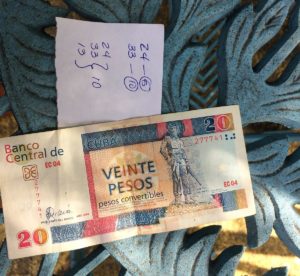
De los tres números, el primero se conoce como centena y los otros dos decena. La primera cifra posee un valor de 300 a 600 CUP por cada peso cubano apostado y la decena también varía de 30 a 60 CUP por cada peso jugado, o sea, si usted juega el 325 con 5 pesos en la centena y cinco en la decena y sale ese número, usted obtiene más de 2 mil pesos cubanos, pero si acierta solo en la decena (en este caso 25) solo recibe entre 200 o 300 CUP.
bolita-e1543371480467

En algunas zonas del país se paga el «vire», por ejemplo para 325 el vire es 532, o sea el último dígito del original pasa a la centena, la misma suerte corre la «suma», donde al original le adicionamos el «vire» y el resultado lo nombramos «suma», en el caso analizado sería 325+532=857, y también ocurre lo mismo con el «pega‘o», si juegas el 324 y sale el 325 puedes obtener una ganancia, pues este es el número que antecede al 325. Todas estas opciones tienen un valor monetario menor a la centena y la decena.

Las personas juegan basándose en la Charada China con algunos ajustes cubanos. La gente relaciona los números de la Charada con sueños y experiencias personales a través de cábalas (cábulas como se le conoce popularmente), es decir, un sistema de interpretación mística y alegórica que busca el significado del mundo a través de paralelismos entre dígitos y lo que sucede en la vida de las personas.

También existe una cartilla con una serie de listas y recomendaciones para alcanzar el éxito en la «bolita», este manual es muy seguido pues consideran que lo elaboró una persona con fuertes conocimientos matemáticos y aritméticos. Asimismo, todos los días reciben dos adivinanzas cuyos enigmas llevan a los números de la jornada.

dsc00052

Los banqueros siempre tienen mucho dinero por si alguien asesta un buen golpe en un número, y cuando un dígito lleva mucho tiempo sin salir entonces limitan la cantidad de personas que lo pueden jugar por cada listero, además, existen las personas que juegan al menudeo, 2 o 3 pesos diarios, y los que juegan al por mayor, entre 100 y 200 pesos en una sola cifra.

Pero más allá de la «bolita» yacen otros juegos ilícitos que alcanzan popularidad en nuestra nación, entre ellos el dominó, el silo y las cartas por dinero. El primero de ellos lo encontramos en cualquier esquina de una comunidad, donde un grupo de personas juegan al dominó con cantidades considerables de capital en apuestas. Suelen armonizar el escenario con una botella de alcohol y los gritos o el silencio de sus participantes temerosos de recibir una «pollona» (como se le conoce a la pérdida de una ronda sin ganar juego alguno) o que el contrario pegue su última ficha.

El silo consiste en un juego con tres dados y varias personas que prueban suerte en los tiros y quien obtenga mayor cantidad de puntos en los tres dados durante una tirada resulta el ganador. A su vez los juegos de cartas van desde la brisca hasta el burro (populares entre los cubanos) y llevan como atractivo principal la rivalidad económica.

dados_juegos_casino_dinero

En las competencias deportivas abundan las disputas, pues en el desarrollo de torneos nacionales e internacionales de béisbol, boxeo, fútbol y otras disciplinas, se apuesta por los equipos y deportistas favoritos.

En tanto las peleas de gallos, que los cubanos recibimos por tradición resultan escenarios frecuentes de jugadores y casi siempre se acompañan de altos grados de violencia, de forma similar ocurre con las peleas de perros, repugnantes por lo sangriento de la contienda.

Asimismo, en las carreras de caballos, motos y autos y en los torneos (competiciones de habilidades en los campos) surgen riñas entre los contrincantes por problemas a la hora de cobrar el dinero empeñado.

logo

Calle-ObispoON THE STREETS OF CUBA: “OF PROHIBITED GAMES” AND “BOLITEROS”.

Some take gambling or gambling for economic reasons; others, like pure entertainment, but the certain thing is that the prohibited games in Cuba proliferate in the streets in a variety of formats, from the so famous “little ball” to board games for money, monetary challenges in sports competitions, etc.

The best-known and most popular of all the prohibited games on the island is undoubtedly the “little ball”, heir to its predecessor: the national lottery, which existed before the revolutionary triumph of 1959. This lottery takes the first three of the Florida lottery digits and has a systematic twice a day, the first announcement is issued at 2:00 pm and the other at 8:00 pm

Of the three numbers, the first is known as hundreds and the other two ten. The first number has a value of 300 to 600 CUP for each Cuban peso bet and the ten also varies from 30 to 60 CUP for each peso played, that is, if you play 325 with 5 pesos in the hundred and five in the ten and that number comes out, you get more than 2 thousand Cuban pesos, but if you hit only in the ten (in this case 25) you only receive between 200 or 300 CUP.

In some areas of the country the vire is paid, for example for 325 the vire is 532, that is, the last digit of the original goes to the hundred, the same fate runs the “sum”, where the original is added the “vire” »And the result we named it« sum », in the analyzed case it would be 325 + 532 = 857, and the same thing happens with the« pega’o », if you play the 324 and the 325 comes out you can get a profit, because this is the number that precedes the 325. All these options have a monetary value less than the hundred and the ten.

bolita-loteria-cubana-300x336

People play based on the Chinese Charade with some Cuban adjustments. People relate the Charade numbers with dreams and personal experiences through cabals (cábulas as it is popularly known), that is, a system of mystical and allegorical interpretation that seeks the meaning of the world through parallels between digits and what happens in people’s lives

There is also a primer with a series of lists and recommendations to achieve success in the “little ball”, this manual is very often because they consider that it was developed by a person with strong mathematical and arithmetic skills. Also, every day they receive two riddles whose enigmas lead to the numbers of the day.

The bankers always have a lot of money in case someone makes a good hit on a number, and when a digit has not been out for a long time then they limit the number of people who can play it for each listeria, in addition, there are people who play at retail, 2 or 3 pesos a day, and those who play wholesale, between 100 and 200 pesos in a single figure.

3

But beyond the “little ball” lie other illicit games that reach popularity in our nation, among them the domino, the silo and the letters for money. The first one is found in any corner of a community, where a group of people plays dominoes with considerable amounts of betting capital. They usually harmonize the stage with a bottle of alcohol and the shouts or silence of their participants afraid of receiving a “pollona” (as the loss of a round is known without winning any game) or that the opponent sticks his last card.

The silo consists of a game with three dice and several people who try their luck in the shots and whoever gets the most points in the three dice during a roll is the winner. In turn, the card games range from brisca to donkey (popular among Cubans) and have as their main attraction the economic rivalry.

In the sports competitions, there are many disputes, because in the development of national and international baseball, boxing, soccer and other disciplines, bet on the favorite teams and athletes.

While the cockfights, which we Cubans receive by tradition, are frequent scenarios of players and almost always accompanied by high degrees of violence, similarly occurs with dogfights, disgusting because of the bloodiness of the fight.

Also, in the races of horses, motorcycles and cars and in the tournaments (skills competitions in the fields) fights arise between the opponents for problems when it comes to collecting the money pledged.

Agencies/ IslaLocal/ Internet Photos/ Arnoldo Varona/ www.TheCubanHistory.com
THE CUBAN HISTORY, HOLLYWOOD.
cuba-408869__340

OVER 7,000 ARTICLES ABOUT CUBA. (SEARCH) > www.TheCubanHistory.com

logo

< (OPINION) BOLTON vs. MADURO: OF Twitters, Threats, and Caricatures.

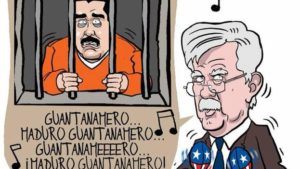
Caricatura de Maduro tras las rejas de Guantánamo en el despacho de Bolton. (Fernando Pinilla)

Caricatura de Maduro tras las rejas de Guantánamo en el despacho de Bolton. (Fernando Pinilla)

(OPINIÓN) BOLTON vs. MADURO: DE TWITERS, AMENAZAS Y CARICATURAS.

Una caricatura de Nicolás Maduro detrás de las rejas de Guantánamo decora la oficina de John Bolton en la Casa Blanca. Es un producto directo de su agresiva campaña contra el presidente venezolano, que se libra a diario desde Twitter y tiene a los militares de Venezuela como principal destinatario.

“Guantanamero ¡Maduro Guantanamero!”, canta Bolton, el asesor de Seguridad Nacional del presidente de EE UU, Donald Trump, mientras agita unas maracas decoradas con la bandera de su país y sueña con la imagen del mandatario venezolano vestido con un traje naranja, sacudiendo los barrotes de esa prisión estadounidense en Cuba.

Esa viñeta del ilustrador venezolano Fernando Pinilla, publicada en febrero en el Diario Las Américas de Miami, está enmarcada desde hace unas semanas en el despacho de Bolton.

Su origen está en uno de los tuits más comentados de los más de 150 que ha enviado Bolton en esa red social desde que comenzó su ofensiva venezolana en enero, coincidiendo con la toma de posesión de Maduro que EE UU y muchos otros países no reconocieron.

“Le deseo a Nicolás Maduro y a sus principales asesores una larga y tranquila jubilación, viviendo en una bonita playa en algún lugar lejos de Venezuela”, escribió Bolton en Twitter el 31 de enero.

Al día siguiente, en una entrevista de radio, Bolton advirtió a Maduro de que “cuanto antes aproveche la oportunidad” de renunciar al poder y acogerse a una amnistía, “más probable será que pueda tener un retiro agradable y tranquilo en una playa bonita, en lugar de estar en otra zona playera como la de Guantánamo”.

La arremetida de Bolton contra Maduro ha encontrado un escaparate singular en Twitter, una herramienta que el año pasado solo usaba esporádicamente y que ahora emplea a diario para referirse casi exclusivamente al país caribeño.

La arremetida de Bolton contra Maduro ha encontrado un escaparate singular en Twitter, una herramienta que el año pasado solo usaba esporádicamente y que ahora emplea a diario para referirse casi exclusivamente al país caribeño

“(Mis tuits sobre Venezuela) son un nuevo experimento en la diplomacia pública”, dijo Bolton este mes a la cadena CNN.

“Muchos de mis tuits también salen en español, porque queremos llegar a la audiencia latinoamericana en particular”, incluidos aquellos “de izquierdas”, y crear así “una coalición lo más amplia posible para reemplazar a Maduro”, agregó.

Su portavoz, Garrett Marquis, precisó a Efe que los tuits de Bolton buscan “reforzar las políticas” de EE UU, además de “aumentar el diálogo y reunir apoyos para el presidente interino Juan Guaidó”, el líder opositor reconocido como mandatario legítimo por más de 50 países.

“Este es un esfuerzo para contactar directamente al pueblo de Venezuela, incluidos los militares, las fuerzas de seguridad y quienes integran el círculo de Maduro, y con aliados internacionales e instituciones financieras”, explicó Marquis.

En efecto, Bolton ha dedicado decenas de tuits a advertir a los militares venezolanos de que no sigan con Maduro y a hacerles ofertas si respaldan a Guaidó.

“Al alto rango militar venezolano, ahora es el momento de estar al lado del pueblo de Venezuela”, afirmó Bolton en febrero, en uno de sus tuits en español.

El asesor de Trump también ha trasladado a Twitter la amenaza de la intervención militar estadounidense, al recordar que “todas las opciones están sobre la mesa”.

Esa arrolladora campaña tiene sus riesgos, según Philip Seib, profesor de Diplomacia en la Universidad del Sur de California.

“Twitter fuerza la simplificación de temas complejos”, apuntó Seib a Efe. “Las amenazas implícitas sobre acciones militares pueden acaparar titulares e invalidar enfoques más constructivos”.

Michael Shifter, presidente del centro de estudios Diálogo Interamericano, también duda de la efectividad de la misión tuitera de Bolton, y cree que incluso podría “tener el efecto contrario” y reforzar el “apoyo a Maduro” de los militares venezolanos, que “no suelen responder bien a las amenazas” de EE.UU.

En contra de Bolton también pueden jugar su fama de intervencionista y defensor de “estrategias de cambio de régimen”, además de su denuncia de que Venezuela, Cuba y Nicaragua forman una especie de “eje del mal”, una “troika de la tiranía”, como él mismo los describe.

“Pocos comparten esa fórmula ideológica de Bolton, que tiene ecos inconfundibles de la Guerra Fría”, opinó Shifter para Efe.

Con sus tuits, sin embargo, Bolton ha conseguido llevar la voz cantante en la política de EE UU hacia Venezuela, y a veces incluso se permite cerrarlos con el dramático estilo de su jefe, un experto en el arte de Twitter. “¡Tomen la decisión correcta!”, reclamó a los militares venezolanos el 6 de febrero.

logo

(OPINION) BOLTON vs. MADURO: OF TWITTERS, THREATS, AND CARICATURES.

images (4)images (3)

A caricature of Nicolás Maduro behind Guantanamo bars decorates John Bolton’s office in the White House. It is a direct product of its aggressive campaign against the Venezuelan president, which is waged daily from Twitter and has the Venezuelan military as the main target.

“Guantanamero Maduro Guantanamero!” Sings Bolton, National Security Advisor to US President Donald Trump, while waving some maracas decorated with the flag of his country and dreaming of the image of the Venezuelan president dressed in an orange suit, shaking the bars of that American prison in Cuba.

That vignette by Venezuelan illustrator Fernando Pinilla, published in February in the Diario Las Américas of Miami, has been framed for a few weeks in Bolton’s office.

Its origin is in one of the most commented tweets of the more than 150 that Bolton has sent in that social network since its Venezuelan offensive began in January, coinciding with Maduro taking office that the US and many other countries did not recognize.

“I wish Nicolás Maduro and his senior advisors a long and quiet retirement, living on a beautiful beach somewhere far from Venezuela,” Bolton wrote on Twitter on January 31.

The next day, in a radio interview, Bolton warned Maduro that “the sooner he seizes the opportunity” to renounce power and take advantage of an amnesty, “the more likely it is that he can have a nice and peaceful retreat on a beautiful beach, instead of being in another beach area like Guantanamo. ”

Bolton’s onslaught against Maduro has found a unique showcase on Twitter, a tool he used only sporadically last year and now uses every day to refer almost exclusively to the Caribbean country.

Bolton’s onslaught against Maduro has found a unique showcase on Twitter, a tool he used only sporadically last year and now uses every day to refer almost exclusively to the Caribbean country

“(My tweets about Venezuela) are a new experiment in public diplomacy,” Bolton told CNN this month.

“Many of my tweets also come out in Spanish, because we want to reach the Latin American audience in particular,” including those “from the left,” and create “a coalition as broad as possible to replace Maduro,” he added.

Caricatura-Guantanamo-Bolton-Fernando-Pinilla_CYMIMA20190315_0003_13

His spokesman, Garrett Marquis, told Efe that Bolton’s tweets seek to “reinforce the policies” of the United States, in addition to “increasing dialogue and gathering support for interim president Juan Guaidó,” the opposition leader recognized as a legitimate president for more from 50 countries.

“This is an effort to directly contact the people of Venezuela, including the military, the security forces and those in the Maduro circle, and with international allies and financial institutions,” Marquis explained.

In effect, Bolton has dedicated dozens of tweets to warning the Venezuelan military not to continue with Maduro and to make offers to them if they back Guaidó.

“To the Venezuelan high military rank, now is the time to be next to the people of Venezuela,” Bolton said in February, in one of his tweets in Spanish.

Trump’s advisor has also moved to Twitter the threat of US military intervention, remembering that “all options are on the table.”

That overwhelming campaign has its risks, according to Philip Seib, professor of diplomacy at the University of Southern California.

“Twitter forces the simplification of complex issues,” Seib said to Efe. “Implicit threats to military actions can make headlines and invalidate more constructive approaches.”

Michael Shifter, president of the Inter-American Dialogue study center, also doubts the effectiveness of Bolton’s Twitter mission, and believes that it could even “have the opposite effect” and reinforce the “support to Maduro” of the Venezuelan military, which “does not tend to respond well to threats “from the US

Against Bolton, they can also play their fame as interventionist and defender of “regime change strategies”, in addition to their claim that Venezuela, Cuba and Nicaragua form a kind of “axis of evil”, a “troika of tyranny” , as he himself describes them.

“Few share Bolton’s ideological formula, which has unmistakable echoes of the Cold War,” Shifter told Efe.

With his tweets, however, Bolton has managed to take the lead in US politics towards Venezuela, and sometimes it is even allowed to close them with the dramatic style of his boss, an expert in the art of Twitter. “Make the right decision!”, He complained to the Venezuelan military on February 6.

Agencies/ EFE/ 14ymedio, La Habana/ Lucia Leal/ Internet Photos/ Arnoldo Varona/ www.TheCubanHistory.com
THE CUBAN HISTORY, HOLLYWOOD.

Cuba01 (1)

logo

< WHAT MEANS for the Cubans the Phrase: "I'll Make a Tale" (Te Voy a Hacer un Cuento).

downloadQUE SIGNIFICA PARA LOS CUBANOS LA FRASE: “TE VOY A HACER UN CUENTO”.

Dentro del lenguaje popular cubano se encuentran ciertos términos que son empleados de forma muy curiosa. El vocablo ‘cuento’, posee disimiles usos, claro, los que solo un cubano o alguien cerca conoce.

Por ejemplo, cuando en Cuba se dice Vivir del Cuento, todos pensamos en el popular programa humorístico cubano que ganó reconocimiento debido al expresidente de los Estados Unidos Barack Obama y su participación en él durante la visita que realizara con su familia a isla; pero también se refiere esta frase a que alguien vive del aire, que no trabaja.

Cuando se dice que alguien ´´metió un cuento´´, quiere decir que ese alguien dijo alguna mentira o exageración, pero si se trata de la expresión ´´no cree en cuentos´´, quiere decir que esta persona no le creyó el cuento al anterior.

Todos los cubanos conocemos al cuento de la buena pipa, que no es más que la situación que se alarga sin que tenga fin.

Cuando un cubano se pone a conversar de cualquier tema con los vecinos del barrio o en una cola, o en el trabajo, puede referirse a que se puso a que ´´dio muela e hizo cuentos´´.

maxresdefault-1

En el caso de las personas a las que se les ´´acabó el cuento´´, esto se refiere a que se les terminó la buena situación económica que poseía.

Y hasta allí llego se le acabo la abundancia o a lo cubano “se le acabo el cuento”

Cuando nos referimos a que ´´no queremos cuento con alguien´´, queremos decir que no queremos tener nada que ver con esa persona.

Y cada quien por su lado.

Cuando nos encontramos con un embustero queriendo hacer de las suyas decimos que es un cuento de velorio.

También es usado para referisrse a que no se cree en ´´cuentos de velorio´´, cuando se usa la frase ´´no creo en cuentos de chinos de manila´´.

Cuando vas a decirle a alguien que no le crees nada de los que está diciendo se usa la frase ´´ a otro con ese cuento´´ porque a mi no me engañas.

Está también el que ´´no hizo el cuento´´, que se le llama así a quien no sobreviviera a alguna enfermedad, accidente o agresión.

Hasta allí llego, es decir le llego su día.

logo

download (1)WHAT MEANS FOR THE CUBANS THE PHRASE: “I’LL MAKE YOU A TALE”.

Within the Cuban popular language, there are certain terms that are used in a very curious way. The word ‘story’, has dissimilar uses, of course, which only a Cuban or someone close knows.

For example, when in Cuba it is called Vivir del Cuento, we all think of the popular Cuban humor program that gained recognition due to the former president of the United States Barack Obama and his participation in it during the visit he made with his family to the island; but this phrase also refers to someone living in the air, who does not work.

When it is said that someone “got a story,” it means that someone said some lie or exaggeration, but if it is the expression “do not believe in stories,” it means that this person did not believe the story the previous.

All Cubans know the story of the good pipe, which is nothing more than the situation that stretches without end.

When a Cuban talks about any topic with the neighbors of the neighborhood or in a queue, or at work, he can refer to what he said when he “grinds and tells stories”.

In the case of the people who were ” finished the story ”, this means that they ended the good economic situation he had.

And until I get there the abundance or the Cuban thing is over “the story is over”

When we refer to “we do not want someone,” we want to say that we do not want to have anything to do with that person.

trabajo-en-cuba

And each one by his side.

When we meet a liar wanting to do his own we say it is a wake story.

It is also used to refer to not believing in ” velorio ”, when the phrase ” I do not believe in tales of Chinese manila”.

When you are going to tell someone that you do not believe anything of what you are saying, the phrase “to another with that story” is used because you do not deceive me.

There is also the one who “did not tell the story,” which is called that who does not survive any illness, accident or aggression.

That’s where he arrived, that is, his day arrived.

Agencies/ TodoCuba/ Internet Photos/ Arnoldo Varona/ wwww.TheCubanHistory.com
THE CUBAN HISTORY, HOLLYWOOD.

cuba-ferries

logo