< ROLANDO LA SERIE, One of the Most Distinguished Cuba Singer of His Time.VIDEOS.

shareROLANDO LA SERIE, UNO DE LOS CANTANTES DE CUBA MÁS DISTINGUIDO DE SU TIEMPO.
VIDEOS.

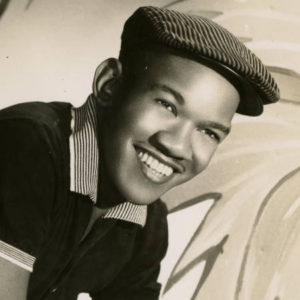
Rolando Laserie nació el 27 de agosto de 1923 en Villa Clara, Cuba, también conocido como “El Guapo de la Canción” o “El Guapachoso”, un cantante cubano de boleros, guarachas, son cubano, son montuno, tangos y bolero. .

La Serie tenía una gran voz abierta, ligeramente ronca y agresiva. Aunque algunos de sus mayores éxitos fueron baladas, su canto al alza fue una maravilla de improvisación y sonido. Su ataque y su entusiasmo le valieron el apodo de “El Guapo de la Canción”, que en la jerga cubana se traduce como el cantante valiente o audaz.

6155uqPguJL._SY355_

Rolando La Serie, comenzó como percusionista, fue uno de los miembros originales del grupo de Beny More, cuyo canto fue visto como un poco embarazoso. Pero en 1956 tuvo la oportunidad de grabar una balada de Mario Fernández Porta llamada ” Mentiras Tuyas ”, que transformó con su sonido claramente duro. El compositor de la canción se opuso a la interpretación del Sr. La Serie, pero el disco vendió 30,000 copias en los primeros días después de su lanzamiento.

https://youtu.be/29H9WVi8jo4

La Serie abandonó Cuba poco después, viajando por el mundo y viviendo en Argentina y México, lo que le costó su fama en su país natal. Pero mantuvo una agenda ocupada, grabando con las estrellas más grandes de la música, incluso en el exilio de Cuba. Grabó en Nueva York con Tito Puente y su banda en la década de 1960 para un álbum llamado “Pachanga en Nueva York” y con la gran banda puertorriqueña Cortijo y Su Combo, cantando con Ismael Rivera. En el camino, continuó teniendo éxitos, entre ellos ” Amalia Batista ”, ahora un estándar latino. Añadió tangos a su repertorio, y su frecuente interjección “¡De pelicula!” (“De una película!”) Se convirtió en su marca registrada.

En la década de 1970 se mudó a Florida y en la década de los 80 grabó con Johnny Pacheco en Fania Records. Comenzó a grabar con Caiman Records, que produjo el álbum ” Ay, Se Pasó La Serie ”, grabado en 1985 en un estilo cubano moderno.

Rolando La Serie, uno de los grandes cantantes cubanos de su época, murió el 22 de noviembre de 1998 (75 años), en Coral Gables, Florida, Estados Unidos, en el Hospital de Médicos de Healthsouth, la causa fue una complicación cardíaca. Fue sobrevivido por su esposa, Gisela.

logo

images (3)ROLANDO LA SERIE, ONE OF THE MOST DISTINGUISHED CUBA SINGER OF HIS TIME. VIDEOS.

Rolando Laserie was born August 27, 1923 in Villa Clara, Cuba, he was also known as ‘El Guapo de la Cancion” or “El Guapachoso”, a Cuban singer of boleros, guarachas, son cubano, son montuno, tangos and bolero Son.

La Serie had a big, open voice, slightly hoarse and aggressive. Although some of his biggest hits were ballads, his up-tempo singing was a marvel of improvisation and sound. His attack and his enthusiasm earned him the nickname ”El Guapo de la Cancion,” which in Cuban slang translates as the valiant or bold singer.

Rolando La Serie, started out as a percussionist — he was one of the original members of Beny More’s group — whose singing was seen as a bit of an embarrassment. But in 1956 he had the opportunity to record a ballad by Mario Fernandez Porta called ”Mentiras Tuyas,” which he transformed with his distinctively hard sound. The composer of the song objected to Mr. La Serie’s interpretation, but the record sold 30,000 copies in the first few days after its release.

268x0w

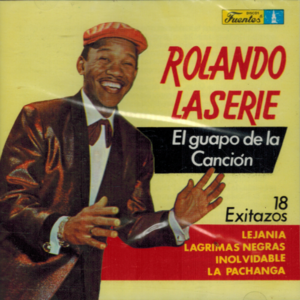
La Serie left Cuba soon after, traveling the world and living in Argentina and Mexico, which cost him his fame in his native country. But he maintained a busy schedule, recording with the music’s biggest stars, even in exile from Cuba. He recorded in New York with Tito Puente and his band in the 1960s for an album called ”Pachanga in New York” and with the great Puerto Rican band Cortijo y Su Combo, singing with Ismael Rivera. Along the way he continued to have hits, including ”Amalia Batista,” now a Latin standard. He added tangos to his repertory, and his frequent interjection ”De pelicula!” (”From a movie!”) became his trademark.

In the 1970’s he moved to Florida, and in the 80’s he recorded with Johnny Pacheco on Fania Records. He began recording with Caiman Records, which produced the album ”Ay, Se Paso La Serie,” recorded in 1985 in a modern Cuban style.
amaz_b_82de3ab8-6f92-44e1-89ff-9409a5c61aed_300x300

Rolando La Serie, one of the great Cuban singers of his time, died the 22 of November 1998 (75 años), in Coral Gables, Florida, Estados Unidos at Healthsouth Doctors’ Hospital, the cause was cardiac complications. He was survived by his wife, Gisela.

Agencies/ TNYTimes./ Petr Watrousnow/ Internet Photos/ YouTube/ Arnoldo Varona/ www.TheCubanHistory.com
THE CUBAN HISTORY, HOLLYWOOD.

cayo-santa-maria-copia

OVER 7,000 ARTICLES ABOUT CUBA. (SEARCH) > www.TheCubanHistory.com
logo

< INCREASES the Number of Cubans Traveling to Haiti to buy Merchandise. Photos.

imageAUMENTA EL NUMERO DE CUBANOS VIAJANDO A HAITI A COMPRAR MERCANCIAS.

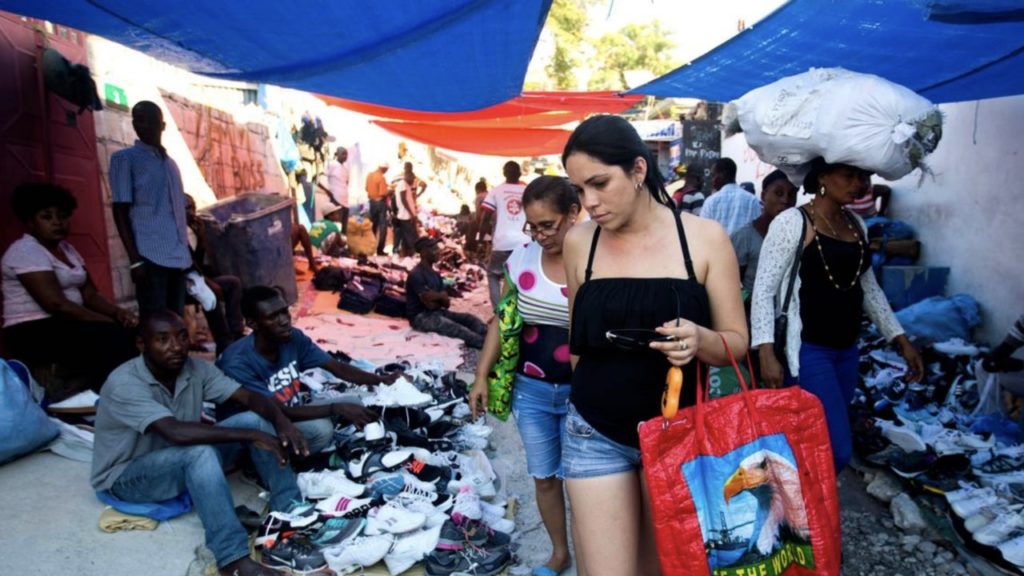
Cientos de cubanos siguen arribando semanalmente a Haití para comprar en el país vecino -el más pobre de América Latina- mercancías de diversa índole.

En los últimos meses, cientos de cubanos se pasean a diario por Puerto Príncipe, la capital haitiana, en busca de artículos para sus negocios en Cuba, en el caso de los cuentapropistas, y también para uso personal.

Tanto los haitianos como los cubanos se benefician mutuamente de la compraventa de artículos del hogar, tecnología, ropa o calzado, entre otros, que adquieren en el mercado Hippolyte, el más grande la ciudad, que hace de todo para satisfacer a su mayor clientela.

Los cubanos suelen viajar por poco tiempo y se limitan a recorrer un área muy reducida de la capital haitiana. Saben que a la vuelta tienen tienen un límite de 30 kilos por maleta y que no pueden comprar más de 12 artículos del mismo género.

0003069977

No obstante, en declaraciones a la agencia AFP, una comerciante cubana asegura que cuando los vendedores les hacen lotes de 10 no tienen problemas, y que luego se arreglan entre los propios cubanos: “en el avión todos nos conocemos”, afirma, dando a entender que hacen cambios de mercancía según sus intereses.

“Compro de todo: ropa, equipos electrónicos, zapatos… En Cuba es muy caro, y, sobre todo, no existen estas ofertas”, explica otro cubano.

Los “turistas” de la Isla son fácilmente reconocibles en el aeropuerto de Puerto Príncipe, pues todo su equipaje se compone de grandes paquetes de ropa, televisores de pantalla plana y juguetes para niños.

Tal como sucede en el caso de otros países, como Guyana o Panamá, hay toda una red que ofrece transporte, hospedaje o que vende comida a los cubanos. De hecho, cerca del aeropuerto, un barrio de Puerto Príncipe ha comenzado a ser llamado “Ti Havana” (Pequeña Habana, en la lengua local). Se trata de tres calles en los que están situados los hoteles más frecuentados por los cubanos. Mientras tanto, los locales se muestran encantados, pues los cubanos constituyen su gran clientela.

cubanos-haiti-758x398

Sobre los trámites, una cubana explica que ella ha optado por comprar pagar 900 dólares por un paquete gestionado a través de una agencia en La Habana que incluye la visa, los boletos de avión y el hotel por tres días.

“Puede que sea más costosa pero es menos complicada que la embajada de Haití, donde nos hacen muchas preguntas”, subraya la joven.

Aunque Hatí no comparece en el listado de países del continente libre de visado para cubanos, gestionar una visa no es tan difícil como lo es para otros lugares.

Les da igual: Rusia, Guyana, Ecuador, Panamá, o cualquier destino viable para ir a comprar las cosas que no existen en Cuba.

No obstante, no todo son ventajas en Haití, pues algunos cubanos también aseguran haber sido víctimas de robos a manos de jóvenes que sabían que llevan grandes sumas de dinero en efectivo.

creciente-extranjero-mercancia-Isla-Flickr_CYMIMA20170614_0006_13

Creada en 2010, la compañía aérea haitiana Sunrise viaja actualmente a La Habana, Camagüey y Santiago de Cuba. La compañía opera 12 vuelos directos por semana.

A pesar de que, según las cifras, dos de cada tres haitianos vive con menos de dos dólares por día; a pesar de que 100,000 niños menores de 5 años sufren de desnutrición aguda y menos del 50% de los hogares tiene acceso a agua potable, los cubanos desesperados lo ven como una opción.

Mucho es el dinero que en los últimos tiempo están invirtiendo los cubanos en esos países que sirven de destino para comprar. En el caso de Panamá, país que ha garantizado una tarjeta de turismo para aquellos cubanos que quieran ir a invertir, los ciudadanos de la Isla dejaron 308 millones de dólares el año pasado, y van camino de gastar quizás hasta un 8% más en 2018, según Luis Carlos Saenz, subdirector general del área franca.

logo

1544555052-cubanos-van-comprar-haiti-pais-pobre-hemisferioINCREASES THE NUMBER OF CUBANS TRAVELING TO HAITI TO BUY MERCHANDISE.

Hundreds of Cubans continue arriving weekly to Haiti to buy in the neighboring country – the poorest in Latin America – merchandise of various kinds.

In recent months, hundreds of Cubans walk daily through Port-au-Prince, the Haitian capital, in search of articles for their businesses in Cuba, in the case of self-employed workers, and also for personal use.

Both Haitians and Cubans benefit mutually from the sale of household goods, technology, clothing or footwear, among others, which they acquire in the Hippolyte market, the largest in the city, which does everything to satisfy its biggest clientele.

Cubans usually travel for a short time and are limited to touring a very small area of ​​the Haitian capital. They know that on return they have a limit of 30 kilos per suitcase and they can not buy more than 12 items of the same gender.

However, in statements to the AFP agency, a Cuban merchant says that when the sellers do lots of 10 do not have problems, and then arrange themselves among Cubans: “on the plane we all know each other,” he says, giving understand that they make merchandise changes according to their interests.

“I buy everything: clothes, electronic equipment, shoes … In Cuba it is very expensive, and, above all, these offers do not exist,” explains another Cuban.

The “tourists” of the Island are easily recognizable at the Port-au-Prince airport, since all their luggage consists of large packages of clothes, flat-screen TVs and toys for children.

AP_0011911293-340x220-1

As in the case of other countries, such as Guyana or Panama, there is a whole network that offers transportation, lodging or that sells food to Cubans. In fact, near the airport, a neighborhood of Port-au-Prince has begun to be called “Ti Havana” (Little Havana, in the local language). It is about three streets where the most frequented hotels by Cubans are located. Meanwhile, the locals are delighted, because Cubans are its great clientele.

On the procedures, a Cuban explains that she has opted to buy pay 900 dollars for a package managed through an agency in Havana that includes the visa, airline tickets and the hotel for three days.

“It may be more expensive but it is less complicated than the Haitian embassy, ​​where they ask us a lot of questions,” she says.

Although Hatí does not appear in the list of countries of the continent free of visa for Cubans, managing a visa is not as difficult as it is for other places.

They do not care: Russia, Guyana, Ecuador, Panama, or any viable destination to buy things that do not exist in Cuba.

However, not all are advantages in Haiti, because some Cubans also claim to have been victims of robberies at the hands of young people who knew they carry large sums of cash.

Created in 2010, the Haitian airline Sunrise currently travels to Havana, Camagüey and Santiago de Cuba. The company operates 12 direct flights per week.

sunrise_airways_avion

Despite the fact that, according to the figures, two out of every three Haitians live on less than two dollars a day; Although 100,000 children under the age of 5 suffer from acute malnutrition and less than 50% of households have access to drinking water, desperate Cubans see it as an option.

A lot is the money that Cubans have been investing in the last few years in those countries that are destiny to buy. In the case of Panama, a country that has guaranteed a tourism card for those Cubans who want to invest, the citizens of the island left 308 million dollars last year, and are on track to spend up to 8% more in 2018 , according to Luis Carlos Saenz, deputy general director of the free area.

Agencies/ CiberCuba/ Internet Photos/ Arnoldo Varona/ www.TheCubanhistory.com
THE CUBAN HISTORY, HOLLYWOOD.

1-Destino

OVER 7,000 ARTICLES ABOUT CUBA. (SEARCH > www.TheCubanHistory.com

logo

< SALSA - "LA PELICULA" Filmed in France and Cuba. (French with Subtitles in Spanish). Video.

710SDaUWmfL._SY355_SALSA – “LA PELICULA” FILMADA EN FRANCIA AND CUBA. (French with Subtitles in Spanish)

Si te gusta la salsa cubana, no dejes de ver esta pelicula francesa, muy buena, para mi muestra la cubania en su totalidad, se las recomiendo.

El tema donde bailan los abuelos se llama “Son para tì” y su autor es Pepe Ordás, un guanabacoense que a pesar de su bella voz, por mucho tiempo prefirió que sus canciones fueran cantadas por otros interprétes que las hicieron famosas como Sara González, Pablito Milanés, Isaac Delgado, Liuva Marìa Hevia, entre otros. Desde hace poco ha continuado su carrera en solitario. Como buen trovador que es, cargado con su guitarra hizo su primer disco con temas propios esta vez cantados por él. El disco tiene el tìtulo de esta bella canción “Son para tì” y por su puesto la incluye.


SALSA -“LA PELICULA” (Trailer)

SALSA -“LA PELICULA” FILMED IN FRANCE AND CUBA (French with Subtitles in Spanish).

download

If you like Cuban salsa, do not miss this French film, very good, for me it shows cubania in its entirety, or almost, I recommend it.

The theme where the grandparents dance is called “Son para tì” and its author is Pepe Ordás, a Guanabacoense who, despite his beautiful voice, for a long time preferred that his songs be sung by other interprétes who made them famous as Sara González, Pablito Milanés, Isaac Delgado, Liuva Marìa Hevia, among others.


SALSA- “LA PELICULA” (Complete FILM)

Pepe Ordáz has recently continued his solo career. As a good troubadour, he is, loaded with his guitar made his first album with his own songs this time sung by him. The album has the title of this beautiful song “Son para tì” and of course it includes it.

Agencies/ Wiki/ Various/ Internet Photos/ YouTube/ Arnoldo Varona/ www.TheCubanHistory.com
THE CUBAN HISTORY, HOLLYWOOD.

cuba-408869__340

OVER 7,000 ARTICLES ABOUT CUBA. (SEARCH > www.TheCubanHistory.com

logo