– SPAIN HOTEL CHAIN “Iberostar” inaugurates its number 15 in Cuba. + CADENA HOTELERA Española inaugura su hotel número 15 en Cuba.

3416-hotel-iberostar-playa-alameda

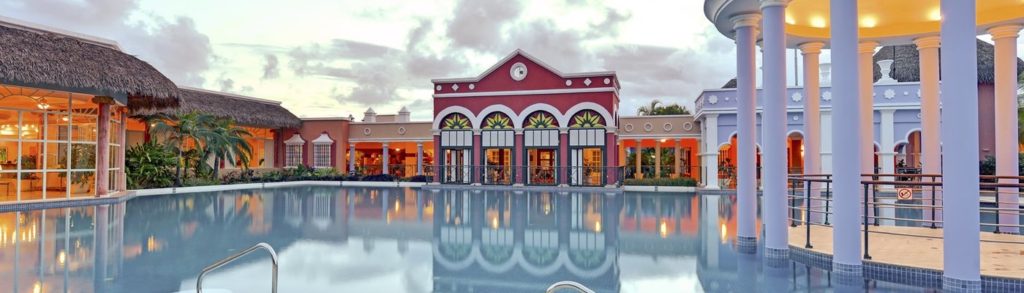
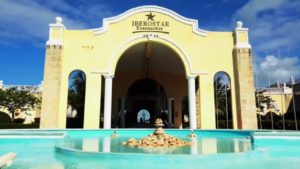
The Spanish hotel chain Iberostar Hotels & Resorts has opened a new hotel in Varadero resort, Cuba’s most important tourist and beach resort, official media reported Sunday.

The Iberostar Bella Vista Varadero, the new facility that will be managed by the Spanish company, is a Premium Gold five star hotel owned by the state tourism company Gaviota, managed by the Armed Forces.

“Cuba is Iberostar’s first bet in Latin America”, said the delegate of the chain in the country, Mateo Cardentey, during the opening of the hotel, which was attended by tour operators, travel agents and tour executives.

“Cuba is the first bet Iberostar in Latin America,” said the delegate of the chain in the country, Mateo Cardentey, during the opening of the hotel.

Cardentey said guests from Italy, Spain, and Canada, among other nationalities, are expected at this adults-only hotel with 827 rooms.

The spa has more than 50 hotels, 80% of them four and five star category, with more than 20,000 rooms, and in 2016 received more than one million tourists for the ninth consecutive year, according to data from the Ministry of Tourism.

image

Iberostar Hotels & Resorts has been present in Cuba since 1993 and currently operates 15 hotels in Cuba located in Havana, Cayo Largo del Sur, Varadero, Trinidad and the northern cayería of the central provinces Villa Clara and Ciego de Avila.

According to Cardentey, the Spanish company plans to expand to the eastern cities of Santiago de Cuba and Holguin, where the opening of the first Iberostar-run hotel in Playa Pesquero, one of the main tourist centers in the country, is planned for this year.

He also cited other projects in association with the Cuban tourist chains Gaviota and Gran Caribe, such as Havana’s construction of Hotel Packard and the repair of Habana Riviera, two former establishments that he described as “significant and with history.”

Iberostar is one of the foreign companies that has opted for management contracts with financing to remodel hotel facilities, a new modality of investment promoted by the tourist authorities.

Iberostar has opted for management contracts with financing to remodel hotel facilities, a new modality of investment promoted by the authorities.

Cuba achieved in 2016, and for the first time in its history, the record number of 4 million tourists. By 2017, the projections of foreign visitors to the island aim to raise the number to 4.2 million.

Tourism represents the most dynamic sector of the Cuban economy and the country’s second largest source of income behind the commercialization of professional services abroad.

logo

Cadena Española “Iberostar” inaugura su hotel número 15 en Cuba.

La cadena hotelera española Iberostar Hotels & Resorts abrió un nuevo hotel en el balneario de Varadero, el polo turístico de sol y playas más importante de Cuba, informaron este domingo medios oficiales.

proximamente-Santiago-Cuba-Holguin-Iberostar_CYMIMA20170417_0002_13

El Iberostar Bella Vista Varadero, la nueva instalación que administrará la compañía española, es un hotel Premium Gold de categoría cinco estrellas que es propiedad de la empresa de turismo estatal Gaviota, administrada por las Fuerzas Armadas.

“Cuba constituye la primera apuesta de Iberostar en Latinoamérica”, afirmó el delegado de la cadena en el país, Mateo Cardentey, durante la apertura del hotel, a la que asistieron turoperadores, agentes de viajes y ejecutivos turísticos.

“Cuba constituye la primera apuesta de Iberostar en Latinoamérica”, afirmó el delegado de la cadena en el país, Mateo Cardentey, durante la apertura del hotel.

Cardentey dijo que esperan huéspedes de Italia, España, y Canadá, entre otras nacionalidades, en este hotel solo para adultos que cuenta con 827 habitaciones.

El balneario dispone de más de 50 hoteles, el 80% de ellos categoría de cuatro y cinco estrellas, con más de 20.000 habitaciones, y en 2016 recibió más de un millón de turistas por noveno año consecutivo, según datos del Ministerio del Turismo.

Iberostar Hotels&Resorts está presente en Cuba desde 1993 y en la actualidad opera 15 hoteles en Cuba ubicados en La Habana, Cayo Largo del Sur, Varadero, Trinidad y la cayería norte de las provincias centrales Villa Clara y Ciego de Ávila.

maxresdefault (1)

Según Cardentey, la compañía española proyecta extenderse próximamente a las ciudades orientales de Santiago de Cuba y Holguín, donde está prevista para este año la apertura del primer hotel administrado por Iberostar en Playa Pesquero, uno de los principales polos turísticos del país.

Además citó otros proyectos en asociación con las cadenas turísticas cubanas Gaviota y Gran Caribe, como la construcción en La Habana del Hotel Packard y la reparación del Habana Riviera, dos antiguos establecimientos que calificó como “significativos y con historia”.

Iberostar es una de las compañía extranjeras que ha optado por los contratos de administración con financiación para remodelar instalaciones hoteleras, una nueva modalidad de inversión impulsada por las autoridades turísticas.

143798

Iberostar ha optado por los contratos de administración con financiación para remodelar instalaciones hoteleras, una nueva modalidad de inversión impulsada por las autoridades
Cuba consiguió en 2016, y por primera vez en su historia, la cifra récord de 4 millones de turistas. Para 2017, las proyecciones de visitantes extranjeros a la Isla apuntan a elevar el número hasta 4,2 millones.

El turismo representa el sector más dinámico de la economía cubana y la segunda fuente de ingresos del país detrás de la comercialización de servicios profesionales en el exterior.

Agencies/EFE/Internet Photos/Arnoldo Varona/ TheCubanHistory.com
THE CUBAN HISTORY, HOLLYWOOD.

Cuba Photos.

Cuba Photos.

THE CUBAN Armed Forces: The True Power on the Island. + LAS FUERZAS Armadas Cubanas: El Verdadero Poder en la Isla.

cubmp_003
 
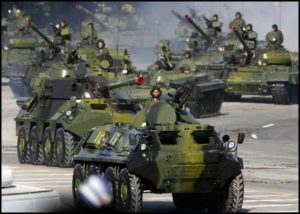
The Cuban Revolutionary Armed Forces celebrate the 60th anniversary of its founding. But the one who was once one of the most formidable armies of the Third World is now looking for his place in the world.

The Revolutionary Armed Forces (FAR) and the Ministry of the Interior (Minint) form the hard core of the system: from its ranks 7 of the 17 members of the Political Bureau (the highest organ of the Communist Party, and consequently of the royal power) . Even the powers of the President of the country, whose office is officially known as President of the Councils of State and Ministers, are below those of the First Secretary of the Party, who builds up a great part of his power in the fact of leading The National Defense Council.

Gaesa is the name is grouped an intricate network of companies and other similar institutions that – at least nominally – are subordinated to the Revolutionary Armed Forces. From there, and through the Ministry Secretariat, they establish their ties with the presidency of the country and – very secondarily – with the National Assembly of People’s Power. Gaesa’s origins date back to the mid-1980s, when after the third congress of the Communist Party, Fidel Castro launched the “Rectification of Errors and Negative Trends” campaign, a tropical version of Perestroika.

GAESA means - Grupo de Administración Empresarial, SA.

GAESA means – Grupo de Administración Empresarial, SA.

The proviso is not superfluous. As detailed in the Foresight Cuba site, which specializes in statistical analysis of the island: “None of these companies present any information about their income, profits, taxes paid, statement of accounts, the names of their executive directors, Public for any of its positions. ” Moreover, for the common citizen, Gaesa (the Business Management Group, Sociedad Anónima) is a completely unknown name, even though it dominates “hotels, marinas, rental agencies, the national gas station network, Special Development Zone Mariel, Habaguanex, among others, “lists an opposition publication to the government.

According to a study published in 2015, the military “control at least 57 companies and their ramifications, and between 50% and 80% of corporate revenues in Cuba,” according to a study published in 2015. The entire operation works under a dense blanket of silence, which extends to the institution’s own headquarters, located in the former headquarters of the Navy, in the historic center of the city of Havana. In order not to lose the custom, it is also strictly forbidden to photograph them.

Towards the interior of the island Gaesa follows the classic scheme of a corporate holding. All his decisions remain “in family”, as the board of directors is chaired by Brigadier General Luis Alberto Rodríguez López-Callejas, ex-son in law of President Raúl Castro and brother since the infancy of Colonel Alejandro Castro Espín (the head of the Defense Commission And National Security). Everyone wants to associate with the military commander who married 20 years ago with Deborah Castro, a graduate in chemical engineering and mother of her two children. Convergence is not easy because the character is elusive. Should any decision be taken that transcends the framework of its competence, Raúl himself, from his all-encompassing faculties, can make the matter viable.
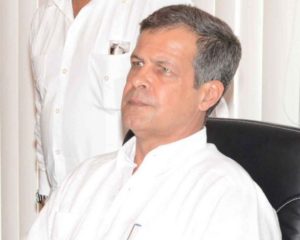
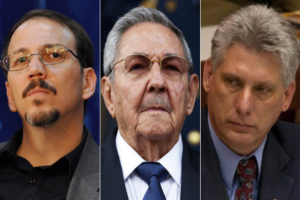
Brigadier General Luis Alberto Rodríguez López-Callejas.

Brigadier General Luis Alberto Rodríguez López-Callejas.

For the direction of each one of the dependencies also the old officers are privileged, says the journalist Fidel Gómez Sosa. “There are many examples of military commanders transformed into entrepreneurs: Brigadier General Luis Pérez Róspide, former director of the Military Industry, presides over the Gaviota Group; Colonel Héctor Oroza heads the corporate import and export monopoly (Cimex), where he acts as advisor to the former head of the military intelligence services, retired Major General Fabián Escalante. ”

“The deal with the military is more difficult than with the civilians, but they are the ones who command in Cuba,” recognized a Spanish executive visiting the Peninsula some time ago. Just review the list of companies that make up the consortium to check the accuracy of their words.

Take, for example, the tourism sector, the most powerful of the local economy and the main destination of Hispanic investments. If it is intended to operate hotels already built, the entrepreneur should establish links with chains such as Islazul, Cubanacán or Gran Caribe; If it seeks to open its way in developing poles, its business will have as an ineluctable counterpart to the Union of Military Constructions and a whole rosary of entities that to a greater or lesser extent are subordinated to the military leadership. The framework of relations and dependencies also covers areas that persist in their “civil” status.
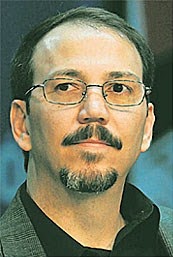
Alejandro Castro Espín.

Alejandro Castro Espín.

The implications of the fact transcend the economic. In order to obtain work in tourism or in some of the foreign exchange-collecting shops, it is necessary to comply with a rigorous process of verification that in many respects re-enacts the object of active combatants; In addition, once “within the system,” workers are subject to various aspects of the legislation of armed forces, which first prohibits any manifestation or attitude “that is not in accordance with the principles of the Revolution.”

“It is evident that the military has its own economy far beyond the requirements of its professional tasks of national security,” said analyst Arturo López-Levy last August, speaking to the newspaper Clarín. At that time, the transfers to Gaesa of Banco Financiero Internacional (the main entity of its type for currency management) and Habaguanex (the gigantic corporation managed by the Office of the Historian of Havana) had just taken place. The group “is investing wisely in the most international and lucrative economic areas,” says the American expert Richard Feinberg, an officer during the administration of William Clinton and professor of international politics at the University of California, San Diego. “Well-placed armed forces will not fear the future. On the contrary, they will probably support the visionary economic reforms that will make Cuba more efficient and competitive, “he adds.

Although they transcend the limits of rational optimism, their assessments serve to outline one of the most possible scenarios in the near future. It is hard to believe that the military elite may someday favor opening up, but it has certainly decided to ride the car of reforms … economic, of course.

logo

Las Fuerzas Armadas Cubanas: El Verdadero Poder en la Isla.

Las Fuerzas Armadas Revolucionarias Cubanas celebran el 60º aniversario de su fundación. Pero el que antaño fue uno de los ejércitos más formidables del Tercer Mundo busca hoy su lugar en el mundo.
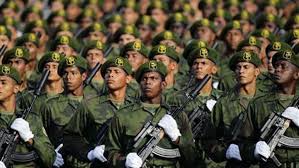
images

Las Fuerzas Armadas Revolucionarias (FAR) y el Ministerio del Interior (Minint) conforman el núcleo duro del sistema: de sus filas proceden 7 de los 17 miembros del Buró Político (el máximo órgano del Partido Comunista, y en consecuencia, del poder real). Incluso las facultades del presidente del país, cuyo cargo se conoce oficialmente como Presidente de los Consejos de Estado y de Ministros, están por debajo de las que posee el Primer Secretario del Partido, quien cimienta buena parte de su poder en el hecho de encabezar además el Consejo de Defensa Nacional.

Gaesa es el nombre se agrupa una intrincada red de compañías y otras instituciones similares que -al menos de forma nominal- se subordinan a las Fuerzas Armadas Revolucionarias. Desde allí, y a través de la Secretaría del Ministro, establecen sus vínculos con la presidencia del país y –muy en segundo plano– con la Asamblea Nacional del Poder Popular. Los orígenes de Gaesa se remontan a mediados de la década de 1980, cuando después del tercer congreso del Partido Comunista, Fidel Castro lanzó la campaña de “Rectificación de Errores y Tendencias Negativas”, una versión tropical de la Perestroika.

logo-119707966-1471954755-d612cf982d218e0927aee28985e825de1471954755

La salvedad no resulta superflua. Como detalla el sitio Foresight Cuba, especializado en análisis estadísticos acerca de la isla: “Ninguna de estas empresas presenta ningún tipo de información sobre sus ingresos, ganancias, impuestos pagados, estado de cuentas, ni el nombre de sus directores ejecutivos, ni hace licitación pública para ninguno de sus cargos”. Aun más, para el común de los ciudadanos, Gaesa (el Grupo de Administración Empresarial, Sociedad Anónima) es un nombre completamente desconocido, a pesar de que domina “hoteles, marinas, agencias de rentas de autos, la red nacional de gasolineras, la Zona Especial de Desarrollo Mariel, Habaguanex, entre otras”, enumera una publicación opositora al gobierno.

La agencia estadounidense Bloomberg va incluso más allá, De acuerdo con un estudio publicado en 2015, los militares “controlan al menos 57 compañías y sus ramificaciones, y entre el 50% y el 80% de la recaudación empresarial en Cuba”. Toda la operación funciona bajo un denso manto de silencio, que se extiende hasta las propias oficinas centrales de la institución, ubicadas en la antigua jefatura de la Marina de Guerra, en pleno centro histórico de la ciudad de La Habana. Para no perder la costumbre, también está terminantemente prohibido fotografiarlas.

Hacia el interior de la isla Gaesa sigue el esquema clásico de un holding corporativo. Todas sus decisiones quedan “en familia”, pues el consejo director es presidido por el general de brigada Luis Alberto Rodríguez López-Callejas, ex yerno del presidente Raúl Castro y hermano desde la infancia del coronel Alejandro Castro Espín (el jefe de la Comisión de Defensa y Seguridad Nacional). Todos quieren asociarse con el jefe militar que matrimonió hace 20 años con Deborah Castro, licenciada en ingeniería química y madre de sus dos hijos. No resulta fácil la convergencia porque el personaje es esquivo. En caso de que deba tomarse alguna decisión que trascienda los marcos de su competencia, el propio Raúl, desde sus facultades omnímodas, puede viabilizar el asunto.

Brigadier General Luis Alberto Rodríguez López-Callejas.

Brigadier General Luis Alberto Rodríguez López-Callejas.

Para la dirección de cada una de las dependencias también se privilegia a los antiguos oficiales, señala el periodista Fidel Gómez Sosa. “Son múltiples los ejemplos de mandos militares transformados en empresarios: el general de brigada Luis Pérez Róspide, antiguo director de la Industria Militar, preside el Grupo Gaviota; el coronel Héctor Oroza dirige el monopolio corporativo de importación y exportación (Cimex), donde actúa como asesor el antiguo jefe de los servicios militares de Inteligencia, el general de división retirado Fabián Escalante”.

“El trato con los militares es más difícil que con los civiles, pero son los que mandan en Cuba”, reconocía hace algún tiempo un ejecutivo español de visita en la Península. Basta repasar el listado de compañías que integran el consorcio para comprobar lo acertado de sus palabras.

Pongamos por ejemplo el sector turístico, el más pujante de la economía local y principal destino de las inversiones hispanas. Si se pretende operar hoteles ya construidos, el empresario deberá establecer vínculos con cadenas como Islazul, Cubanacán o Gran Caribe; si busca abrirse camino en polos en desarrollo, sus negocios tendrán como contraparte ineludible a la Unión de Construcciones Militares y a todo un rosario de entidades que en mayor o menor medida se subordinan a la cúpula castrense. El entramado de relaciones y dependencias abarca también los ámbitos que persisten en su condición “civil”.
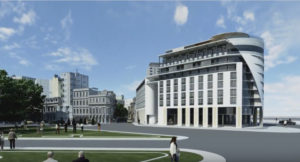
ghyugyuyu

Las implicaciones del hecho trascienden lo económico. Para conseguir trabajo en el turismo o en algunas de las tiendas recaudadoras de divisas es necesario cumplir un riguroso proceso de comprobaciones que en muchos aspectos reedita al que son objeto los combatientes en activo; además, una vez “dentro del sistema”, los trabajadores están sujetos a diversos aspectos de la legislación de los cuerpos armados, que en primer lugar prohíbe cualquier manifestación o actitud “que no esté acorde con los principios de la Revolución”.

“Se hace evidente que los militares disponen de una economía propia mucho más allá de los requerimientos de sus tareas profesionales de seguridad nacional”, consideraba en agosto pasado el analista Arturo López-Levy, en declaraciones al diario Clarín. Por entonces acababan de producirse los traspasos a Gaesa del Banco Financiero Internacional (la principal entidad de su tipo para la gestión de divisas) y Habaguanex (la gigantesca corporación gestionada por la Oficina del Historiador de La Habana). El Grupo “está invirtiendo sabiamente en las áreas económicas más internacionales y lucrativas”, opina a su vez el experto estadounidense Richard Feinberg, funcionario durante la administración de William Clinton y profesor de política internacional en la Universidad de California en San Diego. “Unas fuerzas armadas bien ubicadas no temerán el futuro. Por el contrario, probablemente apoyarán las reformas económicas visionarias que volverán a Cuba más eficiente y competitiva”, agrega.

Aunque trascienden los límites del optimismo racional, sus valoraciones sirven para perfilar uno de los escenarios más posibles en el futuro cercano. Cuesta creer que la élite militar pueda algún día favorecer la apertura, pero sin duda ha decidido montarse en el carro de las reformas… económicas, por supuesto

Agencies/ElConfidencial/Ignacio Isla, La Habana/ Extractos/ Internet Photos/ Arnoldo Varona/ TheCubanHistory.com
THE CUBAN HISTORY, HOLLYWOOD.
51957_10

– (OPINION) Cuba’s Caution transition of Power in 2018. + (OPINIÓN) La Cautelosa transición de Poder en Cuba en el 2018.

INRE16A_CUBA_PRIMERO_DE_MAYO-efe-Noticia-851508

In just under a year’s time, if President Castro keeps to his previously announced timetable, he will step down and cease to lead Cuba’s Council of State and Council of Ministers. Others in his generation are also expected to demit office.

Unless a constitutional change occurs, he will also cease to be the Commander in Chief of the Cuban armed forces. However, it is not clear, whether he and other historic figures still active in the leadership will continue to lead or play a central role in the Cuban Communist Party.

To achieve all of this, several far-reaching announcements will have to be made in the coming months about the country’s future leadership, constitution, and possibly, based on previous thinking, electoral reform. Despite this there have so far been no formal indications as to when this will happen or exactly what the process will involve.

It is suggested that Miguel Díaz-Canel, the First Vice President of Council of State and the Council of Ministers will assume the leadership.

02-21-Cuba_03

Over the last year, he has travelled widely and been warmly welcomed in Africa, China, India and Vietnam, to Russia, and Venezuela which he has visited frequently. He has also participated in recent months in several important and sometimes challenging national debates in Cuba with young communists, at universities and with the media. He has also been a regular visitor to the country’s provinces meeting workers and others.

However, on January 2, on the occasion of the youth dominated celebration of the 59th anniversary of the Cuban Revolution, it was notable that the political address in the Plaza de la Revolución was delivered by Jennifer Bello Martínez, the President of the Federation of University Students (FEU), who is also a Member the Council of State. Then Ms Bello spoke about domestic and international issues, with President Castro presiding.

Notwithstanding, whoever succeeds President Castro, who is now 85, will have to be seen by Cuban of all ages as having political legitimacy, and the same moral authority, respect and importantly they will need to be seen as genuinely representative of Cuba’s new, educated, more diverse, free-thinking and nationalistic young people.

Speaking on April 3 to the Cuban media, the First Secretary of its Young Communist League (UJC), Susely Morfa González, said that the organisation she leads is now seeking to represent all Cuban youth. Ms Morfa – who has rapidly emerged as one of several younger national political figures in Cuba and who recently became a member of the country’s Council of State – made clear that in order to respond to the challenges facing the country, the UJC wants “to motivate new generations to learn more about Cuba’s history in a more inclusive, humane and creative way”.

What all this seems to suggest is that while preparations for generational change are underway, caution prevails, and the completion of the process may require the public emergence of a diverse group of younger leaders with charisma and managerial ability.
Irrespective, it appears likely that the transition, is also being constrained by other uncertainties.

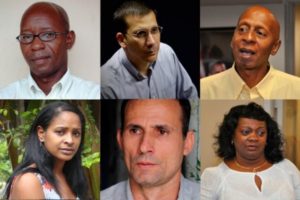
Opposition Candidates for a Change in Cuba.

Opposition Candidates for a Change in Cuba.

TRANSITION UNCERTAINTIES.

Externally, Cuba will not know for some time yet the outcome of the policy review currently underway in Washington; its planning process is being impacted by the rapidly deteriorating internal situation in Venezuela; and following an abrupt change in US rhetoric on Russia, Havana may need to incorporate into its thinking, the possibility of a new form of cold war.

Internally, the uncertainties include: a poorly performing economy and a possibly lengthy period of economic austerity; unresolved differences between conservatives and reformers about further economic reform; the rapid growth of small entrepreneurs and non-state co-operatives; widespread related concern about income inequality and inflation; a desire for a wider range of freedoms among the young; and a belated recognition that if the Communist Party and mass organisations are to remain relevant to the changed thinking of young people, they have to adapt rapidly.

In a TV program, Julio Garcia Oliveras, one of Cuba’s historic generation who fought in the revolution, speaking about his life, the lessons learnt, and Cuban history, said: “We are now in a stage of change, and youth needs to master all these experiences and be clear (about) the problem of unity, with which we have defeated all the manoeuvres of the enemy. If we divide (amongst) ourselves we are lost in a world totally contrary to a Socialist Revolution … I live clinging to the concept of unity as the most important concept on which young people have to reflect”. He went on to observe that while everything can be discussed, a single sense of purpose will need to be internalised.

Before long Cuba’s leadership will have to clarify to the Cuban people how generational change will occur, and what and who will be involved. The process is meant to be complete by the time of next Cuban Communist Party Congress in 2021: it is likely to be a real challenging.

logo

(Opinión) La Cautelosa transición de Poder en Cuba en el 2018.

En menos de un año, si el presidente Castro mantiene su calendario previamente anunciado, dimitirá y dejará de dirigir el Consejo de Estado y Consejo de Ministros de Cuba. Otros en su generación también se espera que demit oficina.

A menos que se produzca un cambio constitucional, dejará de ser comandante en jefe de las fuerzas armadas cubanas. Sin embargo, no está claro si él y otras figuras históricas aún activas en el liderazgo seguirán liderando o desempeñando un papel central en el Partido Comunista de Cuba.

Pelea por el poder ?

Pelea por el poder ?

Para lograr todo esto, en los próximos meses habrá que hacer varios anuncios de gran alcance sobre el futuro liderazgo del país, su constitución y, posiblemente, sobre la base del pensamiento previo, la reforma electoral. A pesar de esto, hasta ahora no ha habido indicaciones formales sobre cuándo ocurrirá esto o exactamente lo que el proceso implicará.

Se sugiere que Miguel Díaz-Canel, Primer Vicepresidente del Consejo de Estado y del Consejo de Ministros asuma el liderazgo y quien durante el último año, ha viajado ampliamente y ha sido calurosamente recibido en África, China, India y Vietnam, a Rusia y Venezuela, que ha visitado con frecuencia. También ha participado en los últimos meses en varios debates nacionales importantes ya veces desafiantes en Cuba con jóvenes comunistas, universidades y medios de comunicación. También ha sido un visitante regular de las provincias del país reuniéndose con los trabajadores y otros.

Sin embargo, el 2 de enero, con motivo de la celebración dominicana del 59 aniversario de la Revolución Cubana, fue notable que el discurso político en la Plaza de la Revolución fue entregado por Jennifer Bello Martínez, Presidenta de la Federación de la Universidad Estudiantes (FEU), que también es miembro del Consejo de Estado. Luego, la Sra. Bello habló sobre asuntos nacionales e internacionales, presidido por el Presidente Castro.

No obstante, quienquiera que suceda al presidente Castro, que ahora tiene 85 años, tendrá que ser visto por los cubanos de todas las edades como teniendo legitimidad política, y la misma autoridad moral, respeto e igualmente importante será que tengan que ser vistos como genuinamente representativos de los jóvenes cubanos, educados, más diversos, libres de pensamiento y nacionalistas.

Opposition Candidate Manuel Cuesta Morua.

Opposition Candidate Manuel Cuesta Morua.

En declaraciones el 3 de abril a los medios de comunicación cubanos, la Primera Secretaria de la Liga Juvenil Comunista (Susana Morfa González), Susely Morfa, dijo que la organización que lidera ahora busca representar a todos los jóvenes cubanos. La Sra. Morfa -que se ha convertido rápidamente en una de las figuras políticas más jóvenes de Cuba y recientemente miembro del Consejo de Estado del país- dejó claro que para responder a los desafíos del país, la UJC quiere “motivar Nuevas generaciones para aprender más sobre la historia de Cuba de una manera más inclusiva, humana y creativa “.

Lo que todo esto parece sugerir es que mientras los preparativos para el cambio generacional están en marcha, la precaución prevalece, y la terminación del proceso puede requerir la aparición pública de un grupo diverso de jóvenes líderes con carisma y capacidad de gestión.
Independientemente, parece probable que la transición, también está siendo restringida por otras incertidumbres.

INCERTIDUMBRES DE LA TRANSITION EN CUBA.

Externamente, Cuba no sabrá por algún tiempo todavía el resultado de la revisión de políticas actualmente en curso en Washington; Su proceso de planificación se ve afectado por la rápida deterioración de la situación interna en Venezuela; Y después de un cambio abrupto en la retórica estadounidense sobre Rusia, La Habana puede necesitar incorporar en su pensamiento la posibilidad de una nueva forma de guerra fría.

Internamente, las incertidumbres incluyen: una economía de bajo rendimiento y un período posiblemente largo de austeridad económica; Las diferencias no resueltas entre los conservadores y los reformadores acerca de la reforma económica; El rápido crecimiento de pequeños empresarios y cooperativas no estatales; Preocupación generalizada relacionada con la desigualdad de los ingresos y la inflación; El deseo de una gama más amplia de libertades entre los jóvenes; Y un tardío reconocimiento de que si el Partido Comunista y las organizaciones de masas siguen siendo relevantes para el cambio de pensamiento de los jóvenes, tienen que adaptarse rápidamente.

Quien definirá realmente el poder en Cuba. ?

Quien definirá realmente el poder en Cuba. ?

En un programa de televisión, Julio García Oliveras, uno de la generación histórica de Cuba que luchó en la revolución, hablando de su vida, las lecciones aprendidas y la historia cubana, dijo: “Ahora estamos en una etapa de cambio y la juventud necesita dominar Todas estas experiencias y ser claro sobre el problema de la unidad, con el que hemos derrotado todas las maniobras del enemigo.si nos dividimos entre nosotros mismos estamos perdidos en un mundo totalmente contrario a una revolución socialista … yo vivo Aferrándose al concepto de unidad como el concepto más importante sobre el cual los jóvenes tienen que reflexionar “. Continuó observando que si bien todo puede ser discutido, será necesario interiorizar un solo sentido del propósito.

En poco tiempo, el liderazgo de Cuba tendrá que aclarar al pueblo cubano cómo se producirá el cambio generacional y qué y quién estará involucrado. El proceso está destinado a ser completo en el momento del próximo Congreso del Partido Comunista de Cuba en 2021: es probable que sea un verdadero reto.

Agencies/ BarbadosAdvocate/David Jessop/Caribbean Council/ Extractos/ Internet Photos/ Arnoldo Varona/ TheCubanHistory.com.
THE CUBAN HISTORY, HOLLYWOOD.
Cuba Photos.

Cuba Photos.