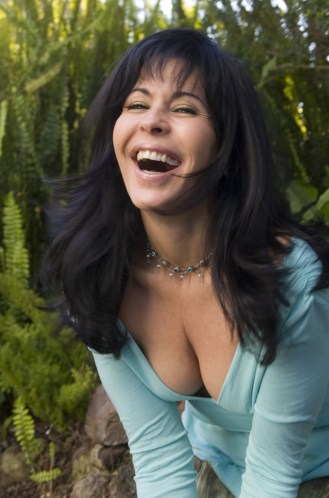
PRES. MADURO ORDERED TO CANCEL MARIA CONCHITA ALONSO VENEZUELAN CITIZENSHIP.
The government’s decision was published in the Official Gazette. The artist is a fierce opposition of the regime in Caracas.
The regime Nicolas Maduro ordered to remove the Venezuelan national Cuban singer and actress Maria Conchita Alonso, in retaliation for their political positions.
According to local media, the Ministry for the Interior, Justice and Peace and initiated proceedings for revocation.
Maria Conchita Alonso, whose real name is María Concepción Alonso Bustillo, was born in Havana and then won the Venezuelan nationality. He now lives in the United States.
The government’s decision was published in the Official Gazette No. 40.498, which runs Wednesday.
The singer and actress is a fierce opposition regime Nicolas Maduro.
Last week he told a Peruvian newspaper that she was “blacklisted of Venezuela”.
“I care, I’m always protected. Two months ago I hacked everything.’m Not in this fight for a place in politics, just looking for the freedom of man and respect, I do it for passion and love,” he said.
Venezuelan singer El Puma, in press conference, asked the military to ‘save’ Venezuela.
PRES. MADURO ORDENA LE QUITEN LA CIUDADANÍA A MARIA CONCHITA ALONSO.
La decisión gubernamental fue publicada en la Gaceta Oficial. La artista es una férrea opositora del régimen de Caracas.
El régimen de Nicolás Maduro ordenó retirar la nacionalidad venezolana a la cantante y actriz cubana María Conchita Alonso, en represalia por sus posiciones políticas.
Según medios locales, el Ministerio para Relaciones Interiores, Justicia y Paz ya inició los trámites para la revocación.
María Conchita Alonso, cuyo nombre real es María Concepción Alonso Bustillo, nació en La Habana y luego obtuvo la nacionalidad venezolana. Ahora vive en Estados Unidos.
La decisión gubernamental fue publicada en la Gaceta Oficial N° 40.498, que circula este miércoles.
La cantante y actriz es una férrea opositora del régimen de Nicolás Maduro.
La semana pasada dijo a un periódico peruano que ella estaba “en la lista negra de Venezuela”.
“Me cuido, siempre estoy protegida. Hace dos meses me hackearon todo. No estoy en esta lucha por un puesto en la política, solo busco la libertad del ser humano y el respeto, lo hago por pasión y por amor”, explicó.
El cantante El Puma pidió en unas declaraciones en la prensa a los militares ‘salvar’ a Venezuela.
DDC/Agencies/InternetPhotos/youtube/www.thecubanhistory.com
The Cuban History, Hollywood.
Arnoldo Varona, Editor.
Antonia Rey (born October 12, 1927) is a Cuban-born American actress.
Rey was born Antonia Francesch in Havana, Cuba, the daughter of Emilia (née Rangel), a nurse, and Antonio Francesch, a dentist. She married director Andres Castro in 1958.
Rey is better known for her cameos in various movies like Jacob’s Ladder and King of the Gypsies, as well as the TV-movie pilot for Kojak entitled The Marcus-Nelson Murders. She has also appeared in shows such as Who’s the Boss?, Third Watch, Law & Order and Law & Order: Criminal Intent.
In 2003, she received the HOLA Lifetime Achievement Award from the Hispanic Organization of Latin Actors (HOLA).
Agencies/Various/Wiki/InternetPhotos/www.thecubanhistory.com
The Cuban History, Hollywood.
Arnoldo Varona, Editor.
Reinaldo Arenas (July 16, 1943 – December 7, 1990) was a Cuban poet, novelist, and playwright who despite his early sympathy for Fidel Castro and the 1959 revolution, grew critical of and then rebelled against the Cuban government.
Arenas was born in the countryside, in the northern part of the Province of Oriente, Cuba, and later moved to the city of Holguín. In 1963, he moved to Havana to enroll in the School of Planification and, later, in the Faculty of Letters at the Universidad de La Habana, where he studied philosophy and literature without completing a degree. The following year, he began working at the Biblioteca Nacional José Martí. While there, his talent was noticed and he was awarded prizes at Cirilo Villaverde National Competition held by UNEAC (National Union of Cuban Writers and Artists). His Hallucinations was awarded “first Honorable Mention” in 1966 although, as the judges could find no better entry, no First Prize was awarded that year.
His writings and openly gay lifestyle were, by 1967, bringing him into conflict with the Communist government. He left the Biblioteca Nacional and became an editor for the Cuban Book Institute until 1968. From 1968 to 1974 he was a journalist and editor for the literary magazine La Gaceta de Cuba. In 1974, he was sent to prison after being charged and convicted of ‘ideological deviation’ and for publishing abroad without official consent. He escaped from prison and tried to leave Cuba by launching himself from the shore on a tire inner tube. The attempt failed and he was rearrested near Lenin Park and imprisoned at the notorious El Morro Castle alongside murderers and rapists. He survived by helping the inmates to write letters to wives and lovers. He was able to collect enough paper this way to continue his writing. However, his attempts to smuggle his work out of prison were discovered and he was severely punished. Threatened with death, he was forced to renounce his work and was released in 1976.
In 1980, as part of the Mariel Boatlift, he fled to the United States. He came on the boat San Lazaro captained by Cuban immigrant Roberto Aguero.
Writings.
Despite his short life and the hardships imposed during his imprisonment, Arenas produced a significant body of work. In addition to significant poetic efforts (“El Central”, “Leprosorio”), his Pentagonia is a set of five novels that comprise a “secret history” of post-revolutionary Cuba. It includes Singing from the Well (in Spanish also titled “Celestino before Dawn”), Farewell to the Sea (whose literal translation is “The Sea Once More”), Palace of the White Skunks, the Rabelaisian Color of Summer, and The Assault. In these novels Arenas’ style ranges from a stark realist narrative and high modernist experimental prose to absurd, satiric humor. His second novel, Hallucinations (“El Mundo Alucinante”), rewrites the story of the colonial dissident priest Fray Servando Teresa de Mier.
In interviews, his autobiography, and in some of his fiction work itself, Arenas draws explicit connections between his own life experience and the identities and fates of his protagonists. As is evident and as critics such as Francisco Soto have pointed out, the “child narrator” in “Celestino”, Fortunato of “The Palace…”, Hector of “Farewell..”, and the triply named “Gabriel/Reinaldo/Gloomy Skunk” character in “Color” appear to live progressive stages of a continuous life story that is also linked to Arenas’s own.
In turn, Arenas consistently links his individual narrated life to the historical experience of a generation of Cubans. A constant theme in his novels and other writing is the condemnation of the Castro government, although Arenas also critiques the Catholic Church, US culture and politics, and a series of literary personalities in Havana and internationally, particularly those who he believed had betrayed him and suppressed his work (Severo Sarduy and Ángel Rama are notable examples). His “Thirty truculent tongue-twisters”, which he claims circulated in Havana and which are reprinted in “The Color of Summer”, mock everyone from personal friends who he suggests may have spied on him to figures such as Nicolás Guillén, Alejo Carpentier, Miguel Barnet, Sarduy and of course Fidel himself.
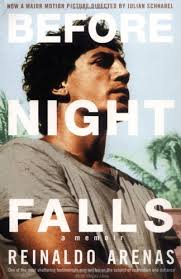
His autobiography, Before Night Falls was on the New York Times list of the ten best books of the year in 1993. In 2000 this work was made into a film, directed by Julian Schnabel, in which Arenas was played by Javier Bardem. An opera based on the autobiography with libretto and music by Cuban-American composer Jorge Martin was premiered by the Fort Worth Opera on May 29, 2010, with baritone Wes Mason singing the role of Reinaldo Arenas.
Death.
In 1987, Arenas was diagnosed with AIDS, but he continued to write and speak out against the Cuban government. He mentored many Cuban exile writers, including John O’Donnell-Rosales. After battling AIDS, Arenas died of an intentional overdose of drugs and alcohol on December 7, 1990, in New York. In a suicide letter written for publication, Arenas wrote:
Due to my delicate state of health and to the terrible depression it causes me not to be able to continue writing and struggling for the freedom of Cuba, I am ending my life. . . . I want to encourage the Cuban people out of the country as well as on the Island to continue fighting for freedom. . . Cuba will be free. I already am.
Notable works.
El mundo alucinante (1966) ISBN 978-84-8310-775-1, OCLC 421023; Scholarly edition by Enrico Mario Santí; English translation Hallucinations (2001 reissue) ISBN 978-0-14-200019-9
Cantando en el pozo (1982) (originally published as Celestino antes del alba (1967)) English translation Singing from the Well (1987) ISBN 978-0-14-009444-2
El palacio de las blanquisimas mofetas (1982) English translation The Palace of the White Skunks (1990) ISBN 978-0-14-009792-4
Otra vez el mar (1982) English translation Farewell to the Sea (1987) ISBN 978-0-14-006636-4
El color del verano (1982) English translation The Color of Summer (1990) ISBN 978-0-14-015719-2
El Asalto (1990) English translation The Assault (1992) ISBN 978-0-14-015718-5
El portero (1987) English translation The Doorman (1991) ISBN 978-0-8021-3405-9
Antes que anochezca (1992) English translation Before Night Falls (1993) ISBN 978-0-14-015765-9
Mona and Other Tales (2001) ISBN 978-0-375-72730-6 This is an English translation of a collection of short stories originally published in Spanish in Spain between 1995 and 2001
Con los ojos cerrados (1972),
La vieja Rosa (1980), English Translation Old Rosa (1989) ISBN 978-0-8021-3406-6
El central (1981), ISBN 978-0-380-86934-3
Termina el desfile (1981).
Arturo, la estrella más brillante (1984),
Cinco obras de teatro bajo el título Persecución (1986).
Necesidad de libertad (1986)
La Loma del Angel (1987), English Translation Graveyard of the Angels (1987) ISBN 978-0-380-75075-7
Voluntad de vivir manifestándose (1989) ISBN 978-987-9396-55-1
Viaje a La Habana (1990). ISBN 978-0-89729-544-4
Final de un cuento (El Fantasma de la glorieta) (1991) ISBN 978-84-86842-38-3
Adiós a mamá (1996) ISBN 978-0-89729-791-2
Agencies/Various/Wiki/InternetPhotos/youtube/thecubanhistory.com
The Cuban History, Hollywood.
Arnoldo Varona, Editor.



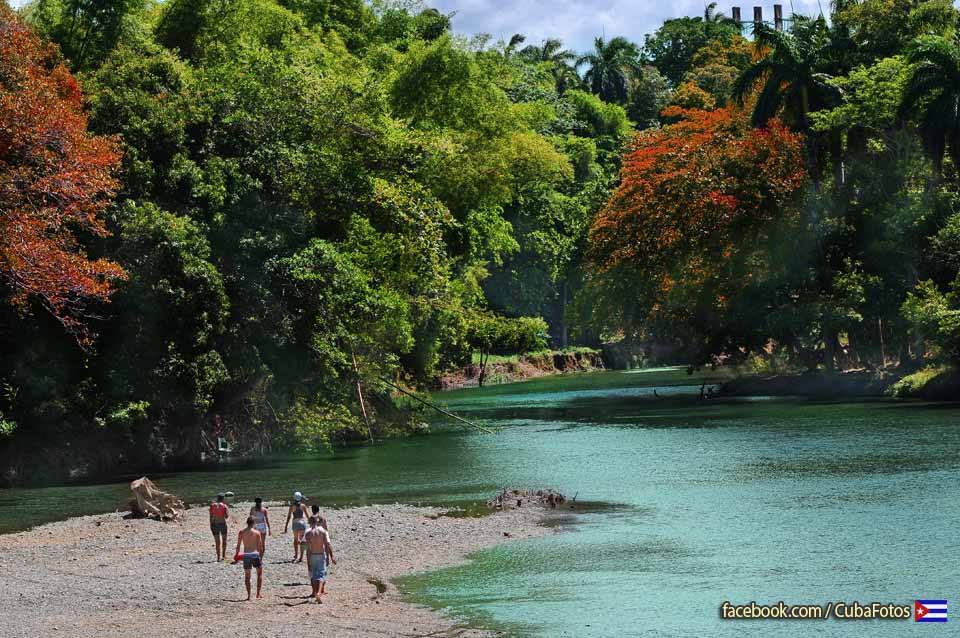 CUBA PHOTOS.