“THE DOWNSTAIR’S NEIGHBOR”, chronicles of Enrique Núñez Rodríguez. (Photos) ** “EL VECINO DE LOS BAJOS” DE Enrique Núñez Rodríguez.

“EL VECINO DE LOS BAJOS” CRÓNICAS DE ENRIQUE NUÑEZ RODRÍGUEZ.

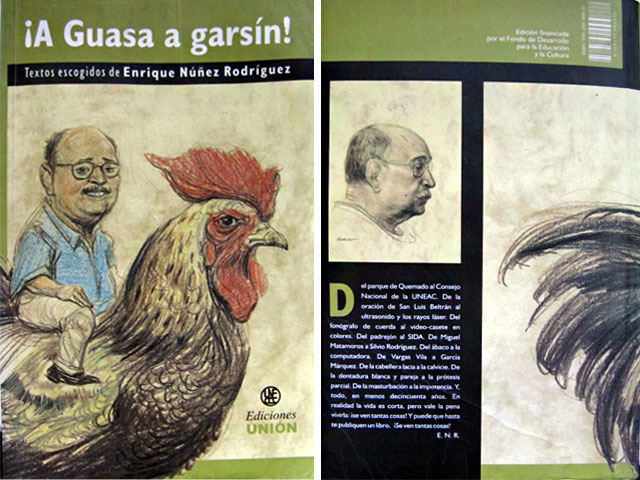
Acaba de aparecer un libro de Enrique Núñez Rodríguez. Se titula ‘El vecino de los bajos’ y compila 99 de las crónicas que su autor publicó en la edición dominical de Juventud Rebelde entre 1987 y 2002, que fue el año de su muerte.
enrique

La columna que mantuvo en este periódico nutrió casi todos sus libros, desde los muy populares Yo vendí mi bicicleta (1989) y Mi vida al desnudo (2000) hasta los menos recordados Oyee, como lo cogieron (1991) y Gente que yo quise (1995). Pero quedaba mucho material suyo en los archivos del diario, y de allí se sacaron las crónicas que conforman este volumen recién publicado.

Pero, ¿por qué ese título de El vecino de los bajos, que publica Ediciones Unión? Sucede que durante años, Enrique mantuvo su espacio en lo que él llamó el «acogedor sótano» de la página tres del periódico de los domingos, mientras que los «altos» se reservaban a Gabriel García Márquez. Cuando se agotaron las valiosas colaboraciones del autor de Cien años de soledad, la dirección del periódico ofreció «el piso de arriba» a Enrique. Algunos seguidores le instaban a reclamar el espacio que dejaba el colombiano. La antigüedad, la constancia y la larga permanencia en el trabajo —decían los lectores— concedían a Enrique el derecho al ascenso.

El humorista declinó la propuesta de la dirección del diario y desoyó la demanda del público. Adujo que «no es fácil, en el periodismo, acreditar una columna y establecer el hábito, entre los lectores, de buscarla en la misma página y en el mismo sitio». Añadió que era alérgico a las mudadas y que el traslado de sitio dentro de la página no se avenía con su «sedentarismo habitacional». Por último, expresó al director de JR, «que las caídas desde el piso bajo son menos dolorosas».

images

LAS CRONICAS.

Túpac Pinilla, el nieto de Enrique Núñez Rodríguez, compiló y editó El vecino de los bajos. La gente reclamaba la reedición de los libros del autor, todos totalmente agotados. Luego de bucear en los archivos, Pinilla prefirió sacar a la luz esos 99 textos. Les dio un orden cronológico.

¿De qué tratan esas crónicas? Tratan, sencillamente, de la vida. Son páginas de recreación autobiográfica, de memoria espejeante, de evocación de hechos y personas. Visión incisiva del fluir cotidiano. Peripecias e intimidades del mundo de la farándula, del teatro, la radio y la televisión.

Supo el cronista recoger sin amargura la áspera cotidianidad del período especial y hasta supo hacernos reír en medio del drama de sobrevivir que caracterizó aquella etapa. En las páginas de este libro advierten los especialistas la risa reflexiva y filosófica del humorista. También está presente la voluntad del autor por provocar la risa a secas, de hacernos pasar un rato agradable con lo que escribe, como lo hace en la crónica que titula En el bar, la vida es más sabrosa.

Sucede que Carlos Más, aquel actor que de tanto interpretarlo quedó en el recuerdo como el cesante de la televisión, celebraba su cumpleaños en el bar del restaurante La Roca, y, como invitaba a todos sus compañeros del ICRT que pasaban por el lugar a que lo acompañaran a compartir los tragos, la cuenta crecía y crecía por momentos. Cuando decidió marcharse y buscó la billetera en el bolsillo para pagar lo consumido, comprobó, horrorizado, que no la tenía. Había pedido ya la cuenta, y Richard el camarero se la trajo. Carlos Más le explicó la situación y pidió que le diera un chance para ir a su casa a buscar el dinero. Richard adujo que no había chance alguno, que debía liquidar la cuenta al momento. Rogó Carlos Más, y Richard en sus trece. Fue entonces que el actor, desesperado, exclamó:
—Pero tú me conoces a mí. Yo soy Carlos Más.
Y Richard, sin inmutarse, repuso:
—Y yo soy Federico Engels y me tienes que liquidar la cuenta.
enrique-nunnez-rodriguez

PARA CERRAR ESTOS EXTRACTOS.

A medida que trabajaba en la selección de los textos que conforman El vecino de los bajos, Túpac Pinilla, quien es lector inteligente y crítico agudo, advierte sobre los fetiches de su abuelo a la hora de «trenzar la cuerda», que era como llamaba al acto de escribir —trucos, manías y obsesiones—. Mientras avanzaba tropezaba a ratos con un insistente fragmento que se colaba en cualquier crónica, fuera cual fuera su tema. Aludía al bolerista Pablo Quevedo y decía con ligeras variantes: «Quevedo no grabó discos, y se llevó su voz íntima, pequeña, como para protegerla. Su recuerdo se extinguirá con el último testigo: “Ya Quevedo se ha marchado. De su voz no queda nada”. Y con el último testigo, desaparecerá, también, aquel mito lejano de sonoras campanitas de cristal».

Escribe Túpac: «Era la suya una alerta tierna y seria —y muy pertinaz— sobre la fragilidad de lo efímero, pero su sorpresiva recurrencia me arrancaba la risa. Quiero invitarlos, pues, a que con esa misma risa, tierna y seria, evitemos para Enrique el destino de Quevedo».

El escribidor, con esta página, se suma con modestia a ese propósito.

CiroBianchiRoss/JuventudRebelde/Extractos/InternetPhotos/TheCUbanHistory.com
The Cuban History, Hollywood.
Arnoldo Varona, Editor.

Cuba en Fotos.
10550934_10152550643691083_1567668146935471121_n

“THE DOWNSTAIR’S NEIGHBOR” CHRONICLES OF ENRIQUE NUÑEZ RODRÍGUEZ.

It have just been published a book of Enrique Núñez Rodríguez. It is entitled ‘The downstair’s Neighbor’ and 99 chronic compiles its author published in the Sunday edition of Juventud Rebelde between 1987 and 2002, which was the year of his death.

The column in this newspaper nurtured kept most of his books from the popular I sold my bike (1989) and My Life Naked (2000) to the less remembered Oyee, as caught (1991) and People I wanted (1995). But his material was much files daily, and from there the chronicles that make up this newly published volume is removed.

But why the title of the downstair’s Neighbor, published Ediciones Union? It happens that for years, Henry kept his room in what he called the “cozy basement” page three of the newspaper on Sunday, while the ‘high’ is reserved for Gabriel García Márquez. When the valuable contributions of the author of One Hundred Years of Solitude is exhausted, the newspaper’s management offered “upstairs” to Henry. Some followers urged him to claim the space left Colombia. Antique, perseverance and long-term employment-readers said Henry granted the right to promotion.

enrique

The humorist declined the proposal of the management of the daily and disregarded public demand. He argued that “it is not easy, in journalism, establish a column and establish the habit, among readers of searching on the same page and in the same place.” He added that he was allergic to molted and moving within the page site was at odds with his “dwelling sedentary.” Finally, the director said JR, “which falls from the ground floor are less painful.”

THE CHRONICLES.

Tupac Pinilla, the grandson of Enrique Núñez Rodríguez, compiled and edited The neighbor low. People claimed Reissue author’s books, all completely exhausted. After diving in the archives, Pinilla preferred exposing those 99 texts. He gave a chronological order.

What treat these chronic? Treated simply life. These are pages of autobiographical recreation, shimmering memory, evocation of events and people. Incisive vision of the daily flow. Adventures and intimacies of the world of entertainment, theater, radio and television.

He knew the chronicler collect without bitterness rough daily special period to make us laugh heard amid the drama of survival that characterized that period. In the pages of this book experts warn reflective and philosophical comedian laugh. Author will also present to cause laughter to dry, to make us have a good time with what you write, as it does in the chronicle entitled The bar life is more flavorful.

images

He succeeds Carlos Mas, that actor was in both interpret the memory as the loss of television, celebrated his birthday at the bar restaurant La Roca, and as invited all his fellow ICRT passing by the place to accompany him to share the drinks, the bill was growing and growing by the minute. When he decided to leave and seek wallet in his pocket to pay for what is consumed, found to his horror that he did not. He had already asked for the bill, and Richard the waiter brought. More Carlos explained the situation and asked to give him a chance to go home and get the money. Richard argued that there was no chance, that should settle the bill at the time. More begged Carlos, and Richard to his guns. It was then that the actor, desperate, said:
‘But you know me. I am Carlos Mas.
And Richard, undeterred, said:
And I’m Frederick Engels and you have to pay the bill right now.

TO CLOSE THESE EXCERPTS.

As I worked in the selection of texts that make up the low neighbor, Tupac Pinilla, who is intelligent and sharp critic reader warns about the fetishes of his grandfather when “braiding rope” as it was called the act of writing-tricks, quirks and obsessions. As he moved stumbled at times with an insistent fragment that seeped into any chronic, whatever was his subject. Paul alluded to bolerista Quevedo and said with slight variations: “Quevedo recorded albums, and took his small, intimate voice to protect. His memory will be extinguished with the last witness: “It has come Quevedo. In his voice there is nothing left. “And with the last witness, disappear, too, that distant myth glass bells sound. ”

Tupac writes: “His was a tender and alert very seriously and persistent-about the fragility of the ephemeral, but its surprising recurrence tore me laugh. I invite you, then, that with that same laugh, tender and serious, to avoid the fate of Enrique Quevedo. ”

The Scriptwriter with this page, adds modestly that purpose.

CiroBianchiRoss / JuventudRebelde / Excerpts/ InternetPhotos / TheCubanHistory.com
The Cuban History, Hollywood.
Arnoldo Varona, Editor.
RESENTFUL, official press criticizes exiled Antonio Pacheco’s decision. (Photos) ** RESENTIDOS, prensa oficialista critica al “Capitan de Capitanes”.

RESENTIDOS, LA PRENSA OFICIALISTA EN CUBA CRITICA LA DECISION DEL “CAPITAN DE CAPITANES”.
Articulo publicado en la prensa oficial de Cuba por M.H. Lagarde con el titulo:
“Antonio Pacheco y el falso cuento de la Ley de Ajuste cubano”.

mqdefault HABANA: Por lo visto, y según se sobrentiende de sus declaraciones, el Capitán de capitanes, no pidió asilo en Estados Unidos por temor al comunismo al cual representó en sus actuaciones internacionales como pelotero.

Casi un mes después de su llegada a Estados Unidos el estelar pelotero cubano Antonio Pacheco declaró al diario digital Centro Tampa que quisiera poder convertirse en entrenador de las Grandes Ligas.

Y aunque el pelotero declinó hablar de política porque, según enfatizó: “No soy político. Lo mío es la pelota y enseñar”, su decisión de “refugiarse” en Estados Unidos pone en entredicho, una vez más a la llamada Ley de Ajuste Cubano.

Pacheco, aseguró estar “pidiendo el ajuste cubano (asilo). Como todo cubano que llega a hacer sus papeles acá. No me voy a quedar sin papeles acá y estoy tratando de sacar mi permiso de trabajo, mi licencia de conducir y quiero aportarle a la sociedad”, dijo.

“La Ley de Ajuste Cubano -apunta la enciclopedia cubana Ecured- es un engendro legislativo adoptado en 1966, con el deliberado propósito de incentivar las salidas ilegales de ciudadanos cubanos hacia ese país, única de este tipo en el mundo, ofrece a los cubanos que llegan a los Estados Unidos por vías ilegales privilegios que no reciben ciudadanos de ninguna otra nacionalidad ni país”.

De acuerdo con declaraciones del senador de origen cubano Marco Rubio, quien ha propuesto hacerle cambios a dicha Ley, la misma fue implementada en 1966 para ofrecer refugio a aquellos que huían de los “horrores” del comunismo.

En una entrevista para Diario Las Américas, Marco Rubio criticó a quienes utilizan la Ley para quedarse en Estados Unidos aduciendo supuestas razones de tipo político que: “El Ajuste Cubano le permite a alguien entrar a Estados Unidos con el argumento de que está huyendo por una persecución política. Pero si luego viajas 16 veces al año… ya no tienes tanto miedo”.

Según el sitio digital Centro Tampa: “Pacheco Massó, de 50 años, residía en Canadá y trabajaba como entrenador en el vecino país, gracias a un contrato a través de Cubadeportes, empresa del gobierno cubano que se dedica a exportar el deporte”.

“De Cuba a Canadá fui a trabajar por un contrato y viví allí año y medio. Trabajaba en una academia de béisbol para niños”, dijo Pacheco Massó.

Por lo visto, y según se sobrentiende de sus declaraciones, el Capitán de capitanes, no pidió asilo en Estados Unidos por temor al comunismo al cual representó en sus actuaciones internacionales como pelotero.

Pacheco07-display

“Jugué 22 series nacionales con el equipo de Cuba; 16 en el equipo nacional; fui capitán del equipo nacional de Cuba por 16 años. Fui a tres olimpiadas como jugador, dirigí el equipo cubano en una olimpiada, dirigí 7 años el equipo de Santiago de Cuba, obtuvimos tres campeonatos y un subcampeonato”, destacó Pacheco en su entrevista al diario de Tampa.

Dijo además “tener el récord en Cuba con un promedio de bateo de por vida de .334 y aparecer entre los 10 mejores peloteros cubanos. El segunda base es dueño también del récord histórico de más hits conectados, con 2,356”.

Ante la interrogante del periodista de por qué no había regresado a Cuba desde Canadá, el pelotero respondió:

“Pusimos todo en una balanza, fue una decisión familiar y nos preguntamos: ¿Dónde es mejor estar? En Canadá, mucho frio, no era el ambiente de uno que vive en Cuba y acá el clima, las personas y Tampa la vimos como un lugar tranquilo”, dijo.

Agregó además, “acá me quiero sentir como cualquier persona normal. No es fácil tomar una decisión para entrar o salir del país. Es una decisión personal. Estados Unidos me ofrece la oportunidad que le ofrece a todo el mundo, que es un país desarrollado”.

PachecoTampa02-display
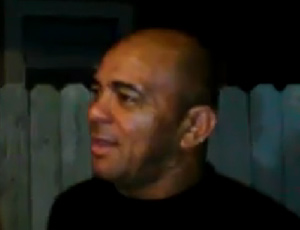
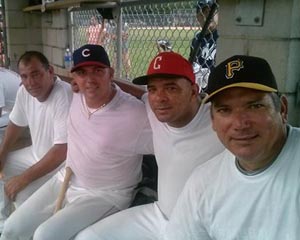
Reencuentro en Tampa. De izq, a der., René Arocha, Maels Rodríguez, Antonio Pacheco y Rolando Arrojo.

Curiosamente, y al mismo tiempo que el Capitán de Capitanes hacía sus declaraciones en Tampa, EEUU, el país que le ofrece “oportunidades a todo el mundo” deporta a decenas de miles de niños centroamericanos que llegaron solos a Estados Unidos huyendo de la violencia y la miseria en sus países de origen.

No tiene nada de apolítico hacerse cómplice de la también llamada Ley asesina que ha sido, y sigue siendo utilizada, como medio de propaganda contra Cuba. Al final dicha Ley lo que busca es incitar las salidas ilegales, incluso en el inverosímil caso de Pacheco, para luego mostrarle al mundo la prueba de la ineficiencia del socialismo cubano. De hecho, es la misma Ley que ha amparado el robo de los talentos deportivos formados por la Revolución que han tenido lugar en los últimos años.

Paradójicamente, el país más desarrollado del mundo, al parecer, no puede prescindir de la obra de un pequeño país cuya obra social ha querido desaparecer de la faz de la tierra. Cada jonrón de los cubanos que juegan hoy en las Grandes Ligas deberían darles vergüenza.

La “decisión” de Pacheco pone al descubierto nuevamente la hipocresia de la llamada Ley de Ajuste Cubano, usada por muchos como coartada política para escapar del asfixiante bloqueo de Estados Unidos contra la Isla.

Burda patraña. Quien mismo te estrangula, luego se ofrece de salvador a darte aire de boca a boca. No faltan, lamentablemente, quienes de manera oportunista terminan por escoger el aliento de los billetes al “cariño de la gente”.

CubaSi/M.H.Lagarde/InternetPhotos/www.thecubanhistory.com
The Cuban History, Hollywood.
Arnoldo Varona, Editor.
Cuba en Fotos.
10593222_10152559393786083_2734696640084775064_n

RESENTFUL, OFFICIAL PRESS IN CUBA CRITICIZED EXILED ANTONIO PACHECO’S DECISION.
Article published in the official PRESS of Cuba by M.H. Lagarde with the title:
“Antonio Pacheco and the false story of the Cuban Adjustment Act.”

HAVANA- Apparently, and as understood from his remarks, Captain of captains, did not request asylum in the U.S. for fear of communism which he represented in their international performances as a player.

mqdefault

Nearly a month after his arrival in America stellar Cuban baseball player Antonio Pacheco told the online newspaper Tampa Center would like to become major league coach.

And although the ballplayer declined to talk about politics because, as emphasized: “.’m Not political Mine is the ball and teach” his decision to “take refuge” in the United States called into question once again the Cuban Adjustment Act .

Pacheco said he was “asking the Cuban Adjustment (asylum). As any Cuban who arrives to do his papers here. I’m not staying here without papers and I’m trying to get my work permit, my driving license and want to give back to society, “he said.

“The Cuban Adjustment Act, it aims Cuban encyclopedia Ecured-is a legislative monstrosity adopted in 1966 with the express purpose of encouraging illegal departures from Cuba to that country, only one of its kind in the world, offers Cubans arrive in the United States by illegal means privileges not granted to citizens of any other nationality or country. ”

According to statements Cuban Senator Marco Rubio, who has proposed to make changes to that law, it was implemented in 1966 to provide shelter for those fleeing the “horrors” of communism.

In an interview with Diario Las Americas, Marco Rubio criticized those who use the law to stay in the U.S. on the grounds alleged political reasons to like “The Cuban Adjustment allows someone to enter the United States on the grounds that it is running a political persecution. But then if you’re traveling 16 times a year … I have not much fear. ”

According to Tampa Digital Center site, “Pacheco Masso, 50, lived in Canada and worked as a coach in the neighboring country, thanks to a contract through Cubadeportes, the Cuban government company dedicated to export the sport.”

“From Cuba to Canada went to work for a contract and lived there eighteen months. He worked at a baseball academy for children, “Pacheco said Masso.

PachecoTampa02-display
Reunion in Tampa. From left, to right., Rene Arocha, Maels Rodríguez, Antonio Pacheco and Rolando Arrojo.

Apparently, and as understood from his remarks, Captain of captains, did not request asylum in the U.S. for fear of communism which he represented in their international performances as a player.

“I played 22 national team series with Cuba; 16 in the national team; I was captain of the national team of Cuba for 16 years. I went to three Olympics as a player, headed the Cuban team in the Olympics, seven years headed the team of Santiago de Cuba, we obtained three championships and a runner, “Pacheco said in his interview to Tampa.

He said “hold the record in Cuba with an average lifetime batting .334 and appearing in the top 10 Cuban players. Second baseman also owns the record for most career hits with 2,356.”

Before the question of why the journalist had not returned to Cuba from Canada, the ballplayer said

“We put everything in a balance, was a family decision and wonder: Where is best to stay? In Canada, very cold, I was not the one living environment in Cuba and here the weather, people and Tampa saw as a quiet place, “he said.

He added, “here I want to feel like a normal person.’s Not easy to make a decision to enter or leave the country. It is a personal decision. U.S. offers me the opportunity offered to everyone, which is a developed country “.

Interestingly, while the Captain of Captains made ​​their statements in Tampa, USA, the country that offers “opportunities for everyone” deport tens of thousands of Central American children who came alone to America to escape the violence and poverty in their countries of origin.

Pacheco07-display

There is nothing apolitical be complicit also called murderous law that has been, and continues to be used as a means of propaganda against Cuba. At the end of the Act you are looking to encourage illegal emigration, even in the unlikely event of Pacheco, then show the world proof of the inefficiency of Cuban socialism. In fact, it is the same law that has protected the theft of sports talents trained by the Revolution that took place in recent years.

Paradoxically, the more developed world, it seems, the country can not do without the work of a small country whose social work wanted to disappear from the face of the earth. Each homer Cubans playing in the majors today should be ashamed.

The “decision” Pacheco again reveals the hypocrisy of the so-called Cuban Adjustment Act, used by many as a political alibi to escape the stifling U.S. blockade against the island

Burda hoax. Whoever it strangles you, then offers to give air savior of mouth. No missing unfortunately opportunistically who end up choosing the breath of tickets to “loving people”.

CubaSi / MHLagarde / InternetPhotos / www.thecubanhistory.com
The Cuban History, Hollywood.
Arnoldo Varona, Editor.

DESPERATE, american prisoner in Cuba say goodbye to his family. (Photos) ** DESESPERADO ALAN GROSS SE DESPIDE DE SU FAMILIA.

showimageDESESPERADO, PRISIONERO NORTEAMERICANO PRESO EN CUBA SE DESPIDE DE SU FAMILIA.

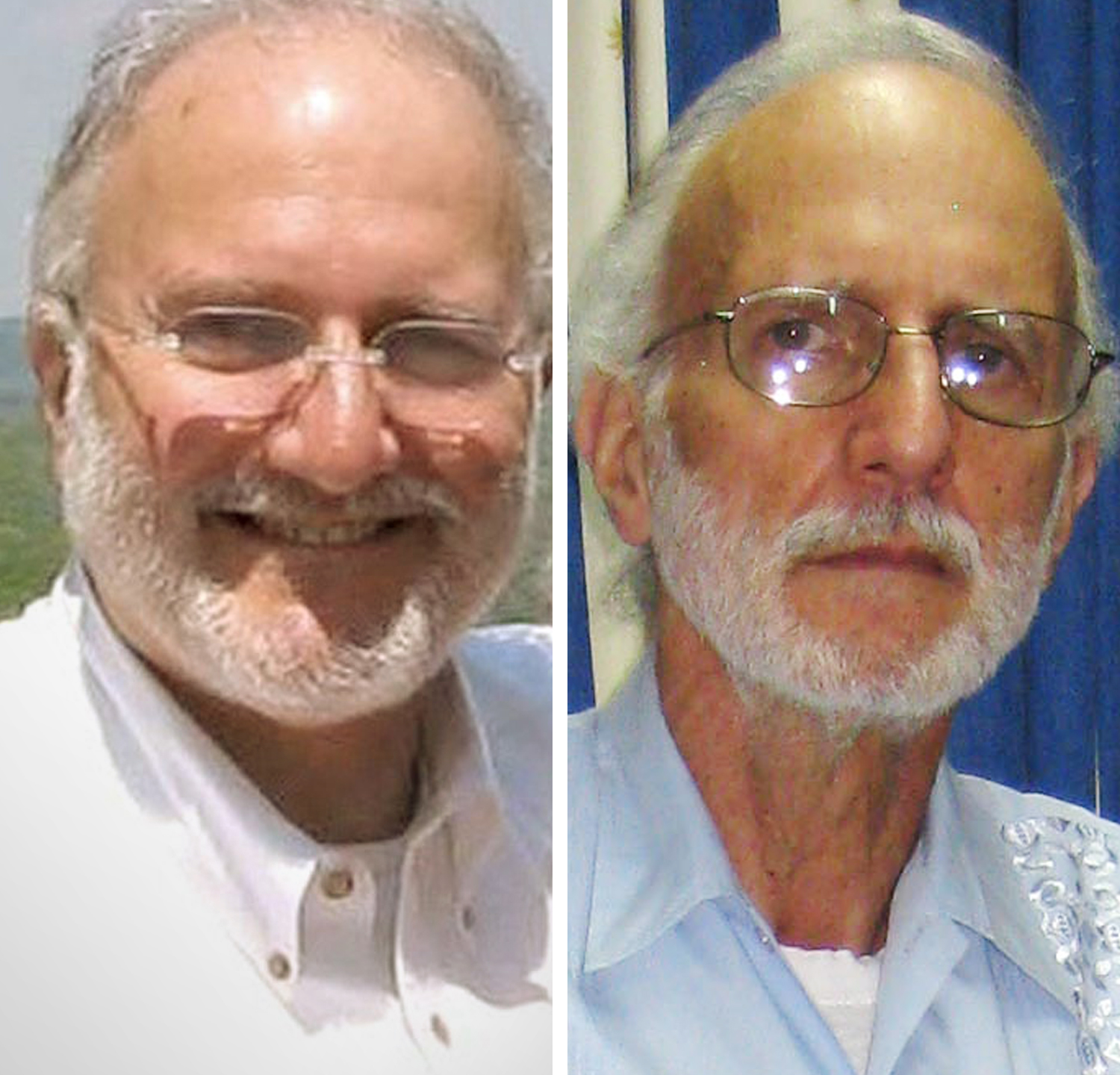
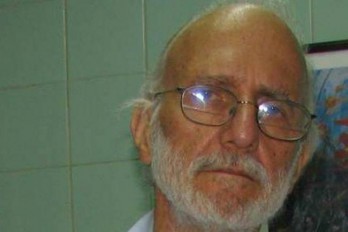
El abogado del contratista estadounidense Alan Gross dijo este lunes que su cliente no puede soportar mucho más tiempo la vida en prisión en Cuba y desesperado se ha despedido de su esposa y una hija, informa la AP.

Gross fue arrestado en Cuba en 2009 y acusado por el Gobierno de distribuir tecnología prohibida. Su abogado alertó en un comunicado que su cliente se “ha rendido” y le dijo que “la vida en la cárcel no es una vida digna de vivirse”.

El estadounidense había dicho que su cumpleaños 65 en mayo sería el último que celebraría en La Habana “de una manera u otra”.

Se despidió de su esposa e hija menor durante una visita reciente. Gross, que vivía en Maryland, previamente había dicho a sus dos hijas que no lo visitaran en prisión.

El estadounidense ha dejado de hacer ejercicio y su salud no es buena, dijo Gilbert, quien planea visitar a su cliente esta semana. Tiene problemas en las caderas y ha perdido casi toda la visión del ojo derecho.

Su “deterioro emocional ha sido severo”, particularmente tras la muerte en junio de su madre, que tenía 92 años, dijo Gilbert. Hablaban frecuentemente por teléfono y cuando Gross estuvo nueve días en huelga de hambre en abril, fue su madre quien lo persuadió de interrumpirla.

121201-alan-gross-before-after

Gross pidió autorización al Gobierno cubano para viajar a Estados Unidos al funeral de su madre, pero la solicitud fue rechazada.

Judy Gross, su esposa, en un comunicado que nunca había visto a su esposo en tan malas condiciones durante el tiempo que ha pasado en prisión y escribió: “su decisión de despedirse de nosotros fue muy dolorosa”.

Gross también se ha negado a ver a funcionarios de la Oficina de Intereses de Estados Unidos en La Habana.

En el momento que Gross fue arrestado trabajaba como contratista de la Agencia de Estados Unidos para el Desarrollo Internacional (USAID), cuyos programas son considerados por La Habana como destinados a derrocar al régimen de Raúl Castro. Fue sentenciado a 15 años de prisión.

También el lunes, el abogado de Gross dio a conocer una carta que 300 rabinos enviaron al presidente estadounidense, Barack Obama, exhortándolo a tomar medidas para asegurar la liberación de Gross, quien además de ser judío trabajaba, cuando fue arrestado, con la pequeña comunidad judía en la Isla para mejorar su acceso a internet.

DDC/Internetphotos/www.thecubanhistory.com
THe CubanHistory, Hollywood.
Arnoldo Varona, Editor.
Cuba en Fotos.
10414902_10152560385761083_6437374834722671528_n

DESPERATE, AMERICANA PRISONER IN CUBA SAY GOODBYE TO HIS FAMILY.

The attorney for the American contractor Alan Gross said Monday that his client can not stand much longer life in prison in Cuba and desperate is had said goodbye for good to his wife and daughter, reports the AP.

Gross was arrested in Cuba in 2009 and accused by the government of distributing banned technology. His lawyer warned in a statement that his client “has rendered” and said that “life in prison is not a life worth living.”

showimage

The U.S. had said his 65th birthday in May would be the last one held in Havana “in one way or another.”

He said goodbye to his wife and youngest daughter during a recent visit. Gross, who lived in Maryland, had previously said his two daughters who did not visit him in prison.

The U.S. has stopped exercising and your health is not good, Gilbert, who plans to visit his client said this week. Having trouble on the hips and has lost almost all vision in his right eye.

His “emotional impairment was severe,” particularly after the death in June of his mother, who was 92 years old, Gilbert said. They spoke frequently by phone and when Gross was nine days on hunger strike in April, was her mother who persuaded him to interrupt.

Gross asked the Cuban government authorization to travel to the United States at the funeral of his mother, but the request was rejected.

Judy Gross, his wife said in a statement that he had never seen her husband in such poor condition during the time spent in prison and wrote, “his decision to say goodbye to us was very painful.”

Gross has also refused to see officials of the Office of U.S. Interests in Havana.

121201-alan-gross-before-after

At the time he was arrested Gross was working as a contractor for the U.S. Agency for International Development (USAID), whose programs are considered by Havana as intended to overthrow the regime of Raul Castro. He was sentenced to 15 years in prison.

Also Monday, the lawyer for Gross issued a letter that 300 Rabbis sent to U.S. President Barack Obama, urging him to take steps to secure the release of Gross, who besides being Jewish was working when he was arrested, with the small community Jewish in the Island to improve their access to internet.

DDC / Internetphotos / www.thecubanhistory.com
THe Cuban History, Hollywood.
Arnoldo Varona, Editor.