

OPINIÓN: CUBA Y PUERTO RICO: ¿DOS NUEVAS COMUNIDADES AUTÓNOMAS?
Por Isabel Miranda, Madríd, Spain.
Varias asociaciones en las excolonias españolas piden la integración de sus países en España en condiciones de «igualdad»
Puerto Rico y Cuba: ¿dos nuevas comunidades autónomas en el Caribe?

«Una nación no muere, ni agoniza porque le queman un poco de madera podrida. Una nación es ante todo un alma, y el alma de España, no agoniza». Fueron palabras del escritor Leopoldo Alas «Clarín» tras el desastre del 98 y la pérdida de las últimas colonias americanas españolas (Cuba y Puerto Rico). Y aunque las enunciase hace más de un siglo, quizá no le faltaba razón. Desde hace nueve meses, el Movimiento de Reunificación de Puerto Rico con España (MRE) busca integrarse en el país como la Comunidad Autónoma número 18.
La isla figura en la actualidad como Estado Libre Asociado de Estados Unidos, pero en general sus ciudadanos no están contentos con este estatus. En 2012, el Gobierno convocó un referéndum y el 54 por ciento de los puertorriqueños votaron en contra de su condición política territorial actual, para responder en la siguiente pregunta, con un 66 por ciento a favor, que querían convertirse en el Estado número 51 de la potencia mundial. Sin embargo, se trata de un debate que lleva décadas abierto y que, a la vista de los acontecimientos, no parece que a Estados Unidos le corra mucha prisa solucionar. Al final, y como reacción, por primera vez en 116 años ha surgido en la isla un movimiento que defiende públicamente la Reunificación de Puerto Rico con España.
«No queremos permanecer como un Estado Libre Asociado, ese nombre es un engaño. En realidad Puerto Rico es una colonia estadounidense, sin derecho a tener congresistas, solo un comisionado residente con voz pero sin voto si es decisivo, tampoco votamos por el presidente, algo que como Comunidad Autónoma tendríamos derecho», dice el fundador del movimiento, José Nieves. «Queremos reunificarnos con España porque Puerto Rico fue una provincia de ultramar española separada en contra de su voluntad por los Estados Unidos en 1898», explica. «Los puertorriqueños somos españoles, no es lo económico lo que nos motiva», dice. Su principal motivación es conseguir una «igualdad política» que Estados Unidos les niega.
LA OPCIÓN PARA «DESCOLONIZAR» A PUERTO RICO.
La idea, según comenta Nieves, está «revolcado el avispero político» en el país «como la opción para descolonizar la isla». Sin embargo, no tienen todo a su favor. La leyenda negra sigue pesando sobre los españoles. Es lo que se enseña en las escuelas, cuenta Nieves, aunque entre los universitarios su influencia es menor. «En las escuelas que tergiversan nuestra historia, ocultando parte de ella», defiende.

El mes de julio será decisivo para el movimiento de reunificación. Será cuando puedan averiguar cuánto apoyo real tiene su iniciativa y cuántas personas se afilian, ya que celebrarán la primera asamblea y se nombrará un Consejo Insular. «Inscribiremos el MRE en el Departamento de Estado de Puerto Rico, coordinaremos una cita en el Consulado de España y en su momento iremos al Tribunal de La Haya para que se invalide el Tratado de París [por el que España cedió Cuba, Puerto Rico y Filipinas]». Lo cierto es que no son los primeros que aluden a la ilegalidad del Tratado de París, firmado en 1898. En su caso, aducen a su ilegalidad por falta de representación del Gobierno autónomo de Puerto Rico, pero desde hace años también existen grupos que pretenden la integración de Cuba en España y que aluden a varios puntos en los que el tratado no sería legítimo. Es el caso de la asociación Autonomía Concertada para Cuba (ACC), que defiende la integración de la isla en España en condiciones de igualdad con el resto de los territorios.
«CUBA GOZABA DE UN GOBIERNO Y UN PARLAMENTO QUE TENDRÍAN QUE HABER CONSULTADO.»
En la misma línea que los puertorriqueños, el fundador de la ACC, Ferrán Núñez, asegura que «se olvida muy rápido la existencia de la Carta Autonómica» por la que se establecía la soberanía de Cuba con su Cámara Insular. «Cuba gozaba de un Gobierno legítimo (electo) y un Parlamento que tendrían que haber consultado antes de firmar nada». Pero además, defiende, «nunca la Reina Regente estuvo autorizada para ceder ciudadanos, sólo territorios y propiedades. Por esa razón jamás fue discutido seriamente en las Cortes» y, aunque el Ejecutivo obtuvo la autorización para firmar el Tratado como lo exigía la Constitución, lo hizo a través de expedientes parlamentarios. «Lo importante es que los señores diputados de la época no lo refrendaron y un Tratado Internacional que no se apruebe en el Parlamento, antes y ahora, simplemente no vale», dice Núñez.
DIFERENTES VÍAS DE ACTUACIÓN.
No obstante, en el caso de la ACC, tienen claro que no conseguirían nada por la vía que defienden los puertorriqueños. Su estrategia radica en reclamar la nacionalidad española utilizando como argumento los cabos sueltos legales que se quedaron tras la firma del Tratado de París, acudiendo al Tribunal Europeo de Derechos Humanos. Y una vez abierta la brecha a su favor, asegura Núñez, España tendría dos opciones: o Ratificar el Tratado de París ante el Parlamento 116 años después o plegarse a la decisión del Tribunal. El reclamo de la nacionalidad se volvería imparable en Cuba, defiende, con lo que «a continuaciín, un referéndum indiscutible sería garantía de éxito».
La ACC nació en 2012 y fue legalizada en Francia. Pero aunque es anterior al MRE, no ha conseguido ni tanta difusión ni tantos apoyos. Apenas tienen 28 afiliados que pagan su cuota religiosamente. «Detractores sí que tenemos un montón, nos atacan historiadores desde Cuba, pero también del exilio. Muchos periodistas y blogueros que tienen acceso a internet cuando no tienen de qué hablar, pues la emprenden contra nosotros y hasta el artículo en español que teníamos en Wikipedia fue borrado tras recibir amenazas de muerte». Mientras, ellos aseguran que una integración en España permitiría «un regreso acelerado de Cuba a la modernidad sin demasiado drama» y España obtendría beneficios a nivel político.
No obstante, son muy conscientes de que su futuro es complicado. La labor de la asociación hasta ahora ha sido compilar datos, estructurar el discurso y los argumentos legales de la petición. Pero la ACC ha topado con su techo, reconoce Núñez. «En algún momento habrá que sacar el pecho y salir a la calle, pero eso aún está lejos».
ABC,Spain/ Isabel Miranda/InternetPhotos/THeCubanHistory.com
Opinión: Cuba y Puerto Rico: ¿nuevas comunidades autónomas?
The CUban History, Hollywood.
Arnoldo Varona, Editor
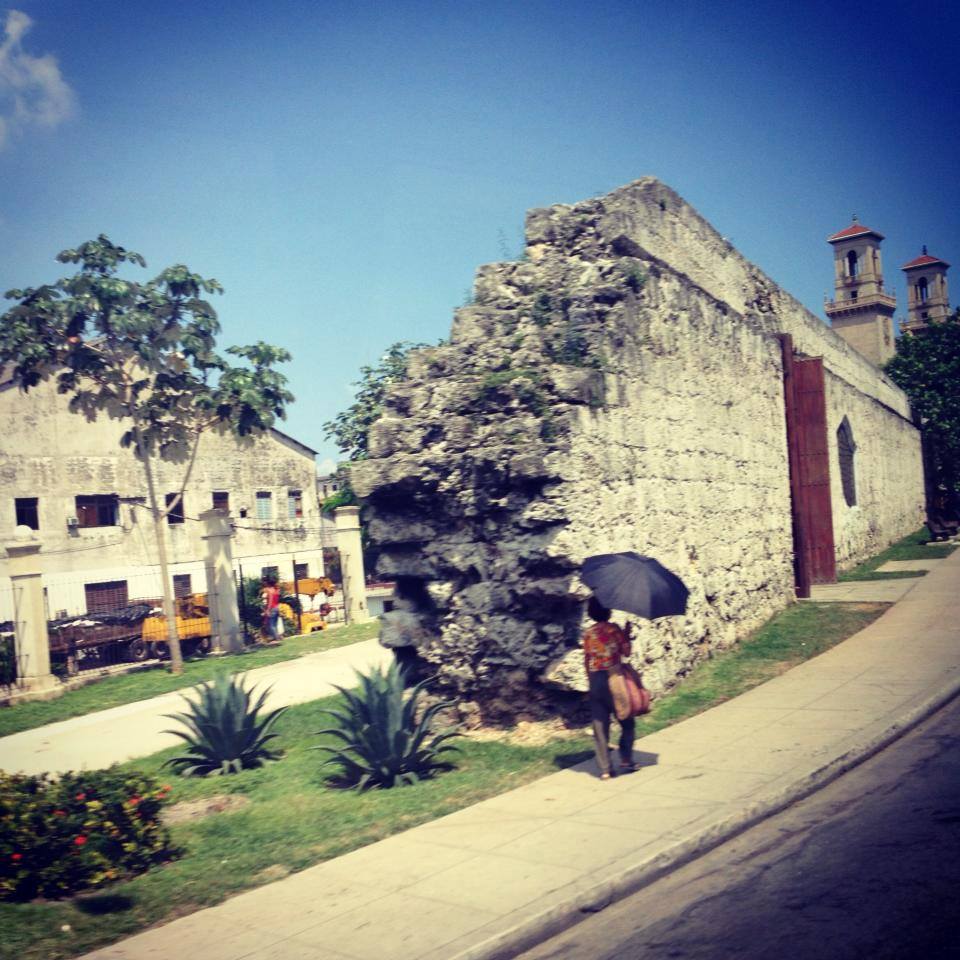
Tramo de lo que fue la Muralla española de La Habana. Cuba en Fotos.
OPINION: CUBA AND PUERTO RICO: ¿TWO NEW AUTONOMOUS COMMUNITIES ?
By Isabel Miranda, Madrid, Spain.
Several associations in the former Spanish colonies calling for the integration of their countries in Spain in terms of ‘equality’ Puerto Rico and Cuba: two new regions in the Caribbean ?
“A nation does not die or dying because they burn a bit of rotten wood. A nation is primarily a soul, and the soul of Spain, not dying. “They were words of writer Leopoldo Alas “Clarín” after the disaster of ’98 and the loss of the last Spanish American colonies (Cuba and Puerto Rico). And although enunciate more than a century, maybe not lacked reason. For nine months, the Unification Movement of Puerto Rico to Spain (MRE) in the country seeks to integrate the Autonomous Community as number 18.
Fig Island today as the Commonwealth of the United States, but generally citizens are not happy with this status. In 2012, the government called a referendum and 54 percent of Puerto Ricans voted against its current territorial political status, to answer the following question, with 66 percent in favor, who wanted to become the state number 51 world power. However, this is a debate that has opened decades and, in the light of events, it appears that the United States would run a hurry to solve. Finally, in reaction, for the first time in 116 years there has been a movement on the island who publicly advocates the reunification of Puerto Rico with Spain.
“We will not remain a commonwealth, that name is a hoax. In fact Puerto Rico is a U.S. colony, had no right to Congress, Resident Commissioner only with voice but without vote if decisive, not vote for president, which would include Autonomous Community law “, says the movement’s founder, Joseph Nieves. “We want to reunify with Spain because Puerto Rico was a Spanish overseas province separated against their will by the United States in 1898,” he explains. “Puerto Ricans are Spanish, economics is not what motivates us,” he says. Their main motivation is to get a “political equality” that the U.S. denies.
CHOICE FOR ‘decolonize’ PUERTO RICO.
The idea, says Nieves, is “wallowed political hornet’s nest” in the country “as the option to colonize the island.” However, they have everything in their favor. The black legend continues to haunt the Spanish. It is what is taught in schools, it has Nieves, although its influence among college is lower. “In schools that distort our history, hiding part of it”, he argues.
The month of July will be crucial to the reunification movement. Can be when you find out how much real support their initiative and how many people join since the first meeting and held an Island Council is appointed. “Enroll the MRE in the State Department of Puerto Rico, will make an appointment at the Consulate of Spain and eventually go to the tribunal in The Hague for the Treaty of Paris is invalidated [by which Spain ceded Cuba, Puerto Rico and Philippines]. “The truth is that they are not the first to allude to the illegality of the Treaty of Paris, signed in 1898. Where appropriate, argues that it is unlawful for a lack of representation of the autonomous government of Puerto Rico, but for years there are groups seeking integration of Cuba into Spain and alluding to several points at which the treaty would not be legitimate. This is the case for association Concerted Autonomy Cuba (ACC), which advocates the integration of the island in Spain on an equal footing with the rest of the territories.
‘CUBA ENJOYED A GOVERNMENT AND PARLIAMENT THAT WOULD HAVE TO BE CONSULTED. ”
In line with the Puerto Ricans, the founder of the ACC, Ferran Núñez says that “the existence of the Autonomic Charter forgets very fast” by which the sovereignty of Cuba with its Insular Chamber was established. “Cuba enjoyed a legitimate government (elected) and a Parliament that should have consulted before signing anything.” In addition, he argues, “never the Queen Regent was authorized to give citizens, territories and properties only. For that reason it was never seriously discussed in Parliament ‘and, although the Executive was authorized to sign the Treaty as required by the Constitution, made it through parliamentary records. “The important thing is that the gentlemen of the time and not endorsed an international treaty that is not approved in Parliament, then and now, just not worth,” says Nunez.
DIFFERENT WAYS OF ACTION.
However, in the case of the ACC, they clearly get nothing by way defending Puerto Ricans. Its strategy is to claim Spanish nationality using as argument the legal loose ends that were left after the signing of the Treaty of Paris, going to the European Court of Human Rights. And once opened the gap in their favor, says Nunez, Spain would have two options: either ratify the Treaty of Paris in Parliament after 116 years or bow to the decision of the Tribunal. The claim of nationality would become unstoppable in Cuba, defend, so that ‘CONTINUED, an indisputable referendum would guarantee success. ”
The ACC was born in 2012 and was legalized in France. But although prior to the MRE, has not gotten much coverage or not many props. Just have 28 members who religiously pay their share. “Critics do have a lot, they attack from Cuba historians, but also in exile. Many journalists and bloggers who have internet access when they have to talk about, because the undertaking against us until we had Spanish article in Wikipedia was deleted after receiving death threats. “As they say in Spain allow integration “an accelerated return of Cuba to modernity without too much drama” and Spain get benefits politically.
However, they are very aware that their future is complicated. The work of the association so far has been compiling data structure the discourse and the legal arguments of the petition. But the ACC has hit his ceiling, recognizes Nunez. “At some point we must draw the chest and go outside, but that is still far.”
ABC, Spain / Isabel Miranda / InternetPhotos / THeCUbanHistory.com
Review: Cuba and Puerto Rico: new regions?
The Cuban History, Hollywood.
Arnoldo Varona, Editor