The Matanzas slugger Michel Abreu stood for leader with nine homers in the League of the Pacific Coast of Japan, at the end of the first 30 games of the calendar.
Abreu, who appears as a DH and fifth in the lineup in the Hokkaido Nippon-Ham Fighters, has a 286 batting average with 30 hits in 117 innings and 20 RBIs.
At 34, Abreu played in Mexico last summer, with the Sultans of Monterrey, where he had a dream season to finish first in batting average soaring 371 and RBIs with 106, as well as taking third in homers (29) .
It is the first year of Abreu in Japan’s Pacific League, after an unsuccessful journey for baseball in the United States and destacadísimo role in the Mexican League with the Olmec of Tabasco and the Monterrey Sultans, between 2010 and last year.
Maybe luck was not accompanied Abreu, who should be playing in the Major Leagues (MLB), as his talent and performance they deserve.
Sources:CafeFuerte/Aguila/InternetPhoto/www.thecubanhistory.com
Baseball: Cuban Michel Abreu leader in homeruns
The Cuban History, Arnoldo Varona, Publisher
Primer lugar en bateo el Cubano Michel Abreu.
El matancero Michel Abreu se situó de lider jonronero con nueve batazos de cuatro esquinas en la Liga de la Costa del Pacífico de Japón, al concluir los primeros 30 juegos del calendario.
Abreu, quien aparece como bateador designado y quinto en el lineup del Hokkaido Nippon-Ham Fighters, presenta un average al bate de 286 con 30 hits en 117 turnos y 20 remolcadas.
Con 34 años, Abreu jugó el verano pasado en México, con los Sultanes de Monterrey, donde tuvo una campaña de ensueño al terminar primero en bateo con altísimo promedio de 371 e impulsadas con 106, además de ocupar el tercer puesto en cuadrangulares (29).
Es el primer año de Abreu en la Liga del Pacífico de Japón, luego de un infructuoso peregrinar por el béisbol en Estados Unidos y un destacadísimo papel en la Liga Mexicana con los Olmecas de Tabasco y los Sultanes de Monterrey, entre el 2010 y el pasado año.
Tal vez la suerte no ha acompañado a Abreu, quien debería estar jugando en las Grandes Ligas (MLB), como su talento y desempeño lo merecen.
Sources:CafeFuerte/Aguila/InternetPhoto/www.thecubanhistory.com
Baseball: Cuban Michel Abreu leader in homeruns
The Cuban History, Arnoldo Varona, Editor
Daughter of the ballet dancer Eduardo Cansino, native of Castilleja of the Cuesta (Seville, Spain), and of Volga Hayworth, of Irish origin. Rita began its career as ballerina along with its father, and with its real name, at the early age of 13 years.
In this video we can see the visit to Cuba of the actress along with its husband of then, prince Ali Khan. José Antonio Alonso was the manager of interviewing it in that occasion.
It came to Hollywood in 1933, and from 1935 it acted like actress in secondary roles, realizing many series movies B in those that especially he emphasized for its talent for the dance, or for its elegant aspect. From this stage he emphasizes the movie Charlie Chan in Egypt (1937), of Louis King, movie belonging to the saga devoted to the famous oriental detective, at which it was employed along with Warner Oland, which was personifying Chan.
During the decade of 1950 and beginning of that of 1970 it was employed at modest productions, of series B, and at some European joint productions, showing its physical and intellectual slope, since it began to show symptoms of the Illness of Alzheimer’s disease, which was preventing him from memorizing well the scripts.
From the latter stage they emphasize three qualifications: The fabulous world of the circus (1964) of Henry Hathaway, along with John Wayne and Claudia Cardinale; The adventurer (1967), of Terence Young, along with Anthony Quinn; and The God’s anger (1972), of Ralph Nelson), that was its last interpretation on the big screen.
Agencies/Vimeo/MemoriasCubanas/Jorge Molina/www.thecubanhistory.com
THE CUBAN HISTORY, HOLLYWOOD.
RECUERDOS DE UNA VIEJA CÁMARA. RITA HAYWORTH IN CUBA.
En este video podemos ver la visita que realizó la actriz junto a su marido de entonces, el príncipe Ali Khan a Cuba. José Antonio Alonso fue el encargado de entrevistarla en aquella ocasión.
RITA HAYWORTH
Hija del bailarín Eduardo Cansino, natural de Castilleja de la Cuesta (Sevilla, España), y de Volga Haworth, de origen irlandés. Rita empezó su carrera como bailarina junto a su padre, y con su nombre real, a la temprana edad de 13 años.
Llegó a Hollywood en 1933, y desde 1935 actuó como actriz en papeles secundarios, realizando muchas películas de serie B en las que sobre todo destacó por sus dotes para la danza, o por su elegante aspecto. De esta etapa destaca la película Charlie Chan en Egipto (1937), de Louis King, película perteneciente a la saga dedicada al célebre detective oriental, en la que trabajó junto a Warner Oland, que encarnaba a Chan.
Durante la década de 1950 y principios de la de 1970 trabajó en producciones modestas, de serie B, y en algunas coproducciones europeas , mostrando su declive físico e intelectual, ya que comenzaba a mostrar síntomas de la Enfermedad de Alzheimer, que le impedía memorizar bien los guiones.
De esta última etapa destacan tres títulos: El fabuloso mundo del circo (1964) de Henry Hathaway, junto a John Wayne y Claudia Cardinale; El aventurero (1967), de Terence Young, junto a Anthony Quinn; y La ira de Dios (1972), de Ralph Nelson), que fue su última interpretación en la gran pantalla.
Agencies/Vimeo/MemoriasCubanas/Jorge Molina/www.thecubanhistory.com
THE CUBAN HISTORY, HOLLYWOOD.
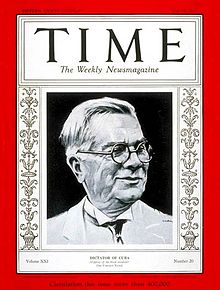
Gerardo Machado y Morales (September 28, 1871, Camajuani – March 29, 1939, Miami Beach, Florida) was President of Cuba (1925–1933) and a general of the Cuban War of Independence. He was born in the central Province of Las Villas (now Villa Clara) and was from a poor background.
He married his cousin, Elvira Machado Nodal (28 October 1868 in Villa Clara – 1968) and they had three daughters; Laudelina (Nena), Ángela Elvira and Berta. Machado also had two children out of wedlock, Leonor and Heriberto Machado. In his youth he was said to have been a cattle rustler before he joined the fight for independence.
War experience
He was one of the youngest Cuban generals of the 1895 to 1898 Cuban War of Independence. Only two other War of Independence generals were younger: Calixto Enamorado (1874–1951) and Enrique Loynaz del Castillo (1871–1963), Gerardo Machado fought in the middle provinces along with José Miguel Gómez (1858–1921) who also was president on the Liberal Party ticket and José de Jesús Monteagudo who would later defeat the disorganized black separatist forces of Evaristo Estenoz and Pedro Ivonet win the 1912 Race War and cruelly crush this rebellion.
Machado, said the party’s War leader in Las Villas province, fought on the defeated Liberal side in the 1917 “Little War of February 1917” La Chambelona (Chambelona War), with José Miguel Gómez, Alfredo Zayas and with Enrique Loynaz del Castillo. Calixto Enamorado fought on the Conservative side. After the initial victories of the Liberals, things turned worse. Yet Machado continued to fight even after the Liberals lost to the machine guns of Colonel Rosendo Collazo at Caicaje once the hacienda of Santiago Saura Orraque and Juan Manuel Perez de la Cruz on 8 March until his cause was unsustainable and surrendered.
President Mario García Menocal had clearly won. Technically there was no US intervention in this war and Cuban Army Offices notably Julio Sanguilí, in Santiago, regained control. Since in this war the Liberals were said to be pro-German, US President Woodrow Wilson, worried about Mexico and Pancho Villa, and the loss of able general, Menocal’s friend and Cuba hand Frederick Funston had one less distraction on his hands. Menocal declared war on Germany April 7 of that same year. John J. Pershing, less tactful than Funston, in the Cuban circumstance, would be sent first to Mexico and then Europe.
Political life
A political figure, he served in the Liberal Party Administration of José Miguel Gómez. Allied with his predecessor outgoing president Alfredo Zayas and running as a Liberal Party candidate, he defeated Mario García Menocal of the Conservative Party by an overwhelming majority to become Cuba’s 5th president. He took office as President of Cuba on May 20, 1925 and left office on August 12, 1933. Elected at the time of a fall in world sugar prices, he was a Cuban industrialist and member of the political elite of the Liberal Party.
Machado believed in the infant industry argument for protectionism. This led him to support the Tejeda Act of 1926, which attempted to raise sugar prices by cutting production, and the Customs-Tariff Law of 1927.Machado supported construction of the Central Highway.
Politically he was less adroit, he determined to make Cuba the “Switzerland of the Americas.” His detractors claimed that he became despotic and forced his way into a second term. According to his critics, Machado abused and censored the press,. The struggles against Machado have influenced both film and literature. It was in these turbulent times, when Machado ruled, that Cuban links to the Stalinist Communist International were made for the first time by Fabio Grobart.
Although Machado is said to have ordered the murder of defecting communist Julio Antonio Mella in Mexico this murder is generally conceded to have been carried out by the Stalinist faction of the Communist International who were in a death struggle with the followers of Leon Trotsky. The actual assassination was probably done by an action group that included notorious communist assassin Vittorio Vidali. Trotsky was eventually also murdered in that country by communist assassin Ramón Mercader.
Machado loses power
In Cuba, Machado engaged in a long struggle with diverse insurgent groups which varied from the green shirts of the ABC to Blas Hernández, to the conservative veterans of the Cuban War of Independence to the radical Antonio Guiteras group, and clung on for several years. He was finally toppled in the 1933 by US influence, Sumner Welles, Cuban War of Independence veterans, Army officers and civic leaders in a general strike (Alba, 1968). His government’s collapse was followed by a revolution led by dissident students, labor activists, and non-commissioned military officers, that left the power in the hands of Fulgencio Batista.
He died in Miami Beach and is entombed in Miami at Woodlawn Park Cemetery and Mausoleum (now Caballero Rivero Woodlawn North Park Cemetery and Mausoleum). He has a few descendants in Germany, Florida, and Panama. Last names are Jones, Reyez, and some still have Machado.
Sources: Wiki/CubanPress/InternetPhotos/youtube/www.thecubanhistory.com
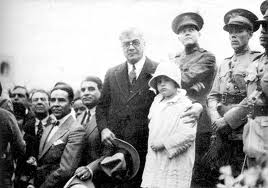
Presidente Gerardo Machado Morales
The Cuban History, Arnoldo Varona, Editor
PRESIDENTE GERARDO MACHADO MORALES (1925-1933)
Gerardo Machado y Morales (28 de septiembre de 1871, Camajuaní – 29 de marzo de 1939, Miami Beach, Florida) fue Presidente de Cuba (1925-1933) y un general de la Guerra de Independencia de Cuba. Nació en la provincia central de Las Villas (hoy Villa Clara) y era de origen humilde.
Se casó con su prima, Elvira Machado Nodal (28 de octubre de 1868 en Villa Clara – 1968) y tuvieron tres hijas. Laudelina (Nena), Ángela Elvira y Berta Machado también tuvo dos hijos fuera del matrimonio, Leonor Machado y Heriberto . En su juventud se decía que había sido un ladrón de ganado antes de unirse a la lucha por la independencia.
Eexperiencia en la Guerra
Fue uno de los más generales cubanos de la guerra de 1895 a 1898 de Independencia de Cuba. Sólo dos de los generales de la Guerra de la Independencia otro era más joven: Calixto Enamorado (1874-1951) y Enrique Loynaz del Castillo (1871-1963), Gerardo Machado luchó en las provincias centrales junto con José Miguel Gómez (1858-1921), que también Fue presidente por el Partido Liberal y José de Jesús Monteagudo quien luego derrotaría a las desorganizadas fuerzas separatistas negros de Evaristo Estenoz y Pedro Ivonet ganar la Guerra Race 1912 y cruelmente aplastar esta rebelión.
Machado, dijo al líder de la Guerra del partido en la provincia de Las Villas, luchó en el bando derrotado Liberal en el 1917 “Guerra Chiquita de febrero de 1917” La Chambelona (Chambelona Guerra), con José Miguel Gómez, Alfredo Zayas y Enrique Loynaz del Castillo. Calixto Enamorado luchó en el bando conservador. Después de las victorias iniciales de los liberales, las cosas salieron mal. Pero Machado continuó luchando incluso después de que los liberales perdieron las ametralladoras del coronel Rosendo Collazo en Caicaje una vez que la hacienda de Santiago Saura Orraque y Juan Manuel Pérez de la Cruz, el 8 de marzo hasta su causa era insostenible y se rindió.
El presidente Mario García Menocal había ganado con claridad. Técnicamente no hubo intervención de EE.UU. en la guerra y en las oficinas del Ejército de Cuba en particular Sanguilí Julio, en Santiago, recuperó el control. Dado que en esta guerra los liberales se decía que eran pro-alemán, EE.UU. El presidente Woodrow Wilson, preocupado por México y Pancho Villa, y la pérdida de poder en general, amigo de Menocal y Cuba mano Frederick Funston tenía una distracción menos en sus manos. Menocal declaró la guerra a Alemania 07 de abril de ese mismo año. John J. Pershing, menos discreto que Funston, en la circunstancia cubana, sería enviado primero a México y luego a Europa.
Políticos vida
Una figura política, se desempeñó en la Administración Partido Liberal de José Miguel Gómez. Aliado con su predecesor saliente presidente Alfredo Zayas y correr como candidato del Partido Liberal, derrotó a Mario García Menocal, del Partido Conservador por una abrumadora mayoría para convertirse en presidente quinto de Cuba. Él asumió el cargo de presidente de Cuba el 20 de mayo de 1925 y dejó el cargo el 12 de agosto de 1933. Elegido en el momento de la caída de los precios mundiales del azúcar, era un empresario cubano y miembro de la elite política del Partido Liberal.
Machado cree en el argumento de la industria naciente para el proteccionismo. Esto lo llevó a apoyar la Ley de Tejeda, de 1926, que trató de elevar los precios del azúcar mediante la reducción de la producción, y la Ley de Aduanas y Aranceles de construcción 1927.Machado apoyo de la Carretera Central.
Políticamente fue menos hábil, decidió convertir a Cuba en la “Suiza de América”. Sus detractores afirmaron que se convirtió despótico y se abrió paso a un segundo mandato. Según sus críticos, Machado abusos y censura a la prensa,. Las luchas contra Machado han influido en el cine y la literatura. Fue en estos tiempos turbulentos, cuando Machado declaró, que los vínculos cubanos a la Internacional Comunista estalinista se hicieron por primera vez por Fabio Grobart.
Aunque Machado se dice que ordenó el asesinato de desertar comunista Julio Antonio Mella en México este asesinato se concede generalmente para haber sido llevada a cabo por la facción estalinista de la Internacional Comunista, que estaban en una lucha a muerte con los seguidores de Leon Trotsky. El asesinato real fue hecho probablemente por un grupo de acción que incluía notorio asesino comunista Vittorio Vidali. Trotsky fue asesinado eventualmente también en ese país comunista asesino Ramón Mercader.
Machado pierde energía
En Cuba, Machado comprometido en una larga lucha contra los grupos insurgentes diversos que varían de las camisetas verdes de la ABC a Blas Hernández, a los veteranos conservadores de la Guerra de Independencia de Cuba al grupo radical Antonio Guiteras, y se aferró durante varios años. Él fue derrocado finalmente en el 1933 por la influencia de EE.UU., Sumner Welles, La guerra de los veteranos de la independencia cubana, oficiales del ejército y líderes cívicos en una huelga general (Alba, 1968). Colapso de su gobierno fue seguida por una revolución dirigida por los estudiantes disidentes, activistas laborales y suboficiales militares, que dejaron el poder en manos de Fulgencio Batista.
Murió en Miami Beach y está sepultado en Miami en Woodlawn Park Cemetery and Mausoleum (Caballero Rivero Woodlawn ahora North Park Cementerio y Mausoleo). Tiene unos pocos descendientes en Alemania, Florida y Panamá. Los apellidos son Jones, Reyez, y algunos todavía tienen Machado.
Sources: Wiki/CubanPress/InternetPhotos/www.thecubanhistory.com
Presidente Gerardo Machado Morales
The Cuban History, Arnoldo Varona, Editor