LA PALMA REAL , la Reina de los Campos de Cuba. Una de las Más Bellas del Mundo. PHOTOS. * LA PALMA REAL, The Queen of the Fields of Cuba. One of the Most Beautiful in the World. PHOTOS

LA PALMA REAL, LA REINA DE LOS CAMPOS DE CUBA. UNA DE LAS MAS BELLAS DEL MUNDO. PHOTOS

download (50)

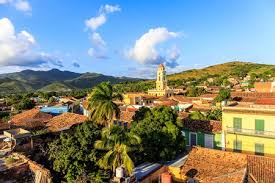
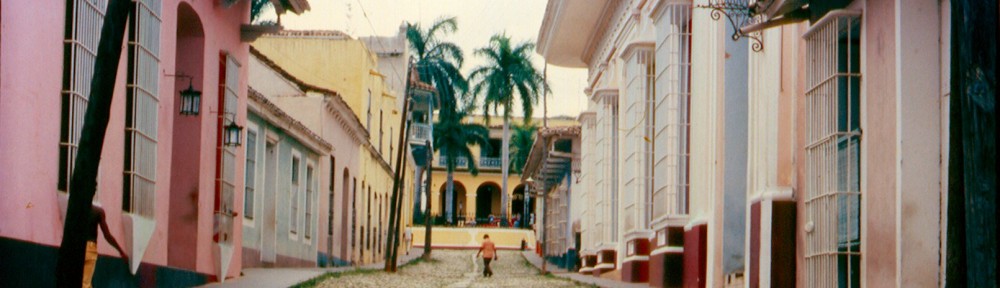
EL primer árbol que contempla quien visita Cuba es la Palma Real. Resulta difícil pensar en nuestra isla sin su presencia. A lo largo del país desde el Cabo San Antonio, su extremo más occidental, hasta el más oriental, la punta de Maisí, se van viendo palmas en grupos o aisladas en todo paisaje e incluso alineadas a ambos lados de las carreteras. Pienso que esa imagen es imborrable para todos los cubanos.

LA PALMA REAL, Nombre científico o latino: Roystonea regia. Origen: Cuba.

Nombre común o vulgar: Palmera real, Chaguaramo cubano, Palmera real cubana, Asahí, Caruta, Chaguarama, Mapora, Palma de yaguar, Palmiche, Palmiste, Yagua, Yaguarrama. Familia: Arecaceae (antes Palmaceae).

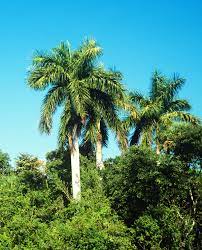
La Palmera real de Cuba tiene un tronco robusto, tipo columna, de color blanco mármol, un tallo de la corona enorme, color verde césped, y una hermosa corona de hojas grandes y plumosas. Es de crecimiento rápido en condiciones favorables.

Sus hojas pinnadas de hasta 8 metros de largo y color verde brillante por ambas caras, tienen un aspecto airoso y plumoso, sus folíolos pueden llegar a medir hasta un metro sobre todo los de la base de la hoja.

Entre la zona de unión de tronco y capitel brotan las inflorescencias que son muy ramificadas, con pequeñas flores aromáticas de color blanco. Frutos redondeados de color púrpura. Estos frutos ricos en grasas y almidón son dados a los cerdos como un excelente pienso.

Una de las palmeras más bellas del Mundo. No por gusto es nuestro árbol nacional y aparece en el escudo de la república.

LA REINA DE LOS CAMPOS DE CUBA

Reconocida como la reina de los campos por su majestuosidad y belleza, además de la utilidad que reporta, la Palma Real es el más numeroso de los árboles del país.

download (48)

Cuando los colonizadores llegaron a esta nación en el siglo XV, los aborígenes vivían en bohíos, chozas de tablas de palmas, techo de guano y paredes de yagua, estructura que se expandió por todo el campo cubano. Y todos estos componentes provienen de nuestra palma. Todavía este tipo de vivienda puede verse disperso en los lugares más intrincados y abruptos del territorio donde muchos de nuestros campesinos aún viven en bohíos, especialmente en las zonas montañosas.

Según el reconocido científico cubano Juan Tomás Roig y Mesa, se suponía que sólo existía una especie de Palma Real en Cuba, pero estudiosos minuciosos de las palmas cubanas demostraron que son varias las especies y variedades de palmas reales.

La región oriental de la Isla de Cuba, con cinco especies del género, es el centro de origen, y es el centro de evolución de dicho género, cuyas diez especies viven naturalmente sólo en las Antillas y en territorio de América del Norte, América Central y América del Sur, que resultan más o menos cercanos a estas islas, distribución geográfica que refleja su origen antillano.

Muchas localidades del archipiélago cubano han eliminado grandes cantidades de poblaciones de Palma Real a favor de planes de desarrollo agrícola y para la urbanización de zonas rurales. No obstante, si se atraviesa la Isla de un lado a otro, todavía pueden verse innumerables palmares a ambos lados de la carretera.

Y estoy seguro que la palma siempre estará allí…

Muy utilizada en alineaciones por su porte en calles o avenidas.

Es una de las palmeras más bellas del Mundo.

RECOMIENDENOS A SUS AMISTADES * PREFIERA A NUESTROS SPONSORS.

RECOMIENDENOS A SUS AMISTADES * PREFIERA A NUESTROS SPONSORS.

logo

LA PALMA REAL, THE QUEEN OF THE FIELDS OF CUBA. ONE OF THE MOST BEAUTIFUL IN THE WORLD. PHOTOS
download (46)

The first tree that anyone who visits Cuba sees is the Royal Palm. It is difficult to think of our island without their presence. Throughout the country from Cabo San Antonio, its westernmost end, to its easternmost, Maisí point, palms are seen in groups or isolated throughout the landscape and even lined up on both sides of the roads. I think that this image is indelible for all Cubans.

LA PALMA REAL, Scientific or Latin name: Roystonea regia. Origin: Cuba.

Common or vulgar name: Royal Palm, Cuban Chaguaramo, Cuban Royal Palm, Asahí, Caruta, Chaguarama, Mapora, Yaguar Palm, Palmiche, Palmiste, Yagua, Yaguarrama. Family: Arecaceae (formerly Palmaceae).

The Royal Cuban Palm has a sturdy, column-like, marble-white trunk, a huge crown stem, grass green, and a beautiful crown of large, feathery leaves. It is fast-growing under favorable conditions.

Its pinnate leaves up to 8 meters long and bright green on both sides have an airy and feathery appearance, its leaflets can measure up to one meter, especially those at the base of the leaf.

Inflorescences that are highly branched, with small aromatic white flowers, sprout between the trunk and capital junction area. Rounded purple fruits. These fruits rich in fat and starch are given to pigs as excellent feed.

One of the most beautiful palm trees in the world. Not for pleasure, it is our national tree and it appears on the coat of arms of the republic.

THE QUEEN OF THE FIELDS OF CUBA

Recognized as the queen of the fields for its majesty and beauty, in addition to the usefulness it brings, the Royal Palm is the most numerous of the country’s trees.

download (49)

When the colonizers arrived in this nation in the 15th century, the aborigines lived in huts, palm-plank huts, guano roofs, and yagua walls, a structure that spread throughout the Cuban countryside. And all these components come from our palm. Still, this type of housing can be seen scattered in the most intricate and abrupt places of the territory where many of our farmers still live in huts, especially in the mountainous areas.

According to the renowned Cuban scientist Juan Tomás Roig y Mesa, it was assumed that only one species of Royal Palm existed in Cuba, but meticulous scholars of Cuban palms have shown that there are several species and varieties of royal palms.

The eastern region of the Island of Cuba, with five species of the genus, is the center of origin and is the center of evolution of the said genus, whose ten species live naturally only in the Antilles and in the territory of North America, Central America and South America, which are more or less close to these islands, a geographic distribution that reflects their Antillean origin.

Many towns in the Cuban archipelago have eliminated large numbers of populations from Palma Real in favor of agricultural development plans and for the urbanization of rural areas. However, if you cross the Island from one side to the other, you can still see countless palm groves on both sides of the road.

And I’m sure the palm will always be there …

Widely used in alignments due to its bearing on streets or avenues.

It is one of the most beautiful palm trees in the world.

Agencies/ MemoriasCubanas/ Derubin Jacome/ Extractos/ Excerpts/ Internet Photos/ Arnoldo Varona/ www.TheCubanHistory.com
THE CUBAN HISTORY, HOLLYWOOD.
RECOMIENDENOS A SUS AMISTADES * PREFIERA A NUESTROS SPONSORS.

RECOMIENDENOS A SUS AMISTADES * PREFIERA A NUESTROS SPONSORS.

logo

PARA VENERAR A SAN LAZARO, el de las Muletas y los Perros. PHOTOS. * TO VENERATE SAN LAZARO, the One with the Crutches and the Dogs. PHOTOS

PARA VENERAR A SAN LAZARO, EL DE LAS MULETAS Y LOS PERROS. PHOTOS

promesa1 (1)

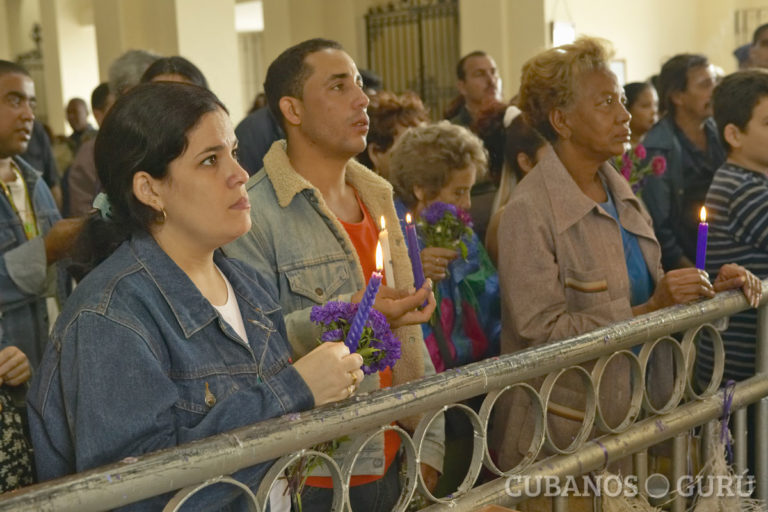
Desde la medianoche de este viernes 17 de diciembre, centenares de cubanos iniciaron una peregrinación hacia el Santuario Nacional de San Lázaro, en la localidad de El Rincón, para celebrarlo y ofrecerle sus ofrendas.

A la iglesia, ubicada en la localidad de Santiago de las Vegas, en la capital cubana, acuden personas de distintas regiones del país que cada año desafían las limitaciones del transporte y del agotamiento físico para rendir tributo al “Viejo Lázaro”, un santo venerado en la isla, donde lo consideran “milagroso y protector de los enfermos”.

El templo donde se honra a San Lázaro estaba desde la víspera fuertemente vigilado por efectivos policiales y militares.

La religión católica nunca santificó al mendigo en la parábola bíblica. Para esto, el único santo de ese nombre es San Lázaro Obispo, que siempre aparece en las imágenes sin heridas, tocado con una mitra y cubierto con una capa conforme a su jerarquía eclesiástica.

¿Cuál es la causa de la devoción tan extendida en nuestro país de la figura del mendigo lacerado?

EL SINCRETISMO EN SAN LAZARO

Es necesario buscar la equivalencia que persiguieron los negros Lucumianos en sus dioses africanos con las imágenes cristianas. Para ellos, el personaje evangélico era Babayú-Aye, el “orisha” que cura a los enfermos y protege a los pobres. Y con este personaje colocaron su imagen en los altares que construyeron en sus ayuntamientos y la popularizaron. Babayú-Aye en sincretismo se compara con San Lázaro (17 de diciembre).

CONSTRUCCION DEL TEMPLO

En 1781, cuando terminó de construirse el Real Hospital de San Lazaro, en la Caleta de Juan Guillén, el edificio constaba de dos plantas, con un frente monumental que servía de fachada a una iglesia ubicada al centro de la edificación en forma de cuadrilátero. Durante años este fue el templo visitado por los enfermos de lepra y devotos de San Lazaro o Babalú Ayè, en busca de ayuda espiritual y para dar cumplimiento a sus promesas, hasta que ambas instituciones fueron trasladas provisionalmente a Mariel, y luego al poblado de Rincon, en el municipio Santiago de las Vegas, como definitiva sede.

Al trasladarse el hospital para Rincón, como parte inseparable de este, a su entrada se erigió una sencilla iglesia, que en sus primeros tiempos fue de madera y tejas y contaba solo de una nave central, en la que por medio de falsos arcos se imitaba la existencia de otras dos laterales. En ese momento no tenía campanario, este se le construyó a principios de la década del 20 del siglo xx.

En 1936 se iniciaron las primeras obras de reconstrucción del templo gracias a las limosnas y donaciones provenientes de la generosidad pública, recaudadas por las religiosas de la orden de las Hijas de la Caridad. En los años cincuenta se edificó sobre el altar mayor una cúpula rematada por una cruz, y en los exteriores, un portal techado con cristales, que ya no existe. En 1960 quedó terminada una primera fase de ampliación.

El templo se mantuvo invariable durante casi cuarenta años, hasta que en 1990 se le construyeron las dos naves laterales con que cuenta en la actualidad, que amplían su espacio y permiten un flujo mayor de personas los días de festividad religiosa.

Su estructura actual no responde a un estilo arquitectónico definido, aunque se inspira en el barroco colonial con un ligero toque de eclecticismo. El altar mayor y los de los laterales son de estilo neogótico. Los elementos neoclásicos y románticos del altar donde está ubicado el Lázaro «milagroso» forman un conjunto ecléctico, reflejo de un fenómeno típicamente cubano.

1526980_510938489005185_92756641_n-300x266

EL TEMPLO DEL RINCON EN LA HABANA. INTERIOR

El templo llama la atención, por la modernidad de sus líneas y su iluminación natural, sus dos pequeñas naves laterales dispuestas en forma de cruz latina cuyos brazos son dos capillas, una para el auxilio espiritual de los enfermos y la de la izquierda que acoge al altar mayor y el presbiterio. Su frente exhibe tres campanas ubicadas bajo tres arcos de medio punto, y en la parte superior del campanario, en el centro de la torre, se encuentra un reloj circular; debajo, un friso frontal con un tragaluz cuyo cristal forma una cruz. Al fondo de la iglesia hay una sacristía y un salón de juntas, y en los altos se ubican las habitaciones del capellán. La fachada tiene tres entradas con arcos de medio punto, y sus puertas, coronadas por cristales sujetos por travesaños de madera, poseen un ancho que permite la entrada y salida de grandes grupos de fieles. Alternando con estas hay cuatro ventanas, también de madera y con pequeños arcos de medio punto donde predomina el cristal. Los laterales del edificio son exactos; en ambos hay puertas y ventanas con estructuras similares a la del cuerpo central.

En el interior existen varios altares o capillas con imágenes de los santos más venerados por los cubanos. En la parte central de la nave está ubicado el altar mayor, donde halla San Lázaro obispo.El arco donde está situado el Lázaro «milagroso», que es la imagen más antigua y venerada del templo, ocupa una posición privilegiada en la capilla de la izquierda y se encuentra protegida por una urna de cristal.

En la década de los noventa del siglo XX, a propuesta del reverendo Ramón Suárez Polcari, en la Conferencia de Obispos Católicos celebrada en Puebla,mexico le fue otorgado a esta pequeña iglesia el título de Santuario Nacional. Para esta designación se tuvo en cuenta:
El número cada vez mayor de personas que asisten al lugar, tanto en ocasión de la celebración, el 17 de diciembre, como el resto del año.
Por la significación que tiene este santo en la vida de muchos cubanos; el significado que tiene dentro de la cultura nacional; el caudal histórico que hay detrás de sus muros y del hospital.

9e2d41ae5312db2238fd8d60ec1915ea

PEREGRINAR HASTA EL SANTUARIO NACIONAL DE SAN LAZARO

Una de las más concurridas manifestaciones de fervor religioso en Cuba es la peregrinación anual hasta el Santuario Nacional de San Lázaro, los creyentes, que confieren a este santo una gran generosidad para conceder peticiones personales y milagros, suelen asistir masivamente a pie o en cualquier medio de transporte a este lugar el 17 de diciembre, festividad de San Lázaro. Ese día, y en especial la víspera, los fieles acostumbran dar cumplimiento a sus promesas satisfechas o establecer otras, lo que puede ser, precisamente, la difícil caminata desde diferentes puntos de la capital.

Hasta el San Lázaro milagroso cubano, o Babalú Ayé, llegan devotos de todas las provincias de Cuba y del exterior, así como turistas, curiosos y miembros de la prensa cubana y extranjera.

RECOMIENDENOS A SUS AMISTADES * PREFIERA A NUESTROS SPONSORS.

RECOMIENDENOS A SUS AMISTADES * PREFIERA A NUESTROS SPONSORS.

logo

TO VENERATE SAN LAZARO, THE ONE WITH THE CRUTCHES AND THE DOGS. PHOTOS

san-lazaro-rincon-personas-768x512

The Catholic religion never sanctified the beggar in the biblical parable. For this, the only saint of that name is San Lázaro Obispo, who always appears in the images without injuries, wearing a miter and covered with a cape according to his ecclesiastical hierarchy.

What, then, is the cause of the widespread devotion in our country to the figure of the lacerated beggar?

SINCRETISM IN SAN LAZARO

It is necessary to look for the equivalence that the Lucumian blacks pursued in their African gods with Christian images. For them, the evangelical character was Babayú-Aye, the “orisha” who heals the sick and protects the poor. And with this character, they placed his image on the altars that they built in their town halls and made it popular. Babayú-Aye in syncretism is compared with Saint Lazarus (December 17).

CONSTRUCTION OF THE TEMPLE

In 1781, when the Real Hospital de San Lazaro was finished, in Caleta de Juan Guillén, the building consisted of two floors, with a monumental front that served as a facade for a church located in the center of the building in the shape of a quadrilateral. For years this was the temple visited by leprosy patients and devotees of San Lazaro or Babalú Ayè, in search of spiritual help and to fulfill their promises, until both institutions were provisionally transferred to Mariel, and then to the town of Rincon. , in the municipality of Santiago de las Vegas, as the definitive headquarters.

When the hospital moved to Rincón, as an inseparable part of it, a simple church was erected at its entrance, which in its early days was made of wood and tiles and had only a central nave, in which it was imitated by means of false arches the existence of two other laterals. At that time it did not have a bell tower, it was built in the early 20s of the twentieth century.

In 1936 the first reconstruction works of the temple began thanks to alms and donations from public generosity, collected by the nuns of the order of the Daughters of Charity. In the fifties, a dome topped by a cross was built over the main altar, and on the exteriors, a portal covered with glass, which no longer exists. In 1960 the first phase of expansion was completed.

sanlazaro

The temple remained unchanged for almost forty years, until in 1990 the two lateral naves that it currently has were built, which expand its space and allow a greater flow of people on religious holidays.

Its current structure does not respond to a defined architectural style, although it is inspired by the colonial baroque with a slight touch of eclecticism. The main altar and those on the sides are in the Neo-Gothic style. The neoclassical and romantic elements of the altar where the “miraculous” Lazarus is located form an eclectic ensemble, reflecting a typically Cuban phenomenon.

THE TEMPLE OF THE RINCON IN HAVANA. INSIDE

The temple draws attention, due to the modernity of its lines and its natural lighting, its two small lateral naves arranged in the shape of a Latin cross whose arms are two chapels, one for the spiritual aid of the sick and the one on the left that welcomes the main altar and presbytery. Its front exhibits three bells located under three semicircular arches, and in the upper part of the bell tower, in the center of the tower, there is a circular clock; below, a frontal frieze with a skylight whose glass forms a cross. At the back of the church there is a sacristy and a meeting room, and upstairs are the chaplain’s rooms. The façade has three entrances with semicircular arches, and its doors, surmounted by glass supported by wooden crossbars, are wide enough to allow large groups of worshipers to enter and exit. Alternating with these there are four windows, also made of wood and with small semicircular arches where glass predominates. The sides of the building are exact; in both, there are doors and windows with structures similar to that of the central body.

Inside there are several altars or chapels with images of the saints most venerated by Cubans. The main altar is located in the central part of the nave, where there is Saint Lazarus the bishop. left and is protected by a glass urn.

In the nineties of the twentieth century, at the proposal of the Reverend Ramón Suárez Polcari, in the Conference of Catholic Bishops held in Puebla, Mexico, this small church was awarded the title of National Shrine. For this designation, the following were taken into account:
The increasing number of people who attend the place, both on the occasion of the celebration, on December 17, and the rest of the year.
Because of the significance that this saint has in the lives of many Cubans; the meaning it has within the national culture; the historical wealth behind its walls and the hospital.

frente-iglesia-santuario-san-lazaro-rincon (1)

PILGRIMAGE TO THE NATIONAL SANCTUARY OF SAN LAZARO

One of the most popular manifestations of religious fervor in Cuba is the annual pilgrimage to the National Sanctuary of San Lázaro, believers, who give this saint great generosity to grant personal requests and miracles, usually attend en masse on foot or in any way transport to this place on December 17, the feast of San Lázaro. On that day, and especially the day before, the faithful are used to fulfilling their satisfied promises or establishing others, which may be, precisely, the difficult walk from different points of the capital.

As far as the miraculous Cuban San Lazaro, or Babalú Ayé, devotees come from all the Cuban provinces and abroad, as well as tourists, onlookers, and members of the Cuban and foreign press.

Agencies/ Wiki/ Various/ Extractos/ Excerpts/ Internet Photos/ Arnoldo Varona/ www.TheCubanHistory.com
THE CUBAN HISTORY, HOLLYWOOD.

RECOMIENDENOS A SUS AMISTADES * PREFIERA A NUESTROS SPONSORS.

RECOMIENDENOS A SUS AMISTADES * PREFIERA A NUESTROS SPONSORS.

logo

EL DIA DE SAN LÁZARO, el viejo Babalú Ayé, el 16 de Diciembre para los Cubanos. * THE DAY OF SAN LÁZARO, the Old BABALÚ AYÉ, on December 16 for the Cubans. PHOTOS

EL DIA DE DE SAN LÁZARO, EL VIEJO BABALÚ AYÉ, EL 16 DE DICIEMBRE PARA LOS CUBANOS. PHOTOS.

San Lázaro, el personaje bíblico amigo de Jesús y hermano de Marta y María de Betania o el Lázaro, el mendigo que aparece en una parábola del Evangelio de San Lucas o Babalú Ayé, el orisha africano que se sincretiza con los dos anteriores, este es el SAN LAZARO que veneran miles de cubanos dentro y fuera de la isla.

9e2d41ae5312db2238fd8d60ec1915ea

El 16 de diciembre, víspera del día de San Lázaro, miles de cubanos acuden a su Santuario a 30 kilómetros al suroeste de La Habana, para venerar a quien los católicos identifican con San Lázaro Obispo y los santeros con Babalú Ayé. La pequeña iglesia, poco más que una ermita, se halla en el pueblo de Rincón. Próximo al santuario se encuentra el sanatorio de leprosos. Dentro del santuario, además de la iglesia, hay un manantial o pequeña fuente.

La devoción por San Lázaro en Cuba ocupa el segundo lugar después de la Virgen de la Caridad, esta veneración está casi siempre ligada a la santería.

PROCESION DEL SANTURARIO EN LA HABANA

La procesión hacia el santuario comienza sobre las 5:00 de la tarde, el flujo de peregrinos hacia el santuario de El Rincón en Santiago de las Vegas es constante. Por la noche se celebra la Santa Misa Víspera del Día de San Lázaro, bajo carpa, en el parqueo de la iglesia, como es costumbre, y en esa misma Iglesia a las 8 de la noche será la Santa Procesión por las calles de la ciudad.

La caminata de cinco kilómetros, desde el pueblo de Santiago de las Vegas hasta el Santuario, muchos la cumplen vestidos con tejidos de yute o ropa de color morado. Decenas de fieles se martirizan durante el camino y entran al templo extenuados, arrastrándose, de rodillas, rodando o dando volteretas. Algunos arrastran un bloque de cemento, otros llevan rocas, grilletes o incluso un trozo de raíl. Un hombre rodó por la ruta con dos velas encendidas sujetadas con los dedos de los pies.

Visitada por el Papa Juan Pablo II en su histórico viaje en enero de 1998, esta pequeña ermita es junto a un leprosario el principal lugar de devoción a esta deidad de creación popular, en una peregrinación en la que las plegarias se mezclan con el reggaeton, el pan con lechón, el ron y los habanos.

Y es que el sincretismo religioso, la mezcla de lo católico con lo africano en las raíces de la cubanía, están presentes en ofrendas y otras ceremonias características de este día por toda la isla y también fuera de ella.

frente-iglesia-santuario-san-lazaro-rincon (1)

SAN LAZARO PARA LOS CUBANOS.

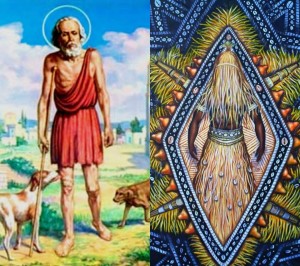
En Cuba se venera a un San Lázaro qué no es Santo, es un personaje bíblico. San Lázaro, el mendigo, el de las llagas, las muletas y los perros, que tiene su origen en un pasaje de los Evangelios. Y hay que buscar esta equivalencia en los negros lucumíes que identificaron a sus dioses africanos con las imágenes cristianas. Para ellos el personaje evangélico era Babayú-Aye, el “orisha” que cura a enfermos y protegía a los pobres. Y con este carácter colocaron su imagen en los altares que construían en sus cabildos y lo popularizaron.

Y es este el santo que todos los cubanos de una forma u otra veneramos, al que todos los cubanos hemos pedido algo, el milagroso San Lázaro o Babalú Aye, el santo que cura y al que muchos cubanos le piden salud y prosperidad.

Para la Iglesia, el único santo de ese nombre es San Lázaro Obispo, sin llagas y con mitra, que se venera el 17 de diciembre y cuya imagen se encuentra en el Santuario del Rincón. La religión católica jamás santificó al mendigo de la parábola bíblica.

BABALÚ AYÉ

Babalú ayé es una de las deidades de la religión yoruba y en la santería sincretiza con San Lázaro. Representa las afecciones de la piel, las enfermedades contagiosas, especialmente las venéreas y las epidemias en el ser humano. Medio hermano de Changó, cuando los adivinos se reunieron para la distribución de los reinos le fue entregado el Reino de Dajome.

Es el santo más venerado de tierra Arará. Tiene el aspecto de un inválido, minado por un mal deformante, de piernas retorcidas y espinazo doblado. En Candomblé y Umbanda se lo representa cubierto de unos vestidos de paja. Deidad de la viruela, la lepra,y en general, de las afecciones de la piel. Orisha mayor y santo muy venerado. En realidad Babalú Ayé es un título que significa “padre del mundo” que se le daba a Chopono o Chakpata, el terrible Orisha de la viruela, cuyo nombre no podía pronunciarse.

Petición-a-San-Lázaro-Cuba-10-203x300

A este Santo le gusta trabajar con muertos. Su color es el morado obispo y su día es el viernes, aunque para otros es el miércoles. Su número es el 17 y habla en el 4, el 11 y el 13 del Diloggún (Irosun, Ojuani y Metanlá). Collares de cuentas negras, matipó de Oyá, Matipó de San Lázaro (blanco con rayas azules) cuentas rojas. Combinadas según el camino del Santo. Hoy es un día para pedirle salud a San Lázaro .

Se le ofrenda maíz tostado, ministras de diferentes granos, mazorcas de maíz asadas, pan quemado, agua de coco, vino seco, ajo desgranado, pescado y jutía ahumados, cocos, cocos verdes, cebolla, corojo, cogote de res, etc. Se le inmolan chivo con barba, gallina de guinea, gallo y paloma. Sus Ewe son cundeamor, sargazo, sasafrás, alacrancillo, apasote ateje, piñón botija, bejuco ubí, caisimón, albahaca, zarzaparilla, alejo macho, artemisa, caguairán, cenizo, copaiba, chirimoya, bejuco amarillo, bejuco lombriz, cardosanto, cabolletas, ortiguilla, incienso, millo, pica pica, etc.

Oramos y pedimos al Lázaro de las muletas y los perros, al Lázaro llagado y mendigante, al que se venera multitudinariamente en Cuba, por encima de cualquier tradición o doctrina teológica. En realidad a los devotos no parece importarles si es uno u otro, incluso de seguro no conocen la diferencia, y la posibilidad de que cada Lázaro haya sido una persona distinta.

Lo cierto para todos ellos es su bondad y su poder y sin sus milagros acaso este día no sería una fecha tan esperada.

RECOMIENDENOS A SUS AMISTADES * PREFIERA A NUESTROS SPONSORS.

RECOMIENDENOS A SUS AMISTADES * PREFIERA A NUESTROS SPONSORS.

logo

THE DAY OF SAN LÁZARO, THE OLD BABALÚ AYÉ, DECEMBER 16 FOR THE CUBANS. PHOTOS.

Saint Lazarus, the biblical character friend of Jesus and brother of Martha and Mary of Bethany or Lazarus, the beggar who appears in a parable of the Gospel of Saint Luke or Babalú Ayé, the African orisha who is syncretized with the previous two, this is the SAN LAZARO that thousands of Cubans venerate inside and outside the island.

sanlazaro

On December 16, the eve of Saint Lazarus Day, thousands of Cubans flock to his Shrine 30 kilometers southwest of Havana, to venerate whom Catholics identify as Saint Lazarus Obispo and the santeros as Babalú Ayé. The small church, little more than a hermitage, is in the town of Rincón. Next to the sanctuary is the sanatorium for lepers. Inside the sanctuary, in addition to the church, there is a spring or small fountain.

The devotion to Saint Lazarus in Cuba ranks second after the Virgin of Charity, this veneration is almost always linked to Santeria.

PROCESSION OF THE SANCTUARY IN HAVANA

The procession to the sanctuary begins around 5:00 in the afternoon, the flow of pilgrims to the El Rincón sanctuary in Santiago de las Vegas is constant. At night the Holy Mass is celebrated on the eve of Saint Lazarus Day, under a tent, in the church parking lot, as is customary, and in that same Church at 8 o’clock at night, there will be the Holy Procession through the streets of the city .

The five-kilometer walk, from the town of Santiago de las Vegas to the Sanctuary, is carried out by many dressed in jute fabrics or purple clothing. Dozens of the faithful are martyred along the way and enter the temple exhausted, crawling, kneeling, rolling or cartwheeling. Some are dragging a block of cement, others are carrying rocks, shackles, or even a piece of rail. A man rolled down the road with two lighted candles held between his toes.

Visited by Pope John Paul II on his historic trip in January 1998, this small hermitage is next to a leper colony the main place of devotion to this deity of popular creation, in a pilgrimage in which prayers are mixed with reggaeton, the bread with suckling pig, the rum and the cigars.

And it is that religious syncretism, the mixture of the Catholic with the African in the roots of Cubanness, are present in offerings and other characteristic ceremonies of this day throughout the island and also outside of it.

SAN LAZARO FOR CUBANS.

In Cuba, a Saint Lazarus is worshiped who is not Saint, he is a biblical character. Saint Lazarus, the beggar, the one with the sores, the crutches, and the dogs, has its origin in a passage in the Gospels. And this equivalence must be sought in the Lucumian blacks who identified their African gods with Christian images. For them, the evangelical character was Babayú-Aye, the “orisha” who heals the sick and protected the poor. And with this character, they placed his image on the altars that they built in their town halls and made it popular.

And this is the saint that all Cubans in one way or another venerate, to whom all Cubans have asked for something, the miraculous San Lázaro or Babalú Aye, the saint who heals and from whom many Cubans ask for health and prosperity.

frente-iglesia-santuario-san-lazaro-rincon (1)

For the Church, the only saint of that name is San Lázaro Obispo, without wounds and with a miter, who is venerated on December 17 and whose image is in the Sanctuary of the Rincón. The Catholic religion never sanctified the beggar in the biblical parable.

BABALÚ AYÉ

Babalú ayé is one of the deities of the Yoruba religion and in Santeria, he syncretizes with Saint Lazarus. He represents skin conditions, contagious diseases, especially venereal diseases, and human epidemics. Chango’s half brother, when the diviners met for the distribution of the kingdoms, the Kingdom of Dajome was handed over to him.

He is the most revered saint of Arará land. He has the appearance of an invalid, undermined by a deformed evil, with twisted legs and a bent spine. In Candomblé and Umbanda he is represented covered in straw dresses. He deity of smallpox, leprosy, and in general, of skin affections. Orisha major and saint very venerated. Actually, Babalú Ayé is a title that means “father of the world” that was given to Chopono or Chakpata, the terrible Orisha of smallpox, whose name could not be pronounced.

This Saint likes to work with the dead. His color is bishop purple and his day is Friday, although for others it is Wednesday. His number is 17 and he speaks on 4, 11, and 13 of Diloggún (Irosun, Ojuani, and Metanlá). Necklaces of black beads, matipó de Oyá, Matipó de San Lázaro (white with blue stripes) red beads. Combined according to the path of the Saint. Today is a day to ask San Lázaro for health.

He is offered toasted corn, ministers of different grains, roasted corn on the cob, burnt bread, coconut water, dry wine, shelled garlic, smoked fish and jutía, coconuts, green coconuts, onion, corojo, beef neck, etc. Bearded goat, guinea fowl, rooster and dove are sacrificed to him. Their Ewe are cundeamor, sargassum, sassafras, alacrancillo, apasote ateje, piñón botija, liana ubí, caisimón, basil, sarsaparilla, alejo macho, mugwort, caguairán, ash, copaiba, chirimoya, yellow liana, lombriz liana, cardosanto, cabolletas , incense, millet, pica pica, etc.

We pray and ask Lazaro with crutches and dogs, Lazaro wounded and beggar, who is widely venerated in Cuba, above any tradition or theological doctrine. Actually, the devotees do not seem to care if he is one or the other, even sure they do not know the difference, and the possibility that each Lazarus has been a different person.

The truth for all of them is his goodness and his power and without his miracles, perhaps this day would not be a long-awaited date.

Agencies/ MemoriasCubanas/ Derubin Jacome/ Extractos/ Excerpts/ Internet Photos/ Arnoldo Varona/ www.TheCubanHistory.com
THE CUBAN HISTORY, HOLLYWOOD.

RECOMIENDENOS A SUS AMISTADES * PREFIERA A NUESTROS SPONSORS.

RECOMIENDENOS A SUS AMISTADES * PREFIERA A NUESTROS SPONSORS.

logo