CUBA, un Bastión Natural y Ecológico en el Caribe. PHOTOS. * CUBA, a Natural and Ecological Bastion in the Caribbean. PHOTOS

CUBA, UN BASTIÓN NATURAL Y ECOLÓGICO EN EL CARIBE. PHOTOS.
download (63)

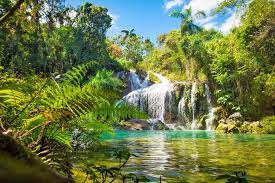
Como dijo un científico, Cuba es la “superpotencia biológica” del Caribe. La isla tiene las extensiones más grandes de selva tropical virgen, arrecifes vírgenes y humedales intactos en las islas del Caribe. Cuba también alberga muchas especies únicas o endémicas, incluido el solenodonte, un insectívoro regordete que parece una musaraña gigante, y el colibrí abeja, el ave más pequeña del mundo, que pesa menos de un centavo.

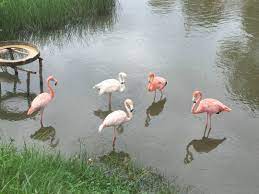
El medio ambiente de Cuba ha sufrido en el pasado los efectos nocivos de la tala descontrolada, la conversión de las tierras bajas en campos de caña de azúcar, el sobredesarrollo urbano y la contaminación en la Bahia de la Havana. Aún así, con su vida rural anacrónica y ecosistemas en gran parte saludables, la isla es una especie de Brigadoon ecológico, que ofrece una visión del Caribe de antaño. Grandes poblaciones de aves migratorias acuden a Cuba (patos, vireos, chupasaves y pájaros carpinteros) y los humedales albergan una magnífica profusión de currucas, garcetas, garzas y flamencos.

Si Cuba es una visión elisea es también por defecto. Las carreteras están despejadas en parte porque no hay nada que tirar. Durante la era soviética, que terminó en 1991, la industria y la agricultura cubanas, impulsadas por el apoyo soviético, resultaron altamente contaminantes, pero ahora muchas fábricas y campos están inactivos. La presión demográfica no es un problema; de hecho, miles arriesgan sus vidas cada año para huir. Un análisis reciente de la Heritage Foundation y el Wall Street Journal clasificó a Cuba como la segunda economía más represiva del mundo, solo detrás de Corea del Norte.

Pero a diferencia de Corea del Norte, Cuba parece estar al borde del cambio. El comercio aborrece el vacío y parece que esta cautivadora isla no puede resistir indefinidamente el desarrollo. Los inversores españoles, canadienses, holandeses, suecos, noruegos, alemanes, franceses y otros se han aprovechado del embargo comercial estadounidense de más de 60 años para forjar sus propias relaciones comerciales con el gobierno de Castro. Y es probable que la presión para desarrollar la isla aumente si, o cuando, Cuba reanude el pleno comercio con Estados Unidos.

PARQUE NACIONAL “ALEXANDER VON HUMBOLDT” DE CUBA

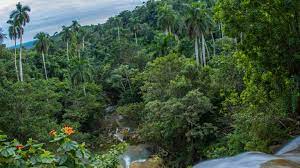
El Parque Nacional Alexander von Humboldt, en la parte oriental de la isla, cubre casi 300 millas cuadradas en la frontera de las provincias de Holguín y Guantánamo. Conduciendo allí, atravesamos lo que debe ser una de las partes menos urbanizadas del Caribe, y la experiencia es desorientadora. Los pocos autos que vemos son reliquias bien conservadas, desaparecidas hace mucho tiempo de su país de origen: DeSotos, Studebakers, Willys, Nashs y muchos otros modelos extintos. Si Cuba es un centro de endemismo para la vida silvestre, podría llamarse un centro de end-upism para los automóviles.
download (67)

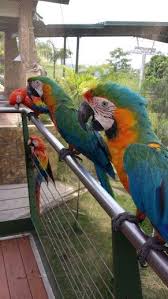
Con 905 especies de plantas, Humboldt contiene el 30 por ciento de las plantas endémicas de Cuba y también tiene la mayor diversidad de plantas del Caribe. El parque también proporciona un hábitat para muchas aves, incluido el colibrí abeja. Lo más intrigante es que si el pájaro carpintero de pico de marfil todavía existe en cualquier lugar de la tierra, es probable que se encuentre en la cima de la meseta en las profundidades del parque. El gran pájaro blanco y negro tiene un estatus casi místico entre los ornitólogos, sobre todo porque puede haberse extinguido a pesar de los febriles esfuerzos por salvarlo. El último avistamiento confirmado del pájaro carpintero de pico de marfil en los Estados Unidos fue hace cinco décadas. Pero los científicos que trabajaban en el este de Cuba encontraron un par de aves en 1987, y el gobierno tomó medidas para proteger el área, dejando de lado el bosque que se convertiría en el núcleo de HumboldtPark, que lleva el nombre de Alexander von Humboldt, quien exploró la isla hace 200 años.

Desde que Castro tomó el poder en 1959, la tala de bosques se ha desacelerado notablemente, según los expertos; la cubierta forestal ha aumentado de alrededor del 14 por ciento en 1956 a alrededor del 21 por ciento.

Las especies de mamíferos son escasas, aunque están el roedor arborícola, la jutía y el solenodonte insectívoro. Quizás no sea sorprendente que el único mamífero que florece en Cuba (y muchas otras islas) tenga alas: los murciélagos. También se han establecido plantas que pueden flotar (o que tienen semillas que flotan). Cuba tiene una gran diversidad de palmeras, aproximadamente 100 especies. Los reptiles, como la iguana y el cocodrilo, también están bien representados, quizás porque su capacidad para estivar, o esperar el calor del verano en un letargo parecido a la hibernación, les conviene para viajes oceánicos en troncos de árboles y cosas por el estilo. Cuba ocupa el décimo lugar en el mundo en diversidad de reptiles, con unas 91 especies diferentes.

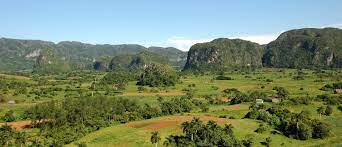
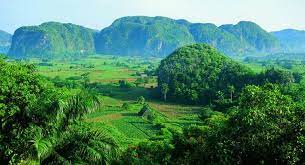
La geología sigue dando forma a la vida en las islas. Una abundancia de terreno rico en piedra caliza es el paraíso para los moluscos, particularmente los caracoles, que forman sus conchas a partir del mineral. En el oeste de Cuba, la erosión ha creado colinas de piedra caliza empinadas llamadas mogotes. Un caracol que se origina en un mogote en particular se limita esencialmente a él, por lo que la evolución del caracol sigue su propio curso en prácticamente cada mogote, produciendo un gran número de especies. Cuba tiene cientos de diferentes especies de caracoles, incluida la llamativa polimita de la región oriental de la isla; puede ser verde, rojo, amarillo o alguna combinación de colores. Por desgracia, la polimita está en peligro crítico porque la gente recoge su caparazón; El milano cubano, ave que se alimenta del molusco, también está desapareciendo.

CUBA, UNA DE LAS NACIONES MÁS POBRES DE SU HEMISFERIO

(Cuba) Es una de las naciones más pobres de su hemisferio, y la economía está tan arruinada que los médicos trabajan como amas de llaves porque pueden ganar seis veces más dinero que por ser cirujanos. Señalo que el gobierno no es una república democrática sino un estado policial comunista.

images (51)

Es poco probable que haya una estampida entre las naciones para replicar el camino de Cuba hacia el desarrollo sostenible. En Cuba, el comunismo y la pobreza no han resultado tan desastrosos para la naturaleza como en otros lugares. En la Rusia soviética, la necesidad de productividad impulsó a los planificadores centrales a aplicar políticas agrícolas que envenenaban ríos y destruían tierras a una escala épica. En contraste, el movimiento de Cuba hacia la agricultura orgánica ha tenido efectos secundarios beneficiosos en las poblaciones de aves y peces. Los agricultores han aprendido a vivir con una compensación en la que toleran que las aves se coman algunos de sus cultivos como un tipo de salario por el trabajo de las aves en el control de plagas.

Es fácil dejarse seducir por la belleza de Cuba, pero algunos ecologistas moderan su entusiasmo por el futuro de Cuba. MacPhee se pregunta si las tendencias ecológicas en Cuba son tan saludables como parecen a primera vista, y contrasta el futuro de la isla con el de Puerto Rico, que alguna vez fue un excelente ejemplo de desarrollo honky-tonk. Puede que a Cuba le queden más de sus bosques originales, pero la pobreza de Cuba y la dependencia de la agricultura significan que las tierras silvestres siguen amenazadas. En Puerto Rico, dice, los bosques han experimentado una recuperación notable desde la Segunda Guerra Mundial a medida que la economía se ha alejado de los cultivos.

En Estados Unidos, prácticamente todo lo relacionado con Cuba despierta pasión e incluso ira, y el entorno de la nación insular no es una excepción. Sergio Díaz-Briquets, consultor del Consejo para el Desarrollo Humano, y Jorge Pérez-López, economista del Departamento de Trabajo de Estados Unidos, son autores de un libro reciente, Conquering Nature, argumentando que el socialismo ha dañado los ecosistemas de Cuba y que cualquier reciente “reverdecimiento” de el régimen de Castro es cosmético. Describen a ZapataSwamp como un ecosistema herido que enfrenta graves amenazas de los esquemas de drenaje, la extracción de turba y la tala de madera para obtener carbón.

Probablemente, las áreas naturales de Cuba serán golpeadas por fuerzas colosales cuando la nación, ahora en el umbral de una vertiginosa transición política y económica, se abra. No todos los 11 millones de habitantes de Cuba comparten necesariamente la ideología austera de sus líderes y es posible que muchos quieran satisfacer sus aspiraciones materiales. Los conservacionistas cubanos temen que los exiliados cubanos regresen a su patria con grandes planes de desarrollo, socavando las salvaguardas ambientales. Hay precedentes. En Rusia, durante los años soviéticos, los apparatchiks pisotearon bosques y contaminaron ríos por ignorancia; ahora muchos de esos mismos funcionarios, convertidos en capitalistas, saquean la naturaleza con fines de lucro.

Cuba podría ser diferente. Existe una red de áreas protegidas y la combinación singular de opresión, pobreza y ambientalismo del régimen ha creado una riqueza inusual de tierras silvestres. Para mí, ese legado se materializó en una antigua propiedad en ruinas en el bosque con vistas a TacoBay. Las villas fantasmales no tienen techos, y los higos estranguladores rompen lentamente las paredes restantes del edificio derrumbado. Para algunos, la vista es un triste recordatorio de una forma de vida perdida. Pero también es una señal de que la naturaleza, si se le da una oportunidad, prevalecerá.

RECOMIENDENOS A SUS AMISTADES * PREFIERA A NUESTROS SPONSORS.

RECOMIENDENOS A SUS AMISTADES * PREFIERA A NUESTROS SPONSORS.

logo

CUBA, A NATURAL AND ECOLOGICAL BASTION IN THE CARIBBEAN. PHOTOS
download (64)

As one scientist put it, Cuba is the “biological superpower” of the Caribbean. The island has the largest tracts of untouched rainforest, unspoiled reefs, and intact wetlands in the Caribbean islands. Cuba also is home to many unique, or endemic, species, including the solenodon, a chubby insectivore that looks rather like a giant shrew, and the bee hummingbird, the world’s smallest bird, weighing less than a penny.

Cuba’s environment has in the past suffered the ill effects of unchecked logging, the conversion of lowlands into sugarcane fields, urban overdevelopment, and pollution in HavanaBay. Still, with its anachronistic rural life and largely healthy ecosystems, the island is a sort of ecological Brigadoon, offering a vision of the Caribbean of long ago. Neat thatch-roofed villages line quiet roads; litter-free highways connect provincial cities whose approaches are graced by tamarind or guaiacum trees. Large populations of migratory birds flock to Cuba—ducks, vireos, sapsuckers, and woodpeckers—and wetlands hold a gorgeous profusion of warblers, egrets, herons, and flamingos.

Whether Cuba can continue to remain a holdout is, of course, a great question. Much of the nation’s ecological health can be chalked up to planning by Fidel Castro’s regime, to be sure; but Cuba is an elysian vision also by default. Roads are unlittered partly because there’s nothing to litter. During the Soviet era, which ended in 1991, Cuban industry and agriculture, boosted by Soviet support, proved highly polluting, but now many factories and fields are idle. Population pressure is not a problem; indeed, thousands risk their lives each year to flee. A recent analysis by the Heritage Foundation and the Wall Street Journal ranked Cuba as the world’s second most repressive economy, behind only North Korea.

But unlike North Korea, Cuba seems on the verge of change. Commerce abhors a vacuum, and it appears that this beguiling island cannot indefinitely resist development. Spanish, Canadian, Dutch, Swedish, Norwegian, German, French, and other investors have taken advantage of the more than 60-year-old U.S. trade embargo to forge their own trade relationships with Castro’s government. And the pressure to develop the island is likely to increase if—or when—Cuba resumes full trade with the United States.

CUBA’S “ALEXANDER VON HUMBOLDT” NATIONAL PARK

Alexander von Humboldt National Park, in the eastern part of the island, covers almost 300 square miles on the border of Holguín and Guantánamo provinces. Driving there, we go through what must be one of the least built-up parts of the Caribbean, and the experience is disorienting. The few cars we see are well-preserved relics, long gone from their country of origin: DeSotos, Studebakers, Willys, Nashs, and many other extinct models. If Cuba is a center of endemism for wildlife, it might be called a center of end-upism for cars.

images (50)

With 905 plant species, Humboldt contains 30 percent of Cuba’s endemic plants and also has the most plant diversity in the Caribbean. The park also provides a habitat to many birds, including the bee hummingbird. Most intriguing, if the ivory-billed woodpecker still exists anywhere on earth, it is likely to be atop the plateau deep inside the park. The large black-and-white bird has near-mystical status among ornithologists, not least because it may have gone extinct despite feverish efforts to save it. The last confirmed sighting of the ivory-billed woodpecker in the United States was five decades ago. But scientists working in eastern Cuba came upon a pair of the birds in 1987, and the government moved to protect the area, setting aside forest that would become the core of HumboldtPark, named after Alexander von Humboldt, who explored the island 200 years ago.

Since Castro seized power in 1959, forest cutting has slowed markedly, according to experts; forest cover has increased from about 14 percent in 1956 to about 21 percent.

Mammal species are scarce, though there’s the tree-dwelling rodent, the hutia, and the insectivorous solenodon. Perhaps not surprisingly, the one mammal that flourishes on Cuba (and many other islands) has wings: bats. Plants that can float (or have seeds that float) also have become established. Cuba has a great diversity of palm trees—roughly 100 species. Reptiles, like the iguana and the crocodile, are well represented, too, perhaps because their capacity to estivate, or wait out the summer heat in a torpor akin to hibernation, suits them to ocean voyages on tree trunks and the like. Cuba ranks tenth in the world in reptile diversity, with some 91 different species.

Geology continues to shape island life. An abundance of limestone-rich terrain is heaven for mollusks, particularly snails, which fashion their shells out of the mineral. In western Cuba, erosion has created steep-sided limestone hills called mogotes. Asnail originating on a particular mogote is essentially limited to it, so snail evolution follows its own course on virtually each mogote, producing a great number of species. Cuba has hundreds of different snail species, including the gaudy polymita of the island’s eastern region; it might be green, red, yellow or some combination of colors. Alas, the polymita is critically endangered because people collect its shell; the Cuban kite, a bird that feeds on the mollusk, is also disappearing.

CUBA, ONE OF THE POOREST NATIONS IN ITS HEMISPHERE

(Cuba) It’s one of the poorest nations in its hemisphere, and the economy is so screwed up that doctors work as housekeepers because they can earn six times the hard cash they get for being a surgeon. I point out that the government is not a democratic republic but a Communist police state.

It is unlikely that there will be a stampede among nations to replicate Cuba’s path toward sustainable development. In Cuba, Communism and poverty have not proved as disastrous for nature as they have elsewhere. In Soviet Russia, the need for productivity spurred central planners to pursue agricultural policies that poisoned rivers and destroyed lands on an epic scale. In contrast, Cuba’s move toward organic farming has had beneficial side effects on bird and fish populations. Farmers have learned to live with a trade-off in which they tolerate birds eating some of their crops as a type of wage for the birds’ work controlling pests.
images (52)

It is easy to be seduced by Cuba’s beauty, but some ecologists temper their enthusiasm for Cuba’s future. MacPhee wonders whether ecological trends in Cuba are as healthy as they seem at first blush, and contrasts the island’s future with that of Puerto Rico, once a prime example of honky-tonk development. Cuba may have more of its original forests left, but Cuba’s poverty and dependence on agriculture mean that wildlands remain under threat. In Puerto Rico, he says, the forests have staged a remarkable recovery since World War II as the economy has shifted away from crops.

In the United States, practically anything concerning Cuba arouses passion and even anger, and the island nation’s environment is no exception. Sergio Díaz-Briquets, a consultant with the Council for Human Development, and Jorge Pérez-López, a U.S. Labor Department economist, have authored a recent book, Conquering Nature, arguing that socialism has harmed Cuba’s ecosystems and that any recent “greening” of the Castro regime is cosmetic. They describe ZapataSwamp as a wounded ecosystem that faces dire threats from drainage schemes, peat extraction, and woodcutting for charcoal.

Likely as not, Cuba’s natural areas will be buffeted by colossal forces when the nation, now on the threshold of a dizzying political and economic transition, open up. Not all of Cuba’s 11 million people necessarily share their leaders’ austere ideology, and many may want to satisfy material aspirations. Cubans conservationists fear that Cuban exiles will return to their homeland with grand development plans, undermining environmental safeguards. There are precedents. In Russia during the Soviet years, apparatchiks trampled forests and polluted rivers out of ignorance; now many of those same officials, turned capitalist, plunder nature for profit.

Cuba just might be different. A network of protected areas is in place, and the regime’s singular blend of oppression, poverty, and environmentalism has created an unusual wealth of wildlands. To me, that legacy was embodied in a ruined old estate in the forest overlooking TacoBay. The ghostly villas have no roofs, and strangler figs slowly crack apart the remaining walls of the crumbling building. To some, the sight is a sad reminder of a lost way of life. But it’s also a sign that nature, given a chance, will prevail.

Agencies/ SmithsoniamInstitute/ Eugene Linden/ Extractos/ Excerpts/ Internet Photos/ Arnoldo Varona/ www.TheCubanHistory.com
THE CUBAN HISTORY, HOLLYWOOD.
RECOMIENDENOS A SUS AMISTADES * PREFIERA A NUESTROS SPONSORS.

RECOMIENDENOS A SUS AMISTADES * PREFIERA A NUESTROS SPONSORS.

logo

EL SANTUARIO de la Caridad del Cobre. Hogar de la Virgen Cubana. PHOTOS. * THE SHRINE of the Charity del Cobre. Home of the Cuban Virgin. PHOTOS

EL SANTUARIO DE LA CARIDAD DEL COBRE. HOGAR DE LA VIRGEN CUBANA. PHOTOS

collage_0

A través del tiempo la imagen de la Virgen de la Caridad (Cachita, como mucha gente la llama) ha sido venerada por una gran inmensa cantidad de cubanos creyentes y no creyentes que le piden algún favor para cubrir sus necesidades espirituales.

Aunque muchos desconocen su origen y la historia de su basílica, el Santuario del Cobre, este comienza cuando la Virgen de la Caridad se encuentra en la bahía de Nipe en 1608 por los hermanos Juan y Rodrigo de Hoyos y un joven negro llamado Juan Moreno, todos ellos naturales de la comarca de El Cobre, 12 kilómetros de Santiago de Cuba.

La imagen fue colocada por primera vez en un pequeño altar en Barajagua, desde el altar mayor de la iglesia de El Cobre, pertenecía a Santiago Apóstol y las otras dos iglesias fueron ocupadas por Santa Bárbara y Nuestra Señora del Rosario.

Luego, junto a Tha iglesia se construyó una ermita y poco después, a finales del siglo XVIII, se empezó a nacer la fama milagrosa y con ella la historia legendaria de la Virgen del Cobre, dando lugar a la disminución gradual de la la adoración a la imagen de Santiago Apóstol.

LA CARIDAD DEL COBRE COMO PATRONA DE CUBA

En 1915 la Guerra de los Veteranos de la Independencia, pide al Papa Benedicto XV que proclame a la Virgen del Cobre como Patrona de Cuba, y lo hace el 10 de mayo de 1916.

El Santuario del Cobre es destino obligado para los devotos de la Patrona de Cuba, que acuden muchas veces a este templo para pagar promesas.

Las ofrendas son acumuladas y depositadas en la “Capilla de os Milagros”: joyas de oro y piedras preciosas, muletas, otras riquezas de diversos valores y hasta la medalla de oro ganada en 1954 por el escritor norteamericano Ernest Hemingway con Premio Nobel.

download (57)

Los peregrinos se llevan consigo pequeñas piedras de la mina y las guardan en casas dentro de vasija litúrgica, bolsillos o carteras, como protección contra las malas o quizás como buena luz para el futuro personal y familiar.

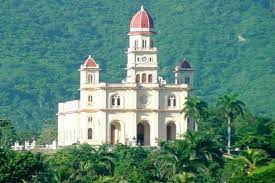
La Virgen ha colocado en las últimas tres Iglesias, una seguida de la otra, construida en El Cobre. La iglesia actual es la tercera que ha tenido la Virgen cuya fiesta es el 8 de septiembre y la iglesia actual se construyó siendo el vasco español fray Valentín Zubizarreta (Arzobispo de Santiago de Cuba) el 8 de septiembre de 1927.

El 20 de diciembre de 1936 por orden del Papa Pío XI se corona la imagen de la virgen en solemne ceremonia realizada en el Bulevar de Santiago de Cuba.

En diciembre de 1977, el Papa Pablo VI otorgó el título de Basílica a la iglesia, responsabilidad desempeñada por el cardenal africano Bernardino Cantín.

El 24 de enero de 1998, durante la visita del Papa Juan Pablo II, coronó a la Virgen durante la misa que tuvo lugar en la Plaza de la Revolución Antonio Maceo de Santiago de Cuba y colocó entre sus manos un rosario de oro.

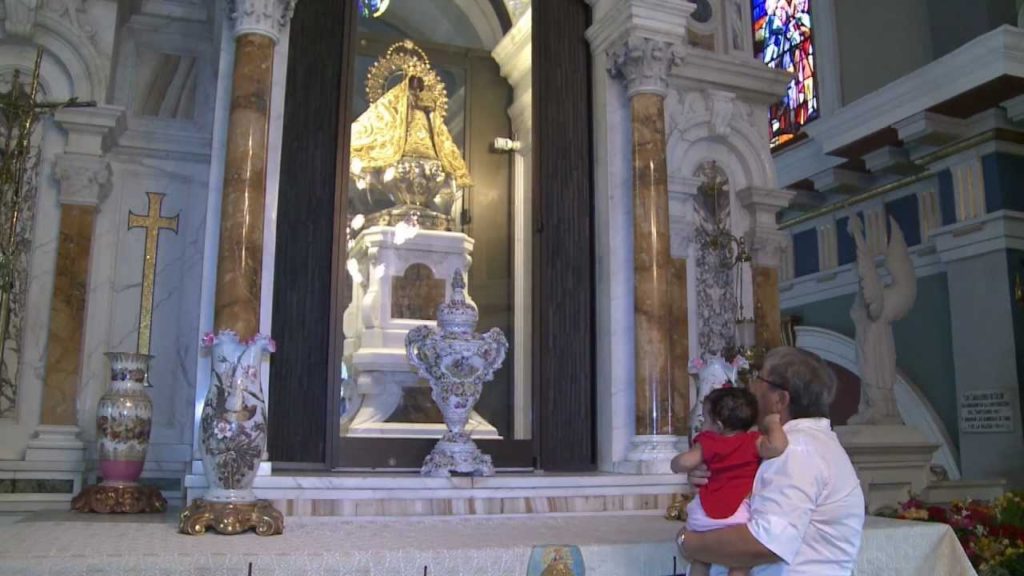
En la iglesia se encuentra la imagen de la Virgen dentro de una urna de vidrio dentro de la cual hay unas condiciones climáticas especiales. Está situado en el llamado “Camerín de la Virgen” donde asisten sus fieles a rezar y poner flores. Cuando comienza la misa la imagen de la Virgen gira hacia el templo, en el altar mayor poniendo el rostro hacia el pueblo. Una vez que la masa termina, vuelve a girar.

Lo hizo antes de forma manual y ahora de forma electrónica con la urna que se adquirió en Montreal, Canadá, de donde también llega el candelabro que colgaba en la habitación de la Virgen. La repisa que vistió fue bordada en oro por algunas monjas de clausura en España.

A lo largo del tiempo la imagen de La Virgen de la Caridad (Cachita, como la llaman muchos) ha servido para realizar múltiples peticiones por parte de los creyentes que piden consuelo ante los dolores, misericordia y paz en los momentos de más tensión, libertad y alivio en las batallas, etc.

RECOMIENDENOS A SUS AMISTADES * PREFIERA A NUESTROS SPONSORS.

RECOMIENDENOS A SUS AMISTADES * PREFIERA A NUESTROS SPONSORS.

logo

THE SHRINE OF THE CHARITY DEL COBRE. HOME OF THE CUBAN VIRGIN. PHOTOS

images (46)

Through time the image of the Virgin of Charity (Cachita, as many people call her) has been venerated by a large number of believing and non-believing Cubans who ask her for a favor to meet her spiritual needs.

Although many are unaware of its origin and the history of its basilica, the Sanctuary of Cobre, it begins when the Virgen de la Caridad is found in Nipe Bay in 1608 by the brothers Juan and Rodrigo de Hoyos and a young black man named Juan Moreno, all of them from the El Cobre region, 12 kilometers from Santiago de Cuba.

The image was placed for the first time in a small altar in Barajagua, from the main altar of the El Cobre church, it belonged to Santiago Apóstol and the other two churches were occupied by Santa Bárbara and Nuestra Señora del Rosario.

Then, next to Tha church a hermitage was built and shortly after, at the end of the 18th century, the miraculous fame began to be born and with it the legendary story of the Virgen del Cobre, giving rise to the gradual decrease in the worship of the image of Santiago Apóstol.

THE CHARITY OF COPPER AS THE PATRON OF CUBA

In 1915, the Veterans’ War for Independence asked Pope Benedict XV to proclaim the Virgen del Cobre as Patroness of Cuba, and he did so on May 10, 1916.

The El Cobre Sanctuary is an obligatory destination for the devotees of the Patron Saint of Cuba, who often come to this temple to pay promises.

The offerings are accumulated and deposited in the “Chapel of Miracles”: gold jewelry and precious stones, crutches, other riches of various values ​​, and even the gold medal won in 1954 by the North American writer Ernest Hemingway with the Nobel Prize.

The pilgrims take small stones from the mine with them and keep them in houses in liturgical vessels, pockets, or purses, as protection against bad weather or perhaps as good light for the personal and family future.

The Virgin has placed in the last three Churches, one followed by the other, built-in El Cobre. The current church is the third that the Virgin has had, whose feast is on September 8, and the current church was built when the Spanish Basque Fray Valentín Zubizarreta (Archbishop of Santiago de Cuba) on September 8, 1927.

maxresdefault

On December 20, 1936, by order of Pope Pius XI, the image of the Virgin was crowned in a solemn ceremony held on the Boulevard of Santiago de Cuba.

In December 1977, Pope Paul VI granted the title of Basilica to the church, a responsibility carried out by the African Cardinal Bernardino Cantín.

On January 24, 1998, during the visit of Pope John Paul II, he crowned the Virgin during the mass that took place in the Plaza de la Revolución Antonio Maceo in Santiago de Cuba and placed a golden rosary in her hands.

In the church is the image of the Virgin inside a glass urn in which there are special climatic conditions. It is located in the so-called “Camerín de la Virgen” where the faithful attend to pray and put flowers. When the mass begins, the image of the Virgin turns towards the temple, on the main altar putting her face towards the people. Once the dough is done, turn again.

She did it before manually and now electronically with the urn that was acquired in Montreal, Canada, from which also comes the chandelier that hung in the Virgin’s room. The mantel that she dressed was embroidered in gold by some cloistered nuns in Spain.

Throughout time the image of La Virgen de la Caridad (Cachita, as many call her) has served to make multiple requests by believers who ask for consolation in the face of pain, mercy, and peace in moments of stress, freedom, and relief in battles, etc.

Agencies/ Wiki/ CubanismosHist./ Extractos/ Excerpts/ Internet Photos/ Arnoldo Varona/ www.TheCubanHistory.com
THE CUBAN HISTORY, HOLLYWOOD.

RECOMIENDENOS A SUS AMISTADES * PREFIERA A NUESTROS SPONSORS.

RECOMIENDENOS A SUS AMISTADES * PREFIERA A NUESTROS SPONSORS.

logo

RUM y COCA COLA o “CUBA LIBRE”, una de las Bebidas más Populares del Mundo. * RUM and COKE or “CUBA LIBRE”, one of the Most Popular Drinks around the World. PHOTOS.

RON Y COCA COLA o “CUBA LIBRE”, UNA DE LAS BEBIDAS MÁS POPULARES DEL MUNDO. FOTOS.

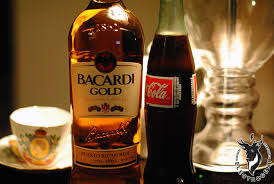
Ron y Coca-Cola, o el Cuba libre; literalmente “Cuba Libre”, es un cóctel highball que consiste en cola, ron y, en muchas recetas, jugo de limón con hielo. Tradicionalmente, el ingrediente de cola es Coca-Cola (“Coke”) y el alcohol es un ron ligero como Bacardi; sin embargo, la bebida se puede preparar con varios tipos de rones y marcas de cola, y se puede incluir o no jugo de lima.

Taste-Along-with-Cuba-LIbre

El cóctel se originó a principios del siglo XX en Cuba, luego de que el país ganara la independencia en la Guerra Hispanoamericana. Posteriormente se hizo popular en Cuba, Estados Unidos y otros países. Su receta simple y sus ingredientes omnipresentes y económicos la han convertido en una de las bebidas alcohólicas más populares del mundo. Los críticos de la bebida a menudo consideran que la bebida es mediocre, pero se ha destacado por su importancia histórica.

INGREDIENTES
120 ml de cola
50 ml de ron blanco
10 ml de zumo de lima recién exprimido

PREPARACIÓN
Prepare todos los ingredientes (ron y coca cola) en un vaso alto lleno de hielo. Adorne con una rodajita de lima.

HISTORIA

La bebida fue creada en Cuba a principios de 1900, pero sus orígenes exactos no son seguros. Se hizo popular poco después de 1900 cuando la Coca-Cola embotellada se importó por primera vez a Cuba desde los Estados Unidos. Su origen está asociado con la fuerte presencia estadounidense en Cuba tras la Guerra Hispanoamericana de 1898; El nombre tradicional de la bebida, “Cuba libre”, fue el lema del movimiento independentista cubano. A veces se dice que Cuba Libre se creó durante la Guerra Hispanoamericana. Sin embargo, esto es anterior a la primera distribución de Coca-Cola a Cuba en 1900. En 1898 se conocía una bebida llamada “Cuba libre”, pero era una mezcla de agua y azúcar morena.

logoVIDEOS- “Cuba Libre” en la Guerra de España-Americana..

Bacardí y otros rones cubanos también experimentaron un auge después de la independencia que atrajo a un gran número de turistas e inversores extranjeros, así como nuevas oportunidades para exportar alcohol. Los rones ligeros como el Bacardi se convirtieron en los preferidos para los cócteles, ya que se consideraba que se mezclaban bien. Coca-Cola ha sido un mezclador común en los Estados Unidos desde que se embotelló por primera vez en 1886, y se convirtió en una bebida omnipresente en muchos países después de su primera exportación en 1900.

El ron y la Coca-Cola se difundieron rápidamente de Cuba a los Estados Unidos. A principios del siglo XX, el cóctel, como la propia Coca-Cola, era más popular en el sur de los Estados Unidos. Durante la era de la Prohibición de 1922 a 1933, Coca-Cola se convirtió en un mezclador favorito para disfrazar el sabor de los rones de baja calidad, así como de otros licores. Después de la Prohibición, el ron y la Coca-Cola se volvieron frecuentes también en el norte y el oeste de los EE. UU., Y tanto en círculos de alta y baja ceja.

Ron y Coca-Cola alcanzaron un nuevo nivel de popularidad durante la Segunda Guerra Mundial. A partir de 1940, Estados Unidos estableció una serie de puestos de avanzada en las Indias Occidentales Británicas para defenderse de la Armada alemana. La presencia estadounidense creó una demanda intercultural, con los militares estadounidenses y los lugareños desarrollando gustos por los productos de los demás.

logoVIDEOS- “Rum and Coca” sing by Andrew Sisters( 1944)…

En 1943, la canción Calypso de Lord Invader “Rum and Coca-Cola” llamó más la atención sobre la bebida en Trinidad. La canción fue una adaptación de la composición de 1904 de Lionel Belasco “L’Année Passée” con nueva letra sobre soldados estadounidenses en Trinidad retozando con chicas locales y bebiendo ron y Coca-Cola. El comediante Morey Amsterdam plagió “Rum and Coca-Cola” y lo autorizó a las Andrews Sisters como su propio trabajo. La versión de las Andrews Sisters fue un gran éxito en 1945 y aumentó aún más la popularidad del ron y la Coca-Cola, especialmente en el ejército. Lord Invader y los propietarios de la composición de Belasco demandaron con éxito a Amsterdam por los derechos de la canción.

DESTILERÍAS DE BACARDI CONFISCADAS POR EL GOBIERNO EN CUBA

Durante la Revolución Cubana en 1959, Bacardí huyó a Puerto Rico donde comenzaron a producir el mismo Ron junto a otra de sus destileria en México. Estados Unidos impuso un embargo contra Cuba que prohibió la importación de productos cubanos, mientras que Cuba también prohibió la importación de productos estadounidenses.

images (44)

El ron y la Coca-Cola son muy populares; Bacardi dice que es la segunda bebida alcohólica más popular del mundo. Su popularidad se debe a la ubicuidad y el bajo costo de los ingredientes principales, y al hecho de que es muy fácil de hacer. Como se puede elaborar con cualquier cantidad o estilo de ron, es sencillo de preparar y difícil de arruinar.

Charles A. Coulombe considera la Cuba libre como una bebida de importancia histórica y escribe que es “un símbolo potente de un orden mundial cambiante: el matrimonio del ron, el lubricante de los viejos imperios coloniales, y la Coca-Cola, un ícono de la modernidad estadounidense capitalismo global “.

RECETA Y VARIACIONES

Coca-Cola es la cola convencional en la bebida, hasta el punto de que los clientes rara vez piden algo más. Esto se remonta al origen de la bebida en Cuba y se solidificó en la década de 1920 cuando Coca-Cola emergió como la principal marca de cola luego de la quiebra de Pepsi y Chero-Cola, y por lo tanto, el mezclador de cola preferido en bebidas alcohólicas. Los intentos posteriores de Pepsi de ingresar al mercado de los cócteles no tuvieron éxito, especialmente después de que la canción “Rum and Coca-Cola” solidificara la asociación en la imaginación del público.

La lima se incluye tradicionalmente en la bebida, aunque a menudo se omite, especialmente cuando el pedido es solo para “ron y coca cola”. Algunas recetas tempranas requerían que se mezclara jugo de limón; otros incluían lima solo como guarnición. Otras recetas tempranas requerían ingredientes adicionales como ginebra y amargos. Algunas fuentes consideran que la lima es esencial para que una bebida sea un verdadero Cuba libre, que distinguen de un simple ron y Coca-Cola. Sin embargo, la lima se incluye con frecuencia incluso en los pedidos de “ron y Coca-Cola”.

Cuando se usa ron añejo Bacardi añejo, la bebida a veces se llama Cubata, un nombre que también se usa informalmente en España para cualquier Cuba libre. Algunas recetas modernas inspiradas en las más antiguas incluyen ingredientes adicionales como amargos. Las variantes más elaboradas con más ingredientes incluyen el Cinema Highball, que usa ron infundido con palomitas de maíz con mantequilla y mezclado con cola.

RECOMIENDENOS A SUS AMISTADES * PREFIERA A NUESTROS SPONSORS.

RECOMIENDENOS A SUS AMISTADES * PREFIERA A NUESTROS SPONSORS.

logo

RUM AND COKE or “CUBA LIBRE”, ONE OF THE WORLD’S MOST POPULAR DRINKS. PHOTOS

Rum and Coke, or the Cuba libre; literally “Free Cuba”, is a highball cocktail consisting of cola, rum, and in many recipes lime juice on ice. Traditionally, the cola ingredient is Coca-Cola (“Coke”) and the alcohol is a light rum such as Bacardi; however, the drink may be made with various types of rums and cola brands, and lime juice may or may not be included.

images (42)

The cocktail originated in the early 20th century in Cuba, after the country won independence in the Spanish–American War. It subsequently became popular across Cuba, the United States, and other countries. Its simple recipe and inexpensive, ubiquitous ingredients have made it one of the world’s most popular alcoholic drinks. Drink critics often consider the drink mediocre, but it has been noted for its historical significance.

INGREDIENTS
120 ml cola
50 ml white rum
10 ml Fresh lime juice

PREPARATION
Build all ingredients (Rum & Coke) in a highball glass filled with ice. Garnish with a lime wedge.

HISTORY

The drink was created in Cuba in the early 1900s, but its exact origins are not certain. It became popular shortly after 1900 when bottled Coca-Cola was first imported into Cuba from the United States. Its origin is associated with the heavy U.S. presence in Cuba following the Spanish–American War of 1898; the drink’s traditional name, “Cuba libre” (Free Cuba), was the slogan of the Cuban independence movement. The Cuba Libre is sometimes said to have been created during the Spanish–American War. However, this predates the first distribution of Coca-Cola to Cuba in 1900. A drink called a “Cuba libre” was indeed known in 1898, but this was a mix of water and brown sugar.

logoVIDEOS- “Cuba Libre” in the Spanish-American War…

Bacardi and other Cuban rums also boomed after independence brought in large numbers of foreign tourists and investors, as well as new opportunities for exporting alcohol. Light rums such as Bacardi became favored for cocktails as they were considered to mix well. Coca-Cola had been a common mixer in the United States ever since it was first bottled in 1886, and it became a ubiquitous drink in many countries after it was first exported in 1900.

Rum and Coke quickly spread from Cuba to the United States. In the early 20th century the cocktail, like Coca-Cola itself, was most popular in the Southern United States. During the Prohibition era from 1922 to 1933, Coca-Cola became a favored mixer for disguising the taste of low-quality rums, as well as other liquors. After Prohibition, rum, and Coke became prevalent in the northern and western U.S. as well, and in both high-brow and low-brow circles.

Rum and Coke achieved a new level of popularity during World War II. Starting in 1940, the United States established a series of outposts in the British West Indies to defend against the German Navy. The American presence created cross-cultural demand, with American servicemen and the locals developing tastes for each other’s products.

logoVIDEOS- “Rum & Cola” for the Andrew Sisters..

In 1943, Lord Invader’s Calypso song “Rum and Coca-Cola” drew further attention to the drink in Trinidad. The song was an adaptation of Lionel Belasco’s 1904 composition “L’Année Passée” with new lyrics about American soldiers in Trinidad cavorting with local girls and drinking rum and Coke. Comedian Morey Amsterdam plagiarized “Rum and Coca-Cola” and licensed it to the Andrews Sisters as his own work. The Andrews Sisters’ version was a major hit in 1945 and further boosted the popularity of rum and Coke, especially in the military. Lord Invader and the owners of Belasco’s composition successfully sued Amsterdam for the song’s rights.

BACARDI DISTILLERIES CONFISCATED BY THE NEW GOVERNMENT IN CUBA

During the Cuban Revolution in 1959, Bacardi fled to Puerto Rico where they began to produce the same rum with another of their distilleries in Mexico. The United States imposed an embargo against Cuba that prohibited the importation of Cuban products, while Cuba also prohibited the importation of American products.

Rum and Coke are very popular; Bacardi says that it is the world’s second-most-popular alcoholic drink. Its popularity derives from the ubiquity and low cost of the main ingredients, and the fact that it is very easy to make. As it can be made with any quantity or style of rum, it is simple to prepare and difficult to ruin.

Charles A. Coulombe considers the Cuba libre a historically important drink, writing that it is “a potent symbol of a changing world order – the marriage of rum, the lubricant of the old colonial empires, and Coca-Cola, an icon of modern American global capitalism”.

RECIPE AND VARIATIONS

Coca-Cola is the conventional cola in the drink, to the point that customers rarely order anything else. This dates back to the origin of the drink in Cuba and was solidified in the 1920s when Coca-Cola emerged as the primary cola brand following the bankruptcy of Pepsi and Chero-Cola, and therefore the preferred cola mixer in alcoholic drinks. Pepsi’s later attempts to enter the cocktail market were unsuccessful, especially after the song “Rum and Coca-Cola” solidified the association in the public imagination.

images (43)

Lime is traditionally included in the drink, though it is often left out, especially when the order is for just “rum and Coke”. Some early recipes called for lime juice to be mixed in; others included lime only as a garnish. Other early recipes called for additional ingredients such as gin and bitters. Some sources consider lime essential for a drink to be a true Cuba libre, which they distinguish from a mere rum and Coke. However, lime is frequently included even in orders for “rum and Coke”.

When aged Bacardi añejo rum is used, the drink is sometimes called a Cubata, a name also used informally in Spain for any Cuba libre. Some modern recipes inspired by older ones include additional ingredients such as bitters. More elaborate variants with further ingredients include the Cinema Highball, which uses rum infused with buttered popcorn and mixed with cola.

Agencies/ Wiki/ CubaLibreHist./ Extractos/ Excerpts/ Internet Photos/ YouTube/ Arnoldo Varona/ www.TheCubanHistory.com
THE CUBAN HISTORY, HOLLYWOOD.

RECOMIENDENOS A SUS AMISTADES * PREFIERA A NUESTROS SPONSORS.
RECOMIENDENOS A SUS AMISTADES * PREFIERA A NUESTROS SPONSORS.

logo