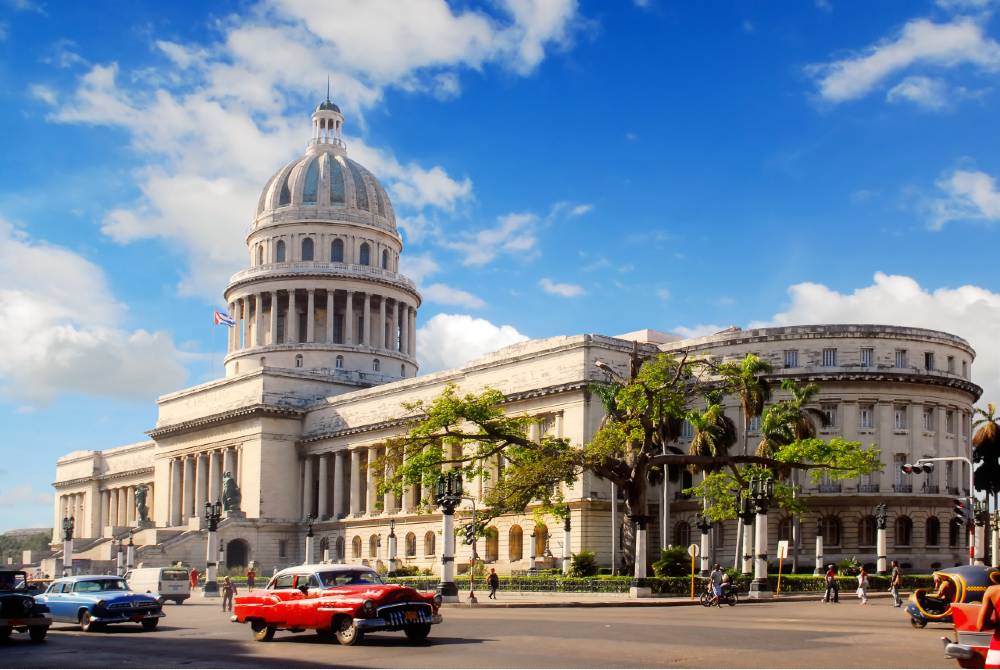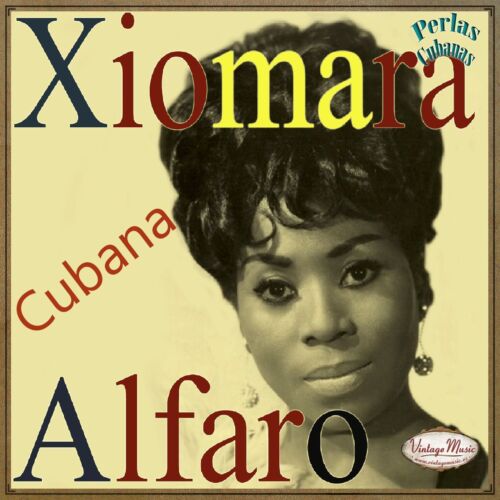
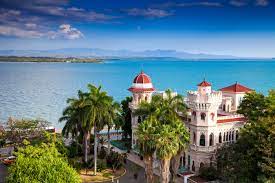
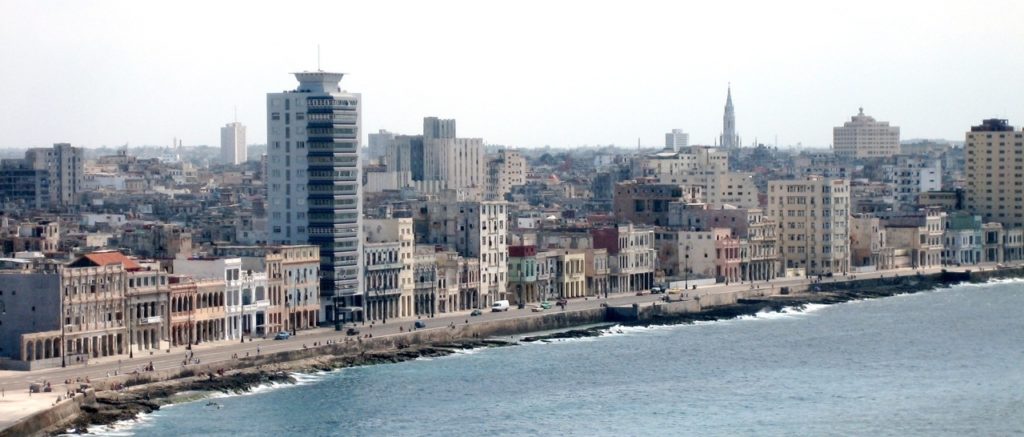
Ciudad de CIENFUEGOS, Cuba, declarada Patrimonio de la Humanidad por la UNESCO. * CIENFUEGOS City, Cuba declared a World Heritage by UNESCO. PHOTOS.

download (8)

La ciudad cubana de Cienfuegos conserva uno de los centros urbanos más homogéneos de la Isla. Está lleno de fachadas clásicas y esbeltas columnas que le dan un ambiente que recuerda a la Francia del siglo XIX, que lo inspiró. De hecho, la ciudad fue fundada en 1819 por un emigrante francés, don Luis D’Clouet.

Cienfuegos es conocida como la “Perla del Sur de Cuba” y no es una sorpresa ya que esta pequeña ciudad ha logrado seducir a viajeros de todo el mundo. En la misma bahía se puede leer un cartel que dice “La ciudad que más me gusta”, citando las palabras del famoso cantante Benny Moré.

Cienfuegos está abierta al mar y está situada justo en la bahía natural más grande de Cuba. Toda la ciudad disfruta de un entorno costero envidiable, que, junto a la tranquilidad, son unos cayos que han sido declarados Patrimonio de la Humanidad por la UNESCO en 2005.

Cienfuegos se encuentra a unos 250 km (160 millas) de La Habana y tiene una población de 150.000 habitantes. La ciudad se llama La Perla del Sur (Perla del Sur). Aunque Cienfuegos se traduce literalmente como “cien fuegos” (cien, “cien”; fuegos, “fuegos”), la ciudad toma su nombre del apellido de José Cienfuegos, Capitán General de Cuba (1816-19).

En 2005, la UNESCO inscribió el Centro Histórico Urbano de Cienfuegos en la Lista del Patrimonio Mundial, citando a Cienfuegos como el mejor ejemplo existente de la implementación de la Ilustración española de principios del siglo XIX en la planificación urbana. El área del centro contiene seis edificios de 1819 a 1850, 327 edificios de 1851 a 1900 y 1188 edificios del siglo XX. No hay otro lugar en el Caribe que contenga un grupo tan notable de estructuras neoclásicas.

HISTORIA DE LA CIUDAD
El área donde se encuentra la ciudad fue identificada como Cacicazgo de Jagua por los primeros conquistadores españoles. Originalmente fue poblado por indígenas taínos. Cacicazgo se traduce del idioma taino como “cacicazgo”. Cacicazgo de Jagua era pues el cacicazgo del Cacique Jagua.

Posteriormente, la ciudad fue colonizada por inmigrantes franceses de Burdeos y Luisiana dirigidos por Don Louis de Clouet el 22 de abril de 1819.[1] Los colonos llamaron a la ciudad Fernandina de Jagua en honor al Rey Fernando VII de España y Cacique Jagua.[8] El asentamiento se convirtió sucesivamente en un pueblo (villa) en 1829, renombrado por José Cienfuegos, Capitán General de Cuba (1816–19), y una ciudad en 1880. Muchas de las calles del casco antiguo reflejan orígenes franceses en sus nombres: Bouyón, D Clouet, Hourruitiner, Gacel y Griffo, por ejemplo.

El puerto de Cienfuegos, a pesar de ser uno de los últimos asentamientos establecidos durante la época colonial, pronto se convirtió en una ciudad poderosa debido a los fértiles campos que lo rodeaban y su posición en la ruta comercial entre Jamaica y las ciudades sudamericanas del sureste y el interior provincial. capital de Santa Clara al noreste. Su ventajosa ubicación comercial en la históricamente epónima Bahía de Jagua fue utilizada por la oligarquía azucarera cubana cuando se construyó un ferrocarril entre ambas ciudades entre 1853 y 1860.

Cerca de Cienfuegos fue el escenario de una batalla durante la Guerra Hispanoamericana el 11 de mayo de 1898, entre los marines estadounidenses que intentaban cortar las líneas de comunicación españolas bajo el agua y los defensores españoles.
download (11)

GEOGRAFÍA
Cerca de la entrada a la Bahía de Cienfuegos se encuentra el Castillo de Jagua (nombre completo: Castillo de Nuestra Señora de Los Ángeles de Jagua), una fortaleza erigida en 1745 para protección contra los piratas caribeños.

Cienfuegos, uno de los principales puertos marítimos de Cuba, es un centro del comercio de azúcar, café y tabaco. Si bien la caña de azúcar es el cultivo principal, los agricultores locales también cultivan café.

DEMOGRAFÍA
En 2004, el municipio de Cienfuegos tenía una población de 163.824. Con una superficie total de 333 km2 (129 millas cuadradas), tiene una densidad de población de 492,0/km2 (1.274/millas cuadradas).

ATRACCIONES
Salto El Nicho, Cienfuegos
Castillo de Nuestra Señora de Los Ángeles de Jagua – fortaleza
Arco de Triunfo – el único Arco de Triunfo en Cuba
Catedral de Nuestra Señora de la Purísima Concepción – catedral con vidrieras, construida entre 1833 y 1869
Delfinario – delfines y leones marinos en una laguna de agua salada
Jardín Botánico de Cienfuegos – 97 hectáreas de jardín botánico
Museo Provincial – museo de muebles y porcelana
Palacio de Valle – construido entre 1913 y 1917 en estilo neogótico
Panteón Palmira Yorubá – museo del sincretismo religioso afrocatólico
Parque José Martí – parque en Plaza de Armas
Teatro Tomás Terry – teatro de estilo colonial
Palacio Ferrer
Malecón de Cienfuegos
Paseo del Prado – la calle más larga de Cuba, llena de coloridos edificios
Fábrica de puros Quintero
La Universidad de Cienfuegos “Carlos Rafael Rodríguez” (UCF) – institución de educación superior de la provincia
Playa Rancho Luna
Laguna del Cura – una auténtica laguna de barcos de pesca.

download (16)

GENTE NOTABLE
José Abreu , jugador de la MLB de los Medias Blancas de Chicago
María Conchita Alonso, cantante cubano-venezolana-estadounidense; nació aquí
Yordany Álvarez, jugador de la MLS del Real Salt Lake
Joe Azcue , jugador de la MLB de los Cincinnati Reds , Kansas City Royals , Cleveland Indians , Boston Red Sox , California Angels y Milwaukee Brewers
Luis Posada Carriles, un activista anticastrista cubano nacido aquí
Yoán Moncada , jugador de la MLB de los Medias Blancas de Chicago
Benny Moré, cantante cubano
Olance Nogueras Rofes, periodista cubana
Gina Pellón, pintora cubana; vive exiliado en París
Yasiel Puig, jugador de la MLB de los Indios de Cleveland; nació aquí
Osmel Sousa, empresario cubano-venezolano y expresidente de la Organización Miss Venezuela.
José Tartabull , jugador de la MLB de los Medias Rojas de Boston
Cristóbal Torriente , beisbolista del Salón de la Fama nacido en Cuba
* RECOMIENDENOS A SUS AMISTADES * PREFIERA A NUESTROS SPONSORS *

* RECOMIENDENOS A SUS AMISTADES * PREFIERA A NUESTROS SPONSORS *

logo (4)

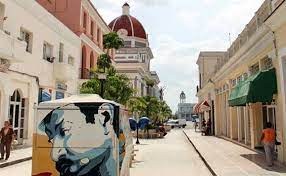
CIENFUEGOS CITY, CUBA DECLARED A WORLD HERITAGE BY UNESCO. PHOTOS
download (12)

The Cuban city of Cienfuegos preserves one of the most homogeneous urban centers on the Island. It is full of classical facades and slender columns that provide an atmosphere reminiscent of 19th-century France, which inspired it. In fact, the city was founded in 1819 by a French emigrant, don Luis D’Clouet.

Cienfuegos is known as the “Pearl of the South of Cuba” and not a surprise since this small city has managed to seduce travelers from all over the world. In the bay itself, you can read a sign that says “The city I like best”, quoting the words of the famous singer Benny Moré.

Cienfuegos is open to the sea and is situated right on Cuba’s largest natural bay. The whole city enjoys an enviable coastal environment, which, along with the tranquility are some keys that have been declared a World Heritage Site by UNESCO in 2005.

Cienfuegos it is located about 250 km (160 mi) from Havana and has a population of 150,000. The city is dubbed La Perla del Sur (Pearl of the South). Although Cienfuegos literally translates to “one hundred fires” (cien, “one hundred”; fuegos, “fires”), the city takes its name from the surname of José Cienfuegos, Captain General of Cuba (1816–19).

In 2005, UNESCO inscribed the Urban Historic Centre of Cienfuegos on the World Heritage List, citing Cienfuegos as the best extant example of early 19th century Spanish Enlightenment implementation in urban planning. The downtown area contains six buildings from 1819–50, 327 buildings from 1851–1900, and 1188 buildings from the 20th century. There is no other place in the Caribbean that contains such a remarkable cluster of Neoclassical structures.

CITY HISTORY
The area where the city lies was identified as Cacicazgo de Jagua by early Spanish conquistadors. It was originally settled by Taino indigenous people. Cacicazgo translates from the Taino language as “chiefdom”. Cacicazgo de Jagua was therefore the chiefdom of Chief Jagua.

The city was later settled by French immigrants from Bordeaux and Louisiana led by Don Louis de Clouet on April 22, 1819.[1] The settlers named the city Fernandina de Jagua in honor of King Ferdinand VII of Spain and Chief Jagua.[8] The settlement successively became a town (villa) in 1829, renamed for José Cienfuegos, Captain General of Cuba (1816–19), and a city in 1880. Many of the streets in old town reflect French origins in their names: Bouyón, D’Clouet, Hourruitiner, Gacel, and Griffo, for instance.

Cienfuegos port, despite being one of the latest settlements established during the colonial era, soon grew to be a powerful town due to the fertile fields surrounding it and its position on the trade route between Jamaica and South American cities to the southeast and the hinterland provincial capital of Santa Clara to the northeast. Its advantageous trading location on the historically eponymous Bay of Jagua was used by the Cuban sugar oligarchy when a railroad was built between both cities between 1853 and 1860.[9][10]

Near Cienfuegos was the scene of a battle during the Spanish–American War on May 11, 1898, between American Marines attempting to sever underwater Spanish communication lines and the Spanish defenders.

download (15)

GEOGRAPHY
Near the entrance to Cienfuegos Bay is Castillo de Jagua (full name: Castillo de Nuestra Señora de Los Angeles de Jagua), a fortress erected in 1745 for protection against Caribbean pirates.

Cienfuegos, one of the chief seaports of Cuba, is a center of the sugar trade as well as coffee and tobacco. While sugarcane is the chief crop, local farmers also grow coffee.

DEMOGRAPHICS
In 2004, the municipality of Cienfuegos had a population of 163,824. With a total area of 333 km2 (129 sq mi), it has a population density of 492.0/km2 (1,274/sq mi).

ATTRACTIONS
El Nicho Falls, Cienfuegos
Castillo de Nuestra Señora de Los Ángeles de Jagua – fortress
Arco de Triunfo – the only Arco de Triunfo in Cuba
Catedral de Nuestra Señora de la Purísima Concepción – cathedral with stained glass work, built 1833–1869
Delfinario – dolphins and sea lions in a saltwater lagoon
Jardín Botánico de Cienfuegos – 97 hectares of botanic garden
Museo Provincial – furniture and porcelain museum
Palacio de Valle – built 1913–1917 in neo-gothic style
Palmira Yorubá Pantheon – museum of religious afro-catholic syncretism
Parque José Martí – park in Plaza de Armas
Teatro Tomás Terry – colonial style theater
Palacio Ferrer
Malecón de Cienfuegos
Paseo del Prado – the longest street in Cuba, full of colorful buildings
Quintero (cigar) cigar factory
The University of Cienfuegos “Carlos Rafael Rodríguez” (UCF) – the province’s high education institution
Rancho Luna Beach
Laguna del Cura – an authentic fishing boat lagoon.

download (9)

NOTABLE PEOPLE
José Abreu, MLB player for the Chicago White Sox
María Conchita Alonso, a Cuban-Venezuelan-American singer; was born here
Yordany Álvarez, MLS player for Real Salt Lake
Joe Azcue, MLB player for the Cincinnati Reds, Kansas City Royals, Cleveland Indians, Boston Red Sox, California Angels, and Milwaukee Brewers
Luis Posada Carriles, a Cuban anti-Castro activist born here
Yoán Moncada, MLB player for the Chicago White Sox
Benny Moré, Cuban singer
Olance Nogueras Rofes, Cuban journalist
Gina Pellón, a Cuban painter; lives in exile in Paris
Yasiel Puig, MLB player for the Cleveland Indians; was born here
Osmel Sousa, Cuban-Venezuelan entrepreneur and former president of the Miss Venezuela Organization.
José Tartabull, MLB player for the Boston Red Sox
Cristóbal Torriente, Cuban-born Hall of Fame baseball player

Agencies/ Wiki/ Cinefuegos,CubaHist./ Extractos/ Excerpts/ Internet Photos/ Arnoldo Varona/ www.TheCubanHistory.com
THE CUBAN HISTORY, HOLLYWOOD.

* RECOMIENDENOS A SUS AMISTADES * PREFIERA A NUESTROS SPONSORS *


* RECOMIENDENOS A SUS AMISTADES * PREFIERA A NUESTROS SPONSORS *

logo (4)

ANA DE ARMAS: “Cuba es mi casa porque es donde está mi Pueblo”. Cuenta su historia. * ANA DE ARMAS: “Cuba is my home because it’s where my People are”. Tells her Story. Videos. Photos.

MV5BOWFlNjc4NzgtMGFkZC00N2FkLWFmNWItMWMxZGNiMDdjNmQ2XkEyXkFqcGdeQXVyODk4OTc3MTY@._V1_SX700_CR0,0,700,393_AL_

Conocí a Ana de Armas durante el rodaje de Una rosa de Francia, que ella protagonizaba, dirigida por Manuel Gutiérrez Aragón. En ese momento, el notable cineasta había augurado el éxito de la joven actriz. En Cuba actuó en tres películas y ahora en Hollywood trabaja en la cuarta.

Ana es muy conocida en España, donde ha desarrollado gran parte de su carrera. Desde su debut allí hace más de una década, ha tenido papeles en una docena de películas y varias series de televisión, disfrutando de un gran éxito. Ana es solicitada por directores de todas partes, desde España hasta Hollywood, desde América Latina hasta Europa. Ahora reside en Hollywood, la llamada meca del cine, para continuar su carrera. Es la primera actriz cubana en ingresar a la élite de la codiciada industria estadounidense. Nacida en Santa Cruz del Norte a fines de la década de 1980, defiende su cubanía donde quiera que esté. Ella también ha estado en los titulares de este lado del mundo, y ahora lo es.

VIDEOS- Ana actuación en “Una Rosa de Francia” en Cuba…(Cortos).th

Ana de Armas nos cuenta su vida desde Cuba hasta Hollywood:

Cuando aún era estudiante en la Escuela Nacional de Arte (ENA) de Cuba, fue seleccionada por Manuel Gutiérrez Aragón para protagonizar Una rosa de Francia, y ella comentó:
“Estoy en deuda con Una rosa de Francia, Manuel Gutiérrez Aragón, Jorge Perugorría, Tamara Morales (directora de casting) y todos los involucrados en ese proyecto, por poder descubrir con tanta libertad y pasión lo que significa actuar en la película. Esa película me enseñó todas las reglas de un rodaje: disciplina, estudio, trasnochadas, respeto a todos los miembros del equipo y, sobre todo, a darme cuenta de la suerte que tenemos de hacer lo que amamos y vivir de ello. experiencia que a los 16 años te puede asustar o te puede dar coraje y hambre de más. Y yo quería comerme el mundo. Además, me abrió mucho la puerta al mercado español, que luego me llevó me incorporó y me dio trabajo durante muchos años”.

¿Trabajando con Fernando Pérez, uno de los cineastas más célebres de Cuba?. “Fernando Pérez es una de las mejores personas que he conocido. Es un hombre con un corazón enorme, y eso siempre se refleja en sus películas. Todavía recuerdo el día que hice la audición como si fuera hoy. Fernando le susurró algo a yo, creo que para explicar la escena, la verdad no estoy seguro, porque lo que me quedó fue el tono de su voz, dulce y melancólica. Su voz fue mi motivación. Stella Maris fue mi segunda experiencia en el cine, junto con Luis Alberto García, otra de las personas que más quiero y que más me ayudó cuando estaba empezando, fue una experiencia breve, tuve una pequeña parte, pero di lo mejor de mí y disfruté mucho. , No tenía permiso para filmar de la escuela de teatro, así que tuve que escaparme un montón de veces para filmar por la noche, y al día siguiente me quedaba dormido en clase. ¡Valió la pena!”

ELLA HABLÓ DE SU VIAJE ORIGINAL A ESPAÑA…
“Fui a España cuando terminé la escuela de arte dramático. Bueno, técnicamente no terminé la escuela, tuve que irme antes de presentar mi tesis final. Tenía 18 años y sentí que era el momento adecuado para seguir adelante. Mi mis padres me apoyaron en todo, siempre lo han hecho, no recuerdo haberlo pensado mucho, en parte porque no sabía lo que significaba vivir y sobrevivir en otro país, y en parte porque casi nunca cuestiono mi instinto. Iba con 200 euros en el bolsillo que había ahorrado de la última película que hice en Cuba, El edén perdido, y les dije a mis padres que volvería cuando se me acabara el dinero. sucedió; se me acabó el dinero en una semana y no volví”.

Cuando eligió ‘El Internado’, no siendo consciente del éxito que le traería, respondió:
“Conocí al director de casting de El Internado dos semanas después de mi llegada a Madrid. Y creo y puedo decir que ni él, ni yo, ni nadie, podíamos imaginar el éxito que iba a tener esa serie. Y por supuesto, yo no tenía ni idea de lo que eso significaría para mí personalmente”.

Cuando le preguntamos qué significaba para ella ser cubana, respondió:
“Uno simplemente no puede negar lo que es. Haber nacido en Cuba es parte de mi identidad, no una etiqueta. Siempre he estado orgulloso de haber nacido y crecido allí, por la importancia personal que tiene para mí, la conexión emocional, porque respeto mis raíces y mis padres. Porque mis buenas y malas experiencias me formaron y me convirtieron en lo que soy hoy. Yo estaría tan orgulloso de haber nacido en otro país si tuviera los mismos padres y amigos que tengo en Cuba, con los que crecí. Eso es lo que Cuba significa para mí, Cuba es mi casa porque es donde está mi gente”.

Cuando se le preguntó qué significó para ella mudarse a Hollywood:
“Me mudé a Los Ángeles porque mi instinto me dijo que era hora de mudarme, ponerme a prueba, soñar en grande. No estaba completamente convencida de estar lista para el desafío, pero pensé que si seguía reflexionando, nunca me parecia el momento adecuado, asi que fui, para mi empezar de nuevo es algo bueno, es otra oportunidad, es aprender, es demostrarme que soy fuerte y puedo con todo, es la ambicion de querer ser una mejor persona y artista, y no estoy de acuerdo con eso. Hollywood es duro, la industria es gigantesca y hay una probabilidad igual de que no te vean y que te pasen por encima. Los Ángeles Puede ser una ciudad muy solitaria, pero si tienes las ideas claras y trabajas duro, se te pueden abrir grandes oportunidades. El idioma y ser aceptado culturalmente no eran las cosas que más me preocupaban. Por ahora, parece que todo va bien. , aunque nunca se sabe, nada es seguro”.

keanu-reeves-y-ana-de-armas11

Cuando se le preguntó qué significaba trabajar con actores famosos como Robert de Niro y Keanu Reeves, dijo.
“Es difícil de explicar… Es literalmente una locura. Por supuesto, lo he soñado mil veces, pero nunca pensé que se haría realidad. Son actores que admiro desde que era un niño; viendo sus películas. Ahora, un rato después, estoy en el mismo plató, compartiendo escenas con ellos. Es difícil de procesar. Me siento inspirado como si tuviera algo que aportar. Me siento orgulloso, siento que mi carrera está creciendo. , poco a poco, pero al mismo tiempo es vertiginoso. No sé, supongo que es una señal para no rendirse”.

¿Qué significa lidiar con la fama y el éxito?, finalizó diciendo:
“La fama y el éxito nunca son una constante, al igual que las personas que quieren estar cerca de ti o desaparecer según su conveniencia. Eso siempre lo he tenido muy claro y siempre le he dado la importancia justa. Creo que los primeros años de mi carrera fueron los de más cambios y los más críticos en cuanto al impacto de la fama en mi vida personal, pero el hecho de que siempre estuve conectado con mis padres y amigos y las muchas visitas que recibí He hecho a Cuba me han mantenido cerca de la realidad. Mi familia es lo que me hace pensar todos los días en lo que es realmente importante en mi vida. Mi vida no ha cambiado mucho, aunque a veces es difícil ignorarlo cuando la gente mira te sigo por la calle, trato de mantenerme en mi rutina y en mi mundo. Ahora en Estados Unidos, todo vuelve a la calma, aquí, vuelvo a ser invisible. Así que lo disfruto mucho, porque lo imagino. no permanecerá así para siempre. Cuando las cosas cambien, veremos qué sucede, pero ahora sé qué ex. pecto, así que no hay forma de que sea demasiado para mí”.

* RECOMIENDENOS A SUS AMISTADES * PREFIERA A NUESTROS SPONSORS *

* RECOMIENDENOS A SUS AMISTADES * PREFIERA A NUESTROS SPONSORS *

logo (4)

ANA DE ARMAS: “CUBA IS MY HOME BECAUSE IT’S WHERE MY PEOPLE ARE”. TELLS HER STORY. VIDEOS. PHOTOS

images (43)

I first met Ana de Armas during the filming of Una rosa de Francia (A Rose from France), in which she starred, directed by Manuel Gutiérrez Aragón. At the time, the notable filmmaker had predicted success for the young actress. In Cuba, she acted in three movies, and now in Hollywood, she’s working on her fourth.

Ana is very well-known in Spain, where she has spent a large part of her career. Since her debut there more than a decade ago, she has had parts in a dozen films and several television series, enjoying great success. Ana is in demand by directors from all over, from Spain to Hollywood, Latin America to Europe. She now resides in Hollywood, the so-called movie mecca, to continue her career. She is the first Cuban actress to enter the elite of the coveted U.S. industry. Born in Santa Cruz del Norte in the late 1980s, she defends her Cuban-ness wherever she may be. She’s been making headlines on this side of the world, too, and now it’s.

VIDEOS- Ana film “Blonde” Marilyn Monroe Story. (Trailer).th

Ana de Armas tell us of her life from Cuba to Hollywood:

When you were still a student at Cuba’s National Art School (ENA), she was selected by Manuel Gutiérrez Aragón to star in Una rosa de Francia, and she commented:
“I am in debt to Una rosa de Francia, Manuel Gutiérrez Aragón, Jorge Perugorría, Tamara Morales (casting director), and everyone involved in that project, for being able to discover so freely and so passionately what it means to act in the film. That movie taught me all the rules of a film shoot: discipline, study, late nights, respect for all team members, and above all, to realize how lucky we are to do what we love and make a living from it. When you experience that at the age of 16, it can scare you or it can fill you with courage and hunger for more. And I wanted to eat up the world. Moreover, it really opened the door for me to the Spanish market, which later took me in and gave me work for many years”.

Working with Fernando Pérez, one of Cuba’s most celebrated filmmakers?. “Fernando Pérez is one of the best people I’ve ever known. He is a man with an enormous heart, and that is always reflected in his films. I still remember the day I auditioned as if it were today. Fernando whispered something to me, I think to explain the scene; I’m honestly not sure, because what stayed with me was the tone of his voice, sweet and melancholic. His voice was my motivation. Stella Maris was my second experience in film, along with Luis Alberto García, another of the people I love most, and who helped me the most when I was starting out. It was a brief experience, and I had a small part, but I gave it my best and I really enjoyed myself. That time, I didn’t have permission to film from drama school, so I had to sneak out a bunch of times to film at night, and then the next day I would fall asleep in class. It was worth it!”

SHE TALKED HER ORIGINAL TRIP TO SPAIN…
“I went to Spain when I finished drama school. Well, technically I didn’t finish school; I had to leave before I presented my final thesis. I was 18 years old and I felt like the time was right to move on. My parents supported me in everything, they always have. I don’t remember having thought it over much, partly because I didn’t know what it meant to live and survive in another country, and partly because I almost never question my instinct. I went with 200 euros in my pocket that I’d saved from the last film that I made in Cuba, El edén perdido, and I told my parents that I’d be back when my money ran out. Of course, that didn’t happen; my money ran out in a week, and I didn’t go back”.

When she had chosen ‘El Internado’, she wasn’t aware of the success that it would bring to her, she responded:
“I met the casting director for El Internado two weeks after I got to Madrid. And I thinkand that I can say that neither he nor I, nor anybody else, could have imagined what a hit that series would be. And of course, I had no idea whatsoever about what that would mean for me personally”.

knock-knock-image-3

Asked what being Cuban mean to her she answered:
“You simply can’t deny what you are. Having been born in Cuba is part of my identity, not a label. I’ve always been proud of having been born and raised there, because of the personal importance it has for me, the emotional connection, because I respect my roots and my parents. Because my good and bad experiences shaped me and made me into who I am today. I would be just as proud to have been born in another country if I had the same parents and friends that I have in Cuba, the ones I grew up with. That is what Cuba means to me; Cuba is my home because it’s where my people are”.

Asked what did mean to her to move to Hollywood:
“I moved to Los Angeles because my instinct told me it was time to move, to test myself, to dream bigger. I wasn’t completely convinced that I was ready for the challenge, but I thought that if I kept mulling it over, it would never seem like the right time, so I went. For me, starting over is a good thing; it’s another opportunity; it’s learning; it’s demonstrating to myself that I’m strong and I can do anything. It’s the ambition of wanting to be a better person and artist, and I’m not afrwith aid of that. Hollywood is hard; the industry is gigantic and there’s an equal probability that they won’t see you and that they’ll step all over you. Los Angeles can be a very lonely city, but if you have clear ideas and work hard, big opportunities can open up for you. The language and being accepted culturally were not the things I was most worried about. For now, it seems like everything’s going well, although you never know; nothing’s for sure”.

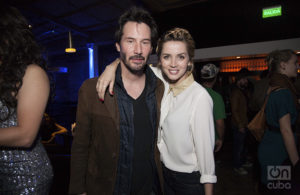
Asked what did mean working with famous actors like Robert de Niro and Keanu Reeves, she said.
“It’s hard to explain…. It’s literally insane. Of course, I’ve dreamed of it a thousand times, but I never thought it would come true. They are actors that I’ve admired since I was a child; I grew up watching their movies. Now, a little while later, I’m on the same set, sharing scenes with them. It’s difficult to process. I feel inspired like I have something to contribute. I feel proud; I feel like my career is growing, little by little, but at the same time, it’s dizzying. I don’t know; I suppose it’s a sign not to give up”.

What does it means dealing with fame and success, she finished by saying:
“Fame and success are never a constant, just like the people who want to be around you or disappear according to their convenience. I’ve always been very clear on that, and I’ve always given it the right amount of importance. I think that the early years of my career were the ones with the most change, and the most critical in terms of the impact of fame on my personal life. But the fact that I always stayed connected with my parents and friends and the many visits I’ve made to Cuba have kept me close to reality. My family is what makes me think every day about what’s really important in my life. My life hasn’t changed much, although at times it is hard to ignore it when people look at you or follow you in the street; I try to stick to my routine and to my world. Now in the United States, everything’s calm again; here, I’m invisible again. So I’m really enjoying that, because I imagine it won’t stay that way forever. When things change, we’ll see what happens, but now I know what to expect, so there’s no way it will be too much for me”.

Agencies/ OnCuba/ Cecilia Crespo/ AnadeArmasBio./ Extractos/ Excerpts/ Internet Photos/ YouTube/ Arnoldo Varona/ www.TheCubanHistory.com
THE CUBAN HISTORY, HOLLYWOOD.

* RECOMIENDENOS A SUS AMISTADES * PREFIERA A NUESTROS SPONSORS *
* RECOMIENDENOS A SUS AMISTADES * PREFIERA A NUESTROS SPONSORS *

logo (4)

XIOMARA ALFARO, “La Alondra de la Canción” nos deja con su Recuerdo. VIDEOS. PHOTOS. * XIOMARA ALFARO, “The Skylark of the Song” leaves us with her Memories. PHOTOS.

s-l500

Xiomara Alfaro González nació en La Habana, Cuba el 11 de mayo de 1930. Fue una estrella de la escena musical cubana de la década de 1950. Se hizo famosa como cantante de boleros en parte por la forma en que los cantaba con su voz de soprano. Era conocida como “El Ruiseñor de la Cancion” y como “La Alondra de la Cancion”.

Marcó un estilo propio en la canción popular cubana, con su repertorio de boleros en su voz de soprano de coloratura de impresionantes agudos, artista contemporánea de Olga Guillot , Celia Cruz y Omara Portuondo.

Como sucedió con casi la gran mayoría de las cantantes cubanas, Xiomara Alfaro se ganó un concurso en una radio cubana y desde ese momento quedó marcado su destino como cantante.

Interprete de la música romántica, del bolero en especial, que cubrió toda una etapa de la canción popular cubana y latinoamericana, que gozó de una gran y justificada admiración por parte de varias generaciones de hispanoparlantes.

VIDEOS- Xiomara Alfaro canta “Siboney”…th

Su experiencia como actriz fue en teatro musical, cabaret, radio y televisión. Una soprano de coloratura, su interpretación de la Siboney del compositor y pianista cubano Ernesto Lecuona fue la favorita del compositor.

CARRERA ARTISTICA…

Se inició en revistas musicales en los años 50 y en espectáculos de cabaret, actuó en Tropicana y realizó números espectáculos en diversos países del mundo, editó más de 28 discos, alguno con la colaboración de Bebo Valdés o Ernesto Duarte Brito, entre otros.

Ella aparece en 28 álbumes grabados para RCA Victor y otros sellos a lo largo de su carrera. Estaba fue casada con el pianista Rafael Benítez. La carrera de Alfaro la llevó del Tropicana de La Habana al Carnegie Hall de Nueva York y al Moulin Rouge de París.

Hizo una gira con la coreógrafa de vanguardia Katherine Dunham, con quien apareció, junto con las estrellas Sylvana Mangano, Vittorio Gassman y Shelly Winters, en la película Mambo de 1954, filmada en Italia. Alfaro también protagonizó Olé…Cuba!, una película de 1957 que también contó con la participación de Celia Cruz.

Xiomara se fue de Cuba a los Estados Unidos en 1960. Su estilo propio y singularidad no se había presentado en la interpretación de la canción popular cubana, orientando su actividad hacia el bolero, para lo que se le escogió un repertorio que se adaptada a su asombrosa voz de soprano, la que le permitía hacer impresionantes registros agudos, lo que fue casi inmediatamente aceptado por los amantes del bolero, ya que se trataba de algo novedoso y con características musicales muy sonoras adornadas con esas notas tan sorprendentes, mas propio de una interprete del bel canto que de una cantante de música popular.

download (7)

VIDA PERSONAL…
Casada con el pianista panameño Rafael Benítez, quien ha sido su arreglista y director de orquesta artístico colaborando en la grabación de sus discos. No dejo descendencia.

Falleció en Cape Coral, Fla. el 24 de junio de 2018 a la edad de 88 años.

* RECOMIENDENOS A SUS AMISTADES * PREFIERA A NUESTROS SPONSORS *

* RECOMIENDENOS A SUS AMISTADES * PREFIERA A NUESTROS SPONSORS *

logo (2)

XIOMARA ALFARO, “THE SKYLARK OF THE SONG” LEAVES US WITH HER MEMORIES. PHOTOS

download (5)

Xiomara Alfaro González was born in Havana, Cuba on May 11, 1930. She was a star in the Cuban music scene of the 1950s. She became famous as a bolero singer in part because of the way she sang boleros in her singing voice. soprano. She was known as ‘El Ruiseñor de la Cancion’ (The Nightingale of Music) and as ‘La Alondra de la Cancion’ (The Lark of Music).

She marked her own style in Cuban popular song, with her repertoire of boleros in her impressive high-pitched coloratura soprano voice, a contemporary artist of Olga Guillot, Celia Cruz, and Omara Portuondo.

As happened with almost the vast majority of Cuban singers, Xiomara Alfaro won a contest on Cuban radio, and from that moment her destiny as a singer was marked.

She interprets romantic music, especially bolero, which covered an entire stage of Cuban and Latin American popular songs, which she enjoyed great and justified admiration from several generations of Spanish speakers.

Her experience as an actress was in musical theater, cabaret, radio, and television. A coloratura soprano, her interpretation of Siboney by Cuban composer and pianist Ernesto Lecuona was the composer’s favorite.

ARTISTIC CAREER…

He started in music magazines in the 50s and in cabaret shows, he performed at the Tropicana and performed in many shows in various countries around the world, he released more than 28 albums, some with the collaboration of Bebo Valdés or Ernesto Duarte Brito, among others.

She appears on 28 albums recorded for RCA Victor and other labels throughout her career. She was married to the pianist Rafael Benítez. Alfaro’s career took her from the Tropicana in Havana to Carnegie Hall in New York and the Moulin Rouge in Paris.

download (6)

She toured with avant-garde choreographer Katherine Dunham, with whom she appeared, along with stars Sylvana Mangano, Vittorio Gassman, and Shelly Winters, in the 1954 film Mambo, shot in Italy. Alfaro also starred in Olé…Cuba!, a 1957 film that also featured Celia Cruz.

Xiomara left Cuba for the United States in 1960. Her own style and singularity had not been present in the interpretation of the Cuban popular song, directing her activity towards the bolero, for which a repertoire was chosen that was adapted to her amazing soprano voice, which allowed her to make impressive high registers, which was almost immediately accepted by bolero lovers since it was something new and with very sonorous musical characteristics adorned with those surprising notes, more typical of an interpreter of the bel canto than of a singer of popular music.

PERSONAL LIFE…

She is married to the Panamanian pianist Rafael Benítez, who has been her arranger and her artistic conductor, collaborating in the recording of her albums. She left no offspring.

She passed away in Cape Coral, Fla. on June 24, 2018, at the age of 88.

Agencies/ Wiki/ Ecured/ XiomaraAlfaroBio./ Extractos/ Excerpts/ Internet Photos/ YouTube/ Arnoldo Varona/ www.TheCubanHistory.com
THE CUBAN HISTORY, HOLLYWOOD.

* RECOMIENDENOS A SUS AMISTADES * PREFIERA A NUESTROS SPONSORS *

* RECOMIENDENOS A SUS AMISTADES * PREFIERA A NUESTROS SPONSORS *

logo (2)