LA ONU LANZA programa de 42 Millones de Dolares para socorrer a Cuba. PHOTOS. * THE UNITED NATIONS launches a 42-Million-Dollar Program to Help Cuba. PHOTOS.

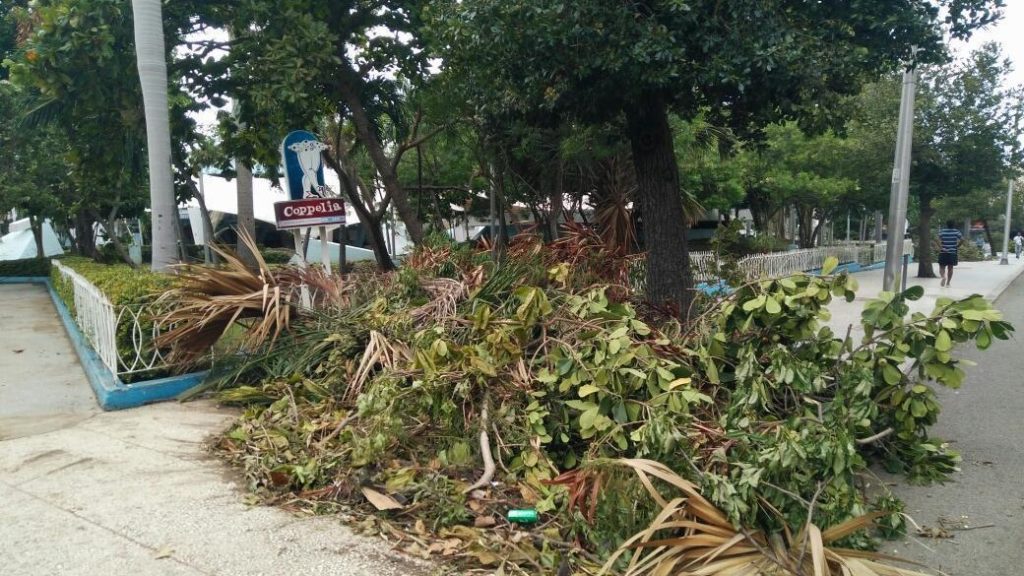
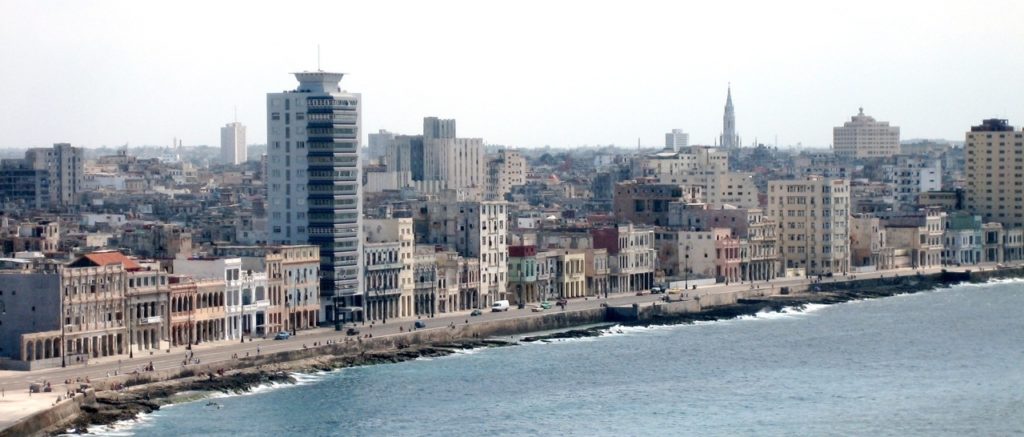
Daños del huracán Ian en la heladería Coppelia de La Habana. DIARIO DE CUBA

Daños del huracán Ian en la heladería Coppelia de La Habana. DIARIO DE CUBA

LA ONU LANZA PROGRAMA DE 42 MILLONES DE DOLARES PARA SOCORRER A CUBA. PHOTOS.

El plan apoyaría la respuesta en la vivienda, la salud, la educación, la seguridad alimentaria y el acceso a agua potable y electricidad despues del Huracan por Cuba.

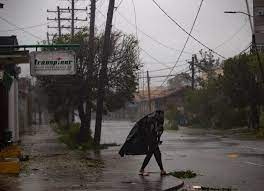
LA ONU PRESENTÓ el miércoles un plan de acción de 42 millones de dólares con el que espera apoyar a unas 800.000 personas afectadas en Cuba por el huracán Ian, tanto a corto plazo, con ayuda de emergencia, como a medio plazo, para reparar daños.

Según el portavoz Stéphane Dujarric, con esta iniciativa Naciones Unidas busca respaldar el trabajo de las autoridades cubanas para dar respuesta a las necesidades de los ciudadanos tras el paso de Ian, que a finales de septiembre arrasó el extremo occidental de la Isla.

La organización explicó que el plan apoyará la respuesta en ámbitos como la vivienda, la salud, la educación, la seguridad alimentaria y el acceso a agua potable y electricidad.

En total, la ONU espera que se beneficien unas 798.000 personas, principalmente en las provincias de Pinar del Río y Artemisa, los territorios más afectadas por el huracán.

Para financiar el plan, Naciones Unidas ha destinado ya una partida de 7,8 millones de dólares de su Fondo Central para Respuesta a Emergencias y 3,7 millones del presupuesto destinado a su equipo en Cuba.

Esa cifra se suma a una suma de un millón de euros en ayuda humanitaria anunciado días atrás por la Unión Europea (UE) “para ayudar a las personas afectadas” por el impacto del fenómeno meteorológico.

Según dijo el comisario de Gestión de Crisis de la organización, Janez Lenarcic: “La UE se solidariza plenamente con el pueblo cubano en este momento difícil. El curso del huracán Ian causó un impacto devastador en varias zonas del país. Nuestra ayuda de emergencia ayudará a brindar apoyo vital a los afectados directamente en el terreno”.
download (50)

La financiación se proporcionará, señaló la nota oficial, “a los socios humanitarios de la UE que operan sobre el terreno para satisfacer las necesidades inmediatas de los más vulnerables, incluso mediante la provisión de servicios temporales de alojamiento, agua y saneamiento de emergencia”.

De acuerdo con cifras oficiales, Ian dejó unas 100.000 viviendas afectadas en la Isla.

Casi 8.000 personas seguían evacuadas hasta el viernes último, 6.618 de ellas en casas de familiares y 1.043 en centros de evacuación.

En Pinar del Río el servicio eléctrico había sido restituido el martes a menos de la mitad del territorio, según se dijo en una reunión de Gobierno.

Solo en esa provincia hay 83.707 viviendas afectadas, 9.354 con derrumbe total y 9.418 con derrumbe parcial. De ellas, 2.906 son albergues de personas afectadas por eventos meteorológicos previos. Los derrumbes totales o parciales de techos ascienden a 43.104, el 51% de las afectaciones al fondo habitacional.

Varias familias afectadas por el paso de Ian ya habían perdido su vivienda hace 20 años, cuando en 2002 el huracán Lili azotó Pinar del Río. Pese a los donativos de diversos países y a las promesas del Gobierno, su situación seguía siendo precaria hasta la fecha.

“Este el mayor desastre en la historia de Pinar del Río, mayor que los ciclones Alberto, Lili, Isidoro y Gustav. Los más viejos no recuerdan haber presenciado tanto desastre, a pesar de que Pinar del Río es tierra de ciclones”, dijo a DIARIO DE CUBA Enely Ricardo, manicure pinareña de 36 años.

“Aquí, en Pinar del Río, no se hizo nada para prepararnos para el paso del huracán”, lamentó. “Todo fue Código y más Código (de las Familias), pero no se podó ni una mata como otros años”.

Tampoco se podaron árboles en La Habana, según contaron vecinos de la capital a DIARIO DE CUBA.

“En el centro de Pinar del Río no se evacuó a nadie y cada cual decidió irse a casas más seguras de familiares”, añadió Ricardo.

“Ahora es que empieza de verdad el ciclón silencioso para nosotros: qué vamos a comer, cómo vamos a vivir sin electricidad, sin nada, y cómo vamos a recuperar lo que perdimos si no hay de nada”, lamentó.
* RECOMIENDENOS A SUS AMISTADES * PREFIERA A NUESTROS SPONSORS *

* RECOMIENDENOS A SUS AMISTADES * PREFIERA A NUESTROS SPONSORS *

logo (2)

THE UNITED NATIONS LAUNCHES A 42-MILLION-DOLLAR PROGRAM TO HELP CUBA. PHOTOS.

The plan would support the response in housing, health, education, food security, and access to drinking water and electricity after Hurricane Cuba.
download (52)

The UN PRESENTED on Wednesday a $42 million action plan with which it hopes to support some 800,000 people in Cuba affected by Hurricane Ian, both in the short term, with emergency aid, and in the medium term, to repair the damage.

According to spokesman Stéphane Dujarric, with this initiative, the United Nations seeks to support the work of the Cuban authorities to respond to the needs of citizens after the passage of Ian, which devastated the western end of the island at the end of September.

The organization explained that the plan will support the response in areas such as housing, health, education, food security, and access to drinking water and electricity.

In total, the UN expects that some 798,000 people will benefit, mainly in the provinces of Pinar del Río and Artemisa, the territories most affected by the hurricane.

To finance the plan, the United Nations has already allocated an item of 7.8 million dollars from its Central Fund for Emergency Response and 3.7 million from the budget allocated to its team in Cuba.

That figure is added to a sum of one million euros in humanitarian aid announced days ago by the European Union (EU) “to help people affected” by the impact of the meteorological phenomenon.

According to the organization’s Commissioner for Crisis Management, Janez Lenarcic: “The EU stands in full solidarity with the Cuban people at this difficult time. The course of Hurricane Ian caused a devastating impact in several areas of the country. Our emergency aid will help to provide vital support to those directly affected on the ground.

The funding will be provided, the official note noted, “to EU humanitarian partners operating on the ground to meet the immediate needs of the most vulnerable, including through the provision of temporary emergency shelter, water, and sanitation services.”
download (49)

According to official figures, Ian left some 100,000 homes affected on the island.

Almost 8,000 people were still evacuated until last Friday, 6,618 of them in relatives’ houses and 1,043 in evacuation centers.

In Pinar del Río, the electricity service had been restored on Tuesday to less than half of the territory, according to what was said at a government meeting.

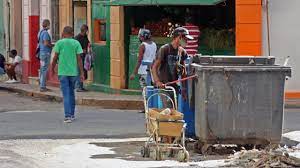
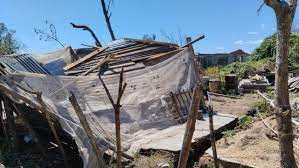
In that province alone there are 83,707 affected homes, 9,354 with total collapse and 9,418 with partial collapse. Of these, 2,906 are shelters for people affected by previous weather events. The total or partial collapses of roofs amount to 43,104, 51% of the affectation to the housing fund.

Several families affected by Ian’s passage had already lost their homes 20 years ago when Hurricane Lili hit Pinar del Río in 2002. Despite donations from various countries and promises from the Government, their situation remained precarious to date.

“This is the greatest disaster in the history of Pinar del Río, greater than the cyclones Alberto, Lili, Isidoro, and Gustav. The oldest does not remember having witnessed such a disaster, despite the fact that Pinar del Río is a land of cyclones,” he told DIARIO DE CUBA Emily Ricardo, a 36-year-old manicurist from Pinar del Río.

“Here, in Pinar del Río, nothing was done to prepare for the passage of the hurricane,” he lamented. “Everything was Code and more Code (of the Families), but not a single bush was pruned like other years.”

Nor were trees pruned in Havana, according to what residents of the capital told DIARIO DE CUBA.

“In the center of Pinar del Río no one was evacuated and everyone decided to go to the safer homes of relatives,” added Ricardo.

“Now the silent cyclone really begins for us: what are we going to eat, how are we going to live without electricity, with nothing, and how are we going to recover what we lost if there is nothing,” he lamented.

Agencies/ DDC/ CubaHoy/ Extractos/ Excerpts/ Internet Photos/ Arnoldo Varona/ www.TheCubanHistory.com
THE CUBAN HISTORY, HOLLYWOOD.
* RECOMIENDENOS A SUS AMISTADES * PREFIERA A NUESTROS SPONSORS *

* RECOMIENDENOS A SUS AMISTADES * PREFIERA A NUESTROS SPONSORS *

logo (4)

ESTADOS UNIDOS anuncia expulsión de Venezolanos que entren por México. PHOTOS. * The UNITED STATES announces the Expulsion of Venezuelas who enter Through México. PHOTOS.

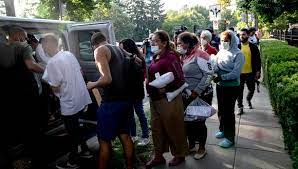
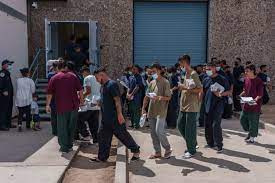
El Gobierno estadounidense aceptará en un principio a 24.000 personas, aseguró un funcionario. (EFE)

El Gobierno estadounidense aceptará en un principio a 24.000 personas, aseguró un funcionario. (EFE)

ESTADOS UNIDOS ANUNCIA LA EXPULSION DE VENEZOLANOS QUE ENTREN POR MEXICO. PHOTOS.

Un nuevo programa migratorio concede estatus temporal a quienes llegan en avión con el aval de un estadounidense que acredite que dispone de recursos.

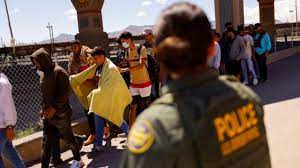
ESTADOS UNIDOS anunció este miércoles nuevas medidas para controlar la migración venezolana: un programa que da estatus legal por dos años a quienes llegan en avión y la expulsión inmediata de la mayoría de quienes crucen la frontera por México.

El Departamento de Seguridad Nacional (DHS) informó de la creación de un nuevo alivio migratorio para los venezolanos, similar al que ya existe para los ciudadanos de Ucrania, que concede un estatus temporal de dos años a quienes dispongan de un patrocinador en EE UU.

En paralelo, el DHS devolverá a México a la mayoría de venezolanos que sean interceptados después de atravesar la frontera sur; las expulsiones serán llevadas a cabo bajo el Título 42, una normativa de salud pública impuesta al inicio de la pandemia y heredada de la Administración del expresidente Donald Trump (2017-2021).

Las medidas tiene el objetivo de “reducir el número de personas que llegan a la frontera” de manera irregular y crear proceso migratorio “más ordenado” para los venezolanos que huyen de la “crisis humanitaria y económica de su país”, dijo este miércoles un funcionario del Gobierno estadounidense en una llamada de prensa.

Entre octubre de 2021 y agosto de este año, más de 150.000 venezolanos han sido arrestados en la frontera sur de EE UU, en comparación con los 50.499 en el mismo periodo del año pasado.

download (46)

En virtud de este programa migratorio, del que están excluidos los deportados de EE UU en los últimos cinco años o las personas que hayan entrado a Panamá o México de manera irregular, el Gobierno estadounidense aceptará en un principio a 24.000 personas, acotó el funcionario.

Para aplicar al programa, los venezolanos interesados deberán demostrar que tienen un patrocinador en EE UU que pueda acreditar que tiene los recursos financieros por el periodo de tiempo que los migrantes vayan a residir en el país.

Además, los beneficiarios deberán pasar una evaluación de “seguridad nacional y seguridad pública”, indicó DHS en un comunicado.

El anuncio de EE UU llega en medio de un aumento de la llegada de venezolanos a la frontera con México. Entre octubre de 2021 y agosto de este año, más de 150.000 venezolanos han sido arrestados en la frontera sur de EE UU, en comparación con los 50.499 en el mismo periodo del año pasado.

Más de 6,1 millones de venezolanos han salido de su país, en la que es la segunda crisis migratoria más grande del mundo, superada sola por la de Siria, de acuerdo con la organización Refugees International.

* RECOMIENDENOS A SUS AMISTADES * PREFIERA A NUESTROS SPONSORS *

* RECOMIENDENOS A SUS AMISTADES * PREFIERA A NUESTROS SPONSORS *

logo (2)

UNITED STATES ANNOUNCES THE EXPULSION OF VENEZUELANS WHO ENTER THROUGH MEXICO. PHOTOS

download (48)

A new immigration program grants temporary status to those who arrive by plane with the endorsement of an American who proves that they have resources.

The UNITED STATES announced this Wednesday new measures to control Venezuelan migration: a program that gives legal status for two years to those who arrive by plane and the immediate expulsion of most of those who cross the border through Mexico.

The Department of Homeland Security (DHS) reported the creation of new immigration relief for Venezuelans, similar to the one that already exists for citizens of Ukraine, which grants a two-year temporary status to those who have a sponsor in the US.

In parallel, the DHS will return to Mexico the majority of Venezuelans who are intercepted after crossing the southern border; The expulsions will be carried out under Title 42, a public health regulation imposed at the beginning of the pandemic and inherited from the Administration of former President Donald Trump (2017-2021).

The measures are intended to “reduce the number of people who arrive at the border” irregularly and create a “more orderly” migration process for Venezuelans fleeing the “humanitarian and economic crisis in their country,” said a US government official in a press call.

Between October 2021 and August of this year, more than 150,000 Venezuelans have been arrested on the US southern border, compared to 50,499 in the same period last year.

download (45)

Under this immigration program, from which deportees from the US in the last five years or people who have entered Panama or Mexico irregularly are excluded, the US government will initially accept 24,000 people, the official said.

To apply to the program, interested Venezuelans must demonstrate that they have a sponsor in the US who can prove that they have the financial resources for the period of time that the migrants are going to reside in the country.

In addition, recipients must pass a “national security and public safety” screening, DHS said in a statement.

The US announcement comes amid an increase in the arrival of Venezuelans at the border with Mexico. Between October 2021 and August of this year, more than 150,000 Venezuelans have been arrested on the US southern border, compared to 50,499 in the same period last year.

More than 6.1 million Venezuelans have left their country, in what is the second largest migration crisis in the world, second only to that of Syria, according to the organization Refugees International.

Agencies/ EFE/ 14yMedio/ Extractos/ Excerpts/ Internet Photos/ Arnoldo Varona/ www.TheCubanHistory.com
THE CUBAN HISTORY, HOLLYWOOD.

* RECOMIENDENOS A SUS AMISTADES * PREFIERA A NUESTROS SPONSORS *
* RECOMIENDENOS A SUS AMISTADES * PREFIERA A NUESTROS SPONSORS *

logo (2)

ELENA BURKE, reconocida cantante Cubana y fuente de Estudio para Nuevas Generaciones. PHOTOS. VIDEOS. * ELENA BURKE, a Recognized Cuban Singer and a Source of Study for New Generations. PHOTOS. VIDEOS.

MI0002447302

ELENA BURKE, RECONOCIDA CANTANTE CUBANA Y FUENTE DE ESTUDIO PARA NUEVAS GENERACIONES. PHOTOS. VIDEOS.

Elena Burke, fue una destacada cantante cubana que se destacó por su versatilidad y la manera muy personal de interpretar los temas. Integró el movimiento filin, realzándolo con su potente voz contralto que contrastaba con su agridulce entonación. Sus interpretaciones son fuente de estudio para las nuevas generaciones de artistas. Mujer de extraodinario carisma y sencillez.

Romana Elena BURGUE GONZÁLEZ, su nombre verdadero, nació en la Habana el 28 de Febrero de 1928 y fue una Artista emblemática de la música cubana y cuya trayectoria artistica le hizo ganar el sobrenombre de “Señora Sentimiento”.

CARRERA ARTISTICA

Su primer contacto con la música, fue a través del tango, particularmente Caminito, que cantó en 1940 en la radioemisora CMC. Su ídolo en esa etapa era la cantante argentina Libertad Lamarque. En 1943 se presentó en La Corte Suprema del Arte, de CMQ Radio, donde ganó premio en unión de Rosita Fornés y Miguel Ángel Ortiz. Ese mismo año comenzó a trabajar en la radioemisora Mil Diez, en el espacio Ensoñación, con una orquesta dirigida por Enrique González Mántici y Adolfo Guzmán. Recibió orientaciones de música de Isolina Carrillo, y trabajó con Dámaso Pérez Prado y Frank Fernández como pianistas acompañantes.

VIDEOS- Elena canta “Quiereme como Soy”..th

Integró el Cuarteto de Orlando de la Rosa, junto a Aurelio Reinoso, Roberto Barceló y Adalberto del Río, con el que recorrió los Estados Unidos; su sede, en Nueva York, era La Taberna Cubana. Posteriormente fue miembro del Cuarteto de Facundo Rivero, con el que actuó durante varios años en cabarets de México, que le dio el entrenamiento escénico que después volcaría en el cuarteto D’Aida, creado por Aida Diestro Rega. Más tarde integró el trío Las Cancioneras, dirigido por la pianista Enriqueta Almanza.

En 1947 fue una de las fundadoras de Las Mulatas de Fuego, que debutaron en el teatro Fausto, y posteriormente se presentaron en el Alkázar y Encanto (con Josephine Baker) con Serenata mulata, y posteriormente presentaron Rapsodia en bronce y negro, bajo la dirección del pianista y compositor Felo Bergaza; luego viajaron a México, donde fueron contratadas por el Follies Bergère, actuaron junto a Yolanda Montes (Tongolele) y participaron en el filme Salón México, dirigido por el Indio Fernández. En 1952 fue una de las fundadoras del Cuarteto D’Aida debutaron en el programa Carrousel de las Sorpresas, de CMQ Televisión, con Omara y Haydée Portuondo y Moraima Secada, bajo la dirección de la pianista y repertorista Aida Diestro.

ELENA BURKE CONSOLIDA SU CARRERA…

En la década del 60 fundó el grupo Los D’Ángeles, dirigido por Enriqueta Almanza. Representó a Cuba en el IV Festival de Málaga (España), y en el Festival Internacional de la Canción de Viña del Mar (Chile). En 1964 realizó una gira por Polonia, Alemania socialista y Checoslovaquia, y participó en la clausura del Festival Cinematográfico de Cannes.

En 1965 actuó en el teatro Olympia (de París), con el elenco del Gran Music Hall de Cuba, y en 1966 en el Festival de Sopot, donde quedó en el quinto lugar, y en el Orfeo de Oro, Bulgaria. Participó en la Expo’67 de Montreal (Canadá). Actuó en el Cardini Internacional de México, y se presentó en el II Festival Internacional del Disco de ese país, junto a Dámaso Pérez Prado, Ray Charles y Armando Manzanero. Participó con Los Van Van en el espectáculo llevado a la Expo’70 de Osaka (Japón). En 1978 se presentó en el Lincoln Center (de Nueva York) con la Orquesta Aragón y Los Papines. Se presentó en Canadá, y en Estados Unidos compartió el camerino con la actriz estadounidense Judy Garland.

Su versatilidad no solo como solista, le permitió cantar a dúo con Bola de Nieve (Ignacio Villa), Benny Moré, Fernando Álvarez, Juana Bacallao (Neris Amelia Martínez Salazar), Tito Gómez, Omara Portuondo, Toña La Negra (María Antonia Peregrino Álvarez), Frank Domínguez y Pablo Milanés.

Malena Burke

Malena Burke

Lena Burke

Lena Burke

Actuó, entre otros, junto a Pedro Vargas, Libertad Lamarque, Nat King Cole, Edith Piaf, Sara Vaughan, César Portillo de la Luz, José Antonio Méndez y Marta Justiniani.

En su vida personal Elena es la madre de Malena Burke y abuela de Lena, ambas conocidas en el mundo artistico como cantantes.

SUS ÚLTIMOS DÍAS…

A principios de los años 1990 se contagió de sida (síndrome de inmunodeficiencia adquirida) que se considera adquirió durante una estadía en México.

En la década del noventa se presentó cada viernes en el club Gato Tuerto acompañada de un guitarrista. En este club bohemio sus conciertos eran intercalados entre los de Cesar Portillo de la Luz y los de Osdalgia Lesmes, con quienes gustaba «descargar» su feeling.

A causa de la inmunodepresión, hacia 1998 contrajo una dolencia renal que le impidió caminar.

Una vez que se supo que Elena había vuelto a su casa en La Habana, pronto le pidieron que cantara en el Teatro Nacional de Cuba. Al fin se abrió el telón y todo el mundo se quedó callado al verla ahí, en un sillón de ruedas, con el micrófono delante. El amor pudo más, y rompió un aplauso interminable, al que ella respondió: «Hubiera querido agradecerles de pie». Una voz del público le respondió: «¡No importa, Elena, estás aquí con nosotros!». Entonces ella empezó a cantar, como una adolescente que sale por primera vez al escenario, muchas canciones, tratándose de entregar toda, y empezaron los gritos de las peticiones; con «Yolanda» olvidó la letra, pero un coro de mil personas se fue alzando hasta el clamor, mientras le cantaba a «Elena» de Pablo [Milanés]. En ese instante supimos bien claro que ella nunca se iba a morir.

La intérprete falleció en la capital cubana el 9 de junio del 2002 a los 74 años, pero su voz nos acompañará siempre en un viejo disco de acetato, en un cd, en una emisión radial o televisiva o incluso en una conversación entre amigos.

* RECOMIENDENOS A SUS AMISTADES * PREFIERA A NUESTROS SPONSORS *

* RECOMIENDENOS A SUS AMISTADES * PREFIERA A NUESTROS SPONSORS *

logo (2)

ELENA BURKE, A RECOGNIZED CUBAN SINGER AND A SOURCE OF STUDY FOR NEW GENERATIONS. VIDEOS

download (43)

Elena Burke was an outstanding Cuban singer who stood out for her versatility and her very personal way of interpreting her songs. She integrated the filin movement, enhancing it with her powerful contralto voice that contrasted with her bittersweet intonation. Her interpretations are a source of study for new generations of artists. She is a woman of extraordinary charisma and simplicity.

Romana Elena BURGUE GONZÁLEZ, her real name, was born in Havana on February 28, 1928, and was an emblematic artist of Cuban music whose artistic career earned her the nickname “Señora Sentimiento”.

ARTISTIC CAREER

Her first contact with music was through tango, particularly Caminito, which she sang in 1940 on the CMC radio station. Her idol at that stage was the Argentine singer Libertad Lamarque. In 1943 she appeared at the Supreme Court of Art, of CMQ Radio, where she won an award together with Rosita Fornés and Miguel Ángel Ortiz. That same year she began working at the Mil Diez radio station, in the Ensoñación space, with an orchestra conducted by Enrique González Mántici and Adolfo Guzmán. She received music guidance from Isolina Carrillo and worked with Dámaso Pérez Prado and Frank Fernández as accompanying pianists.

She joined the Orlando de la Rosa Quartet, together with Aurelio Reinoso, Roberto Barceló, and Adalberto del Río, with whom she toured the United States; its headquarters, in New York, was La Taberna Cubana. She later became a member of the Facundo Rivero Quartet, with whom she performed for several years in cabarets in Mexico, which gave her the scenic training that would later lead her to the D’Aida quartet, created by Aida Diestro Rega. She later joined the trio Las Cancioneras, led by pianist Enriqueta Almanza.

In 1947 she was one of the founders of Las Mulatas de Fuego, which debuted at the Fausto theater, and later appeared at the Alkázar y Encanto (with Josephine Baker) with Serenata mulata, and later presented Rapsodia en bronze y negro, under the direction the pianist and composer Felo Bergaza; then they traveled to Mexico, where they were hired by the Follies Bergère, acted alongside Yolanda Montes (Tongolele) and participated in the film Salón México, directed by Indio Fernández. In 1952, she was one of the founders of the Cuarteto D’Aida. They debuted on the program Carrousel de las Sorpresas, on CMQ Television, with Omara and Haydée Portuondo and Moraima Secada, under the direction of the pianist and repertories Aida Diestro.

las-d-aida (1)

ELENA BURKE CONSOLIDATES HER CAREER…

In the 1960s, she founded the group Los D’ Ángeles, directed by Enriqueta Almanza. She represented Cuba at the IV Malaga Festival (Spain), and at the Viña del Mar International Song Festival (Chile). In 1964 she toured Poland, socialist Germany, and Czechoslovakia, and participated in the closing of the Cannes Film Festival.

In 1965 she performed at the Olympia Theater (Paris), with the cast of the Gran Music Hall of Cuba, and in 1966 at the Sopot Festival, where she placed fifth, and at the Orfeo de Oro, Bulgaria. She participated in Expo’67 in Montreal (Canada). She performed at the International Cardini in Mexico, and appeared at the II International Disco Festival in that country, along with Dámaso Pérez Prado, Ray Charles, and Armando Manzanero. She participated with Los Van Van in the show taken to Expo’70 in Osaka (Japan). In 1978 she appeared at the Lincoln Center (in New York) with the Orquesta Aragón and Los Pines. She performed in Canada, and in the United States, she shared a dressing room with American actress Judy Garland.

His versatility not only as a soloist, allowed him to sing in a duet with Bola de Nieve (Ignacio Villa), Benny Moré, Fernando Álvarez, Juana Bacallao (Neris Amelia Martínez Salazar), Tito Gómez, Omara Portuondo, Toña La Negra (María Antonia Peregrino Álvarez ), Frank Dominguez and Pablo Milanes.

She acted, among others, alongside Pedro Vargas, Libertad Lamarque, Nat King Cole, Edith Piaf, Sara Vaughan, César Portillo de la Luz, José Antonio Méndez and Marta Justiniani.

In her personal life, Elena is the mother of Malena Burke and grandmother of Lena, both known in the art world as singers.

HER LAST DAYS…

In the early 1990s, she contracted AIDS (Acquired Immune Deficiency Syndrome) which she is believed to have acquired during a stay in Mexico.

In the nineties, she appeared every Friday at the Gato Tuerto club accompanied by a guitarist. In this bohemian club, her concerts were interspersed between those of Cesar Portillo de la Luz and those of Osdalgia Lesmes, with whom she liked to “unload” her feeling.

Because of her immunosuppression, around 1998 she contracted a kidney disease that prevented her from walking.

Once it became known that Elena had returned home to Havana, she was soon asked to sing at the National Theater of Cuba. At last the curtain opened and everyone fell silent to see her there, in a wheelchair, with the microphone in front of her. Love was stronger, and broke into endless applause, to which she replied: “I would have liked to thank you for standing up.” A voice from the audience replied: “It doesn’t matter, Elena, you’re here with us!” Then she began to sing, like a teenager who comes out on stage for the first time, many songs, trying to deliver everything, and the cries of requests began; with “Yolanda” she forgot the lyrics, but a choir of a thousand people rose to the clamor, while she sang to Pablo’s “Elena” [Milanés]. At that moment we knew very clearly that she was never going to die.

The interpreter died in the Cuban capital on June 9, 2002, at the age of 74, but her voice will always accompany us on an old acetate disc, on a CD, on a radio or television broadcast, or even in a conversation between friends.

Agencies/ Wiki/ Ecured/ ElenaBurkeBio./ Extractos/ Excerpts/ Internet Photos/ YouTube/ Arnoldo Varona/ www.TheCubanHistory.com
THE CUBAN HISTORY, HOLLYWOOD.

* RECOMIENDENOS A SUS AMISTADES * PREFIERA A NUESTROS SPONSORS *
* RECOMIENDENOS A SUS AMISTADES * PREFIERA A NUESTROS SPONSORS *

logo (2)