EL IMPERIO CHINO DE CHEN ZHI Y SU SOMBRA HACEN TEMBLAR EL SECTOR TABACALERO DE HABANOS S.A. PHOTOS. * THE CHINESE EMPIRE OF CHEN ZHI AND ITS SHADOW ARE SHAKING THE CIGAR SECTOR OF HABANOS S.A. PHOTOS.

EL IMPERIO CHINO DE CHEN ZHI Y SU SOMBRA HACEN TEMBLAR EL SECTOR TABACALERO DE HABANOS S.A. PHOTOS.

El camboyano de origen chino Chen Zhi hace temblar los pilares del sector tabacalero que comercializa los puros cubanos a través de Habanos S.A. / ACN.
El socio español de Cubatabaco se desvincula de su accionista principal, prófugo de la justicia por delitos de fraude electrónico y lavado de dinero.

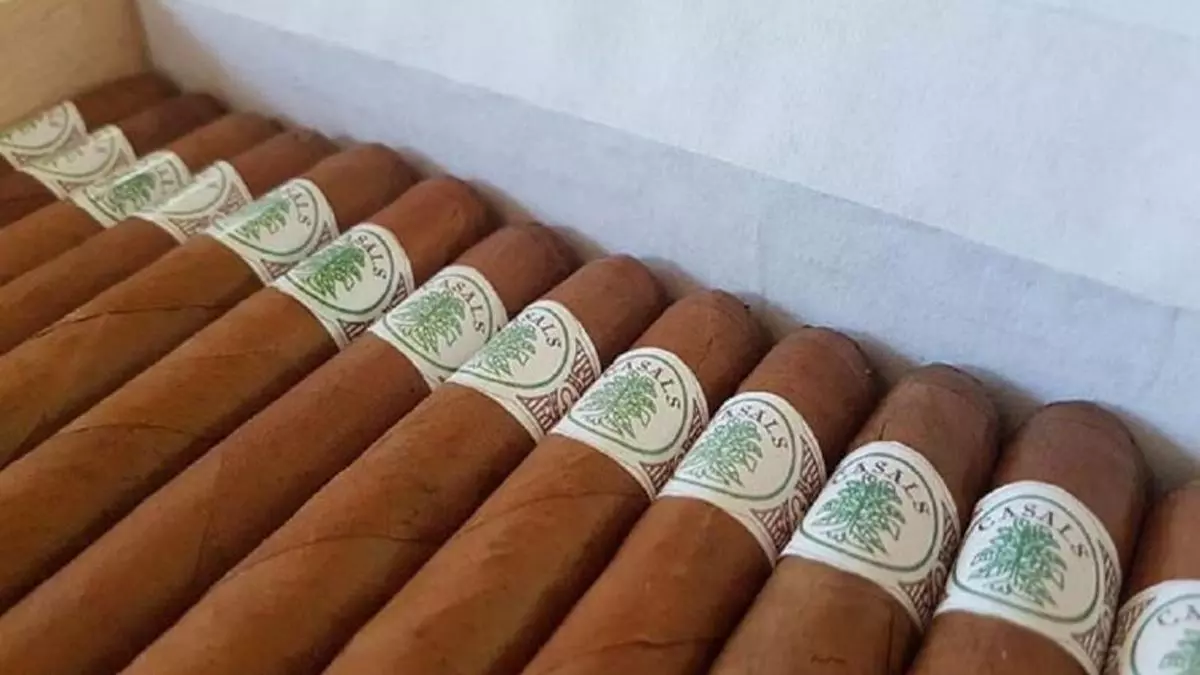
LA HABANA- Un magnate desconocido hace temblar los pilares del poderoso sector tabacalero que comercializa los puros cubanos a través de la sociedad mixta Habanos S.A., dirigida desde la Isla. El camboyano de origen chino Chen Zhi, que se convirtió secretamente en 2020 en el principal accionista del socio español de Cubatabaco, se ha esfumado cuando se enteró de que la justicia lo investigaba en varios países por lavado de dinero, fraudes con criptomonedas, estafas electrónicas, además de supervisar campos de trabajos forzados.

LOS RIESGOS

Ante los riesgos financieros que conlleva esta situación, el socio español de Habanos S.A. ha anunciado que está tomando “las medidas necesarias para garantizar que Chen Zhi quede completamente apartado” de sus operaciones, señala la agencia France Presse, citando a un portavoz de Tabacalera. Sin nombrarlos, la misma fuente ha agregado que los dos accionistas minoritarios de Allied Cigar Corporation –controlada por Chen Zhi– pretenden adquirir la participación del empresario asiático.

Tabacalera, el socio español de Habanos S.A. ha anunciado que está tomando medidas para garantizar que Chen Zhi quede completamente apartado de sus operaciones
France Presse aseguró que tuvo acceso a un organigrama proporcionado por una empresa distribuidora de puros en Escandinavia al ayuntamiento de Gotemburgo (Suecia), en el que el nombre de Chen, nacido en China, aparece como principal accionista de varias sociedades con sede en Europa, Asia y el Caribe, lo que al final lleva a su participación accionarial en Tabacalera.

EL IMPERIO DR CHEN ZHI

Según datos recopilados en publicaciones de la industria tabacalera, Allied Cigar Corporation está controlada al 100% por Asia Uni Corporation Limited, con sede en Hong Kong. A su vez, la sociedad dominante última es Allied Cigar Fund, con domicilio en las Islas Caimán. Chen Zhi tiene participación mayoritaria en Allied Cigar Corporation a través de una cadena de sociedades offshore, no como accionista directo visible.

Chen Zhi, conocido también como Vincent, figura como fundador y presidente del Prince Holding Group, un conglomerado con sede en Camboya que se presenta públicamente como un empresario de bienes raíces, servicios financieros y comercio internacional.

A mediados de octubre de 2025, las autoridades de Estados Unidos lo acusaron formalmente por fraude electrónico y lavado de dinero relacionados con operaciones de centros de estafa y trabajo forzado en Camboya. El Departamento del Tesoro de Estados Unidos calificó al grupo de Chen como una organización criminal transnacional, imponiendo fuertes sanciones y colocando a Chen Zhi y su Prince Group en su lista de entidades bloqueadas.

Las sanciones forman parte de lo que Washington ha descrito como una de las mayores acciones contra redes de fraude a escala global, que incluyen el decomiso de miles de millones de dólares en criptomonedas vinculadas a las operaciones del grupo.Chen también ha sido sancionado por Reino Unido.



NUEVAS REVELACIONES

En noviembre, la plataforma de investigación y análisis de PANews, especializada en blockchain, criptomonedas, finanzas digitales y crimen financiero transnacional, publicó un detallado artículo sobre las actividades de Chen, revelando que se ocultaba detrás de empresas fantasma, criptomonedas y estructuras offshore, descritas como un “capitalismo de telaraña 2.0”, un modelo transnacional que combina tecnología blockchain, paraísos fiscales y redes de explotación humana.

Según el medio, con su conglomerado Prince Group, el magnate operaba redes de estafas cibernéticas y tráfico de personas en campamentos cerrados donde se les obligaba a trabajar en fraudes digitales.

En 2020, detalló PANews, el gigante tabacalero británico Imperial Brands decidió vender su negocio de cigarros de alta gama, incluida una participación del 50% en Habanos. Chen Zhi adquirió esta participación por 1.040 millones de euros. Tras la transacción, Allied Cigar sufrió frecuentes cambios estructurales en cuestión de meses. En abril, las acciones se transfirieron a Allied Cigar Fund LP. En mayo, la empresa pasó a llamarse Instant Alliance Ltd. y, en noviembre, las acciones se transfirieron a una persona física llamada Zhang Pingshun. La empresa se disolvió en junio de 2021. Esta serie de cambios vertiginosos dificultaron la identificación del beneficiario real detrás de Habanos.

De momento, ni Habanos S.A. ni el Gobierno de Cuba han emitido declaraciones oficiales sobre la naturaleza del vínculo con Chen.


THE CHINESE EMPIRE OF CHEN ZHI AND ITS SHADOW ARE SHAKING THE CIGAR SECTOR OF HABANOS S.A. PHOTOS.

The Cambodian of Chinese origin, Chen Zhi, is shaking the foundations of the tobacco sector that markets Cuban cigars through Habanos S.A. / ACN.
The Spanish partner of Cubatabaco is distancing itself from its main shareholder, a fugitive from justice for electronic fraud and money laundering.

HAVANA – An unknown magnate is shaking the foundations of the powerful tobacco sector that markets Cuban cigars through the joint venture Habanos S.A., managed from the island. The Cambodian of Chinese origin, Chen Zhi, who secretly became the main shareholder of Cubatabaco’s Spanish partner in 2020, has disappeared after learning that he was being investigated in several countries for money laundering, cryptocurrency fraud, and electronic scams, in addition to overseeing forced labor camps.

THE RISKS

Given the financial risks involved in this situation, the Spanish partner of Habanos S.A. has announced that it is taking “the necessary measures to ensure that Chen Zhi is completely removed” from its operations, reports Agence France-Presse, citing a spokesperson for Tabacalera. Without naming them, the same source added that the two minority shareholders of Allied Cigar Corporation – controlled by Chen Zhi – intend to acquire the Asian businessman’s stake.

Tabacalera, the Spanish partner of Habanos S.A., has announced that it is taking measures to ensure that Chen Zhi is completely removed from its operations.
Agence France-Presse reported that it had access to an organizational chart provided by a cigar distribution company in Scandinavia to the Gothenburg city council (Sweden), in which the name of Chen, born in China, appears as the main shareholder of several companies based in Europe, Asia, and the Caribbean, which ultimately leads to his shareholding in Tabacalera. THE EMPIRE OF DR. CHEN ZHI

According to data compiled from tobacco industry publications, Allied Cigar Corporation is 100% controlled by Asia Uni Corporation Limited, based in Hong Kong. The ultimate parent company is Allied Cigar Fund, domiciled in the Cayman Islands. Chen Zhi holds a majority stake in Allied Cigar Corporation through a chain of offshore companies, not as a visible direct shareholder.

Chen Zhi, also known as Vincent, is listed as the founder and chairman of Prince Holding Group, a Cambodia-based conglomerate that publicly presents itself as a real estate, financial services, and international trade company.

In mid-October 2025, U.S. authorities formally charged him with wire fraud and money laundering related to scam centers and forced labor operations in Cambodia. The U.S. Treasury Department designated Chen’s group as a transnational criminal organization, imposing significant sanctions and placing Chen Zhi and his Prince Group on its list of blocked entities.

The sanctions are part of what Washington has described as one of the largest actions against global fraud networks, including the seizure of billions of dollars in cryptocurrencies linked to the group’s operations. Chen has also been sanctioned by the United Kingdom.

NEW REVELATIONS

In November, PANews, a research and analysis platform specializing in blockchain, cryptocurrencies, digital finance, and transnational financial crime, published a detailed article about Chen’s activities, revealing that he was hiding behind shell companies, cryptocurrencies, and offshore structures, described as a “spiderweb capitalism 2.0,” a transnational model combining blockchain technology, tax havens, and human trafficking networks.

According to the outlet, through his conglomerate Prince Group, the magnate operated cyber scam and human trafficking networks in closed camps where people were forced to work on digital fraud schemes.

In 2020, PANews reported, the British tobacco giant Imperial Brands decided to sell its premium cigar business, including a 50% stake in Habanos. Chen Zhi acquired this stake for 1.04 billion euros. Following the transaction, Allied Cigar underwent frequent structural changes within months. In April, the shares were transferred to Allied Cigar Fund LP. In May, the company was renamed Instant Alliance Ltd., and in November, the shares were transferred to an individual named Zhang Pingshun. The company was dissolved in June 2021. This series of rapid changes made it difficult to identify the true beneficial owner behind Habanos.

To date, neither Habanos S.A. nor the Cuban government has issued any official statements regarding the nature of their relationship with Chen.


Agencies/ 14yMedio/La Habana/ Internet Photos/ Arnoldo Varona.
THE CUBAN HISTORY, HOLLYWOOD.

LARITZA BACALLAO: DESTACADA CANTANTE DE LA MUSICA POPULAR CUBANA. PHOTOS/ VIDEOS. * LARITZA BACALLAO: A LEADING SINGER OF CUBAN POPULAR MUSIC. PHOTOS/VIDEOS.

LARITZA BACALLAO: DESTACADA CANTANTE DE LA MUSICA POPULAR CUBANA. PHOTOS/ VIDEOS.

Una de las más destacadas cantantes de la música popular y contemporánea de Cuba. En sus conciertos merece ovaciones del público por su bien timbrada voz y su acertada interpretación, con un exelente repertorio conformado mayormente por música popular bailable ha escalado hasta los primeros planos de popularidad dentro y fuera de Cuba de la mano de compositores como Osmani Espinosa , Shiina , Germán Nogueira entre otros.

Hija de Ernesto Bacallao (cantante de La Aragón), graduada de nivel elemental en Dirección Coral nivel medio Pianista Acompañante. Comienza su vida artística a la edad de cuatro años, presentándose a partir de este momento ante disímiles públicos tanto en Cuba como en el extranjero.

Participaciones en festivales

Ha formado parte del elenco del Festival Boleros de Oro en varias ediciones. Durante años ha participado en los homenajes realizados al emblemático cantante cubano Beny Moré. Y en algunas ediciones del Festival Habaneras en la Habana.

Recientemente se ha unido al prestigioso catálogo de P.M.M, y a la compañía ‘Events’ con vista a lanzar y desarrollar su carrera en los Estados Unidos como plataforma al mundo. Para muchos cubanos Laritza es considerada la voz del pueblo por su buen cantar y es admirada por gran cantidad de hispanohablantes.

Formatos musicales participados

En su trabajo como vocalista ha trabajado con diferentes formatos musicales y agrupaciones tales como:

Formato charanga: Orquesta Aragón
Charanga de Oro: Charanga del Conservatorio Amadeo Roldán.
Formato Sonora: Conjunto Caney.
Orquestas: Los Surik y Sabor Latino .
Pequeños formatos: Villa azul.
También ha sido acompañada por guitarra y piano indistintamente.
Giras Internacionales
1997: Japón, presentaciones en 19 ciudades.
2000: Caracas, Venezuela.
2006: Alemania.
2007: Italia, (Torino)

Discografía

Portada del CD Que Suenen Los Tambores (2013)
1997: La Orquesta Aragón presenta a La Princesita del Cha Cha Chá ,Comercializadora Artesáfono, Venezuela .
2001: Si no sabes no te metas (4 temas) . Bis Music Cuba.
2001: Homenaje a Elena Burke y Ahora, Corporation , Japón .
2003: Calle 66 . Forwrd SRI , Milano , Italia . (1 tema)
En el player es posible escuchar dos temas de Laritza:
Basta ya.
Soy cubana.
2013 CD. Que Suenen Los Tambores.


LARITZA BACALLAO: A LEADING SINGER OF CUBAN POPULAR MUSIC. PHOTOS/VIDEOS.

One of the most prominent singers of Cuban popular and contemporary music, Laritza Bacallao consistently earns ovations from audiences at her concerts for her beautiful voice and masterful interpretations. With an excellent repertoire composed primarily of popular dance music, she has risen to the forefront of popularity both in and outside of Cuba, thanks to collaborations with composers such as Osmani Espinosa, Shiina, and Germán Nogueira, among others.

The daughter of Ernesto Bacallao (singer of La Aragón), she holds degrees in Elementary Choral Conducting and Intermediate Piano Accompaniment. She began her artistic career at the age of four, performing for diverse audiences in Cuba and abroad from that moment on.


Festival Appearances

She has been part of the cast of the Boleros de Oro Festival on several occasions. For years, she has participated in the tributes held for the iconic Cuban singer Beny Moré, and in several editions of the Habaneras Festival in Havana.

Recently, she joined the prestigious P.M.M. catalog and the company ‘Events’ with the goal of launching and developing her career in the United States as a platform to the world. For many Cubans, Laritza is considered the voice of the people for her exceptional singing and is admired by a large number of Spanish speakers.


Agencies/ Wiki/ Ecured/ YouTube/ Internet Photo/ www.thecubanhistory.com, Arnoldo Varona.
THE CUBAN HISORY, HOLLYWOOD.

EL BEMBÉ, UNA CELEBRACION AFROCUBANA QUE INCLUYE MUSICA, CANTO Y BAILE. COMO SE CELEBRA. PHOTOS. * THE BEMBÉ, AN AFRO-CUBAN CELEBRATION INCLUDING MUSIC, SINGING, AND DANCING. HOW IT IS CELEBRATED. PHOTOS.

EL BEMBÉ, UNA CELEBRACION AFROCUBANA QUE INCLUYE MUSICA, CANTO Y BAILE. COMO SE CELEBRA. PHOTOS.

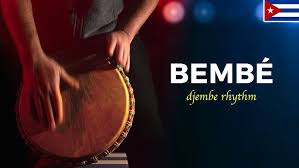
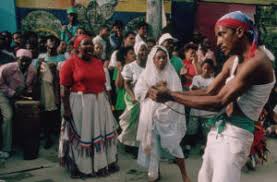
Un bembé es una celebración religiosa afrocubana (a menudo vinculada a la Santería/culto a los Orishas) que se celebra para honrar a los orishas (deidades). Incluye música, canto y baile, que se cree que facilitan la comunicación con los orishas.

El bembé es un aspecto vibrante y perdurable del legado africano en Cuba, que muestra cómo las tradiciones africanas se adaptaron y se fusionaron con el nuevo entorno tras la trata transatlántica de esclavos.

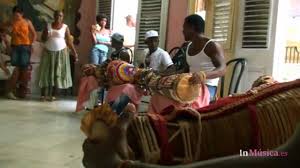
Una fiesta para la diversión de los orishas, los dioses pertenecientes al Panteón Yoruba. En esta fiesta se canta, se baila y se tocan diversos tipos de instrumentos de percusión.

Durante un bembé los Orishas son alabados, saludados e implorados para que se unan a la fiesta montando (posesión a través del trance) a uno de sus sacerdotes presentes.

Esto se hace a través de una confluencia de la canción, el ritmo y el movimiento, llamando al orisha de forma que se reconozca a si mismo en la lírica, ritmos y danzas que han sido interpretados para ellos quizás por miles de años.

Los ritmos juegan una parte importante en esta ecuación y los tamboreros practican asiduamente por años para poder tocar los intricados ritmos correctamente. Esto es importante porque los tambores realmente le hablan a los Orishas debido a que el lenguaje yoruba es tonal, y los tambores han sido afinados de forma que toquen las diferentes tonalidades de la lengua Yoruba. Por esta razón algunos ritmos nunca se tocan a menos que sea dentro de un contexto religioso u ofendería al orisha. Estos ritmos son en realidad rezos a los Orishas, teniendo cada orisha sus propios ritmos asociados con ellos.

COVERSION EN UNA ORACION

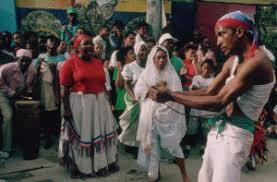
El baile o danza también se convierte en oración dentro del contexto religioso de un bembé. Los movimientos de las danzas son los mismos movimientos que han sido asociados con los Orishas por miles de años.

Como sucede con los ritmos que se tocan con los tambores, cada orisha tiene su propia danza, la danza de Yemayá emula el movimiento de las olas, la de Oggún el corte con el machete, la de Oshún representa la forma en que ella se acicala frente al espejo de mano, etc. Por tanto, estos movimientos se convierten más en rezos bailables que lo que los europeos ocs y llamando a los Orishas para que estén con nosotros.


“EL TRANCE”

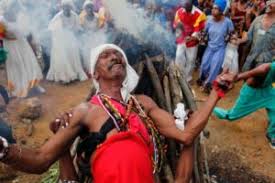
La Posesión a través del ‘Trance’ es una parte importante en esta religión. Durante un bembé o fiesta de tambores en honor de los orishas, un orisha puede ser convencido a unirse al festejo y entrar al cuerpo de uno de los sacerdotes consagrados a ese orisha. Se dice que la persona está siendo “montada” por el orisha, o que el orisha “ha bajado” del cielo para estar con nosotros. Las canciones, ritmos y bailes son realmente una súplica deliberada a los orishas para que bajen y nos bendigan con sus consejos, limpiezas y su mera presencia. Cuando un Orisha decide usar uno de nuestros cuerpos por un rato es, por supuesto, motivo de gran alegría.

Los orishas solo raramente montan a un aleyo o persona que no ha sido iniciada al sacerdocio, y en esas ocasiones usualmente señalan a esta persona como una persona que necesita ser iniciada en la religión como sacerdote o sacerdotisa.

Esto no se le impone a las personas, ni tampoco es algo demoníaco como en el caso de películas como “El Exorcista”. Si alguien no está listo, el orisha es delicadamente disuadido a alejarse hasta que la persona es iniciada y preparada para semejante ocasión.

EL BAILE DEL BEMBE

La celebración incluye un estilo de baile específico. El famoso músico cubano Benny Moré lo menciona en una canción emblemática: “En Cuba se baila el bembé”.
Influencia cultural: La influencia del bembé en el lenguaje cubano también es significativa, con expresiones como “Se formó el bembé” (que significa “se armó una gran fiesta o alboroto”) que reflejan su profundo arraigo en la cultura local.


PLEASE PATRONIZE OUR ADVERTISERS- PREFIERA NUESTROS SPONSORS.


THE BEMBÉ, AN AFRO-CUBAN CELEBRATION INCLUDING MUSIC, SINGING, AND DANCING. HOW IT IS CELEBRATED. PHOTOS.

A bembé is an Afro-Cuban religious celebration (often linked to Santería/Orisha worship) held to honor the orishas (deities). It includes music, singing, and dancing, which are believed to facilitate communication with the orishas.

The bembé is a vibrant and enduring aspect of the African legacy in Cuba, showcasing how African traditions adapted and merged with the new environment after the transatlantic slave trade.

It’s a celebration for the enjoyment of the orishas, ​​the gods belonging to the Yoruba pantheon. Singing, dancing, and various types of percussion instruments are played at this celebration.

During a bembé, the Orishas are praised, greeted, and implored to join the celebration by possessing (through trance) one of their priests present.

This is done through a confluence of song, rhythm, and movement, calling to the orisha in a way that allows them to recognize themselves in the lyrics, rhythms, and dances that have been performed for them for perhaps thousands of years.

The rhythms play a crucial part in this equation, and the drummers practice assiduously for years to be able to play the intricate rhythms correctly. This is important because the drums actually speak to the Orishas, ​​as the Yoruba language is tonal, and the drums have been tuned to play the different tones of the Yoruba language. For this reason, some rhythms are never played unless it is within a religious context, as it would offend the orisha. These rhythms are essentially prayers to the Orishas, ​​with each orisha having its own associated rhythms.


DANCE AS PRAYER

The dance also becomes a form of prayer within the religious context of a bembé. The dance movements are the same movements that have been associated with the Orishas for thousands of years.

As with the rhythms played on the drums, each Orisha has its own dance. Yemayá’s dance emulates the movement of the waves, Oggún’s the cutting motion of the machete, Oshún’s represents the way she primps in front of her hand mirror, and so on. Therefore, these movements become more like prayers in motion than what Europeans might call dances, calling upon the Orishas to be with us.

“THE TRANCE”

Possession through “trance” is an important part of this religion. During a bembé, or drum ceremony in honor of the Orishas, ​​an Orisha may be persuaded to join the festivities and enter the body of one of the priests consecrated to that Orisha. The person is said to be “mounted” by the Orisha, or that the Orisha “has come down” from heaven to be with us. The songs, rhythms, and dances are truly a deliberate plea to the Orishas to descend and bless us with their guidance, cleansing, and their very presence. When an Orisha decides to use one of our bodies for a while, it is, of course, a cause for great joy.

The Orishas only rarely possess an aleyo, or person who has not been initiated into the priesthood, and on those occasions, they usually indicate that this person needs to be initiated into the religion as a priest or priestess.

This is not forced upon people, nor is it something demonic, as in the case of films like “The Exorcist.” If someone is not ready, the Orisha is gently persuaded to leave until the person is initiated and prepared for such an occasion.


Agencies/ EcuRed/ Bembé/ Internet Photos/ YouTube/ Arnold Varona/ TheCubanHistory.com
THE CUBAN HISTORY, HOLLYWOOD.