“EL CONJUNTO CASINO” (Faz, Vallejo, Espi), a Popular Cuban Music Assembled ever. VIDEOS. * “EL CONJUNTO CASINO” (Faz, Vallejo, Espi), un Conjunto de Música Popular Cubana de Todos los Tiempos. PHOTOS. VIDEOS.

“EL CONJUNTO CASINO” (Faz, Vallejo, Espi), UN CONJUNTO DE MUSICA POPULAR CUBANA DE TODOS LOS TIEMPOS. VIDEOS

El grandemente celebrado y destacado “Conjunto Casino” con sus cantantes Faz, Vallejo y Espi, fue una agrupación de música popular cubana que realizó una labor importante en las décadas de los 1940 y 1950, encuadrado en la tradición de conjuntos en boga por esa época en Cuba interpretando entre sus generos musicales el son Montuno, guarachas, boleros, conga, rumba, guaguanco y el cha cha cha.

images (38)

El estilo del ‘Casino’, más apegado a las armonías del jazz, específicamente del swing y del bebop, se enmarcó en la corriente más progresiva entre las agrupaciones soneras de su tipo en esta época.

Junto al conjunto de Arsenio Rodríguez, representando la línea afrocubana, el conjunto Sonora Matancera, apegada a la guaracha y la rumba mulata, el ‘Casino’ conformó un patrón que siguieron muchas agrupaciones desde ese momento como el conjunto ‘Colonial’, el conjunto de Senén Suárez, el conjunto de Ernesto Grenet, el ‘Kubakán’ y el conjunto ‘Rumbavana’, entre otros.

CARRERA MUSICAL

Alrededor de 1933, en pleno auge los sextetos y septetos de sones, los hermanos José y Manolo Saldarino, cantante y contrabajista respectivamente, fundaron en La Habana el Sexteto ‘Miquito’. El grupo, denominado ‘sexteto’ a pesar de que en su personal ya se incluía el piano, cambió de nombre el 1.º de mayo de 1937 a ‘Casino’ al convertirse en el grupo de planta del ‘Summer Casino’ o Gran Casino Nacional de Marianao, en La Habana.

logoVIDEOS- El Conjunto Casino interpreta…

En 1940 pasó a dirigir el grupo el tresero Esteban Grau. Ese año cuando se unieron al grupo el contrabajista Cristóbal Dobal y el trovador cienfueguero Roberto Espí. Este último fue el promotor de otras renovaciones importantes, entre ellas el cambio definitivo del nombre de la agrupación a conjunto ‘Casino’ como fue popularmente reconocido a partir de sus primeras grabaciones para el sello RCA Victor en 1942. Espí en 1931 había fundado un grupo de sones en su natal Cienfuegos al que llamó “Conjunto Lírico Caunabó”, de ahí su insistencia en el uso de la palabra “Conjunto” para redefinir al Casino.

LA TRILOGIA MUSICAL DE FAZ, VALLEJO Y ESPI

Las voces prima y segunda de Roberto Faz y Roberto Espí junto al falsete de Agustín Ribot gozó de mucha popularidad entre 1946 y 1951. Trilogía influyente en agrupaciones similares como el Conjunto del pianista Luis Santí.

El 28 de noviembre de ese año fueron contratados por el cabaret ‘Zombie Club’ de La Habana para inaugurar su show, alternando con la orquesta del Zombie dirigida por el pianista Adolfo Guzmán, y la orquesta del músico catalán Pedro Calonge. La primera trilogía vocal en los discos y el Zombie estuvo compuesta por Juan Fuentes (Bolita), Esteban Grau y Roberto Espí. Poco después, a comienzos de 1943, Nelo Sosa sustituyó a ‘Bolita’.

Durante las presentaciones del ‘Casino’ en el ‘Zombie Club’ un amigo se encargó de presentarle a Espí a otro cantante de la localidad habanera de Regla: Roberto Faz. Desde ese primer encuentro trabaron amistad, quedando pendiente la entrada de Faz al grupo para el regreso de un inminente viaje a México.

logoVIDEOS- El Conjunto Casino interpreta..

El 28 de noviembre de 1943, el conjunto ‘Casino’ se despidió del Zombie Club y de la Habana. Contratados por la firma Max Factor Hollywood y la gerencia del cabaret ‘Sans Soucí’ permanecieron casi un año haciendo presentaciones en el DF mexicano. Durante la estancia en México, Grau decidió retirarse y Roberto Espí fue elegido por sus compañeros para asumir la dirección del grupo. Paralelamente a esto, Nelo Sosa decidió regresar a La Habana sin previo aviso y Alfredito Valdés pasó a sustituirle en el escenario del Sans Soucí.

En octubre de 1944 regresaron a Cuba y se produjeron nuevos cambios en su personal. Regresó Nelo Sosa y al unirse Roberto Faz al ‘Casino’ se completó la trilogía del conjunto: Faz, Sosa y Espí, como rezarían las etiquetas de la RCA Victor. En el orden instrumental el ‘Casino’ estrenó su sección de metales y el empaste de las trompetas de Alberto Armenteros, Miguel Román y Alejandro ‘El Negro’ Vivar, la guaracha de Agustín Ribot: ‘Viejo verde’, uno de los primeros grandes éxitos de esa época.

Otros cantantes importantes que posteriormente completaron las armazones vocales del conjunto Casino fueron: Agustín Ribot, quien sustituyó a Nelo Sosa a comienzos de 1946. La trilogía: Faz, Ribot y Espí grabaría profusamente sus éxitos para los sellos RCA Victor y a partir de 1949 para el sello Panart, fundado en La Habana en 1944 por el ingeniero de sonido Ramón Sabat, primer esfuerzo discográfico serio en Cuba.

En abril de 1951 Agustín Ribot decidió fundar su propia agrupación y fue sustituido por Orlando Vallejo. La nueva trilogía Faz, Vallejo y Espí continuó grabando para Panart. En ese ínterin otro cantante pasó fugazmente por las filas del Conjunto Casino: Celio Gonzáez quien dejó con el Casino una excepcional versión del bolero “Plazos traicioneros”. Cuando Orlando Vallejo, ya con una popularidad garantizada, decidió emprender su carrera como solista en mayo de 1953, el cantante Rolito Rodríguez pasó a formar parte de la agrupación .

A la trilogía vocal de Faz, Rolito y Espí se sumó en 1955 otro cantante proveniente de la Sonora Matancera: Laíto Sureda. Esta combinación vocal mantuvo altas cuotas de popularidad combinando sus presentaciones en los espacios bailables, la radio y la televisión.

El 3 de enero de 1956, Roberto Faz decidió fundar su propia agrupación. El Conjunto Casino sufrió una renovación que redundó en un estilo mucho más progresivo al incorporar personal nuevo a sus filas. Entre ellos se destacó el joven pianista y arreglista Paquito Echevarría, el percusionista Perico Hernández y los vocalistas Fernando Álvarez (hasta entonces coro de la Banda de Beny Moré), René del Mar, Felo Martínez, Alberto Ruiz, Alberto Díaz y Orlando Reyes. Este último, luego de una breve estancia en el grupo, pasó al conjunto de Roberto Faz.

Ya en los años sesenta el Conjunto Casino iban a presentarse todos los años en el carnaval de Camaguey. Ya eran notables los dúos que registraron Faz y Espí con el Conjunto Casino para los sellos RCA Victor y Panart entre 1945 y 1955.

images (40)

Bajo la dirección de Roberto Espí el Conjunto Casino efectuó, entre 1956 y 1961, numerosas grabaciones para los sellos RCA Victor, Gema, Ansonia, Rosell Records, Castro Records, Velvet y Maype, entre otros. Manteniendo la calidad y el sonido que les hizo indispensables en fiestas y bailables a lo largo y ancho de la isla, acompañaron también a cantantes extranjeros como Carmen Delia Dipiní, Daniel Santos, Juan Polanco y Alberto Beltrán.

Otros cantantes que se unieron al conjunto entre 1959 y 1974 fueron Onelio Pérez, Orlando Morales, Mayito Rodríguez, Tont Raymat, Raúl García y Jesús Navarro.

LLEGA LA TELEVISION A CUBA

Con la inauguración de la televisión en Cuba en el mes de octubre de 1950, se redobló su presencia en los estudios de la CMQ. Fueron presencia habitual entre marzo de 1951 y julio de 1955 en el famosísimo ‘Show del mediodía’. En CMQ-Radio también fueron cita obligada en el ‘Gran Show de la Mañana’ y ‘Cumbanchoa’, entre otros espacios estelares.

Junto a los bailables públicos a lo largo y ancho de la isla, otros viajes se produjeron durante los cuarenta y cincuenta: Puerto Rico, en 1945 y 1946; Venezuela en 1947; posteriormente y con regularidad visitaron el sur de los Estados Unidos: Miami, Tampa y Cayo Hueso; Nueva York en 1953; Antillas Neerlandesas en 1955; Panamá en 1956 y 1957, Santo Domingo en 1958, y Estados Unidos en octubre de 1959. En 1961 la ruptura de las relaciones entre Cuba y USA frustró una prometedora presentación en el célebre Palladium neoyorquino donde alternaría con la Banda de Machito y sus Afrocubans.

La renovación que sufrió el Conjunto Casino en 1956, a partir del reclutamiento que hizo Roberto Faz de parte de su personal, provocó que Roberto Espí vinculara a su conjunto nuevos vocalistas e instrumentistas, incidiendo favorablemente en la modernización del sonido del grupo, sin perder la esencia sonera que había caracterizado a la banda hasta ese momento.

En diferentes etapas los avanzados arreglos del Niño Rivera, Juanito Márquez, Manolito Menéndez, Pepé Delgado, Paquito Echevarría, Rolando Baró, Frank Emilio, Peruchín, entre muchos otros, oxigenaron y mantuvieron el estilo Casino. Estos cambios influenciaron notablemente una etapa renovadora de la música popular en Cuba, imbuida en nuevos ritmos y estilos interpretativos.

El Conjunto Casino mantuvo durante treinta años un elemento que lo identificó entre las agrupaciones soneras de su tiempo: el empaste y sincronía de su sección de metales identificada por importantes músicos como Eduardo Periquet, Alberto Armenteros (estilista del sonido Casino de los años 40 y primera mitad de los 50), Miguel Román, Alejandro “el Negro” Vivar, José Gundín (El Fiñe), Luis Toledo, Mario Sorí, Reynaldo Godínez, Idelfonso Salinas, Miguel Sánchez (Bayoya), Jorge Varona, Mario del Monte, entre muchos otros.

images (39)

A partir de 1954 el Conjunto Casino se convirtió en la primera agrupación de su tipo en contar con cuatro trompetas cuando Espí sumó a José Gundín (El Fiñe) a la tríada de Miguel Román, Alberto Armenteros y Mario Sorí. Armenteros fue sustituido en 1955 por Alfonso Salinas.

Otro importante apartado tímbrico fue el aportado por sus pianistas: desde el veterano Enrique Rodríguez (Diablo Rojo), René Urbino, Agustín Mercier, Pepé Delgado, Robertico Álvarez (Santa Amalia), Adolfo O´Reilly, Ñico Cevedo, Rolando Baró, Paquito Echevarría, Silvio Contreras, Koqui Llera, Rafael Pérez Cáter, entre otros.

LLEGA EL FIN DEL CONJUNTO CASINO

En 1958 grabaron para GEMA, en 1959 para el sello Ansonia y para Rosell Records, en 1960 para Velvet, y en 1961 para el sello Maype, entre otros. Con el advenimiento de la revolución en la isla todos estos sellos fueron “nacionalizados”, esto provocó la desaparición de la industria fonográfica independiente. La grabación y edición de música en Cuba pasó a ser responsabilidad del sello (EGREM), institución oficial del nuevo gobierno.

Por esa época, los grandes clubes nocturnos también comenzaron a languidecer hasta extinguirse casi por completo en 1968. Toda esta situación incidió desfavorablemente en las agrupaciones populares que venían de un modelo totalmente diferente. Especialmente en una agrupación como el Conjunto Casino, con amplio prestigio y cuyos integrantes acostumbraban a viajar libremente por el mundo. Estas fueron algunos de los elementos que transformaron completamente el panorama musical cubano de esa década fomentando un importante éxodo artístico.

Roberto Espí continuó al frente de este conjunto hasta 1974 cuando se retiró de la música, completando una labor de poco más de treinta años. Murió en La Habana el 14 de mayo de 1999. En una sencilla ceremonia, donde concurrieron familiares, músicos y pueblo simpatizante del Conjunto Casino, sus restos fueron depositados en el cementerio de Colón.

En esa ocasión, Helio Orovio, músico, escritor e investigador, pronunció el panegírico. Así mismo, Felo Martínez, Orlando Reyes y Alberto Díaz, sus compañeros del “Casino” lo despidieron con su canción “Luna Cienfueguera”.

RECOMIENDENOS A SUS AMISTADES * PREFIERA A NUESTROS SPONSORS.

RECOMIENDENOS A SUS AMISTADES * PREFIERA A NUESTROS SPONSORS.

logo

EL CONJUNTO CASINO WITH ROBERTO FAZ, VALLEJO, AND ESPÍ. A POPULAR CUBAN MUSICAL GROUP OF ALL TIME. VIDEOS.

The widely celebrated and prominent “Conjunto Casino” with its singers Faz, Vallejo, and Espi, was a Cuban popular music group that carried out important work in the 1940s and 1950s, framed in the tradition of ensembles in vogue at that time. in Cuba performing among his musical genres the son Montuno, guarachas, boleros, conga, rumba, guaguanco, and the cha cha cha.

download (52)

The style of the ‘Casino’, more attached to the harmonies of jazz, specifically swing and bebop was part of the most progressive trend among sonic groups of its type at this time.

Together with the Arsenio Rodríguez ensemble, representing the Afro-Cuban line, the Sonora Matancera ensemble, attached to the guaracha and the mulatto rumba, the ‘Casino’ formed a pattern that many groups followed from that moment such as the ‘Colonial’ ensemble, the ensemble of Senén Suárez, the Ernesto Grenet ensemble, the ‘Kubakán’ and the ‘Rumbavana’ ensemble, among others.

MUSICAL CAREER

Around 1933, at the height of the sones sextets and septets, the brothers José and Manolo Saldarino, singer and double bass player respectively, founded the ‘Miquito’ Sextet in Havana. The group called the ‘sextet’ despite the fact that the piano was already included in its staff, changed its name on May 1, 1937, to ‘Casino’ when it became the floor group of the ‘Summer Casino’ or Grand Casino Nacional de Marianao, in Havana.

logoVIDEOS- Conjunto Casino play “Amor de Cobre”…

In 1940 Esteban Grau went on to lead the group. That year when the double bass player Cristóbal Dobal and the Cienfuegos troubadour Roberto Espí joined the group. The latter was the promoter of other important renovations, among them the definitive change of the name of the group to the ensemble ‘Casino’ as it was popularly recognized from its first recordings for the RCA Victor label in 1942. Espí in 1931 had founded a group of sones in his native Cienfuegos which he called “Conjunto Lírico Caunabó”, hence his insistence on the use of the word “Conjunto” to redefine the Casino.

The first and second voices of Roberto Faz and Roberto Espí along with Agustín Ribot’s falsetto enjoyed great popularity between 1946 and 1951. Influential trilogy in similar groups such as the Conjunto by pianist Luis Santí.

On November 28 of that year, they were hired by the cabaret ‘Zombie Club’ in Havana to inaugurate their show, alternating with the Zombie orchestra led by the pianist Adolfo Guzmán, and the orchestra of the Catalan musician Pedro Calonge. The first vocal trilogy on the records and the Zombie was composed by Juan Fuentes (Bolita), Esteban Grau, and Roberto Espí. Shortly after, at the beginning of 1943, Nelo Sosa replaced ‘Bolita’.

During the ‘Casino’ presentations at the ‘Zombie Club,’ a friend was in charge of introducing Espí to another singer from the Havana town of Regla: Roberto Faz. From that first meeting, they became friends, pending the entry of Faz to the group for the return of an imminent trip to Mexico.

On November 28, 1943, the ‘Casino’ set said goodbye to the Zombie Club and Havana. Hired by the firm Max Factor Hollywood and the management of the cabaret ‘Sans Soucí’ they stayed for almost a year making presentations in Mexico City. During the stay in Mexico, Grau decided to retire and Roberto Espí was chosen by his companions to assume the leadership of the group. Parallel to this, Nelo Sosa decided to return to Havana without prior notice and Alfredito Valdés happened to replace him on the Sans Soucí stage.

In October 1944 they returned to Cuba and there were new changes in their personnel. Nelo Sosa returned and when Roberto Faz joined the ‘Casino’ the trilogy of the group was completed: Faz, Sosa, and Espí, as the RCA Victor labels would say. In the instrumental order, the ‘Casino’ premiered its brass section and the filling of the trumpets by Alberto Armenteros, Miguel Román, and Alejandro ‘El Negro’ Vivar, Agustín Ribot’s guaracha: ‘Viejo Verde, one of the first great successes of that time.

download (54)

Other important singers who later completed the vocal frameworks of the Casino ensemble were: Agustín Ribot, who replaced Nelo Sosa at the beginning of 1946. The trilogy: Faz, Ribot, and Espí would record their hits profusely for the RCA Victor labels and from 1949 for the Panart label, founded in Havana in 1944 by the sound engineer Ramón Sabat, the first serious recording effort in Cuba.

THE MUSICAL TRILOGY OF FAZ, VALLEJO AND ESPI

In April 1951 Agustín Ribot decided to found his own group and was replaced by Orlando Vallejo. The new trilogy Faz, Vallejo y Espí continued recording for Panart. In that meantime, another singer briefly passed through the ranks of the Conjunto Casino: Celio Gonzáez, who left with the Casino an exceptional version of the bolero “Plazos treacherous”. When Orlando Vallejo, already with guaranteed popularity, decided to start his solo career in May 1953, the singer Rolito Rodríguez became part of the group.

Back in the sixties, the Conjunto Casino was going to perform every year at the Camaguey carnival. The duets that Faz y Espí recorded with Conjunto Casino for the RCA Victor and Panart labels between 1945 and 1955 were already notable.

The vocal trilogy of Faz, Rolito y Espí was joined in 1955 by another singer from Sonora Matancera: Laíto Sureda. This vocal combination maintained high shares of popularity combining their presentations in dance spaces, radio, and television.

On January 3, 1956, Roberto Faz decided to found his own group. The Conjunto Casino underwent a renovation that resulted in a much more progressive style by incorporating new personnel into its ranks. Among them stood out the young pianist and arranger Paquito Echevarría, the percussionist Perico Hernández and the vocalists Fernando Álvarez (until then choir of the Beny Moré Band), René del Mar, Felo Martínez, Alberto Ruiz, Alberto Díaz and Orlando Reyes. The latter, after a brief stay in the group, went to the Roberto Faz team.

Under the direction of Roberto Espí, the Conjunto Casino made, between 1956 and 1961, numerous recordings for the RCA Victor, Gema, Ansonia, Rosell Records, Castro Records, Velvet, and Maype labels, among others. Maintaining the quality and sound that made them indispensable in parties and dance events throughout the island, they also accompanied foreign singers such as Carmen Delia Dipiní, Daniel Santos, Juan Polanco, and Alberto Beltrán.

Other singers who joined the group between 1959 and 1974 were Onelio Pérez, Orlando Morales, Mayito Rodríguez, Tont Raymat, Raúl García and Jesús Navarro.

TELEVISION ARRIVES IN CUBA

With the inauguration of television in Cuba in October 1950, its presence in the CMQ studios was redoubled. They were a regular presence between March 1951 and July 1955 in the famous ‘Midday Show. In CMQ-Radio they were also a must in the ‘Great Morning Show’ and ‘Cumbanchoa’, among other stellar spaces.

images (37)

Along with the public dances throughout the island, other trips took place during the 1940s and 1950s: Puerto Rico, in 1945 and 1946; Venezuela in 1947; later and regularly they visited the south of the United States: Miami, Tampa, and Key West; New York in 1953; Netherlands Antilles in 1955; Panama in 1956 and 1957, Santo Domingo in 1958, and the United States in October 1959. In 1961 the breakdown of relations between Cuba and the USA frustrated a promising presentation at the famous New York Palladium where he alternated with the Banda de Machito and his Afro-Cubans.

The renovation that the Conjunto Casino underwent in 1956, from the recruitment by Roberto Faz of part of his staff, caused Roberto Espí to link new vocalists and instrumentalists to his group, having a favorable impact on the modernization of the group’s sound, without losing the sonic essence that had characterized the band up to that moment.

In different stages the advanced arrangements of Niño Rivera, Juanito Márquez, Manolito Menéndez, Pepé Delgado, Paquito Echevarría, Rolando Baró, Frank Emilio, Peruchín, among many others, oxygenated and maintained the Casino style. These changes notably influenced a renovating stage of popular music in Cuba, imbued with new rhythms and interpretive styles.

The Conjunto Casino maintained for thirty years an element that identified it among the sonic groups of its time: the filling and synchrony of its brass section identified by important musicians such as Eduardo Periquet, Alberto Armenteros (stylist of the Casino sound of the 40s and early mid-50s), Miguel Román, Alejandro “el Negro” Vivar, José Gundín (El Fiñe), Luis Toledo, Mario Sorí, Reynaldo Godínez, Idelfonso Salinas, Miguel Sánchez (Bayoya), Jorge Varona, Mario del Monte, among many others.

Starting in 1954, the Conjunto Casino became the first group of its kind to have four trumpets when Espí added José Gundín (El Fiñe) to the triad of Miguel Román, Alberto Armenteros and Mario Sorí. Armenteros was replaced in 1955 by Alfonso Salinas.

Another important timbral section was contributed by its pianists: the veteran Enrique Rodríguez (Diablo Rojo), René Urbino, Agustín Mercier, Pepé Delgado, Roberto Álvarez (Santa Amalia), Adolfo O’Reilly, Ñico Cevedo, Rolando Baró, Paquito Echevarría , Silvio Contreras, Koqui Llera, Rafael Pérez Cáter, among others.

THE END OF THE CONJUNTO CASINO COMES

In 1958 they recorded for GEMA, in 1959 for the Ansonia label and for Rosell Records, in 1960 for Velvet, and in 1961 for the Maybe label, among others. With the advent of the revolution on the island, all these labels were “nationalized”, which caused the disappearance of the independent phonographic industry. The recording and editing of music in Cuba became the responsibility of the label (EGREM), the official institution of the new government.

Around that time, the big nightclubs also began to languish until they were almost completely extinct in 1968. This whole situation had an unfavorable impact on popular groups that came from a totally different model. Especially in a group like the Conjunto Casino, with wide prestige and whose members used to travel freely around the world. These were some of the elements that completely transformed the Cuban music scene of that decade, fostering an important artistic exodus.

Roberto Espí continued to lead this group until 1974 when he retired from music, completing a work of little more than thirty years. He died in Havana on May 14, 1999. In a simple ceremony, attended by family members, musicians, and people who were sympathetic to Conjunto Casino, his remains were deposited in the Colón cemetery.

On that occasion, Helio Orovio, musician, writer, and researcher, delivered the eulogy. Likewise, Felo Martínez, Orlando Reyes and Alberto Díaz, his colleagues from the “Casino” fired him with their song “Luna Cienfueguera”.

Agencies/ Wiki/ ConjuntoCasinoHist./ Extractos/ Excerpts/ Internet Photos/ YouTube/ Arnoldo Varona/ www.TheCubanHistory.com
THE CUBAN HISTORY, HOLLYWOOD.

RECOMIENDENOS A SUS AMISTADES * PREFIERA A NUESTROS SPONSORS.

RECOMIENDENOS A SUS AMISTADES * PREFIERA A NUESTROS SPONSORS.

logo

AMAZING FACTS about the Flora & Fauna of Cuba. Paradise for Naturalists. PHOTOS. * HECHOS Sorprendentes sobre la FLORA & FAUNA Cubana. Paraiso de los Naturalistas. PHOTOS. VIDEOS.

HECHOS SORPRENDENTES DE LA FLORA Y FAUNA CUBANA. PARAISO DE LOS NATURALISTAS.PHOTOS.

th (17)

La flora y fauna cubana se caracterizan por su gran diversidad y alto nivel de endemismo en lo que influyen sin duda la insularidad y la increíble variedad geológica con una notable presencia de zonas cársicas, serpentiníticas, de pizarras y sabanas con arenas cuarcíticas, lo que da lugar a una extensa variedad de hábitat y disímiles condiciones de vida así como también a un muy diverso mosaico de suelos.

La variedad de las especies de la fauna de Cuba, unido a la belleza que caracteriza a algunos de sus especímenes, le ha ganado a la isla el nombre de Paraíso de los Naturalistas. El archipiélago cubano cuenta con más de 13 mil especies de animales terrestres, entre invertebrados y vertebrados: mamíferos, aves, anfibios y reptiles, y una gran parte de ellos habitan exclusivamente en este territorio.

En Cuba vive:
El pájaro más pequeño del mundo: el zunzuncito o pájaro mosca (Mellisuga elenae), mide alrededor de 6 cm de longitud como máximo y pesa como promedio alrededor de 2 gramos, es endémica de la isla.
El anfibio más pequeño del mundo: la rana pigmeo o sapito (Sminthillus limbatus) que mide menos de 12 mm de longitud.
El murciélago más pequeño del mundo que a la vez se considera el menor de los mamíferos: se trata del murciélago mariposa (Nystiellus lepidus), que solo pesa de 2-3 g y mide alrededor de 3 cm.
El almiquí (Solenodon cubanus), a punto de extinción que posee como característica de los mamíferos fósiles una saliva venenosa. Se pensó que estaba extinguido pues desde fines del siglo XIX no se veía pero en 1974 y 1975 se capturaron 3 ejemplares.
Existen evidencias de que en Cuba vivío el Paralouatta varonai, considerado el mayor de los monos antillanos, sólo vivía en la isla, según se ha demostrado por hallazgos arqueológicos. Se desconoce cuando desapareció.
Habitan 13 especies de jutías, de las cuales algunas solo viven en determinados cayos, con un hábitat muy restringido lo que las hace peligrar. La jutía cabrera solo vive en el Cayo Ana María, la garrido en Cayo Majá, la jutía rata en Cayo Fragoso y la sanfelipensis en Cayo Juan García.
La jutía enana es la más pequeña de todos los del género Capromydes en el mundo, solo vive en Cuba.
Se ha comprobado que en Viñales vive la especie de moluscos más antigua del mundo: se trata de la Vaina regina o calcifolio que vive pegada a los mogotes y rocas para alimentarse del hongo de las mismas.
El manjuarí (Atractosteus tristoechus) es considerado un fósil viviente y tiene cuerpo de pez y cabeza de reptil, su carne es comestible pero sus huevos son venenosos.

VER VIDEO> Cuba, Paraiso Tropical. (Documentary)..th - 2022-04-22T161909.612

AVES
Entre las más de 350 especies y subespecies de aves que habitan en Cuba existen unas 29 que son endémicas de la isla, entre ellas el tocororo, considerado el Ave Nacional; el catey, conocido también como perico.

Otras especies típicas son: el sijú platanero y el gavilán caguarero, ambos rapaces diurnos; el zunzuncito, considerada el ave más pequeña del mundo; el ruiseñor, con un extraordinario canto aflautado; el cabrero, que resalta por su buen trino y llamativos colores y la cartacuba o pedorrera, uno de los más bellos ejemplares alados del archipiélago cubano.

Figuran igualmente el cao, uno de los pájaros negros cubanos; la fermina, ave con endemismo muy localizado; el totí, otro pájaro negro que ataca los arrozales en grandes bandadas; el tomeguín del pinar, muy común en los campos de la isla y la gallinuela de Santo Tomás, ave acuática quien además es endémica de la Ciénaga de Zapata.

Punto aparte merecen el carpintero real y el guacamayo cubano, el primero considerado en peligro de extinción y el segundo, desaparecido desde el siglo pasado. Además de otras 14 especies de aves que también son endémicas de la isla.

Existe un numeroso grupo de estos vertebrados alados que, aunque no son endémicos, anidan en territorio cubano o tienen amplia distribución caribeña, entre ellos se puede citar: el flamenco, de largas patas y color rosáceo; la yaguasa, apreciada por su carne; el gavilán de monte, muy común en Cuba; y el sinsonte, rey de los alados canoros que habitan en la isla.

También se encuentran: la tojosa, una de las palomas silvestres más pequeñas del mundo; el querequeté, conocido por su hábito de volar al atardecer sobre los campos y costas y el martín pescador, gran devorador de peces.

Todas las especies de aves reportadas en la isla se encuentran distribuidas en un total de 21 órdenes, así se ha recogido en diferentes listas y catálogos que han sido editados desde principios del siglo XIX. En los mismos ha quedado representado un número de especies y subespecies que cronológicamente ha ido en aumento debido a mayores facilidades para el estudio de la fauna cubana y mejores accesos a determinados lugares de la isla y sus cayos adyacentes.

En Cuba las especies del género Plectoptera han sido vistas asociadas a las flores, pero su función como polinizadora no ha sido demostrada y requiere de estudios de campo (recientemente, una posible especie polinizadora de Symploce, fue descubierta por investigadores cubanos en República Dominicana).

Poder identificar a las diferentes especies silvestres y conocer su distribución, las convierte en excelentes bioindicadoras del estado de conservación de los ecosistemas naturales, y por ello son una herramienta útil para estudios de evaluación del impacto del hombre en el ambiente.

th (19)

ANFIBIOS
El archipiélago cubano está bien equipado de la fauna anfibia, la cual cuenta con 45 especies, de ellas aproximadamente tres o cuatro no son endémicas. Se distinguen más de una docena de especies de ranas y sapos, las cuales sobresalen por la gran diferencia entre sus tamaños.

Entre los anfibios que habitan en la isla se encuentra la rana toro (Rana catesbeiana) que tiene gran talla, pues llega a medir hasta 19 cm de largo. Los dedos de sus patas son palmeados, debido a sus hábitos acuáticos. Posee un dorso oscuro con tinte oliváceo y partes inferiores blancas. Las ancas de este anfibio constituyen un alimento muy apreciado, por lo que se cría con estos fines, así como para la utilización de su piel en la industria del calzado y de otros artículos. Su canto es muy fuerte y se diferencia del resto de las ranas y sapos. No es oriunda de Cuba. También se le conoce como sapo toro, aunque no lo es.

También se encuentra la llamada ranita de Cuba (Sminthillus limbatus), la más pequeña del mundo, con no más de 12 mm de largo. Deposita sus huevos entre las hoquedades de los árboles, debajo de las piedras y entre la hojarasca del suelo. Los recién nacidos no presentan estado larvario, sino que nacen en su forma adulta.

Otro anfibio cubano es la rana común (Osteopilus septentrionalis), conocida también como ranita platanera por abundar entre los bananos. Tiene los dedos libres sin discos digitales. Generalmente es de color verde avellana lustroso, con dos líneas laterales amarillas en los costados, aunque también puede ser verde cenizo y marmóreo. Los aborígenes cubanos la llamaban Toa, nombre del río más caudaloso de Cuba.

El gran sapo de muescas de occidente (Peltaphryne peltacephalus peltacephalus) es un anfibio endémico de esa región del país. Se le ha localizado en los alrededores de la Sierra de los Órganos, Pinar del Río, y en serranías de Matanzas. Es un sapo grande, cabezón y de dorso color pardo oliváceo, con una serie de arabescos y arrugas amarillo olivo. En la oscuridad sus ojos son rojizos. Resulta de gran utilidad a la agricultura, por la cantidad de insectos dañinos que devora.

En los mares próximos habitan varias especies de tortugas, entre ellas el carey, de concha muy apreciada y la caguama, de carnes comestibles. En los ríos y pantanos viven las jicoteas.

VER VIDEO> CUBA: FLORA Y FAUNA (Documentary)..th - 2022-04-22T161909.612

OTRAS ESPECIES
En los mares adyacentes a la isla viven alrededor de 900 especies de peces, entre los que sobresalen el pargo, la cherna, el serrucho o sierra, la rabirrubia, el bonito, la lisa, la aguja de paladar, el sábalo y el tiburón. Es endémico del país el manjuarí, pez de agua dulce, al igual que varias especies de peces ciegos (sin ojos) que habitan en cavernas de las regiones occidental-central.

Son crustáceos importantes: el cangrejo moro, la langosta y el camarón. En los bajos fondos costeros abundan los corales, las medusas, las estrellas de mar, los erizos, y esponjas, invertebrados de gran importancia económica.

Existen 1 700 especies de moluscos, tanto terrestres como marinos y fluviales. Por su valor alimenticio, se destacan el ostión (Ostrea virginica), la almeja (Macoma contricta), los pulpos y calamares.

Los bañistas y buceadores pueden admirar en las costas rocosas y en las playas cubanas, una gran variedad de caracoles marinos, entre los que sobresalen el llamado cobo, que formaba parte de la dieta aborigen y era usado como instrumento de comunicación a distancia.

Entre los caracoles no deben olvidarse los que habitan en la región oriental, donde se localiza la famosa polimita (Polymita picta), endémica de Cuba, considerada el molusco terrestre más bello del mundo.

Los artrópodos suman más de 7 000 especies, algunos autóctonos como ciertos alacranes. Entre los insectos, el archipiélago cubano tiene una gran representación con miles de variedades, distribuidas en todos los ecosistemas, incluyendo las cavernas. Cabe mencionar, por ser las más vistosas y endémicas, algunas mariposas como las llamadas Gundlach y Avellaneda.

*RECOMIENDENOS A SUS AMISTADES* *PREFIERA A NUESTROS SPONSORS*

*RECOMIENDENOS A SUS AMISTADES*
*PREFIERA A NUESTROS SPONSORS*

logo (1)

AMAZING FACTS ABOUT THE FLORA AND FAUNA OF CUBA. PARADISE FOR NATURALISTS. VIDEOS.

th (23)

The Cuban flora and fauna are characterized by their great diversity and high level of endemism, which is undoubtedly influenced by the insularity and the incredible geological variety with a notable presence of karstic, serpentine, slate, and savannah zones with quartzite sands, which gives This gives rise to a wide variety of habitats and dissimilar living conditions, as well as a very diverse mosaic of soils.

The variety of the species of the fauna of Cuba, together with the beauty that characterizes some of its specimens, has earned the island the name of Naturalists’ Paradise. The Cuban archipelago has more than 13 thousand species of terrestrial animals, including invertebrates and vertebrates: mammals, birds, amphibians, and reptiles, and a large part of them live exclusively in this territory.

In Cuba lives:
The smallest bird in the world: the zunzuncito or fly bird (Mellisuga elenae), measures about 6 cm in length at most and weighs an average of about 2 grams, is endemic to the island.
The smallest amphibian in the world: is the pygmy frog or toad (Sminthillus limbatus) which measures less than 12 mm in length.
The smallest bat in the world, which is also considered the smallest of the mammals: is the butterfly bat (Nystiellus lepidus), which only weighs 2-3 g and measures about 3 cm.
The almiquí (Solenodon cubanus), on the verge of extinction, has poisonous saliva as a characteristic of fossil mammals. It was thought that it was extinct because it had not been seen since the end of the 19th century, but in 1974 and 1975 3 specimens were captured.
There is evidence that the Paralouatta varonai lived in Cuba, considered the largest of the Antillean monkeys, it only lived on the island, as has been shown by archaeological findings. It is unknown when he disappeared.
They inhabit 13 species of hutias, of which some only live in certain keys, with a very restricted habitat which makes them endangered. The cabrera hutia only lives in Cayo Ana María, the garrido in Cayo Majá, the rat hutia in Cayo Fragoso and the sanfelipensis in Cayo Juan García.
The dwarf hutia is the smallest of all of the genus Capromydes in the world, it only lives in Cuba.
It has been proven that in Viñales lives the oldest species of mollusks in the world: it is the Vaina regina or calcifolio that lives attached to the mogotes and rocks to feed on the fungus on them.
The manjuarí (Atractosteus tristoechus) is considered a living fossil and has the body of a fish and the head of a reptile, its meat is edible but its eggs are poisonous.

BIRDS
Among the more than 350 species and subspecies of birds that inhabit Cuba, there are some 29 that are endemic to the island, including the tocororo, considered the National Bird; the catey, also known as parakeet.

Other typical species are: the banana sijú and the caguarero hawk, both diurnal birds of prey; the zunzuncito, considered the smallest bird in the world; the nightingale, with an extraordinary flute-like song; the goatherd, which stands out for its good trill and striking colors and the cartacuba or pedorrera, one of the most beautiful winged specimens of the Cuban archipelago.

They also include the cao, one of the Cuban blackbirds; the fermina, a bird with very localized endemism; the totí, another blackbird that attacks the rice fields in large flocks; the tomeguín of the pine forest, very common in the fields of the island and the Santo Tomás gallinuela, an aquatic bird that is also endemic to the Ciénaga de Zapata.

A separate point deserves the royal woodpecker and the Cuban macaw, the first considered in danger of extinction and the second, disappeared in the last century. In addition to 14 other species of birds that are also endemic to the island.

There is a large group of these winged vertebrates that, although they are not endemic, nest in Cuban territory or have a wide Caribbean distribution, among us can mention: the flamingo, with long legs and pinkish color; the yaguasa, appreciated for its meat; the mountain hawk, very common in Cuba; and the mockingbird, king of the winged songbirds that inhabit the island.

There are also: the tojosa, one of the smallest wild pigeons in the world; the querequeté, known for its habit of flying over the fields and coasts at dusk; and the kingfisher, a great fish eater.

VER VIDEO> Cuba Paraiso de los Naturalistas (Documentary)..th - 2022-04-22T161909.612

All the bird species reported on the island are distributed in a total of 21 orders, and have been collected in different lists and catalogs that have been published since the beginning of the 19th century. A number of species and subspecies have been represented in them, which has been increasing chronologically due to greater facilities for the study of Cuban fauna and better access to certain places on the island and its adjacent keys.

In Cuba, species of the genus Plectoptera have been seen associated with flowers, but their role as pollinators has not been demonstrated and requires field studies (recently, a possible pollinator species of Symploce was discovered by Cuban researchers in the Dominican Republic).

Being able to identify the different wild species and know their distribution makes them excellent bioindicators of the state of conservation of natural ecosystems, and therefore they are a useful tool for studies evaluating the impact of man on the environment.

AMPHIBIANS
The Cuban archipelago is well equipped with amphibian fauna, which has 45 species, of which approximately three or four are not endemic. There are more than a dozen species of frogs and toads, which stand out for the great difference between their sizes.

Among the amphibians that inhabit the island is the bullfrog (Rana catesbeiana), which is large, reaching up to 19 cm in length. Their toes are webbed, due to their aquatic habits. It has a dark back with an olive tint and white underparts. The haunches of this amphibian are highly valued food, which is why it is raised for these purposes, as well as for the use of its skin in the footwear industry and other items. Its song is very strong and differs from the rest of the frogs and toads. She is not from Cuba. It is also known as a bull toad, although it is not.

There is also the so-called Cuban frog (Sminthillus limbatus), the smallest in the world, with no more than 12 mm long. It lays its eggs in the hollows of the trees, under the stones, and in the leaf litter on the ground. The newborns do not present a larval stage but are born in their adult form.

Another Cuban amphibian is the common frog (Osteopilus septentrionalis), also known as the banana tree frog because it abounds among banana trees. He has free fingers without digital disks. It is generally a shiny hazel green, with two yellow lateral lines on the sides, although it can also be ash green and marble. The Cuban aborigines called it Toa, the name of the mightiest river in Cuba.

The great western notched toad (Peltaphryne peltacephalus peltacephalus) is an amphibian endemic to that region of the country. It has been located in the surroundings of the Sierra de los Órganos, Pinar del Río, and in the mountains of Matanzas. It is a large, stubborn toad with an olive-brown back, with a series of olive-yellow arabesques and wrinkles. In the dark his eyes are reddish. It is very useful for agriculture, due to the number of harmful insects it devours.

Several species of turtles inhabit the nearby seas, including the hawksbill, with its highly prized shell, and the loggerhead, with its edible meat. The turtles live in the rivers and swamps.

th (18)

OTHER SPECIES
Around 900 species of fish live in the seas adjacent to the island, among which the snapper, grouper, sawfish, yellowtail snapper, bonito, mullet, palate needle, tarpon, and shark stand out. The manjuarí, a freshwater fish, is endemic to the country, as are several species of blind fish (without eyes) that inhabit caves in the western-central regions.

They are important crustaceans: the stone crab, lobster, and shrimp. Corals, jellyfish, starfish, sea urchins, and sponges, invertebrates of great economic importance, abound in the low coastal depths.

There are 1,700 species of molluscs, both terrestrial, marine, and fluvial. Due to their nutritional value, the oyster (Ostrea virginica), the clam (Macoma contricta), octopus and squid stand out.

Bathers and divers can admire a great variety of marine snails on the rocky coasts and on the Cuban beaches, among which the so-called conch stands out, which was part of the aboriginal diet and was used as an instrument of communication at a distance.

Among the snails, those that live in the eastern region should not be forgotten, where the famous polymita (Polymita picta) is located, endemic to Cuba, considered the most beautiful land mollusk in the world.

The arthropods add up to more than 7,000 species, some of the native, such as certain scorpions. Among insects, the Cuban archipelago has a great representation with thousands of varieties, distributed in all ecosystems, including caves. It is worth mentioning because they are the showiest and endemic, some butterflies such as the ones called Gundlach and Avellaneda.

Agencies. Wiki. Ecured. FloraFaunaCub. Extractos. Excerpts. Internet Photos. YouTube. Arnoldo Varona. www.TheCubanHistory.com
THE CUBAN HISTORY, HOLLYWOOD.

*RECOMIENDENOS A SUS AMISTADES* *PREFIERA A NUESTROS SPONSORS*

*RECOMIENDENOS A SUS AMISTADES*
*PREFIERA A NUESTROS SPONSORS*

logo (1)

SOME of the Most Attractive and Beautiful Places on the Island of Cuba. PHOTOS. * Algunos de los Lugares mas Atractivos y Bellos de la Isla de Cuba. PHOTOS.

ALGUNOS DE LOS MAS ATRACTIVOS Y BELLOS LUGARES DE LA ISLA DE CUBA. PHOTOS.

3.3-Ciudad

La Habana Vieja.
paseo-prado-edificios

La Habana Vieja es el máximo exponente de la arquitectura colonial en la isla y en todo el Caribe. Situada en la margen oeste de la bahía de La Habana y con 3.2 km (2.0 mi) en el eje norte-sur y 1.6 km (1.0 mi) en el eje este-oeste, es el mayor centro colonial del Caribe.
Declarada como Patrimonio de la Humanidad por la UNESCO en 1982 con el objetivo de preservar su arquitectura y su herencia histórica, La Habana Vieja atesora en su entorno muchas de las mas bellas e importantes plazas, edificaciones, monumentos históricos, museos y fortalezas de la época colonial de la isla.

Santiago de Cuba.
catedral

Santiago de Cuba es la segunda ciudad de Cuba y también la capital de la provincia del mismo nombre, caracterizada por la interelación de la principal cadena montañosa de la isla, la Sierra Maestra, y el Mar Caribe. Santiago de Cuba es montaña y mar, mar Caribe. La ciudad, construida en una zona colinosa junto a la bahía del mismo nombre y teniendo de telón de fondo la Sierra Maestra es muy pintoresca y llena de bellos escenarios físicos y tiene una importante herencia histórica y cultural.

Ciudad de Trinidad.
trinidad-calle-parque

La ciudad de Trinidad esta localizada en el centro de la isla, en la provincia de Sancti Spiritus. Trinidad es una de las primeras villas fundadas en Cuba (1514) y ha sido declarada por la UNESCO Patrimonio Cultural de la Humanidad y es donde la arquitectura y el aire colonial mejor se han conservado en la isla por lo que también se le conoce como Ciudad Museo del Mar Caribe. En realidad es una de las mas encantadoras y mágicas ciudades en todo el Caribe y Latino América.
En su entorno, de gran belleza natural, se encuentra el Valle de los Ingenios, también Patrimonio Cultural de la Humanidad, y la Sierra del Escambray, un verdadero paraíso ecológico.

Playa de Varadero, Provincia de Matanzas.
playa3-160

Es el principal y mas bello balneario cubano, y también el mejor equipado de la isla. Se localiza en la península de Hicacos en la costa norte de la provincia de Matanzas y a 140 km (87.5 mi) al este de la Ciudad de la Habana con la que se comunica por una amplia autopista.

Ciudad de Cienfuegos.
palacio-valle2 (1)

La Ciudad del Mar, Cienfuegos, es sin dudas la ciudad mas bella de Cuba. Situada en el centro-sur del país, en las márgenes de la bahía de Jagua, fue fundada por franceses provenientes de la Louisiana en el año 1819. En ella pueden admirarse parques, teatros, iglesias, cementerios llenos de monumentos escultóricos de gran valor, joyas arquitectónicas como el Palacio de Valle y el teatro Terry.

Ciudad de Baracoa.
baracoa-bahia

La ciudad primada de Cuba es Baracoa, la primera villa del país fue fundada por Diego Velázquez en el año 1511 en el extremo oriental de la isla. El aislamiento físico en que se mantuvo por 4 siglos y una naturaleza exuberante le dan un aire único en la isla, el trazado original de la villa se mantiene así como manifestaciones danzario-culinarias propias y una arquitectura en madera sin par en el país. Además del bello entorno natural que se disfruta en Baracoa en el que se destacan los ríos Miel y Toa (el mas caudaloso de Cuba).
El acceso a la ciudad puede ser por carretera a través de La Farola, una vía escénica única.

Valle de Viñales, Pinar del Rio.
vinales-mogotes

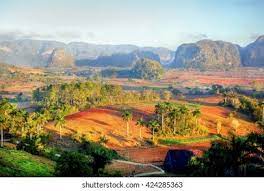
Uno de los lugares mas bellos de Cuba, caracterizada por la belleza del paisaje, en el que se destacan los mogotes, tanto en solitario como en sierras cársicas, alternando con las vegas de tabaco, los campos de cultivo y las casas rústicas de familias campesinas. El valle de Viñales se localiza en el centro de la Sierra de los Organos y esta combinación de paisaje natural y cultural le han ganado la categoría de Paisaje Natural de la Humanidad dada por la UNESCO. Se destacan, además, la flora y la fauna de la región por su exclusividad y varios sistemas cavernarios que clasifican entre los mas bellos y mas grandes de Latinoamérica.

Cayo Largo del Sur. Archipiélago de los Canarreos.
marina5

Cayo Largo del Sur es una pequeña y paradisíaca isla situada al Sur de la isla de Cuba, en el extremo Este del Archipiélago de los Canarreos y en medio del Mar Caribe. Cayo Largo en gran parte se encuentra en estado natural y bastante bien conservado. Tiene alrededor de 20 Km de playas arenosas con aguas límpidas y arena fina y blanca, muchas de ellas casi vírgenes. La fauna es rica en especies sobre todo de aves y peces, aunque aquí destacan por su popularidad las iguanas, una especie de reptiles que a pesar de su aspecto amenazador son, como todos los demás animales de estos cayos y de Cuba en general, completamente inofensivas.

AQUELLOS QUE OLVIDAN SU HISTORIA ESTAN CONDENADOS A REPETIRLA.

AQUELLOS QUE OLVIDAN SU HISTORIA ESTAN CONDENADOS A REPETIRLA.

SOME OF THE MOST ATTRACTIVE AND BEAUTIFUL PLACES ON THE ISLAND OF CUBA. PHOTOS.

Old Havana.
Los 10 Mejores Lugares Turísticos de Cuba
Old Havana is the best example of colonial architecture on the island and throughout the Caribbean. Located on the west bank of Havana Bay and 3.2 km (2.0 mi) on the north-south axis and 1.6 km (1.0 mi) on the east-west axis, it is the largest colonial center in the Caribbean.
Declared a World Heritage Site by UNESCO in 1982 with the aim of preserving its architecture and its historical heritage, Old Havana treasures in its environment many of the most beautiful and important squares, buildings, historical monuments, museums and fortresses of the colonial time island.

Santiago de Cuba.
Santiago de Cuba is the second city of Cuba and also the capital of the province of the same name, characterized by the interrelation of the main mountain range of the island, the Sierra Maestra, and the Caribbean Sea. Santiago de Cuba is a mountain and sea, a Caribbean sea. The city, built in a hilly area next to the bay of the same name and having the backdrop of the Sierra Maestra is very picturesque and full of beautiful physical scenarios and has an important historical and cultural heritage.

City of Trinidad.
Los 10 Mejores Lugares Turísticos de Cuba
The city of Trinidad is located in the center of the island, in the province of Sancti Spiritus. Trinidad is one of the first villas founded in Cuba (1514) and has been declared by UNESCO as a Cultural Heritage of Humanity and is where architecture and colonial air have been best preserved on the island for what is also known as City Museum of the Caribbean Sea. It is actually one of the most charming and magical cities in the Caribbean and Latin America.
In its environment, of great natural beauty, is the Valley of the Sugar Mills, also a Cultural Heritage of Humanity, and the Sierra del Escambray, a true ecological paradise.

Varadero Beach, Province of Matanzas .
It is the main and most beautiful Cuban resort, and also the best equipped on the island. It is located in the Hicacos peninsula on the north coast of the province of Matanzas and 140 km (87.5 mi) east of the City of Havana with which it is connected by a wide highway.

Cienfuegos City .
The City of the Sea, Cienfuegos, is undoubtedly the most beautiful city in Cuba. Located in the center-south of the country, in the margins of the bay of Jagua, was founded by French from Louisiana in the year 1819. In it, you can admire parks, theaters, churches, cemeteries full of sculptural monuments of great value, and architectural gems like the Palacio de Valle and the Terry Theater.

City of Baracoa.
Los 10 Mejores Lugares Turísticos de Cuba
The primate city of Cuba is Baracoa, the first town in the country was founded by Diego Velázquez in 1511 at the eastern end of the island. The physical isolation in which it was kept for 4 centuries and its exuberant nature give it a unique air on the island, the original layout of the villa is maintained as well as its own dance-culinary manifestations and architecture in wood without equal in the country. In addition to the beautiful natural environment that is enjoyed in Baracoa, which highlights the Miel and Toa rivers (the largest in Cuba).
Access to the city can be by road through La Farola, a unique scenic route.

Viñales Valley, Pinar del Rio.
One of the most beautiful places in Cuba, characterized by the beauty of the landscape, which highlights the mogotes, both alone and in karst mountain ranges, alternating with the tobacco fields, fields, and rural houses of peasant families. Viñales Valley is located in the center of the Sierra de los Organos and this combination of natural and cultural landscape has earned it the category of Natural Landscape of Humanity given by UNESCO. It also highlights the flora and fauna of the region for its exclusivity and several cave systems that rank among the most beautiful and largest in Latin America.

Cayo Largo del Sur. Archipelago of the Canarreos .
Los 10 Mejores Lugares Turísticos de Cuba
Cayo Largo del Sur is a small and paradisiac island located to the South of the island of Cuba, in the East end of the Canarreos Archipelago and in the middle of the Caribbean Sea. Cayo Largo is largely in a natural state and quite well preserved. It has around 20 km of sandy beaches with limpid waters and fine white sand, many of them almost virgin. The fauna is rich in species, especially birds and fish, although here iguanas stand out for their popularity, a species of reptiles that despite their threatening aspect are, like all the other animals of these keys and of Cuba in general, completely Harmless

Agencies/ Wiki/ Internet Photos/ Arnoldo Varona/ www.thecubanhistory.com
THE CUBAN HISTORY, HOLLYWOOD.

cuba-408869__340

logo