– (OPINION) The Main Obstacle to the Economic Takeoff of Cuba is the Blocking of the National Private Enterprise. <> (OPINIÓN) El Obstáculo Principal al Despegue Económico de Cuba es el Bloqueo a la Empresa Privada Nacional.

14769762525876(OPINIÓN) EL OBSTÁCULO PRINCIPAL AL DESPEGUE ECONÓMICO DE CUBA ES EL BLOQUEO A LA EMPRESA PRIVADA NACIONAL.

El ministro de Comercio Exterior e Inversiones de Cuba, Rodrigo Malmierca Díaz, dijo “no vamos a vender el país” en una entrevista reciente en la que también se refirió a “una serie de reglas que permiten el control” del capital extranjero para “preservar la soberanía”. Al mismo tiempo, dio la bienvenida a la modificación de “algunas reglas complementarias” que acortan los procesos de evaluación de los inversores.

¿Cómo encajan las palabras de Malmierca en el actual panorama?

* Esas son palabras para la galería. Después de seis décadas de propaganda durante las que el Gobierno siempre ha afirmado que toda inversión es una forma de explotación y, en particular, la inversión extranjera era una forma del ‘imperialismo’ de tratar de apoderarse de la riqueza de los países, a funcionarios como Malmierca no le queda más remedio que contrarrestar lo dicho con tanto fervor revolucionario y socialista. Yo no dudo que el propio Malmierca se haya creído la propia propaganda del régimen. De hecho, la retórica puede intimidar todavía a muchos inversionistas.

¿Cómo actúa el control gubernamental mencionado por Malmierca en los procesos de inversión y qué repercusión tiene en la concreción de los proyectos y sobre la economía en general?

* Los funcionarios cubanos tienen ideas muy primitivas y erradas de cómo operan las empresas y los procesos inversionistas. Creen que controlándolo todo protegen los intereses nacionales, sobre los que tienen nociones simplistas. Es realmente lamentable que el discurso oficial cubano sea tan pobre, lo que sigue mostrando la incapacidad del Gobierno para manejar la economía.

Nunca han entendido cómo las empresas contribuyen a la economía. La soberanía cubana no está en peligro a menos que los inversionistas pidan y consigan privilegios o concesiones especiales, fuera del ámbito productivo de sus proyectos. Las inversiones por sí solas no afectan la soberanía, pero la paranoia gubernamental puede acabar estableciendo controles y formas de supervisión que acaben obstaculizando las nuevas inversiones.

Malmierca anunció en FIHAV que se han modificado normas complementarias que acortan los procesos de evaluación de los inversores y que se trabaja en la creación de una Ventanilla Única que funcionará el próximo año. ¿Serán efectivas para lograr el monto total de capital extranjero que se ha propuesto el Gobierno y que admitió ‘está por debajo del necesario’?

* La ventanilla única bien debe ayudar a las inversiones extranjeras, pero la incomprensión de los funcionarios y políticos cubanos sobre la economía y cómo deben operar las empresas para ser eficientes me hace pensar que les llevará algún tiempo antes de que logran que el mecanismo funcione eficientemente.

Yo dudo mucho que el Gobierno cubano pueda atraer inversiones extranjeras en un monto como el que necesita la economía del país para crecer y salir de la crisis crónica que ya va a cumplir sesenta años. Aunque parezca mentira, bajo el socialismo castrista Cuba nunca tuvo una economía solvente, una que pudiera sostenerse sin los subsidios soviéticos primero y los venezolanos después.

Malmierca volvió a culpar al embargo de que las inversiones extranjeras no alcanzaran el crecimiento de 2.500 millones de dólares necesario para desarrollar el modelo económico estatal. ¿Qué otras medidas serían necesarias para alcanzar este objetivo?

* No hay duda de que el embargo es un obstáculo a la inversión extranjera, pero el principal es lo que yo he llamado el bloqueo interno representado por las prohibiciones masivas del Gobierno cubano a la empresa privada nacional. Esto está fehacientemente demostrado por la propia prohibición de la ley de inversiones extranjeras a la participación de los cubanos a desarrollar su propias inversiones y empresas en Cuba.

Los inversionistas extranjeros bien informados saben que Cuba está gobernada por individuos que están ideológicamente sesgados en contra del capitalismo lo cual se hace evidente a diario en Cuba. Para que Cuba pueda tener el volumen de inversiones que necesita, el Gobierno (y el Partido) tendrán que hacer grandes concesiones y permitir el desarrollo de la economía de los cubanos, lo que verían los extranjeros como una señal positiva que inspiraría confianza.

También ayudaría mucho que Cuba tuviera entre sus autoridades económicas a algunas figuras conocidas por su competencia en este sentido, pero lamentablemente las mismas no existen y si existen no se conocen.

logo

0002739240(OPINION) THE MAIN OBSTACLE TO THE ECONOMIC TAKEOFF OF CUBA IS THE BLOCKING OF THE NATIONAL PRIVATE ENTERPRISE.

Cuba Foreign Trade and Investment Minister Rodrigo Malmierca Díaz, said “We are not going to sell the Country” in a recent interview in which he also referred to “a series of rules that allow control” of foreign capital so that “sovereignty is preserved.” At the same time he welcomed the modification of “some complementary rules” that shorten the processes of investor evaluation.

How do Malmierca’s words fit in the current panorama?

* Those are words for the gallery. After six decades of propaganda during which the Government has always claimed that all investment is a form of exploitation and, in particular, foreign investment was a form of ‘imperialism’ of trying to seize the wealth of countries, officials as Malmierca has no other choice but to counter what has been said with such revolutionary and socialist fervor. I do not doubt that Malmierca himself has believed the propaganda of the regime. In fact, rhetoric can still intimidate many investors.

How does the government control mentioned by Malmierca in the investment processes and what impact does it have on the concretion of the projects and on the economy in general?

* Cuban officials have very primitive and mistaken ideas of how companies and investment processes operate. They believe that controlling everything protects national interests, over which they have simplistic notions. It is really regrettable that the official Cuban discourse is so poor, which continues to show the inability of the Government to manage the economy.

They have never understood how companies contribute to the economy. Cuban sovereignty is not in danger unless investors ask for and obtain privileges or special concessions, outside the productive scope of their projects. Investments alone do not affect sovereignty, but government paranoia may end up establishing controls and forms of supervision that end up hindering new investments.

Malmierca announced in FIHAV that complementary rules have been modified that shorten the processes of investor evaluation and that work is carried out in the creation of a Single Window that will operate next year. Will they be effective to achieve the total amount of foreign capital that the Government has proposed and that admitted ‘is below the necessary’?

* The single window should help foreign investments, but the incomprehension of Cuban officials and politicians about the economy and how companies should operate in order to be efficient makes me think that it will take some time before they manage to efficiently operate the mechanism .

I very much doubt that the Cuban government can attract foreign investment in an amount like the one that the country’s economy needs to grow and come out of the chronic crisis that will be sixty years old. Believe it or not, under Castro’s socialism Cuba never had a solvent economy, one that could be sustained without Soviet subsidies first and Venezuelans later.

The main one is what I have called the internal blockade represented by the massive prohibitions of the Cuban Government to the national private company. This is demonstrated by the very prohibition of the law of foreign investments to the participation of Cubans to develop their own investments and companies in Cuba.

Well-informed foreign investors know that Cuba is governed by individuals who are ideologically biased against capitalism, which is evident daily in Cuba. In order for Cuba to have the volume of investments it needs, the Government (and the Party) will have to make big concessions and allow the development of the Cuban economy, which foreigners would see as a positive signal that would inspire confidence.

It would also help a lot if Cuba had among its economic authorities some figures known for their competence in this sense, but unfortunately they do not exist and if they exist they do not know each other.

Agencies/DDC/ Jorge A Sanguinetty/ Extractos/ Internet Photos/ Arnoldo Varona/ TheCubanHistory.com
THE CUBAN HISTORY, HOLLYWOOD.

logo

– STREET Legend of the Old Havana, El Caballero de Paris (The Knight of Paris). <> LEYENDA Callejera de la Habana Vieja, El Caballero de París. FOTOS.

8196-caballero-parisLEYENDA CALLEJERA DE LA HABANA VIEJA, EL CABALLERO DE PARÍS.

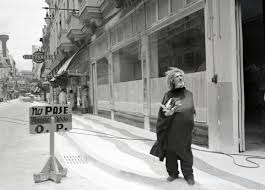
El Caballero de París, aquel mítico personaje que encarnó uno de los peldaños más altos de esas leyendas de figuras callejeras, rodeado del folclore que forma parte de la historia capitalina de los últimos 50 años del pasado siglo.

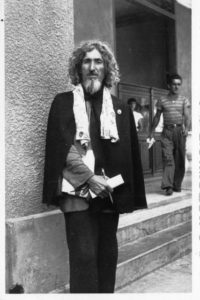
De mediana estatura, menos de 6 pies, tenía el pelo muy largo y desaliñado, lucía barba y sus uñas eran largas y retorcidas por no haberse cortado en muchos años. Vestido siempre de negro, con una capa de igual color, incluso en el calor del verano. Siempre llevaba en las manos un cartapacio de papeles y periódicos, patrimonio de sus pertenencias, que parecía no querer desprenderse de ellos. Aunque los niños inicialmente le tenían miedo por su apariencia, pronto perdían el miedo y charlaban con él y tanto adultos como niños, le hablaban con mucho respeto.

José María Lledín era su verdadero nombre, pero para los cubanos “El Caballero de París”.

Se paseaba por las calles y viajaba en los ómnibus de La Habana, saludando a todo el mundo y discutiendo la filosofía de su vida, la religión, la política y los eventos del día con todo el que atravesaba su camino.

CABALLERO DE PARIS

Somos muchos los habaneros que lo vimos deambular, durante años, por las capitalinas calles del Paseo del Prado, la Avenida del Puerto, en un parque cerca de la “Plaza de Armas”; cerca de la Iglesia de Paula; y en el Parque Central, donde algunas veces dormía en uno de los bancos; y solía caminar por la calle Muralla, Infanta y San Lázaro y por la esquina de 12 y 23, en el Vedado.

Lo cierto es que “El Caballero de Paris”, o José María Lledin, nació en Fonsagrada, provincia de Lugo, en Galicia, España, el 30 de diciembre de 1899 y fue el único, de once hermanos que aprendió a leer y a escribir. Dicen que dedicó muchísimas horas a completar su educación, no pudo concluir sus estudios de Bachillerato, pero siempre prefirió la lectura y la buena música.

Llegó a Cuba sin haber cumplido los quince años de edad y trabajó en diferentes actividades, como suelen hacer los emigrados y se dice que trabajó como sirviente de restaurante en los hoteles Inglaterra, Telégrafo, Sevilla, Manhattan, Royal Palm, Salón A y Saratoga.

Se cuenta que perdió el equilibrio mental después de haber sufrido prisión en El Castillo del Príncipe en La Habana, de manera injusta por un delito que no cometió, tras su excarcelación y a partir de las primeras décadas del siglo XX comenzó a deambular por las calles devenido personaje popular que cambiaba de personalidad y que le acompañó hasta su muerte.

4fffaf4f1dce4bb6240875e4eb8f55d7

El 7 de Diciembre de 1977, cercano a sus 90 años, se le vio por las calles hasta que fue necesario internarlo en el Hospital Psiquiátrico de La Habana en las afueras de la ciudad, para tratar de mejorar su delicado estado mental. Su psiquiatra el Dr. Luis Calzadilla Fierro, último acompañante de sus días a quien llamó su fiel mosquetero dictaminó que padecía de parafrenia, delirio imaginativo con confabulaciones y un deterioro no significativo de la personalidad.

La historia de vida está recogida en un libro del Dr. Luis Calzadilla Fierro, titulado ‘Yo soy el Caballero de París’ publicado en el año 2000, en el que publica una copia fotográfica del certificado de nacimiento y la lista de entradas de pasajeros cuando él llegó a Cuba y una copiosa documentación hasta el reporte de su autopsia.

51+KJ2b-aXL._SY400_

No importa su desaparición física de las calles pues quedan sus andanzas, ahora en el imaginario popular, en el recuerdo y en las leyendas de esa Habana que lo eternizó. Lo evocamos cada día los miles de transeúntes que podemos verlo o tocarlo, en una estatua de bronce, de tamaño natural, fruto del escultor José Villa Soberón, ubicada en las afueras del Convento de San Francisco de Asís, del Centro Histórico. La obra, iniciativa de Eusebio Leal, Historiador de la Ciudad de La Habana que lo denota como un caminante.

logo

024STREET LEGEND OF THE OLD HAVANA, EL CABALLERO DE PARÍS (THE KNIGHT OF PARIS).

El Caballero de Paris (The Knight of Paris), that mythical character who embodied one of the highest levels of these legends of street figures, surrounded by folklore that is part of the capital’s history of the last 50 years of the last century.

Of medium height, less than 6 feet, his hair was very long and disheveled, he had a beard and his nails were long and twisted because they had not been cut for many years. Always dressed in black, with a layer of the same color, even in the heat of summer. He always carried in his hands a portfolio of papers and newspapers, patrimony of his belongings, which seemed not to want to part with them. Although the children were initially afraid of his appearance, they soon lost their fear and chatted with him, and both adults and children spoke to him with great respect.

José María Lledín was his real name, but for the Cubans “El Caballero de París”.

He walked through the streets and traveled in the buses of Havana, greeting everyone and discussing the philosophy of his life, religion, politics and the events of the day with everyone who crossed his path.

download (1)

We are many habaneros who saw him wandering, for years, through the capital streets of Paseo del Prado, Avenida del Puerto, in a park near the “Plaza de Armas”; near the Church of Paula; and in the Central Park, where sometimes he slept in one of the banks; and I used to walk down Muralla street, Infanta and San Lázaro and around the corner of 12 and 23, in Vedado.

The truth is that “The Knight of Paris”, or José María Lledin, was born in Fonsagrada, province of Lugo, in Galicia, Spain, on December 30, 1899 and was the only one of eleven brothers who learned to read and write. They say that he dedicated many hours to complete his education, he could not finish his studies of Bachillerato, but he always preferred reading and good music.

He arrived in Cuba without having reached the age of fifteen and worked in different activities, as migrants usually do and is said to have worked as a restaurant servant in the hotels Inglaterra, Telégrafo, Sevilla, Manhattan, Royal Palm, Salón A and Saratoga.

download

It is said that he lost his mental balance after having suffered imprisonment in El Castillo del Príncipe in Havana, unfairly for a crime he did not commit, after his release and from the first decades of the twentieth century began to wander through the streets popular character who changed personality and who accompanied him until his death.

On December 7, 1977, close to his 90 years, he was seen in the streets until it was necessary to admit him to the Psychiatric Hospital of Havana on the outskirts of the city, to try to improve his delicate mental state. His psychiatrist Dr. Luis Calzadilla Fierro, last companion of his days whom he called his faithful musketeer, stated that he suffered from paraphrenia, imaginative delirium with confabulations and a non-significant deterioration of personality.

The life story is collected in a book by Dr. Luis Calzadilla Fierro, entitled ‘I am the Paris Gentleman’ published in the year 2000, in which he publishes a photographic copy of the birth certificate and the list of passenger tickets when He arrived in Cuba and a copious documentation until his autopsy report.

1-El-Caballero-de-París-en-La-Habana

No matter his physical disappearance from the streets because his adventures are left, now in the popular imagination, in the memory and in the legends of that Havana that immortalized him. We evoke every day the thousands of passers-by who can see or touch it, in a life-size bronze statue, fruit of the sculptor José Villa Soberón, located on the outskirts of the Convent of San Francisco de Asís, of the Historical Center. The work, initiative of Eusebio Leal, Historian of the City of Havana that denotes him as a walker.

Agencies/ Guadalupe Yaujar Diaz/ Internet Photos/ Extractos/ Arnoldo Varona/ TheCubanhistory.com
THE CUBAN HISTORY, HOLLYWOOD.

logo

– HISTORY of the Cuban Equine Race. The First Horses. PHOTOS. <> HISTORIA de la Raza Equina Cubana. Los Primeros Caballos.

horse2_origiHISTORY OF THE CUBAN EQUINE RACE. THE FIRST HORSES.  

All the investigations carried out in our continent prove that the horse did not exist in these lands at the arrival of the Spaniards. At that time, the Iberian horse, especially the Andalusian horse, was considered the best in Europe, in whose formation the horses carried there by the Arabs had influenced, whose domination lasted more than seven centuries.

Hence, the preparation of Christopher Columbus’s first trip to our lands coincided with the latest struggles against Arab rule in Granada, Spain.

According to existing documents in the Archive of the Indies of Seville, the horses brought in the expedition of Columbus were of proven physical strength and came from Seville, a city where the members of the crews were also recruited.

Thus, we can assure that the first horses entered America through the island of Hispaniola, that is, what Santo Domingo and Haiti are today, where they were taken by Columbus in 1493.

Years later, in 1511, Diego Velázquez introduced them to Cuba and although there were few animals enough to sow panic among the natives. As when Pánfilo de Narváez was ordered to take the Indian population of Bayamo with 30 men and a single mare covered with bells that were mounted by him.

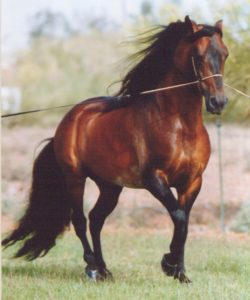
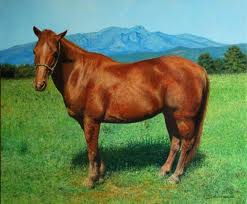
From the mix of breeds in Cuba came a specimen that is characterized by its fine and gualdrapeada gait, it is a strong animal with an elegant appearance. The so-called Cuban Paso horse has a head that is proportional to its body and has a straight profile, although occasionally it can be slightly convex or slightly concave. The forehead is wide, the ears are medium, well implanted and mobile
The neck is strong, medium length and well inserted at both ends. The cross slightly high, muscular and the back straight and strong back.

caballos-en-la-cerca1

In visit to Cuba by the American writer Samuel Hazard in 1870, he could appreciate the quality of our horses at that time. In his book Cuba a pluma y lápiz, he states that:

“The horse of Cuba is a magnificent animal, short body, solid and well formed, with strong limbs, beautiful and intelligent eyes and for long days there is no better one.These horses have a thick neck, strong mane and thick tails and seeing them in the savannahs where they are raised, before they are beloved, present a beautiful appearance of wild horses.Their march is something peculiar, exclusive of them and in a well-trained Cuban horse, even the one that has never ridden, can do it without fear ” .

The largest production of equines of this breed in Cuba are found in the ranch La Loma of Granma province. These breeds require a refreshing blood with Spanish horses, breed that gave birth, or with the Criollo Continental horse and fine-riding stallions from America, which also come from the Spanish horse and have similar morphological characteristics to Cuban horses .

In Cuba the huntsmen prefer Trote’s Criollo horse for its work in the cattle ranch, but the peasants that require a horse as a means of transport better estimate the Cubano de Paso, since they travel greater distances in less time, they are more comfortable and very coveted by rural women who also need this service.

logo

caballo-cubanoHISTORIA DE LA RAZA EQUINA CUBANA. LOS PRIMEROS CABALLOS.

Todas las investigaciones realizadas en nuestro continente prueban que el caballo no existía en estas tierras a la llegada de los españoles. Por esa época, el caballo ibérico, sobre todo el andaluz, era considerado el mejor de Europa, en cuya formación habían influido los caballos llevados allí por los árabes, cuya dominación duró más de siete siglos.

De ahí que la preparación del primer viaje de Cristóbal Colón a nuestras tierras coincidiera con las últimas luchas contra el dominio árabe en Granada, España.

Según documentos existentes en el Archivo de Indias de Sevilla los caballos traídos en la expedición de Colón eran de probada fortaleza física y procedían de Sevilla, ciudad donde también fueron reclutados los miembros de las tripulaciones.

Así, podemos asegurar que los primeros caballos entraron a América por la isla la Española, o sea, lo que es hoy Santo Domingo y Haití, a donde fueron llevados por Colón en 1493.

Años después, en 1511, Diego Velázquez los introducía en Cuba y aunque venían pocos animales bastaba para sembrar el pánico entre los nativos. Como cuando Pánfilo de Narváez se le ordenó tomar la población india de Bayamo con 30 hombres y una sola yegua cubierta de cascabeles que era montada por él.

De la mezcla de razas en Cuba salio un ejemplar que se caracteriza por su marcha fina y gualdrapeada, es un animal fuerte y de apariencia elegante. El llamado caballo de paso cubano tiene la cabeza un tamaño proporcional a su cuerpo, presenta un perfil recto, aunque en ocasiones puede ser ligeramente convexo o ligeramente cóncavo. La frente es ancha, las orejas son medianas, bien implantadas y móviles
El cuello es fuerte, de mediana longitud y bien insertado en ambos extremos. La cruz ligeramente alta, musculosa y el dorso lomo recto y fuerte.

En visita realizada a Cuba por el escritor norteamericano Samuel Hazard en el año 1870, pudo apreciar la calidad de nuestros caballos en esa época. En su libro Cuba a pluma y lápiz, plantea que:

“El caballo de Cuba es un magnífico animal, de cuerpo corto, sólido y bien formado, con fuertes miembros, ojos bellos e inteligentes y para largas jornadas no hay uno mejor. Estos caballos tienen cuello grueso, fuertes crines y colas espesas y viéndolas en las sabanas donde se crían, antes de que se les amaestren, presentan una bella apariencia de caballos salvajes. Su marcha es algo peculiar, exclusiva de ellos y en un buen amaestrado caballo cubano, aún el que nunca haya montado, puede hacerlo sin temor”.

91bac9dfbffc5f7ed6ed087d90124107877bc22e

La mayor producción de equinos de esta raza en Cuba se encuentran en el rancho La Loma de la provincia Granma. Estas razas requieren de un refrescamiento de la sangre con caballos españoles, raza que le dio origen, o con el caballo Criollo Continental y sementales de marcha fina procedentes de América, las cuales también proceden del caballo español y tienen características morfológicas similares a los caballos cubanos.

En Cuba los monteros prefieren el caballo Criollo de Trote para su trabajo en la ganadería, pero los campesinos que requieren de un caballo como medio de transporte estiman mejor al Cubano de Paso, ya que recorren mayores distancias en menor tiempo, son más cómodos y muy codiciados por la mujeres de campo que necesitan también este servicio.

Agencies/Radio Encyclop./ Juan B. Rodriguez/Ecured/ Internet Photos/ Arnoldo Varona/ TheCubanHistory.com
THE CUBAN HISTORY, HOLLYWOOD.

logo