< TOMAS MILIAN, Cuban Actor with a Long International Filming Career.

download (4)TOMAS MILIAN, ACTOR CUBANO CON UNA LARGA CARRERA INTERNACIONAL EN EL CINE. VIDEOS

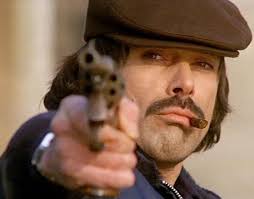
Tomás Quintín Rodríguez-Varona Milian Salinas De La Fé y Alvarez De La Campa, solo conocido como Tomas Milian, nació en La Habana, Cuba, el 3 de marzo de 1933. Era un actor y cantante cubanoamericano con ciudadanía italiana, conocido por La intensidad emocional y el humor que trajo a los papeles en las películas de género europeas.

Milian era bisexual; Antes de su matrimonio con la actriz Margherita Valletti, tuvo relaciones con hombres y mujeres.

Después de comenzar una carrera en los Estados Unidos, Milian viajó a Italia en 1958 para participar en un festival de teatro en Spoleto. Finalmente, decidió mudarse a Italia, donde vivió durante más de 25 años, convirtiéndose en un artista muy exitoso.

Un estudiante de Lee Strasberg, Milian estudió método actuando en el Actors Studio en la ciudad de Nueva York. En Italia, fue descubierto por el director Mauro Bolognini y apareció en papeles secundarios en varias películas dramáticas a fines de los años cincuenta y principios de los sesenta, incluso como Rafael en The Agony and the Ecstasy de Carol Reed (1965).

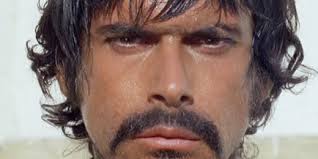
A lo largo de finales de los años sesenta y principios de los setenta, Milian se convirtió en un actor dinámico en una serie de películas de Spaghetti Western, en particular The Ugly Ones (1966), The Big Gundown (1966), Django Kill … If You Live ¡Dispara! (1967), Cara a cara (1967), Correr, Hombre, Correr (1968), Sentencia de muerte (1968), Tepepa (1969), Compañeros (1970), Sonny y Jed (1972), La vida es dura, ¿Eh Providencia? (1972) y Cuatro del Apocalipsis (1975).
download (5)

Tras una disminución en la popularidad de Spaghetti Westerns, Milian hizo la transición a papeles en películas de poliziottesco. Después de ser aclamado por su desempeño como asesino psicótico en Almost Human (1974), hizo apariciones en Emergency Squad (1974), The Tough Ones (1976), The Cynic, The Rat and the Fist (1977) y dos series de películas. La serie de Nico Giraldi de Bruno Corbucci (1976-1984, comenzando con The Cop in Blue Jeans) y las películas de Er Monnezza de Umberto Lenzi (1976-1980, comenzando con Free Hand for a Tough Cop). También apareció en otras películas durante este período, incluyendo el giallo Don’t Torture a Duckling (1972) y las películas que no son de género The Last Movie (1971), Luna (1979), Identification of a Woman (1982) y Monseñor ( mil novecientos ochenta y dos). Después de regresar a los Estados Unidos en 1985, Milian continuó desempeñando papeles secundarios en producciones cinematográficas, como JFK (1991), Amistad (1997), Traffic (2000) y The Lost City (2005). Milian murió en 2017.
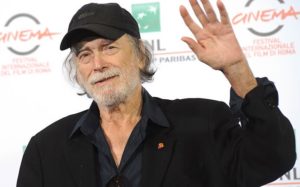
A medida que creció, Milián decidió regresar a los Estados Unidos. Apareció en La Habana de Sidney Pollack, Amistad de Steven Spielberg, Traffic de Steven Soderbergh y The Lost City, de Andy García, sobre la Cuba revolucionaria. También ha jugado muchos papeles en el escenario. En 2005, interpretó al Generalísimo Rafael Leonidas Trujillo Molina en la versión cinematográfica de la novela La fiesta de la cabra de Mario Vargas Llosa.

Milian fue encontrado muerto de un derrame cerebral en su casa de Miami el 22 de marzo de 2017.

El 11 de octubre de 2017, recibió el premio Leone in Memoriam en el 7º Festival de Cine del Oeste de Almería. Fue recogido por su amigo Luis Santeiro.

Esposa (s) Margherita Valetti (m. 1964–2012) (su muerte)
Niños 1

(LEER SUS ULTIMAS INTERPRETACIONES Y PREMIOS EN LA SECCION EN INGLES BELOW)
cuba-ferries

logo

download (6)TOMAS MILIAN, CUBAN ACTOR WITH A LONG INTERNATIONAL FILMING CAREER. VIDEOS.

Tomás Quintín Rodriguez-Varona Milian Salinas De La Fé y Alvarez De La Campa, only known as Tomas Milian, was born in La Habana, Cuba on March 3, 1933. He was a Cuban American actor and singer with Italian citizenship, known for the emotional intensity and humor he brought to roles in European genre films.

Milian was bisexual; prior to his marriage to actress Margherita Valletti, he had relationships with both men and women.

After starting a career in the United States, Milian went to Italy in 1958 to take part in a theatre festival in Spoleto. He eventually decided to relocate to Italy, where he lived for over 25 years, becoming a very successful performer.

A student of Lee Strasberg, Milian studied method acting at the Actors Studio in New York City. In Italy, he was discovered by director Mauro Bolognini and appeared in supporting roles in several drama films during the late-1950s and early-1960s, including as Raphael in Carol Reed’s The Agony and the Ecstasy (1965). Throughout the late-1960s and early-1970s, Milian established himself as a dynamic leading actor in a series of Spaghetti Western films, most notably The Ugly Ones (1966), The Big Gundown (1966), Django Kill… If You Live, Shoot! (1967), Face to Face (1967), Run, Man, Run (1968), Death Sentence (1968), Tepepa (1969), Compañeros (1970), Sonny and Jed (1972), Life Is Tough, Eh Providence? (1972) and Four of the Apocalypse (1975).

download (7)

Following a decline in the popularity of Spaghetti Westerns, Milian transitioned to roles in poliziottesco films. After receiving acclaim for his performance as a psychotic killer in Almost Human (1974), he made appearances in Emergency Squad (1974), The Tough Ones (1976), The Cynic, the Rat and the Fist (1977) and two film series – Bruno Corbucci’s Nico Giraldi series (1976-1984, beginning with The Cop in Blue Jeans) and Umberto Lenzi’s Er Monnezza films (1976-1980, beginning with Free Hand for a Tough Cop). He also appeared in other films during this period, including the giallo Don’t Torture a Duckling (1972) and the non-genre films The Last Movie (1971), Luna (1979), Identification of a Woman (1982) and Monsignor (1982). After returning to the United States in 1985, Milian continued to perform supporting roles in film productions, including JFK (1991), Amistad (1997), Traffic (2000) and The Lost City (2005). Milian died in 2017.

As he grew older, Milián decided to go back to the United States. He appeared in Sidney Pollack’s Havana, Steven Spielberg’s Amistad, Steven Soderbergh’s Traffic as well as Andy García’s The Lost City, about Revolutionary Cuba. He has also played many roles on stage. In 2005, he portrayed Generalissimo Rafael Leonidas Trujillo Molina in the film version of Mario Vargas Llosa’s novel The Feast of the Goat.

Milian was found dead from a stroke at his home in Miami on 22 March 2017.

download (8)

On October 11, 2017, he received the Leone in Memoriam award at the 7º Almería Western Film Festival. It was picked up by his friend Luis Santeiro.

Spouse(s) Margherita Valetti (m. 1964–2012) (her death)
Children 1

AWARDS.
Screen Actors Guild Award for Outstanding Performance by a Cast in a Motion Picture
2001 Traffic
Awards FIPRESCI Prize for Best Actor
1965 Time of Indifference
Silver Ribbon Award for Best Supporting Actor
1980 La Luna

Filmography
His Last Performances in a Long Career.

Drug Wars: The Camarena Story (1990, Brian Gibson) as Florentino Ventura
Revenge (1990, Tony Scott) as Cesar
Havana (1990, Sydney Pollack) as Colonel Menocal
Money (1991, Steven Hilliard Stern) as Robert Zarra
JFK (1991, Oliver Stone) as Leopoldo
Frannie’s Turn (1992, various) as Joseph Escobar
Murder, She Wrote, “Day of the Dead” (1992, Anthony Shaw) as Enrico Montejano
Nails (1992, John Flynn) as Pedro Herrara
The screenplay, “Bitter Harvest” (1992, Simon Cellan Jones) as Ramon Cires
Love, Honor & Obey: The Last Mafia Marriage (1993, John Patterson) as Joe Profaci
Marilyn & Bobby: Her Final Affair (1993, Bradford May) as Calro Rossi
The Burning Season (1994, John Frankenheimer) as Darli Alves
The Cowboy Way (1994, Gregg Champion) as Manny Huerta
Fools Rush In (1997, Andy Tennant) as Tomas Fuentes
Oz (1997, various) as Ricardo Alvarez
Amistad (1997, Steven Spielberg) as Ángel Calderón de la Barca y Belgrano
The Yards (2000, James Gray) as Manuel Sequeira
Law & Order (2000, Christopher Misiano) as Colonel Emilio Pantoya
For Love or Country: The Arturo Sandoval Story (2000, Joseph Sargent) as Sosa
Traffic (2000, Steven Soderbergh) as General Arturo Salazar
The Hire: Ambush (short, 2001, John Frankenheimer)
Washington Heights (2002, Alfredo De Villa) as Eddie
The Lost City (2005, Andy García) as Don Federico Fellove
The Feast of the Goat (2005, Luis Llosa) as Rafael Leonidas Trujillo
Fugly! (2014, Alfredo De Villa) as Gramps

Agencies/ Wiki/ Internet Photos/ youTube/ Arnoldo Varona/ www.TheCubanHistory.com
THE CUBAN HISTORY, HOLLYWOOD.
1800px-Cuba_Banner

logo

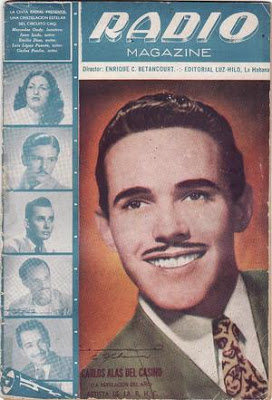
< CARLOS ALAS del Casino, Singer, Composer, Interpreter of Guajiras, Tangos y Boleros.

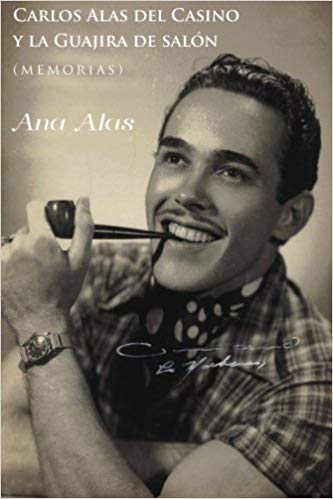
41mSGVsY1lL._SX331_BO1,204,203,200_CARLOS ALAS DEL CASINO, CANTANTE, COMPOSITOR, INTERPRETE DE GUAJIRAS, TANGOS Y BOLEROS. VIDEOS

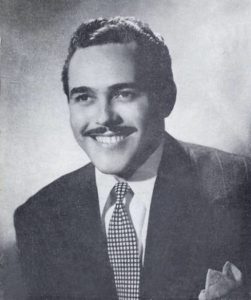
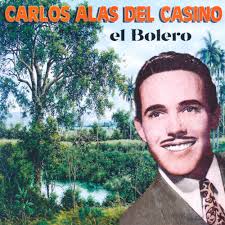
Carlos Manuel Alas Rivero, conocido solo por su nombre artistico Carlos Alas del Casino nació un 4 de Noviembre de 1917 en Guanabacoa, Cuba
y fue un destacado compositor y cantante del genero Guajira aunque tambien fue cantante de conocidos tangos.na .

A muy corta edad con algunos familiares se trasladó a Cienfuegos. A los 6 años de edad ya cantaba en “Fiesta Guajira “. De su amor por esa ciudad surgió su composición “Perla del Sur” , estrenada en 1943. Se inició profesionalmente como cantante en 1943, en Radio Cadena Suaritos. Este mismo año se coloca en los primeros lugares musicales nacionales, y se le considera “la revelación del año”, con seis programas radiales diarios en vivo, cantando guajiras, tangos y boleros.

Acompañado por Mario Landa y Victor Llerena Tabranes graba su primer disco con una tonada campesina titulada “El carretero” y el tango “Mano a mano”.

Trabajó en plantas pequeñas, hasta que llegó a R.H.C. Cadena Azul, donde actuó con Rita Maria Rivero y Carlos D’ Mar , en el recordado programa ” Un mensaje para ti”. Alas del Casino popularizó la guajira de salón en las décadas del 40 y 50; guajira con ritmo cadencioso, como el bolero, que se cantaba y bailaba. Se coloca en los primeros lugares musicales nacionales, y se le considera “La Revelación del Año”, en R.H.C. ( Cadena Azul) en 1944 , con seis programas radiales diarios en vivo, cantando guajiras, tangos y boleros.

Se mantuvo en los hits musicales durante varios años. Actuó en radio, teatros, cabarets, y en televisión a partir de 1950.

Cantó acompañado de las Orquestas Hermanos Castro , Cosmopolita y la de Alfredo Brito , el pianista Felo Bergaza o el Trio Los Latinos.

Popularizó la guajira de salón , aunque grabó bolero y tango.

Realizó con éxito giras por México, Puerto Rico, Colombia, Venezuela y Costa Rica. A partir de 1979 fija su residencia en Miami, donde problemas de salud le obligan a retirarse de los escenarios para dedicarse a su familia.

Carlos Alas

Fallece El 6 de mayo de 1993 en Miami, E.U. Carlos Alas del Casino en su domicilio, a consecuencia de sus problemas de salud. Con su muerte la música cubana pierde uno de los pilares.

Entre sus principales interpretaciones estan: “Por los campos de Cuba” Con el trío Latino.
Madrigal guajiro (Cheo Martínez) guajira
Con mi penquito (Julio Brito) guajira
Amorosa guajira (Jorge González Allué) guajira
Atardecer (Humberto Suárez) guajira
Adiós mi amor (Carlos Alas del Casino) guajira.
Casilda (Osvaldo Farrés) bolero-guajira
Los penachos de las palmas (Celia Romero) guajira
Cosas guajiras (Radeúnda Lima) guajira
El amor de mi bohio (Julio Brito) bolero-guajira
Alborada (Celia Romero) guajira
Verdad compay (José Fernández Pérez) guajira-son
En el eco de mi voz (Carlos Alas del Casino) guajira

Sus composiciones :
“Adiós mi amor”; “En el eco de mi voz”; “Perla del Sur”; “Tú eres falsa”

images (3)

logo

alasCARLOS ALAS DEL CASINO, SINGER, COMPOSER, INTERPRETER OF GUAJIRAS, TANGOS AND BOLEROS.

Carlos Manuel Alas Rivero, known only by his artistic name Carlos Alas del Casino was born on November 4, 1917, in Guanabacoa, Cuba
and was an outstanding composer and singer of the genre Guajira, although he was also a singer of well-known tangos.na.

At a very young age with some relatives, he moved to Cienfuegos. At 6 years old he already sang in “Fiesta Guajira”. From his love for that city came his composition “Perla del Sur”, released in 1943. He started professionally as a singer in 1943, on Radio Cadena Suaritos. This same year it is placed in the first national musical places, and it is considered “the revelation of the year”, with six daily radio programs live, singing guajiras, tangos, and boleros.

Accompanied by Mario Landa and Victor Llerena Tabranes records his first album with a peasant tune entitled “El carretero” and the tango “Mano a mano”.

He worked in Radio small stations until he arrived at R.H.C. Cadena Azul, where he starred with Rita Maria Rivero and Carlos D ‘Mar, in the well-remembered program “Un mensaje para ti”. Alas del Casino popularized the lounge guajira in the ’40s and ’50s; guajira with rhythmic rhythm, like the bolero, which was sung and danced. It is placed in the first national musical places, and it is considered “The Revelation of the Year”, in R.H.C. (Cadena Azul) in 1944, with six live radio programs per day, singing guajiras, tangos, and boleros.

download (1)

He kept on musical hits for several years. He acted in radio, theaters, cabarets, and television since 1950.

He sang accompanied by the Orquestra Hermanos Castro, Cosmopolita and Alfredo Brito, the pianist Felo Bergaza or the Trio Los Latinos.

He popularized the lounge guajira, although he recorded bolero and tango.

He successfully toured Mexico, Puerto Rico, Colombia, Venezuela, and Costa Rica. From 1979 he moved to Miami, where health problems forced him to retire from the stage to dedicate himself to his family.

81hyh2vwFtL._SS500_

On May 6, 1993, in Miami, E.U. Carlos Alas del Casino dies at home, as a result of his health problems. With his death, Cuban music loses one of the pillars.

(READ CARLOS ALAS DEL CASINO PERFORMANCES AND WORKS IN THE SPANISH SECTION ABOVE)

Agencies/ Wiki/ Argelia Vizcaino/ Internet Photos/ YouTube/ Arnoldo Varona/ www.TheCubanHistory.com
THE CUBAN HISTORY, HOLLYWOOD.
3.3-Ciudad

logo

< LA HAVANA: History of the Cuba's National Capitol. Video/ Photos.

El_Capitolio_Havana_CubaLA HABANA: HISTORIA DEL CAPITOLIO NACIONAL DE CUBA. VIDEO / FOTOS.

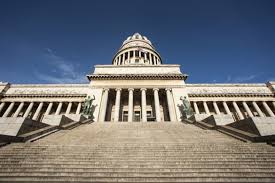
El Capitolio o el Capitolio Nacional de La Habana es un edificio público y solía ser uno de los sitios más visitados de La Habana, la capital de Cuba. El edificio fue encargado por el presidente cubano Gerardo Machado y se construyó desde 1926 hasta 1929 bajo la dirección de Eugenio Rayneri Piedra. Está ubicado en las calles Paseo del Prado, Dragones, Industria y San José en el centro exacto de La Habana.

El proyecto comenzó en abril de 1926, durante la administración de Gerardo Machado. La construcción fue supervisada por la firma estadounidense Purdy y Henderson. Antes de la Revolución cubana de 1959, el Congreso se alojó en el edificio, el Congreso fue abolido y disuelto después de la Revolución Cubana en 1959 y el edificio quedó en mal estado.

“El Capitolio” tiene un tamaño de 681 por 300 pies. Su diseño, aunque a menudo se compara con el del Capitolio de los Estados Unidos, no es una réplica de él. “Es similar a eso en Washington DC, pero un metro más alto, un metro más ancho y un metro de largo, así como mucho más rico en detalles. Para terminar su construcción, necesitaron más de 5000 trabajadores, 3 años, 3 meses y 20 días, así como aproximadamente 17 millones de dólares americanos “. Terminado en 1929, fue el edificio más alto de La Habana hasta la década de 1950. Alberga la tercera estatua de interior más grande del mundo.

A partir de 2013, el gobierno de Cuba ha estado restaurando lentamente el edificio para su uso una vez más como el hogar de la Asamblea Nacional de Cuba. Las obras se terminaron en 2019.

Edificio

Según su arquitecto, Eugenio Rayneri Piedra, la inspiración para la cúpula provino del Panteón de París a través del Tempietto de Bramante en San Pietro in Montorio. La cúpula, que está revestida de piedra alrededor de un marco de acero que se construyó en los Estados Unidos, se coloca de forma planimétrica hacia adelante en el edificio para permitir el ábside que contiene La República, el “Estatuto de la República”. Con casi 92 m (302 pies) de altura, la cúpula fue el punto más alto en la ciudad de La Habana hasta 1956, cuando se construyó el Edificio FOCSA con una altura de 121 metros (397 pies). El Capitolio tenía la tercera cúpula más alta del mundo en el momento de su construcción.

Los jardines, basados ​​en los diseños de jardines europeos que consisten en áreas de césped bordeadas por senderos y resaltadas por palmeras reales, fueron diseñados por el paisajista francés Jean-Claude Nicolas Forestier, quien también diseñó el Paseo del Prado.

download

Los 56 escalones que conducen a la entrada principal, La Escalinata, están flanqueados por estatuas de 6,5 m (21 pies) del artista italiano Angelo Zanelli. A la izquierda está el Trabajo (El Trabajo) y a la derecha La Virtud Tutelar (La Virtud Tutelar). Los escalones conducen al pórtico central, que tiene 36 m (118 pies) de ancho y más de 16 m (52 ​​1⁄2 pies) de altura. Hay 12 columnas de granito en el orden jónico dispuestas en dos filas y cada una de más de 14 m (46 pies) de altura. Más allá del pórtico, tres grandes puertas de bronce con bajorrelieves de Zanelli permiten el acceso a la sala principal.

El interior de la sala principal debajo de la cúpula es la Estatua de la República (La Estatua de la República). La estatua, también de Zanelli, fue fundida en bronce en Roma en tres piezas y se reunió dentro del edificio después de su llegada a Cuba. Está cubierta con una hoja de oro de 22 quilates (92%) y pesa 49 toneladas. Con 15 m (49 1⁄4 pies) de altura, era la segunda estatua más alta del mundo en secreto, con solo el Gran Buda de Nara siendo más alto. La estatua se encuentra en un pedestal de 2,5 m (8 1⁄4 pies) de altura, lo que hace que la altura total sea de 17.54 m (57 1⁄2 pies). Lily Valty, una cubana criolla, sirvió como modelo para el cuerpo de Zanelli, y la inspiración para la estatua vino de Atenea, la diosa griega de la sabiduría.

800px-Capitolio_de_La_Habana_(Cuba)_02

Incrustado en el piso en el centro de la sala principal hay una réplica de diamante de 25 quilates (5 g), que marca el Kilómetro Cero para Cuba. El diamante original, que se dice perteneció al zar Nicolás II de Rusia y fue vendido al estado cubano por un comerciante turco, fue robado el 25 de marzo de 1946 y misteriosamente devuelto al presidente, Ramón Grau San Martín, el 2 de junio de 1946. A ambos lados de la sala principal se encuentra el Salón de Pasos Perdidos, llamado así por sus propiedades acústicas. Estas salas, con pisos de mármol con incrustaciones y lámparas doradas, conducen a las dos cámaras semicirculares que antiguamente albergaban el Parlamento y la Cámara de Diputados. La cámara del Parlamento a la derecha del edificio está respaldada por la oficina del Presidente, que tiene una puerta que se abre directamente al estrado.

Una gama de diferentes lámparas se ve en todo el edificio. Estos fueron diseñados específicamente para la construcción por diseñadores cubanos y la mayoría de ellos fabricados en Francia.

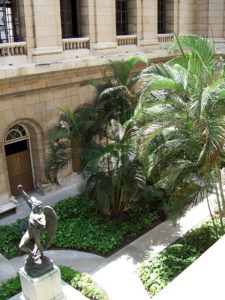
En el centro del edificio hay dos patios que brindan luz y ventilación a las oficinas de las plantas primera (planta baja), tercera y cuarta. El patio norte cuenta con otra estatua, El Ángel Rebelde (El Ángel Rebelde), que fue donada al edificio después de la inauguración. Hay un pequeño quinto piso y un sexto piso que da acceso solo a una parte de la cúpula.

1280px-Diamond_Capitolio

Una amplia escalera de granito de 56 escalones, 36 metros de ancho y 16 metros de altura, conduce al pórtico del edificio. Hay dos filas de 6 columnas de orden jónico. Los pilares destacan con un diámetro de 1,55 metros y una altura de 14,10 metros. Las razones para la sala, ubicadas en todas las puertas y los paneles laterales, son los cuadrados de mármol Boticcino esculpidos por Angelo Zanelli.

A ambos lados del final de la escalera hay dos grupos escultóricos de bronce con pedestal de granito del italiano Angelo Zanelli, uno masculino y otro femenino, tienen una altura de 6,70 metros y representan el primer progreso de la actividad humana y el segundo el tutelar. La virtud de la gente.

Estatua de la republica

Estatua de la republica

Ubicado en el ábside, la Estatua de la República, con un peso de 30 toneladas y una altura total de 14,60 metros, descansa sobre un pedestal de mármol de 2,50 metros. Es la figura de una mujer joven de pie, vestida con una túnica, con casco, escudo y lanza. Fue esculpido por Angelo Zanelli, autor de Altare della Patria, parte del monumento al rey Victor Emmanuel II, en Roma. Es la tercera estatua de interior más grande del mundo, solo superada por el Buda de Nara, Japón y la estatua de Abraham Lincoln en el Lincoln Memorial en Washington.

iStock_000015569301_LargeCubaBeachofCaboCruz_800x2400 (1)

logo

CUBA_-_Havana_-_Capitólio_-_panoramio_(2)LA HAVANA: HISTORY OF THE CUBA’S NATIONAL CAPITOL. VIDEO/ PHOTOS.

El Capitolio or the National Capitol Building (Capitolio Nacional de La Habana) is a public edifice and used to be one of the most visited sites in Havana, capital of Cuba. The building was commissioned by Cuban president Gerardo Machado and built from 1926 to 1929 under the direction of Eugenio Rayneri Piedra. It is located on the Paseo del Prado, Dragones, Industria, and San José streets in the exact center of Havana.

The project began in April 1926, during the Gerardo Machado administration. Construction was overseen by the U.S. firm of Purdy and Henderson. Prior to the Cuban Revolution of 1959, the Congress was housed in the building, the Congress was abolished and disbanded following the Cuban Revolution in 1959 and the building fell into disrepair.

“El Capitolio” has a size of 681 by 300 ft. Its design although it is often compared to that of the United States Capitol, it is not a replica of it. “It is similar to that in Washington D.C, but a meter higher, a meter wider, and a meter long, as well as much richer in detail. To finish its construction they needed more than 5000 workers, 3 years, 3 months and 20 days; as well as approximately 17 millions of American dollars”. Completed in 1929, it was the tallest building in Havana until the 1950s. It houses the world’s third largest indoor statue.

As of 2013, the Government of Cuba has been slowly restoring the building for use once again as the home of Cuba’s National Assembly. Works were finished in 2019.

Capitol_court

Building

According to its architect, Eugenio Rayneri Piedra, the inspiration for the cupola came from the Panthéon in Paris by way of Bramante’s Tempietto in San Pietro in Montorio. The cupola, which is stone clad around a steel frame that was constructed in the United States, is set planimetrically forward on the building to allow for the apse that contains La Republica, the “Statute of the Republic”. At almost 92 m (302 ft) high, the dome was the highest point in the city of Havana until 1956 when the FOCSA Building was built reaching a height of 121 meters (397 ft). The Capitolio had the third highest dome in the world at the time of its construction.

The gardens, based on the designs of European gardens consisting of areas of lawn bordered by paths and highlighted by Royal Palm trees, were designed by French landscape architect Jean-Claude Nicolas Forestier who also designed the Paseo del Prado.

The 56 steps leading to the main entrance, La Escalinata, is flanked by 6.5 m (21 ft) statues by the Italian artist Angelo Zanelli. To the left is Work (El Trabajo) and to the right The Tutelary Virtue (La Virtud Tutelar). The steps lead up to the central portico, which is 36 m (118 ft) wide and more than 16 m (52 1⁄2 ft) tall. There are 12 granite columns in the Ionic order arranged in two rows and each over 14 m (46 ft) tall. Beyond the portico, three large bronze doors with bas-reliefs by Zanelli allow access to the main hall.

Capitol_library

The inside of the main hall under the cupola is the Statue of the Republic (La Estatua de la República). The statue, also by Zanelli, was cast in bronze in Rome in three pieces and assembled inside the building after its arrival in Cuba. It is covered with 22 carats (92%) gold leaf and weighs 49 tons. At 15 m (49 1⁄4 ft) tall, it was the second highest statue undercover in the world at the time, with only the Great Buddha of Nara being taller. The statue stands on a plinth 2.5 m (8 1⁄4 ft) high bringing the total height to 17.54 m (57 1⁄2 ft). A Creole Cuban, Lily Valty served as the model for the body for Zanelli, and the inspiration for the statue came from Athena, the Greek goddess of wisdom.

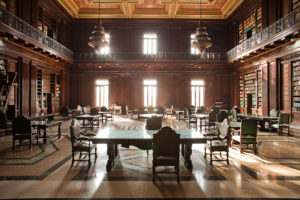
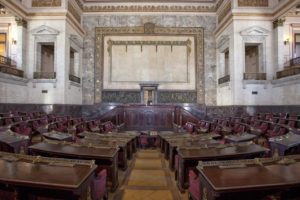
Embedded in the floor in the center of the main hall is a replica 25 carat (5 g) diamond, which marks Kilometre Zero for Cuba. The original diamond, said to have belonged to Tsar Nicholas II of Russia and have been sold to the Cuban state by a Turkish merchant, was stolen on 25 March 1946 and mysteriously returned to the President, Ramón Grau San Martín, on 2 June 1946. To either side of the main hall is the Salón de Pasos Perdidos (Hall of Lost Steps), named for its acoustic properties. These halls, with inlaid marble floors and gilded lamps, lead to the two semicircular chambers that formerly housed the Parliament and Chamber of Deputies. The Parliament chamber to the right of the building is backed on to by the President’s office which has a door opening directly onto the dais.

lossy-page1-1280px-El_Capitolio,_Havana,_Cuba_LCCN2010638891.tif

A range of different lamps is seen throughout the building. These were all designed specifically for the building by Cuban designers and the majority of them manufactured in France.

In the center of the building are two patios which provide light and ventilation for the offices of first (ground), third and fourth floors. The north patio features another statue The Rebellious Angel (El Ángel Rebelde) which was donated to the building after the inauguration. There are a small fifth floor and a sixth floor which gives access only to part of the cupola.

A wide granite staircase of 56 steps, 36 meters wide and 16 meters high, leads to the portico of the building. There are two rows of 6 columns of the Ionic order. The pillars stand out with a diameter of 1.55 meters and a height of 14.10 meters. Reasons for the hall, located in all the doors and the lateral panels, are the Boticcino marble squares sculpted by Angelo Zanelli.

On both sides of the end of the staircase are two bronze sculptural groups with granite pedestal by the Italian Angelo Zanelli, one male, and the other female, have a height of 6.70 meters and represent the first progress of human activity and the second the tutelary virtue of the people.

Republic Statue.

Republic Statue.

Statue of the Republic

Located in the apse, the Statue of the Republic, with a weight of 30 tons and a total height of 14.60 meters, rests on a marble pedestal of 2.50 meters. It is the figure of a young woman standing, dressed in a tunic, with a helmet, shield, and lance. It was sculpted by Angelo Zanelli, author of the Altare della Patria, part of the monument to King Victor Emmanuel II, in Rome. It is the third largest indoor statue in the world, surpassed only by the Buddha of Nara, Japan and the Abraham Lincoln statue in the Lincoln Memorial in Washington. D.C.

Agencies/ WikiPedia/ Internet Photos/ YouTube/ Arnoldo Varona/ www.TheCubanHistory.com
THE CUBAN HISTORY, HOLLYWOOD.
Cuba041

logo