
< FAMOUS Cuban Drinks "EL MOJITO". Recipe. VIDEOS.

Todo-lo-que-necesitas-saber-sobre-el-mojito-cubanoFAMOSAS BEBIDAS CUBANAS “EL MOJITO”. RECETA. VIDEO.

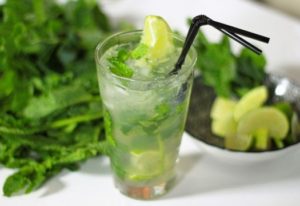
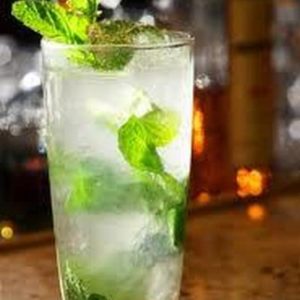
El Mojito es un cóctel cubano clásico muy vinculado al famoso bar La Bodeguita del Medio de Cuba, visitado hace algunos años por el famoso escritor Ernest Hemingway. Esta bebida es extremadamente refrescante y es un excelente cóctel para ordenar en un caluroso día de verano o al ir a la pista de baile. La bebida básica es remotamente similar a la limonada, pero ahí es donde terminan las comparaciones.

La primera adición notable es la menta. Esto proporciona una chispa refrescante a la bebida. El uso de la menta proporciona una sensación refrescante en la lengua y los labios al beber, esto es parte de lo que la convierte en una bebida excepcionalmente refrescante. En segundo lugar, el ron le da a la bebida una pequeña patada y equilibra la bebida. Las limas proporcionan la acidez para calmar la sed que tanta gente anhela en el calor. Si es posible, use limas clave (limas mexicanas) para esta bebida, ya que proporcionan un sabor fresco. Además, un buen ron blanco, como Bacardi, Havana Club (3 años) le dará a la bebida un sabor más auténtico, pero cualquier ron blanco servirá. Usar jarabe simple ayudará a mejorar su Mojito ya que el azúcar granular no se disuelve demasiado bien en líquidos fríos. Mojito arenoso no son muy apetitosos.

Cuando prepare su Mojito, mezcle suavemente las hojas de menta con el simple jarabe y el jugo de limón. No quieres que las hojas rizadas floten en la bebida. No es una buena presentación y solo necesitas magullar las hojas para liberar los aceites esenciales. Después de enredar, empaca mucho hielo sobre las hojas de menta para evitar que floten alrededor. Agregue su ron y luego complete con el agua de soda.

Algunas recetas requieren amargos, pero un auténtico mojito cubano no contiene amargos.
photo

Desde que el Mojito ha ganado más popularidad, la gente ha estado creando variaciones únicas y sabrosas. Para mantener esta bebida fresca, intente agregar Perrier, Perrier con sabor a lima o champaña en lugar de la soda del club. También puede agregar purés de bayas, como la frambuesa o el mango. O echa un vistazo al Centaur, que es un cóctel de coñac y ginger ale basado en el mojito.

Ingredientes para hacer un mojito cubano.

1 parte de Ron
3 partes de agua mineral
12 hojas de menta
1/2 1/2 Picaduras de Limón
1/2 parte de azúcar

¡Disfrutarlo!

1800px-Cuba_Banner

logo

Mojito-copia-525x360FAMOUS CUBAN DRINKS “EL MOJITO”. RECIPE. VIDEO.

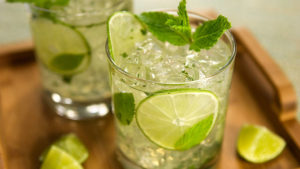
The Mojito (pronounced: moe-hee-toe) is a classic Cuban cocktail most closely tied to Cuba’s famous La Bodeguita del Medio bar visited some years ago by the famous writer Ernest Hemingway. This drink is extremely refreshing and is a great cocktail to order on a hot summer day or when hitting the dance floor. The basic drink is remotely similar to limeade, but that’s where the comparisons stop.

The first noticeable addition is mint. This provides a refreshing spark to the drink. The use of mint provides a cooling sensation on the tongue and lips when drinking, this is part of what makes it an exceptionally refreshing drink. Secondly, the rum gives the drink a little kick and balances out the drink. The limes provide the thirst-quenching sourness that so many people crave in the heat. If possible, use key limes (Mexican limes) for this drink as they provide a crisp flavor. Also, a good white rum, like Bacardi, Havana Club (3-Year-Old) will give the drink a more authentic flavor, but any white rum will do. Using simple syrup is will help make your Mojito’s better since granular sugar doesn’t dissolve too well in cold liquids. Gritty Mojito’s aren’t very appetizing.

When preparing your Mojito, gently muddle the mint leaves with the simple syrup and lime juice. You don’t want shredded leaves floating around in the drink. It doesn’t make for good presentation and you just need to bruise the leaves to release the essential oils. After muddling pack lots of ice over the mint leaves to keep them from floating around. Add your rum and then top off with the soda water.

Some recipes call for bitters, but a genuine Cuban Mojito does not contain bitters.
mojito-cubano_1104199816_64500172_667x375

Since the Mojito has gained more popularity, people have been creating unique and tasty variations. To keep this drink fresh try adding Perrier, lime-flavored Perrier or champagne in place of the club soda. You can also add berry purees, such as raspberry or mango. Or check out the Centaur which is a cognac and ginger ale cocktail based on the Mojito.

Ingredients to make a Cuban Mojito

1 part Rum
3 Parts of Mineral Water
12 mint leaves
1 / 2 1 / 2 Lemon bites
1 / 2 part sugar

Enjoy!

Agencies/ ClassicCubanMojitos/ O’Neil/ YouTube/ Internet Photo/ Arnoldo Varona/ www.TheCubanHistory.com
THE CUBAN HISTORY, HOLLYWOOD.

Cuba01 (1)

logo

< NEW Chinese Train Fare Havana-Guantanamo, 200 Cuban Pesos (US$8.00). VIDEOS.

download (4)PRECIO DEL PASAJE DEL TREN CHINO HABANA-GUANTANAMO, 200 PESOS CUBANOS (US $ 8.00).

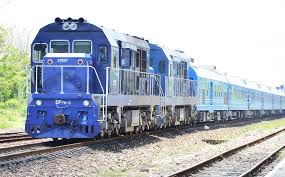
El primer vagón de tren nuevo de Cuba en correr en más de cuatro décadas se retiró de la capital, La Habana, este fin de semana para iniciar su viaje inaugural de 915 kilómetros (516 millas) y 15 horas a Guantánamo en el extremo este de la isla, DW. com informó.

Con ventanas rotas, puertas faltantes y asientos rotos, los trenes de Cuba necesitan desesperadamente una actualización. Los 14 autos nuevos en la ruta incluyen cuatro con aire acondicionado y un vagón comedor.

En mayo, Cuba recibió un envío de 80 vagones azul brillante de fabricación china como parte del proyecto de modernización ferroviaria del gobierno socialista, con un total de 250 piezas de equipos chinos que llegarán a fines de 2019, según el informe.

El siguiente paso será reparar alrededor de 4,200 kilómetros (2,600 millas) de vías y docenas de estaciones en ruinas dispersas por toda la isla. Para 2030, Cuba espera que el sistema ferroviario restaurado sea completamente funcional.

“Este es el primer paso de la transformación del sistema ferroviario cubano”, dijo el sábado Eduardo Hernández, jefe de la Compañía Nacional de Ferrocarriles de Cuba.

El sistema ferroviario de Cuba se lanzó por primera vez en la década de 1830. Hoy en día, sufre de falta de mantenimiento y nuevos equipos, según el informe.

Los trenes de Cuba son una de las formas más baratas de viajes de larga distancia, pero el sistema es muy ineficiente. Los tiempos de viaje a través de la isla generalmente toman alrededor de 24 horas para hacer el viaje desde La Habana a Santiago. Un auto puede hacer el viaje en la mitad del tiempo pero es más caro.

Aunque los nuevos vagones deben reducir el tiempo de viaje, los nuevos trenes no pueden funcionar a toda velocidad hasta que se reparen las vías.

El viaje de ida y vuelta desde La Habana a Guantánamo comienza en 200 pesos cubanos (US $8).

Según el Ministerio de Transporte de Cuba, los trenes transportaron 6,7 millones de pasajeros en 2018. El gobierno dijo que quiere agregar un millón de pasajeros en 2019 en las rutas de larga distancia.

Un tren es una opción popular para viajar a las ciudades del este de Santiago, Holguín, Camagüey, 200 y Guantánamo.

3.3-Ciudad (1)

logo

138225797_15631031113561nNEW CHINESE TRAIN FARE: HAVANA-GUANTANAMO 200 CUBAN PESOS (US$8.00).

Cuba’s first new train cars to run in over four decades pulled out of the capital, Havana, this weekend to start their 915-kilometer (516-mile), 15-hour maiden journey to Guantanamo on the eastern end of the island, DW.com reported.

With broken windows, missing doors and cracked seats, Cuba’s trains are in desperate need of an upgrade. The 14 new cars on the route include four with air conditioning and a dining car.

In May, Cuba received a shipment of 80 shiny blue Chinese-made rail cars as part of the socialist government’s rail modernization project, with a total of 250 pieces of Chinese equipment due to arrive by the end of 2019, the report said.

The next step will be to repair around 4,200 kilometers (2,600 miles) of track and dozens of dilapidated stations scattered throughout the island. By 2030, Cuba hopes that the restored rail system will be fully functional.

“This is the first step of the transformation of the Cuban railway system,” said Eduardo Hernandez, head of the National Railway Company of Cuba said Saturday.

Cuba’s railway system was first launched in the 1830s. Today, it suffers from lack of maintenance and new equipment, the report said.

Cuba’s trains are one of the cheapest forms of long-distance travel, but the system is very inefficient. Travel times across the island typically take around 24 hours to make the trip from Havana to Santiago. A car can make the trip in half the time but is more expensive.

Although the new train cars should cut down the travel time, the new trains cannot run at full speed until the tracks are repaired.

A round trip ticket from Havana to Guantanamo trip starts at 200 Cuban pesos (US$8).

According to the Cuban Transportation Ministry, trains carried 6.7 million passengers in 2018. The government said it wants to add a million passengers in 2019 on long-distance routes.

A rail is a popular option for travel to the eastern cities of Santiago, Holguin, Camaguey, 200 and Guantanamo.

Agencies/ Asia Times/ Dm Chan/ Internet Photos/ Arnodo Varona/ www.TheCubanHistory.com
THE CUBAN HISTORY, HOLLYWOOD.
cuba

logo

< WILL EXHIBIT Worldwide "Our Cónsul in Havana" a Cuban-Portuguese Production. VIDEO.

download (11)SE ESTRENA MUNDIALMENTE “NUESTRO CONSUL EN LA HABANA” UNA COPRODUCCION CUBANO-PORTUGUESA.

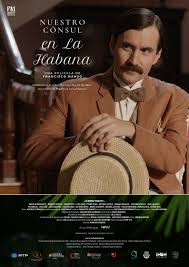
En el marco de la celebración del centenario de las relaciones diplomáticas entre Cuba y Portugal se exhibirá, en función única, la coproducción cubano-portuguesa Nuestro cónsul en La Habana, adaptación resumida, para salas cinematográficas, de la serie que actualmente se está televisando en Portugal.

La serie, y la película derivada, narran la vida del escritor y diplomático portugués Eça de Queiroz (1845-1900), sobre todo su estancia en Cuba. El maestro de la literatura realista en habla portuguesa cuenta con las novelas El crimen del Padre Amaro (1875) y Los Maias (1888).

El filme se concentra en el período en que Eça de Queiroz fue cónsul de Portugal en Cuba en la época colonial española, y trabajó en defensa de los chinos de Macao (conocidos como “culíes”), pues eran explotados por los dueños de las plantaciones.

La mayor parte de los incidentes que cuenta la película Nuestro cónsul en La Habana se aluden o se relatan en la correspondencia enviada por el autor a Portugal, en la cual se reflejan igualmente momentos de soledad, enfermedad y escepticismo. También se cuenta el romance con Mollie, la hija del general estadounidense Robert Bidwell. La acción de la película se desarrolla entre Portugal y Cuba, cuenta con el guión de Antonio Torrado y la presencia de Inti Herrera como productor ejecutivo por la parte cubana.

Independientemente de lo que cuente la película, el escritor nunca se sintió bien en La Habana. En una carta de 1873 la considera una “ciudad estúpida, fea, sucia, odiosa, innoble.” Y añade: “!Oh! la gente grosera. (…) Esta ciudad (…) ¡qué miserable aldea es, con todos sus palacios, con todos sus trenes arrastrados por cuatro caballos cubiertos de plata! ¡Ah! La miserable, subalterna, rastrera manera de estos espíritus. Detesto esta ciudad verdeada y millonaria, sombría y ruidosa ―este depósito de tabaco, este charco de sudor, este estúpido palillero de palmeras. (…)Disculpe mi cólera ―ella nace de un tedio sin límites y de un despecho cruel: el despecho de sentirme un pobre diablo artista, encajado en una función oficial, y tener que ajustar el sentido artístico al código de los cónsules.”

El director de Nuestro cónsul en La Habana, Francisco Manso visitó también el Café de la Columnata Egipcia, en la calle Mercaderes, un lugar recientemente recuperado por la Oficina del Historiador de la Ciudad. El Café era frecuentado por el escritor portugués.

El mismo día que se exhibe el filme, el Teatro Raquel Revuelta acogerá la obra ‘Mise en Abîme’, a cargo del Grupo de Teatro D’DOS, que recorre la vida del escritor y diplomático portugués, gracias al texto y la dirección de Julio César Ramírez.

3.3-Ciudad (1)

logo

brasaoWILL EXHIBIT WORLDWIDE “OUR CONSUL IN HAVANA” A CUBAN-PORTUGUESE COPRODUCTION.

In the framework of the celebration of the centenary of diplomatic relations between Cuba and Portugal, the Cuban-Portuguese co-production Our Consul in Havana will be exhibited, a summary adaptation for cinemas, of the series that is currently being televised in Portugal.

The series and the derivative film narrate the life of the Portuguese writer and diplomat Eça de Queiroz (1845-1900), especially his stay in Cuba. The teacher of realistic literature in Portuguese speaks with the novels El crimen del Padre Amaro (1875) and Los Maias (1888).

The film focuses on the period when Eça de Queiroz was Portugal’s consul in Cuba during the Spanish colonial era, and worked in defense of the Macao Chinese (known as “coolies”), as they were exploited by the owners of the plantations.

Most of the incidents that the film tells Our Consul in Havana are alluded to or reported in correspondence sent by the author to Portugal, which also reflects moments of loneliness, illness, and skepticism. The romance is also told with Mollie, the daughter of the American general Robert Bidwell. The action of the film is developed between Portugal and Cuba, has the script of Antonio Torrado and the presence of Inti Herrera as executive producer on the Cuban side.

Regardless of what the film tells, the writer never felt well in Havana. In a letter of 1873, he considers it a “stupid, ugly, dirty, hateful, ignoble city.” He adds: “Oh! the rude people. (…) This city (…) what a miserable village it is, with all its palaces, with all its trains dragged by four horses covered in silver! Oh! The miserable, subaltern, creeping way of these spirits. I hate this green and millionaire city, dark and noisy – this tobacco deposit, this puddle of sweat, this stupid palillero of palm trees. (…) Excuse my anger – she is born of boundless boredom and cruel spite: the spite of feeling like a poor artist devil, fitted into an official function, and having to adjust the artistic sense to the code of the consuls. ”

The director of Our Consul in Havana, Francisco Manso, also visited the Egyptian Colonnade Café on Mercaderes Street, a place recently recovered by the Office of the City Historian. The Café was frequented by the Portuguese writer.

The same day that the film is shown, the Raquel Revuelta Theater will host the play ‘Mise en Abîme’, by the D’DOS Theater Group, which covers the life of the Portuguese writer and diplomat, thanks to the text and address of Julio César Ramírez.

Agencies/ CiberCuba/ Joel del Rio/ YouTube/ Internet Photos/ Arnoldo Varona/ www.TheCubanhistory.com
THE CUBAN HISTORY, HOLLYWOOD.

cuba_havana_adobestock_57649461-2048px (1)

logo