– FÉLIX CHAPPOTTÍN, Musician, Bandleader, and Songwriter. VIDEOS.

unnamed (3)FÉLIX CHAPPOTTÍN, MÚSICO, DIRECTOR DE ORQUESTA Y COMPOSITOR. VIDEOS

Félix Chappottín Lage nació el 31 de marzo de 1907, en el barrio de Cayo Hueso, La Habana. Fue trompetista y líder de banda cubano y miembro de tres bandas cubanas de gran éxito: Septeto Habanero, el conjunto de Arsenio Rodríguez y Conjunto Chappottín, que dirigió.

Su padre Julio Chappottin era miembro del grupo de Son ‘Los Apaches’. Félix a los 8 años de edad, comenzó a estudiar corneta con Venancio González; luego tomó la tuba, el oboe y el euphonium. A los doce años se unió a la banda juvenil local de Guanajay.

https://youtu.be/StPdBsPXGww

En 1924 se unió a la Estudiantina Orquídea de Américo González como trompetista, y en 1927, se unió al Septeto Habanero, anteriormente Sexteto Habanero, convirtiéndose en el trompetista más famoso de Cuba. Con el Habanero, Chappottín grabó varios sencillos de 78 rpm para Víctor entre febrero de 1928 y 1930, cuando dejó la banda por razones económicas, fue reemplazado por José Interián. Luego se unió a otros septetos hijos: Colín, Munamar (dirigido por Juan José Izquierdo), Agabama y Universo (dirigido por Abelardo Barroso). Después de la disolución de Sexteto Boloña en 1935, Chappottín y Jesús “Tata” Gutiérrez fundaron el Sexteto Bolero. En 1939 se unió al septeto Carabina de Ases.

FELIX CHAPPOTTIN Y SUS ESTRELLAS .

En la década de 1940, después de la disolución de Carabina de Ases, Chappottín se unió a varios conjuntos: América, Gloria Cubana, Anacaona (dirigida por Concepción Castro), Azul (dirigida por Chano Pozo), Los Jóvenes del Cayo y finalmente en 1950 con el popular Arsenio Rodríguez. conjunto En 1950, Arsenio Rodríguez decidió continuar su carrera en Nueva York y los miembros de su conjunto que permanecieron en La Habana fundaron el Conjunto Chappottín, dirigido por Chappottín, con los arreglos de la pianista Lilí Martínez y presentando a Miguelito Cuní en la voz principal. La banda se convirtió en uno de los conjuntos más populares de la década de 1950 con éxitos como “Alto Songo”.

https://youtu.be/yA-Vg8W9ncI

Chappottín siguió siendo el líder de su conjunto hasta su muerte, que tuvo lugar el 21 de diciembre de 1983 en La Habana.

LEGACY.

maxresdefault

Chappottín es ampliamente considerado como el fundador del estilo moderno de trompeta cubana debido a su enfoque innovador en el desarrollo del hijo Cubano entre 1920 y 1950. Según Craig Harris, escritor de AllMusic, Chappottín “continuó inspirando la música afrocubana con su dulce trompeta tocando durante más de seis décadas”. En 2002, Chappottín fue inducido póstumamente al Salón de la Fama de la Música Latina Internacional.

Después de su muerte, su hijo y más tarde su nieto han dirigido Conjunto Chappottín.
travelling-in-cuba-tours-and-vacation-packages-1503555095-1920X700

logo

unnamedFÉLIX CHAPPOTTÍN, MUSICIAN, BANDLEADER, AND SONGWRITER. VIDEOS.

Félix Chappottín Lage was born on March 31, 1907, in the barrio of Cayo Hueso, La Havana. He was a Cuban trumpeter and bandleader and a member of three highly successful Cuban bands: Septeto Habanero, Arsenio Rodríguez’s conjunto, and Conjunto Chappottín, which he directed.

His father Julio Chappottin was a member of the son group Los Apaches. Felix at 8 years of age, began to study cornet under Venancio González; he later took up the tuba, the oboe, and the euphonium. At age twelve he joined the local youth band of Guanajay.

In 1924 he joined the Estudiantina Orquídea de Américo González as a trumpeter, and in 1927, he joined the Septeto Habanero, previously the Sexteto Habanero, becoming the most famous trumpeter in Cuba. With the Habanero, Chappottín recorded several 78 rpm singles for Victor between February 1928 and 1930, when he left the band for economic reasons, was replaced by José Interián. He then joined other son septets: Colín, Munamar (directed by Juan José Izquierdo), Agabama, and Universo (directed by Abelardo Barroso). After the disbandment of Sexteto Boloña in 1935, Chappottín and Jesús “Tata” Gutiérrez founded the Sexteto Bolero. In 1939 he joined the septet Carabina de Ases.
200976122encodingjpgsize300

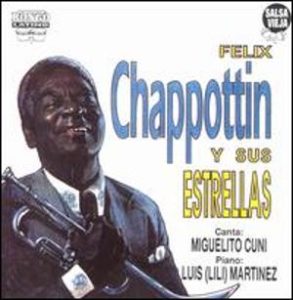
FELIX CHAPPOTTIN AND HIS STARS.

In the 1940s, after the disbandment of Carabina de Ases, Chappottín joined several conjuntos: América, Gloria Cubana, Anacaona (directed by Concepción Castro), Azul (directed by Chano Pozo), Los Jóvenes del Cayo and finally in 1950 with Arsenio Rodríguez’s popular conjunto. In 1950, Arsenio Rodríguez decided to continue his career in New York and the members of his conjunto that remained in Havana founded Conjunto Chappottín, which was directed by Chappottín, with the arrangements of pianist Lilí Martínez and featuring Miguelito Cuní on lead vocals. The band became one of the most popular conjuntos of the 1950s with hits such as “Alto Songo”.

Chappottín remained the leader of his conjunto until his death, which took place on December 21, 1983, in Havana.
18172-300x200

LEGACY.

Chappottín is widely regarded as the founder of the modern Cuban trumpet style due to his innovative approach in the development of son Cubano between 1920 and 1950s. According to Craig Harris, writer for AllMusic, Chappottín “continued to inspire Afro-Cuban music with his sweet-toned trumpet playing for more than six decades”. In 2002, Chappottín was posthumously inducted into the International Latin Music Hall of Fame.

After his death, his son and later his grandson have directed Conjunto Chappottín.

Agencies/ Wiki/ Felix Chappottin Bio./ Internet Photos/ YouTube/ Arnoldo Varona/ www.TheCuban History.com
THE CUBAN HISTORY, HOLLYWOOD.

La Habana morro

logo

– THE CUBAN CAPITOL, a National Masterpiece. PHOTOS.

8570-capitolio-habanaEL CAPITOLIO CUBANO, UNA OBRA MAESTRA NACIONAL.

Quizá muchos no sepan que en el terreno que hoy ocupa el Capitolio habanero existió una ciénaga, dragada y convertida, a mediados del siglo pasado, en el primer jardín botánico que tuvo la capital cubana.

Tampoco se conoce mucho que la ejecución definitiva de ese emporio estuvo sujeta a demorados plazos producto de su elevado costo, por un lado, y de indecisiones políticas, por otro.

Fue, por fin, en marzo de 1926, cuando arrancó de una vez la construcción del Capitolio de La Habana, a pesar de que, años antes, se habían echado sus cimientos.

El majestuoso edificio fue inaugurado tres años después, el 20 de mayo, en horas de la tarde, con la presencia del presidente de la República y el cuerpo diplomático acreditado en la Isla.

images (5)

El equipo que participó en la ejecución de los planos definitivos que se concretaron en las piedras del Capitolio de La Habana estuvo integrado por ingenieros y arquitectos cubanos, bajo la dirección artística y técnica del también arquitecto Eugenio Raynieri Piedra.

Fue necesaria una superficie de 388 mil 700 metros cuadrados, para que la casa constructora Púrdy Hénderson –la misma que construyó el Centro Gallego, el Palacio de los Asturianos y el Banco de Obispo y Aguiar, todos en La Habana Vieja-, levantara, en apenas 3 años y 2 meses, el impresionante inmueble.

Su costo total se acercó a los 17 millones de pesos, equivalentes, en aquellos tiempos, a la misma cantidad de dólares.

grand_hall_inside_El_Capitolio_Cuba

En la construcción del Capitolio de La Habana fueron empleados 25 mil metros cúbicos de piedra de capellanía.

A cualquier transeúnte citadino puede llamarle la atención la cúpula del Capitolio de La Habana, la quinta en el mundo de estilo renacentista. La misma que, por sus proporciones y silueta, recuerda a la Basílica de San Pedro, en Roma, Italia.

La cúpula es, en la actualidad, el segundo punto más alto de la ciudad, precedido por el monumento a José Martí en la hoy llamada la Plaza de la Revolución.

Otro detalle que atrae la mirada del caminante es el pórtico central, soportado por 17 columnas jónicas de granito.

En él destacan, además, las 3 grandes puertas de bronce que dan acceso a la planta principal, los bajorrelieves o metópas, del escultor italiano Angelo Zanéli, y las 2 puertas, también de bronce, que comunican con las logias y elevadores. (Tomado de RReloj).

Cuba041

logo

El-Capitolio-2THE CUBAN CAPITOL, A NATIONAL MASTERPIECE.

Many may not know that in the land that the Havana Capitol occupies today there was a swamp, dredged and converted, in the middle of the last century, in the first botanical garden that the Cuban capital had.

Nor is it well known that the final execution of this emporium was subject to delays due to its high cost, on the one hand, and political indecisions, on the other.

It was, finally, in March 1926, when the construction of the Capitol of Havana started at once, despite the fact that, years before, its foundations had been laid.

The majestic building was inaugurated three years later, on May 20, in the afternoon, with the presence of the President of the Republic and the diplomatic corps accredited on the Island.

Capitolio_de_La_Habana_(Cuba)_02

The team that participated in the execution of the final plans that took shape in the stones of the Havana Capitol was composed of Cuban engineers and architects, under the artistic and technical direction of the architect Eugenio Raynieri Piedra.

An area of ​​388 thousand 700 square meters was necessary, so that the construction house Púrdy Hénderson – the same one that built the Galician Center, the Palace of the Asturians and the Bank of Bishop and Aguiar, all in Old Havana -, will raise, in just 3 years and 2 months, the impressive property.

Its total cost approached 17 million pesos, equivalent, at that time, to the same amount of dollars.

In the construction of the Capitol of Havana 25 thousand cubic meters of chaplaincy, the stone was used.

Any citizen of the city can call attention to the dome of the Capitol of Havana, the fifth in the world of Renaissance style. The same one that, for its proportions and silhouette, recalls the Basilica of St. Peter, in Rome, Italy.

Minolta DSC

Minolta DSC

The dome is, at present, the second-highest point in the city, preceded by the monument to José Martí in today called the Revolution Square.

Another detail that attracts the walker’s gaze is the central porch, supported by 17 Ionic granite columns.

It also highlights the 3 large bronze doors that give access to the main floor, the bas-reliefs or metópas, by the Italian sculptor Angelo Zanéli, and the 2 bronze doors, which communicate with the lodges and elevators.

Agencies/ RHC/ Bárbara Gómez/ Internet Photos/ Arnoldo Varona/ www.TheCubanHistory.com
THE CUBAN HISTORY, HOLLYWOOD.

1800px-Cuba_Banner

logo

– ALWAYS with Us: Two Legends of the Artistic World “Celia Cruz y Lola Flores”. VIDEOS.

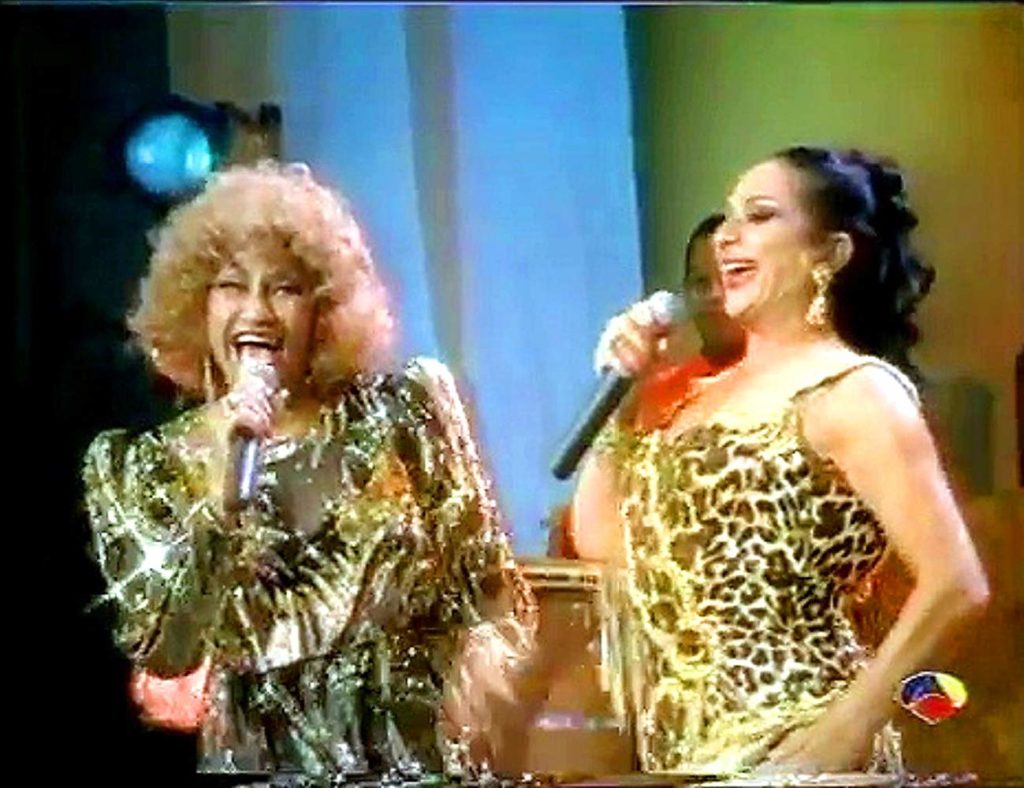
hqdefault (1)PRESENTACION FILMICA EN HOMENAJE A DOS GRANDES DEL MUNDO ARTISTICO: CELIA CRUZ Y LOLA FLORES.

Apoteósica presentación de Lola Flores a Celia Cruz. El énfasis que pone “La Faraona” pone los pelos de punta.

Dos leyendas! Dos seres irrepetibles, juntas de nuevo en escena interpretando su exitoso dueto. “Burundanga”.

En noviembre de 1998, doña Celia Cruz se presenta una vez más en Television Española en el programa Esta Copla Me Suena dedicado especialmente a la memoria de la faraona Lola Flores, icono de la cultura española en el mundo entero. Este tema forma parte de la producción: Mi Vida es Cantar lanzada por la guarachera de Cuba a finales de los 90. Cabe recordar, que Celia Cruz y Lola Flores además de ser grandes artistas, fueron amigas desde los 70 razón por la cual, en su partida, la reina le rinde tributo a la gran Lola, su amiga, su hermana. Aqui le ofrece su canto a Lola.

Cuba01 (1)

logo

MV5BYWZiZTJlY2QtOTQ3OC00MTg4LTg3MmYtNjUwZDdlNmQ2ZTIxXkEyXkFqcGdeQXVyMTA2NDgyNA@@._V1_SY1000_CR0,0,1299,1000_AL_FILMS IN TRIBUTE TO TWO BIG OF THE ARTISTIC WORLD: “CELIA CRUZ AND LOLA FLORES”.

Apotheosis presentation of Lola Flores to Celia Cruz. The emphasis that puts “La Pharaoh” puts the creeps.

Two legends! Two unrepeatable beings, together again on stage interpreting their successful duet. “Burundanga.”

In November 1998, Mrs. Celia Cruz is presented once again on Spanish Television in the program This Copla Me Sounds dedicated especially to the memory of the pharaoh Lola Flores, an icon of Spanish culture throughout the world. This theme is part of the production: ‘Mi Vida es Cantar’, launched by the guarachera of Cuba in the late 1990s. It should be remembered that Celia Cruz and Lola Flores, besides being great artists, were friends since the age of 70, which is why, in his departure, the queen pays tribute to the great Lola, her friend, her sister. Here he offers his song to Lola.

Agencies/ Internet Photos/ YouTube/ Arnoldo Varona/ www.TheCubanHistory.com
THE CUBAN HISTORY, HOLLYWOOD.

cuba_havana_adobestock_57649461-2048px (1)

logo